DRUG INTERACTIONS
Mr. Mangesh Bansod
Asst. Prof.,
SDDVCPR, Panvel
Introduction
 A situation in which a substance affects the drug activity (i.e., either
increases or decreases the effects) or produce a new effect that does
not produces on its own is termed as drug interaction.
 Interaction between drugs (i.e., drug-drug interaction) occurs most
commonly. However, interactions also occur between drugs and
foods (i.e., drug- food interactions), and drugs and herbs (i.e., drug-
herb interactions).
 Drug interactions should be avoided, or else they will give rise to poor
or unanticipated consequences. However, sometimes drug
interactions are used deliberately , such as co-administering
probenecid and penicillin prior to mass production of penicillin.
 Manufacturing penicillin was difficult, so it was necessary to find a
way by which the amount of penicillin required can be reduced.
Probenecid delays penicillin excretion, thus penicillin persists longer
within the body if taken with probenecid. As a result, patients take
less penicillin during their therapy.
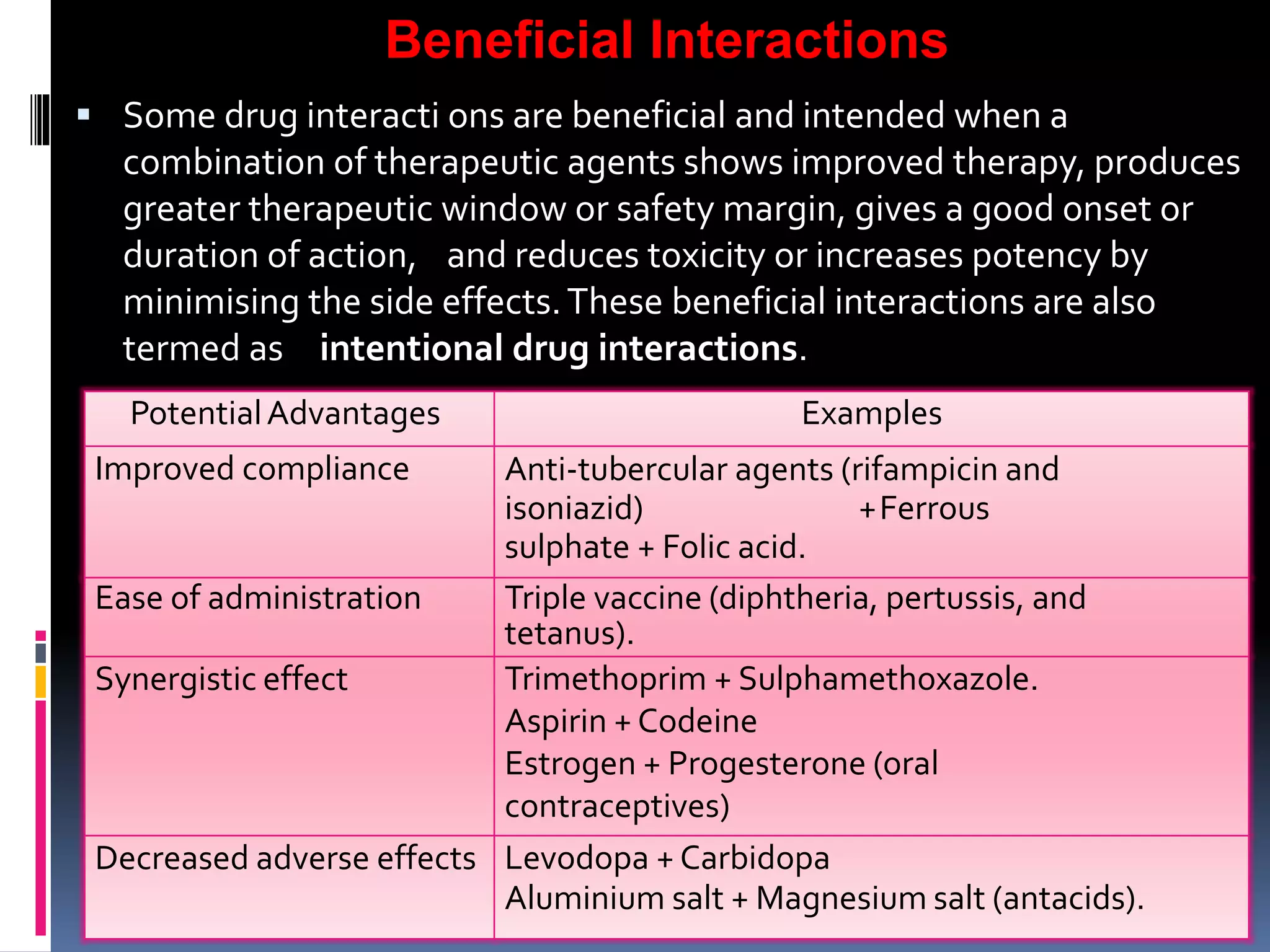
Beneficial Interactions
 Some drug interacti ons are beneficial and intended when a
combination of therapeutic agents shows improved therapy, produces
greater therapeutic window or safety margin, gives a good onset or
duration of action, and reduces toxicity or increases potency by
minimising the side effects.These beneficial interactions are also
termed as intentional drug interactions.
PotentialAdvantages Examples
Improved compliance Anti-tubercular agents (rifampicin and
isoniazid) +Ferrous
sulphate + Folic acid.
Ease of administration Triple vaccine (diphtheria, pertussis, and
tetanus).
Synergistic effect Trimethoprim + Sulphamethoxazole.
Aspirin + Codeine
Estrogen + Progesterone (oral
contraceptives)
Decreased adverse effects Levodopa + Carbidopa
Aluminium salt + Magnesium salt (antacids).
Adverse Interactions
 The drug-drug interactions which counteract or alter the
therapeutic effects of prescribed medications negatively are
termed adverse interactions .
 Such interactions result from the errors that occur during
prescribing, dispensing or administering a combination of drugs
that potentiate, inhibit or oppose the normal therapeutic or
physiological effects inside the body .
 Generally by altering the dosage , an adverse drug interaction can
be avoided or reduced up to an acceptable limit; but if any serious
effect occurs , it is better to avoid the interacting combination
completely.
Analgesics
Analgesics Interacting Drugs Possible Effects
Opioids Phenoxybenzamine Depressor effect of opioids is
exaggerated.
Salicylates Alkalinisers and antacids Serum levels of salicylate decreases
as therenal reabsorption of salicylate
from alkaline urine reduces.
Salicylates Indomethacin Serum level of indomethacin
decreasesdue to inhibition of
gastrointestinal absorption.
Salicylates Acidifiers, ascorbic acid,
and ammonium chloride
Serum levels of salicylate increases due to
enhancement in the renal absorption
ofsalicylate from acidic urine.
Salicylates Heparin and warfarin Aspirin inhibits platelet aggregation, thus
giving rise to additive effect which
causesbleeding.
Salicylates Probenecid Uricosuric activity of
probenecid decreases as both compete
for the samebinding site (albumin
molecule) on
plasma.
Phenylbutazone Tolbutamide Hypoglycaemic response increases as
tolbutamide metabolism is inhibited.
Diuretics Interacting Drugs Possible Effects
Furosemide
,
thiazides,
and
ethacrynic
acid
Sulfonylureas Effect of sulfonylureas antagonises
due todepression of islets of
Langerhans.
Thiazides Methyldopa,
guanethidine,and
reserpine
Antihypertensive effects are
increased bythiazides and this may
cause hypotension.
Furosemide,
thiazides, and
ethacrynic
Acid
Digoxin Cardiac effect and toxicity due to
potassium depletion enhances.
Furosemide Phenytoin Response of furosemide decreases
due toincrease in sodium
absorption.
Acetazolamide Quinidine Serum level of quinidine increases.
Spironolactone Potassium chloride Hyperkalaemia occurs as spironolac
tone isa potassium sparing diuretic.
Cardiovascular
Drugs
Interacting Drugs Possible Effects
Digitalis
glycosides
Magnesium, calcium,
and aluminium salts
containing
Antacid
Absorption of cardiac glycosides
decreasesin GIT.
Digitoxin Barbiturates Digitoxin effect decreases due to
inductionof hepatic microsomal
enzymes (responsible for digitoxin
metabolism).
Quinidine Digitalis glycoside Clearance of digitalis glycosides is
decreased and also displaced from
the binding site by quinidine, thus
cardiac effect and toxicity of cardiac
glycosideincreases.
b-blockers
(propranolol
and atenolol)
Anti-diabetic agents Release of glucose from the liver
Glycogen is inhibited by b-blockers
and this causeshypoglycaemia.
Guanethidine Tricyclic antidepressant Antihypertensive effect antagonises
as guanethidine uptake is inhibited.
Gastrointestinal Drugs Interacting Drugs Possible Effects
Antacids Aspirin Absorption of aspirin decreases.
Magnesium carbonate and
magnesium trisilicate
Digitalis
Glycoside
Absorption of cardiac glycosides
decreases.
Aluminium hydroxide gel Isoniazid Absorption of isoniazid
decreases.
Metoclopramide
(antiemetic)
Levodopa
Absorption rate of levodopa
decreases
due to decrease in GIT motility.
Kaolin-pectin mixture Digoxin Absorption of digoxin decreases.
Vitamins Interacting Drugs Possible Effects
Vitamin B12 Chloramphenicol
Vitamin B 12 effect decreases
due tointerference in
erythrocyte
maturation.
VitaminA Mineral oil
Mineral oil impairs
vitamin A
absorption.
Vitamin B6 Levodopa
Pyridoxine increases
levodopametabolism, thus
decreases its
effectiveness.
Vitamin D Phenytoin and
phenobarbital
Vitamin D metabolism is
stimulatedwhich reduces
calcium serum level.
Vitamins Oral contraceptives
Oral contraceptives cause
deficiency of vitamin B12, vitamin
C, vitamin B6,and folic acid by
inhibiting enzyme
required for their absorption.
Hypoglycaemic Drugs Interacting Drugs Possible Effects
Hypoglycaemic drugs Alcohol
Hypoglycaemic effect of
alcoholcauses hypoglycaemia.
Hypoglycaemic drugs Oral
Contraceptives
Glucose tolerance impairs.
Insulin Propranolol Insulin activity increases.
Sulfonylureas Anticoagulant Hypoglycaemic activity
increases.
Sulfonylureas Rifampin
Hypoglycaemia occurs due
toincrease in metabolism.
Pharmacokinetic Drug Interactions
Object Drug(s) Precipitant Drug(s) Influence onObject Drug(s)
Absorption Interactions
1) Complexation andAdsorption
Tetracycline and
penicillamine
Antacids, food and
mineral
supplements
containingAl, Mg,
Fe, Zn,
Bi and Ca ions
Formation of poorly soluble
and unabsorbable complex
with suchheavy metal ions.
Ciprofloxacin and
Norfloxacin
Antacids containing
Al, Mg
andCa and
sucralfate
Reduced absorption due to
complexation with metal ions.
Cephalexin,
sulfamethoxazole,
trimethoprim, w
arfarinand thyroxine
Cholestyramine Reduced absorption due to
adsorptionand binding.
METHODS FOR DETECTING DRUG INTERACTIONS
ADR is detected by two methods:
 Pharmacovigilance, and
 Epidemiological methods.
Pharmacovigilance (Spontaneous Case Reports and
Record Linkage Studies)
 Pharmacovigilance is a branch of clinical pharmacy in which drug -
induced unknown adverse effects and their risk factors are detected
and studied to prevent iatrogenic disease and promote safe and
rational use of drugs.
 The WHO defined pharmacovigilance as “ the science and activities
relating to the detection, assessment, understanding and
prevention of adverse effects or any other medicine-related
problem”.
 The newly marketed drugs should be studied so that their
undesirable and unexpected effects can be determined. Clinical trials
can produce limited data regarding the rare and unexpected adverse
effects.
 The drug-related knowledge increases with time, and this is essential
for post -marketing investigation, i.e., safety evaluation of a drug
that has been approved for marketing in order to provide alert
signals about the possible adverse effects the drug may cause.
Monitoring of Adverse Drug Reaction
 The process of detecting an adverse drug effect consists of:
 Hypothesis generation,
 Hypothesis strengthening and preliminary assessment of the
available data, and
 Signal testing, evaluation, and explanation.
 A signal is defined as a set of pharmacological, pathological or
epidemiological data and arguments establishing a hypothesis
which is significant for the rational and safe use of a drug in
humans.These signals are derived by making observations in a
patient or in populations or from experimental studies.
Spontaneous Case Reports
 The spontaneous case reports include the results obtained after post -
marketing surveillance of drugs . Such reporting has been started since
1960s in developed countries, where a spontaneous reporting system was
developed for collecting the data of ADRs voluntarily.
 Generally, reports obtained from ADRs are available in national drug
formularies or drug bulletins.
 Spontaneous reporting systems provide information about serious and
unpredicted drug reactions.They are relatively inexpensive „early warning
systems‟ that inform about any potential problems observed during the post-
marketing phase of a drug.
 Once the clinical trial is completed, the drug is marketed and prescribed to a
population that usually differ to a great extent from the population on which
it was tested during the clinical trials ( e.g., elderly people, people with co -
morbidity patterns that differ from the trial populations, pregnant women or
children). Spontaneous reporting systems do not provide any information
about the population consuming a certain drug and the duration of therapy.
Spontaneous Case Reports
 These systems do not calculate the frequency of ADRs and also do not
compare ADRs between drugs; therefore, pharmacoepidemiological studies
are performed.
 There are a large number of under-reported cases with spontaneous
reporting system.
 Almost 90% of prescribers never report a suspected ADR and also reporting
rates are rarely stable over time. It has been observed that the pharmacists
report more frequently, but are less aware of an ADR, because patients
contact to physician or doctor and not to their pharmacist about the adverse
effects.
 The reasons behind the under -reporting are named as the seven deadly
sins by Inman in 1986:The reasons behind the under -reporting
 Satisfaction with the wrong belief that only safe drugs are allowed to be
marketed and prescribed.
 Fear of any legal action.
 A feeling of guilt because the patient health has been harmed by the drugs
prescribed by a doctor.
Ambition to collect and publish a personal series of cases.
Lack of desire for reporting.
 Ambition to collect and publish a personal series of cases.
 Lack of desire for reporting.
 Hesitancy on reporting measly doubts which might lead to mockery.
 A person is not bothered to report the ADR.
 Under-reporting ofADRs may lead to various problems that are
characteristic for spontaneous reporting systems:
 Frequency of ADRs remains unnoticed most of time.
 Causing delayed detection of ADRs.
 A significant under-reporting may not be random but a selective process.
 For example, reporting rates of a newly launched drug are generally more
during the first year.
 Many countries have tried to improve the reporting rates of ADRs and for
this purpose , they have developed methods of feedback to reporters.This
feedback includes a preliminary evaluation of a reported adverse case,
therapy advice on how to deal with the adverse action, recording the report
by a telephone call, a personal visit, occasional publication of a case series in
scientific medical journals, or regular publication of recently reported ADRs.
 It is a common method of raising doubts about drug -induced diseases. If a
physician doubts that an undesirable condition occurring in a patient is
because of a particular prescribed drug, he/she reports about it either in a
letter to the medical journals or to the drug manufacturer.This alerts the
other physicians and they avoid prescribing that drug.
 Spontaneous reporting agencies are set-up to collect and gather such case
reports. Although the resulting information collected gives no idea of the
frequency with which a given event is caused by a drug, it indicates that a
number of prescribers feel that the event is possibly drug related.
Advantages of Spontaneous Reporting
 This reporting process is relatively cheap.
 A medicine can be monitored throughout its life.
 Monitoring of over-the-counter medications and herbal therapies is
also possible.
 These methods are included under passive surveillance systems.The
efficiency and accuracy of these systems depend on the ability of health
professionals to identify potential ADRs and to differentiate them on
the basis of symptoms related to underlying disease. Here it is essential
to know that only a suspicion of a causal link between a drug and an
adverse event is sufficient, and confirmation of the association is not
required.
 The main drawback of spontaneous reporting systems is their
inability to quantify the risk.These systems only provide information on
the number of cases of ADRs reported and not the incidence of
reactions because the population exposed to the drug cannot be
accurately determined . Along with this , only a few reactions of ADR
are reported. However, spontaneous reports are important evidences
that lead to drug withdrawals and are crucial for generating hypothesis.
Record Linkage Studies
 Details regarding the cause of death (as recorded on death
certificate) or of hospitalisation (as recorded on the discharge letter)
are collected and analysed routinely.This provides an early warning
of an epidemic of drug-related disease. Record linkage studies can
be used to facilitate the research for drug-induced disease.
 Medical record linkage uses computer and related software to study
life and health events (birth, marriage, death, hospital admission) of
the population along with prescription event monitoring and history
of drug used.They are developed till resources are available.
Epidemiological Methods
 The various epidemiological methods are:
 Case-Control Studies: In these studies, a group of patients having a
disease assumed to be caused by a drug (the „cases‟) is compared
with another group of patients not having the disease (the
„controls‟). Drug histories of the cases and controls are compared. If
the disease is caused by the suspected drug, the drugs have been
extensively used in the cases that in the controls.
 Such case -control studies are performed at relatively low cost;
however, they should be conducted properly and the obtained data
should be appropriate.
 During the case control studies, following precautions should be
taken:
 Selection of case should be performed carefully.
 A clear, precise and accurate description of the disease should
be given.The disease under study should have a reasonable risk
of being drug induced.
 The controls defined should be according to the population of
cases but not according to the disease of interest. Controls are
usually the hospitalised patients.
 The results should be determined accurately and precisely.
 Cohort Studies: Cohort is a group of recipients of drug of interest
and studies involve observing them for different time periods t o
check what happens to them.These studies are used for short -
term clinical trials of new drug. Cohort studies are beneficial in
detecting predictable adverse effects arising due to excessive
pharmacological effects during or after short-term treatment.
ADVERSE DRUG REACTION REPORTING AND MANAGEMENT
 During reporting an ADR, the healthcare professional should keep in
mind that these reports are only showing suspected associations of a
drug with a particular adverse event. Reporting an ADR does not confirm
a causal relationship between the drug and the adverse reaction. But, it is
always better to report a case in a doubtful situation.
 Any undesirable ADR suspected to be resulted due to the use of any
drug, biological (including blood product s), herbal agents, cosmetics or
medical devices should be reported. Some of the examples are:
 All suspected ADRs to be associated with a prescribed or non-prescribed
medication.
 The marketing companies should provide all suspected ADRs regardless
of whet her or not the product was used according to the information
provided.
 All the information related to the unexpected reaction should be
reported regardless of their nature, severity, and frequency.
ADVERSE DRUG REACTION REPORTING AND MANAGEMENT
 Any serious reaction, whether expected or not should be reported.
 All the adverse reactions that may occur due to drug -drug, drug -food or
drug -food supplements interactions should be monitored.
 Monitoring of ADRs in special cases , like drug abuse and drug use in
pregnancy and during lactation, should be done properly.
 ADRs due to overdose or medication error should also be reported.
 Reporting ofADRs that result due to unusual lack of efficacy or when
suspected pharmaceutical defects are observed.
ADR Case Report
 The minimal standard information is required
for proper assessment of the ADR reports and
it covers the following information:
 Patient Information
 Patient Identity: It includes initials or record
number of the patient in hospital, medical
institution, dispensary, clinic, or pharmacy.
 Birth Dates or Age: It includes date, month and
year.
 Sex: Male or female.
 Weight: It should be measured in kilograms.
Adverse Reaction(s)
 Brief Description of the ADR(s): It gives information about the adverse
reaction(s) by marking X on the right box. It gives clear and brief information
about the adverse reactions being reported along with the body site and
severity.
 Time/Date of Onset of the Adverse Reactions: Clear information should be
provided about the time of onset or the occurrence of the adverse reaction
with respect to the drug administration.The date of onset should be given in
the order of day, month and year.
For example, adverse reactions appeared immediately after drug
administration or there was a temporal or spatial correlation with
administration.
 Other Relevant Information: It includes information about:
 Patient’s medical history or laboratory data along with the dates (if
available), considered relevant to the case or the adverse reaction
being reported should be entered.
 Laboratory tests done to the patient and results should be mentioned to
confirm the adverse reaction.
 Such information should be concise and clear.
Adverse Reaction(s)
 Suspected Drug(s)
 Name of the Suspected Drug (s): The trade name of the drug should be
mentioned clearly. But in case the trade name is not available, the
generic name should be documented along with the strength of drug(s).
 Dosage, frequency and administration route of drug should be clearly
mentioned. For example,
 Examples
 Dosage: The dosage form (tablet, capsules, syrup, injection, cream, eye drops,
etc.) along with the total amount of drugs should be mentioned.
 Frequency: The unit (i.e., mg, ml, mg/kg) and number of time s a drug is to be
administered (e.g., 4 times daily or q.i.d.) should be mentioned.
 Route of Administration: The drug administration route should also be
mentioned either in full form or abbreviated form according toWHO codes:
 Therapy Date: The starting and ending date of drug administration should
be given clearly in the following manner, i.e., date, month and year. In case
exact dates are not available, the duration of treatment should be
mentioned. If drug administration has been continued and not ended at
the time of reporting, it should be stated as „Continuing‟.
Adverse Reaction(s)
 Batch Number and Expiry Date: These should be provided if available.
 Reason for Use: The condition or disease for which the drug(s) was being
administered should be mentioned.
 Particular of Concurrently Drugs (or OtherTreatment):Information about the other
drug(s) administered by the patient along with the suspected drug should be given.
Also, information on the drugs administered for at least 1 month back along with the
dosage, administration route , duration and indications should be mentioned.
Information related to medical devices used should also be provided.
 Management of the Adverse Reaction
 Confirmation of the ADRs: It includes the procedures required to confirm the suspected adverse
reactions. For example,
 ADRs confirmed by disappearance on stopping the administration of the drug or reducing the doses.
 Patient recovers on withdrawal of the suspected drug(s) if no other drug is withdrawn and no therapy is given.
 Recovery includes withdrawal of drug causing ADR along with the treatment of ADRs.
 Criteria: The criteria for considering a drug reaction as ADR should be mentioned.
 Treatment: Information about any treatment given to the patient after experiencing the ADRs
should be mentioned.
 Outcome: The symptoms of adverse reaction should be mentioned by marking X in the
appropriate box with dates in case of fatal outcome.
 Reporter Information: The name, address of the health facility (hospital, institution,
dispensary, clinic, company, pharmacy or maternity home), E-mail address
(optional), signature, telephone number , and date of reporting the reaction (indicate
date, month and year) should be mentioned.
Reporting Person
 Submission of a report does not mean that a healthcare professional or the
drug or the product caused or contributed to the ADR in any way because all
reports are considered as suspected results.The reporters should keep in mind
that any information related to them and the patient identities should remain
confidential.
 It is the professional responsibility of all healthcare professionals practicing in
India including specialists, doctors, dentists, pharmacists, nurses, assistant
medical officers, clinical officers, pharmaceutical technicians, pharmaceutical
assistants, traditional medicine practitioners and other healthcare providers to
provide reports of any case of suspected ADRs.
 A system should be developed by the manufacturers or product registrants to
follow -up ADR within their company and to analyse impact of notification of
significant safety data on their products.
 All government hospitals, private hospitals, health centres, dispensaries,
private clinics, private pharmacies, and private nursing homes should report all
ADR cases about which the patients have complained.
 A local person should be appointed by the government and private hospitals,
health centres, and dispensaries to coordinate the ADRs collection and reportn
within the facility.
 It is compulsory to report an ADR to CDSCO even if a precise
relationship is not confirmed with the given medication or all the
data and facts are not available. Reports from various healthcare
providers in different parts of country should be collected to
identify the associations between a particular drug and the ADR.
 Therefore, it is necessary that all required information for
submission of ADR reports should be obtained and reported
through the reporting forms.
Time to Report
 Reporting of any suspected ADR should be done immediately as
any delay in reporting may lead to wrong and unreliable reporting.
Reporting should possibly be done when the patient is still in the
health facility as it gives a chance to the reporter to re -question or
examine the patient to clear any doubt.
Way to Report
 For making a better and efficient programme on ADRs monitoring,
the reporter should send accurate information. Following are the
ways which make an efficient and accurate reporting of ADRs:
 Report should be prepared on a standardised form (specially
designed for reporting ADRs).This reporting form is self-adhesive
postage paid “red coloured form”.
 The ADRs reporting form (annexed)should be filled when a patient
experiences ADR.
 A different form should be used for different patients.
 A duly filled ADR reporting form should be sealed and mailed
within three days directly to CDSCO or through other reporting
centres for onward transmission to the CDSCO.
 Reports can also be submitted online by going to the CDSCO
website or can be sent by e-mail.
 In case of urgency, the ADR reports should be faxed to CDSCO or
related agency.
Way to Report
 Any additional information related to an ADR case that has been
reported later can be sent on another ADR form, or communicated
by telephone, fax or e -mail.The information in the follow -up
reports should be matched with the original report and for this
following information should be provided in the follow-up report:
 It is a follow-up information,
 Date of the original report, and
 Patient‟s identity.
Basic Principles of Efficient Reporting
 An efficient reporting is based on the following basic principles:
 The adverse reaction should be reported as early as possible after it
occurred.
 If possible, the report should be prepared when the patient is still
with the reporter , so that the details can be filled in at once on the
reporting form.
 Any other factors which may explain the occurrence of adverse event
such as any other prescribed drugs, self -medication, herbal products,
food, and chemicals should be mentioned.The patient should be
asked particularly about other medicines they are taking.
 If any supplementary data is collected later in case the patient later
develops so me other symptoms or if something happens which
increases suspicion or seem to exclude the reaction, a supplementary
note should be immediately send using ADRs reporting form along
with the patient identifiers.
 All the ADR reports should have the following four basic points:
 An identifiable patient,
 A suspected adverse effect,
 A named suspected drug(s), and
 An identifiable reporter.
 The report should be written clearly in a readable format.
 Source of ADR Reporting Form
 The ADR reporting form can be obtained free of charge from the
following agencies:
 CDSCO offices,
 The website of CDSCO, downloaded at http://www.cdsco.nic.in,
 Zonal Drug Information Centres, and
 Regional hospital, district hospitals , andADRs local persons in
hospitals, health centres, clinics, and dispensaries.

Adverse drug reaction- Drug Interaction .pptx

  • 1.
    DRUG INTERACTIONS Mr. MangeshBansod Asst. Prof., SDDVCPR, Panvel
  • 2.
    Introduction  A situationin which a substance affects the drug activity (i.e., either increases or decreases the effects) or produce a new effect that does not produces on its own is termed as drug interaction.  Interaction between drugs (i.e., drug-drug interaction) occurs most commonly. However, interactions also occur between drugs and foods (i.e., drug- food interactions), and drugs and herbs (i.e., drug- herb interactions).  Drug interactions should be avoided, or else they will give rise to poor or unanticipated consequences. However, sometimes drug interactions are used deliberately , such as co-administering probenecid and penicillin prior to mass production of penicillin.  Manufacturing penicillin was difficult, so it was necessary to find a way by which the amount of penicillin required can be reduced. Probenecid delays penicillin excretion, thus penicillin persists longer within the body if taken with probenecid. As a result, patients take less penicillin during their therapy.
  • 3.
    Beneficial Interactions  Somedrug interacti ons are beneficial and intended when a combination of therapeutic agents shows improved therapy, produces greater therapeutic window or safety margin, gives a good onset or duration of action, and reduces toxicity or increases potency by minimising the side effects.These beneficial interactions are also termed as intentional drug interactions. PotentialAdvantages Examples Improved compliance Anti-tubercular agents (rifampicin and isoniazid) +Ferrous sulphate + Folic acid. Ease of administration Triple vaccine (diphtheria, pertussis, and tetanus). Synergistic effect Trimethoprim + Sulphamethoxazole. Aspirin + Codeine Estrogen + Progesterone (oral contraceptives) Decreased adverse effects Levodopa + Carbidopa Aluminium salt + Magnesium salt (antacids).
  • 4.
    Adverse Interactions  Thedrug-drug interactions which counteract or alter the therapeutic effects of prescribed medications negatively are termed adverse interactions .  Such interactions result from the errors that occur during prescribing, dispensing or administering a combination of drugs that potentiate, inhibit or oppose the normal therapeutic or physiological effects inside the body .  Generally by altering the dosage , an adverse drug interaction can be avoided or reduced up to an acceptable limit; but if any serious effect occurs , it is better to avoid the interacting combination completely.
  • 5.
    Analgesics Analgesics Interacting DrugsPossible Effects Opioids Phenoxybenzamine Depressor effect of opioids is exaggerated. Salicylates Alkalinisers and antacids Serum levels of salicylate decreases as therenal reabsorption of salicylate from alkaline urine reduces. Salicylates Indomethacin Serum level of indomethacin decreasesdue to inhibition of gastrointestinal absorption. Salicylates Acidifiers, ascorbic acid, and ammonium chloride Serum levels of salicylate increases due to enhancement in the renal absorption ofsalicylate from acidic urine. Salicylates Heparin and warfarin Aspirin inhibits platelet aggregation, thus giving rise to additive effect which causesbleeding. Salicylates Probenecid Uricosuric activity of probenecid decreases as both compete for the samebinding site (albumin molecule) on plasma. Phenylbutazone Tolbutamide Hypoglycaemic response increases as tolbutamide metabolism is inhibited.
  • 6.
    Diuretics Interacting DrugsPossible Effects Furosemide , thiazides, and ethacrynic acid Sulfonylureas Effect of sulfonylureas antagonises due todepression of islets of Langerhans. Thiazides Methyldopa, guanethidine,and reserpine Antihypertensive effects are increased bythiazides and this may cause hypotension. Furosemide, thiazides, and ethacrynic Acid Digoxin Cardiac effect and toxicity due to potassium depletion enhances. Furosemide Phenytoin Response of furosemide decreases due toincrease in sodium absorption. Acetazolamide Quinidine Serum level of quinidine increases. Spironolactone Potassium chloride Hyperkalaemia occurs as spironolac tone isa potassium sparing diuretic.
  • 7.
    Cardiovascular Drugs Interacting Drugs PossibleEffects Digitalis glycosides Magnesium, calcium, and aluminium salts containing Antacid Absorption of cardiac glycosides decreasesin GIT. Digitoxin Barbiturates Digitoxin effect decreases due to inductionof hepatic microsomal enzymes (responsible for digitoxin metabolism). Quinidine Digitalis glycoside Clearance of digitalis glycosides is decreased and also displaced from the binding site by quinidine, thus cardiac effect and toxicity of cardiac glycosideincreases. b-blockers (propranolol and atenolol) Anti-diabetic agents Release of glucose from the liver Glycogen is inhibited by b-blockers and this causeshypoglycaemia. Guanethidine Tricyclic antidepressant Antihypertensive effect antagonises as guanethidine uptake is inhibited.
  • 8.
    Gastrointestinal Drugs InteractingDrugs Possible Effects Antacids Aspirin Absorption of aspirin decreases. Magnesium carbonate and magnesium trisilicate Digitalis Glycoside Absorption of cardiac glycosides decreases. Aluminium hydroxide gel Isoniazid Absorption of isoniazid decreases. Metoclopramide (antiemetic) Levodopa Absorption rate of levodopa decreases due to decrease in GIT motility. Kaolin-pectin mixture Digoxin Absorption of digoxin decreases.
  • 9.
    Vitamins Interacting DrugsPossible Effects Vitamin B12 Chloramphenicol Vitamin B 12 effect decreases due tointerference in erythrocyte maturation. VitaminA Mineral oil Mineral oil impairs vitamin A absorption. Vitamin B6 Levodopa Pyridoxine increases levodopametabolism, thus decreases its effectiveness. Vitamin D Phenytoin and phenobarbital Vitamin D metabolism is stimulatedwhich reduces calcium serum level. Vitamins Oral contraceptives Oral contraceptives cause deficiency of vitamin B12, vitamin C, vitamin B6,and folic acid by inhibiting enzyme required for their absorption.
  • 10.
    Hypoglycaemic Drugs InteractingDrugs Possible Effects Hypoglycaemic drugs Alcohol Hypoglycaemic effect of alcoholcauses hypoglycaemia. Hypoglycaemic drugs Oral Contraceptives Glucose tolerance impairs. Insulin Propranolol Insulin activity increases. Sulfonylureas Anticoagulant Hypoglycaemic activity increases. Sulfonylureas Rifampin Hypoglycaemia occurs due toincrease in metabolism.
  • 11.
    Pharmacokinetic Drug Interactions ObjectDrug(s) Precipitant Drug(s) Influence onObject Drug(s) Absorption Interactions 1) Complexation andAdsorption Tetracycline and penicillamine Antacids, food and mineral supplements containingAl, Mg, Fe, Zn, Bi and Ca ions Formation of poorly soluble and unabsorbable complex with suchheavy metal ions. Ciprofloxacin and Norfloxacin Antacids containing Al, Mg andCa and sucralfate Reduced absorption due to complexation with metal ions. Cephalexin, sulfamethoxazole, trimethoprim, w arfarinand thyroxine Cholestyramine Reduced absorption due to adsorptionand binding.
  • 16.
    METHODS FOR DETECTINGDRUG INTERACTIONS ADR is detected by two methods:  Pharmacovigilance, and  Epidemiological methods.
  • 17.
    Pharmacovigilance (Spontaneous CaseReports and Record Linkage Studies)  Pharmacovigilance is a branch of clinical pharmacy in which drug - induced unknown adverse effects and their risk factors are detected and studied to prevent iatrogenic disease and promote safe and rational use of drugs.  The WHO defined pharmacovigilance as “ the science and activities relating to the detection, assessment, understanding and prevention of adverse effects or any other medicine-related problem”.  The newly marketed drugs should be studied so that their undesirable and unexpected effects can be determined. Clinical trials can produce limited data regarding the rare and unexpected adverse effects.  The drug-related knowledge increases with time, and this is essential for post -marketing investigation, i.e., safety evaluation of a drug that has been approved for marketing in order to provide alert signals about the possible adverse effects the drug may cause.
  • 18.
    Monitoring of AdverseDrug Reaction  The process of detecting an adverse drug effect consists of:  Hypothesis generation,  Hypothesis strengthening and preliminary assessment of the available data, and  Signal testing, evaluation, and explanation.  A signal is defined as a set of pharmacological, pathological or epidemiological data and arguments establishing a hypothesis which is significant for the rational and safe use of a drug in humans.These signals are derived by making observations in a patient or in populations or from experimental studies.
  • 19.
    Spontaneous Case Reports The spontaneous case reports include the results obtained after post - marketing surveillance of drugs . Such reporting has been started since 1960s in developed countries, where a spontaneous reporting system was developed for collecting the data of ADRs voluntarily.  Generally, reports obtained from ADRs are available in national drug formularies or drug bulletins.  Spontaneous reporting systems provide information about serious and unpredicted drug reactions.They are relatively inexpensive „early warning systems‟ that inform about any potential problems observed during the post- marketing phase of a drug.  Once the clinical trial is completed, the drug is marketed and prescribed to a population that usually differ to a great extent from the population on which it was tested during the clinical trials ( e.g., elderly people, people with co - morbidity patterns that differ from the trial populations, pregnant women or children). Spontaneous reporting systems do not provide any information about the population consuming a certain drug and the duration of therapy.
  • 20.
    Spontaneous Case Reports These systems do not calculate the frequency of ADRs and also do not compare ADRs between drugs; therefore, pharmacoepidemiological studies are performed.  There are a large number of under-reported cases with spontaneous reporting system.  Almost 90% of prescribers never report a suspected ADR and also reporting rates are rarely stable over time. It has been observed that the pharmacists report more frequently, but are less aware of an ADR, because patients contact to physician or doctor and not to their pharmacist about the adverse effects.  The reasons behind the under -reporting are named as the seven deadly sins by Inman in 1986:The reasons behind the under -reporting  Satisfaction with the wrong belief that only safe drugs are allowed to be marketed and prescribed.  Fear of any legal action.  A feeling of guilt because the patient health has been harmed by the drugs prescribed by a doctor.
  • 21.
    Ambition to collectand publish a personal series of cases. Lack of desire for reporting.  Ambition to collect and publish a personal series of cases.  Lack of desire for reporting.  Hesitancy on reporting measly doubts which might lead to mockery.  A person is not bothered to report the ADR.  Under-reporting ofADRs may lead to various problems that are characteristic for spontaneous reporting systems:  Frequency of ADRs remains unnoticed most of time.  Causing delayed detection of ADRs.  A significant under-reporting may not be random but a selective process.  For example, reporting rates of a newly launched drug are generally more during the first year.
  • 22.
     Many countrieshave tried to improve the reporting rates of ADRs and for this purpose , they have developed methods of feedback to reporters.This feedback includes a preliminary evaluation of a reported adverse case, therapy advice on how to deal with the adverse action, recording the report by a telephone call, a personal visit, occasional publication of a case series in scientific medical journals, or regular publication of recently reported ADRs.  It is a common method of raising doubts about drug -induced diseases. If a physician doubts that an undesirable condition occurring in a patient is because of a particular prescribed drug, he/she reports about it either in a letter to the medical journals or to the drug manufacturer.This alerts the other physicians and they avoid prescribing that drug.  Spontaneous reporting agencies are set-up to collect and gather such case reports. Although the resulting information collected gives no idea of the frequency with which a given event is caused by a drug, it indicates that a number of prescribers feel that the event is possibly drug related.
  • 23.
    Advantages of SpontaneousReporting  This reporting process is relatively cheap.  A medicine can be monitored throughout its life.  Monitoring of over-the-counter medications and herbal therapies is also possible.  These methods are included under passive surveillance systems.The efficiency and accuracy of these systems depend on the ability of health professionals to identify potential ADRs and to differentiate them on the basis of symptoms related to underlying disease. Here it is essential to know that only a suspicion of a causal link between a drug and an adverse event is sufficient, and confirmation of the association is not required.  The main drawback of spontaneous reporting systems is their inability to quantify the risk.These systems only provide information on the number of cases of ADRs reported and not the incidence of reactions because the population exposed to the drug cannot be accurately determined . Along with this , only a few reactions of ADR are reported. However, spontaneous reports are important evidences that lead to drug withdrawals and are crucial for generating hypothesis.
  • 24.
    Record Linkage Studies Details regarding the cause of death (as recorded on death certificate) or of hospitalisation (as recorded on the discharge letter) are collected and analysed routinely.This provides an early warning of an epidemic of drug-related disease. Record linkage studies can be used to facilitate the research for drug-induced disease.  Medical record linkage uses computer and related software to study life and health events (birth, marriage, death, hospital admission) of the population along with prescription event monitoring and history of drug used.They are developed till resources are available.
  • 25.
    Epidemiological Methods  Thevarious epidemiological methods are:  Case-Control Studies: In these studies, a group of patients having a disease assumed to be caused by a drug (the „cases‟) is compared with another group of patients not having the disease (the „controls‟). Drug histories of the cases and controls are compared. If the disease is caused by the suspected drug, the drugs have been extensively used in the cases that in the controls.  Such case -control studies are performed at relatively low cost; however, they should be conducted properly and the obtained data should be appropriate.
  • 26.
     During thecase control studies, following precautions should be taken:  Selection of case should be performed carefully.  A clear, precise and accurate description of the disease should be given.The disease under study should have a reasonable risk of being drug induced.  The controls defined should be according to the population of cases but not according to the disease of interest. Controls are usually the hospitalised patients.  The results should be determined accurately and precisely.  Cohort Studies: Cohort is a group of recipients of drug of interest and studies involve observing them for different time periods t o check what happens to them.These studies are used for short - term clinical trials of new drug. Cohort studies are beneficial in detecting predictable adverse effects arising due to excessive pharmacological effects during or after short-term treatment.
  • 31.
    ADVERSE DRUG REACTIONREPORTING AND MANAGEMENT  During reporting an ADR, the healthcare professional should keep in mind that these reports are only showing suspected associations of a drug with a particular adverse event. Reporting an ADR does not confirm a causal relationship between the drug and the adverse reaction. But, it is always better to report a case in a doubtful situation.  Any undesirable ADR suspected to be resulted due to the use of any drug, biological (including blood product s), herbal agents, cosmetics or medical devices should be reported. Some of the examples are:  All suspected ADRs to be associated with a prescribed or non-prescribed medication.  The marketing companies should provide all suspected ADRs regardless of whet her or not the product was used according to the information provided.  All the information related to the unexpected reaction should be reported regardless of their nature, severity, and frequency.
  • 32.
    ADVERSE DRUG REACTIONREPORTING AND MANAGEMENT  Any serious reaction, whether expected or not should be reported.  All the adverse reactions that may occur due to drug -drug, drug -food or drug -food supplements interactions should be monitored.  Monitoring of ADRs in special cases , like drug abuse and drug use in pregnancy and during lactation, should be done properly.  ADRs due to overdose or medication error should also be reported.  Reporting ofADRs that result due to unusual lack of efficacy or when suspected pharmaceutical defects are observed.
  • 33.
    ADR Case Report The minimal standard information is required for proper assessment of the ADR reports and it covers the following information:  Patient Information  Patient Identity: It includes initials or record number of the patient in hospital, medical institution, dispensary, clinic, or pharmacy.  Birth Dates or Age: It includes date, month and year.  Sex: Male or female.  Weight: It should be measured in kilograms.
  • 34.
    Adverse Reaction(s)  BriefDescription of the ADR(s): It gives information about the adverse reaction(s) by marking X on the right box. It gives clear and brief information about the adverse reactions being reported along with the body site and severity.  Time/Date of Onset of the Adverse Reactions: Clear information should be provided about the time of onset or the occurrence of the adverse reaction with respect to the drug administration.The date of onset should be given in the order of day, month and year. For example, adverse reactions appeared immediately after drug administration or there was a temporal or spatial correlation with administration.  Other Relevant Information: It includes information about:  Patient’s medical history or laboratory data along with the dates (if available), considered relevant to the case or the adverse reaction being reported should be entered.  Laboratory tests done to the patient and results should be mentioned to confirm the adverse reaction.  Such information should be concise and clear.
  • 35.
    Adverse Reaction(s)  SuspectedDrug(s)  Name of the Suspected Drug (s): The trade name of the drug should be mentioned clearly. But in case the trade name is not available, the generic name should be documented along with the strength of drug(s).  Dosage, frequency and administration route of drug should be clearly mentioned. For example,  Examples  Dosage: The dosage form (tablet, capsules, syrup, injection, cream, eye drops, etc.) along with the total amount of drugs should be mentioned.  Frequency: The unit (i.e., mg, ml, mg/kg) and number of time s a drug is to be administered (e.g., 4 times daily or q.i.d.) should be mentioned.  Route of Administration: The drug administration route should also be mentioned either in full form or abbreviated form according toWHO codes:  Therapy Date: The starting and ending date of drug administration should be given clearly in the following manner, i.e., date, month and year. In case exact dates are not available, the duration of treatment should be mentioned. If drug administration has been continued and not ended at the time of reporting, it should be stated as „Continuing‟.
  • 36.
    Adverse Reaction(s)  BatchNumber and Expiry Date: These should be provided if available.  Reason for Use: The condition or disease for which the drug(s) was being administered should be mentioned.  Particular of Concurrently Drugs (or OtherTreatment):Information about the other drug(s) administered by the patient along with the suspected drug should be given. Also, information on the drugs administered for at least 1 month back along with the dosage, administration route , duration and indications should be mentioned. Information related to medical devices used should also be provided.  Management of the Adverse Reaction  Confirmation of the ADRs: It includes the procedures required to confirm the suspected adverse reactions. For example,  ADRs confirmed by disappearance on stopping the administration of the drug or reducing the doses.  Patient recovers on withdrawal of the suspected drug(s) if no other drug is withdrawn and no therapy is given.  Recovery includes withdrawal of drug causing ADR along with the treatment of ADRs.  Criteria: The criteria for considering a drug reaction as ADR should be mentioned.  Treatment: Information about any treatment given to the patient after experiencing the ADRs should be mentioned.  Outcome: The symptoms of adverse reaction should be mentioned by marking X in the appropriate box with dates in case of fatal outcome.  Reporter Information: The name, address of the health facility (hospital, institution, dispensary, clinic, company, pharmacy or maternity home), E-mail address (optional), signature, telephone number , and date of reporting the reaction (indicate date, month and year) should be mentioned.
  • 37.
    Reporting Person  Submissionof a report does not mean that a healthcare professional or the drug or the product caused or contributed to the ADR in any way because all reports are considered as suspected results.The reporters should keep in mind that any information related to them and the patient identities should remain confidential.  It is the professional responsibility of all healthcare professionals practicing in India including specialists, doctors, dentists, pharmacists, nurses, assistant medical officers, clinical officers, pharmaceutical technicians, pharmaceutical assistants, traditional medicine practitioners and other healthcare providers to provide reports of any case of suspected ADRs.  A system should be developed by the manufacturers or product registrants to follow -up ADR within their company and to analyse impact of notification of significant safety data on their products.  All government hospitals, private hospitals, health centres, dispensaries, private clinics, private pharmacies, and private nursing homes should report all ADR cases about which the patients have complained.  A local person should be appointed by the government and private hospitals, health centres, and dispensaries to coordinate the ADRs collection and reportn within the facility.
  • 38.
     It iscompulsory to report an ADR to CDSCO even if a precise relationship is not confirmed with the given medication or all the data and facts are not available. Reports from various healthcare providers in different parts of country should be collected to identify the associations between a particular drug and the ADR.  Therefore, it is necessary that all required information for submission of ADR reports should be obtained and reported through the reporting forms.
  • 39.
    Time to Report Reporting of any suspected ADR should be done immediately as any delay in reporting may lead to wrong and unreliable reporting. Reporting should possibly be done when the patient is still in the health facility as it gives a chance to the reporter to re -question or examine the patient to clear any doubt.
  • 40.
    Way to Report For making a better and efficient programme on ADRs monitoring, the reporter should send accurate information. Following are the ways which make an efficient and accurate reporting of ADRs:  Report should be prepared on a standardised form (specially designed for reporting ADRs).This reporting form is self-adhesive postage paid “red coloured form”.  The ADRs reporting form (annexed)should be filled when a patient experiences ADR.  A different form should be used for different patients.  A duly filled ADR reporting form should be sealed and mailed within three days directly to CDSCO or through other reporting centres for onward transmission to the CDSCO.  Reports can also be submitted online by going to the CDSCO website or can be sent by e-mail.  In case of urgency, the ADR reports should be faxed to CDSCO or related agency.
  • 41.
    Way to Report Any additional information related to an ADR case that has been reported later can be sent on another ADR form, or communicated by telephone, fax or e -mail.The information in the follow -up reports should be matched with the original report and for this following information should be provided in the follow-up report:  It is a follow-up information,  Date of the original report, and  Patient‟s identity.
  • 42.
    Basic Principles ofEfficient Reporting  An efficient reporting is based on the following basic principles:  The adverse reaction should be reported as early as possible after it occurred.  If possible, the report should be prepared when the patient is still with the reporter , so that the details can be filled in at once on the reporting form.  Any other factors which may explain the occurrence of adverse event such as any other prescribed drugs, self -medication, herbal products, food, and chemicals should be mentioned.The patient should be asked particularly about other medicines they are taking.  If any supplementary data is collected later in case the patient later develops so me other symptoms or if something happens which increases suspicion or seem to exclude the reaction, a supplementary note should be immediately send using ADRs reporting form along with the patient identifiers.
  • 43.
     All theADR reports should have the following four basic points:  An identifiable patient,  A suspected adverse effect,  A named suspected drug(s), and  An identifiable reporter.  The report should be written clearly in a readable format.  Source of ADR Reporting Form  The ADR reporting form can be obtained free of charge from the following agencies:  CDSCO offices,  The website of CDSCO, downloaded at http://www.cdsco.nic.in,  Zonal Drug Information Centres, and  Regional hospital, district hospitals , andADRs local persons in hospitals, health centres, clinics, and dispensaries.