Barbiturates
Presented By
Rasel mahbub
&
Ananta sutradhar
CNS depressants
 CNS depressants are substances that can slow brain activity by
selectively depressing neuronal activity in posterior
hypothalamus.
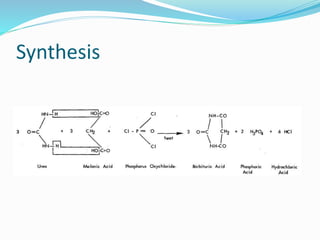
 Barbiturates are derivatives which is synthesized by urea &
malonic acid.
Malonic acid
Barbituric acid
Barbiturates
 It was first prepare by a german scientist Adlof Von Baeyer in
1864,combining urea from animal & malonic acid from apples.
 It was used as sleeping aid(hypnotic only) from 1903-
1950.Since 1950 they have been popular drug in the
UK,these were previously popular drug of abuse.
 It was estimated that 27000 peoples died from
barbiturates overdose in the UK between 1959-1974.
Synthesis
Progressive grade of CNS
depressant
Sedation
Hypnosis
Narcosis
General anaesthesia
Coma
Death
Classification
according to duration of action
.Ultra-short acting Properties
1.Theopental act within second
2.Hexo-barbitone D/A:30 min
Main use:
as I/V anaesthesia
Short acting Properties
1.Pento-barbitone D/A:2 hours
2.Quino-barbitone Main use:
as sedative
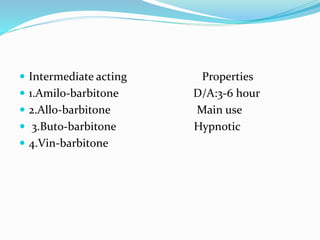
 Intermediate acting Properties
 1.Amilo-barbitone D/A:3-6 hour
 2.Allo-barbitone Main use
 3.Buto-barbitone Hypnotic
 4.Vin-barbitone
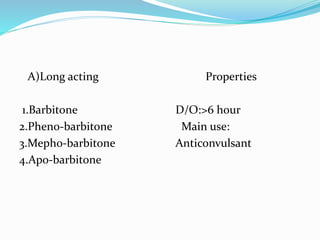
A)Long acting Properties
1.Barbitone D/O:>6 hour
2.Pheno-barbitone Main use:
3.Mepho-barbitone Anticonvulsant
4.Apo-barbitone
According to chemical structure
 1.Oxybarbiturate
 (If oxygen is present)
 2.Thiobarbiturate
 (If oxygen is replaced by sulpher)
Mechanism Of Action
 Barbiturates are general depressants of all cell of the
body,acting as a cellular histotoxic agent.But the cell of the
CNS are more sensitive to barbiturate action.
 1.Barbiturate induce sleep by selectively depressing RAS in
the brain stem.
 2.Barbiturate selectively depress neuronal activity in
posterior hypothalamus,amygdaloid nucleus& limbic
structure (CNS depression)
 3.Barbiturates depress monosynptic pathway of spinal
cord(anticanvulsion)
 4.Barbiturates have also GABA like activity or enhance
GABA activity.
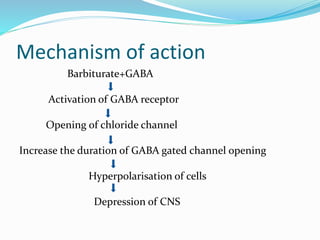
Mechanism of action
Barbiturate+GABA
Activation of GABA receptor
Opening of chloride channel
Increase the duration of GABA gated channel opening
Hyperpolarisation of cells
Depression of CNS
Pharmacological action of
Barbiturates
 A.On CNS
 1.Mild degree of sedation to general anaesthesia.
 2.Anticonvulsant effect.
 3.Respiratory centre depression
 B.On CVS
 1.Hypotension
 2.Decrease heart rate
 3.Circulatory collapse
 C.On liver
 1.Enzyme induction,so increase metabolism of itself &
other drugs.
 2.Stimulate glucoronyl transferase.
 D.On kidney
 1.Antidiuretic effect (increase ADH)
 2.Decrease urinary output by depressing GFR
 E.On eye
 1.No effect (normal dose)
 2.Miosis ( toxic effect)
 F.On GIT
 1.Constipation (on prolong use)
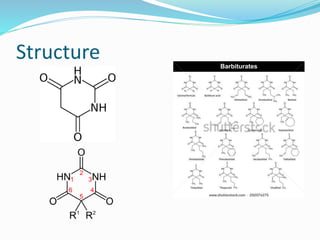
Structure
Indication
1.As anticonvulsant
tetanus
eclampasia,
epilesy
cerebral haemorrhage
convulsant drug poisoning
during surgical anaesthesia
2.As sedative & hypnotic
3.Intravenous anaesthesia
4.Hyperbilurobinaemia & kernicterous
 5.Haemolytic jaundice
 6.Cholestasis
 7.In narco analysis &narcopathy
 8.Identifying the dominant cerebral haemisphere for
speech prior to neuro surgery
 9.Kernicterus in children
Contraindication
 1.Pulmonary insufficiency,pulmonary emphysema
 2.In idiosyncratic patient
 3.Acute intermittent pophyria
 4.In impaired renal function
 5.In hepatic failure
 6.Ptient with suicidal tendency
 7.CCF & hypovolmic shock
Adverse effect of Barbiturates
 1.Pain;Localized or diffuse myalgic,neuralgic or
arthritic pain especially in psychoneurotic patient.
 2.Allergic skin lessions
 3.After effects
 drowsiness
 Hangover effect
 Over excitement
 Night mares & night terrors
 weakness & lethargy
 4.Drug automatism
 5.Enzyme induction (so tolerance develops rapidly)
 6.Idiosyncratic reaction:barbiturates precipitate
attacks of acute porphyria in sussceptible individual.
Doses of barbiturates
 The typical dose of phenobarbital use as
anticonvulsant,,
 For adult:50-100 mg,2/3 times per day
 For newborn:2-4 mg per kilogram of body weight per
day
 For infant:5-8 mg per kilogram pf body weight
 For sedation before surgery 100-200 mg,one hour
before surgery
Commercial brand name available
in BD
 Brand Name Manufacturer
 Barbit Incepta pharma
 Genesia DS Square
 Nelepsin Beximco
 Parotin ACI pharma
 Sedative:Drugs that reduce anxiety,excitement & exert
calming effect without effecting mental function.It is
usually lower or normal dose,not higher dose.
 Hypnotic:Drugs those cause of sleep are called
hypnotic. Usually higher dose not normal or lower
dose
 Sedative given day time hour,they makes patient
drowsy not sleep
 Hypnotics are given at night of sleep

Barbiturate

  • 1.
  • 2.
    CNS depressants  CNSdepressants are substances that can slow brain activity by selectively depressing neuronal activity in posterior hypothalamus.  Barbiturates are derivatives which is synthesized by urea & malonic acid. Malonic acid Barbituric acid Barbiturates  It was first prepare by a german scientist Adlof Von Baeyer in 1864,combining urea from animal & malonic acid from apples.
  • 3.
     It wasused as sleeping aid(hypnotic only) from 1903- 1950.Since 1950 they have been popular drug in the UK,these were previously popular drug of abuse.  It was estimated that 27000 peoples died from barbiturates overdose in the UK between 1959-1974.
  • 4.
  • 5.
    Progressive grade ofCNS depressant Sedation Hypnosis Narcosis General anaesthesia Coma Death
  • 6.
    Classification according to durationof action .Ultra-short acting Properties 1.Theopental act within second 2.Hexo-barbitone D/A:30 min Main use: as I/V anaesthesia
  • 7.
    Short acting Properties 1.Pento-barbitoneD/A:2 hours 2.Quino-barbitone Main use: as sedative
  • 8.
     Intermediate actingProperties  1.Amilo-barbitone D/A:3-6 hour  2.Allo-barbitone Main use  3.Buto-barbitone Hypnotic  4.Vin-barbitone
  • 9.
    A)Long acting Properties 1.BarbitoneD/O:>6 hour 2.Pheno-barbitone Main use: 3.Mepho-barbitone Anticonvulsant 4.Apo-barbitone
  • 10.
    According to chemicalstructure  1.Oxybarbiturate  (If oxygen is present)  2.Thiobarbiturate  (If oxygen is replaced by sulpher)
  • 11.
    Mechanism Of Action Barbiturates are general depressants of all cell of the body,acting as a cellular histotoxic agent.But the cell of the CNS are more sensitive to barbiturate action.  1.Barbiturate induce sleep by selectively depressing RAS in the brain stem.  2.Barbiturate selectively depress neuronal activity in posterior hypothalamus,amygdaloid nucleus& limbic structure (CNS depression)  3.Barbiturates depress monosynptic pathway of spinal cord(anticanvulsion)  4.Barbiturates have also GABA like activity or enhance GABA activity.
  • 12.
    Mechanism of action Barbiturate+GABA Activationof GABA receptor Opening of chloride channel Increase the duration of GABA gated channel opening Hyperpolarisation of cells Depression of CNS
  • 13.
    Pharmacological action of Barbiturates A.On CNS  1.Mild degree of sedation to general anaesthesia.  2.Anticonvulsant effect.  3.Respiratory centre depression  B.On CVS  1.Hypotension  2.Decrease heart rate  3.Circulatory collapse
  • 14.
     C.On liver 1.Enzyme induction,so increase metabolism of itself & other drugs.  2.Stimulate glucoronyl transferase.  D.On kidney  1.Antidiuretic effect (increase ADH)  2.Decrease urinary output by depressing GFR
  • 15.
     E.On eye 1.No effect (normal dose)  2.Miosis ( toxic effect)  F.On GIT  1.Constipation (on prolong use)
  • 16.
  • 17.
    Indication 1.As anticonvulsant tetanus eclampasia, epilesy cerebral haemorrhage convulsantdrug poisoning during surgical anaesthesia 2.As sedative & hypnotic 3.Intravenous anaesthesia 4.Hyperbilurobinaemia & kernicterous
  • 18.
     5.Haemolytic jaundice 6.Cholestasis  7.In narco analysis &narcopathy  8.Identifying the dominant cerebral haemisphere for speech prior to neuro surgery  9.Kernicterus in children
  • 19.
    Contraindication  1.Pulmonary insufficiency,pulmonaryemphysema  2.In idiosyncratic patient  3.Acute intermittent pophyria  4.In impaired renal function  5.In hepatic failure  6.Ptient with suicidal tendency  7.CCF & hypovolmic shock
  • 20.
    Adverse effect ofBarbiturates  1.Pain;Localized or diffuse myalgic,neuralgic or arthritic pain especially in psychoneurotic patient.  2.Allergic skin lessions  3.After effects  drowsiness  Hangover effect  Over excitement  Night mares & night terrors  weakness & lethargy
  • 21.
     4.Drug automatism 5.Enzyme induction (so tolerance develops rapidly)  6.Idiosyncratic reaction:barbiturates precipitate attacks of acute porphyria in sussceptible individual.
  • 22.
    Doses of barbiturates The typical dose of phenobarbital use as anticonvulsant,,  For adult:50-100 mg,2/3 times per day  For newborn:2-4 mg per kilogram of body weight per day  For infant:5-8 mg per kilogram pf body weight  For sedation before surgery 100-200 mg,one hour before surgery
  • 23.
    Commercial brand nameavailable in BD  Brand Name Manufacturer  Barbit Incepta pharma  Genesia DS Square  Nelepsin Beximco  Parotin ACI pharma
  • 24.
     Sedative:Drugs thatreduce anxiety,excitement & exert calming effect without effecting mental function.It is usually lower or normal dose,not higher dose.  Hypnotic:Drugs those cause of sleep are called hypnotic. Usually higher dose not normal or lower dose  Sedative given day time hour,they makes patient drowsy not sleep  Hypnotics are given at night of sleep