



Creative
Mrs. Shamsa Aziz Alshehhi
Design&
Innovation
Materials
Section 1: Mechanical
Properties
Starter
Activity…
Identify the mechanical properties of different materials.
Learning
Outcomes
Understand how mechanical properties affect the
performance of materials.
Demonstrate real-life examples of why material
properties are important
Identify tensile strength, compressive strength, hardness,
toughness, elasticity, plasticity, ductility and malleability
Understand how you can test the mechanical properties of
materials.
1
2
3
4
Because we understand how material behave
It helps to create our technological word.
Make decision about the design selection and use
of materials for specific applications.
Why do we need an understanding
of materials Page 15
Where do materials
come from
Wood
Steel+ironGunpowder
What materials
were used by
armies in the
wars?
Stone
What’s the
properties?
of various materials ?
What’s the
working
characteristic?
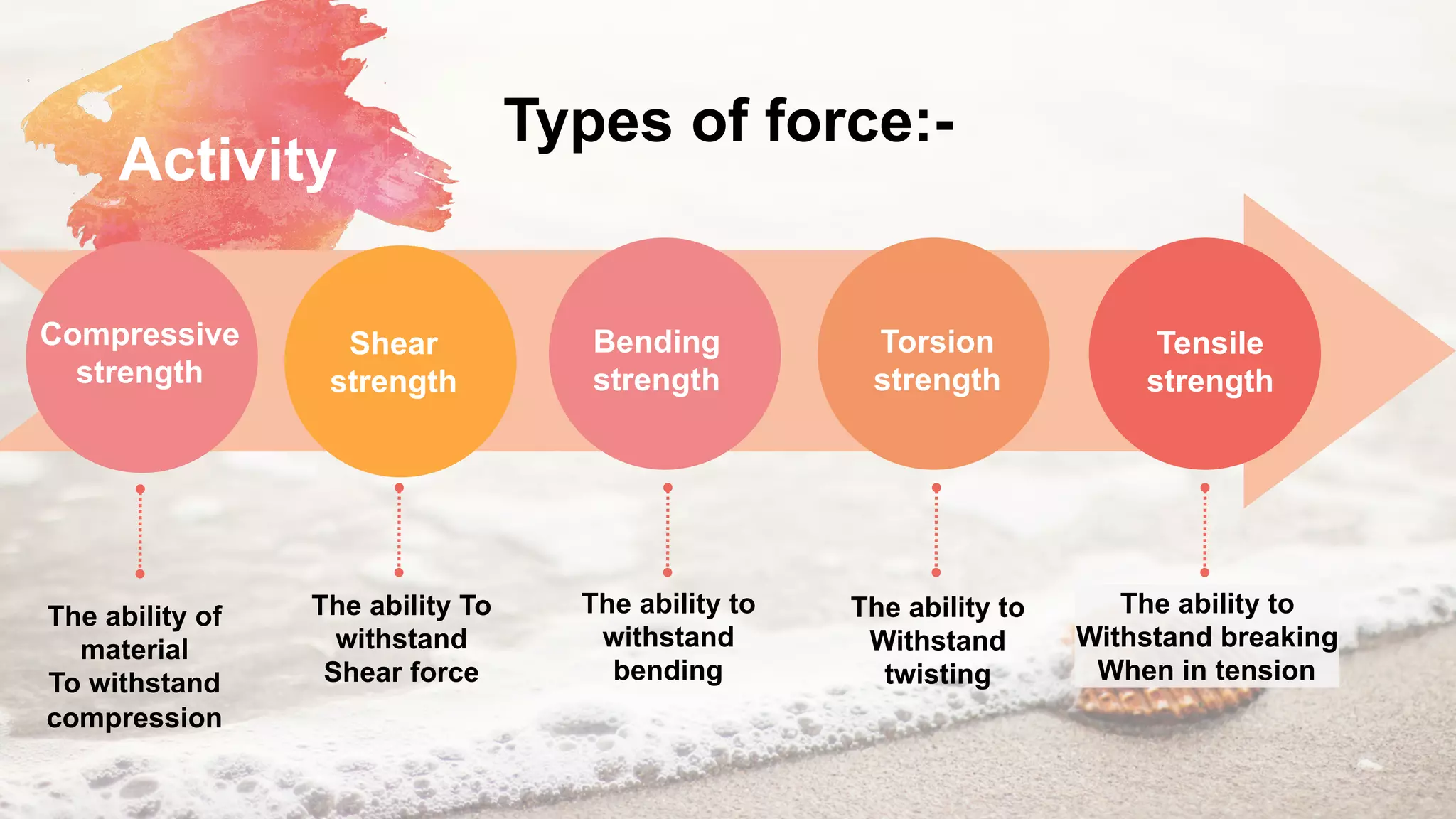
Shear
strength
Bending
strength
Torsion
strength
The ability To
withstand
Shear force
The ability to
withstand
bending
The ability to
Withstand
twisting
The ability to
Withstand breaking
When in tension
Types of force:-
Compressive
strength
Tensile
strength
The ability of
material
To withstand
compression
Activity
Activity
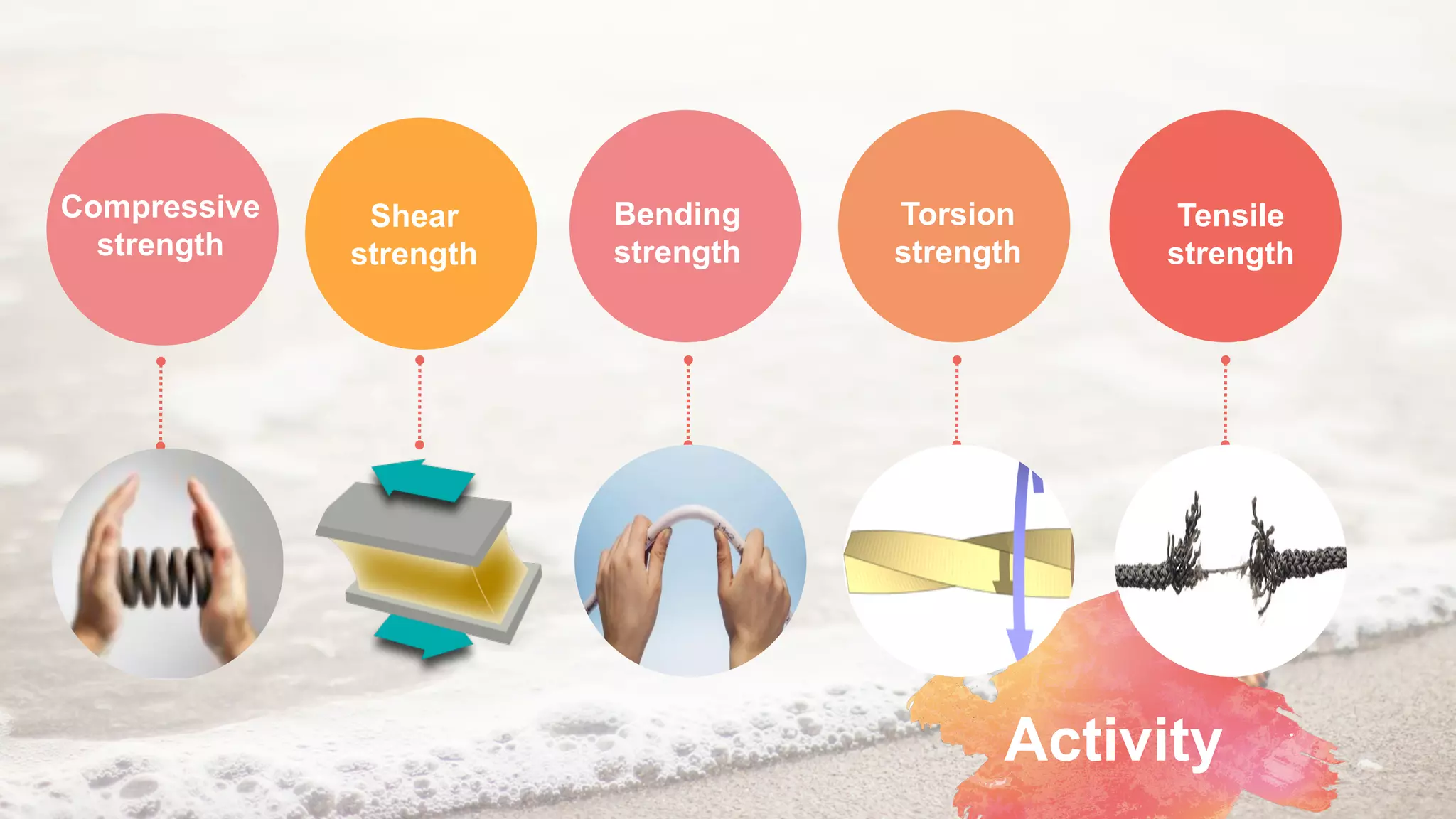
Shear
strength
Bending
strength
Torsion
strength
Compressive
strength
Tensile
strength
Activity 1.1
Page 17
Strength
Hardness
Toughness
Plasticity
/
Malleability
Durability
Ductility
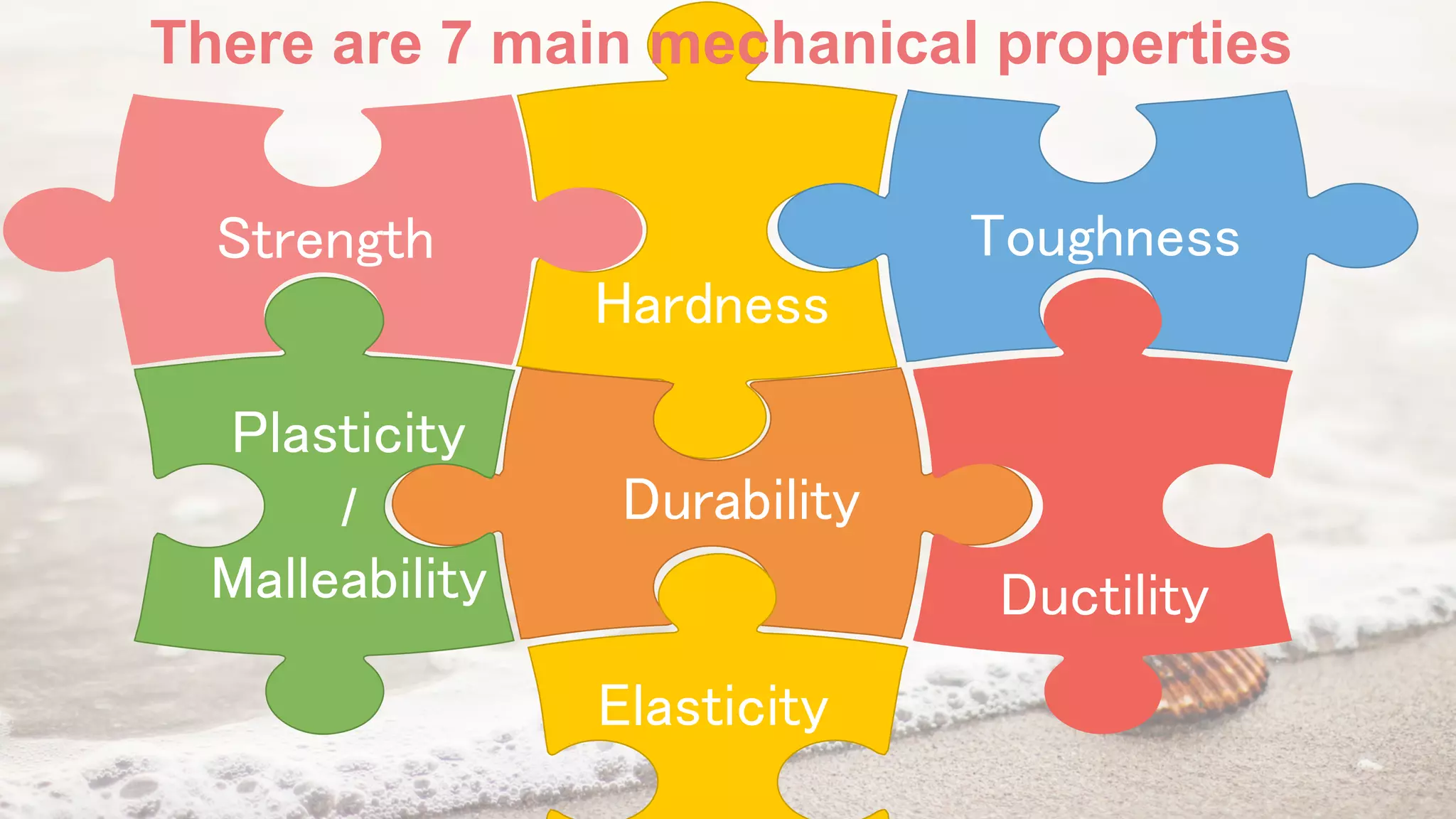
There are 7 main mechanical properties
Elasticity
Hardness
The hardness of a material is its ability to resist
changing shape under force. Hard materials will
resist wear and tear well; they do not scratch or
dent easily. Hard materials, like marble, are used in
many Arabic homes. Why do you think that marble
is a suitable material for the stairs shown in fig.
1.10?
Testing for
Hardness
Engineers use a commonly used test called the
Rock Test to find the hardness of a material.
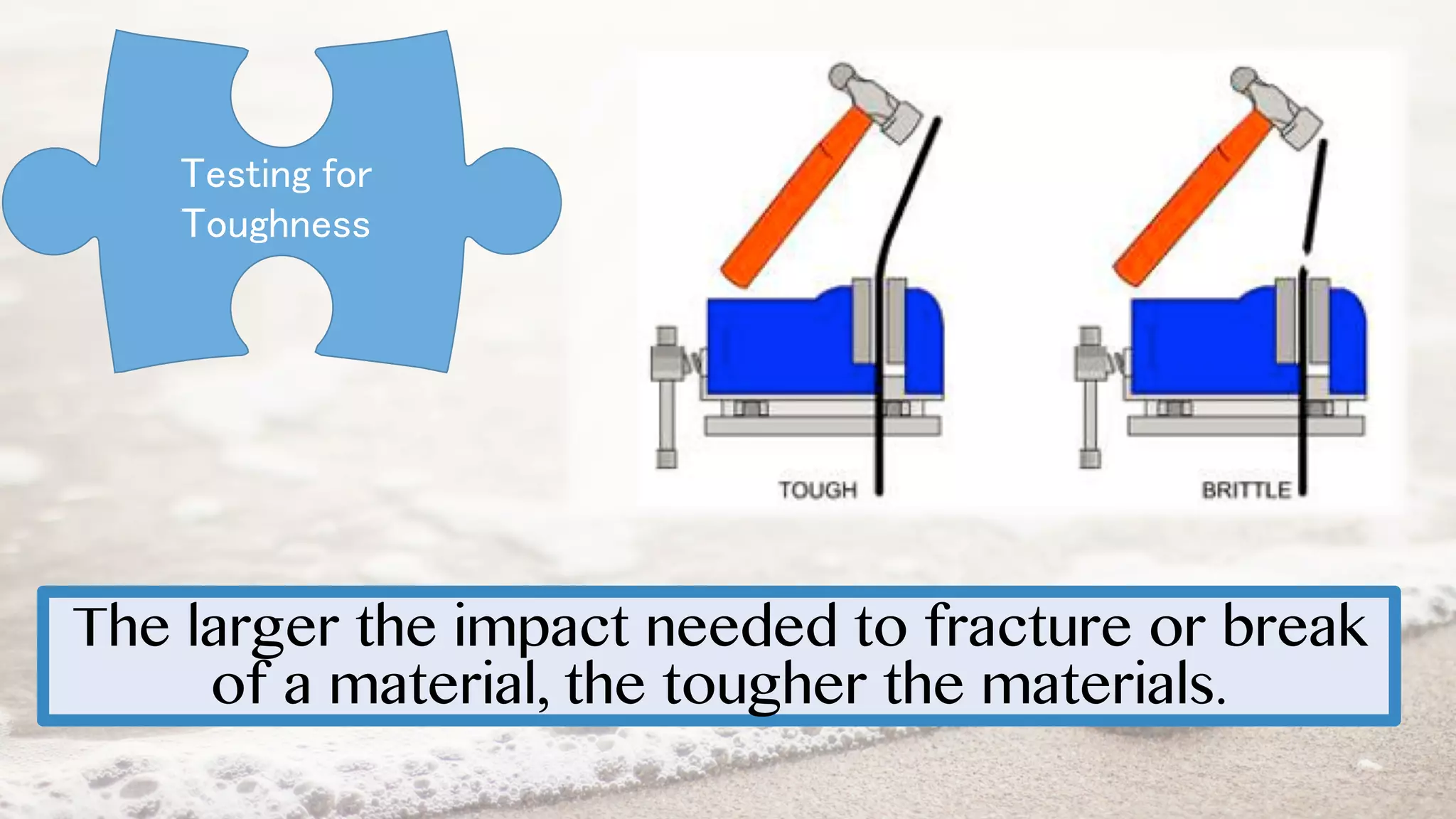
Toughness is the ability of a material to withstand
sudden impact before breaking.
Toughness
The larger the impact needed to fracture or break
of a material, the tougher the materials.
Testing for
Toughness
Testing for
Toughness
The Izod impact test is used to test the toughness
of a materials. The impact required to break the
test piece is used to find the toughness of the
material.
An ability of some materials to bend and flex when
a force is applied, and to return to shape and
Size when those forces are removed. For example,
an elastic band.
Elasticity
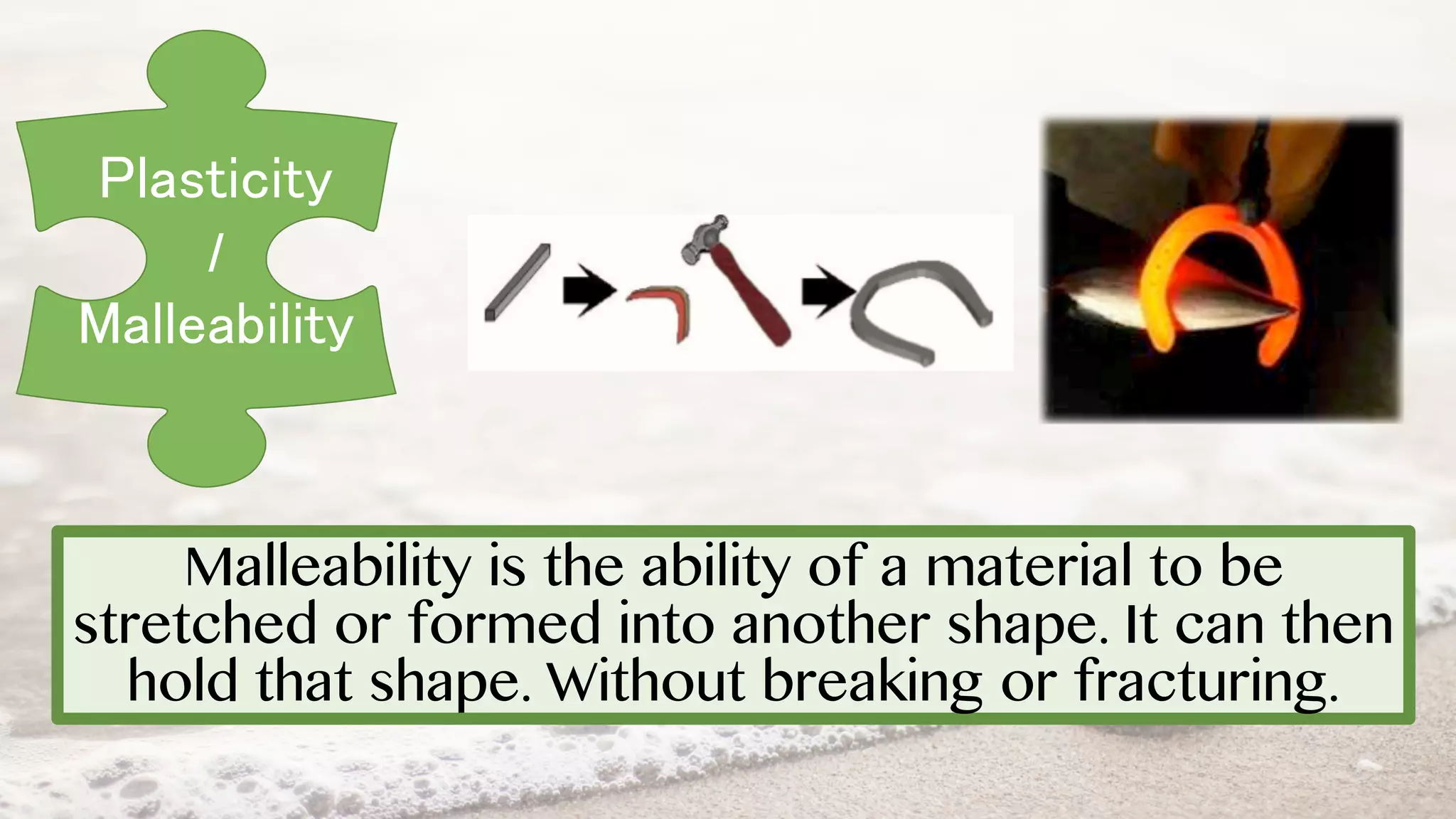
Malleability is the ability of a material to be
stretched or formed into another shape. It can then
hold that shape. Without breaking or fracturing.
Plasticity
/
Malleability
Durability
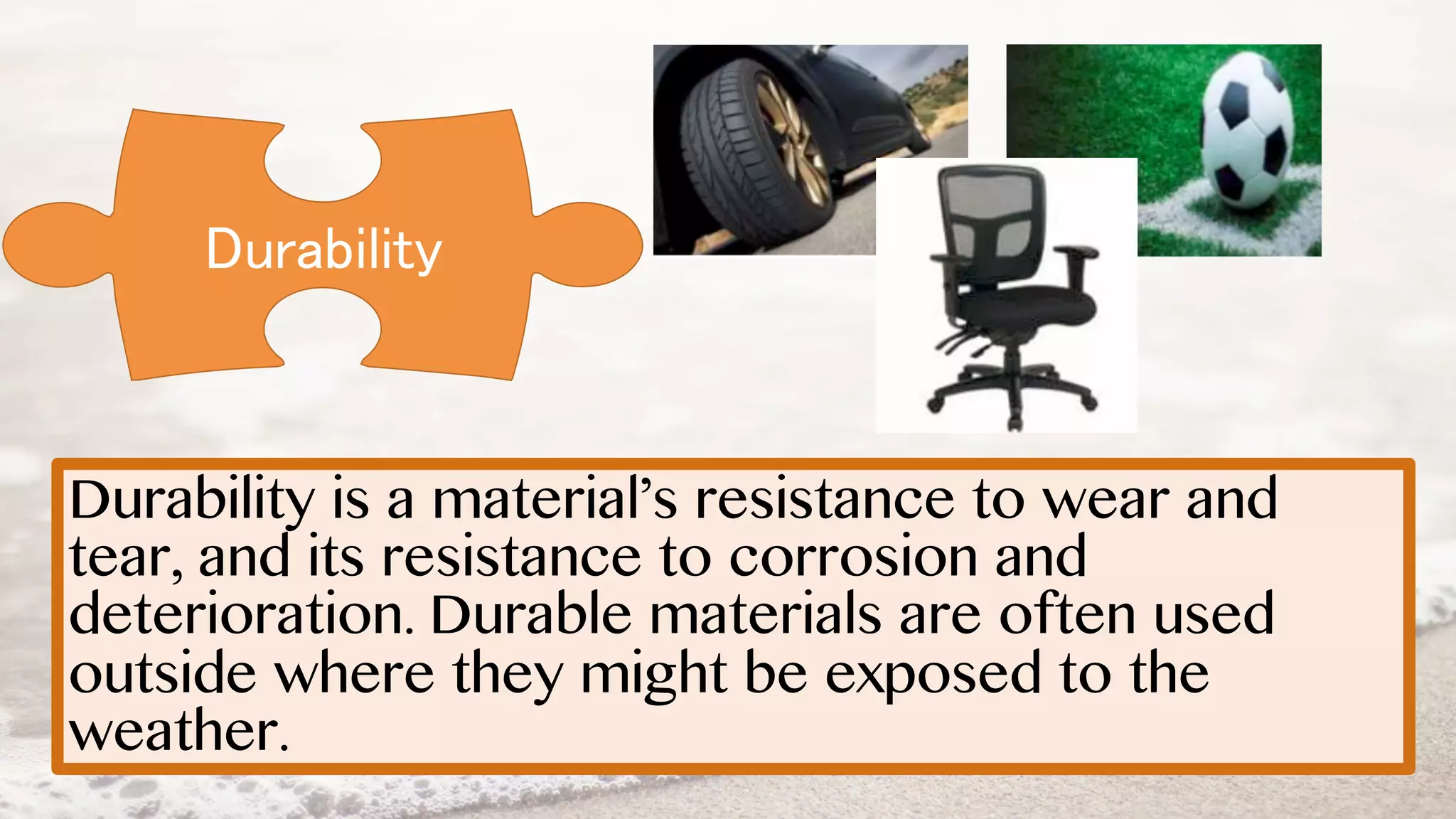
Durability is a material’s resistance to wear and
tear, and its resistance to corrosion and
deterioration. Durable materials are often used
outside where they might be exposed to the
weather.
Ductility indicates how well a material can be
stretched. A ductile material is one that changes
shape easily, under loading conditions, without
breaking.
Ductility
Steel and copper are ductile materials
Activity 1.3
Page 18
Open the book page 15
Do you
have any
question?

Section1; Mechanical Properties