



Creative Design & Innovation
Unit 2: Mechanical System
Section 2: Basic of Hydraulic System
Mrs. Shamsa Aziz
Alshehhi
OutcomesUnderstand a basic hydraulic system.1
Learning
List and state the purpose of the basic components
of a hydraulic system.
Understand the function of a hydraulic pump.
Differentiate between the hand pump and driven pump.
3
2
4
PART
Every hydraulic system
has a minimum number
of basic components.
Regardless of its
function and design.
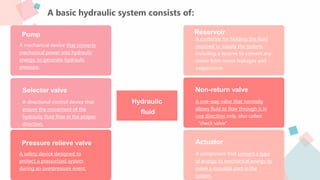
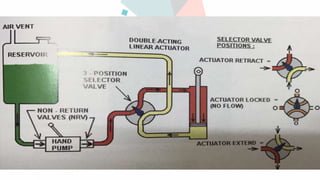
A basic hydraulic system consists of:
A mechanical device that converts
mechanical power into hydraulic
energy, to generate hydraulic
pressure.
Pump
A container for holding the fluid
required to supply the system,
including a reserve to convert any
losses from minor leakages and
evaporation.
Reservoir
A directional control device that
ensure the movement of the
hydraulic fluid flow in the proper
direction.
Selector valve
A one-way valve that normally
allows fluid to flow through it in
one direction only, also called
“check valve”
Non-return valve
A safety device designed to
protect a pressurized system
during an overpressure event.
Pressure relieve valve
A component that convert a type
of energy to mechanical energy to
move a movable part in the
system.
Actuator
Hydraulic
fluid
PART
PART
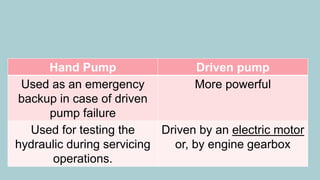
Hand Pump Driven pump
Used as an emergency
backup in case of driven
pump failure
More powerful
Used for testing the
hydraulic during servicing
operations.
Driven by an electric motor
or, by engine gearbox
THANK YOU!

Section 2 basic hydraulic system

  • 1.
    Creative Design &Innovation Unit 2: Mechanical System Section 2: Basic of Hydraulic System Mrs. Shamsa Aziz Alshehhi
  • 2.
    OutcomesUnderstand a basichydraulic system.1 Learning List and state the purpose of the basic components of a hydraulic system. Understand the function of a hydraulic pump. Differentiate between the hand pump and driven pump. 3 2 4
  • 3.
  • 4.
    Every hydraulic system hasa minimum number of basic components. Regardless of its function and design.
  • 5.
    A basic hydraulicsystem consists of: A mechanical device that converts mechanical power into hydraulic energy, to generate hydraulic pressure. Pump A container for holding the fluid required to supply the system, including a reserve to convert any losses from minor leakages and evaporation. Reservoir A directional control device that ensure the movement of the hydraulic fluid flow in the proper direction. Selector valve A one-way valve that normally allows fluid to flow through it in one direction only, also called “check valve” Non-return valve A safety device designed to protect a pressurized system during an overpressure event. Pressure relieve valve A component that convert a type of energy to mechanical energy to move a movable part in the system. Actuator Hydraulic fluid
  • 6.
  • 8.
  • 9.
    Hand Pump Drivenpump Used as an emergency backup in case of driven pump failure More powerful Used for testing the hydraulic during servicing operations. Driven by an electric motor or, by engine gearbox
  • 10.