Blood Supply -Scaphoid
And Its Clinical
Importance
Moderator Maj.Dr Bishnu B. Thapa

Dr Gajendra Mani Shah
MS-OrthoResident
1st year NAMS

S
General features

S Forms radial part of the carpus.
S Lies obliquely 45 degree to longitudinal axes to 2 rows.
S Articulates with 5 bones…..

S Since it crosses two rows of carpus, it is more susceptible to

fracture.
Blood Supply

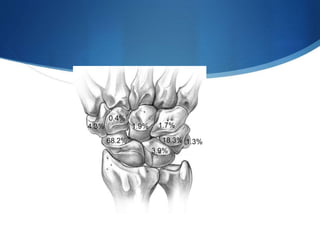
S Obletz & halbestin’s
1. 67% of scaphoid have arterial foramina throughout their length
2. 13%have blood supply predominately in the distal third.
3. 20 %have most foramina in the waist and one foramina near the

proximal pole.
S Talesnic & kelly
1. Lateral volar group
2. Dorsal group

3. Distal group
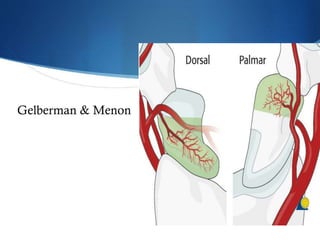
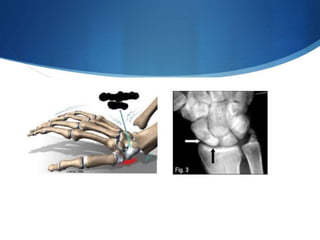
Gelberman & Menon
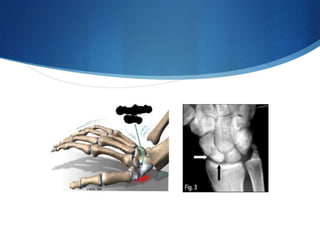
Mechanism of Injury

a. Fall onto outstretched hand
b. Forced dorsiflexion (usually beyond 95 degrees extension),
radially deviated wrist with intercarpal supination.
c. Palmar flexion in 3 % of cases (Leslie & Dickenson; Clay et al)
Clinical evaluation
(high diagnostic sensitivity, specificity approaches 74-80 %)

a. Wrist pain
b. Swelling and fullness off anatomical snuffbox - indicates effusion
c. Tender palpation of Scaphoid tubercle and anatomical snuffbox
d. Pronation followed by ulnar deviation cause pain
e. Slight reduction in range of motion
f. Reduced grip strength
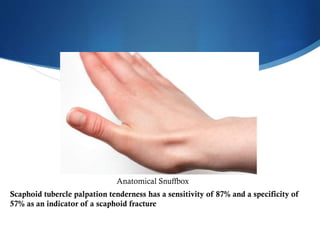
Anatomical Snuffbox
Scaphoid tubercle palpation tenderness has a sensitivity of 87% and a specificity of
57% as an indicator of a scaphoid fracture
g. Provocative tests
S Scaphoid lift test: painful dorsal and volar ballottement.
S Watson test: painful dorsal Scaphoid displacement as the wrist is

moved from ulnar to radial deviation with compression of the
tuberosity.

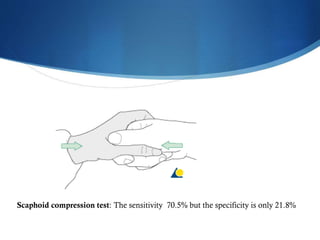
S Scaphoid compression test: longitudinal force along 1 metacarpal

elicits pain.

S Resisted pronation causes pain.
Scaphoid compression test: The sensitivity 70.5% but the specificity is only 21.8%
Radiographic evaluation
(70 % sensitivity)
a. Standard PA
b. Lateral (wrist neutral)
c. 45 degree pronated oblique (STTJ)

d. 45 degree supinated oblique (Radio-scaphoid joint)
e. Scaphoid view (PA with ulnar deviation)
f. Others:
S PA with wrist in slight extension (Ziter view)
S AP with clenched fist to detect a ligamentous injury

Initial films non-diagnostic in 15-25 % of cases.
Other special investigations

S a. Technetium bone scan (92-95 % sensitivity; 60-95 %

specificity)
S b. MRI (90-100 % sensitivity; 90% specificity - false positives

because of bone bruises)
c. CT
S i. Less costly and readily available
S ii. Clearer visualization of fracture displacement

d. Ultrasound evaluation
Classification
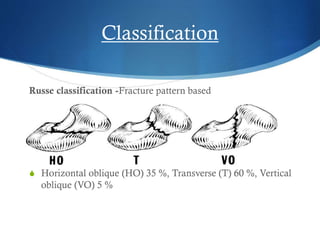
Russe classification -Fracture pattern based

S Horizontal oblique (HO) 35 %, Transverse (T) 60 %, Vertical

oblique (VO) 5 %
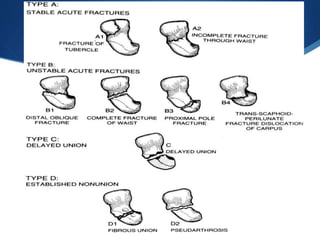
S Herbert classification of Scaphoid fractures

Displacement based (stable or unstable)
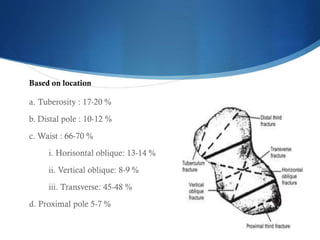
Based on location

a. Tuberosity : 17-20 %
b. Distal pole : 10-12 %
c. Waist : 66-70 %
i. Horisontal oblique: 13-14 %

ii. Vertical oblique: 8-9 %
iii. Transverse: 45-48 %
d. Proximal pole 5-7 %
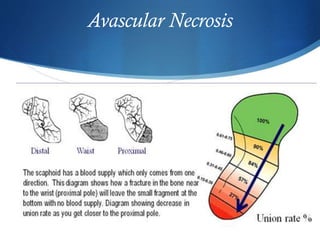
Avascular Necrosis
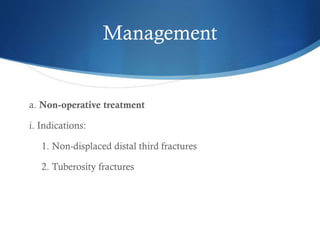
Management

a. Non-operative treatment
i. Indications:
1. Non-displaced distal third fractures

2. Tuberosity fractures
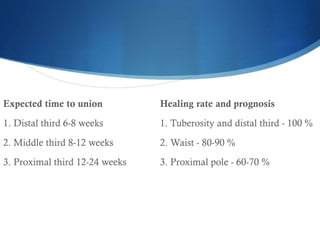
Expected time to union

Healing rate and prognosis

1. Distal third 6-8 weeks

1. Tuberosity and distal third - 100 %

2. Middle third 8-12 weeks

2. Waist - 80-90 %

3. Proximal third 12-24 weeks

3. Proximal pole - 60-70 %
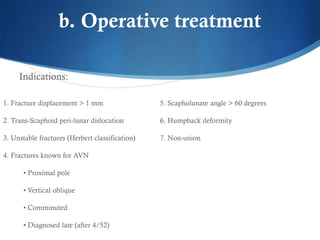
b. Operative treatment
Indications:
1. Fracture displacement > 1 mm

5. Scapholunate angle > 60 degrees

2. Trans-Scaphoid peri-lunar dislocation

6. Humpback deformity

3. Unstable fractures (Herbert classification)

7. Non-union

4. Fractures known for AVN

• Proximal pole
• Vertical oblique
• Comminuted

• Diagnosed late (after 4/52)
References

1.

Apley`s System of Orthopaedics and Fractures

2.

Miller`s Review of Orthopaedics

3.

Campbell`s Operative Orthopaedics

4.

Chapman`s Orthopaedic surgery

5.

Internet

Scaphoid fracture gaju

  • 1.
    Blood Supply -Scaphoid AndIts Clinical Importance Moderator Maj.Dr Bishnu B. Thapa Dr Gajendra Mani Shah MS-OrthoResident 1st year NAMS S
  • 2.
    General features S Formsradial part of the carpus. S Lies obliquely 45 degree to longitudinal axes to 2 rows. S Articulates with 5 bones….. S Since it crosses two rows of carpus, it is more susceptible to fracture.
  • 5.
    Blood Supply S Obletz& halbestin’s 1. 67% of scaphoid have arterial foramina throughout their length 2. 13%have blood supply predominately in the distal third. 3. 20 %have most foramina in the waist and one foramina near the proximal pole.
  • 6.
    S Talesnic &kelly 1. Lateral volar group 2. Dorsal group 3. Distal group
  • 7.
  • 8.
    Mechanism of Injury a.Fall onto outstretched hand b. Forced dorsiflexion (usually beyond 95 degrees extension), radially deviated wrist with intercarpal supination. c. Palmar flexion in 3 % of cases (Leslie & Dickenson; Clay et al)
  • 10.
    Clinical evaluation (high diagnosticsensitivity, specificity approaches 74-80 %) a. Wrist pain b. Swelling and fullness off anatomical snuffbox - indicates effusion c. Tender palpation of Scaphoid tubercle and anatomical snuffbox d. Pronation followed by ulnar deviation cause pain e. Slight reduction in range of motion f. Reduced grip strength
  • 11.
    Anatomical Snuffbox Scaphoid tuberclepalpation tenderness has a sensitivity of 87% and a specificity of 57% as an indicator of a scaphoid fracture
  • 12.
    g. Provocative tests SScaphoid lift test: painful dorsal and volar ballottement. S Watson test: painful dorsal Scaphoid displacement as the wrist is moved from ulnar to radial deviation with compression of the tuberosity. S Scaphoid compression test: longitudinal force along 1 metacarpal elicits pain. S Resisted pronation causes pain.
  • 13.
    Scaphoid compression test:The sensitivity 70.5% but the specificity is only 21.8%
  • 14.
    Radiographic evaluation (70 %sensitivity) a. Standard PA b. Lateral (wrist neutral) c. 45 degree pronated oblique (STTJ) d. 45 degree supinated oblique (Radio-scaphoid joint) e. Scaphoid view (PA with ulnar deviation) f. Others: S PA with wrist in slight extension (Ziter view) S AP with clenched fist to detect a ligamentous injury Initial films non-diagnostic in 15-25 % of cases.
  • 15.
    Other special investigations Sa. Technetium bone scan (92-95 % sensitivity; 60-95 % specificity) S b. MRI (90-100 % sensitivity; 90% specificity - false positives because of bone bruises)
  • 16.
    c. CT S i.Less costly and readily available S ii. Clearer visualization of fracture displacement d. Ultrasound evaluation
  • 17.
    Classification Russe classification -Fracturepattern based S Horizontal oblique (HO) 35 %, Transverse (T) 60 %, Vertical oblique (VO) 5 %
  • 18.
    S Herbert classificationof Scaphoid fractures Displacement based (stable or unstable)
  • 20.
    Based on location a.Tuberosity : 17-20 % b. Distal pole : 10-12 % c. Waist : 66-70 % i. Horisontal oblique: 13-14 % ii. Vertical oblique: 8-9 % iii. Transverse: 45-48 % d. Proximal pole 5-7 %
  • 21.
  • 22.
    Management a. Non-operative treatment i.Indications: 1. Non-displaced distal third fractures 2. Tuberosity fractures
  • 23.
    Expected time tounion Healing rate and prognosis 1. Distal third 6-8 weeks 1. Tuberosity and distal third - 100 % 2. Middle third 8-12 weeks 2. Waist - 80-90 % 3. Proximal third 12-24 weeks 3. Proximal pole - 60-70 %
  • 24.
    b. Operative treatment Indications: 1.Fracture displacement > 1 mm 5. Scapholunate angle > 60 degrees 2. Trans-Scaphoid peri-lunar dislocation 6. Humpback deformity 3. Unstable fractures (Herbert classification) 7. Non-union 4. Fractures known for AVN • Proximal pole • Vertical oblique • Comminuted • Diagnosed late (after 4/52)
  • 26.
    References 1. Apley`s System ofOrthopaedics and Fractures 2. Miller`s Review of Orthopaedics 3. Campbell`s Operative Orthopaedics 4. Chapman`s Orthopaedic surgery 5. Internet