Periprosthetic Fracture
Dr. Jatinder S. Luthra
(MS , DNB, MRCS)
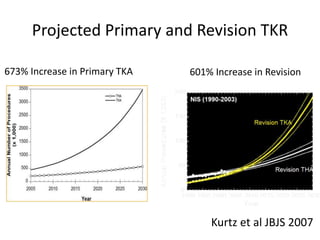
Projected Primary and Revision TKR
673% Increase in Primary TKA
Kurtz et al JBJS 2007
601% Increase in Revision
Oman perspective
Incidence
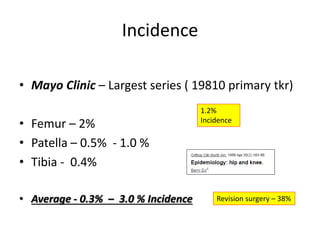
โ€ข Mayo Clinic โ€“ Largest series ( 19810 primary tkr)
โ€ข Femur โ€“ 2%
โ€ข Patella โ€“ 0.5% - 1.0 %
โ€ข Tibia - 0.4%
โ€ข Average - 0.3% โ€“ 3.0 % Incidence
1.2%
Incidence
Revision surgery โ€“ 38%
Incidence
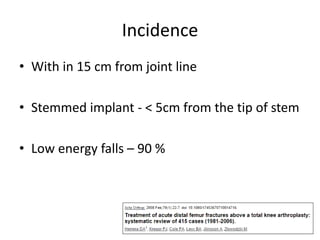
โ€ข With in 15 cm from joint line
โ€ข Stemmed implant - < 5cm from the tip of stem
โ€ข Low energy falls โ€“ 90 %
Risk Factors
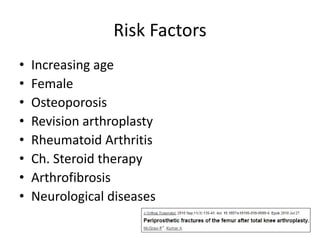
โ€ข Increasing age
โ€ข Female
โ€ข Osteoporosis
โ€ข Revision arthroplasty
โ€ข Rheumatoid Arthritis
โ€ข Ch. Steroid therapy
โ€ข Arthrofibrosis
โ€ข Neurological diseases
Risk Factors
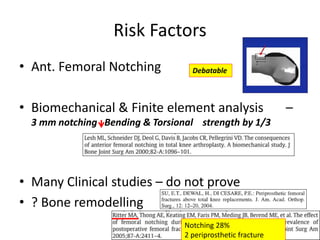
โ€ข Ant. Femoral Notching
โ€ข Biomechanical & Finite element analysis โ€“
3 mm notching Bending & Torsional strength by 1/3
โ€ข Many Clinical studies โ€“ do not prove
โ€ข ? Bone remodelling
Debatable
Notching 28%
2 periprosthetic fracture
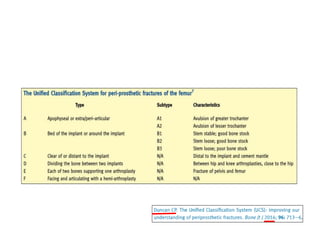
Classification
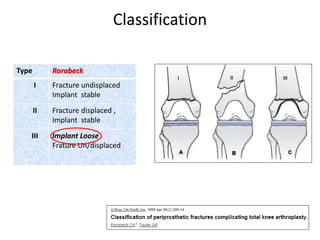
Type Rorabeck
I Fracture undisplaced
Implant stable
II Fracture displaced ,
Implant stable
III Implant Loose
Frature Un/displaced
Classification
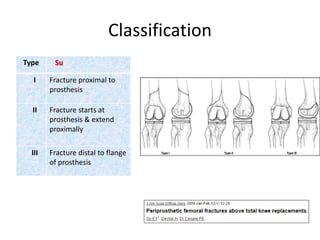
Type Su
I Fracture proximal to
prosthesis
II Fracture starts at
prosthesis & extend
proximally
III Fracture distal to flange
of prosthesis
Classification
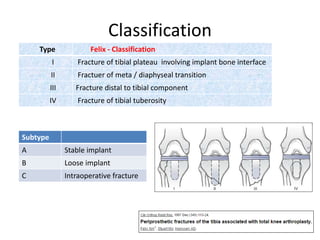
Type Felix - Classification
I Fracture of tibial plateau involving implant bone interface
II Fractuer of meta / diaphyseal transition
III Fracture distal to tibial component
IV Fracture of tibial tuberosity
Subtype
A Stable implant
B Loose implant
C Intraoperative fracture
Classification
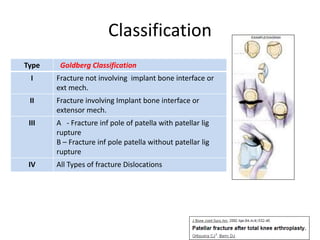
Type Goldberg Classification
I Fracture not involving implant bone interface or
ext mech.
II Fracture involving Implant bone interface or
extensor mech.
III A - Fracture inf pole of patella with patellar lig
rupture
B โ€“ Fracture inf pole patella without patellar lig
rupture
IV All Types of fracture Dislocations
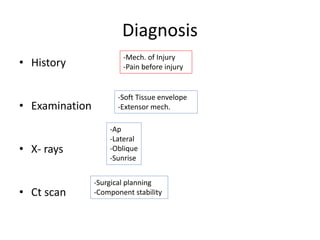
Diagnosis
โ€ข History
โ€ข Examination
โ€ข X- rays
โ€ข Ct scan
-Mech. of Injury
-Pain before injury
-Soft Tissue envelope
-Extensor mech.
-Ap
-Lateral
-Oblique
-Sunrise
-Surgical planning
-Component stability
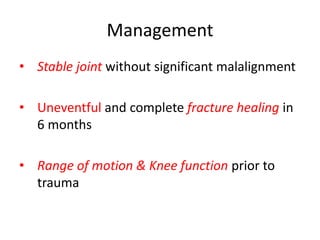
Management
โ€ข Stable joint without significant malalignment
โ€ข Uneventful and complete fracture healing in
6 months
โ€ข Range of motion & Knee function prior to
trauma
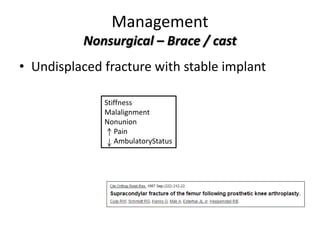
Management
Nonsurgical โ€“ Brace / cast
โ€ข Undisplaced fracture with stable implant
Stiffness
Malalignment
Nonunion
Pain
AmbulatoryStatus
Management
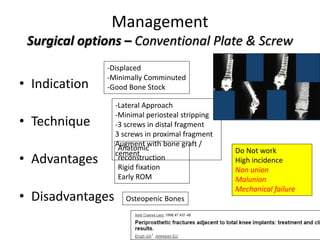
Surgical options โ€“ Conventional Plate & Screw
โ€ข Indication
โ€ข Technique
โ€ข Advantages
โ€ข Disadvantages
-Displaced
-Minimally Comminuted
-Good Bone Stock
-Lateral Approach
-Minimal periosteal stripping
-3 screws in distal fragment
3 screws in proximal fragment
Augment with bone graft /
cement
Anatomic
reconstruction
Rigid fixation
Early ROM
Osteopenic Bones
Do Not work
High incidence
Non union
Malunion
Mechanical failure
Management
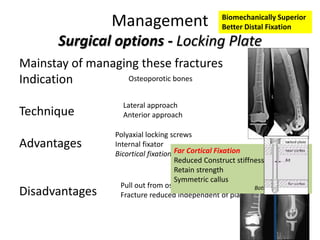
Surgical options - Locking Plate
Mainstay of managing these fractures
Indication
Technique
Advantages
Disadvantages
Lateral approach
Anterior approach
Polyaxial locking screws
Internal fixator
Bicortical fixation
Pull out from osteoporotic bone
Fracture reduced independent of plate โ€“ mal-aligned
Osteoporotic bones
Biomechanically Superior
Better Distal Fixation
Far Cortical Fixation
Reduced Construct stiffness
Retain strength
Symmetric callus
Bottlang et JBJS 2010
Management
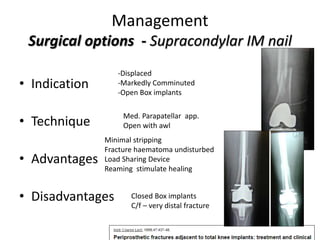
Surgical options - Supracondylar IM nail
โ€ข Indication
โ€ข Technique
โ€ข Advantages
โ€ข Disadvantages
-Displaced
-Markedly Comminuted
-Open Box implants
Med. Parapatellar app.
Open with awl
Minimal stripping
Fracture haematoma undisturbed
Load Sharing Device
Reaming stimulate healing
Closed Box implants
C/f โ€“ very distal fracture
Evidence
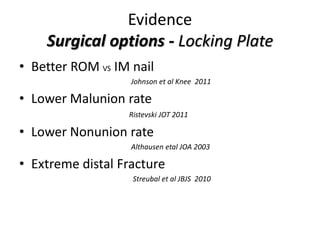
Surgical options - Locking Plate
โ€ข Better ROM VS IM nail
Johnson et al Knee 2011
โ€ข Lower Malunion rate
Ristevski JOT 2011
โ€ข Lower Nonunion rate
Althausen etal JOA 2003
โ€ข Extreme distal Fracture
Streubal et al JBJS 2010
Evidence
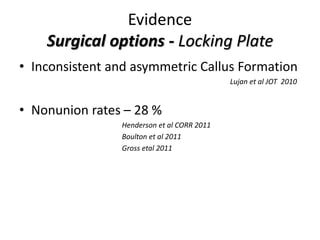
Surgical options - Locking Plate
โ€ข Inconsistent and asymmetric Callus Formation
Lujan et al JOT 2010
โ€ข Nonunion rates โ€“ 28 %
Henderson et al CORR 2011
Boulton et al 2011
Gross etal 2011
Evidence
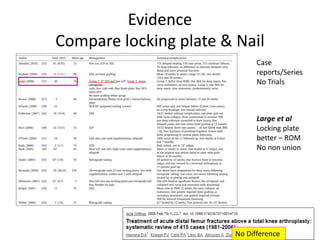
Compare locking plate & Nail
Case
reports/Series
No Trials
Large et al
Locking plate
better โ€“ ROM
No non union
No Difference
Management
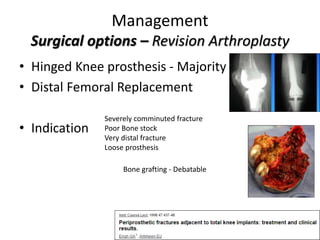
Surgical options โ€“ Revision Arthroplasty
โ€ข Hinged Knee prosthesis - Majority
โ€ข Distal Femoral Replacement
โ€ข Indication
Severely comminuted fracture
Poor Bone stock
Very distal fracture
Loose prosthesis
Bone grafting - Debatable
Management - Algorithm
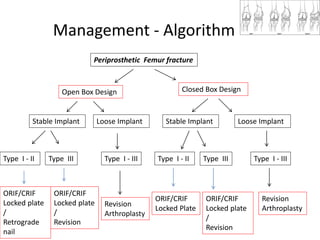
Periprosthetic Femur fracture
Open Box Design Closed Box Design
Stable Implant Loose Implant Stable Implant Loose Implant
Type I - II Type III Type I - III Type I - II Type III Type I - III
ORIF/CRIF
Locked plate
/
Retrograde
nail
ORIF/CRIF
Locked plate
/
Revision
Revision
Arthroplasty
Revision
Arthroplasty
ORIF/CRIF
Locked Plate
ORIF/CRIF
Locked plate
/
Revision
Management - Algorithm
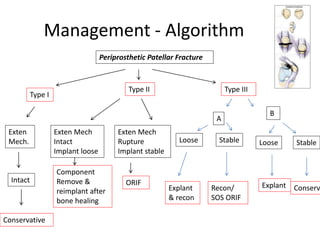
Periprosthetic Patellar Fracture
Type I
Type II Type III
Exten
Mech.
Exten Mech
Intact
Implant loose
Intact
Conservative
Component
Remove &
reimplant after
bone healing
Exten Mech
Rupture
Implant stable
ORIF
A
B
Loose Stable Loose Stable
Explant
& recon
Recon/
SOS ORIF
Explant Conserv
Management - Algorithm
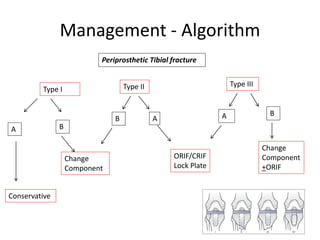
Periprosthetic Tibial fracture
Type I Type II Type III
A B
B A A B
Conservative
Change
Component
ORIF/CRIF
Lock Plate
Change
Component
+ORIF
Outcome
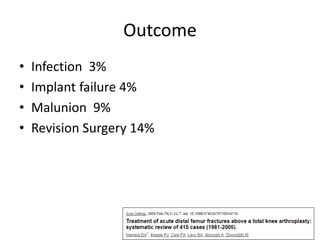
โ€ข Infection 3%
โ€ข Implant failure 4%
โ€ข Malunion 9%
โ€ข Revision Surgery 14%
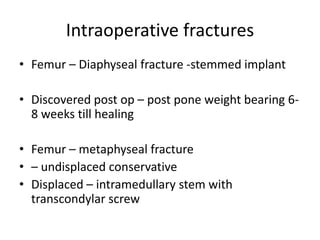
Intraoperative fractures
โ€ข Femur โ€“ Diaphyseal fracture -stemmed implant
โ€ข Discovered post op โ€“ post pone weight bearing 6-
8 weeks till healing
โ€ข Femur โ€“ metaphyseal fracture
โ€ข โ€“ undisplaced conservative
โ€ข Displaced โ€“ intramedullary stem with
transcondylar screw
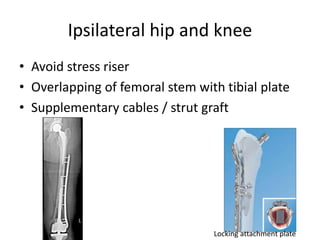
Ipsilateral hip and knee
โ€ข Avoid stress riser
โ€ข Overlapping of femoral stem with tibial plate
โ€ข Supplementary cables / strut graft
Locking attachment plate
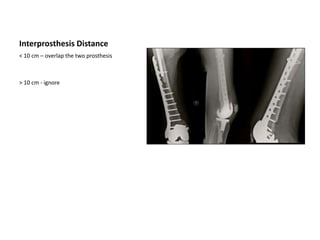
Interprosthesis Distance
< 10 cm โ€“ overlap the two prosthesis
> 10 cm - ignore
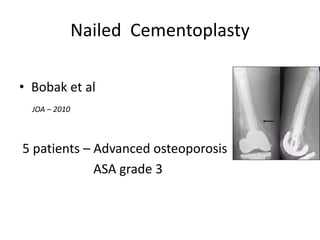
Nailed Cementoplasty
โ€ข Bobak et al
JOA โ€“ 2010
5 patients โ€“ Advanced osteoporosis
ASA grade 3
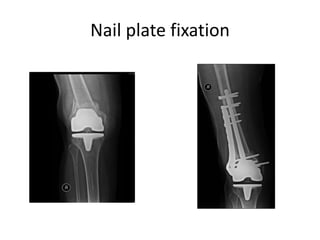
Nail plate fixation
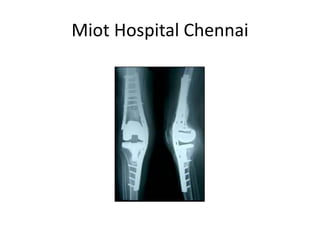
Miot Hospital Chennai
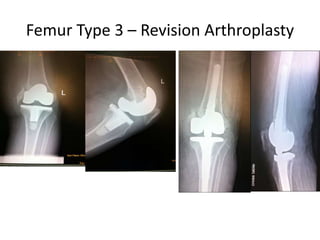
Femur Type 3 โ€“ Revision Arthroplasty
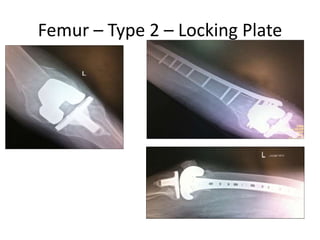
Femur โ€“ Type 2 โ€“ Locking Plate
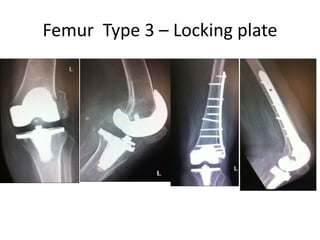
Femur Type 3 โ€“ Locking plate
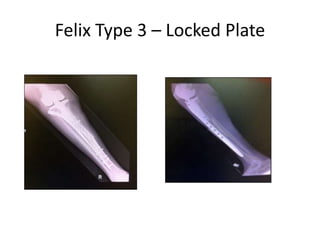
Felix Type 3 โ€“ Locked Plate
Summary
โ€ข Anterior fem. Notching โ€“ Femoral stem extension
โ€ข Avoid eccentric box cut
โ€ข Use stem to augment โ€“ wedges / graft
โ€ข Bypass the stress risers with stems โ€“ 2 canal
diameters
โ€ข Revision surgery -prosthesis removal in gentle
stepwise manner
โ€ข Tibial component removal โ€“ oscillating saw
โ€ข Severe osteopenia / unsteady gait โ€“ use a
cane/walker

Periprosthetic fracture

  • 1.
    Periprosthetic Fracture Dr. JatinderS. Luthra (MS , DNB, MRCS)
  • 2.
    Projected Primary andRevision TKR 673% Increase in Primary TKA Kurtz et al JBJS 2007 601% Increase in Revision
  • 3.
  • 4.
    Incidence โ€ข Mayo Clinicโ€“ Largest series ( 19810 primary tkr) โ€ข Femur โ€“ 2% โ€ข Patella โ€“ 0.5% - 1.0 % โ€ข Tibia - 0.4% โ€ข Average - 0.3% โ€“ 3.0 % Incidence 1.2% Incidence Revision surgery โ€“ 38%
  • 5.
    Incidence โ€ข With in15 cm from joint line โ€ข Stemmed implant - < 5cm from the tip of stem โ€ข Low energy falls โ€“ 90 %
  • 6.
    Risk Factors โ€ข Increasingage โ€ข Female โ€ข Osteoporosis โ€ข Revision arthroplasty โ€ข Rheumatoid Arthritis โ€ข Ch. Steroid therapy โ€ข Arthrofibrosis โ€ข Neurological diseases
  • 7.
    Risk Factors โ€ข Ant.Femoral Notching โ€ข Biomechanical & Finite element analysis โ€“ 3 mm notching Bending & Torsional strength by 1/3 โ€ข Many Clinical studies โ€“ do not prove โ€ข ? Bone remodelling Debatable Notching 28% 2 periprosthetic fracture
  • 8.
    Classification Type Rorabeck I Fractureundisplaced Implant stable II Fracture displaced , Implant stable III Implant Loose Frature Un/displaced
  • 9.
    Classification Type Su I Fractureproximal to prosthesis II Fracture starts at prosthesis & extend proximally III Fracture distal to flange of prosthesis
  • 10.
    Classification Type Felix -Classification I Fracture of tibial plateau involving implant bone interface II Fractuer of meta / diaphyseal transition III Fracture distal to tibial component IV Fracture of tibial tuberosity Subtype A Stable implant B Loose implant C Intraoperative fracture
  • 11.
    Classification Type Goldberg Classification IFracture not involving implant bone interface or ext mech. II Fracture involving Implant bone interface or extensor mech. III A - Fracture inf pole of patella with patellar lig rupture B โ€“ Fracture inf pole patella without patellar lig rupture IV All Types of fracture Dislocations
  • 13.
    Diagnosis โ€ข History โ€ข Examination โ€ขX- rays โ€ข Ct scan -Mech. of Injury -Pain before injury -Soft Tissue envelope -Extensor mech. -Ap -Lateral -Oblique -Sunrise -Surgical planning -Component stability
  • 14.
    Management โ€ข Stable jointwithout significant malalignment โ€ข Uneventful and complete fracture healing in 6 months โ€ข Range of motion & Knee function prior to trauma
  • 15.
    Management Nonsurgical โ€“ Brace/ cast โ€ข Undisplaced fracture with stable implant Stiffness Malalignment Nonunion Pain AmbulatoryStatus
  • 16.
    Management Surgical options โ€“Conventional Plate & Screw โ€ข Indication โ€ข Technique โ€ข Advantages โ€ข Disadvantages -Displaced -Minimally Comminuted -Good Bone Stock -Lateral Approach -Minimal periosteal stripping -3 screws in distal fragment 3 screws in proximal fragment Augment with bone graft / cement Anatomic reconstruction Rigid fixation Early ROM Osteopenic Bones Do Not work High incidence Non union Malunion Mechanical failure
  • 17.
    Management Surgical options -Locking Plate Mainstay of managing these fractures Indication Technique Advantages Disadvantages Lateral approach Anterior approach Polyaxial locking screws Internal fixator Bicortical fixation Pull out from osteoporotic bone Fracture reduced independent of plate โ€“ mal-aligned Osteoporotic bones Biomechanically Superior Better Distal Fixation Far Cortical Fixation Reduced Construct stiffness Retain strength Symmetric callus Bottlang et JBJS 2010
  • 18.
    Management Surgical options -Supracondylar IM nail โ€ข Indication โ€ข Technique โ€ข Advantages โ€ข Disadvantages -Displaced -Markedly Comminuted -Open Box implants Med. Parapatellar app. Open with awl Minimal stripping Fracture haematoma undisturbed Load Sharing Device Reaming stimulate healing Closed Box implants C/f โ€“ very distal fracture
  • 20.
    Evidence Surgical options -Locking Plate โ€ข Better ROM VS IM nail Johnson et al Knee 2011 โ€ข Lower Malunion rate Ristevski JOT 2011 โ€ข Lower Nonunion rate Althausen etal JOA 2003 โ€ข Extreme distal Fracture Streubal et al JBJS 2010
  • 21.
    Evidence Surgical options -Locking Plate โ€ข Inconsistent and asymmetric Callus Formation Lujan et al JOT 2010 โ€ข Nonunion rates โ€“ 28 % Henderson et al CORR 2011 Boulton et al 2011 Gross etal 2011
  • 22.
    Evidence Compare locking plate& Nail Case reports/Series No Trials Large et al Locking plate better โ€“ ROM No non union No Difference
  • 23.
    Management Surgical options โ€“Revision Arthroplasty โ€ข Hinged Knee prosthesis - Majority โ€ข Distal Femoral Replacement โ€ข Indication Severely comminuted fracture Poor Bone stock Very distal fracture Loose prosthesis Bone grafting - Debatable
  • 24.
    Management - Algorithm PeriprostheticFemur fracture Open Box Design Closed Box Design Stable Implant Loose Implant Stable Implant Loose Implant Type I - II Type III Type I - III Type I - II Type III Type I - III ORIF/CRIF Locked plate / Retrograde nail ORIF/CRIF Locked plate / Revision Revision Arthroplasty Revision Arthroplasty ORIF/CRIF Locked Plate ORIF/CRIF Locked plate / Revision
  • 25.
    Management - Algorithm PeriprostheticPatellar Fracture Type I Type II Type III Exten Mech. Exten Mech Intact Implant loose Intact Conservative Component Remove & reimplant after bone healing Exten Mech Rupture Implant stable ORIF A B Loose Stable Loose Stable Explant & recon Recon/ SOS ORIF Explant Conserv
  • 26.
    Management - Algorithm PeriprostheticTibial fracture Type I Type II Type III A B B A A B Conservative Change Component ORIF/CRIF Lock Plate Change Component +ORIF
  • 27.
    Outcome โ€ข Infection 3% โ€ขImplant failure 4% โ€ข Malunion 9% โ€ข Revision Surgery 14%
  • 28.
    Intraoperative fractures โ€ข Femurโ€“ Diaphyseal fracture -stemmed implant โ€ข Discovered post op โ€“ post pone weight bearing 6- 8 weeks till healing โ€ข Femur โ€“ metaphyseal fracture โ€ข โ€“ undisplaced conservative โ€ข Displaced โ€“ intramedullary stem with transcondylar screw
  • 29.
    Ipsilateral hip andknee โ€ข Avoid stress riser โ€ข Overlapping of femoral stem with tibial plate โ€ข Supplementary cables / strut graft Locking attachment plate
  • 30.
    Interprosthesis Distance < 10cm โ€“ overlap the two prosthesis > 10 cm - ignore
  • 31.
    Nailed Cementoplasty โ€ข Bobaket al JOA โ€“ 2010 5 patients โ€“ Advanced osteoporosis ASA grade 3
  • 32.
  • 33.
  • 34.
    Femur Type 3โ€“ Revision Arthroplasty
  • 35.
    Femur โ€“ Type2 โ€“ Locking Plate
  • 36.
    Femur Type 3โ€“ Locking plate
  • 37.
    Felix Type 3โ€“ Locked Plate
  • 38.
    Summary โ€ข Anterior fem.Notching โ€“ Femoral stem extension โ€ข Avoid eccentric box cut โ€ข Use stem to augment โ€“ wedges / graft โ€ข Bypass the stress risers with stems โ€“ 2 canal diameters โ€ข Revision surgery -prosthesis removal in gentle stepwise manner โ€ข Tibial component removal โ€“ oscillating saw โ€ข Severe osteopenia / unsteady gait โ€“ use a cane/walker