SAMPLING IN
QUALITATIVE
RESEARCH
Understanding sampling
• Probability (random) sampling
vs.
• Purposeful sampling
Purposeful sampling
• information-rich cases that can help answer research
questions
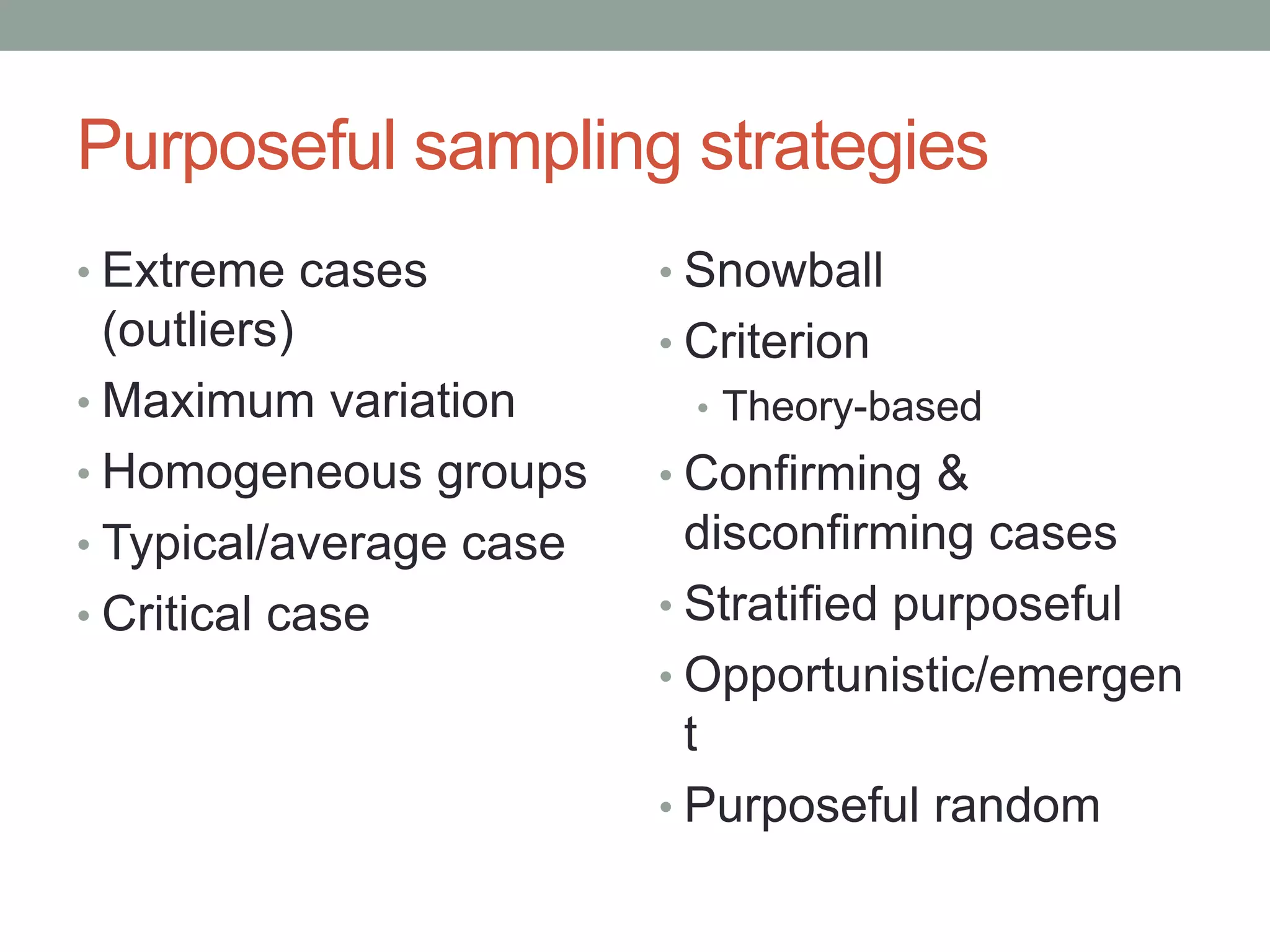
Purposeful sampling strategies
• Extreme cases
(outliers)
• Maximum variation
• Homogeneous groups
• Typical/average case
• Critical case
• Snowball
• Criterion
• Theory-based
• Confirming &
disconfirming cases
• Stratified purposeful
• Opportunistic/emergen
t
• Purposeful random
Extreme cases / outliers
• Cases that have gone extremely well or extremely wrong
– i.e. excellence or extreme failure
• Illuminative of other, less extreme instances
Maximum variation sampling
• Pick a few cases from different conditions: eg:
• very poor, middle class, very rich
• very large, medium, small (town, class, college)
• Identify shared patterns across these variations
Homogeneous groups
• Small group of similar cases to describe in depth
• Used to gain information about a particular subgroup (i.e.
single dads)
• Used in focus group research
Typical/average case
• Identified with the help of key informants or previous
research
• What criteria do you use to define typical?
• e.g. Typical science classroom/prof
Critical case sampling
• If it happens here, it will happen everywhere
• e.g. if conservative group adopts new technology, every
other group will
Snowball / chain sampling
• Ask participants: who should I talk to? Who knows a lot
about… Who does… ?
Criterion sampling
• Participants must meet certain criteria
• EG:
• age requirements
• weekly users of Facebook, Twitter, AND LinkedIn
• teach mathematics at x level
Theory based sampling
• A type of criterion sampling
• The criteria are derived from theory
• EG:
• early adopters (diffusion of innovations)
• high communication apprehension
• spatial learners
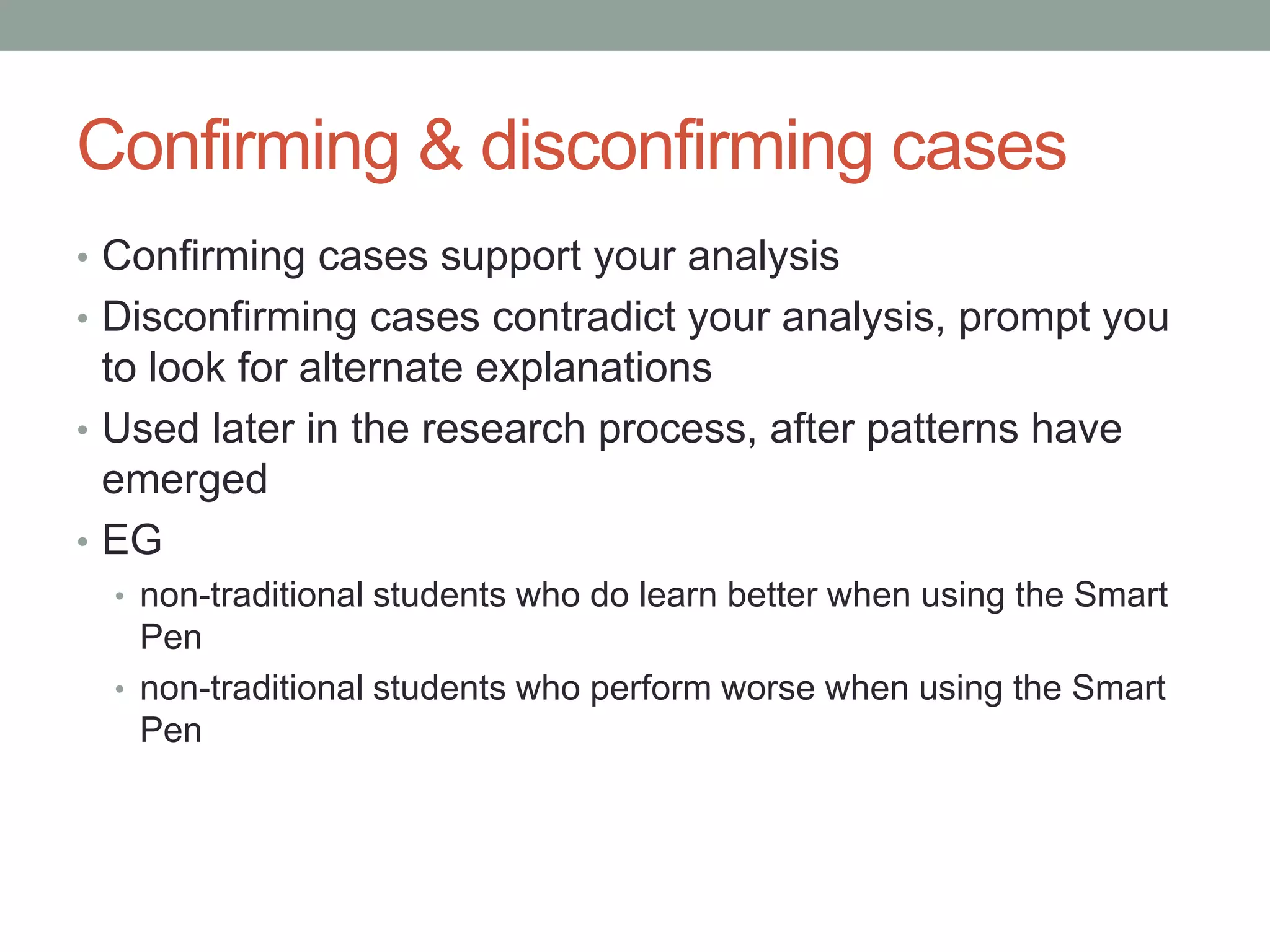
Confirming & disconfirming cases
• Confirming cases support your analysis
• Disconfirming cases contradict your analysis, prompt you
to look for alternate explanations
• Used later in the research process, after patterns have
emerged
• EG
• non-traditional students who do learn better when using the Smart
Pen
• non-traditional students who perform worse when using the Smart
Pen
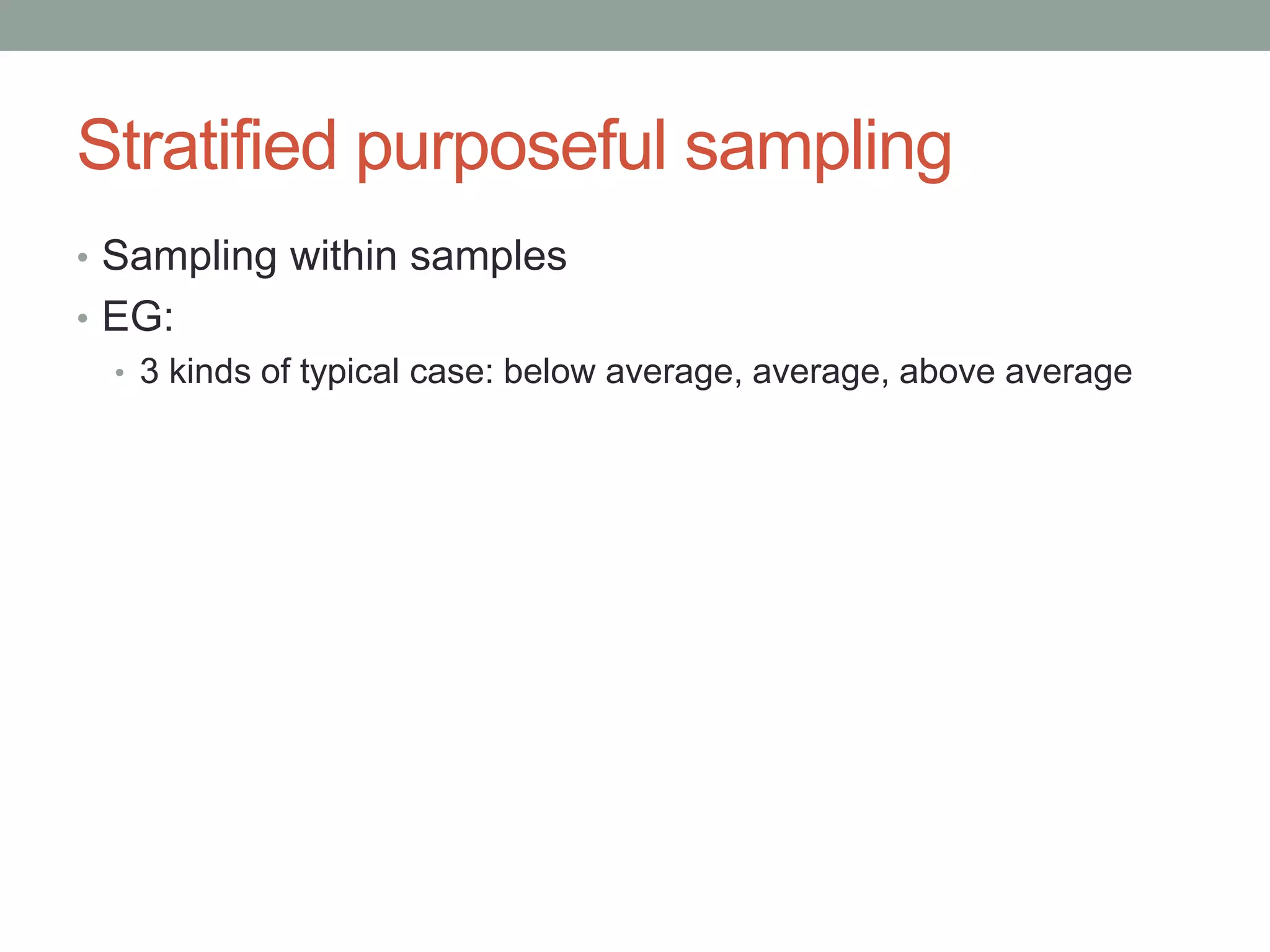
Stratified purposeful sampling
• Sampling within samples
• EG:
• 3 kinds of typical case: below average, average, above average
Opportunistic / emergent sampling
• On-the-spot decisions in the field
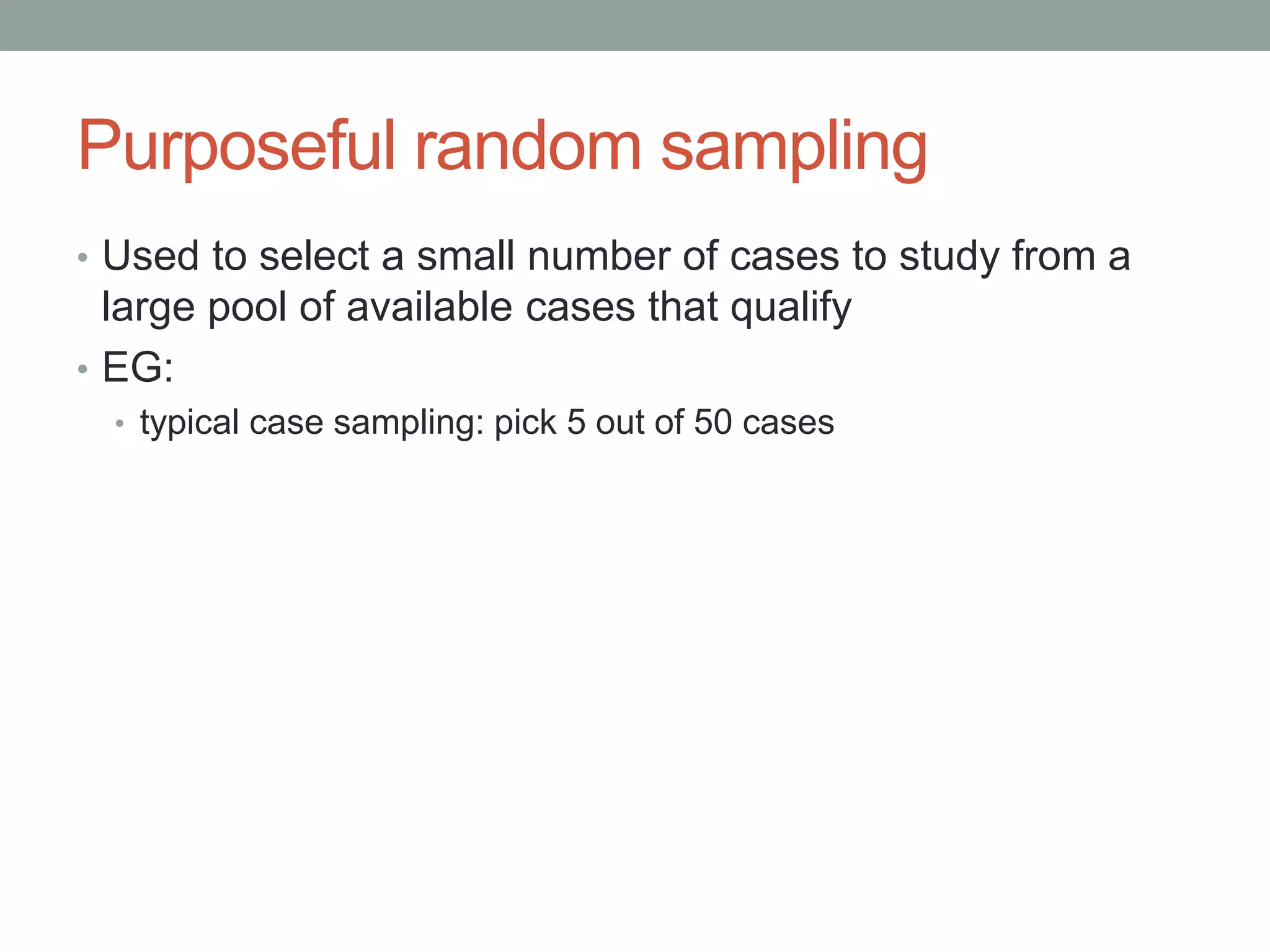
Purposeful random sampling
• Used to select a small number of cases to study from a
large pool of available cases that qualify
• EG:
• typical case sampling: pick 5 out of 50 cases
Sample size in qualitative research
• Sample to the point of redundancy
• For IRB purposes, specify a safely large number

Sampling in qualitative research

  • 1.
  • 2.
    Understanding sampling • Probability(random) sampling vs. • Purposeful sampling
  • 3.
    Purposeful sampling • information-richcases that can help answer research questions
  • 4.
    Purposeful sampling strategies •Extreme cases (outliers) • Maximum variation • Homogeneous groups • Typical/average case • Critical case • Snowball • Criterion • Theory-based • Confirming & disconfirming cases • Stratified purposeful • Opportunistic/emergen t • Purposeful random
  • 5.
    Extreme cases /outliers • Cases that have gone extremely well or extremely wrong – i.e. excellence or extreme failure • Illuminative of other, less extreme instances
  • 6.
    Maximum variation sampling •Pick a few cases from different conditions: eg: • very poor, middle class, very rich • very large, medium, small (town, class, college) • Identify shared patterns across these variations
  • 7.
    Homogeneous groups • Smallgroup of similar cases to describe in depth • Used to gain information about a particular subgroup (i.e. single dads) • Used in focus group research
  • 8.
    Typical/average case • Identifiedwith the help of key informants or previous research • What criteria do you use to define typical? • e.g. Typical science classroom/prof
  • 9.
    Critical case sampling •If it happens here, it will happen everywhere • e.g. if conservative group adopts new technology, every other group will
  • 10.
    Snowball / chainsampling • Ask participants: who should I talk to? Who knows a lot about… Who does… ?
  • 11.
    Criterion sampling • Participantsmust meet certain criteria • EG: • age requirements • weekly users of Facebook, Twitter, AND LinkedIn • teach mathematics at x level
  • 12.
    Theory based sampling •A type of criterion sampling • The criteria are derived from theory • EG: • early adopters (diffusion of innovations) • high communication apprehension • spatial learners
  • 13.
    Confirming & disconfirmingcases • Confirming cases support your analysis • Disconfirming cases contradict your analysis, prompt you to look for alternate explanations • Used later in the research process, after patterns have emerged • EG • non-traditional students who do learn better when using the Smart Pen • non-traditional students who perform worse when using the Smart Pen
  • 14.
    Stratified purposeful sampling •Sampling within samples • EG: • 3 kinds of typical case: below average, average, above average
  • 15.
    Opportunistic / emergentsampling • On-the-spot decisions in the field
  • 16.
    Purposeful random sampling •Used to select a small number of cases to study from a large pool of available cases that qualify • EG: • typical case sampling: pick 5 out of 50 cases
  • 17.
    Sample size inqualitative research • Sample to the point of redundancy • For IRB purposes, specify a safely large number