Download to read offline

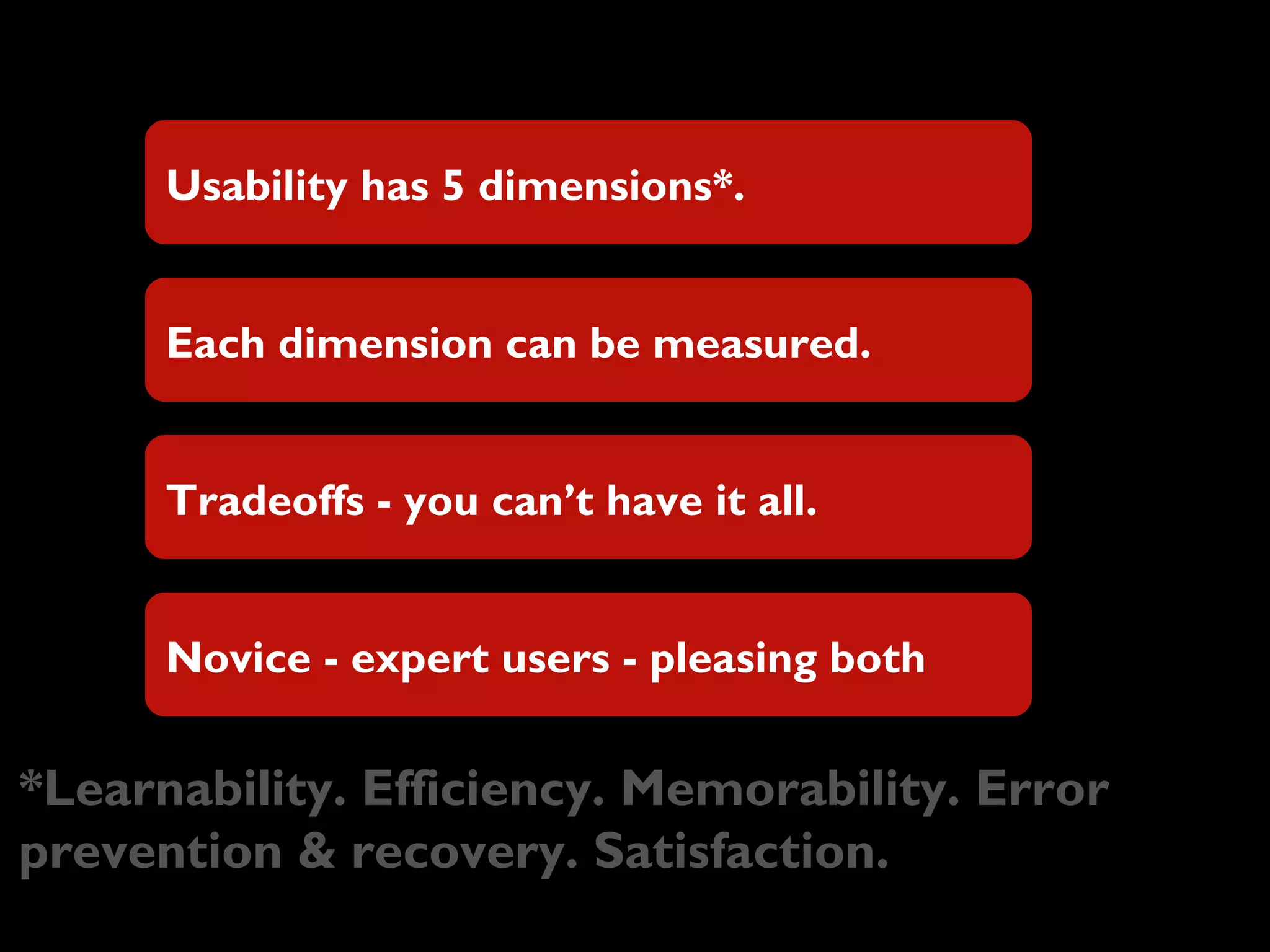

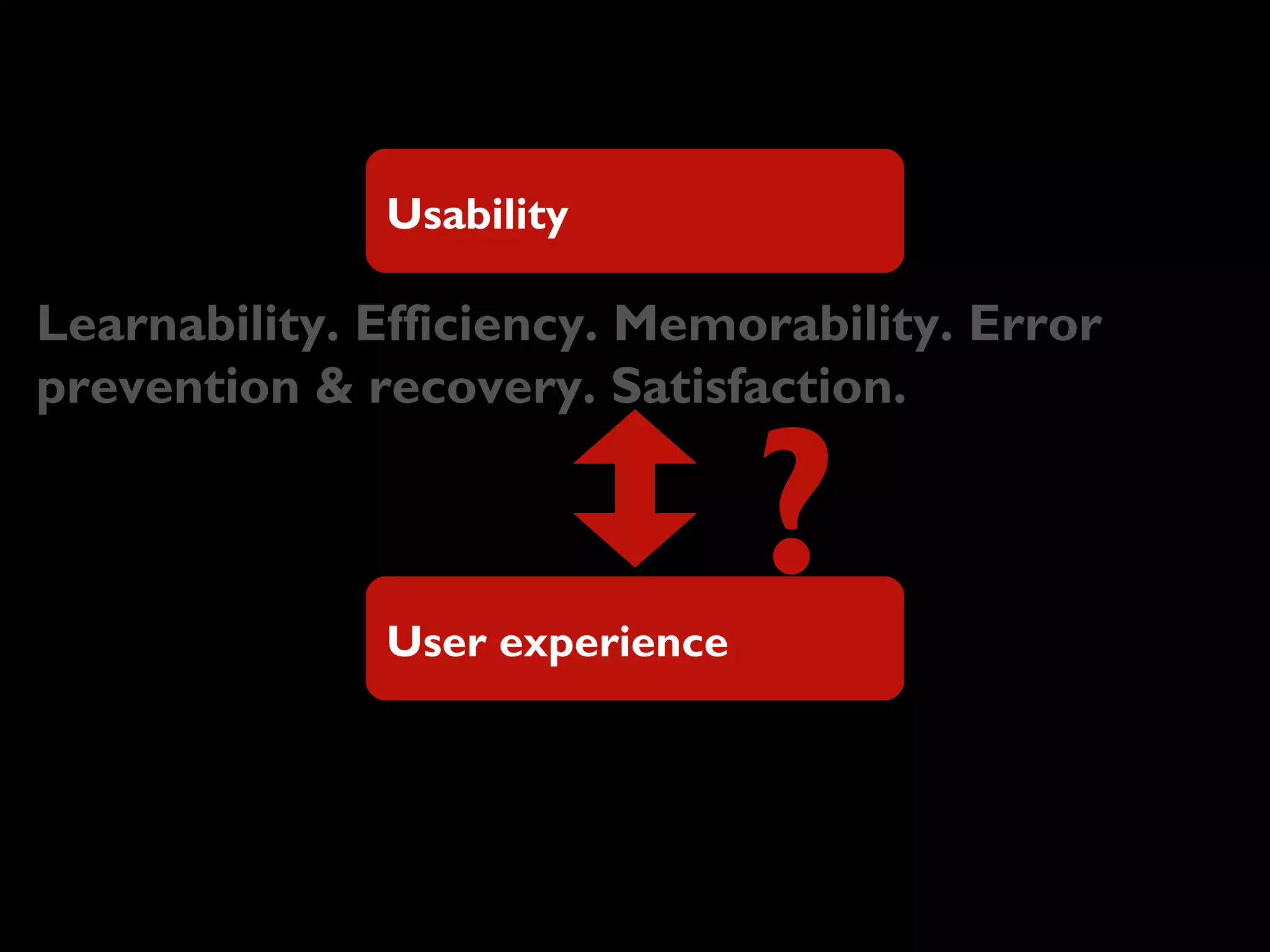

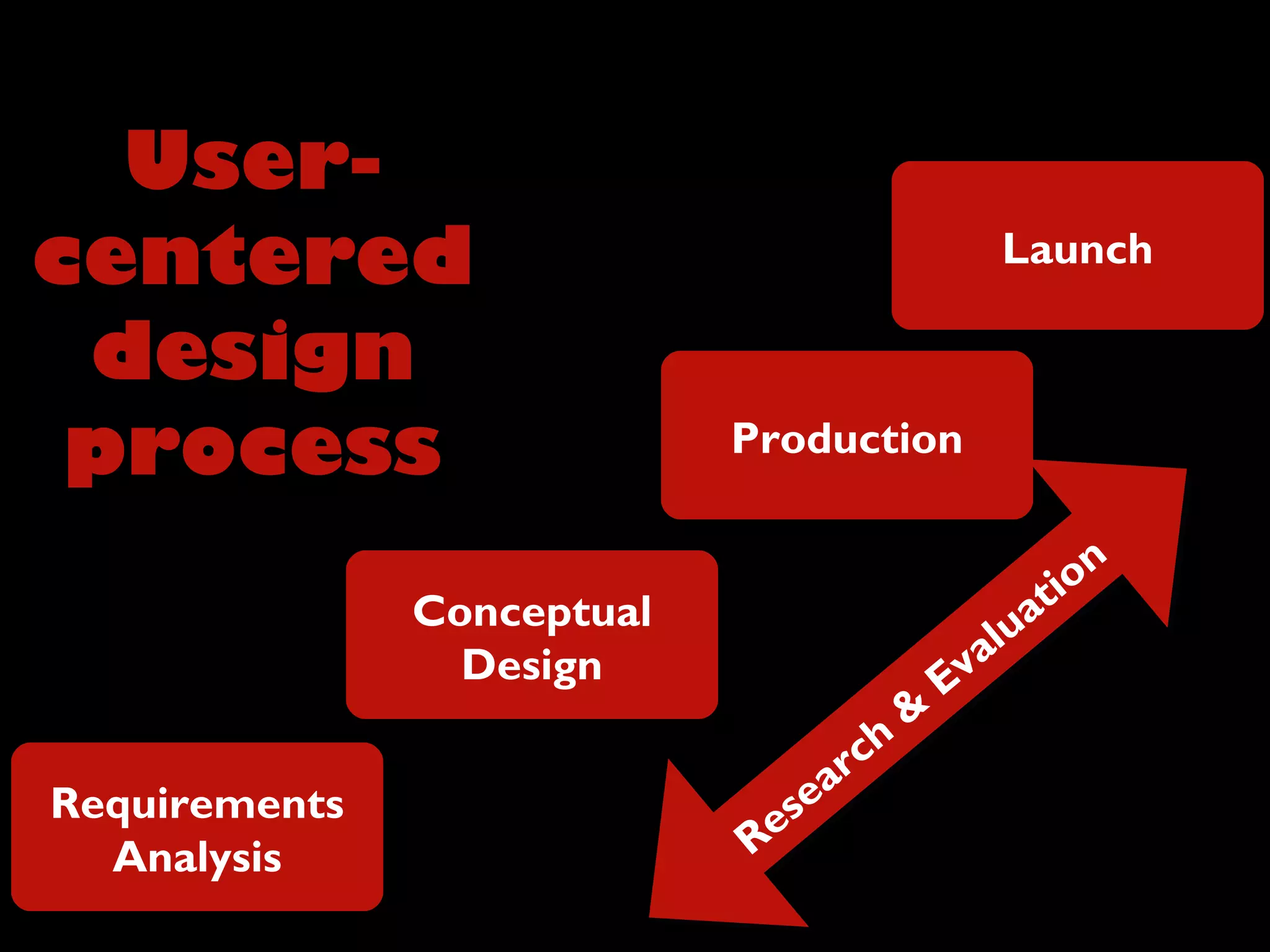
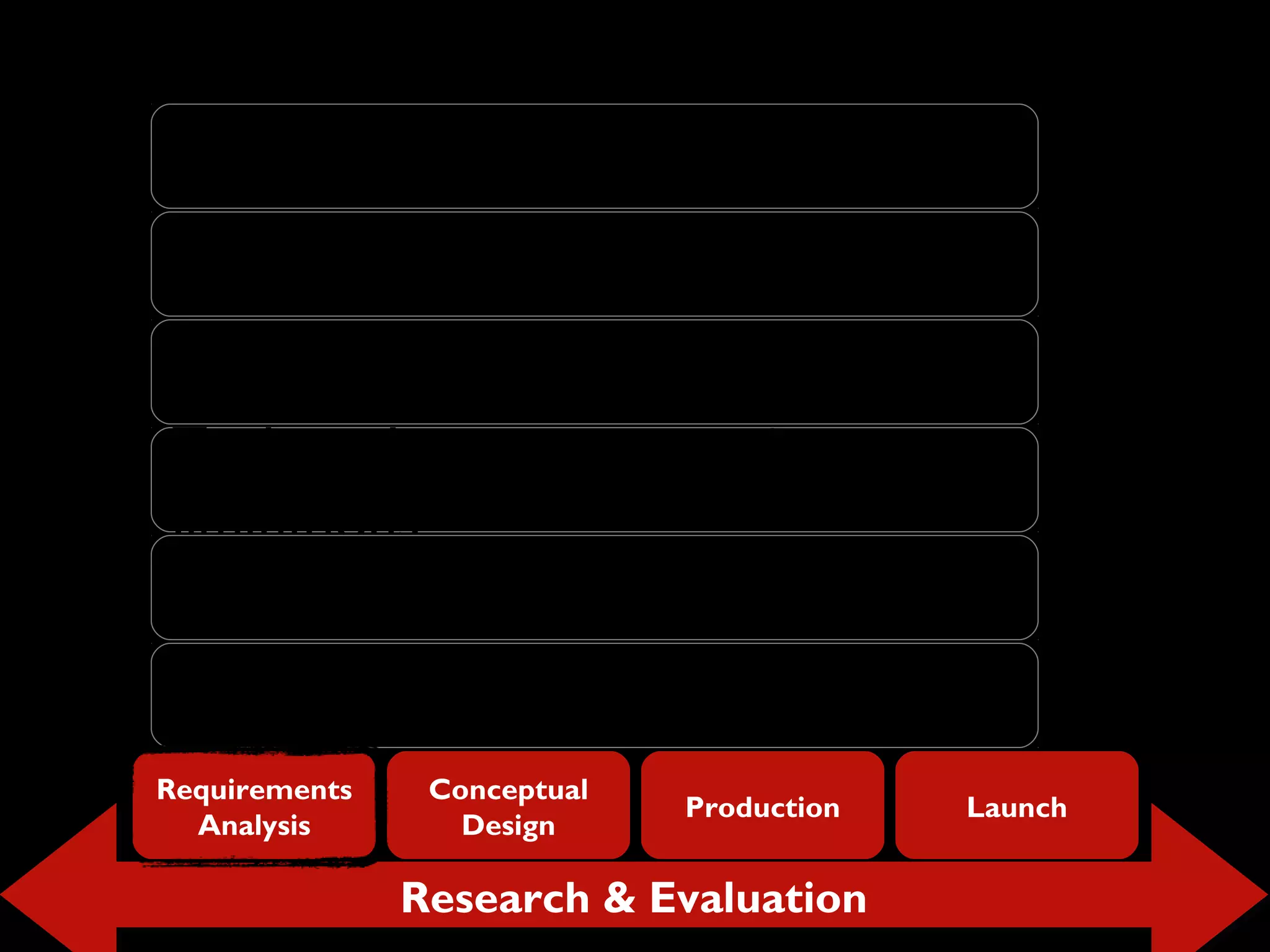
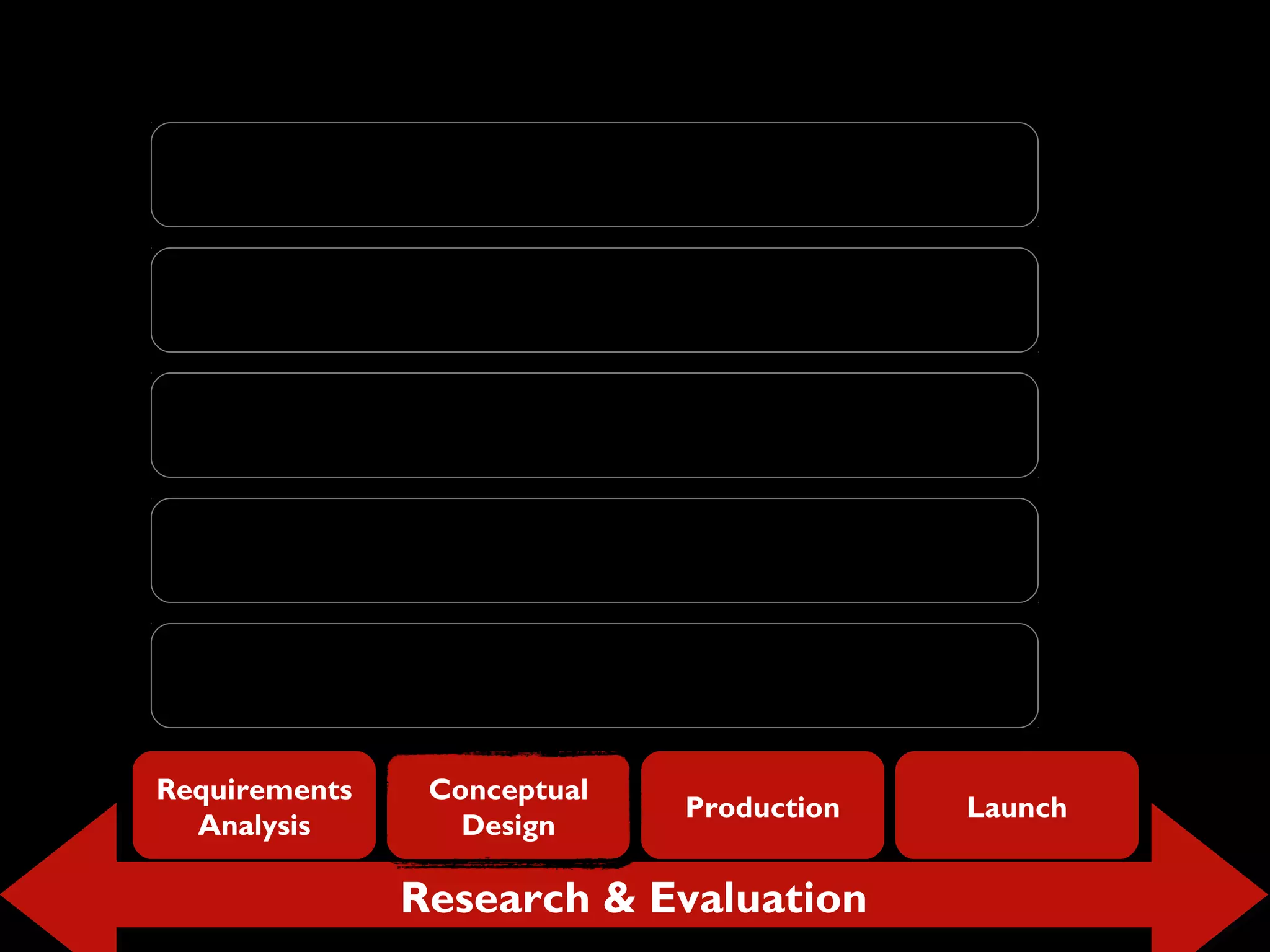
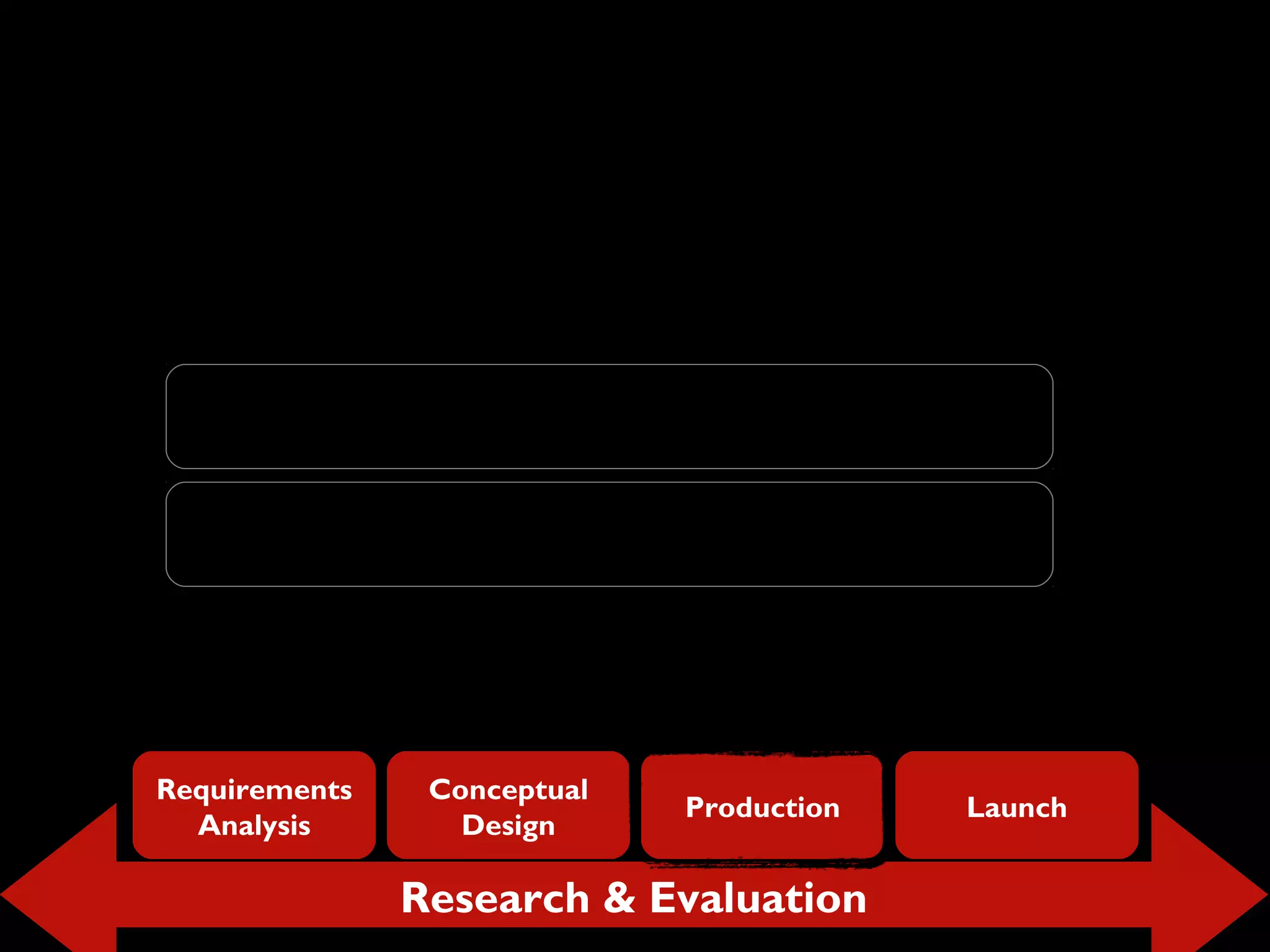
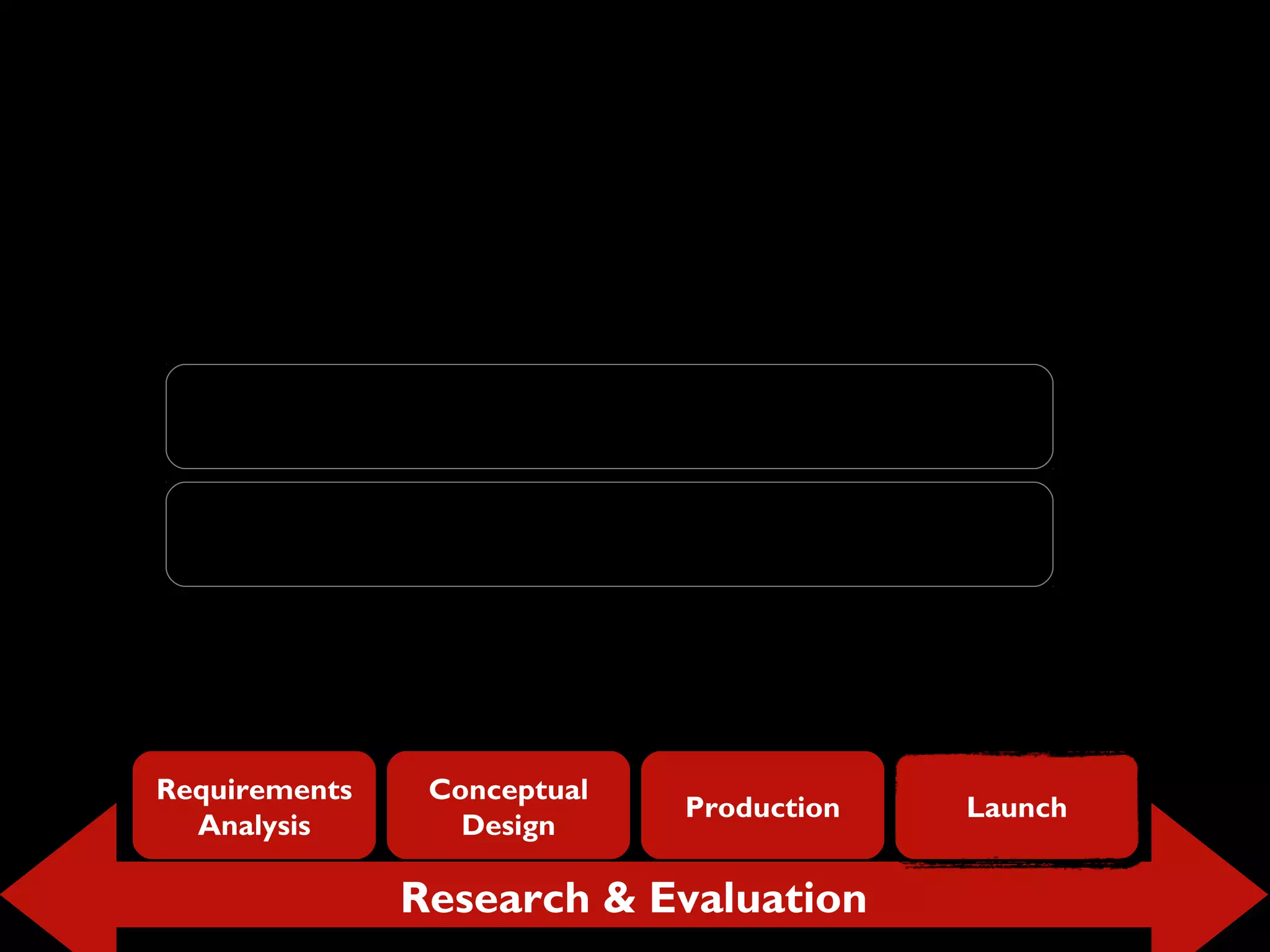
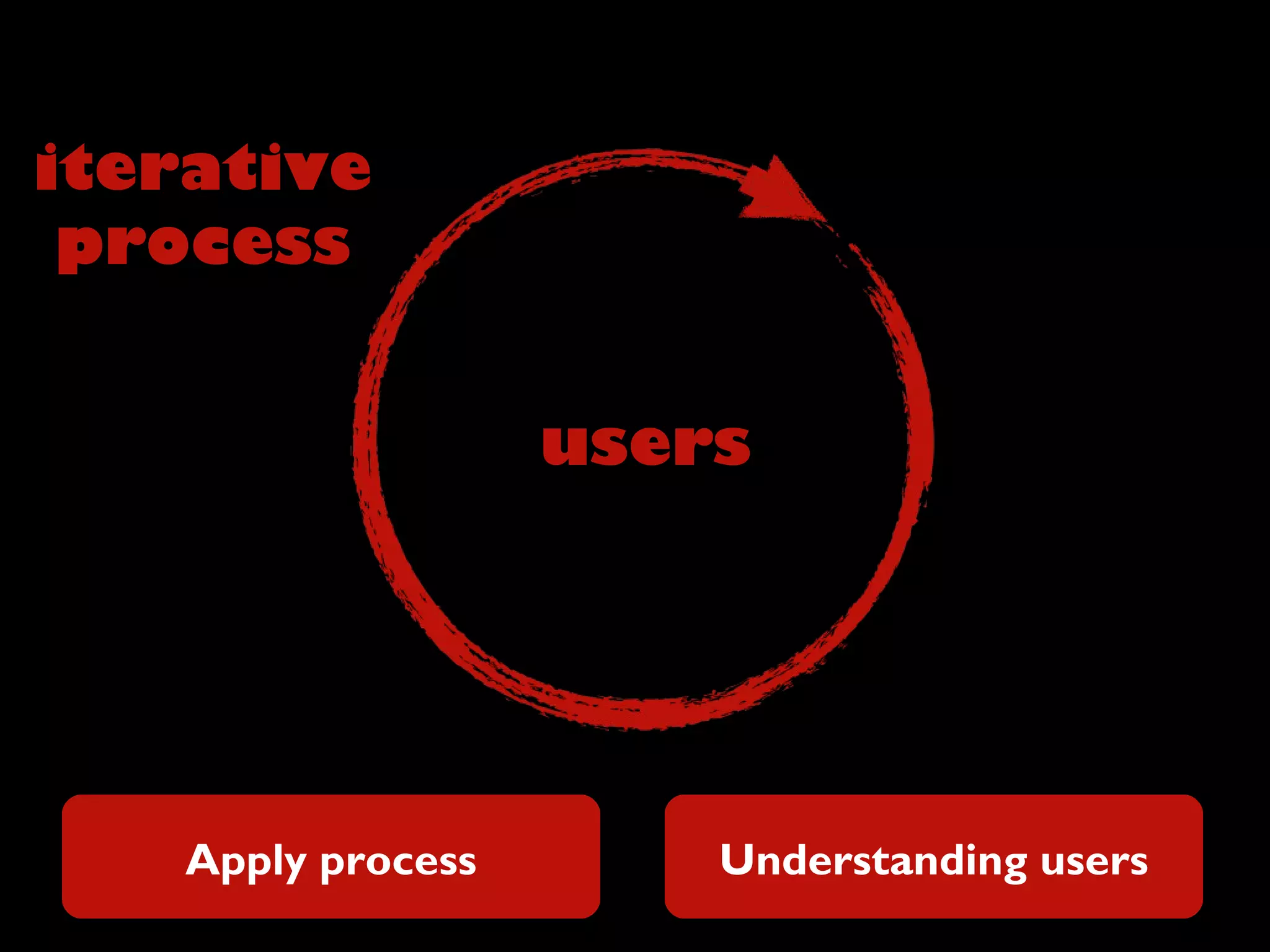

Usability has five key dimensions that can be measured: learnability, efficiency, memorability, error prevention and recovery, and satisfaction. There are three paradigms of design: engineering focuses on making things work, usability focuses on ease of use, and user experience focuses on pleasure of use. The user-centered design process involves research and evaluation, requirements analysis, conceptual design, production, and launch in an iterative process that focuses on understanding users.


