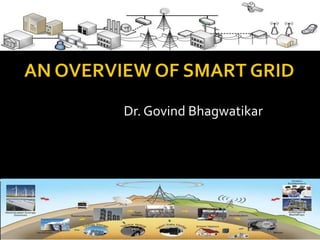
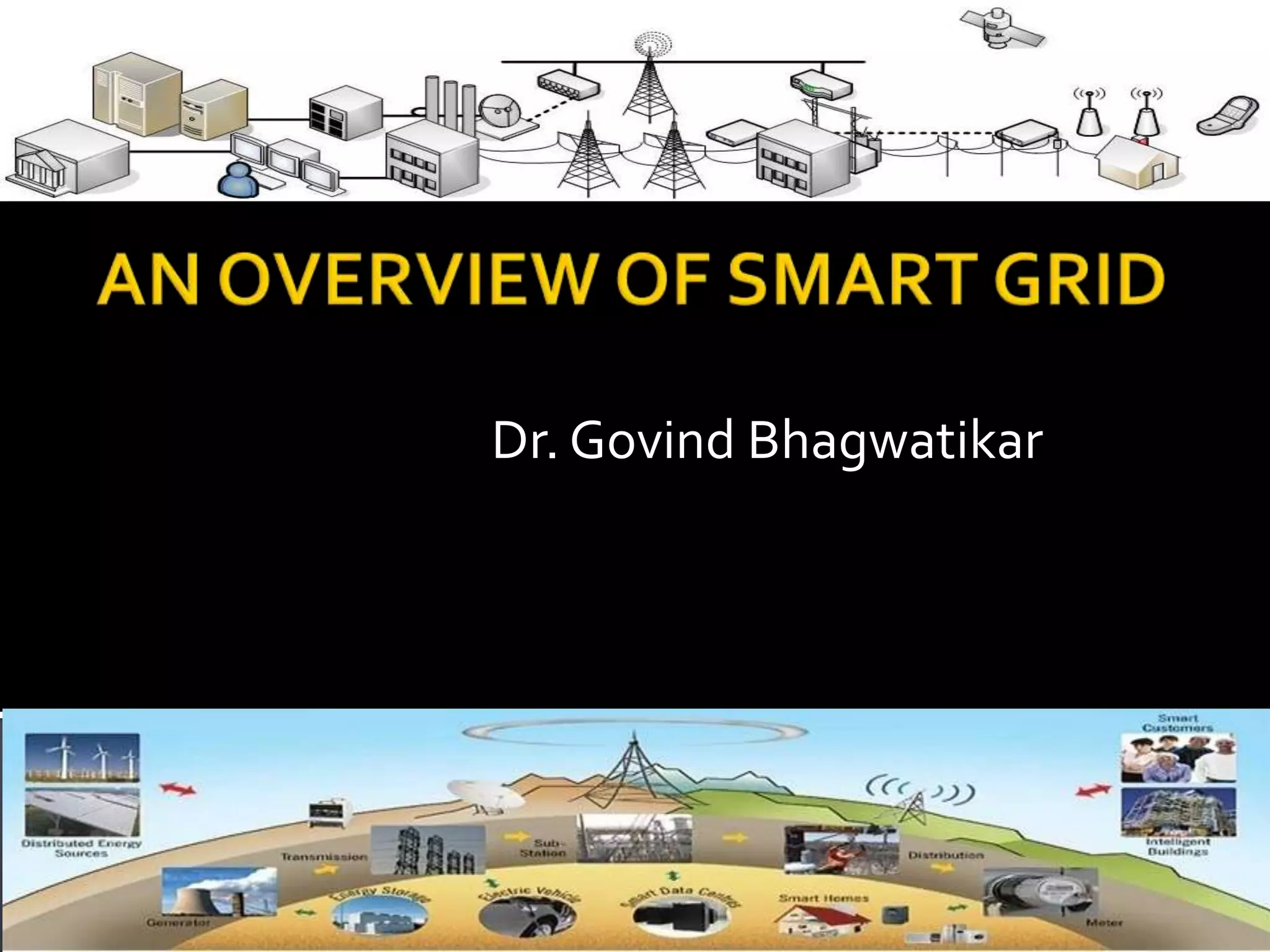
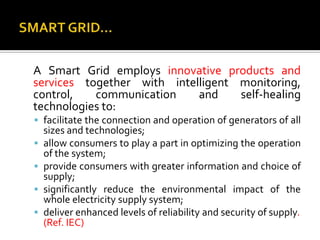
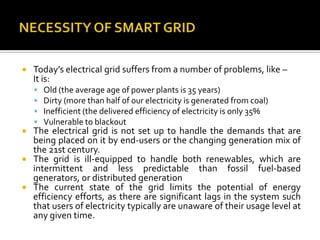
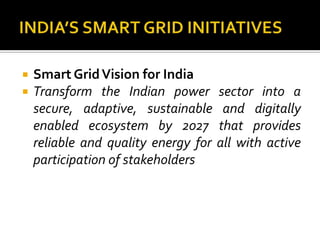
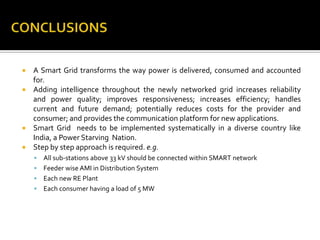
The document discusses smart grids and their components. Some key points:
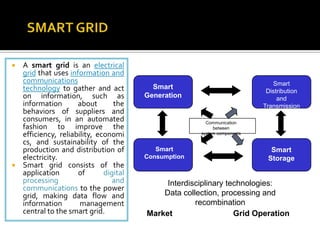
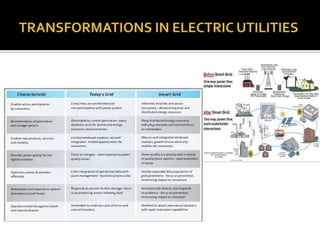
- A smart grid uses information and communications technologies to improve the efficiency, reliability, economics and sustainability of electricity production and distribution.
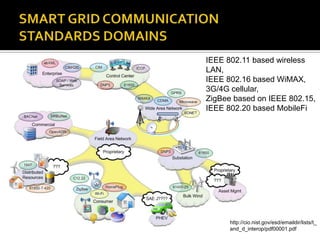
- It consists of applying digital processing and communications to the power grid, making data flow and information central.
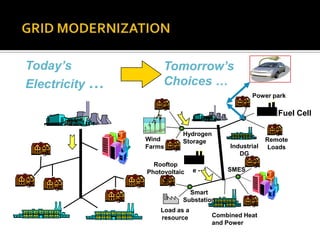
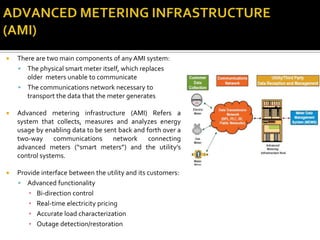
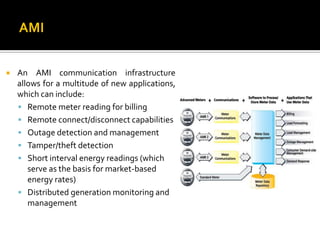
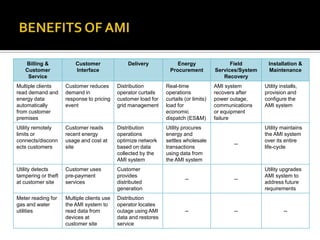
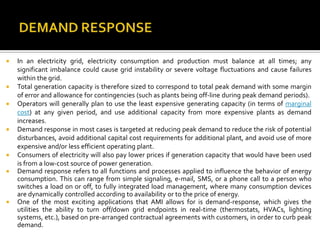
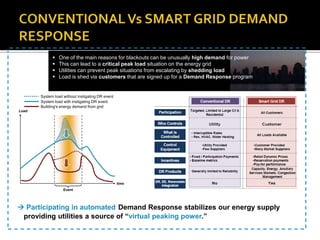
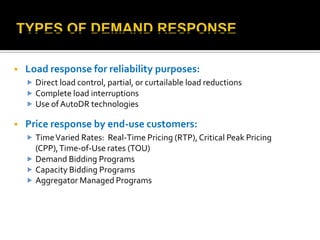
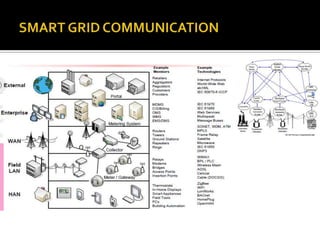
- Smart grids allow for two-way communication between electricity producers and consumers, enabling functions like remote meter reading, demand response and outage detection.
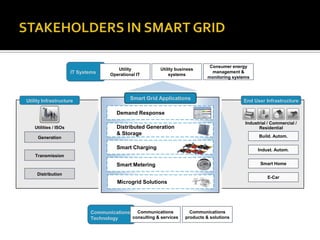
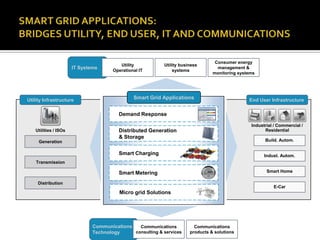
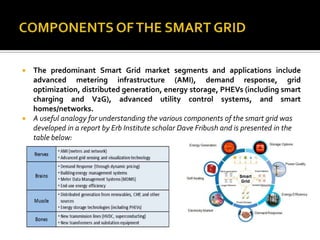
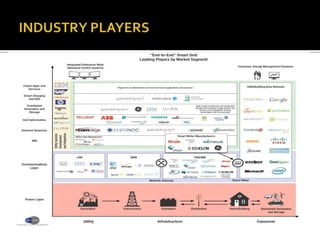
- Advanced metering infrastructure, demand response, distributed generation and energy storage are some of the major smart grid applications and market segments.
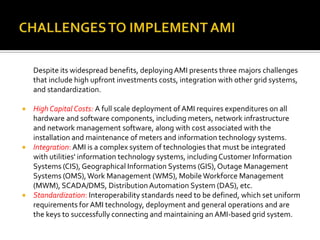
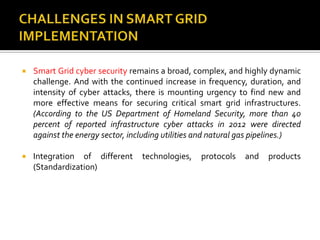
- Widespread smart grid deployment faces challenges of high upfront costs, integrating new technologies with existing grid systems, and


![Top Ten Utilities by Demand-Side Management 2011 [Smart Grid Research], Zprym...](https://cdn.slidesharecdn.com/ss_thumbnails/top10usutilitiesbydsminvestmentzprymesmartgridinsightsmarch2011-110403153820-phpapp02-thumbnail.jpg?width=640&height=640&fit=bounds)


![[Smart Grid Market Research] Energy 2.0: Smart Grid Roadmap, 2012 – 2022, May...](https://cdn.slidesharecdn.com/ss_thumbnails/energy20smartgridroadmap20122022may2012zprymeandclasma-120530111428-phpapp01-thumbnail.jpg?width=640&height=640&fit=bounds)


