A SEMINAR ON
“SMART GRID FUTURE OF ELECTRICAL SYSTEM”
SUBMITTED BY :- VIJENDRA MEENA
ROLL NO. :- 17EEJEE025
YEAR & SEM. :- FINAL YEAR &
VII SEM
BRANCH :- ELECTRICAL
ENGINEERING
CONTENTS
• Introduction
• Comparison
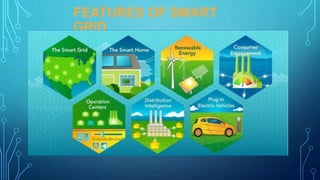
• Features Of Smart Grid
• Smart Grid Components
• Projects In India And It’s Future
• Smart Grid Benefits
• Drawbacks
• Overview of smart grid
• Conclusion
INTRODUCTIO
N
• A smart grid is an electricity network based on digital technology that
is used to supply electricity to consumers via two way digital
communication. This system allows for monitoring, analysis, control
and communication within the supply chain to help improve efficiency,
reduce the energy consumption and cost, and maximize the
transparency and reliability of the energy supply chain. The smart grid
was introduced with the aim of overcoming the weaknesses of
conventional electrical grids by using smart net meters.
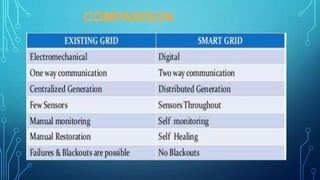
COMPARISON
FEATURES OF SMART
GRID
CONT.
• The smart grid represents the full suite of current and proposed responses to
the challenges of electricity supply
• More efficient transmission of electricity
• Quicker restoration of electricity after power disturbances
• Reliable power-Maintain grid stability Mitigate blackouts and outages
impacts
• Improve energy efficiency Maximize energy flows
• Renewable power-Integrate CO2 free energy Enable renewable DER (wind
,solar) grid connection & dispatch Develop backup energy asset flexibility
(generation & distributed storage) Integrate distributed renewable and
electric vehicles.
• Reduced peak demand, which will also help lower electricity rates.
SMART GRID
COMPONENTS
• Smart Meters
• Phasor Measurement
• Distriubuted generation
SMART METERS
Smart meter is one of the most important devices used in the smart
grid (SG). The smart meter is an advanced energy meter that obtains
information from the end users' load devices and measures the
energy consumption of the consumers and then provides added
information to the utility company and/or system operator. Several
sensors and control devices, supported by dedicated communication
infrastructure, are utilized in a smart meter.
PHASOR
MEASUREMENT
• A phasor measurement unit (PMU) is a device used to estimate the
magnitude and phase angle of an electrical phasor quantity (such as
voltage or current) in the electricity grid using a common time source
for synchronization.
• PMUs can also be used to measure the frequency in the power grid.
DISTRIUBUTED
GENERATION
• Allow the connection of small scale renewable energy generation like
Wind,Solar, fuelcells, Microturbine.
• Generation close to the load and improve efficency.
• Having customer interaction.
• Increases the reliability.
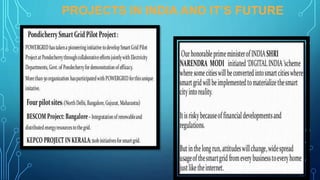
PROJECTS IN INDIA AND IT’S FUTURE
SMART GRID
BENEFITS
• Automatic fault restoration by using sensors in transformers and
transmission lines.
• No headache to call lineman to repair or reroute the electricity from grid.
• The consumer can able to know his energy consumption by viewing smart
meter in real time.
• Smart grid is able to self-heal itself. Self-healing capabilities minimize
blackouts because they allow for continuous self-assessments that inspect,
analyze, react to, and automatically respond to problems. This is possible
through the widespread deployment of sensors and other intelligent devices
and automated controls that check and evaluate the status and condition of
the network to identify abnormalities and problems.
DRAWBACKS
• Security and Privacy
• Some types of meter can be hacked.
• These hackers gain control of thousand even millions of meters.
• Increase or decrease demand of power.
• Large no. of components.
• Various technology component makes system complex to understand.
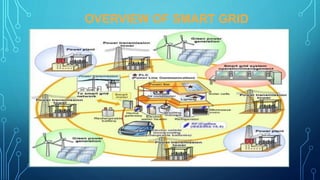
OVERVIEW OF SMART GRID
CONCLUSION
• Smart Grid improves existing electrical
infrastructure.
• By using smart grid tech. energy can be utilized to
the maximum and would not be wasted.
• This tech. also helps to save earth from the global
warming.
• It refers to the modernized version of the earlier
traditional method of energy supply.
Smart Grid Future Of Electrical System

Smart Grid Future Of Electrical System

  • 1.
    A SEMINAR ON “SMARTGRID FUTURE OF ELECTRICAL SYSTEM” SUBMITTED BY :- VIJENDRA MEENA ROLL NO. :- 17EEJEE025 YEAR & SEM. :- FINAL YEAR & VII SEM BRANCH :- ELECTRICAL ENGINEERING
  • 2.
    CONTENTS • Introduction • Comparison •Features Of Smart Grid • Smart Grid Components • Projects In India And It’s Future • Smart Grid Benefits • Drawbacks • Overview of smart grid • Conclusion
  • 3.
    INTRODUCTIO N • A smartgrid is an electricity network based on digital technology that is used to supply electricity to consumers via two way digital communication. This system allows for monitoring, analysis, control and communication within the supply chain to help improve efficiency, reduce the energy consumption and cost, and maximize the transparency and reliability of the energy supply chain. The smart grid was introduced with the aim of overcoming the weaknesses of conventional electrical grids by using smart net meters.
  • 4.
  • 5.
  • 6.
    CONT. • The smartgrid represents the full suite of current and proposed responses to the challenges of electricity supply • More efficient transmission of electricity • Quicker restoration of electricity after power disturbances • Reliable power-Maintain grid stability Mitigate blackouts and outages impacts • Improve energy efficiency Maximize energy flows • Renewable power-Integrate CO2 free energy Enable renewable DER (wind ,solar) grid connection & dispatch Develop backup energy asset flexibility (generation & distributed storage) Integrate distributed renewable and electric vehicles. • Reduced peak demand, which will also help lower electricity rates.
  • 7.
    SMART GRID COMPONENTS • SmartMeters • Phasor Measurement • Distriubuted generation
  • 8.
    SMART METERS Smart meteris one of the most important devices used in the smart grid (SG). The smart meter is an advanced energy meter that obtains information from the end users' load devices and measures the energy consumption of the consumers and then provides added information to the utility company and/or system operator. Several sensors and control devices, supported by dedicated communication infrastructure, are utilized in a smart meter.
  • 9.
    PHASOR MEASUREMENT • A phasormeasurement unit (PMU) is a device used to estimate the magnitude and phase angle of an electrical phasor quantity (such as voltage or current) in the electricity grid using a common time source for synchronization. • PMUs can also be used to measure the frequency in the power grid.
  • 10.
    DISTRIUBUTED GENERATION • Allow theconnection of small scale renewable energy generation like Wind,Solar, fuelcells, Microturbine. • Generation close to the load and improve efficency. • Having customer interaction. • Increases the reliability.
  • 11.
    PROJECTS IN INDIAAND IT’S FUTURE
  • 12.
    SMART GRID BENEFITS • Automaticfault restoration by using sensors in transformers and transmission lines. • No headache to call lineman to repair or reroute the electricity from grid. • The consumer can able to know his energy consumption by viewing smart meter in real time. • Smart grid is able to self-heal itself. Self-healing capabilities minimize blackouts because they allow for continuous self-assessments that inspect, analyze, react to, and automatically respond to problems. This is possible through the widespread deployment of sensors and other intelligent devices and automated controls that check and evaluate the status and condition of the network to identify abnormalities and problems.
  • 13.
    DRAWBACKS • Security andPrivacy • Some types of meter can be hacked. • These hackers gain control of thousand even millions of meters. • Increase or decrease demand of power. • Large no. of components. • Various technology component makes system complex to understand.
  • 14.
  • 15.
    CONCLUSION • Smart Gridimproves existing electrical infrastructure. • By using smart grid tech. energy can be utilized to the maximum and would not be wasted. • This tech. also helps to save earth from the global warming. • It refers to the modernized version of the earlier traditional method of energy supply.