Beenish Latif
Optometrist
COAVS/ KEMU
16-04-2020
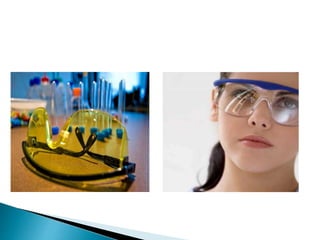
 Eye injuries in the workplace are very common.
 More than 2,000 people injure their eyes at work
each day.
 About 1 in 10 injuries require one or more
missed workdays to recover from.
 Of the total amount of work-related injuries, 10-
20 % will cause temporary or permanent vision
loss.
 Experts believe that the right eye protection
could have lessened the severity or even
prevented 90% of eye injuries in accidents.
 There are three things you can do to help
prevent an eye injury
1) Know the eye safety dangers at work-
complete an eye hazard assessment
2) Eliminate hazards before starting work. Use
machine guarding, work screens, or other
engineering controls)
3) Use proper eye protection.
 Laminated glass safety lenses
 Heat toughened safety lenses
 Special heat toughened safety lenses
 Chemically toughened safety lenses
 These lenses are not very strong.
 Able to withstand significantly more impact
than a standard glass lens.
 These are made by cementing together two
pieces of glass with cellulose acetate.
 By modern standards, these lenses could
hardly be safe.
 The broken glass piece s are usually sharp
and potentially destructive.
 Polarised laminated lenses are available
today, but are designed to provide safety.
 Made by sandwiching a piece of polarising
material between pieces of glass.
 Laminated glass safety lenses have not been
produced for many years.
 The production of heat toughened lenses
begins by surfacing a thick glass lens.
 A heat toughened safety lens needs to be
made thicker than a standard stock lens.
 Heat toughened lenses are often said to be
safe.
 Broken pieces are shaped like cubes and
blunt.
 These lenses are somewhat thinner than the
usual heat toughened lens.
 Can be identified with a polarizing strain
view.
 This strain pattern is different than
conventional heat toughened lens.
 In chemical toughened process, large batches
of cut lenses are first preheated .
 Then these are immersed in the bath of
chemical( molten potassium nitrate at temp
of 440C) .
 These lenses are fairly thin, extremely
regular and strong.
 The process is fully automated, because the
chemical used are hot and dangerous.
 Glass lenses
 Are not easily scratched
 Can be used around harsh chemicals
 Can be made in your corrective prescription
 Are sometimes heavy and uncomfortable
 CR-39 refers to the material that is used to make the
majority prescription lenses.
 It is an optical grade plastic polymer recognized for
its light weight, chemical resistance properties and
'tint-ability'.
 In comparable prescriptions it is approximately half
the weight of glass lenses, while being slightly
thicker.
 Its impact resistance is greater than glass but does
not rise to the level of polycarbonate
 it is not recommended for active sports and
motorcycling.
 It is more scratch resistant than polycarbonate, but
will scratch if not properly taken care of.
 Polycarbonate is an impact resistant material.
 It is becoming used more widely in recent times -
especially for motorcycling and action sports.
 It is also used frequently for the glazing of
rimless frames because of these properties.
 Although polycarbonate is impact resistant, it
should not be considered indestructible.
 Polycarbonate is the strongest material available
and will have the tendency to break into larger
pieces, instead of the CR39's smaller pieces.
 Polycarbonate is thinner than standard CR39.
 Polycarbonate lenses are ten times more
impact resistant than other plastics making
them highly suitable for action sports.
 They offer UV protection and stop 99.9% of
rays from the sun, fluorescent lights and
computer screens.
 Our polycarbonate lenses are supplied with a
scratch resistant coating and are thinner than
standard lens and therefore more
comfortable to wear.
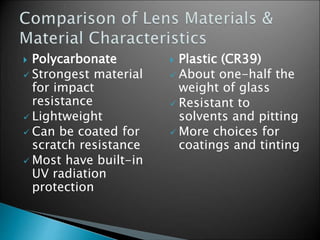
 Polycarbonate
 Strongest material
for impact
resistance
 Lightweight
 Can be coated for
scratch resistance
 Most have built-in
UV radiation
protection
 Plastic (CR39)
 About one-half the
weight of glass
 Resistant to
solvents and pitting
 More choices for
coatings and tinting
Safety Lenses.ppt

Safety Lenses.ppt

  • 1.
  • 2.
     Eye injuriesin the workplace are very common.  More than 2,000 people injure their eyes at work each day.  About 1 in 10 injuries require one or more missed workdays to recover from.  Of the total amount of work-related injuries, 10- 20 % will cause temporary or permanent vision loss.  Experts believe that the right eye protection could have lessened the severity or even prevented 90% of eye injuries in accidents.
  • 3.
     There arethree things you can do to help prevent an eye injury 1) Know the eye safety dangers at work- complete an eye hazard assessment 2) Eliminate hazards before starting work. Use machine guarding, work screens, or other engineering controls) 3) Use proper eye protection.
  • 4.
     Laminated glasssafety lenses  Heat toughened safety lenses  Special heat toughened safety lenses  Chemically toughened safety lenses
  • 6.
     These lensesare not very strong.  Able to withstand significantly more impact than a standard glass lens.  These are made by cementing together two pieces of glass with cellulose acetate.  By modern standards, these lenses could hardly be safe.  The broken glass piece s are usually sharp and potentially destructive.
  • 7.
     Polarised laminatedlenses are available today, but are designed to provide safety.  Made by sandwiching a piece of polarising material between pieces of glass.  Laminated glass safety lenses have not been produced for many years.
  • 8.
     The productionof heat toughened lenses begins by surfacing a thick glass lens.  A heat toughened safety lens needs to be made thicker than a standard stock lens.  Heat toughened lenses are often said to be safe.  Broken pieces are shaped like cubes and blunt.
  • 9.
     These lensesare somewhat thinner than the usual heat toughened lens.  Can be identified with a polarizing strain view.  This strain pattern is different than conventional heat toughened lens.
  • 10.
     In chemicaltoughened process, large batches of cut lenses are first preheated .  Then these are immersed in the bath of chemical( molten potassium nitrate at temp of 440C) .  These lenses are fairly thin, extremely regular and strong.  The process is fully automated, because the chemical used are hot and dangerous.
  • 11.
     Glass lenses Are not easily scratched  Can be used around harsh chemicals  Can be made in your corrective prescription  Are sometimes heavy and uncomfortable
  • 12.
     CR-39 refersto the material that is used to make the majority prescription lenses.  It is an optical grade plastic polymer recognized for its light weight, chemical resistance properties and 'tint-ability'.  In comparable prescriptions it is approximately half the weight of glass lenses, while being slightly thicker.  Its impact resistance is greater than glass but does not rise to the level of polycarbonate  it is not recommended for active sports and motorcycling.  It is more scratch resistant than polycarbonate, but will scratch if not properly taken care of.
  • 13.
     Polycarbonate isan impact resistant material.  It is becoming used more widely in recent times - especially for motorcycling and action sports.  It is also used frequently for the glazing of rimless frames because of these properties.  Although polycarbonate is impact resistant, it should not be considered indestructible.  Polycarbonate is the strongest material available and will have the tendency to break into larger pieces, instead of the CR39's smaller pieces.
  • 14.
     Polycarbonate isthinner than standard CR39.  Polycarbonate lenses are ten times more impact resistant than other plastics making them highly suitable for action sports.  They offer UV protection and stop 99.9% of rays from the sun, fluorescent lights and computer screens.  Our polycarbonate lenses are supplied with a scratch resistant coating and are thinner than standard lens and therefore more comfortable to wear.
  • 15.
     Polycarbonate  Strongestmaterial for impact resistance  Lightweight  Can be coated for scratch resistance  Most have built-in UV radiation protection  Plastic (CR39)  About one-half the weight of glass  Resistant to solvents and pitting  More choices for coatings and tinting