Historical stages
of
modernization
Touching The Model
• Rostow's Stages of Economic Growth model is one of the
major historical models of economic growth. It was published
by American economist Walt Whitman Rostow in 1960
• Rostow’s stage theory occupied a leading position in
conventional development thinking during the 1960s when
new liberal attitudes toward the Third World were being
established
Five Basic Stages
The model claims or presumes that economic growth
occurs in five basic stages, of varying length :
1. Traditional Society
2. Preconditions for Take-off
3. Take-off
4. Drive to Maturity
5. High Mass Consumption
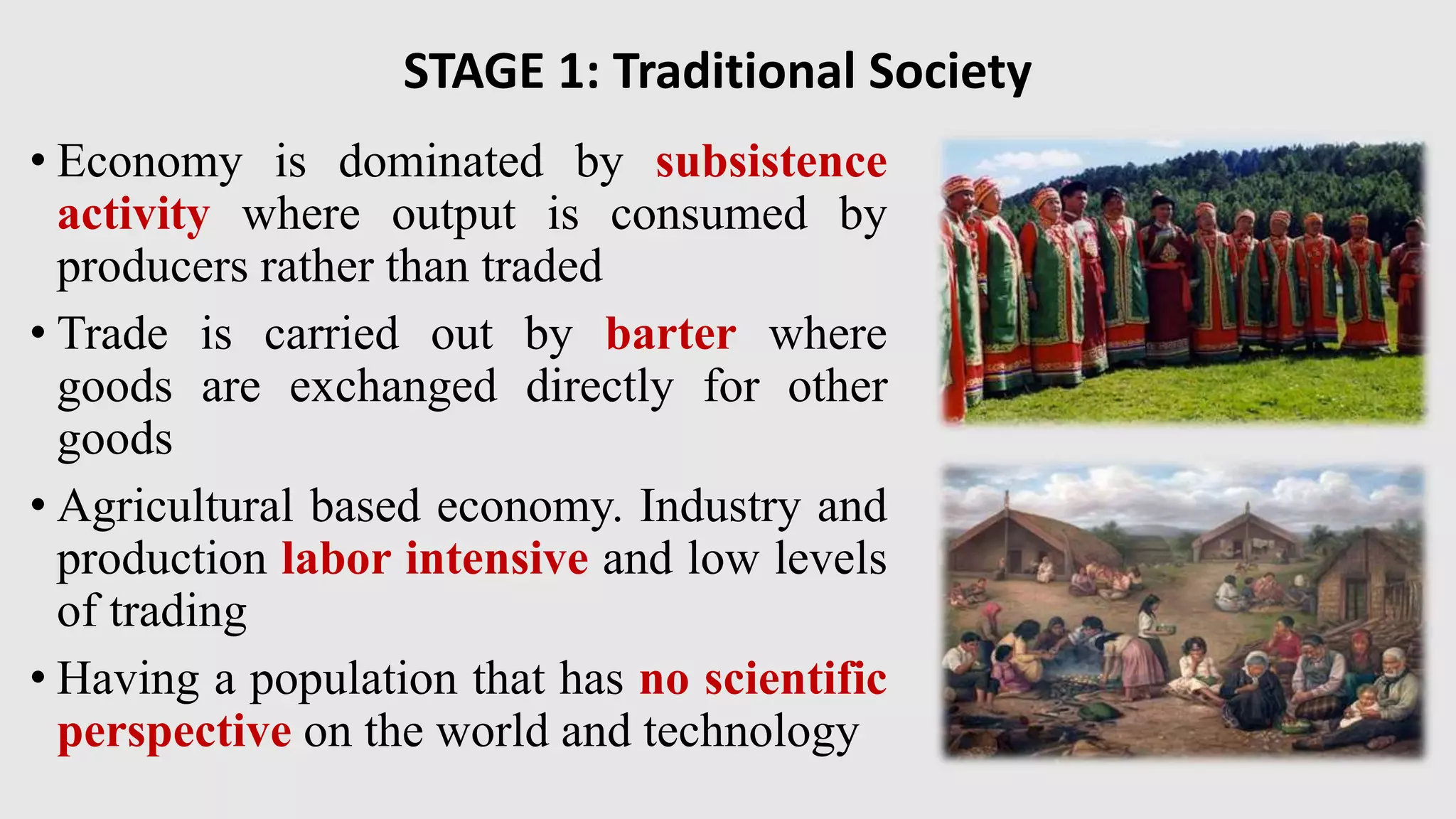
STAGE 1: Traditional Society
• Economy is dominated by subsistence
activity where output is consumed by
producers rather than traded
• Trade is carried out by barter where
goods are exchanged directly for other
goods
• Agricultural based economy. Industry and
production labor intensive and low levels
of trading
• Having a population that has no scientific
perspective on the world and technology
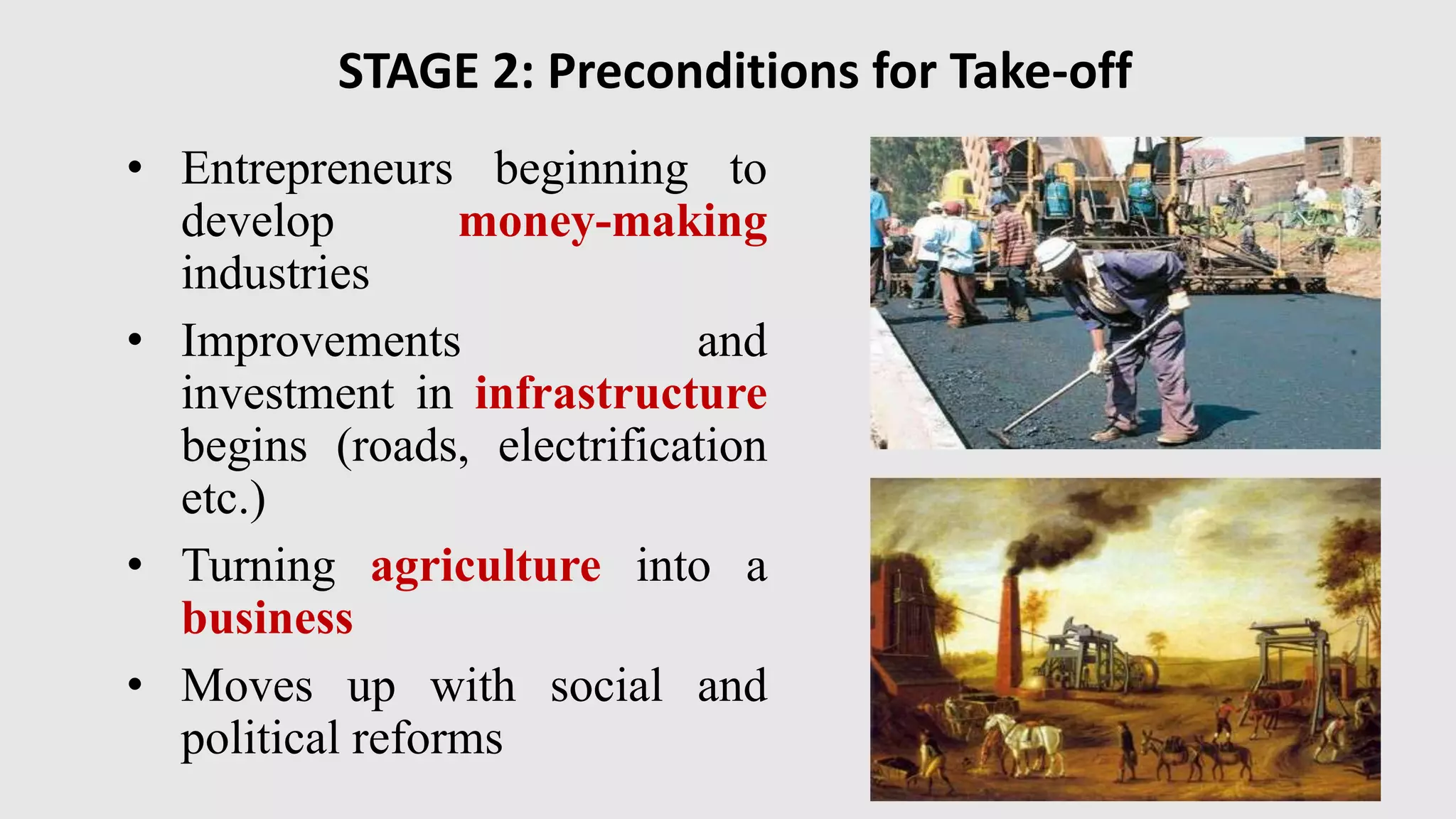
STAGE 2: Preconditions for Take-off
• Entrepreneurs beginning to
develop money-making
industries
• Improvements and
investment in infrastructure
begins (roads, electrification
etc.)
• Turning agriculture into a
business
• Moves up with social and
political reforms
STAGE 3: Take-off
1. Rapid and dynamic economic growth
• Transition of a traditional economy to modern
economy
• Increase in investments and per capital output
• Growth of manufacturing sectors
2. Development in political, social and
industrial framework
3. Agriculture progressed to commercial
rather than subsistence
4. Group of entrepreneurs to pursue
innovation
Country Take-off Period
Great Britain 1783-1802
Russia 1890-1914
United States 1843-1860
Germany 1850-1873
Canada 1896-1914
China 1952
India 1952
STAGE 4: Drive to Maturity
• Takes place over a long period of
time – standards of living rise
• Use of technology increases
• Nationals economy grows and
diversifies
• Increased percentage of Nation’s
wealth – invested into developing
to it’s economy
Country Maturity Year
Great Britain 1850
Russia 1950
United States 1900
Germany 1910
Canada 1950
STAGE 5: High Mass Consumption
• Individuals income are greater
than necessary for buying
essentials
• Growing demand for additional
consumers goods and services
• Improved health care system and
education
• Economy flourishes

Rostow's stages of growth

  • 1.
  • 2.
    Touching The Model •Rostow's Stages of Economic Growth model is one of the major historical models of economic growth. It was published by American economist Walt Whitman Rostow in 1960 • Rostow’s stage theory occupied a leading position in conventional development thinking during the 1960s when new liberal attitudes toward the Third World were being established
  • 3.
    Five Basic Stages Themodel claims or presumes that economic growth occurs in five basic stages, of varying length : 1. Traditional Society 2. Preconditions for Take-off 3. Take-off 4. Drive to Maturity 5. High Mass Consumption
  • 4.
    STAGE 1: TraditionalSociety • Economy is dominated by subsistence activity where output is consumed by producers rather than traded • Trade is carried out by barter where goods are exchanged directly for other goods • Agricultural based economy. Industry and production labor intensive and low levels of trading • Having a population that has no scientific perspective on the world and technology
  • 5.
    STAGE 2: Preconditionsfor Take-off • Entrepreneurs beginning to develop money-making industries • Improvements and investment in infrastructure begins (roads, electrification etc.) • Turning agriculture into a business • Moves up with social and political reforms
  • 6.
    STAGE 3: Take-off 1.Rapid and dynamic economic growth • Transition of a traditional economy to modern economy • Increase in investments and per capital output • Growth of manufacturing sectors 2. Development in political, social and industrial framework 3. Agriculture progressed to commercial rather than subsistence 4. Group of entrepreneurs to pursue innovation Country Take-off Period Great Britain 1783-1802 Russia 1890-1914 United States 1843-1860 Germany 1850-1873 Canada 1896-1914 China 1952 India 1952
  • 7.
    STAGE 4: Driveto Maturity • Takes place over a long period of time – standards of living rise • Use of technology increases • Nationals economy grows and diversifies • Increased percentage of Nation’s wealth – invested into developing to it’s economy Country Maturity Year Great Britain 1850 Russia 1950 United States 1900 Germany 1910 Canada 1950
  • 8.
    STAGE 5: HighMass Consumption • Individuals income are greater than necessary for buying essentials • Growing demand for additional consumers goods and services • Improved health care system and education • Economy flourishes