Waste Treatment Plant Project
Lessons Learned
Construction
Electrical
Ron Clements P.E, PMP
Lead Electrical Engineer Temporary Power
October 6, 2009
2
Syllabus
 Project Inspection Records
 Material Acquisitions (Procurement)
 Sub-Contractor Equipment
 NEC Common Pitfalls
 Arc-Flash
 Grounding Assurance
 Conex Box Electrical Violations
 Medium Voltage Program
 Performance Improvements
2
3
Project Records
 Project Start/Stop
 Lost or missing inspection records
 Time loss
 Re-work
3
4
Material Acquisitions (Procurement)
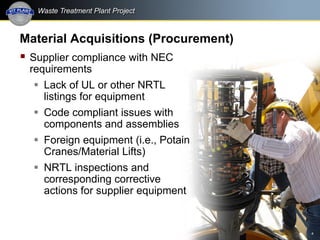
 Supplier compliance with NEC
requirements
 Lack of UL or other NRTL
listings for equipment
 Code compliant issues with
components and assemblies
 Foreign equipment (i.e., Potain
Cranes/Material Lifts)
 NRTL inspections and
corresponding corrective
actions for supplier equipment
4
5
Sub-Contractor Equipment
 NEC code requirements issues
 Concrete batch plant
 OCPD sizing
 Conductor sizing
 Grounding
 Aging equipment
6
NEC Common Pitfalls
 Article 110.3(B) requires listed or labeled equipment to
be installed and used in accordance with any
instructions included in the listing or labeling.
 Article 110.22 requires each disconnecting means to be
legibly marked to indicate its purpose.
 Article 110.26(A)(1) requires a three-foot working
clearance in front of the panelboards. (A)(2) Requires
width of the working space in front of the electric
equipment to be the width of the equipment or 30 inches,
whichever is greater. (A)(3) Requires the work space to
be clear and extend from the grade, floor, or platform to
6½ feet, or where the equipment exceeds 6½ feet, the
minimum headroom shall not be less than the height of
the equipment.
7
NEC Common Pitfalls (cont)
 Article 240.5 requires flexible cord and flexible cable to
be protected by an overcurrent device in accordance
with their ampacity as specified in Table 400.5(A) and
Table 400.5(B).
 Article 250.122 requires the equipment grounding
conductor to be sized based off the overcurrent device
ahead of the equipment.
 Article 700.12(E)(4) requires the branch circuit feeding
the emergency lighting to be the same branch circuit as
that serving the normal lighting in that area.
 Article 725 (A) requires cables and conductors of Class
2 and Class 3 circuits to not be placed in any cable,
cable tray, compartment, enclosure, manhole, outlet box,
raceway, or similar fitting with conductors of electric light,
power, and Class 1 circuits.
8
Arc-Flash
 Evolution of WTP Arc-Flash
 Hanford Calculator
 ETAP Software
 Field evaluations
 Identify equipment type
 Fuse studies
 Circuit breaker studies
 Single-line verification
 ETAP software data Input
 Cross checking performed during data input
9
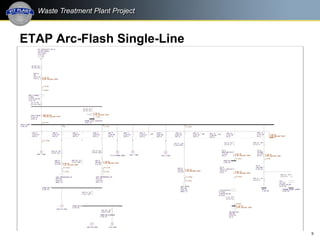
ETAP Arc-Flash Single-Line
10
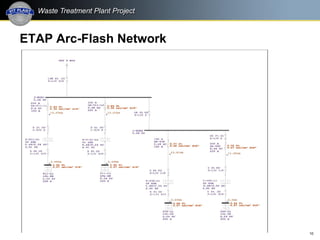
ETAP Arc-Flash Network
11
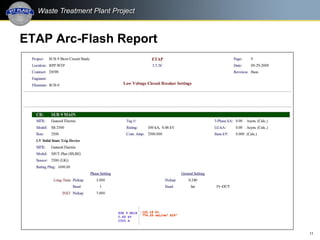
ETAP Arc-Flash Report
12
Grounding Assurance
 Grounding requirements for 240 and 480 volt cord sets
 480 volt heater cord set wiring
 Manufacturer cord and cap (burned in field)
 Replaced with a 30A cord cap and #10 wire
13
Grounding Assurance
14
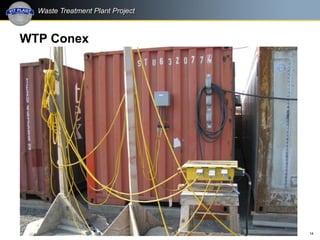
WTP Conex
15
WTP Conex
16
Conex Box Electrical Violations
 Systematic control of temporary power to these types of
temporary structures
 Multiple source feeds to conex
 Extension cords being ran through door ways or
windows
 Bonding/grounding not in accordance to NEC
 No proper disconnecting means
 No procedure in place to control temporary power in
these conex’s
17
Medium Voltage Program
 WTP Substations 1-16
 OSHA 29 CFR 1910.269
 Medium Voltage training (Manual/Non-Manual)
 Use of 13.8KV testing equipment
 Installation of Grounding clusters
 LO/TO (Capacitive Test Points) – In ability of voltage
verification during LO/TO process
 Replacement of dead breaks (allows for voltage
measurement on each feeder and the ability to install
a grounding cluster
18
WTP Substation and Switchboard
19
WTP Substation
20
Summary
 Implementing of enhanced supplier electrical equipment
code inspection oversight
 NEC inspectors designated to each facility
 NRTL certified inspector designated for construction
equipment
 Implementing NEC code compliant inspections of
temporary power and sub-contractor electrical
installations; this includes developing a comprehensive
NEC inspection training program that has emphasized
lessons learned from past problems at the WTP
 Improving electrical design code compliance
performance by emphasizing code requirements and
providing lessons-learned feedback from previous WTP
compliance issues
21
Summary
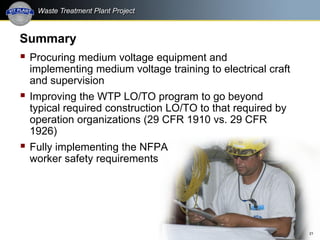
 Procuring medium voltage equipment and
implementing medium voltage training to electrical craft
and supervision
 Improving the WTP LO/TO program to go beyond
typical required construction LO/TO to that required by
operation organizations (29 CFR 1910 vs. 29 CFR
1926)
 Fully implementing the NFPA
worker safety requirements
21
22
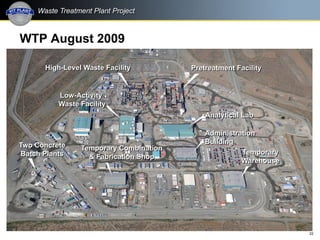
WTP August 2009
Pretreatment Facility
Administration
Building
Temporary
Warehouse
Temporary Combination
& Fabrication Shop
High-Level Waste Facility
Low-Activity
Waste Facility
Two Concrete
Batch Plants
Analytical Lab

Electrical Lessons learned

  • 1.
    Waste Treatment PlantProject Lessons Learned Construction Electrical Ron Clements P.E, PMP Lead Electrical Engineer Temporary Power October 6, 2009
  • 2.
    2 Syllabus  Project InspectionRecords  Material Acquisitions (Procurement)  Sub-Contractor Equipment  NEC Common Pitfalls  Arc-Flash  Grounding Assurance  Conex Box Electrical Violations  Medium Voltage Program  Performance Improvements 2
  • 3.
    3 Project Records  ProjectStart/Stop  Lost or missing inspection records  Time loss  Re-work 3
  • 4.
    4 Material Acquisitions (Procurement) Supplier compliance with NEC requirements  Lack of UL or other NRTL listings for equipment  Code compliant issues with components and assemblies  Foreign equipment (i.e., Potain Cranes/Material Lifts)  NRTL inspections and corresponding corrective actions for supplier equipment 4
  • 5.
    5 Sub-Contractor Equipment  NECcode requirements issues  Concrete batch plant  OCPD sizing  Conductor sizing  Grounding  Aging equipment
  • 6.
    6 NEC Common Pitfalls Article 110.3(B) requires listed or labeled equipment to be installed and used in accordance with any instructions included in the listing or labeling.  Article 110.22 requires each disconnecting means to be legibly marked to indicate its purpose.  Article 110.26(A)(1) requires a three-foot working clearance in front of the panelboards. (A)(2) Requires width of the working space in front of the electric equipment to be the width of the equipment or 30 inches, whichever is greater. (A)(3) Requires the work space to be clear and extend from the grade, floor, or platform to 6½ feet, or where the equipment exceeds 6½ feet, the minimum headroom shall not be less than the height of the equipment.
  • 7.
    7 NEC Common Pitfalls(cont)  Article 240.5 requires flexible cord and flexible cable to be protected by an overcurrent device in accordance with their ampacity as specified in Table 400.5(A) and Table 400.5(B).  Article 250.122 requires the equipment grounding conductor to be sized based off the overcurrent device ahead of the equipment.  Article 700.12(E)(4) requires the branch circuit feeding the emergency lighting to be the same branch circuit as that serving the normal lighting in that area.  Article 725 (A) requires cables and conductors of Class 2 and Class 3 circuits to not be placed in any cable, cable tray, compartment, enclosure, manhole, outlet box, raceway, or similar fitting with conductors of electric light, power, and Class 1 circuits.
  • 8.
    8 Arc-Flash  Evolution ofWTP Arc-Flash  Hanford Calculator  ETAP Software  Field evaluations  Identify equipment type  Fuse studies  Circuit breaker studies  Single-line verification  ETAP software data Input  Cross checking performed during data input
  • 9.
  • 10.
  • 11.
  • 12.
    12 Grounding Assurance  Groundingrequirements for 240 and 480 volt cord sets  480 volt heater cord set wiring  Manufacturer cord and cap (burned in field)  Replaced with a 30A cord cap and #10 wire
  • 13.
  • 14.
  • 15.
  • 16.
    16 Conex Box ElectricalViolations  Systematic control of temporary power to these types of temporary structures  Multiple source feeds to conex  Extension cords being ran through door ways or windows  Bonding/grounding not in accordance to NEC  No proper disconnecting means  No procedure in place to control temporary power in these conex’s
  • 17.
    17 Medium Voltage Program WTP Substations 1-16  OSHA 29 CFR 1910.269  Medium Voltage training (Manual/Non-Manual)  Use of 13.8KV testing equipment  Installation of Grounding clusters  LO/TO (Capacitive Test Points) – In ability of voltage verification during LO/TO process  Replacement of dead breaks (allows for voltage measurement on each feeder and the ability to install a grounding cluster
  • 18.
  • 19.
  • 20.
    20 Summary  Implementing ofenhanced supplier electrical equipment code inspection oversight  NEC inspectors designated to each facility  NRTL certified inspector designated for construction equipment  Implementing NEC code compliant inspections of temporary power and sub-contractor electrical installations; this includes developing a comprehensive NEC inspection training program that has emphasized lessons learned from past problems at the WTP  Improving electrical design code compliance performance by emphasizing code requirements and providing lessons-learned feedback from previous WTP compliance issues
  • 21.
    21 Summary  Procuring mediumvoltage equipment and implementing medium voltage training to electrical craft and supervision  Improving the WTP LO/TO program to go beyond typical required construction LO/TO to that required by operation organizations (29 CFR 1910 vs. 29 CFR 1926)  Fully implementing the NFPA worker safety requirements 21
  • 22.
    22 WTP August 2009 PretreatmentFacility Administration Building Temporary Warehouse Temporary Combination & Fabrication Shop High-Level Waste Facility Low-Activity Waste Facility Two Concrete Batch Plants Analytical Lab