Disorders of the Urinary System BPH Pyelonephritis Cystitis Wilm’s Tumor Urolithiasis Nephrolithiasis Urinary incontinence SUBMITTED BY: GROUP II BSN 3-ROBB SUBMITTED TO: MISS SHENELL A. DELFIN, RN Lecturer NCM 102
URINARY SYSTEM The urinary tract can be divided into upper and lower tracts: the upper tract refers to the  kidneys  and the  ureters   (production and transport of urine); the lower tract comprises the  bladder  and  urethra   (storage and emptying of urine) function excretion of waste products elimination of foreign substances regulation of the amount of water in the body control of the concentration of most compounds in the extracellular fluid OVERVIEW:
functional steps (related to anatomy) filtration - glomeruli of the kidney selective resorption and excretion - tubular system of the kidney also functions as an endocrine organ secreting  erythropoietin  (cortical fibrocytes) and  prostaglandin  (modified medullary fibrocytes)
The  kidneys  continually  filter the blood to maintain water and electrolyte balance, remove wastes andforeign chemicals, and perform a variety of hormonal functions, including the regulation of blood pressure .  * The  ureters   pump the urine produced by the kidneys into the bladder at low pressure without causing the holdup, or stasis, that might permit infections . * The  renal pelvis  and the  ureter pump  urine in a similar manner, with an automatic pacemaker that controls the rate and force of contraction .  * The urine then passes into the bladder through the ureterovesical junction, which is configured in such a way as to prevent backwash, or reflux, of urine from the bladder into the ureter and kidney.
BPH Pyelonephritis Cystitis Wilm’s Tumor Urolithiasis Nephrolithiasis Urinary incontinence What are some disorders of the urinary system?
Benign Prostatic Hyperplasia Most men over age 60 have some BPH, but not all have problems with blockage. There are many different treatment options for BPH Benign prostatic hyperplasia (BPH) is a condition in men that affects the prostate gland, which is part of the male reproductive system. Non-cancerous enlargement of the prostate  Caused by growth of new cells  Results in varying degrees of bladder outlet obstruction
Benign Prostatic Hyperplasia The prostate is located at the bottom of the bladder and surrounds the urethra. BPH is an enlargement of the prostate gland that can interfere with urinary function in older men.  It causes blockage by squeezing the urethra, which can make it difficult to urinate.  Men with BPH frequently have other bladder symptoms including an increase in frequency of bladder emptying both during the day and at night .
Benign Prostatic Hyperplasia
 
Etiology  The etiology of BPH is unclear. Two factors necessary for BPH to occur are: (1) endocrine control (DHT) (2) aging The relative roles of androgen & estrogen in inducing BPH, however , are complex & not completely understood. (Progressive Hyperplasia)
CIRCULATION May exhibit:Elevated BP (renal effects of advanced enlargement) ELIMINATION May report:Decreased force/caliber of urinary stream; dribbling Hesitancy in initiating voiding Inability to empty bladder completely; urgency and frequency of urination Nocturia, dysuria, hematuria, Sitting to void Recurrent UTIs, history of calculi (urinary stasis) Chronic constipation (protrusion of prostate into rectum) May exhibit:Firm mass in lower abdomen (distended bladder), bladder tenderness Inguinal hernia; hemorrhoids (result of increased abdominal pressure required to empty bladder against resistance) Assessment
FOOD/FLUID May report:Anorexia; nausea, vomiting, Recent weight loss PAIN/DISCOMFORT May report:Suprapubic, flank, or back pain; sharp, intense (in acute prostatitis), Low back pain SAFETY May report:Fever SEXUALITY May report:Concerns about effects of condition/therapy on sexual abilities Fear of incontinence/dribbling during intimacy Decrease in force of ejaculatory contractions May exhibit:Enlarged, tender prostate TEACHING/LEARNING May report: Family history of cancer, hypertension, kidney disease Use of antihypertensive or antidepressant medications, OTC cold/allergy medications containing sympathomimetics, urinary antibiotics or antibacterial agents Self-treatment with saw palmetto or soy products
Obstructive Voiding symptoms Weak stream Prolonged micturition Straining Hesitancy Intermittent stream Feeling of incomplete bladder emptying
Irritative symptoms   Frequency Nocturia Urgency Incontinence
Diagnostics Urinalysis & microscopic examination:  to R/O infection or the presence of hematuria. serum U/E & creatinine:  to provide baseline information on renal function & metabolic status. Uroflowmetry:  At a volume of 125-150ml, normal individuals have average flow rates of 12ml/sec & peak flow close to 20ml/sec. Mild 11-15 ml/sec Moderate    7 and    10 ml/sec Severe    7ml/sec Residual Urine:  estimated by U/S or catheterizations. Volumes >150 ml are considered significant since they constitute approximately one-third of normal bladder volume.
Imaging Ultrasonography: In BPH, it is most useful for measuring bladder & prostate volume as well as residual urine. Estimation of prostatic size is important because most urologists prefer to perform TURP for glands under 100g. TRUS must be used as it is more accurate.  IVP:   For UTI & complications of BPH
Complications of BPH Urinary retention Renal impairment Urinary tract infection Gross hematuria Bladder stones Bladder damage (trabeculations, cellules, diverticula) Overflow incontinence
NURSING DIAGNOSIS:  1.  Tissue perfusion , altered, peripheral related to surgical procedure, reduced arterial/venous blood flow, and restricted movement as evidenced by low hemoglobin and hematocrit.  2. Pain (acute),  related to surgical procedure as evidenced by facial grimace, guarding behavior, increased pulse, and patient's verbal report of pain.  3.  Impaired physical mobility,  related to pain, stiffness, musculoskeletal impairment, surgical procedure, restricted movement, decreased muscle strength as evidence by imposed restrictions of movement, guarded movement, patient's reluctant to move.  4.  Infection,  high risk for, related to surgical procedure, incisions, implantation of foreign device, decreased mobility.  5.  Deep vein thrombosis , potential complication related to surgery, immobility.  6.  Skin integrity altered , risk for related to physical immobility, skin contact with cpm.  7. Injury, falls, high risk for related to muscle weakness, fatigue, orthostatic hypotension, pain, gait instability, surgery, use of assistive devices, patient's reported fear of falling.
MEDICAL INTERVENTIONS Alpha Blockers   5-Alpha Reductase Inhibitors SURGICAL INTERVENTIONS Removal of the prostate can be accomplished in several different ways. The extent of the enlargement and the patient's general health will determine which of the three following procedures to use.  Transurethral Resection of the Prostate (TURP)   Transurethral Incision of the Prostate (TUIP ) Open Prostatectomy
Transurethral Resection of the Prostate (TURP)   Transurethral Incision of the Prostate (TUIP ) Open Prostatectomy
Nursing Interventions Patient education on the prevention of bph. Teach promotive measures and early recognition of symptoms. Emphasize importance of seeing health care provider regularly follow-up, recurrence of symptoms and infection. Provide information about disease process/prognosis and treatment needs.  Encourage fluids up to 2 liters per day MONITOR VITAL SIGNS CLOSELY. OBSERVE FOR HYPERTENSION, PERIPHERAL/DEPENDENT EDEMA, CHANGES IN MENTATION. WEIGH DAILY. MAINTAIN ACCURATE I&O. Insert catheter for urinary drainage Administer medications – alpha adrenergic blockers and finasteride Avoid anticholinergics Administer anti-spasmodic to prevent bladder spasms Teach the patient perineal muscle exercises. Avoid valsalva until healing. Establish Realistic Endpoints based on Improvement of Symptoms versus Cure
PYELONEPHRITIS Infection of the kidney tissue and pelvis that occurs from several sources; may be acute or chronic. This means suppurative inflammation of the pelvicalyceal ayatem and the renal parenchyma; it is usually bilateral. Affects the women more than men.  Most commonly, it occurs as a result of urinary tract infection.   Incidence  About 3 to 7 out of 10,000 people.
Etiology:  Typically is caused by bacteria, but may result from fungi or viruses. Acute pyelonephritis results  From bacterial contamination by way of the urethra or from instrumentation.  Bacterial hematogenous spread C hronic pyelonephritis may: Be idiopathic  May occur in association with obstruction or reflux due to kidney stones or neurogenic bladder
PYELONEPHRITIS Pathophysiology and manifestations: The onset of symptoms is usually acute. Symptoms result from infection of the renal parenchyma and can include: Fever, Urinary frequency, Chills, Dysuria, Groin or plank pain, Costovertebral tenderness, Bacteriuria may or may not be associated with these symptoms. Infection of the renal parenchyma    inflammatory response. Disturbance of metabolic function and infection    fatigue. Obstruction    prevention of bacterial elimination    progressive inflammation    fibrosis and scarring.  Diagnosis of chronic pyelonephritis is accomplished by IVP and UTZ.
Assessment findings: Low-grade fever, Abdominal pain, Enuresis, Pain/burning on urination, Urinary frequency,Hematuria Assessment findings: Upper UTI Fever and CHIILS,Flank pain, Costovertebral angle tenderness Exams and Tests  A physical exam may show tenderness when the health care provider presses  ( palpates ) the area of the kidney. Blood culture  may show an infection. Urinalysis  commonly reveals white or red blood cells in the urine. Other urine tests may show bacteria in the urine. An  intravenous pyelogram  (IVP) or  CT scan of the abdomen  may show swollen kidneys.  These tests can also help rule out underlying disorders. Additional tests and procedures that may be done include: Kidney biopsy ,  Kidney scan ,  Kidney ultrasound Voiding cystourethrogram Possible Complications   Acute kidney failure Kidney infection returns Infection around the kidney (perinephric abscess) Severe blood infection (sepsis)
PYELONEPHRITIS NURSING DIAGNOSIS Pain, acute May be related to Increased frequency/force of ureteral contractions,Tissue trauma, edema formation; cellular ischemia Fluid Volume, risk for deficient Risk factors may include Nausea/vomiting (generalized abdominal and pelvic nerve irritation from renal or ureteral colic), Postobstructive diuresis Urinary Elimination, impaired May be related to Stimulation of the bladder by calculi, renal or ureteral irritation Mechanical obstruction, inflammation Infection, high risk  for, related to surgical procedure, incisions, implantation of foreign device, decreased mobility.  Knowledge, deficient [Learning Need] regarding condition, prognosis,treatment,  self-care, and discharge needs May be related to Lack of exposure/recall; information misinterpretation, Unfamiliarity with information resources.
PYELONEPHRITIS A. Medical management: Nitrofurantoin or TMP-SMZ to suppress bacterial growth Careful monitoring of renal function with proper adjustment of dosages depending on renal clearance. B. Surgical management: - Occasionally, surgical intervention is necessary to improve chances of recurrence. If no abnormality is identified, some studies suggest long-term  preventative  (prophylactic) treatment with antibiotics, either daily or after  sexual intercourse
Nursing Interventions: Teach promotive measures and early recognition of symptoms. Emphasize importance of seeing health care provider regularly follow-up, recurrence of symptoms and infection. Avoid exposing the patient to persons with infections. Monitor V/S, I AND O. Instruct the patient to avoid urinary tract irritants (e.g, coffee, citrus,spices,alcohol) Administer antimicrobial agents, as ordered. Monitor TPR every 4 hours and administer antipyretic drugs and antibiotics as prescribed Analgesics PRN Instruct patient to complete full prescription of antibiotic and have a follow up urine culture 2weeks after completion of antibiotic therapy. Careful monitoring of renal function with proper adjustment of dosages depending on renal clearance Provide client teaching and discharge planning concerning a. Avoidance of tub baths  b. Avoidance of bubble baths that might irritate urethra c. Importance for girls to wipe perineum from front to back d. Increase in foods/fluids that acidify urine. Unless contraindicated, liberal fluid intake up to 3 to 4 li/day. Provide warm baths and allow client to void in water to alleviate painful voiding. Manage Pyelonephritis with appropriate antimicrobial therapy, liberal fluids, frequent voiding and hygiene measures
Cystitis There are several types of cystitis: bacterial cystitis , the most common type, which is most often caused by  coliform   bacteria  being transferred from the  bowel  through the  urethra  into the bladder.  interstitial cystitis  (IC) is considered more of an injury to the bladder resulting in constant irritation and rarely involves the presence of infection. IC patients are often misdiagnosed with UTI/cystitis for years before they are told that their urine cultures are negative. The cause of IC is unknown, though some suspect it may be autoimmune where the immune system attacks the bladder.  Cystitis is  inflammation  of the  urinary bladder . The condition more often affects women, but can affect either sex and all age groups.
Cystitis Interstitial Cystitis versus Normal Bladder (Surgery Images)   eosinophilic cystitis is a rare form of cystitis that is diagnosed via biopsy. In these cases, the bladder wall is infiltrated with a high number of eosinophils. The cause of EC is also unknown though it has been triggered in children by certain medications. Some consider it a form of interstitial cystitis.  radiation cystitis often occurs in patients undergoing radiation therapy for the treatment of cancer.  hemorrhagic cystitis   In sexually active women the most common cause is from E. Coli and Staphylococcus saprophyticus.
PATHOPHYSIOLOGY Colonization is more likely in bacteria with adhesion properties. Bacteria with virulent factors, such as  E. coli  hemolysin, enhance pathogenicity and allow bacteria to overcome the antimicrobial properties.  A compromised host immune system also causes an increased susceptibility to bacterial cystitis.   Trauma to the urinary bladder mucosa due to calculi, damaging catheterization and parturition causes erosion and hemorrhage.    Retention of urine due to obstruction or neurogenic causes; it occurs when bacteria overcome normal defense mechanisms and attach to and colonize the urinary bladder mucosa.   Cystitis
PATHOGENESIS
Cystitis Assess patient if there is: A strong, persistent urge to urinate  A burning sensation when urinating  Passing frequent, small amounts of urine  Blood in the urine (hematuria)  Passing cloudy or strong-smelling urine  Discomfort in the pelvic area  A feeling of pressure in the lower abdomen  Low-grade fever
ASSESSMENT AND DIAGNOSTICS Assess patient if there is: A strong, persistent urge to urinate  A burning sensation when urinating  Passing frequent, small amounts of urine  Blood in the urine (hematuria)  Passing cloudy or strong-smelling urine  Discomfort in the pelvic area  A feeling of pressure in the lower abdomen  Low-grade fever  Tests and diagnostics A  urinalysis  commonly reveals white blood cells (WBCs) or red blood cells (RBCs).  A urine culture (clean catch) or catheterized urine specimen may be performed to determine the type of bacteria in the urine and the appropriate antibiotic for treatment.
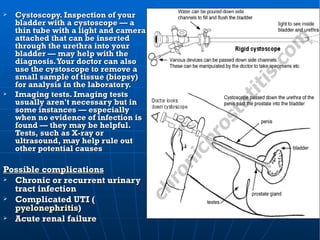
Cystoscopy. Inspection of your bladder with a cystoscope — a thin tube with a light and camera attached that can be inserted through the urethra into your bladder — may help with the diagnosis. Your doctor can also use the cystoscope to remove a small sample of tissue (biopsy) for analysis in the laboratory.  Imaging tests. Imaging tests usually aren't necessary but in some instances — especially when no evidence of infection is found — they may be helpful. Tests, such as X-ray or ultrasound, may help rule out other potential causes Possible complications Chronic or recurrent urinary tract infection  Complicated UTI ( pyelonephritis )  Acute renal failure
Cystitis NURSING DIAGNOSIS Pain, acute May be related to Increased frequency/force of ureteral contractions,Tissue trauma, edema formation; cellular ischemia Fluid Volume, risk for deficient Risk factors may include Nausea/vomiting (generalized abdominal and pelvic nerve irritation from renal or ureteral colic), Postobstructive diuresis Urinary Elimination, impaired May be related to Stimulation of the bladder by calculi, renal or ureteral irritation Mechanical obstruction, inflammation Infection, high risk  for, related to surgical procedure, incisions, implantation of foreign device, decreased mobility.  Knowledge, deficient [Learning Need] regarding condition, prognosis,treatment,  self-care, and discharge needs May be related to Lack of exposure/recall; information misinterpretation, Unfamiliarity with information resources.
Cystitis A. Medical management: Cystitis caused by bacterial infection is generally treated with antibiotics. Treatment for noninfectious cystitis depends on the underlying cause. Commonly used antibiotics include: Nitrofurantoin ,  Trimethoprim-sulfamethoxazole   Amoxicillin   Cephalosporins   Ciprofloxacin  or  levofloxacin   Doxycycline   B. Surgical management: Surgical therapy is generally considered only as a treatment of last resort. Perhaps 10% of patients with interstitial cystitis may become candidates for surgical treatment. Augmentation Cystoplasty . ureterostomy is performed  cystectomy
Nursing Interventions: Patient education on the prevention of CYSTITIS : adequate fluid consumption, regular bladder emptying and proper perineal hygiene. Teach promotive measures and early recognition of symptoms. Emphasize importance of seeing health care provider regularly follow-up, recurrence of symptoms and infection. D. Minimize Precipitating Factors (i.e. medications, stress) INSTRUCT THE PATIENT TO: Urinate frequently. If you feel the urge to void, don't delay going to the bathroom.  Wipe from front to back after a bowel movement. This prevents bacteria in the anal region from spreading to the vagina and urethra.  Take showers rather than tub baths. If you're susceptible to infections, doing so can help prevent infections.  Gently wash the skin around the vagina and anus. Do this daily, but don't use harsh soaps or wash too vigorously. The delicate skin around these areas can become irritated.  Empty your bladder as soon as possible after intercourse. Drink a full glass of water to help flush bacteria.  Avoid using deodorant sprays or feminine products in the genital area. These products can irritate the urethra and bladder
Cystitis Administer antibiotics, as ordered. Monitor TPR every 4 hours and administer antipyretic drugs and antibiotics as prescribed Analgesics PRN Instruct patient to complete full prescription of antibiotic and have a follow up urine culture 2weeks after completion of antibiotic therapy. Unless contraindicated, liberal fluid intake up to 3 to 4 li/day. Establish Realistic Endpoints based on Improvement of Symptoms versus Cure Lifestyle and home remedies Cystitis can be painful, but you can take steps to ease your discomfort:  Use a heating pad. Sometimes a heating pad placed over your lower abdomen can help minimize feelings of bladder pressure or pain.  Stay hydrated. Drink plenty of fluids, but avoid coffee, alcohol, soft drinks with caffeine, citrus juices and spicy foods until your infection has cleared. These items can irritate your bladder and aggravate your frequent or urgent need to urinate.  Take a sitz bath. It may be helpful to soak in a bathtub of warm water (sitz bath) for 15 to 20 minutes.
Wilms tumor (WT) Wilms tumor is a solid tumor of the kidney that arises from immature kidney cells.  It is the fourth most common type of cancer in children.  Approximately 460 new cases of Wilms tumor are diagnosed each year in the United States, and 1 in 8,000-10,000 children are affected.  Average age at diagnosis is about three years, although older children and even adults are occasionally diagnosed with Wilms tumor.  Girls and boys are equally affected.  Other kidney cancers that are much less common than Wilms tumor occasionally arise in children. These tumors include clear cell sarcoma of the kidney, rhabdoid tumor of the kidney, renal cell carcinoma, undifferentiated sarcoma, and congenital mesoblastic nephroma. These tumors behave differently from Wilms tumor and require distinct treatments.
Wilms tumor (WT) Etiology The tumor may arise in 3 clinical settings, the study of which resulted in the discovery of the genetic abnormalities that lead to the disease. The settings for Wilms tumor are (1) sporadic, (2) in association with genetic syndromes, and (3) familial. Although some of the molecular biology of WT is coming to light, the exact cellular mechanisms involved in the etiology of the tumor are still being investigated.
The tumor had taken up over half of the baby’s abdominal cavity when it was found. It pushed the baby’s liver to the left and her right kidneybwas also deformed. The operation lasted 2 hours.
Wilms tumor (WT) Pathophysiology The pathophysiology of Wilms tumor is characterized by an abnormal proliferation of the metanephric blastema cells, which are felt to be primitive embryologic cells of the kidney. When an unborn baby is developing, the kidneys are formed from primitive cells. Over time, these cells become more specialized. The cells mature and organize into the normal kidney structure. Sometimes, clumps of these cells remain in their original, primitive form. If these cells begin to multiply after birth, they may ultimately form a large mass of abnormal cells. This is known as a Wilms' tumor The mean age at diagnosis is 3.5 years. The most common feature at presentation is an abdominal mass. Abdominal pain occurs in 30-40% of cases. Other signs and symptoms include hypertension, fever from tumor necrosis, hematuria, and anemia. Major congenital anomalies include genitourinary anomalies (WAGR and Denys-Drash syndromes, 5% of cases); ectopic, solitary, horseshoe kidney; hypospadias and cryptorchidism; hemihypertrophy and organomegaly (Beckwith-Wiedemann syndrome, 2% of cases); and aniridia (1% of cases). Children with these syndrome anomalies should be checked periodically for Wilms tumor.
Staging  With this information, your child's doctors can assess the extent (stage) of the cancer. Staging helps guide treatment decisions. The various stages of Wilms' tumor are:  Stage I. The cancer is found only in the kidney.  Stage II. The cancer has spread to the tissues and structures near the kidney, such as fat or blood vessels, but it can be completely removed by surgery.  Stage III. The cancer has spread beyond the kidney area to nearby lymph nodes or other structures within the abdomen, and it can't be completely removed by surgery.  Stage IV. The cancer has spread to distant structures, such as the lungs, liver or brain.  Stage V. Cancer cells are in both kidneys.  Wilms tumor (WT)
Wilms tumor (WT) A firm, non-tender mass in the upper quadrant of the abdomen is usually the presenting sign. It may be on either side. Abdominal pain which is related to rapid growth of the tumor. As the tumor enlarges, pressure may cause constipation, vomiting, abdominal distress, anorexia,  weight loss and  dyspnea. Less common manifestation are hypertension, fever, hematuria, and anemia. Associated anomalies includes aniridia (absence of the iris), hemihypertrophy of the vertebrae, and genitourinary anomalies   Assessment Diagnostic Evaluation Abdominal untrasound detects the tumor and assesses the status of the opposite kidney. Chest X-ray and CT scan may be done to identify matastasis. MRI or CT scan of the abdomen may be done to evaluate local spread to lymph nodes. Urine specimens show hematuria; no increase in vanillylmandelic acid and homovanillic acid levels as occurs with  neuroblastoma . Complete blood count , blood chemistries, especially serum electrolytes, uric acid, renal function tests, and liver functions tests, are done for baseline measurement and to detect metastasis.
abdominal mass fever, reduced appetite, malaise Blood in the urine  Constipation  Stomach pain   Nausea & Vomiting  WHAT TO ASSESS? Complications could include: High Blood Pressure   Kidney Failure   metastatic cancer
Wilms tumor (WT) NURSING DIAGNOSIS Pain, acute May be related to Tissue trauma, edema formation; cellular ischemia Fluid Volume, risk for deficient Risk factors may include Nausea/vomiting (generalized abdominal and pelvic nerve irritation from renal or ureteral colic), Postobstructive diuresis Urinary Elimination, impaired May be related to Mechanical obstruction, inflammation Infection, high risk  for, related to surgical procedure, incisions, implantation of foreign device, decreased mobility.  Knowledge, deficient [Learning Need] regarding condition, prognosis,treatment,  self-care, and discharge needs May be related to Lack of exposure/recall; information misinterpretation, Unfamiliarity with information resources.
Medical Intervention Postsurgical radiation--> for stages II, III, and IV; stage I may require radiation depending on histologic studies  Postsurgical chemotherapy--> dactinomycin, vincristine, or doxorubicin may be used and usually given at varying intervals for as long as 15 months Surgical Intervention Most often, surgery is the primary form of treatment for Wilms' tumor. There are three different surgical procedures that may be used. The first, a radical nephrectomy, involves the removal of the entire kidney and the tissues surrounding it (including the ureter, the adrenal gland, surrounding fatty tissues, and oftentimes, nearby lymph nodes), leaving the remaining kidney to continue filtering blood. The second method, a simple nephrectomy, involves the removal of the affected kidney; and the third, partial nephrectomy, is used in rare cases, such as when tumors are found in both kidneys, and involves the removal of the tumors and a section of the kidney surrounding the tumors.   INTERVENTIONS
Wilms tumor (WT) Nursing Care: Teach the parents to have Preconception counseling that helps a woman to make lifestyle changes before conception that will assist in promoting a healthy pregnancy and a healthy baby and  to prevent Wilms ’  Tumor Emphasize importance of seeing health care provider regularly follow-up, recurrence of symptoms and infection. Be alert for  respiratory distress  due to abdominal distention. Observe infant ’ s behavior as indicator of pain; may be irritable and very sensitive to handling or lethargic or unresponsive. Handle the infant gently.  Administer analgesic as prescribed. Encourage follow up care. Provide anticipatory guidance for developmental age of child.
Nephrolithiasis/Urolithiasis Presence of stones anywhere in the urinary tract  Calcium oxalate and uric acid
UROLITHIASIS Refers to stones (calculi) in the urinary tract. Formed when urinary concentrations of calcium oxalate, calcium phosphate and uric acid increase (supersaturation) and dependent on the amounts of the substance, ionic strength, and pH of the urine Nephrolithiasis The process of forming a kidney stone, a stone in the kidney (or lower down in the  urinary tract ).  Most common urological problems 13% in men, 7% in women , increasing in the industrialized world
Kidney Kidney Stones (Nephrolithiasis) Ureter
Nephrolithiasis/Urolithiasis Pathophysiology Supersaturation of crystals due to stasis Stone formation May pass through the urinary tract OBSTRUCTION, INFECTION and HYDRONEPHROSIS
Nephrolithiasis/Urolithiasis Pathophysiology Predisposing factors a. Diet: large amounts of calcium and oxalate b. Increased uric acid levels c. Sedentary life-style, immobility d. Family history of gout or calculi e. Hyperparathyroidism Assessment findings Abdominal or flank pain Renal colic radiating to the groin Hematuria Cool, moist skin Nausea and vomiting
Nephrolithiasis/Urolithiasis Diagnostic tests 1.  KUB Ultrasound and X-ray : pinpoints location, number, and size of stones 2.  IVP:  identifies site of obstruction and presence of non-radiopaque stones 3.  Urinalysis : indicates presence of bacteria, increased protein, increased WBC and RBC (hematuria) COMPLICATIONS:  Recurrence of stones  Urinary tract infection   Obstruction of the ureter,  acute unilateral obstructive uropathy   Kidney damage , scarring  Decrease or loss of function of the affected kidney
Nursing Diagnosis Urinary Elimination, impaired May be related to: Stimulation of the bladder by calculi, renal or ureteral irritation Mechanical obstruction, inflammation Pain, acute May be related to: Increased frequency/force of ureteral contractions, Tissue trauma, edema formation; cellular ischemia Fluid Volume, risk for deficient Risk factors may include: Nausea/vomiting (generalized abdominal and pelvic nerve irritation from renal or ureteral colic) Knowledge, deficient [Learning Need] regarding condition, prognosis, treatment, self-care, and discharge needs May be related to: Lack of exposure/recall; information misinterpretation, Unfamiliarity with information resources Impaired physical mobility,  May be related to :Pain, stiffness, musculoskeletal impairment, surgical procedure, restricted movement, decreased muscle strength as evidence by imposed restrictions of movement, guarded movement, patient's reluctant to move.
Nephrolithiasis/Urolithiasis Medical management Extracorporeal shock-wave lithotripsy: delivers shock waves from outside the body to the stone, causing pulverization Pain management : Morphine or Meperidine Diet modification Surgical management a. Percutaneous nephrostomy: tube is inserted through skin and underlying tissues into renal pelvis to remove calculi. b. Percutaneous nephrostolithotomy: delivers ultrasound waves through a probe placed on the calculus.
Nephrolithiasis/Urolithiasis Nursing Care: Patient education on the prevention of Nephrolithiasis/Urolithiasis : adequate fluid consumption, regular bladder emptying and proper perineal hygiene. Force fluids (3000—4000 cc/day). Encourage ambulation to prevent stasis. reduce foods high in purine  (liver, beans, kidneys, venison, shellfish, meat soups, gravies, legumes);  maintain alkaline urine avoid excess intake of foods/ fluids high in oxalate (tea, chocolate, rhubarb, spinach);  maintain alkaline-ash diet to alkalinize urine  (milk; vegetables; fruits except prunes, cranberries, and plums) limit milk/dairy products;  provide acid-ash diet to acidify urine  (cranberry or prune juice, meat, eggs, poultry, fish, grapes, and whole grains) Relieve pain by administration of analgesics as ordered and application of moist heat to flank area. Administer allopurinol (Zyloprim) as ordered, to decrease uric acid production Provide modified diet, depending upon stone consistency: Calcium, Oxalate and Uric acid stones Provide client teaching and discharge planning concerning Prevention of Urinary stasis by maintaining increased fluid intake  especially in hot weather and during illness; mobility; voiding whenever the urge is felt and at least twice during the night Adherence to prescribed diet,Need for routine urinalysis (at least every 3—4 months), Need to recognize and report signs/ symptoms of recurrence (hematuria, flank pain).
URINARY INCONTINENCE
WHAT IS CONTINENCE? Continence is the ability to pass urine or faeces voluntarily in a socially acceptable place. The continent person can: recognize the need identify the correct place hold on until he reaches the correct place reach the correct place pass urine or faeces when he gets there Incontinence - involuntary loss of urine which is objectively demonstrable & is social and hygienic problem.
HOW DOES INCONTINENCE OCCUR? Factors affecting the bladder: incompetent urethral closure weakness of pelvic floor muscles urethral obstruction overactive urethral closure underactive detrusor detrusor/sphincter dyssynergia unstable detrusor Factors affecting our ability to cope with the bladder: impaired mental function other psychological factors mobility and dexterity problems environmental problems drug treatment
URINARY INCONTINENCE a. Urge Incontinence  Leakage of urine (often large volumes, but variable) because of inability to delay voiding after sensation of bladder fullness is perceived. [Common causes: detrusor instability, CNS disorders, genitourinary conditions] b. Stress Incontinence  Involuntary loss of urine (usually small amount) with increases in intraabdominal pressure (i.e. cough laugh , or exercise) [weakness & laxity of pelvic musculature and urethral sphincter] c. Overflow Incontinence Leakage of urine (usually small amounts) resulting from mechanical forces on an over distended bladder or from other effects of urinary retention on bladder and sphincter function. [anatomic obstruction by prostate or neurologic acontractility secondary to spinal cord injury, diabetes, etc.] ETIOLOGY
Genuine Stress Incontinence Hypermobility excessive descent of bladder neck, so poor transmission of increase in ab pressure to proximal urethra. Intrinsic Sphincter Deficiency poor urethral closure due to scarring - surgery, childbirth, neurological injury.
Increasing parity, probably related to obstetrical trauma Increased intra-abdominal pressure medical factors (eg smoking, chronic bronchitis or other pulmonary problems, constipation with chronic straining at stool, obesity (?)) environmental factors (eg jobs requiring heavy lifting or straining) Pelvic floor trauma and denervation injury obstetric trauma nonobstetric trauma (eg pelvic fractures and radical surgery) Hormonal status and estrogen deficiency Connective tissue disorders WHAT TO ASSESS FOR?
ASSESSMENT AND DIAGNOSTICS ASSESSMENT u rine leakage   Bedwetting (children)   Frequent and unusual urges to urinate  DIAGNOSTICS Physical examination   Stress test  - the patient relaxes, then coughs vigorously as the doctor watches for loss of urine.  Urinalysis  - urine is tested for evidence of infection, urinary stones, or other contributing causes.  Blood tests  - blood is taken, sent to a laboratory, and examined for substances related to causes of incontinence.  Ultrasound  - sound waves are used to visualize the kidneys, ureters, bladder, and urethra.  Cystoscopy  - a thin tube with a tiny camera is inserted in the urethra and used to see the inside of the urethra and bladder.  Urodynamics  - various techniques measure pressure in the bladder and the flow of urine.
Complications of chronic urinary incontinence include: Skin problems. Changes in your activities. Changes in your work life.  Changes in your personal life.  Urodynamics
Nursing Diagnosis Pain, acute May be related to: Increased frequency/force of ureteral contractions,Tissue trauma, edema formation; cellular ischemia Fluid Volume, risk for deficient Risk factors may include Nausea/vomiting (generalized abdominal and pelvic nerve irritation from renal or ureteral colic), Postobstructive diuresis Urinary Elimination, impaired May be related to: Stimulation of the bladder by calculi, renal or ureteral irritation Mechanical obstruction, inflammation Infection, high risk  for, related to surgical procedure, incisions, implantation of foreign device, decreased mobility.  Knowledge, deficient [Learning Need] regarding condition,prognosis,treatment, self-care, and discharge needs May be related to:Lack of exposure/recall; information misinterpretation, Unfamiliarity with information resources.
URINARY INCONTINENCE: Medical/Surgical Management A. Medical management: Anticholinergics (oxybutynin, dicyclomine) Tricyclic antidepressants (imipramine, doxepin) Pseudoephedrine (Sudafed) Estrogen B. Surgical management: Bladder related (inhibiting bladder contractility/decreasing sensory input/ increasing bladder capacity)   Augmentation cystoplasty  Outlet related (Increasing outlet resistance)  Vesicourethral urethral suspension with or without prolapse repair (female)  Sling procedures  TVT - tension free vaginal tape  Bladder outlet reconstruction  Artificial urinary sphincter  Closure of the bladder outlet  Urinary diversion
Nursing Interventions: Patient education on the prevention of URINARY INCONTINENCE : adequate fluid consumption, regular bladder emptying and proper perineal hygiene. Avoid caffeine and alcohol Avoid drinking a lot of fluids in the evening Regular voiding by the clock Gradual increase in time between voids Maintain Adequate Renal Function Establish Normal Voiding Pattern Administer antibiotics, as ordered. Monitor TPR every 4 hours and administer antipyretic drugs and antibiotics as prescribed Analgesics PRN Instruct patient to complete full prescription of antibiotic and have a follow up urine culture 2weeks after completion of antibiotic therapy. Careful monitoring of renal function with proper adjustment of dosages depending on renal clearance Unless contraindicated, liberal fluid intake up to 3 to 4 li/day. Establish Realistic Endpoints based on Improvement of Symptoms versus Cure
REFERENCES: SUZANNE C. SMELTZER, BRENDA G.BARE MEDICAL-SURGICAL NURSING, VOLUME 2 Copyright @2000 by Lippincott &Wilkins 1oth edition PAGES 1250-1309 http://www.mayoclinic.com/health/ http://www. en.wikipedia.org/wiki/Urinary_system  http://www . kidney.niddk.nih.gov/kudiseases/pubs/utiadult  http://www. medicinenet.com/urine_infection/article.htm  http://www. urologychannel.com/uti/index.shtml  http://www . heartlinemedical.com/urinary_tract_infection.htm  http://www. emedicinehealth.com/urinary_tract_infections/article_em.htm  http://www. lab.anhb.uwa.edu.au/mb140/CorePages/Urinary/urinary.htm  http://www. answers.com/topic/urinary-system  http://www. faqs.org/health/Body-by-Design-V2/The-Urinary-System.html

URINARY SYSTEM DISORDERS of ROBB, FILAMER

  • 1.
    Disorders of theUrinary System BPH Pyelonephritis Cystitis Wilm’s Tumor Urolithiasis Nephrolithiasis Urinary incontinence SUBMITTED BY: GROUP II BSN 3-ROBB SUBMITTED TO: MISS SHENELL A. DELFIN, RN Lecturer NCM 102
  • 2.
    URINARY SYSTEM Theurinary tract can be divided into upper and lower tracts: the upper tract refers to the kidneys and the ureters (production and transport of urine); the lower tract comprises the bladder and urethra (storage and emptying of urine) function excretion of waste products elimination of foreign substances regulation of the amount of water in the body control of the concentration of most compounds in the extracellular fluid OVERVIEW:
  • 3.
    functional steps (relatedto anatomy) filtration - glomeruli of the kidney selective resorption and excretion - tubular system of the kidney also functions as an endocrine organ secreting erythropoietin (cortical fibrocytes) and prostaglandin (modified medullary fibrocytes)
  • 4.
    The kidneys continually filter the blood to maintain water and electrolyte balance, remove wastes andforeign chemicals, and perform a variety of hormonal functions, including the regulation of blood pressure . * The ureters pump the urine produced by the kidneys into the bladder at low pressure without causing the holdup, or stasis, that might permit infections . * The renal pelvis and the ureter pump urine in a similar manner, with an automatic pacemaker that controls the rate and force of contraction . * The urine then passes into the bladder through the ureterovesical junction, which is configured in such a way as to prevent backwash, or reflux, of urine from the bladder into the ureter and kidney.
  • 5.
    BPH Pyelonephritis CystitisWilm’s Tumor Urolithiasis Nephrolithiasis Urinary incontinence What are some disorders of the urinary system?
  • 6.
    Benign Prostatic HyperplasiaMost men over age 60 have some BPH, but not all have problems with blockage. There are many different treatment options for BPH Benign prostatic hyperplasia (BPH) is a condition in men that affects the prostate gland, which is part of the male reproductive system. Non-cancerous enlargement of the prostate Caused by growth of new cells Results in varying degrees of bladder outlet obstruction
  • 7.
    Benign Prostatic HyperplasiaThe prostate is located at the bottom of the bladder and surrounds the urethra. BPH is an enlargement of the prostate gland that can interfere with urinary function in older men. It causes blockage by squeezing the urethra, which can make it difficult to urinate. Men with BPH frequently have other bladder symptoms including an increase in frequency of bladder emptying both during the day and at night .
  • 8.
  • 9.
  • 10.
    Etiology Theetiology of BPH is unclear. Two factors necessary for BPH to occur are: (1) endocrine control (DHT) (2) aging The relative roles of androgen & estrogen in inducing BPH, however , are complex & not completely understood. (Progressive Hyperplasia)
  • 11.
    CIRCULATION May exhibit:ElevatedBP (renal effects of advanced enlargement) ELIMINATION May report:Decreased force/caliber of urinary stream; dribbling Hesitancy in initiating voiding Inability to empty bladder completely; urgency and frequency of urination Nocturia, dysuria, hematuria, Sitting to void Recurrent UTIs, history of calculi (urinary stasis) Chronic constipation (protrusion of prostate into rectum) May exhibit:Firm mass in lower abdomen (distended bladder), bladder tenderness Inguinal hernia; hemorrhoids (result of increased abdominal pressure required to empty bladder against resistance) Assessment
  • 12.
    FOOD/FLUID May report:Anorexia;nausea, vomiting, Recent weight loss PAIN/DISCOMFORT May report:Suprapubic, flank, or back pain; sharp, intense (in acute prostatitis), Low back pain SAFETY May report:Fever SEXUALITY May report:Concerns about effects of condition/therapy on sexual abilities Fear of incontinence/dribbling during intimacy Decrease in force of ejaculatory contractions May exhibit:Enlarged, tender prostate TEACHING/LEARNING May report: Family history of cancer, hypertension, kidney disease Use of antihypertensive or antidepressant medications, OTC cold/allergy medications containing sympathomimetics, urinary antibiotics or antibacterial agents Self-treatment with saw palmetto or soy products
  • 13.
    Obstructive Voiding symptomsWeak stream Prolonged micturition Straining Hesitancy Intermittent stream Feeling of incomplete bladder emptying
  • 14.
    Irritative symptoms Frequency Nocturia Urgency Incontinence
  • 15.
    Diagnostics Urinalysis &microscopic examination: to R/O infection or the presence of hematuria. serum U/E & creatinine: to provide baseline information on renal function & metabolic status. Uroflowmetry: At a volume of 125-150ml, normal individuals have average flow rates of 12ml/sec & peak flow close to 20ml/sec. Mild 11-15 ml/sec Moderate  7 and  10 ml/sec Severe  7ml/sec Residual Urine: estimated by U/S or catheterizations. Volumes >150 ml are considered significant since they constitute approximately one-third of normal bladder volume.
  • 16.
    Imaging Ultrasonography: InBPH, it is most useful for measuring bladder & prostate volume as well as residual urine. Estimation of prostatic size is important because most urologists prefer to perform TURP for glands under 100g. TRUS must be used as it is more accurate. IVP: For UTI & complications of BPH
  • 17.
    Complications of BPHUrinary retention Renal impairment Urinary tract infection Gross hematuria Bladder stones Bladder damage (trabeculations, cellules, diverticula) Overflow incontinence
  • 18.
    NURSING DIAGNOSIS: 1. Tissue perfusion , altered, peripheral related to surgical procedure, reduced arterial/venous blood flow, and restricted movement as evidenced by low hemoglobin and hematocrit. 2. Pain (acute), related to surgical procedure as evidenced by facial grimace, guarding behavior, increased pulse, and patient's verbal report of pain. 3. Impaired physical mobility, related to pain, stiffness, musculoskeletal impairment, surgical procedure, restricted movement, decreased muscle strength as evidence by imposed restrictions of movement, guarded movement, patient's reluctant to move. 4. Infection, high risk for, related to surgical procedure, incisions, implantation of foreign device, decreased mobility. 5. Deep vein thrombosis , potential complication related to surgery, immobility. 6. Skin integrity altered , risk for related to physical immobility, skin contact with cpm. 7. Injury, falls, high risk for related to muscle weakness, fatigue, orthostatic hypotension, pain, gait instability, surgery, use of assistive devices, patient's reported fear of falling.
  • 19.
    MEDICAL INTERVENTIONS AlphaBlockers 5-Alpha Reductase Inhibitors SURGICAL INTERVENTIONS Removal of the prostate can be accomplished in several different ways. The extent of the enlargement and the patient's general health will determine which of the three following procedures to use. Transurethral Resection of the Prostate (TURP) Transurethral Incision of the Prostate (TUIP ) Open Prostatectomy
  • 20.
    Transurethral Resection ofthe Prostate (TURP) Transurethral Incision of the Prostate (TUIP ) Open Prostatectomy
  • 21.
    Nursing Interventions Patienteducation on the prevention of bph. Teach promotive measures and early recognition of symptoms. Emphasize importance of seeing health care provider regularly follow-up, recurrence of symptoms and infection. Provide information about disease process/prognosis and treatment needs. Encourage fluids up to 2 liters per day MONITOR VITAL SIGNS CLOSELY. OBSERVE FOR HYPERTENSION, PERIPHERAL/DEPENDENT EDEMA, CHANGES IN MENTATION. WEIGH DAILY. MAINTAIN ACCURATE I&O. Insert catheter for urinary drainage Administer medications – alpha adrenergic blockers and finasteride Avoid anticholinergics Administer anti-spasmodic to prevent bladder spasms Teach the patient perineal muscle exercises. Avoid valsalva until healing. Establish Realistic Endpoints based on Improvement of Symptoms versus Cure
  • 22.
    PYELONEPHRITIS Infection ofthe kidney tissue and pelvis that occurs from several sources; may be acute or chronic. This means suppurative inflammation of the pelvicalyceal ayatem and the renal parenchyma; it is usually bilateral. Affects the women more than men.  Most commonly, it occurs as a result of urinary tract infection.   Incidence  About 3 to 7 out of 10,000 people.
  • 23.
    Etiology: Typicallyis caused by bacteria, but may result from fungi or viruses. Acute pyelonephritis results From bacterial contamination by way of the urethra or from instrumentation. Bacterial hematogenous spread C hronic pyelonephritis may: Be idiopathic May occur in association with obstruction or reflux due to kidney stones or neurogenic bladder
  • 24.
    PYELONEPHRITIS Pathophysiology andmanifestations: The onset of symptoms is usually acute. Symptoms result from infection of the renal parenchyma and can include: Fever, Urinary frequency, Chills, Dysuria, Groin or plank pain, Costovertebral tenderness, Bacteriuria may or may not be associated with these symptoms. Infection of the renal parenchyma  inflammatory response. Disturbance of metabolic function and infection  fatigue. Obstruction  prevention of bacterial elimination  progressive inflammation  fibrosis and scarring. Diagnosis of chronic pyelonephritis is accomplished by IVP and UTZ.
  • 25.
    Assessment findings: Low-gradefever, Abdominal pain, Enuresis, Pain/burning on urination, Urinary frequency,Hematuria Assessment findings: Upper UTI Fever and CHIILS,Flank pain, Costovertebral angle tenderness Exams and Tests A physical exam may show tenderness when the health care provider presses ( palpates ) the area of the kidney. Blood culture may show an infection. Urinalysis commonly reveals white or red blood cells in the urine. Other urine tests may show bacteria in the urine. An intravenous pyelogram (IVP) or CT scan of the abdomen may show swollen kidneys. These tests can also help rule out underlying disorders. Additional tests and procedures that may be done include: Kidney biopsy , Kidney scan , Kidney ultrasound Voiding cystourethrogram Possible Complications Acute kidney failure Kidney infection returns Infection around the kidney (perinephric abscess) Severe blood infection (sepsis)
  • 26.
    PYELONEPHRITIS NURSING DIAGNOSISPain, acute May be related to Increased frequency/force of ureteral contractions,Tissue trauma, edema formation; cellular ischemia Fluid Volume, risk for deficient Risk factors may include Nausea/vomiting (generalized abdominal and pelvic nerve irritation from renal or ureteral colic), Postobstructive diuresis Urinary Elimination, impaired May be related to Stimulation of the bladder by calculi, renal or ureteral irritation Mechanical obstruction, inflammation Infection, high risk for, related to surgical procedure, incisions, implantation of foreign device, decreased mobility. Knowledge, deficient [Learning Need] regarding condition, prognosis,treatment, self-care, and discharge needs May be related to Lack of exposure/recall; information misinterpretation, Unfamiliarity with information resources.
  • 27.
    PYELONEPHRITIS A. Medicalmanagement: Nitrofurantoin or TMP-SMZ to suppress bacterial growth Careful monitoring of renal function with proper adjustment of dosages depending on renal clearance. B. Surgical management: - Occasionally, surgical intervention is necessary to improve chances of recurrence. If no abnormality is identified, some studies suggest long-term preventative (prophylactic) treatment with antibiotics, either daily or after sexual intercourse
  • 28.
    Nursing Interventions: Teachpromotive measures and early recognition of symptoms. Emphasize importance of seeing health care provider regularly follow-up, recurrence of symptoms and infection. Avoid exposing the patient to persons with infections. Monitor V/S, I AND O. Instruct the patient to avoid urinary tract irritants (e.g, coffee, citrus,spices,alcohol) Administer antimicrobial agents, as ordered. Monitor TPR every 4 hours and administer antipyretic drugs and antibiotics as prescribed Analgesics PRN Instruct patient to complete full prescription of antibiotic and have a follow up urine culture 2weeks after completion of antibiotic therapy. Careful monitoring of renal function with proper adjustment of dosages depending on renal clearance Provide client teaching and discharge planning concerning a. Avoidance of tub baths b. Avoidance of bubble baths that might irritate urethra c. Importance for girls to wipe perineum from front to back d. Increase in foods/fluids that acidify urine. Unless contraindicated, liberal fluid intake up to 3 to 4 li/day. Provide warm baths and allow client to void in water to alleviate painful voiding. Manage Pyelonephritis with appropriate antimicrobial therapy, liberal fluids, frequent voiding and hygiene measures
  • 29.
    Cystitis There areseveral types of cystitis: bacterial cystitis , the most common type, which is most often caused by coliform bacteria being transferred from the bowel through the urethra into the bladder. interstitial cystitis (IC) is considered more of an injury to the bladder resulting in constant irritation and rarely involves the presence of infection. IC patients are often misdiagnosed with UTI/cystitis for years before they are told that their urine cultures are negative. The cause of IC is unknown, though some suspect it may be autoimmune where the immune system attacks the bladder. Cystitis is inflammation of the urinary bladder . The condition more often affects women, but can affect either sex and all age groups.
  • 30.
    Cystitis Interstitial Cystitisversus Normal Bladder (Surgery Images) eosinophilic cystitis is a rare form of cystitis that is diagnosed via biopsy. In these cases, the bladder wall is infiltrated with a high number of eosinophils. The cause of EC is also unknown though it has been triggered in children by certain medications. Some consider it a form of interstitial cystitis. radiation cystitis often occurs in patients undergoing radiation therapy for the treatment of cancer. hemorrhagic cystitis In sexually active women the most common cause is from E. Coli and Staphylococcus saprophyticus.
  • 31.
    PATHOPHYSIOLOGY Colonization ismore likely in bacteria with adhesion properties. Bacteria with virulent factors, such as E. coli hemolysin, enhance pathogenicity and allow bacteria to overcome the antimicrobial properties. A compromised host immune system also causes an increased susceptibility to bacterial cystitis. Trauma to the urinary bladder mucosa due to calculi, damaging catheterization and parturition causes erosion and hemorrhage. Retention of urine due to obstruction or neurogenic causes; it occurs when bacteria overcome normal defense mechanisms and attach to and colonize the urinary bladder mucosa. Cystitis
  • 32.
  • 33.
    Cystitis Assess patientif there is: A strong, persistent urge to urinate A burning sensation when urinating Passing frequent, small amounts of urine Blood in the urine (hematuria) Passing cloudy or strong-smelling urine Discomfort in the pelvic area A feeling of pressure in the lower abdomen Low-grade fever
  • 34.
    ASSESSMENT AND DIAGNOSTICSAssess patient if there is: A strong, persistent urge to urinate A burning sensation when urinating Passing frequent, small amounts of urine Blood in the urine (hematuria) Passing cloudy or strong-smelling urine Discomfort in the pelvic area A feeling of pressure in the lower abdomen Low-grade fever Tests and diagnostics A urinalysis commonly reveals white blood cells (WBCs) or red blood cells (RBCs). A urine culture (clean catch) or catheterized urine specimen may be performed to determine the type of bacteria in the urine and the appropriate antibiotic for treatment.
  • 35.
    Cystoscopy. Inspection ofyour bladder with a cystoscope — a thin tube with a light and camera attached that can be inserted through the urethra into your bladder — may help with the diagnosis. Your doctor can also use the cystoscope to remove a small sample of tissue (biopsy) for analysis in the laboratory. Imaging tests. Imaging tests usually aren't necessary but in some instances — especially when no evidence of infection is found — they may be helpful. Tests, such as X-ray or ultrasound, may help rule out other potential causes Possible complications Chronic or recurrent urinary tract infection Complicated UTI ( pyelonephritis ) Acute renal failure
  • 36.
    Cystitis NURSING DIAGNOSISPain, acute May be related to Increased frequency/force of ureteral contractions,Tissue trauma, edema formation; cellular ischemia Fluid Volume, risk for deficient Risk factors may include Nausea/vomiting (generalized abdominal and pelvic nerve irritation from renal or ureteral colic), Postobstructive diuresis Urinary Elimination, impaired May be related to Stimulation of the bladder by calculi, renal or ureteral irritation Mechanical obstruction, inflammation Infection, high risk for, related to surgical procedure, incisions, implantation of foreign device, decreased mobility. Knowledge, deficient [Learning Need] regarding condition, prognosis,treatment, self-care, and discharge needs May be related to Lack of exposure/recall; information misinterpretation, Unfamiliarity with information resources.
  • 37.
    Cystitis A. Medicalmanagement: Cystitis caused by bacterial infection is generally treated with antibiotics. Treatment for noninfectious cystitis depends on the underlying cause. Commonly used antibiotics include: Nitrofurantoin , Trimethoprim-sulfamethoxazole Amoxicillin Cephalosporins Ciprofloxacin or levofloxacin Doxycycline B. Surgical management: Surgical therapy is generally considered only as a treatment of last resort. Perhaps 10% of patients with interstitial cystitis may become candidates for surgical treatment. Augmentation Cystoplasty . ureterostomy is performed cystectomy
  • 38.
    Nursing Interventions: Patienteducation on the prevention of CYSTITIS : adequate fluid consumption, regular bladder emptying and proper perineal hygiene. Teach promotive measures and early recognition of symptoms. Emphasize importance of seeing health care provider regularly follow-up, recurrence of symptoms and infection. D. Minimize Precipitating Factors (i.e. medications, stress) INSTRUCT THE PATIENT TO: Urinate frequently. If you feel the urge to void, don't delay going to the bathroom. Wipe from front to back after a bowel movement. This prevents bacteria in the anal region from spreading to the vagina and urethra. Take showers rather than tub baths. If you're susceptible to infections, doing so can help prevent infections. Gently wash the skin around the vagina and anus. Do this daily, but don't use harsh soaps or wash too vigorously. The delicate skin around these areas can become irritated. Empty your bladder as soon as possible after intercourse. Drink a full glass of water to help flush bacteria. Avoid using deodorant sprays or feminine products in the genital area. These products can irritate the urethra and bladder
  • 39.
    Cystitis Administer antibiotics,as ordered. Monitor TPR every 4 hours and administer antipyretic drugs and antibiotics as prescribed Analgesics PRN Instruct patient to complete full prescription of antibiotic and have a follow up urine culture 2weeks after completion of antibiotic therapy. Unless contraindicated, liberal fluid intake up to 3 to 4 li/day. Establish Realistic Endpoints based on Improvement of Symptoms versus Cure Lifestyle and home remedies Cystitis can be painful, but you can take steps to ease your discomfort: Use a heating pad. Sometimes a heating pad placed over your lower abdomen can help minimize feelings of bladder pressure or pain. Stay hydrated. Drink plenty of fluids, but avoid coffee, alcohol, soft drinks with caffeine, citrus juices and spicy foods until your infection has cleared. These items can irritate your bladder and aggravate your frequent or urgent need to urinate. Take a sitz bath. It may be helpful to soak in a bathtub of warm water (sitz bath) for 15 to 20 minutes.
  • 40.
    Wilms tumor (WT)Wilms tumor is a solid tumor of the kidney that arises from immature kidney cells. It is the fourth most common type of cancer in children. Approximately 460 new cases of Wilms tumor are diagnosed each year in the United States, and 1 in 8,000-10,000 children are affected. Average age at diagnosis is about three years, although older children and even adults are occasionally diagnosed with Wilms tumor. Girls and boys are equally affected. Other kidney cancers that are much less common than Wilms tumor occasionally arise in children. These tumors include clear cell sarcoma of the kidney, rhabdoid tumor of the kidney, renal cell carcinoma, undifferentiated sarcoma, and congenital mesoblastic nephroma. These tumors behave differently from Wilms tumor and require distinct treatments.
  • 41.
    Wilms tumor (WT)Etiology The tumor may arise in 3 clinical settings, the study of which resulted in the discovery of the genetic abnormalities that lead to the disease. The settings for Wilms tumor are (1) sporadic, (2) in association with genetic syndromes, and (3) familial. Although some of the molecular biology of WT is coming to light, the exact cellular mechanisms involved in the etiology of the tumor are still being investigated.
  • 42.
    The tumor hadtaken up over half of the baby’s abdominal cavity when it was found. It pushed the baby’s liver to the left and her right kidneybwas also deformed. The operation lasted 2 hours.
  • 43.
    Wilms tumor (WT)Pathophysiology The pathophysiology of Wilms tumor is characterized by an abnormal proliferation of the metanephric blastema cells, which are felt to be primitive embryologic cells of the kidney. When an unborn baby is developing, the kidneys are formed from primitive cells. Over time, these cells become more specialized. The cells mature and organize into the normal kidney structure. Sometimes, clumps of these cells remain in their original, primitive form. If these cells begin to multiply after birth, they may ultimately form a large mass of abnormal cells. This is known as a Wilms' tumor The mean age at diagnosis is 3.5 years. The most common feature at presentation is an abdominal mass. Abdominal pain occurs in 30-40% of cases. Other signs and symptoms include hypertension, fever from tumor necrosis, hematuria, and anemia. Major congenital anomalies include genitourinary anomalies (WAGR and Denys-Drash syndromes, 5% of cases); ectopic, solitary, horseshoe kidney; hypospadias and cryptorchidism; hemihypertrophy and organomegaly (Beckwith-Wiedemann syndrome, 2% of cases); and aniridia (1% of cases). Children with these syndrome anomalies should be checked periodically for Wilms tumor.
  • 44.
    Staging Withthis information, your child's doctors can assess the extent (stage) of the cancer. Staging helps guide treatment decisions. The various stages of Wilms' tumor are: Stage I. The cancer is found only in the kidney. Stage II. The cancer has spread to the tissues and structures near the kidney, such as fat or blood vessels, but it can be completely removed by surgery. Stage III. The cancer has spread beyond the kidney area to nearby lymph nodes or other structures within the abdomen, and it can't be completely removed by surgery. Stage IV. The cancer has spread to distant structures, such as the lungs, liver or brain. Stage V. Cancer cells are in both kidneys. Wilms tumor (WT)
  • 45.
    Wilms tumor (WT)A firm, non-tender mass in the upper quadrant of the abdomen is usually the presenting sign. It may be on either side. Abdominal pain which is related to rapid growth of the tumor. As the tumor enlarges, pressure may cause constipation, vomiting, abdominal distress, anorexia, weight loss and dyspnea. Less common manifestation are hypertension, fever, hematuria, and anemia. Associated anomalies includes aniridia (absence of the iris), hemihypertrophy of the vertebrae, and genitourinary anomalies Assessment Diagnostic Evaluation Abdominal untrasound detects the tumor and assesses the status of the opposite kidney. Chest X-ray and CT scan may be done to identify matastasis. MRI or CT scan of the abdomen may be done to evaluate local spread to lymph nodes. Urine specimens show hematuria; no increase in vanillylmandelic acid and homovanillic acid levels as occurs with neuroblastoma . Complete blood count , blood chemistries, especially serum electrolytes, uric acid, renal function tests, and liver functions tests, are done for baseline measurement and to detect metastasis.
  • 46.
    abdominal mass fever,reduced appetite, malaise Blood in the urine Constipation Stomach pain Nausea & Vomiting WHAT TO ASSESS? Complications could include: High Blood Pressure Kidney Failure metastatic cancer
  • 47.
    Wilms tumor (WT)NURSING DIAGNOSIS Pain, acute May be related to Tissue trauma, edema formation; cellular ischemia Fluid Volume, risk for deficient Risk factors may include Nausea/vomiting (generalized abdominal and pelvic nerve irritation from renal or ureteral colic), Postobstructive diuresis Urinary Elimination, impaired May be related to Mechanical obstruction, inflammation Infection, high risk for, related to surgical procedure, incisions, implantation of foreign device, decreased mobility. Knowledge, deficient [Learning Need] regarding condition, prognosis,treatment, self-care, and discharge needs May be related to Lack of exposure/recall; information misinterpretation, Unfamiliarity with information resources.
  • 48.
    Medical Intervention Postsurgicalradiation--> for stages II, III, and IV; stage I may require radiation depending on histologic studies Postsurgical chemotherapy--> dactinomycin, vincristine, or doxorubicin may be used and usually given at varying intervals for as long as 15 months Surgical Intervention Most often, surgery is the primary form of treatment for Wilms' tumor. There are three different surgical procedures that may be used. The first, a radical nephrectomy, involves the removal of the entire kidney and the tissues surrounding it (including the ureter, the adrenal gland, surrounding fatty tissues, and oftentimes, nearby lymph nodes), leaving the remaining kidney to continue filtering blood. The second method, a simple nephrectomy, involves the removal of the affected kidney; and the third, partial nephrectomy, is used in rare cases, such as when tumors are found in both kidneys, and involves the removal of the tumors and a section of the kidney surrounding the tumors. INTERVENTIONS
  • 49.
    Wilms tumor (WT)Nursing Care: Teach the parents to have Preconception counseling that helps a woman to make lifestyle changes before conception that will assist in promoting a healthy pregnancy and a healthy baby and to prevent Wilms ’ Tumor Emphasize importance of seeing health care provider regularly follow-up, recurrence of symptoms and infection. Be alert for respiratory distress due to abdominal distention. Observe infant ’ s behavior as indicator of pain; may be irritable and very sensitive to handling or lethargic or unresponsive. Handle the infant gently. Administer analgesic as prescribed. Encourage follow up care. Provide anticipatory guidance for developmental age of child.
  • 50.
    Nephrolithiasis/Urolithiasis Presence ofstones anywhere in the urinary tract Calcium oxalate and uric acid
  • 51.
    UROLITHIASIS Refers tostones (calculi) in the urinary tract. Formed when urinary concentrations of calcium oxalate, calcium phosphate and uric acid increase (supersaturation) and dependent on the amounts of the substance, ionic strength, and pH of the urine Nephrolithiasis The process of forming a kidney stone, a stone in the kidney (or lower down in the urinary tract ). Most common urological problems 13% in men, 7% in women , increasing in the industrialized world
  • 52.
    Kidney Kidney Stones(Nephrolithiasis) Ureter
  • 53.
    Nephrolithiasis/Urolithiasis Pathophysiology Supersaturationof crystals due to stasis Stone formation May pass through the urinary tract OBSTRUCTION, INFECTION and HYDRONEPHROSIS
  • 54.
    Nephrolithiasis/Urolithiasis Pathophysiology Predisposingfactors a. Diet: large amounts of calcium and oxalate b. Increased uric acid levels c. Sedentary life-style, immobility d. Family history of gout or calculi e. Hyperparathyroidism Assessment findings Abdominal or flank pain Renal colic radiating to the groin Hematuria Cool, moist skin Nausea and vomiting
  • 55.
    Nephrolithiasis/Urolithiasis Diagnostic tests1. KUB Ultrasound and X-ray : pinpoints location, number, and size of stones 2. IVP: identifies site of obstruction and presence of non-radiopaque stones 3. Urinalysis : indicates presence of bacteria, increased protein, increased WBC and RBC (hematuria) COMPLICATIONS: Recurrence of stones Urinary tract infection Obstruction of the ureter, acute unilateral obstructive uropathy Kidney damage , scarring Decrease or loss of function of the affected kidney
  • 56.
    Nursing Diagnosis UrinaryElimination, impaired May be related to: Stimulation of the bladder by calculi, renal or ureteral irritation Mechanical obstruction, inflammation Pain, acute May be related to: Increased frequency/force of ureteral contractions, Tissue trauma, edema formation; cellular ischemia Fluid Volume, risk for deficient Risk factors may include: Nausea/vomiting (generalized abdominal and pelvic nerve irritation from renal or ureteral colic) Knowledge, deficient [Learning Need] regarding condition, prognosis, treatment, self-care, and discharge needs May be related to: Lack of exposure/recall; information misinterpretation, Unfamiliarity with information resources Impaired physical mobility, May be related to :Pain, stiffness, musculoskeletal impairment, surgical procedure, restricted movement, decreased muscle strength as evidence by imposed restrictions of movement, guarded movement, patient's reluctant to move.
  • 57.
    Nephrolithiasis/Urolithiasis Medical managementExtracorporeal shock-wave lithotripsy: delivers shock waves from outside the body to the stone, causing pulverization Pain management : Morphine or Meperidine Diet modification Surgical management a. Percutaneous nephrostomy: tube is inserted through skin and underlying tissues into renal pelvis to remove calculi. b. Percutaneous nephrostolithotomy: delivers ultrasound waves through a probe placed on the calculus.
  • 58.
    Nephrolithiasis/Urolithiasis Nursing Care:Patient education on the prevention of Nephrolithiasis/Urolithiasis : adequate fluid consumption, regular bladder emptying and proper perineal hygiene. Force fluids (3000—4000 cc/day). Encourage ambulation to prevent stasis. reduce foods high in purine (liver, beans, kidneys, venison, shellfish, meat soups, gravies, legumes); maintain alkaline urine avoid excess intake of foods/ fluids high in oxalate (tea, chocolate, rhubarb, spinach); maintain alkaline-ash diet to alkalinize urine (milk; vegetables; fruits except prunes, cranberries, and plums) limit milk/dairy products; provide acid-ash diet to acidify urine (cranberry or prune juice, meat, eggs, poultry, fish, grapes, and whole grains) Relieve pain by administration of analgesics as ordered and application of moist heat to flank area. Administer allopurinol (Zyloprim) as ordered, to decrease uric acid production Provide modified diet, depending upon stone consistency: Calcium, Oxalate and Uric acid stones Provide client teaching and discharge planning concerning Prevention of Urinary stasis by maintaining increased fluid intake especially in hot weather and during illness; mobility; voiding whenever the urge is felt and at least twice during the night Adherence to prescribed diet,Need for routine urinalysis (at least every 3—4 months), Need to recognize and report signs/ symptoms of recurrence (hematuria, flank pain).
  • 59.
  • 60.
    WHAT IS CONTINENCE?Continence is the ability to pass urine or faeces voluntarily in a socially acceptable place. The continent person can: recognize the need identify the correct place hold on until he reaches the correct place reach the correct place pass urine or faeces when he gets there Incontinence - involuntary loss of urine which is objectively demonstrable & is social and hygienic problem.
  • 61.
    HOW DOES INCONTINENCEOCCUR? Factors affecting the bladder: incompetent urethral closure weakness of pelvic floor muscles urethral obstruction overactive urethral closure underactive detrusor detrusor/sphincter dyssynergia unstable detrusor Factors affecting our ability to cope with the bladder: impaired mental function other psychological factors mobility and dexterity problems environmental problems drug treatment
  • 62.
    URINARY INCONTINENCE a.Urge Incontinence Leakage of urine (often large volumes, but variable) because of inability to delay voiding after sensation of bladder fullness is perceived. [Common causes: detrusor instability, CNS disorders, genitourinary conditions] b. Stress Incontinence Involuntary loss of urine (usually small amount) with increases in intraabdominal pressure (i.e. cough laugh , or exercise) [weakness & laxity of pelvic musculature and urethral sphincter] c. Overflow Incontinence Leakage of urine (usually small amounts) resulting from mechanical forces on an over distended bladder or from other effects of urinary retention on bladder and sphincter function. [anatomic obstruction by prostate or neurologic acontractility secondary to spinal cord injury, diabetes, etc.] ETIOLOGY
  • 63.
    Genuine Stress IncontinenceHypermobility excessive descent of bladder neck, so poor transmission of increase in ab pressure to proximal urethra. Intrinsic Sphincter Deficiency poor urethral closure due to scarring - surgery, childbirth, neurological injury.
  • 64.
    Increasing parity, probablyrelated to obstetrical trauma Increased intra-abdominal pressure medical factors (eg smoking, chronic bronchitis or other pulmonary problems, constipation with chronic straining at stool, obesity (?)) environmental factors (eg jobs requiring heavy lifting or straining) Pelvic floor trauma and denervation injury obstetric trauma nonobstetric trauma (eg pelvic fractures and radical surgery) Hormonal status and estrogen deficiency Connective tissue disorders WHAT TO ASSESS FOR?
  • 65.
    ASSESSMENT AND DIAGNOSTICSASSESSMENT u rine leakage Bedwetting (children) Frequent and unusual urges to urinate DIAGNOSTICS Physical examination Stress test - the patient relaxes, then coughs vigorously as the doctor watches for loss of urine. Urinalysis - urine is tested for evidence of infection, urinary stones, or other contributing causes. Blood tests - blood is taken, sent to a laboratory, and examined for substances related to causes of incontinence. Ultrasound - sound waves are used to visualize the kidneys, ureters, bladder, and urethra. Cystoscopy - a thin tube with a tiny camera is inserted in the urethra and used to see the inside of the urethra and bladder. Urodynamics - various techniques measure pressure in the bladder and the flow of urine.
  • 66.
    Complications of chronicurinary incontinence include: Skin problems. Changes in your activities. Changes in your work life. Changes in your personal life. Urodynamics
  • 67.
    Nursing Diagnosis Pain,acute May be related to: Increased frequency/force of ureteral contractions,Tissue trauma, edema formation; cellular ischemia Fluid Volume, risk for deficient Risk factors may include Nausea/vomiting (generalized abdominal and pelvic nerve irritation from renal or ureteral colic), Postobstructive diuresis Urinary Elimination, impaired May be related to: Stimulation of the bladder by calculi, renal or ureteral irritation Mechanical obstruction, inflammation Infection, high risk for, related to surgical procedure, incisions, implantation of foreign device, decreased mobility. Knowledge, deficient [Learning Need] regarding condition,prognosis,treatment, self-care, and discharge needs May be related to:Lack of exposure/recall; information misinterpretation, Unfamiliarity with information resources.
  • 68.
    URINARY INCONTINENCE: Medical/SurgicalManagement A. Medical management: Anticholinergics (oxybutynin, dicyclomine) Tricyclic antidepressants (imipramine, doxepin) Pseudoephedrine (Sudafed) Estrogen B. Surgical management: Bladder related (inhibiting bladder contractility/decreasing sensory input/ increasing bladder capacity) Augmentation cystoplasty Outlet related (Increasing outlet resistance) Vesicourethral urethral suspension with or without prolapse repair (female) Sling procedures TVT - tension free vaginal tape Bladder outlet reconstruction Artificial urinary sphincter Closure of the bladder outlet Urinary diversion
  • 69.
    Nursing Interventions: Patienteducation on the prevention of URINARY INCONTINENCE : adequate fluid consumption, regular bladder emptying and proper perineal hygiene. Avoid caffeine and alcohol Avoid drinking a lot of fluids in the evening Regular voiding by the clock Gradual increase in time between voids Maintain Adequate Renal Function Establish Normal Voiding Pattern Administer antibiotics, as ordered. Monitor TPR every 4 hours and administer antipyretic drugs and antibiotics as prescribed Analgesics PRN Instruct patient to complete full prescription of antibiotic and have a follow up urine culture 2weeks after completion of antibiotic therapy. Careful monitoring of renal function with proper adjustment of dosages depending on renal clearance Unless contraindicated, liberal fluid intake up to 3 to 4 li/day. Establish Realistic Endpoints based on Improvement of Symptoms versus Cure
  • 70.
    REFERENCES: SUZANNE C.SMELTZER, BRENDA G.BARE MEDICAL-SURGICAL NURSING, VOLUME 2 Copyright @2000 by Lippincott &Wilkins 1oth edition PAGES 1250-1309 http://www.mayoclinic.com/health/ http://www. en.wikipedia.org/wiki/Urinary_system http://www . kidney.niddk.nih.gov/kudiseases/pubs/utiadult http://www. medicinenet.com/urine_infection/article.htm http://www. urologychannel.com/uti/index.shtml http://www . heartlinemedical.com/urinary_tract_infection.htm http://www. emedicinehealth.com/urinary_tract_infections/article_em.htm http://www. lab.anhb.uwa.edu.au/mb140/CorePages/Urinary/urinary.htm http://www. answers.com/topic/urinary-system http://www. faqs.org/health/Body-by-Design-V2/The-Urinary-System.html