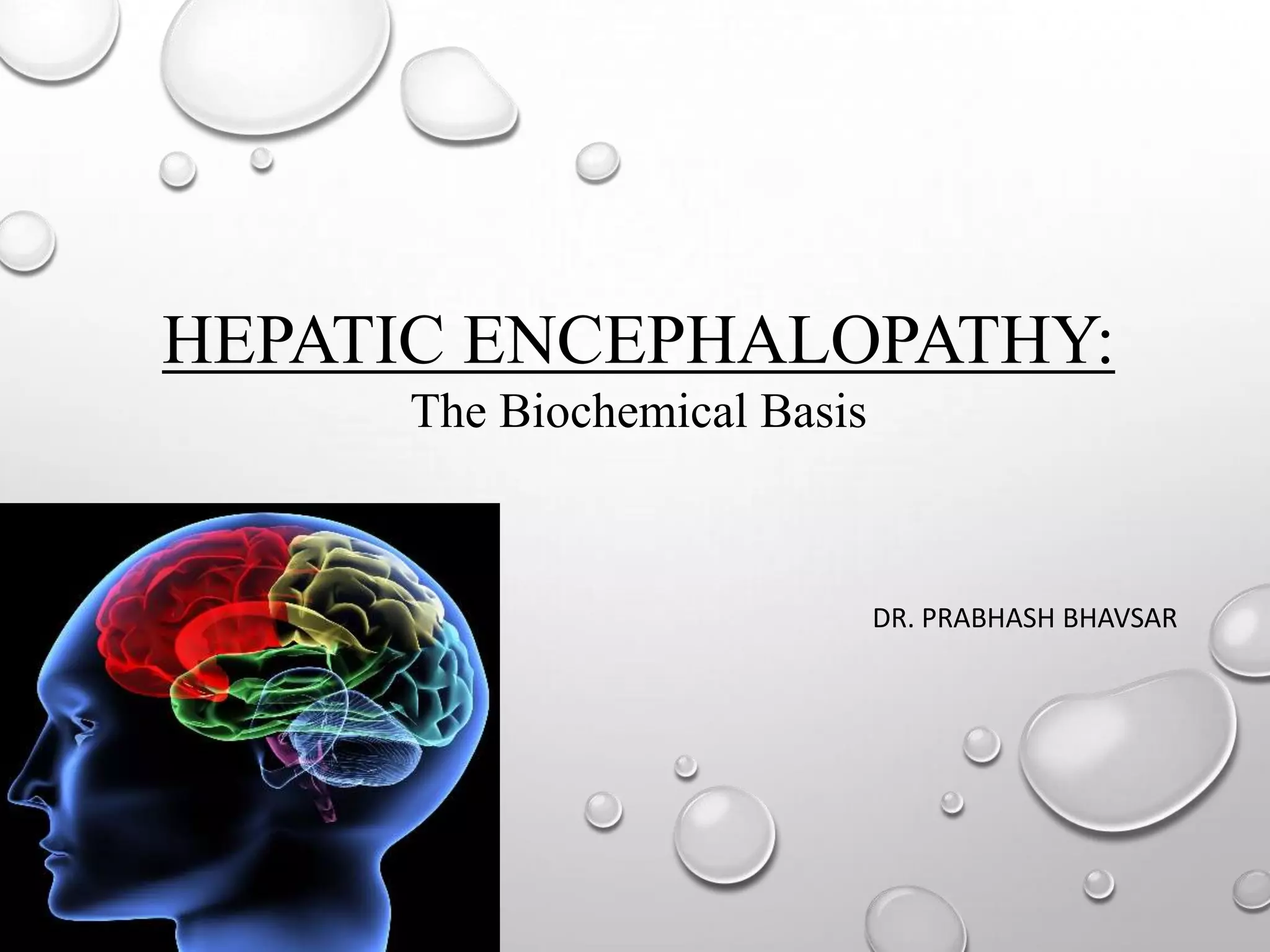
HEPATIC ENCEPHALOPATHY:
The Biochemical Basis

DR. PRABHASH BHAVSAR
Hippocrates described a patient with
fulminant hepatitis- who ‘barked like a
dog, could not be held and said things
which could not be comprehended’.
What Is HE ?
• It’s a Neuropsychiatric disorder occurring due to liver
dysfunction. It is a reversible condition.

• Manifests by broad spectrum of neuropsychiatric disturbancesCognitive

Emotional

Behavioral

Psychomotor

• In the severe form it can lead to coma and death.

Locomotive
Etiology….
• The root cause is – liver failure
• Liver failure alone to cause HE is rare. If occurs, it is mostly in
acute liver failure.
• But in most of the chronic liver failure HE is caused by an variety
of precipitating factors likeExcessive nitrogen load- protein rich diet, GI bleeding,
renal failure, constipation.
Electrolyte disturbances
Drugs- sedatives, alcohol,
Infection- UTI, bacterial peritonitis etc.
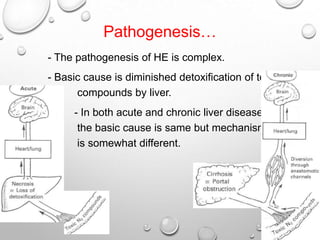
Pathogenesis…
- The pathogenesis of HE is complex.
- Basic cause is diminished detoxification of toxic
compounds by liver.
- In both acute and chronic liver disease,
the basic cause is same but mechanism
is somewhat different.
•
Major toxins of HE
• Ammonia
• Mercaptans
• FFA
• Phenols
• Manganese

These all are believed to act in synergism.
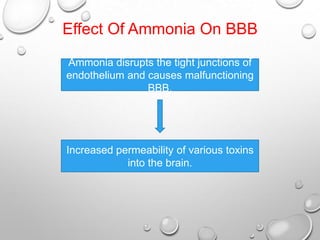
Effect Of Ammonia On BBB
Ammonia disrupts the tight junctions of
endothelium and causes malfunctioning
BBB.

Increased permeability of various toxins
into the brain.
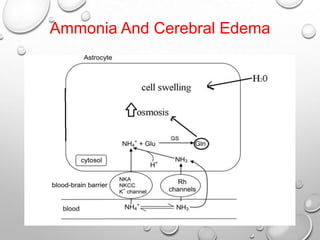
Ammonia And Cerebral Edema
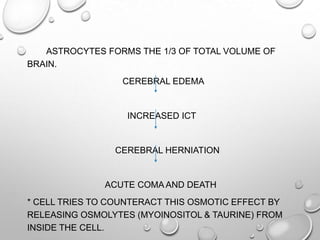
ASTROCYTES FORMS THE 1/3 OF TOTAL VOLUME OF
BRAIN.
CEREBRAL EDEMA

INCREASED ICT

CEREBRAL HERNIATION

ACUTE COMA AND DEATH

* CELL TRIES TO COUNTERACT THIS OSMOTIC EFFECT BY
RELEASING OSMOLYTES (MYOINOSITOL & TAURINE) FROM
INSIDE THE CELL.
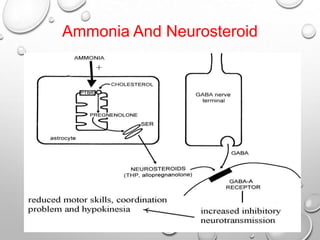
Ammonia And Neurosteroid
Ammonia And Excitatory
NTransmission
• Exposure of astrocyte to high ammonia levels leads to
release of glutamate.

• Glutamate contributes to increased neuronal
activation, which may be the cause of agitation and
seizure in HE.
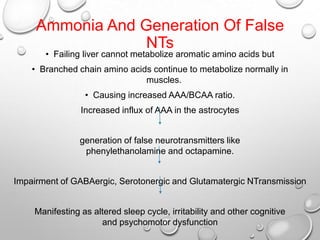
Ammonia And Generation Of False
NTs
• Failing liver cannot metabolize aromatic amino acids but

• Branched chain amino acids continue to metabolize normally in
muscles.
• Causing increased AAA/BCAA ratio.
Increased influx of AAA in the astrocytes

generation of false neurotransmitters like
phenylethanolamine and octapamine.
Impairment of GABAergic, Serotonergic and Glutamatergic NTransmission
Manifesting as altered sleep cycle, irritability and other cognitive
and psychomotor dysfunction
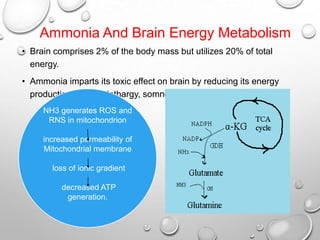
Ammonia And Brain Energy Metabolism
• Brain comprises 2% of the body mass but utilizes 20% of total
energy.
• Ammonia imparts its toxic effect on brain by reducing its energy
production causing lethargy, somnolence and confusion.
NH3 generates ROS and
RNS in mitochondrion
increased permeability of
Mitochondrial membrane
loss of ionic gradient
decreased ATP
generation.
Effect Of Manganese
• Manganese
which
escape
detoxification
hepatocytes accumulates in basal ganglia.

in

• Hyperintense signal on MRI of brain are believed to be
due to manganese deposition.
• Disturbed basal ganglia functions leads to
extrapyramidal symptoms like tremor, rigidity, and
akinesia.
Effect Of Secondary Infections
• Secondary infections causes SIRS to set in.
• SIRS generates TNF.
• TNF stimulates astrocytes to secrete IL-1 & IL-6,
which further increases BBB permeability.
Small Intestinal Bacterial Overgrowth
• It is associated with methionine degradation
formation of mercaptans.

and

• Excessive production of mercaptans and their
absorption into blood also plays synergistic role in
hepatic encephalopathy, although exact causes are
not known.
• Mercaptans excretion into breath causes the foul
smell, k/a foetor hepaticus.
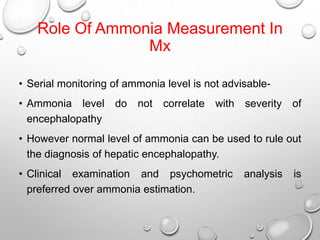
Role Of Ammonia Measurement In
Mx
• Serial monitoring of ammonia level is not advisable• Ammonia level
encephalopathy

do not

correlate

with

severity of

• However normal level of ammonia can be used to rule out
the diagnosis of hepatic encephalopathy.
• Clinical examination and psychometric
preferred over ammonia estimation.

analysis

is
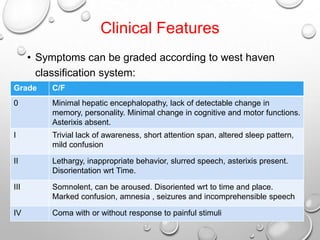
Clinical Features
• Symptoms can be graded according to west haven
classification system:
Grade

C/F

0

Minimal hepatic encephalopathy, lack of detectable change in
memory, personality. Minimal change in cognitive and motor functions.
Asterixis absent.

I

Trivial lack of awareness, short attention span, altered sleep pattern,
mild confusion

II

Lethargy, inappropriate behavior, slurred speech, asterixis present.
Disorientation wrt Time.

III

Somnolent, can be aroused. Disoriented wrt to time and place.
Marked confusion, amnesia , seizures and incomprehensible speech

IV

Coma with or without response to painful stimuli
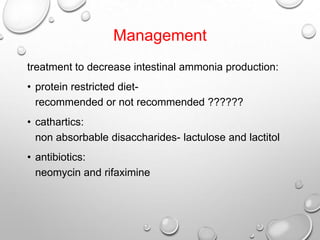
Management
treatment to decrease intestinal ammonia production:
• protein restricted dietrecommended or not recommended ??????
• cathartics:
non absorbable disaccharides- lactulose and lactitol
• antibiotics:
neomycin and rifaximine
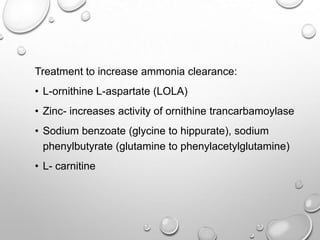
Treatment to increase ammonia clearance:

• L-ornithine L-aspartate (LOLA)
• Zinc- increases activity of ornithine trancarbamoylase
• Sodium benzoate (glycine to hippurate), sodium
phenylbutyrate (glutamine to phenylacetylglutamine)
• L- carnitine
Hepatic encephalopathy: biochemical basis

Hepatic encephalopathy: biochemical basis

  • 1.
    HEPATIC ENCEPHALOPATHY: The BiochemicalBasis DR. PRABHASH BHAVSAR
  • 2.
    Hippocrates described apatient with fulminant hepatitis- who ‘barked like a dog, could not be held and said things which could not be comprehended’.
  • 3.
    What Is HE? • It’s a Neuropsychiatric disorder occurring due to liver dysfunction. It is a reversible condition. • Manifests by broad spectrum of neuropsychiatric disturbancesCognitive Emotional Behavioral Psychomotor • In the severe form it can lead to coma and death. Locomotive
  • 4.
    Etiology…. • The rootcause is – liver failure • Liver failure alone to cause HE is rare. If occurs, it is mostly in acute liver failure. • But in most of the chronic liver failure HE is caused by an variety of precipitating factors likeExcessive nitrogen load- protein rich diet, GI bleeding, renal failure, constipation. Electrolyte disturbances Drugs- sedatives, alcohol, Infection- UTI, bacterial peritonitis etc.
  • 5.
    Pathogenesis… - The pathogenesisof HE is complex. - Basic cause is diminished detoxification of toxic compounds by liver. - In both acute and chronic liver disease, the basic cause is same but mechanism is somewhat different. •
  • 6.
    Major toxins ofHE • Ammonia • Mercaptans • FFA • Phenols • Manganese These all are believed to act in synergism.
  • 7.
    Effect Of AmmoniaOn BBB Ammonia disrupts the tight junctions of endothelium and causes malfunctioning BBB. Increased permeability of various toxins into the brain.
  • 8.
  • 9.
    ASTROCYTES FORMS THE1/3 OF TOTAL VOLUME OF BRAIN. CEREBRAL EDEMA INCREASED ICT CEREBRAL HERNIATION ACUTE COMA AND DEATH * CELL TRIES TO COUNTERACT THIS OSMOTIC EFFECT BY RELEASING OSMOLYTES (MYOINOSITOL & TAURINE) FROM INSIDE THE CELL.
  • 10.
  • 11.
    Ammonia And Excitatory NTransmission •Exposure of astrocyte to high ammonia levels leads to release of glutamate. • Glutamate contributes to increased neuronal activation, which may be the cause of agitation and seizure in HE.
  • 12.
    Ammonia And GenerationOf False NTs • Failing liver cannot metabolize aromatic amino acids but • Branched chain amino acids continue to metabolize normally in muscles. • Causing increased AAA/BCAA ratio. Increased influx of AAA in the astrocytes generation of false neurotransmitters like phenylethanolamine and octapamine. Impairment of GABAergic, Serotonergic and Glutamatergic NTransmission Manifesting as altered sleep cycle, irritability and other cognitive and psychomotor dysfunction
  • 13.
    Ammonia And BrainEnergy Metabolism • Brain comprises 2% of the body mass but utilizes 20% of total energy. • Ammonia imparts its toxic effect on brain by reducing its energy production causing lethargy, somnolence and confusion. NH3 generates ROS and RNS in mitochondrion increased permeability of Mitochondrial membrane loss of ionic gradient decreased ATP generation.
  • 14.
    Effect Of Manganese •Manganese which escape detoxification hepatocytes accumulates in basal ganglia. in • Hyperintense signal on MRI of brain are believed to be due to manganese deposition. • Disturbed basal ganglia functions leads to extrapyramidal symptoms like tremor, rigidity, and akinesia.
  • 15.
    Effect Of SecondaryInfections • Secondary infections causes SIRS to set in. • SIRS generates TNF. • TNF stimulates astrocytes to secrete IL-1 & IL-6, which further increases BBB permeability.
  • 16.
    Small Intestinal BacterialOvergrowth • It is associated with methionine degradation formation of mercaptans. and • Excessive production of mercaptans and their absorption into blood also plays synergistic role in hepatic encephalopathy, although exact causes are not known. • Mercaptans excretion into breath causes the foul smell, k/a foetor hepaticus.
  • 17.
    Role Of AmmoniaMeasurement In Mx • Serial monitoring of ammonia level is not advisable• Ammonia level encephalopathy do not correlate with severity of • However normal level of ammonia can be used to rule out the diagnosis of hepatic encephalopathy. • Clinical examination and psychometric preferred over ammonia estimation. analysis is
  • 18.
    Clinical Features • Symptomscan be graded according to west haven classification system: Grade C/F 0 Minimal hepatic encephalopathy, lack of detectable change in memory, personality. Minimal change in cognitive and motor functions. Asterixis absent. I Trivial lack of awareness, short attention span, altered sleep pattern, mild confusion II Lethargy, inappropriate behavior, slurred speech, asterixis present. Disorientation wrt Time. III Somnolent, can be aroused. Disoriented wrt to time and place. Marked confusion, amnesia , seizures and incomprehensible speech IV Coma with or without response to painful stimuli
  • 19.
    Management treatment to decreaseintestinal ammonia production: • protein restricted dietrecommended or not recommended ?????? • cathartics: non absorbable disaccharides- lactulose and lactitol • antibiotics: neomycin and rifaximine
  • 20.
    Treatment to increaseammonia clearance: • L-ornithine L-aspartate (LOLA) • Zinc- increases activity of ornithine trancarbamoylase • Sodium benzoate (glycine to hippurate), sodium phenylbutyrate (glutamine to phenylacetylglutamine) • L- carnitine

Editor's Notes

  • #11 THP- tetra hydroprogesterone