RISK ANALYSIS
RISK DEFINEDRISK is a Function of Probability  of an adverse health effect and   the severiety of that effect,consequential to    a HAZARD(s) in food.
COMPONENTS OF RISK ANALYSIS         RISK ASSESSMENT         RISK MANAGEMENT         RISK COMMUNICATION
RISK ASSESSMENTSTEPS             HAZARD IDENTIFICATION             HAZARD CHARACTERIZATION             EXPOSURE  ASSESSMENT             RISK CHARACTERIZATION
Hazard identification Biological  Chemical     Physical   agents      Hazard  characterizationQualitative  and/or Quantitative Evaluation            Nature of adverse effects by agents                        Chemical agents-a dose response                        Physical and Biological-dose response if data         present or obtainable
Exposure  assessmentQualitative and/or Quantitative Evaluation Of the likely Intake of Hazardous Agents via food    Or other source if relevant.Risk characterizationQualitative and/or Quantitative Estimation ofAttendant uncertainties
The probability of occurrence
Severity of known or potential adverse health effects in a given population depending on above three stepsRISK ASSESSMENT SHOULD TAKE INTO ACCOUNTRelevant production ,storage and handling practises    Used throughout the food chain.It should include traditiionalpractises,methods ofAnalysis,sampling,inspection and the prevalence of specific adverse health effects.
RISK MANAGEMENTWeighing policy alternatives in the light of the results of risk assessment.Selecting and implementing appropriate control options,including regulatory measures.Note:Major concern human health cosideration.
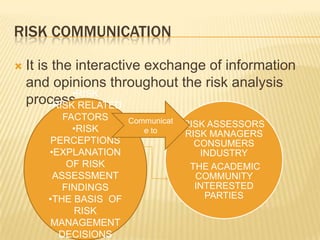
RISK COMMUNICATIONIt is the interactive exchange of information  and opinions throughout the risk analysis process .RISK
RISK RELATED FACTORS
RISK PERCEPTIONSEXPLANATION OF RISK ASSESSMENT FINDINGS
THE BASIS  OF RISK MANAGEMENT DECISIONSCommunicate to
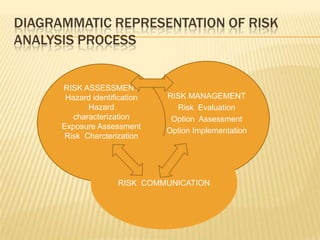
DIAGRAMMATIC REPRESENTATION OF RISK ANALYSIS PROCESSRISK MANAGEMENTRisk  EvaluationOption  AssessmentOption ImplementationRISK ASSESSMENTHazard identificationHazard characterizationExposure AssessmentRisk  CharcterizationRISK  COMMUNICATION
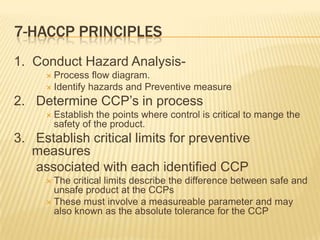
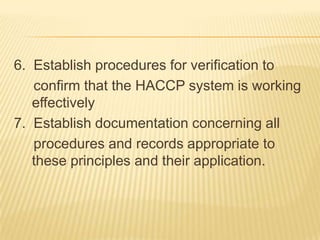
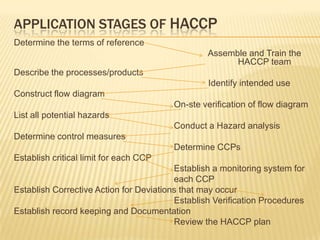
HACCP SystemHAZARDANALYSIS CRITICAL CONTROL POINT
HACCP is a system which
Identifies,
   Evaluates and
   Control hazards  ,      significant for food safety.
Evolution of HACCP SystemDeveloped for micro biological food safety of ASTRONAUTS Original system Drawn up by Pillsbury Company    working with NASA and the US military
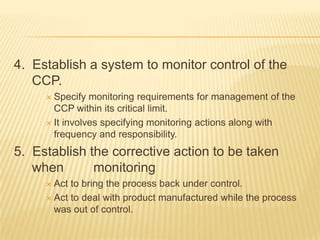
HACCP TerminologyCCP-CCP is an operation(practice,process,procedure or location) at which a preventive or control measure can be exercised that will eliminate,prevent or minimize a hazard or several hazard.CRITICAL LIMIT- The value of a monitored action which separates the acceptable from unacceptable.CONTROL POINT-It is an operation at which preventive and/or control actions are taken because of good manufacturing practices,regulations,product reputation, corporate/company policies or aesthetics. Such distinction between CCP and CP are one of the unique features of HACCP System. This allows setting priorities on risk and emphasizes operations that offer the greatest potential for control.

Risk analysis

  • 1.
  • 2.
    RISK DEFINEDRISK isa Function of Probability of an adverse health effect and the severiety of that effect,consequential to a HAZARD(s) in food.
  • 3.
    COMPONENTS OF RISKANALYSIS RISK ASSESSMENT RISK MANAGEMENT RISK COMMUNICATION
  • 4.
    RISK ASSESSMENTSTEPS HAZARD IDENTIFICATION HAZARD CHARACTERIZATION EXPOSURE ASSESSMENT RISK CHARACTERIZATION
  • 5.
    Hazard identification Biological Chemical Physical agents Hazard characterizationQualitative and/or Quantitative Evaluation Nature of adverse effects by agents Chemical agents-a dose response Physical and Biological-dose response if data present or obtainable
  • 6.
    Exposure assessmentQualitativeand/or Quantitative Evaluation Of the likely Intake of Hazardous Agents via food Or other source if relevant.Risk characterizationQualitative and/or Quantitative Estimation ofAttendant uncertainties
  • 7.
  • 8.
    Severity of knownor potential adverse health effects in a given population depending on above three stepsRISK ASSESSMENT SHOULD TAKE INTO ACCOUNTRelevant production ,storage and handling practises Used throughout the food chain.It should include traditiionalpractises,methods ofAnalysis,sampling,inspection and the prevalence of specific adverse health effects.
  • 9.
    RISK MANAGEMENTWeighing policyalternatives in the light of the results of risk assessment.Selecting and implementing appropriate control options,including regulatory measures.Note:Major concern human health cosideration.
  • 10.
    RISK COMMUNICATIONIt isthe interactive exchange of information and opinions throughout the risk analysis process .RISK
  • 11.
  • 12.
    RISK PERCEPTIONSEXPLANATION OFRISK ASSESSMENT FINDINGS
  • 13.
    THE BASIS OF RISK MANAGEMENT DECISIONSCommunicate to
  • 14.
    DIAGRAMMATIC REPRESENTATION OFRISK ANALYSIS PROCESSRISK MANAGEMENTRisk EvaluationOption AssessmentOption ImplementationRISK ASSESSMENTHazard identificationHazard characterizationExposure AssessmentRisk CharcterizationRISK COMMUNICATION
  • 15.
  • 16.
    HACCP is asystem which
  • 17.
  • 18.
    Evaluates and
  • 19.
    Control hazards , significant for food safety.
  • 20.
    Evolution of HACCPSystemDeveloped for micro biological food safety of ASTRONAUTS Original system Drawn up by Pillsbury Company working with NASA and the US military
  • 21.
    HACCP TerminologyCCP-CCP isan operation(practice,process,procedure or location) at which a preventive or control measure can be exercised that will eliminate,prevent or minimize a hazard or several hazard.CRITICAL LIMIT- The value of a monitored action which separates the acceptable from unacceptable.CONTROL POINT-It is an operation at which preventive and/or control actions are taken because of good manufacturing practices,regulations,product reputation, corporate/company policies or aesthetics. Such distinction between CCP and CP are one of the unique features of HACCP System. This allows setting priorities on risk and emphasizes operations that offer the greatest potential for control.