FOOD SAFETY:
HACCP, TACCP&
VACCP
RASMI. P. K
M.TECH FOOD TECHNOLOGY
22412MFT004
D.S.F.T., I.A.S., B.H.U.
FOOD SAFETY
• Food safety refers to the routines in the preparation, handling and storage of food
meant to prevent food borne illness and injury
• From farm to fork ,food products may encounter any number of health hazards
during their journey through the supply chain
• Food served or sold to customers basically needs to be safe to eat
• Food safety is a primary concern for everyone, and assurance of safe and
wholesome food is the moral responsibility of each and every person who handles
food.
HACCP, VACCP &TACCP- Acronyms
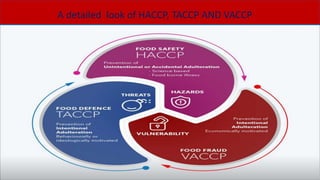
 HACCP (Hazard Analysis Critical Control Point)
TACCP (Threat Assessment Critical Control Point), and
VACCP (Vulnerability Assessment Critical Control Point)
Introduction to HACCP, VACCP, and TACCP
 HACCP principles have not been routinely used to detect or mitigate against a
deliberate attack on the whole supply chain.
 Threat Assessment Critical Control Point (TACCP) and Vulnerability Assessment Critical
Control Point (VACCP) are methodologies that align with the principles of HACCP but
specifically look at the threats and vulnerabilities posed to a business.
The principles behind TACCP and VACCP are therefore not significantly different from
HACCP.
However, the scope of both TACCP and VACCP are different from HACCP and therefore
guidance is useful in how to implement both systems.
 Both TACCP and VACCP use the same risk management approach but there are subtle
differences between the two.
Threat Assessment Critical Control Point (TACCP) helps food producers to identify weak
points in their supply chain and processing activities that maybe open to intentional and
malicious attack.
The TACCP protocol focuses on tampering, intentional adulteration of food and food
defence .
 Vulnerability Assessment Critical Control Point (VACCP) focuses on food fraud as well but
widens the scope to include the systematic prevention of any potential adulteration of
food, whether intentional or not, by identifying the vulnerable points in the supply chain.
 VACCP is especially concerned with economically motivated adulteration. Examples of
supply chain risks include product substitutions, unapproved product enhancements,
counterfeiting and stolen goods.
A detailed look of HACCP, TACCP AND VACCP
HACCP
Logical and scientific approach to food safety
 Helps procedures to prevent customer from food born illness
 Proactive rather than reactive
 Science based
risk based
 Step wise process
Identifies hazards
 Installs preventative measures to eliminate or reduce hazards in foods
It is an essential tool for ensuring that commercial food processors make a safe final
product
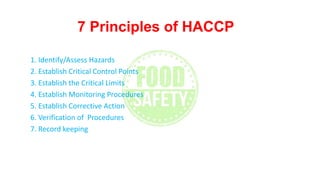
7 Principles of HACCP
1. Identify/Assess Hazards
2. Establish Critical Control Points
3. Establish the Critical Limits
4. Establish Monitoring Procedures
5. Establish Corrective Action
6. Verification of Procedures
7. Record keeping
How Vaccp and Taccp Help an
Organization
Reduce the likelihood of a deliberate malicious attack
 If an attack occurs , it reduce the impact on a business of that attack
 Protects an organizations reputation
 Reassures customers that the organization is managing appropriately the risks in
the supply chain and demonstrate due diligence
 Demonstrate that reasonable precautions are in place to protect the supply
chain
TACCP- Threat Assessment Critical Control Point
Reduce the likelihood (chance) and consequence
(impact) of a deliberate attack
 Protect organizational reputation
Reassure customers and the public that proportionate
steps are in place to protect food
 Demonstrate that reasonable precautions are taken
and due diligence is exercised in protecting food.
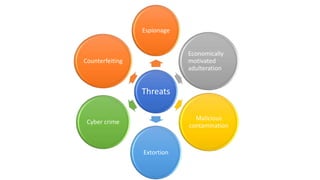
Threats
Espionage
Economically
motivated
adulteration
Malicious
contamination
Extortion
Cyber crime
Counterfeiting
Methods of Threat Assessment
Assess the potential threats in supply chain and processes.
Develop an appropriate set of control measures for each identified threat.
Implement the controls and monitor them regularly.
Evaluate the existing control measures and update them as necessary.
Provide staff training on Threat Assessment Critical Control Points and use the TACCP risk
assessment checklist.
Document all processes, findings, and changes to create an audit trail
VACCP
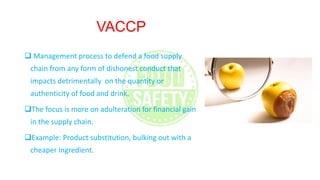
 Management process to defend a food supply
chain from any form of dishonest conduct that
impacts detrimentally on the quantity or
authenticity of food and drink.
The focus is more on adulteration for financial gain
in the supply chain.
Example: Product substitution, bulking out with a
cheaper ingredient.
 Food Frauds
A collective term used to encompass the deliberate and intentional substitution,
addition, tampering, or misrepresentation of food, food ingredients, or food packaging;
or false or misleading statements made about a product for economic gain that could
impact consumer health.
 Vulnerability
Susceptibility or exposure to a food fraud risk ,which is regarded as a gap or deficiency
that could place health at risk if not addressed
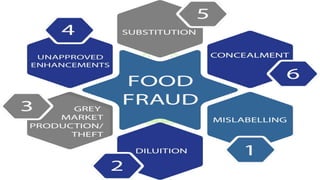
 Substitution - Substitution is when a food product is replaced with a cheaper or lower-
quality product that is similar but inferior.
Eg: Olive oil is being replaced with sunflower oil
Concealment - Hiding of the low quality of food ingredients or product
Eg : poultry may be injected with antibiotics to mask disease and reduce bacterial load
during quality testing
Unapproved enhancement - Process of adding unknown and undeclared compounds to
food products in order to enhance their quality attributes.
Dilution- Olive oil mixed with other types of oil , wine with grape blend, and fruit juice diluted
in water then mixed with other ingredients to produce a similar taste while increasing the
volume
 Mislabelling – Horse meat mixed with beef but labelled and sold as beef
‘organic’ food being sold but found to have traces of ‘non- organic’ ingredients and
mislabelled sea food being sold in the market
Theft - Legitimate product is stolen and passed off as legitimately procured. Fraudulent
product is distributed outside of regulated or controlled supply chain. Here , the stolen
products are mixed with legitimate products
How to Implement VACCP?
Conduct a risk analysis. Evaluate any significant risks and exposures.
Determine the critical points for controlling the fraud.
Determine procedures and technical means of verifying each critical point to control security.
Determine the corrective measures to be implemented when the surveillance reveals that a
critical point for fraud control is no longer under control.
Apply verification procedures in order to confirm that the system is functioning effectively.
Build up a file which includes all procedures and reports concerning these provisions and
their implementation
Conclusion
Practices for HACCP are well defined, VACCP and TACCP are much more
inter-related. Essentially, the three together help us to ensure the safety of
our products from both intentional and unintentional contamination.
HACCP focuses on protecting product from the unintentional, where TACCP
and VACCP focus on intentional contamination and preventing dishonest
conduct. Using these three food and beverage management systems
correctly and effectively will ensure to deliver a safe final product to the
consumer.
THANK YOU

HACCP VACCP TACCP.pptx

  • 1.
    FOOD SAFETY: HACCP, TACCP& VACCP RASMI.P. K M.TECH FOOD TECHNOLOGY 22412MFT004 D.S.F.T., I.A.S., B.H.U.
  • 2.
    FOOD SAFETY • Foodsafety refers to the routines in the preparation, handling and storage of food meant to prevent food borne illness and injury • From farm to fork ,food products may encounter any number of health hazards during their journey through the supply chain • Food served or sold to customers basically needs to be safe to eat • Food safety is a primary concern for everyone, and assurance of safe and wholesome food is the moral responsibility of each and every person who handles food.
  • 3.
    HACCP, VACCP &TACCP-Acronyms  HACCP (Hazard Analysis Critical Control Point) TACCP (Threat Assessment Critical Control Point), and VACCP (Vulnerability Assessment Critical Control Point)
  • 4.
    Introduction to HACCP,VACCP, and TACCP  HACCP principles have not been routinely used to detect or mitigate against a deliberate attack on the whole supply chain.  Threat Assessment Critical Control Point (TACCP) and Vulnerability Assessment Critical Control Point (VACCP) are methodologies that align with the principles of HACCP but specifically look at the threats and vulnerabilities posed to a business. The principles behind TACCP and VACCP are therefore not significantly different from HACCP. However, the scope of both TACCP and VACCP are different from HACCP and therefore guidance is useful in how to implement both systems.
  • 5.
     Both TACCPand VACCP use the same risk management approach but there are subtle differences between the two. Threat Assessment Critical Control Point (TACCP) helps food producers to identify weak points in their supply chain and processing activities that maybe open to intentional and malicious attack. The TACCP protocol focuses on tampering, intentional adulteration of food and food defence .  Vulnerability Assessment Critical Control Point (VACCP) focuses on food fraud as well but widens the scope to include the systematic prevention of any potential adulteration of food, whether intentional or not, by identifying the vulnerable points in the supply chain.  VACCP is especially concerned with economically motivated adulteration. Examples of supply chain risks include product substitutions, unapproved product enhancements, counterfeiting and stolen goods.
  • 6.
    A detailed lookof HACCP, TACCP AND VACCP
  • 7.
    HACCP Logical and scientificapproach to food safety  Helps procedures to prevent customer from food born illness  Proactive rather than reactive  Science based risk based  Step wise process Identifies hazards  Installs preventative measures to eliminate or reduce hazards in foods It is an essential tool for ensuring that commercial food processors make a safe final product
  • 8.
    7 Principles ofHACCP 1. Identify/Assess Hazards 2. Establish Critical Control Points 3. Establish the Critical Limits 4. Establish Monitoring Procedures 5. Establish Corrective Action 6. Verification of Procedures 7. Record keeping
  • 9.
    How Vaccp andTaccp Help an Organization Reduce the likelihood of a deliberate malicious attack  If an attack occurs , it reduce the impact on a business of that attack  Protects an organizations reputation  Reassures customers that the organization is managing appropriately the risks in the supply chain and demonstrate due diligence  Demonstrate that reasonable precautions are in place to protect the supply chain
  • 10.
    TACCP- Threat AssessmentCritical Control Point Reduce the likelihood (chance) and consequence (impact) of a deliberate attack  Protect organizational reputation Reassure customers and the public that proportionate steps are in place to protect food  Demonstrate that reasonable precautions are taken and due diligence is exercised in protecting food.
  • 11.
  • 12.
    Methods of ThreatAssessment Assess the potential threats in supply chain and processes. Develop an appropriate set of control measures for each identified threat. Implement the controls and monitor them regularly. Evaluate the existing control measures and update them as necessary. Provide staff training on Threat Assessment Critical Control Points and use the TACCP risk assessment checklist. Document all processes, findings, and changes to create an audit trail
  • 13.
    VACCP  Management processto defend a food supply chain from any form of dishonest conduct that impacts detrimentally on the quantity or authenticity of food and drink. The focus is more on adulteration for financial gain in the supply chain. Example: Product substitution, bulking out with a cheaper ingredient.
  • 14.
     Food Frauds Acollective term used to encompass the deliberate and intentional substitution, addition, tampering, or misrepresentation of food, food ingredients, or food packaging; or false or misleading statements made about a product for economic gain that could impact consumer health.  Vulnerability Susceptibility or exposure to a food fraud risk ,which is regarded as a gap or deficiency that could place health at risk if not addressed
  • 16.
     Substitution -Substitution is when a food product is replaced with a cheaper or lower- quality product that is similar but inferior. Eg: Olive oil is being replaced with sunflower oil Concealment - Hiding of the low quality of food ingredients or product Eg : poultry may be injected with antibiotics to mask disease and reduce bacterial load during quality testing Unapproved enhancement - Process of adding unknown and undeclared compounds to food products in order to enhance their quality attributes.
  • 17.
    Dilution- Olive oilmixed with other types of oil , wine with grape blend, and fruit juice diluted in water then mixed with other ingredients to produce a similar taste while increasing the volume  Mislabelling – Horse meat mixed with beef but labelled and sold as beef ‘organic’ food being sold but found to have traces of ‘non- organic’ ingredients and mislabelled sea food being sold in the market Theft - Legitimate product is stolen and passed off as legitimately procured. Fraudulent product is distributed outside of regulated or controlled supply chain. Here , the stolen products are mixed with legitimate products
  • 18.
    How to ImplementVACCP? Conduct a risk analysis. Evaluate any significant risks and exposures. Determine the critical points for controlling the fraud. Determine procedures and technical means of verifying each critical point to control security. Determine the corrective measures to be implemented when the surveillance reveals that a critical point for fraud control is no longer under control. Apply verification procedures in order to confirm that the system is functioning effectively. Build up a file which includes all procedures and reports concerning these provisions and their implementation
  • 19.
    Conclusion Practices for HACCPare well defined, VACCP and TACCP are much more inter-related. Essentially, the three together help us to ensure the safety of our products from both intentional and unintentional contamination. HACCP focuses on protecting product from the unintentional, where TACCP and VACCP focus on intentional contamination and preventing dishonest conduct. Using these three food and beverage management systems correctly and effectively will ensure to deliver a safe final product to the consumer.
  • 20.