
Interaction equivalency in self-paced online learning environments: An exploration of learner preferences Dissertation Proposal Jason F. Rhode 9/10/2007
Jason F. Rhode Ph.D. candidate, Capella University Specialization: Instructional Design for Online Learning
Introduction interaction self-paced learning emerging communication approaches
Background Substance and function of online interactions varies Interaction is essential for a quality learning experience Unanswered questions concerning learners’ interaction preferences and degree in which interactions are perceived to be equivalent
Statement of the Problem Interaction identified as a key element to successful online learning programs Little empirical evidence currently exists as to the value that learners place upon various types of interactions in a self-paced learning environment
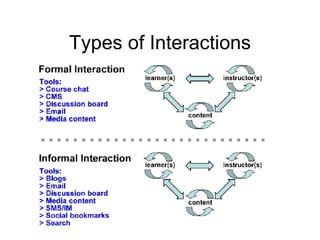
Types of Interactions
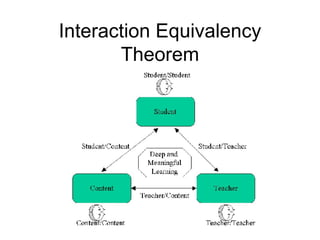
Interaction Equivalency Theorem
Purpose of the Study Expand upon previous research advocating for purposeful design of interaction Examine the composition of the online learning experience of adult learners in self-paced learning environment Explore what forms of interaction self-paced online learners value most as well as what affect such interactions have on their overall learning experience
Research Questions What forms of interaction do adult learners engage in most in self-paced online courses? What forms of interaction do adult learners value most in self-paced online courses? What forms of interaction do online adult learners identify as equivalent in self-paced online courses? What impact does interaction have on the self-paced online learning experience?
Research Design Phenomenological methodology Semi-structured in-depth interviews conducted near the conclusion of the course
Sampling Design Participants Online adult learners enrolled in a fully-online professional development certificate program offered by Valley Forge Christian College Participant selection Convenience sample: all learners (n=13) in Sept. 2007 section of “Advanced Web Communications” course invited to participate
Measures Semi-structured, in-depth interviews to be conducted over the phone, each approx. 1 hr. in length Questions will address 3 main types of interaction and formal vs. informal nature of such interactions Interviews recorded and transcripts coded for
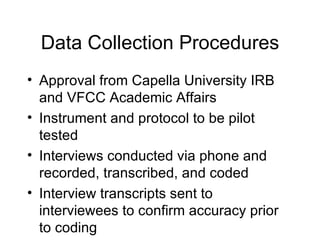
Data Collection Procedures Approval from Capella University IRB and VFCC Academic Affairs Instrument and protocol to be pilot tested Interviews conducted via phone and recorded, transcribed, and coded Interview transcripts sent to interviewees to confirm accuracy prior to coding
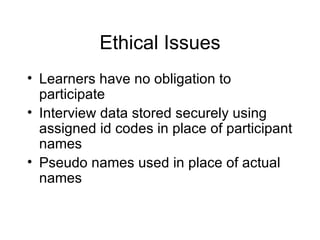
Ethical Issues Learners have no obligation to participate Interview data stored securely using assigned id codes in place of participant names Pseudo names used in place of actual names
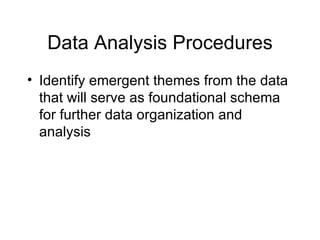
Data Analysis Procedures Identify emergent themes from the data that will serve as foundational schema for further data organization and analysis
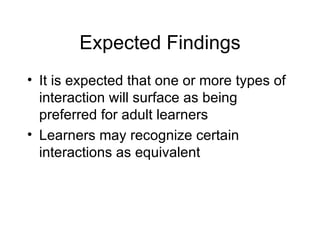
Expected Findings It is expected that one or more types of interaction will surface as being preferred for adult learners Learners may recognize certain interactions as equivalent

Interaction Equivalency in Self-Paced Learning Environments

  • 1.
    Interaction equivalency inself-paced online learning environments: An exploration of learner preferences Dissertation Proposal Jason F. Rhode 9/10/2007
  • 2.
    Jason F. RhodePh.D. candidate, Capella University Specialization: Instructional Design for Online Learning
  • 3.
    Introduction interaction self-pacedlearning emerging communication approaches
  • 4.
    Background Substance andfunction of online interactions varies Interaction is essential for a quality learning experience Unanswered questions concerning learners’ interaction preferences and degree in which interactions are perceived to be equivalent
  • 5.
    Statement of theProblem Interaction identified as a key element to successful online learning programs Little empirical evidence currently exists as to the value that learners place upon various types of interactions in a self-paced learning environment
  • 6.
  • 7.
  • 8.
    Purpose of theStudy Expand upon previous research advocating for purposeful design of interaction Examine the composition of the online learning experience of adult learners in self-paced learning environment Explore what forms of interaction self-paced online learners value most as well as what affect such interactions have on their overall learning experience
  • 9.
    Research Questions Whatforms of interaction do adult learners engage in most in self-paced online courses? What forms of interaction do adult learners value most in self-paced online courses? What forms of interaction do online adult learners identify as equivalent in self-paced online courses? What impact does interaction have on the self-paced online learning experience?
  • 10.
    Research Design Phenomenologicalmethodology Semi-structured in-depth interviews conducted near the conclusion of the course
  • 11.
    Sampling Design ParticipantsOnline adult learners enrolled in a fully-online professional development certificate program offered by Valley Forge Christian College Participant selection Convenience sample: all learners (n=13) in Sept. 2007 section of “Advanced Web Communications” course invited to participate
  • 12.
    Measures Semi-structured, in-depthinterviews to be conducted over the phone, each approx. 1 hr. in length Questions will address 3 main types of interaction and formal vs. informal nature of such interactions Interviews recorded and transcripts coded for
  • 13.
    Data Collection ProceduresApproval from Capella University IRB and VFCC Academic Affairs Instrument and protocol to be pilot tested Interviews conducted via phone and recorded, transcribed, and coded Interview transcripts sent to interviewees to confirm accuracy prior to coding
  • 14.
    Ethical Issues Learnershave no obligation to participate Interview data stored securely using assigned id codes in place of participant names Pseudo names used in place of actual names
  • 15.
    Data Analysis ProceduresIdentify emergent themes from the data that will serve as foundational schema for further data organization and analysis
  • 16.
    Expected Findings Itis expected that one or more types of interaction will surface as being preferred for adult learners Learners may recognize certain interactions as equivalent

Editor's Notes

  • #2 Hi, I’m Jason Rhode, and thanks for taking a few minutes to view a brief overview of my dissertation research entitled, “Interaction equivalency in self-paced online learning environments: An exploration of learner preferences.