Assessing the ecology of a
course blog
Improving learning outcomes through web
mediated writing and open educational practices
Human action is best
understood as narrative
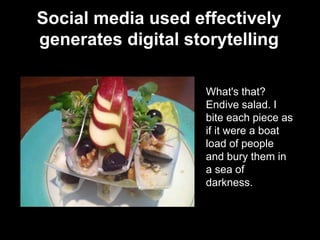
What's that?
Endive salad. I
bite each piece as
if it were a boat
load of people
and bury them in
a sea of
darkness.
Social media used effectively
generates digital storytelling
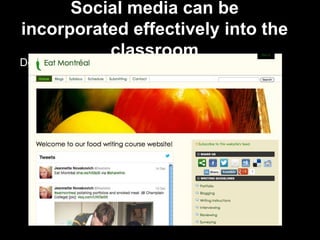
Double-click to enter text
Social media can be
incorporated effectively into the
classroom
Exploratory study tested the ecology of a course blog and
measured learning outcomes in terms of rates of
publication.
Penn State University, State College PA
Undergrad technical writing course for engineers
Students wrote articles for an outside publication
Follow-up study examined the writing process in terms of
differences in peer feedback and learning outcomes.
Concordia University, Montreal, Quebec
Undergraduate basic composition course
Two quasi-experimental studies
were conducted to determine if
blogging technology impacted
learning outcomes
Experimental versus control
group
Both studies entailed two intact sections each of an
undergraduate composition course.
Control group was randomly assigned and worked with
paper and traditional writing process
Experimental group was randomly assigned and
published all work on a course blog
Two sections of technical writing courses were given a project to write
an article for publication.
One section followed the traditional writing process using computer-
assisted writing on paper and group workshops of paper drafts.
The other section published their work-in-progress on a course blog
and engaged in online collaboration.
The results of this study demonstrated that utilizing an online social
network in the form of a course blog impacted learning outcomes.
Abstract first study
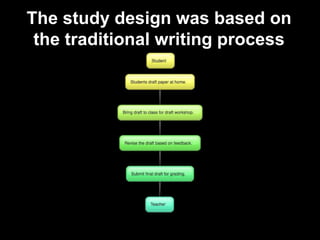
The study design was based on
the traditional writing process
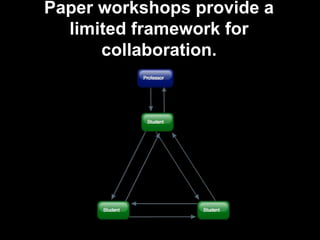
Paper workshops provide a
limited framework for
collaboration.
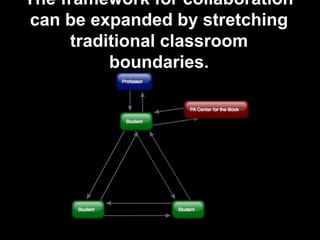
The framework for collaboration
can be expanded by stretching
traditional classroom
boundaries.
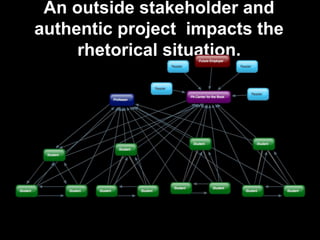
An outside stakeholder and
authentic project impacts the
rhetorical situation.
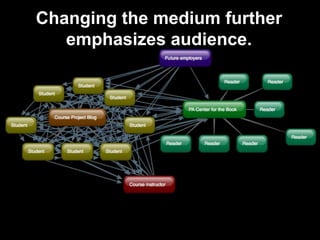
Changing the medium further
emphasizes audience.
Double-click to enter text
Key ingredient was an outside
stakeholder
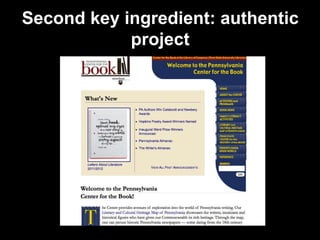
Second key ingredient: authentic
project
Design Considerations
What's in it for me?
Typical projects are only seen by the instructor and a few
peers
PA Center for the Book project was public
Potential to be published
Working with an outside agent (reviewer)
Sense of ownership
Maintaining high levels of interaction
Student/editor
Student/instructor
Student/students
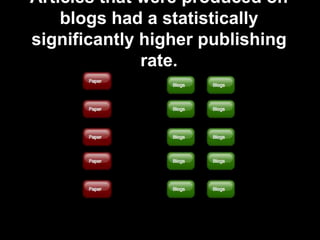
Articles that were produced on
blogs had a statistically
significantly higher publishing
rate.
Student feedback will follow:
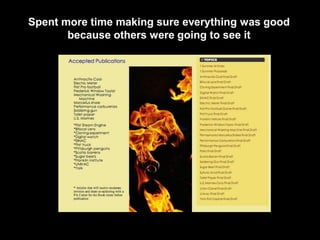
Spent more time making sure everything was good
because others were going to see it
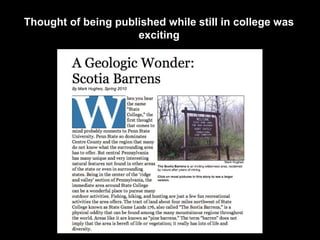
Thought of being published while still in college was
exciting
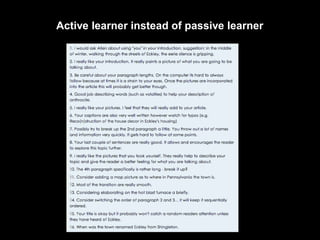
Active learner instead of passive learner
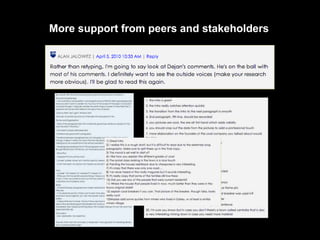
More support from peers and stakeholders
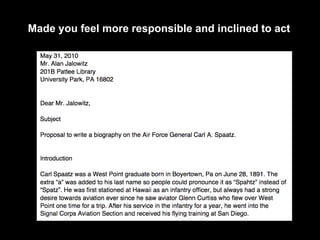
Made you feel more responsible and inclined to act
Next, I conducted a follow-up
study.
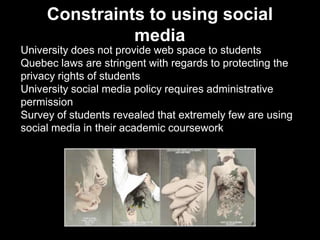
Constraints to using social
media
University does not provide web space to students
Quebec laws are stringent with regards to protecting the
privacy rights of students
University social media policy requires administrative
permission
Survey of students revealed that extremely few are using
social media in their academic coursework
Movable Type 5.14 content management system
Own my domains
Create unlimited number of blogs
Assign each blog to an individual student
Complete administrative, creative, and design control
Able to assign Creative Commons license to all course
material
Cost $25 course/year
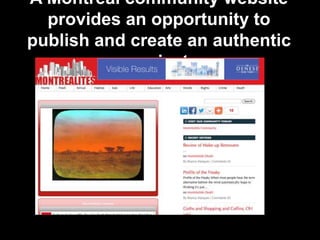
Replace outside stakeholder with a visible community
website
Examples: eatingcrow.ca, english212.com, beatnik.ca,
outlaw-writing.com, businessremix.com, montrealites.ca
Developed server space
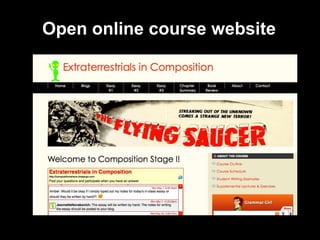
Open online course website
A Montréal community website
provides an opportunity to
publish and create an authentic
project
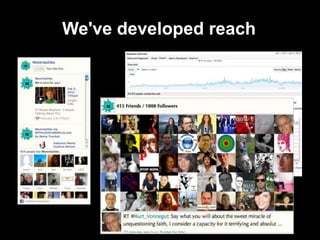
We've developed reach
Abstract follow-up study
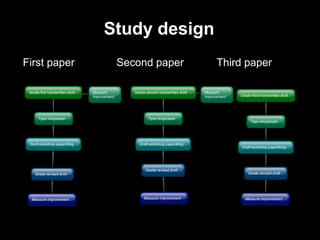
Two sections of basic composition courses were given a project to write
articles for publication. (three articles-three drafts)
One section followed the traditional writing process using computer-
assisted writing on paper and group workshops of paper drafts.
The other section published their work-in-progress on a course blog
and engaged in online collaboration.
The results of this study demonstrated that utilizing an online social
network in the form of a course blog impacted learning outcomes.
Study design
First paper Second paper Third paper
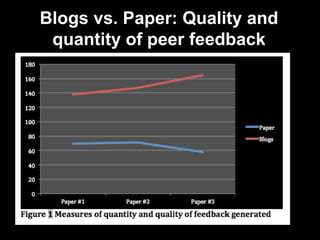
Blogs vs. Paper: Quality and
quantity of peer feedback
Double-click to enter text
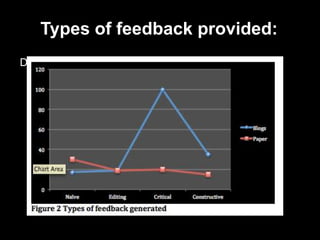
Types of feedback provided:
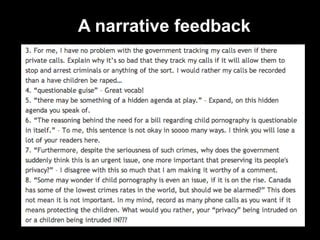
A narrative feedback
Student Feedback
Spent more time making sure everything was good
because others were going to see it
Publishing coursework on a personal blog was
exciting
Engaging learning environment
More support from peers
Felt more responsible and inclined to act
Spent more time on peer feedback activity
Affordance of a course blog
The open course blog provided affordance in terms of the
following factors compared to a Moodle Learning
Management System combined with paper:
Statistically higher learning outcomes
Statistically higher quality and quantity of feedback
Learner engagement
Ease of use
Time
Administrative organization

Assessing the ecology_of_a_course_blog

  • 1.
    Assessing the ecologyof a course blog Improving learning outcomes through web mediated writing and open educational practices
  • 2.
    Human action isbest understood as narrative
  • 3.
    What's that? Endive salad.I bite each piece as if it were a boat load of people and bury them in a sea of darkness. Social media used effectively generates digital storytelling
  • 4.
    Double-click to entertext Social media can be incorporated effectively into the classroom
  • 5.
    Exploratory study testedthe ecology of a course blog and measured learning outcomes in terms of rates of publication. Penn State University, State College PA Undergrad technical writing course for engineers Students wrote articles for an outside publication Follow-up study examined the writing process in terms of differences in peer feedback and learning outcomes. Concordia University, Montreal, Quebec Undergraduate basic composition course Two quasi-experimental studies were conducted to determine if blogging technology impacted learning outcomes
  • 6.
    Experimental versus control group Bothstudies entailed two intact sections each of an undergraduate composition course. Control group was randomly assigned and worked with paper and traditional writing process Experimental group was randomly assigned and published all work on a course blog
  • 7.
    Two sections oftechnical writing courses were given a project to write an article for publication. One section followed the traditional writing process using computer- assisted writing on paper and group workshops of paper drafts. The other section published their work-in-progress on a course blog and engaged in online collaboration. The results of this study demonstrated that utilizing an online social network in the form of a course blog impacted learning outcomes. Abstract first study
  • 8.
    The study designwas based on the traditional writing process
  • 9.
    Paper workshops providea limited framework for collaboration.
  • 10.
    The framework forcollaboration can be expanded by stretching traditional classroom boundaries.
  • 11.
    An outside stakeholderand authentic project impacts the rhetorical situation.
  • 12.
    Changing the mediumfurther emphasizes audience.
  • 13.
    Double-click to entertext Key ingredient was an outside stakeholder
  • 14.
    Second key ingredient:authentic project
  • 15.
    Design Considerations What's init for me? Typical projects are only seen by the instructor and a few peers PA Center for the Book project was public Potential to be published Working with an outside agent (reviewer) Sense of ownership Maintaining high levels of interaction Student/editor Student/instructor Student/students
  • 16.
    Articles that wereproduced on blogs had a statistically significantly higher publishing rate.
  • 17.
  • 18.
    Spent more timemaking sure everything was good because others were going to see it
  • 19.
    Thought of beingpublished while still in college was exciting
  • 20.
    Active learner insteadof passive learner
  • 21.
    More support frompeers and stakeholders
  • 22.
    Made you feelmore responsible and inclined to act
  • 23.
    Next, I conducteda follow-up study.
  • 24.
    Constraints to usingsocial media University does not provide web space to students Quebec laws are stringent with regards to protecting the privacy rights of students University social media policy requires administrative permission Survey of students revealed that extremely few are using social media in their academic coursework
  • 25.
    Movable Type 5.14content management system Own my domains Create unlimited number of blogs Assign each blog to an individual student Complete administrative, creative, and design control Able to assign Creative Commons license to all course material Cost $25 course/year Replace outside stakeholder with a visible community website Examples: eatingcrow.ca, english212.com, beatnik.ca, outlaw-writing.com, businessremix.com, montrealites.ca Developed server space
  • 26.
  • 27.
    A Montréal communitywebsite provides an opportunity to publish and create an authentic project
  • 28.
  • 29.
    Abstract follow-up study Twosections of basic composition courses were given a project to write articles for publication. (three articles-three drafts) One section followed the traditional writing process using computer- assisted writing on paper and group workshops of paper drafts. The other section published their work-in-progress on a course blog and engaged in online collaboration. The results of this study demonstrated that utilizing an online social network in the form of a course blog impacted learning outcomes.
  • 30.
    Study design First paperSecond paper Third paper
  • 31.
    Blogs vs. Paper:Quality and quantity of peer feedback Double-click to enter text
  • 32.
    Double-click to entertext Types of feedback provided:
  • 33.
  • 34.
    Student Feedback Spent moretime making sure everything was good because others were going to see it Publishing coursework on a personal blog was exciting Engaging learning environment More support from peers Felt more responsible and inclined to act Spent more time on peer feedback activity
  • 35.
    Affordance of acourse blog The open course blog provided affordance in terms of the following factors compared to a Moodle Learning Management System combined with paper: Statistically higher learning outcomes Statistically higher quality and quantity of feedback Learner engagement Ease of use Time Administrative organization