Informal help-seeking & ICTs Adnan Qayyum Concordia University Canadian Network for Innovation in Education May 12, 2009
Agenda Present general research problem Review qualitative study Discuss findings of quantitative study So what?  possible implications
General problem & method General research problem Buddhist wheel metaphor  explore student-generated interaction describe how students interact outside of class for course-purposes, and the role of ICTs in doing so Method Exploratory mixed method -qual becomes means for developing or locating instrument Qualitative study  what’s going on Quantitative study  how common is this identify underlying dynamics
Qualitative study Guiding research questions How do students interact with peers and others for course-related purposes outside of class? How do ICTs affect this dynamic? Collaboration with BCIT Learning & Teaching Unit Data collection: Interviews, observations, existing documents, student blogs 69 students in 29 groups Individually and in groups
Findings: channels of communication Talking  in person  via cellphones Writing via chat (e.g. MSN, Yahoo) email Facebook, MySpace  cellphone text messages  WebCT
Findings: topics of communication Main topics discussing school projects and assignments discussing general school issues seeking and sharing information about course administrative issues organizing for school work Other course-related topics  Studying in groups Seeking help about course content Working on assigned group projects Reviewing each others work Sharing resources
Findings: location of communication Blend of social and work space E.g. cafeterias, Student Hall, lounge spaces Designated work spaces E.g. labs, library, learning commons Social spaces E.g. restaurant, pub Off campus E.g. home
Quantitative study Which factors might motivate students to communicate with and seek help from peers and instructors? What communication channels do students use to interact with peers and instructors outside of class? Why do students choose particular communication channels to support their learning?
Questionnaire Main data collection instrument: 89 item survey Content validity: peer review Construct validity: pilot test (Fall 2008, N=40   from .78 to .89) Survey administered to 14 courses (6 to 93)  449 students (438 usable after screening & cleaning) Self-reporting
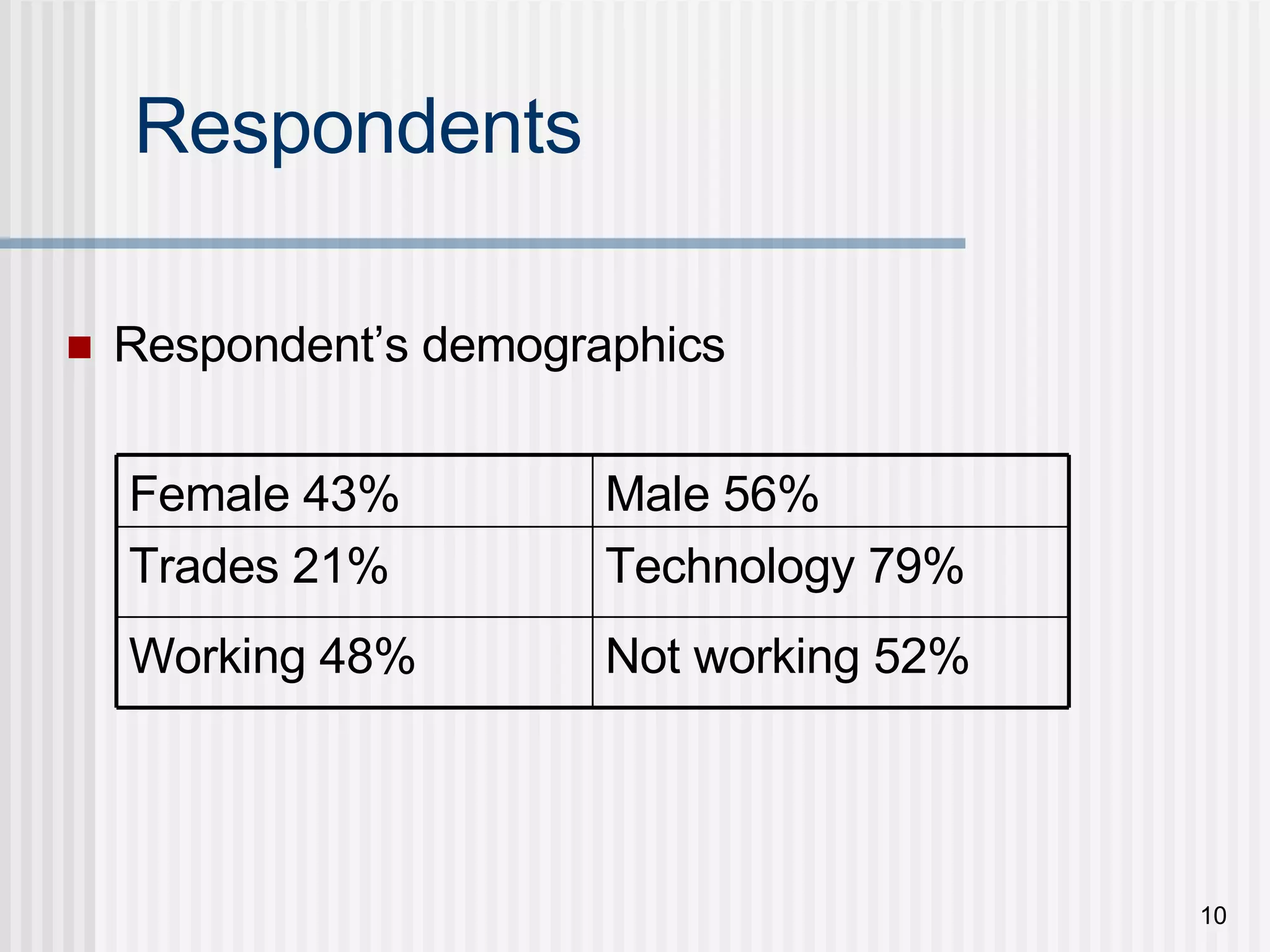
Respondents Respondent’s demographics Not working 52% Working 48% Technology 79% Trades 21% Male 56% Female 43%
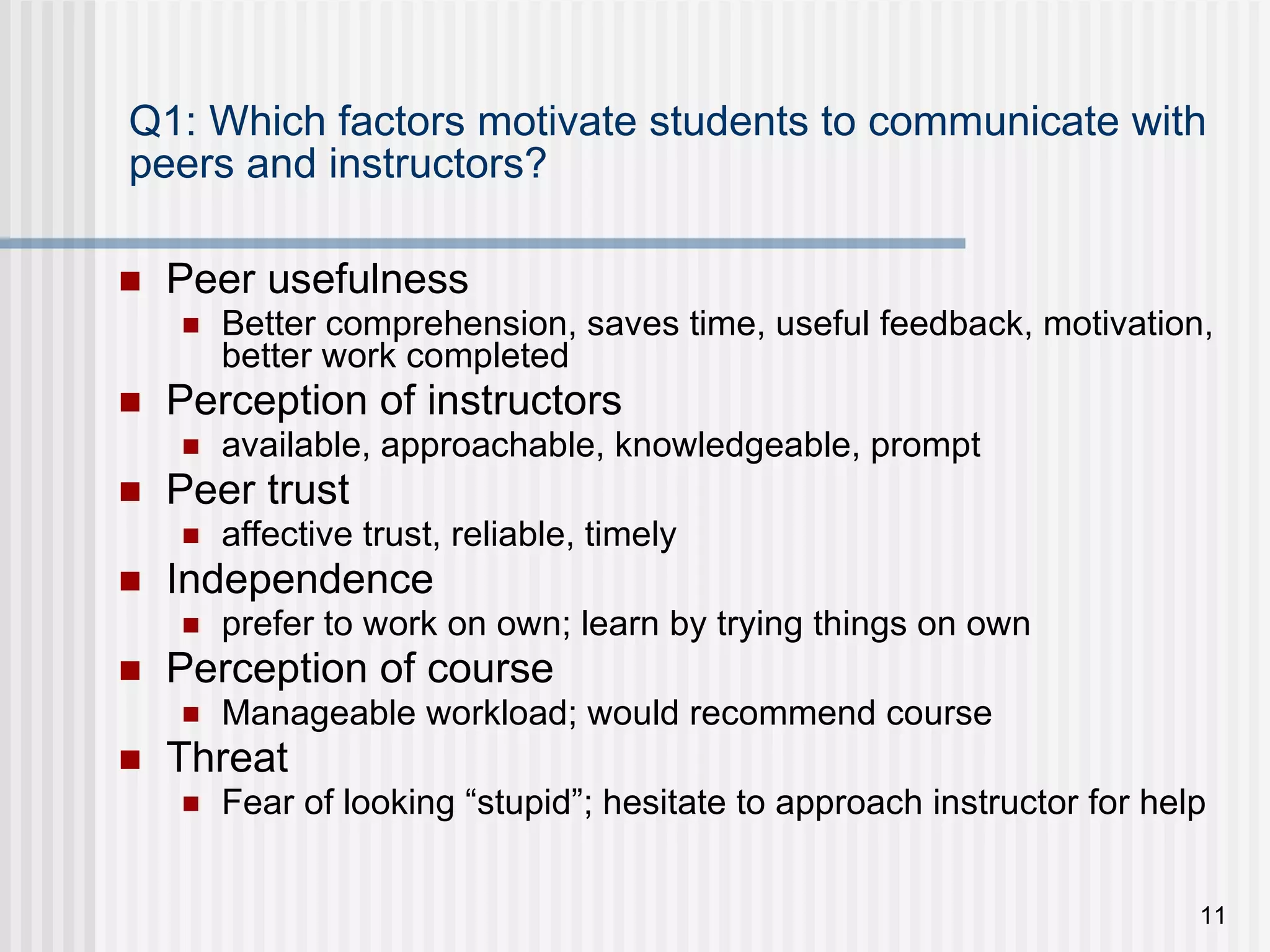
Q1: Which factors motivate students to communicate with peers and instructors? Peer usefulness Better comprehension, saves time, useful feedback, motivation, better work completed Perception of instructors available, approachable, knowledgeable, prompt Peer trust affective trust, reliable, timely Independence  prefer to work on own; learn by trying things on own Perception of course Manageable workload; would recommend course Threat Fear of looking “stupid”; hesitate to approach instructor for help
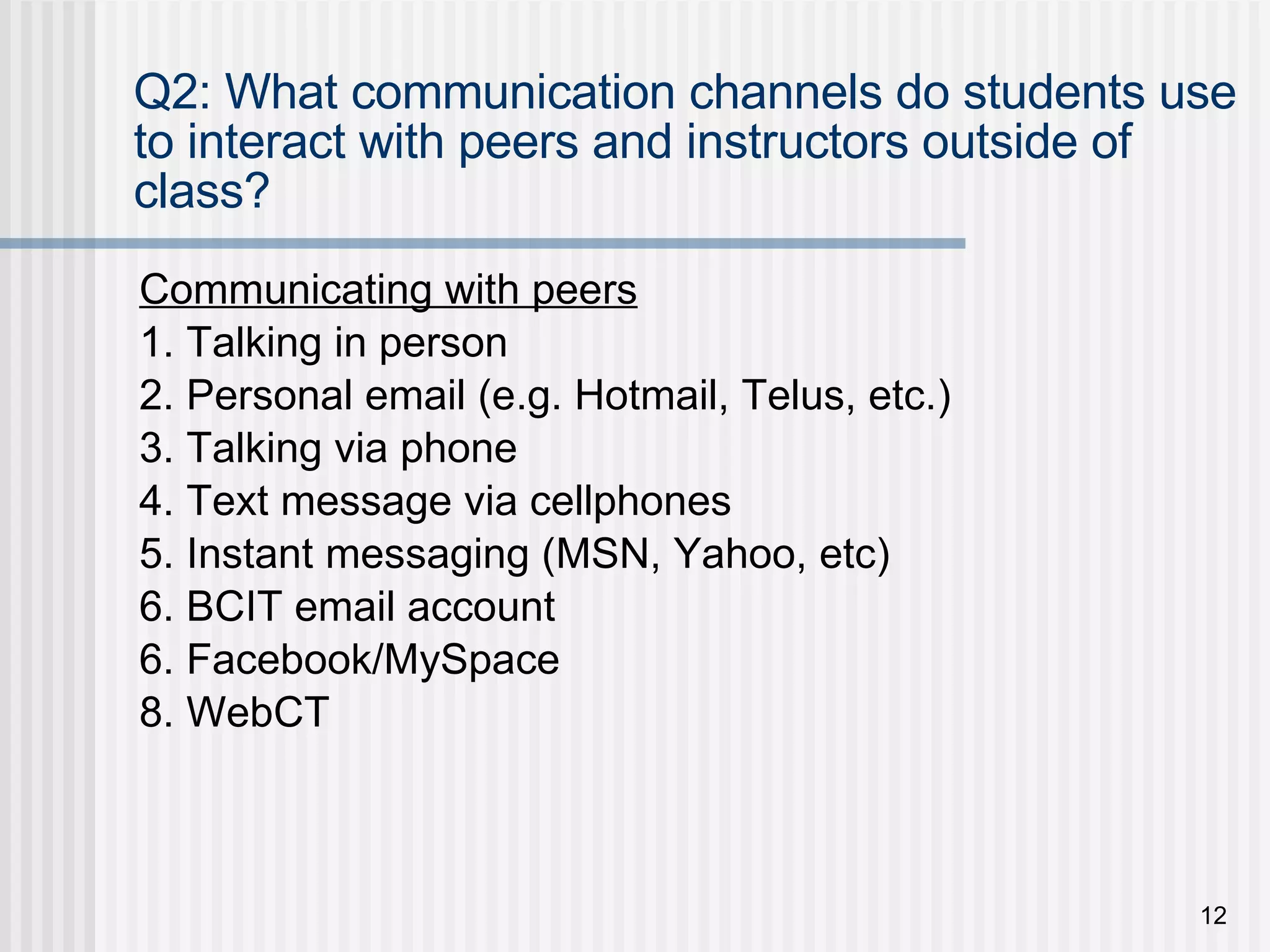
Q2: What communication channels do students use to interact with peers and instructors outside of class? Communicating with peers 1. Talking in person 2. Personal email (e.g. Hotmail, Telus, etc.) 3. Talking via phone 4. Text message via cellphones 5. Instant messaging (MSN, Yahoo, etc) 6. BCIT email account 6. Facebook/MySpace 8. WebCT
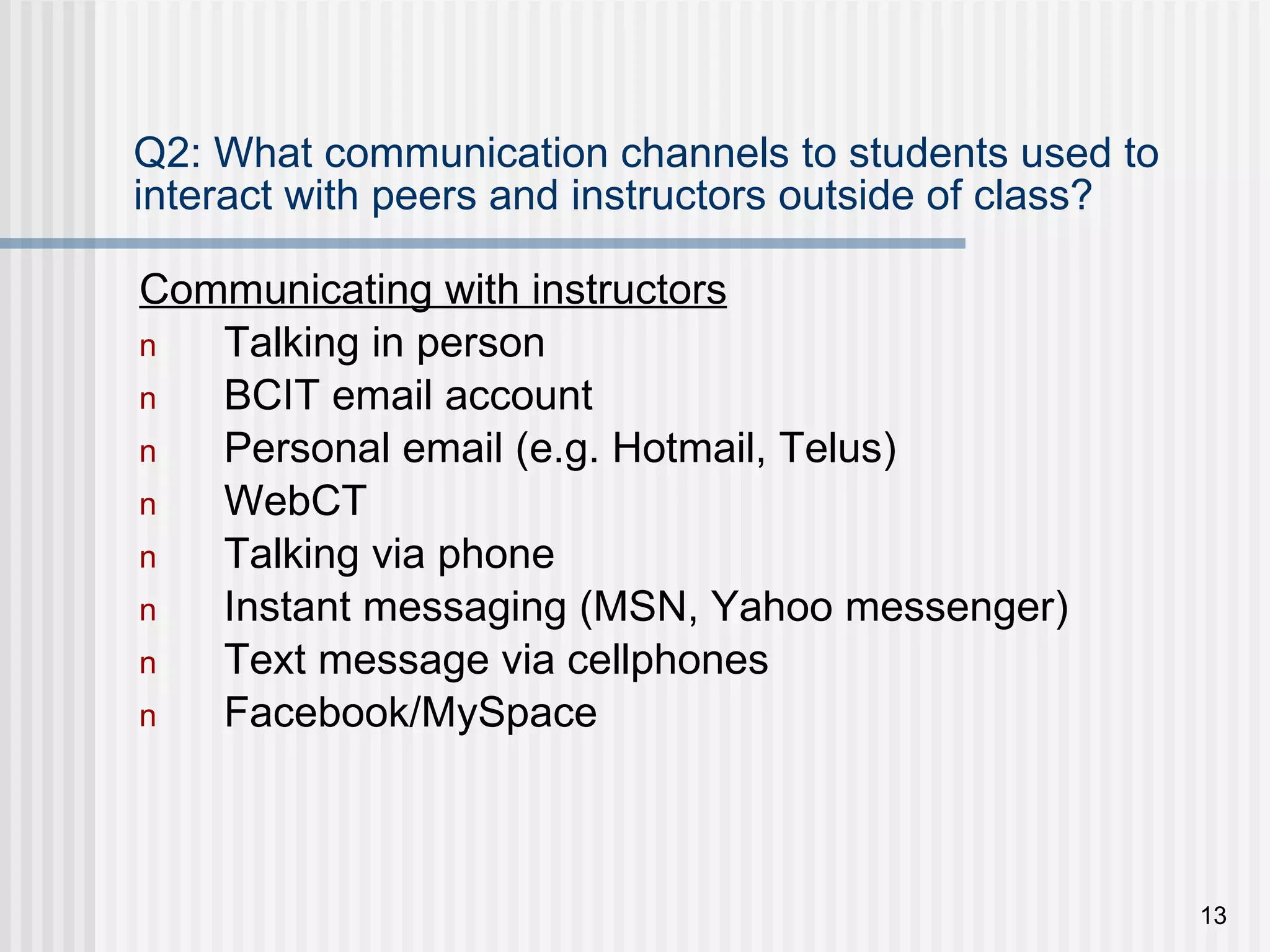
Q2: What communication channels to students used to interact with peers and instructors outside of class? Communicating with instructors Talking in person BCIT email account Personal email (e.g. Hotmail, Telus) WebCT Talking via phone Instant messaging (MSN, Yahoo messenger) Text message via cellphones Facebook/MySpace
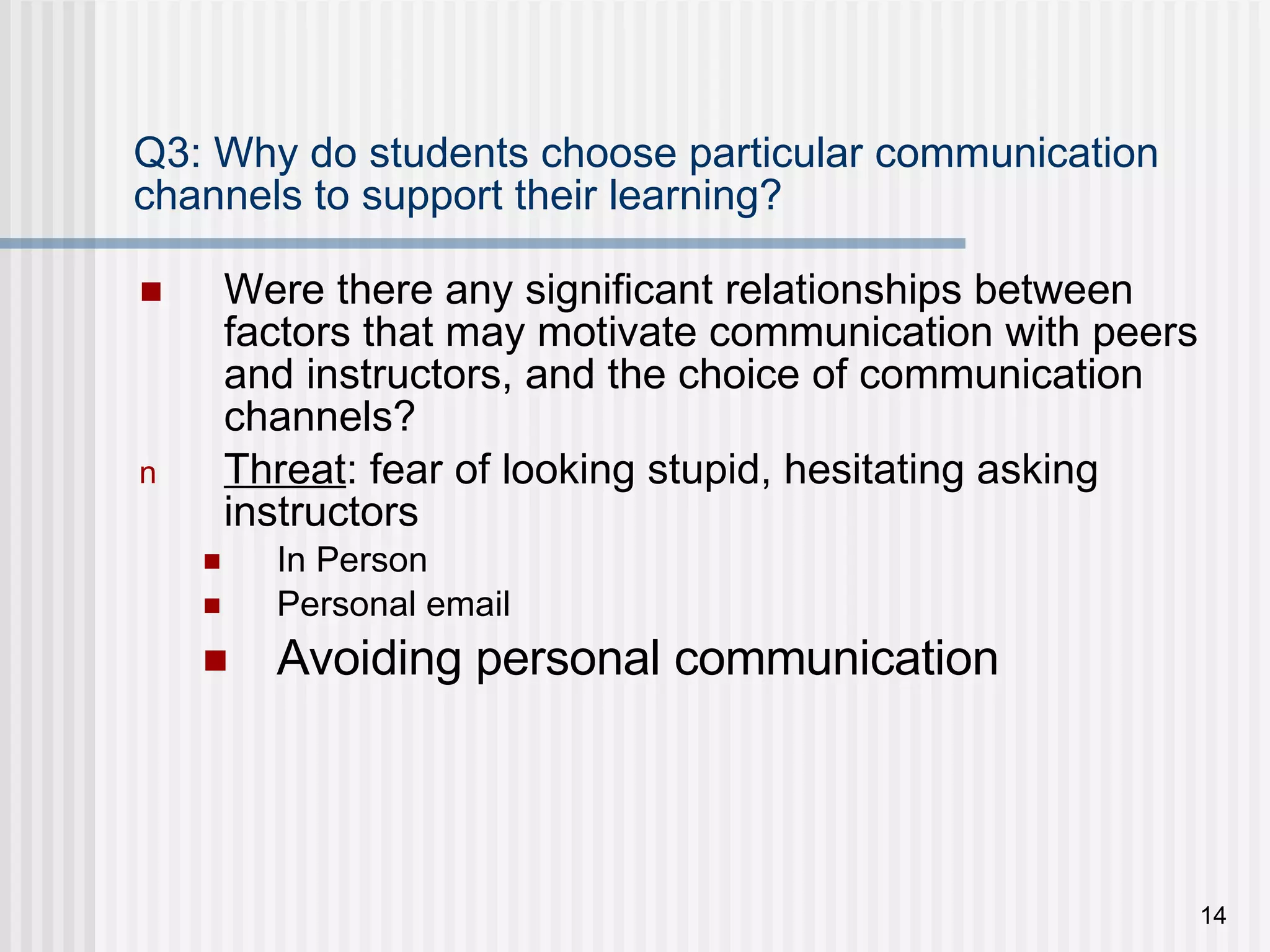
Q3: Why do students choose particular communication channels to support their learning? Were there any significant relationships between factors that may motivate communication with peers and instructors, and the choice of communication channels? Threat : fear of looking stupid, hesitating asking instructors In Person Personal email Avoiding personal communication
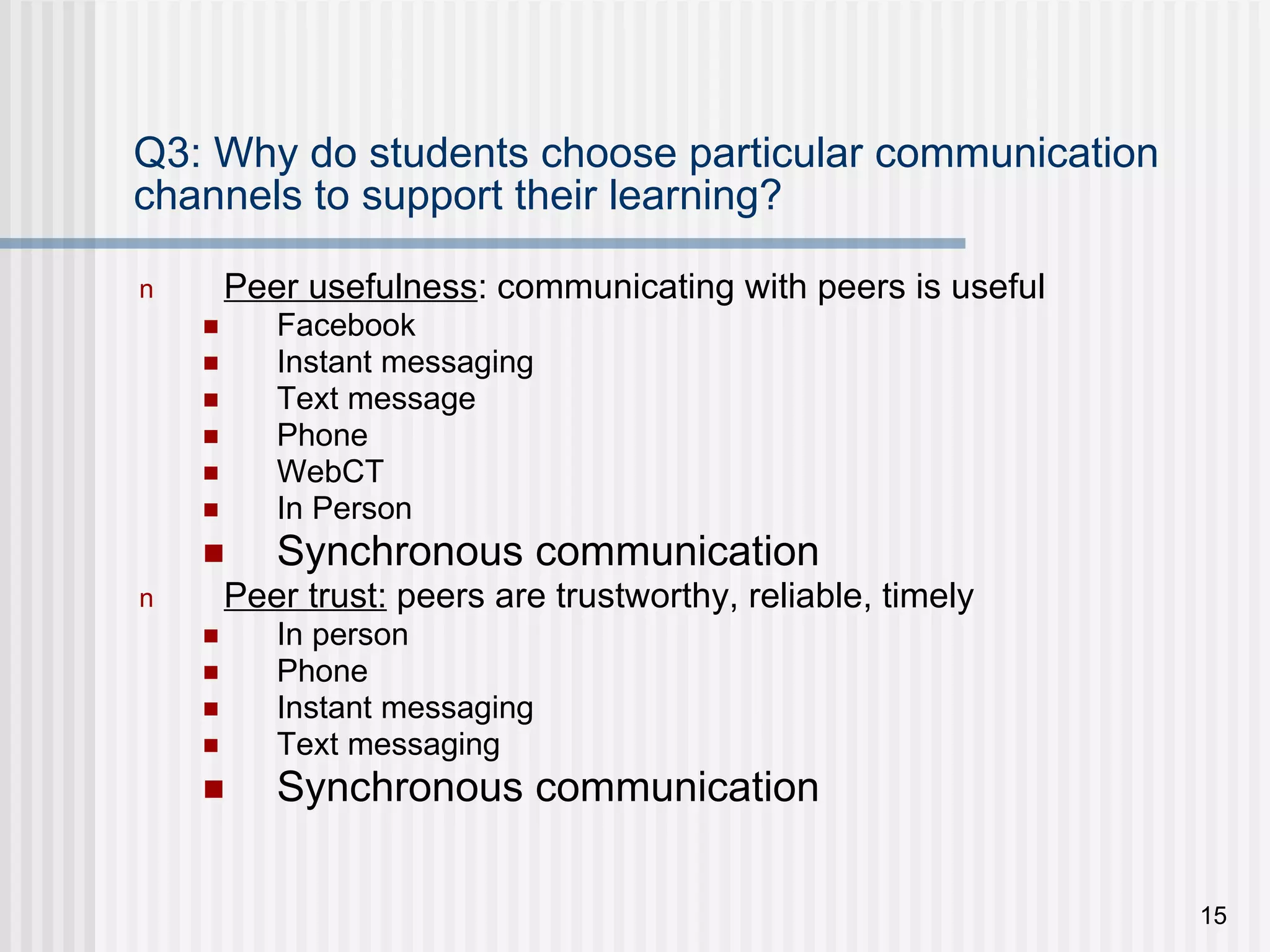
Q3: Why do students choose particular communication channels to support their learning? Peer usefulness : communicating with peers is useful Facebook Instant messaging Text message Phone WebCT In Person Synchronous communication Peer trust:  peers are trustworthy, reliable, timely In person Phone Instant messaging Text messaging Synchronous communication
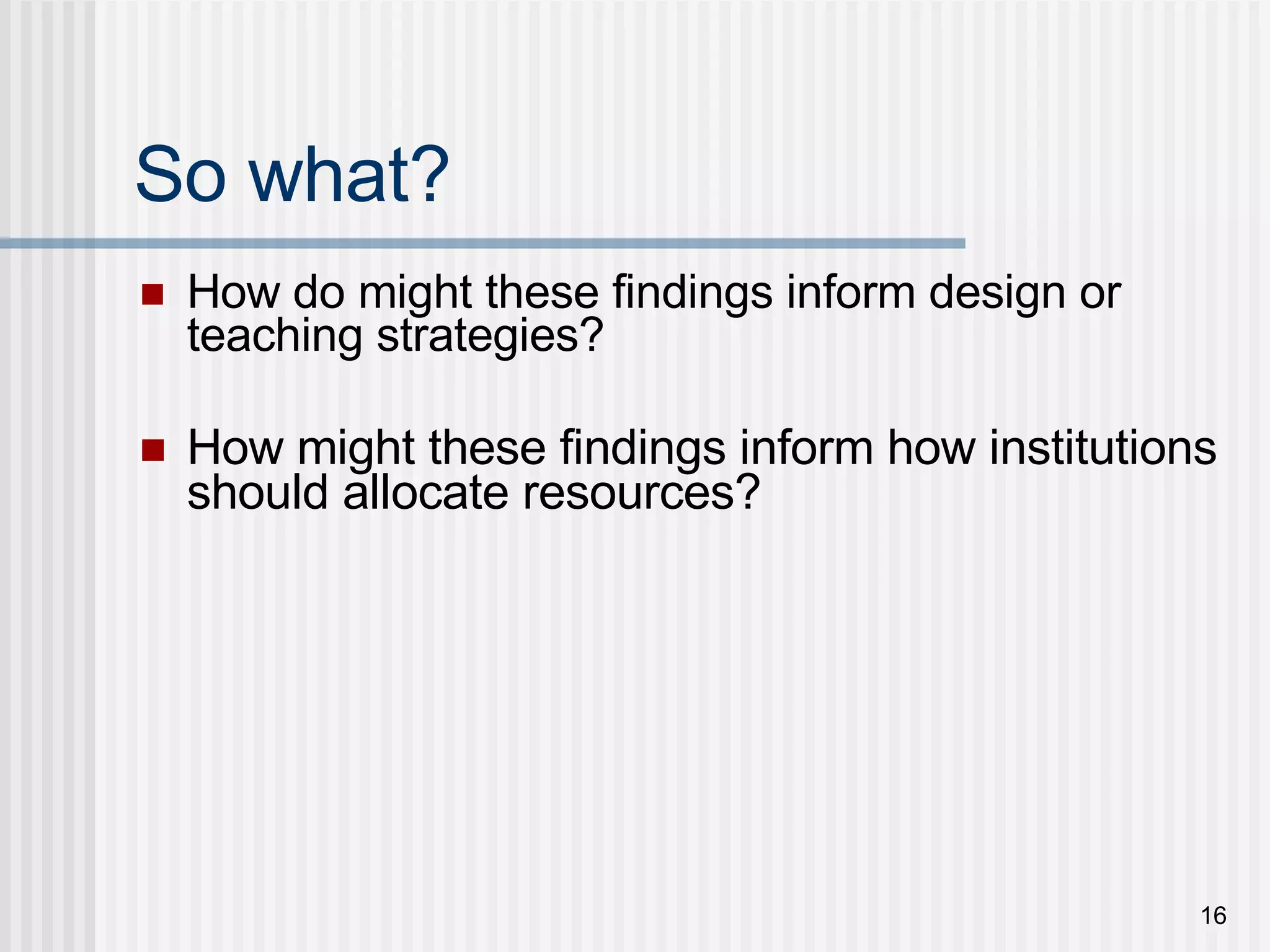
So what? How do might these findings inform design or teaching strategies? How might these findings inform how institutions should allocate resources?
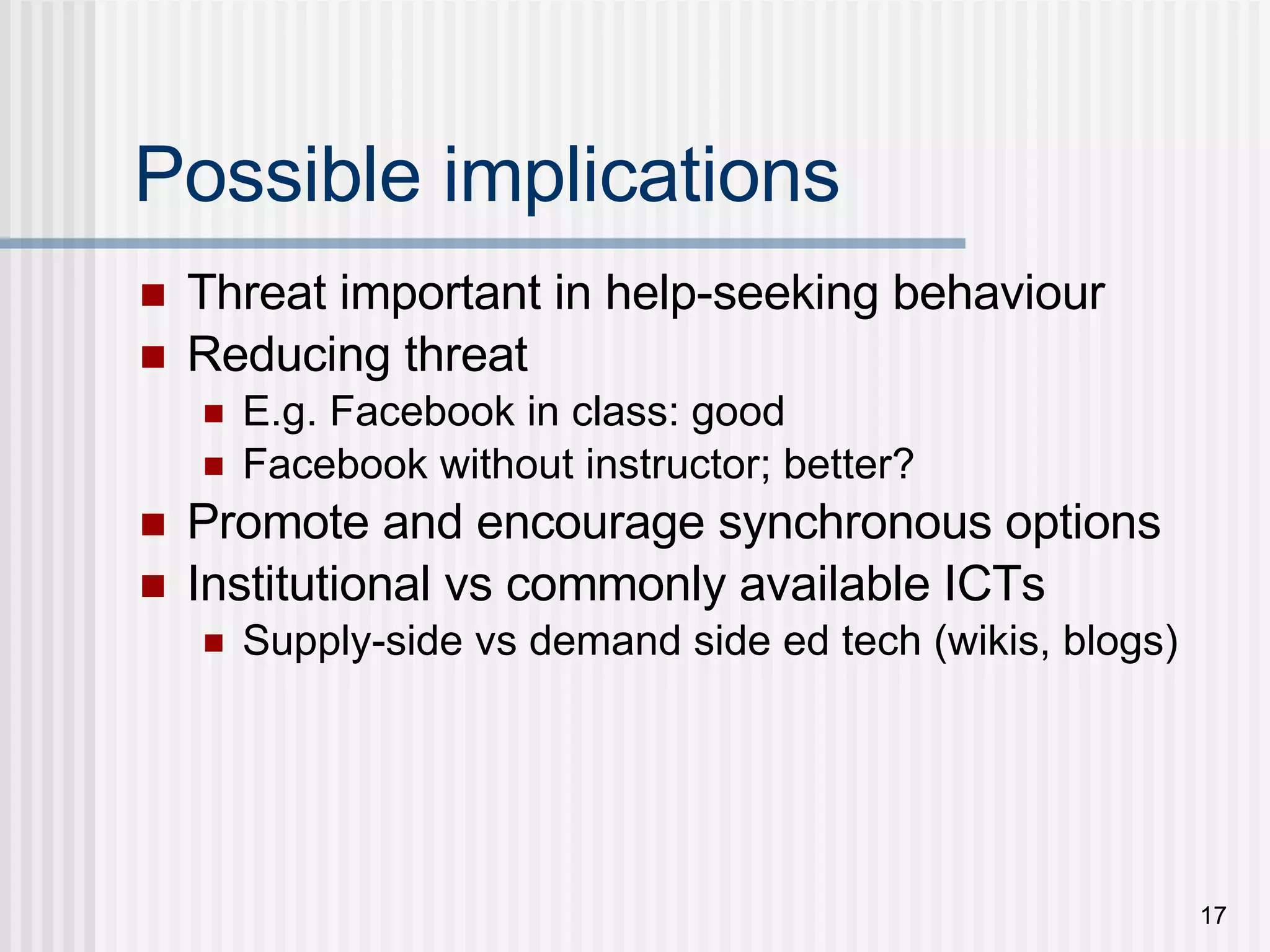
Possible implications Threat important in help-seeking behaviour Reducing threat E.g. Facebook in class: good Facebook without instructor; better? Promote and encourage synchronous options Institutional vs commonly available ICTs Supply-side vs demand side ed tech (wikis, blogs)
Further information [email_address]

Informal Help-Seeking & ICT USe

  • 1.
    Informal help-seeking &ICTs Adnan Qayyum Concordia University Canadian Network for Innovation in Education May 12, 2009
  • 2.
    Agenda Present generalresearch problem Review qualitative study Discuss findings of quantitative study So what? possible implications
  • 3.
    General problem &method General research problem Buddhist wheel metaphor explore student-generated interaction describe how students interact outside of class for course-purposes, and the role of ICTs in doing so Method Exploratory mixed method -qual becomes means for developing or locating instrument Qualitative study what’s going on Quantitative study how common is this identify underlying dynamics
  • 4.
    Qualitative study Guidingresearch questions How do students interact with peers and others for course-related purposes outside of class? How do ICTs affect this dynamic? Collaboration with BCIT Learning & Teaching Unit Data collection: Interviews, observations, existing documents, student blogs 69 students in 29 groups Individually and in groups
  • 5.
    Findings: channels ofcommunication Talking in person via cellphones Writing via chat (e.g. MSN, Yahoo) email Facebook, MySpace cellphone text messages WebCT
  • 6.
    Findings: topics ofcommunication Main topics discussing school projects and assignments discussing general school issues seeking and sharing information about course administrative issues organizing for school work Other course-related topics Studying in groups Seeking help about course content Working on assigned group projects Reviewing each others work Sharing resources
  • 7.
    Findings: location ofcommunication Blend of social and work space E.g. cafeterias, Student Hall, lounge spaces Designated work spaces E.g. labs, library, learning commons Social spaces E.g. restaurant, pub Off campus E.g. home
  • 8.
    Quantitative study Whichfactors might motivate students to communicate with and seek help from peers and instructors? What communication channels do students use to interact with peers and instructors outside of class? Why do students choose particular communication channels to support their learning?
  • 9.
    Questionnaire Main datacollection instrument: 89 item survey Content validity: peer review Construct validity: pilot test (Fall 2008, N=40  from .78 to .89) Survey administered to 14 courses (6 to 93) 449 students (438 usable after screening & cleaning) Self-reporting
  • 10.
    Respondents Respondent’s demographicsNot working 52% Working 48% Technology 79% Trades 21% Male 56% Female 43%
  • 11.
    Q1: Which factorsmotivate students to communicate with peers and instructors? Peer usefulness Better comprehension, saves time, useful feedback, motivation, better work completed Perception of instructors available, approachable, knowledgeable, prompt Peer trust affective trust, reliable, timely Independence prefer to work on own; learn by trying things on own Perception of course Manageable workload; would recommend course Threat Fear of looking “stupid”; hesitate to approach instructor for help
  • 12.
    Q2: What communicationchannels do students use to interact with peers and instructors outside of class? Communicating with peers 1. Talking in person 2. Personal email (e.g. Hotmail, Telus, etc.) 3. Talking via phone 4. Text message via cellphones 5. Instant messaging (MSN, Yahoo, etc) 6. BCIT email account 6. Facebook/MySpace 8. WebCT
  • 13.
    Q2: What communicationchannels to students used to interact with peers and instructors outside of class? Communicating with instructors Talking in person BCIT email account Personal email (e.g. Hotmail, Telus) WebCT Talking via phone Instant messaging (MSN, Yahoo messenger) Text message via cellphones Facebook/MySpace
  • 14.
    Q3: Why dostudents choose particular communication channels to support their learning? Were there any significant relationships between factors that may motivate communication with peers and instructors, and the choice of communication channels? Threat : fear of looking stupid, hesitating asking instructors In Person Personal email Avoiding personal communication
  • 15.
    Q3: Why dostudents choose particular communication channels to support their learning? Peer usefulness : communicating with peers is useful Facebook Instant messaging Text message Phone WebCT In Person Synchronous communication Peer trust: peers are trustworthy, reliable, timely In person Phone Instant messaging Text messaging Synchronous communication
  • 16.
    So what? Howdo might these findings inform design or teaching strategies? How might these findings inform how institutions should allocate resources?
  • 17.
    Possible implications Threatimportant in help-seeking behaviour Reducing threat E.g. Facebook in class: good Facebook without instructor; better? Promote and encourage synchronous options Institutional vs commonly available ICTs Supply-side vs demand side ed tech (wikis, blogs)
  • 18.