Using Web 2.0 Technologies to Facilitate Learning: A student collaboration project between Florida A&M University and Midwestern State University Ms. Mitzi Lewis Midwestern State University Dr. LaRae M. Donnellan, APR, CPRC Florida A&M University
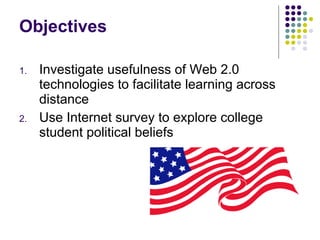
Objectives Investigate usefulness of Web 2.0 technologies to facilitate learning across distance Use Internet survey to explore college student political beliefs
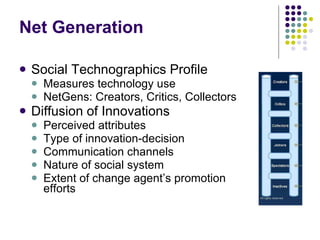
Net Generation Social Technographics Profile Measures technology use NetGens: Creators, Critics, Collectors Diffusion of Innovations Perceived attributes Type of innovation-decision Communication channels Nature of social system Extent of change agent’s promotion  efforts
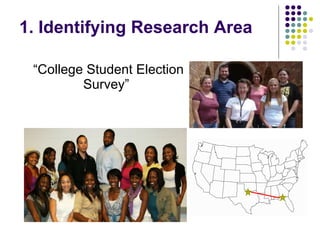
1. Identifying Research Area “ College Student Election  Survey”
Web 2.0 Tools Teleconference E-mail Blog Wiki SurveyMonkey
College Student Election Survey Created in summer 2008 22 questions Political leanings Preferences Issues How learned about the survey 900 responses
2. Gathering Data Tracking student  participation on blog  & wiki Soliciting feedback via  classroom discussions Soliciting feedback via  survey Communicating regularly via e-mail & phone
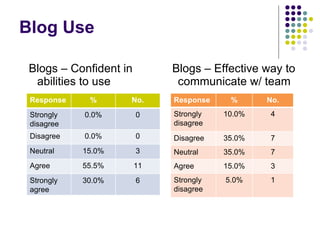
Blog Use Blogs – Confident in abilities to use Blogs – Effective way to communicate w/ team Response % No. Strongly disagree 0.0% 0 Disagree 0.0% 0 Neutral 15.0% 3 Agree 55.5% 11 Strongly agree 30.0% 6 Response % No. Strongly disagree 10.0% 4 Disagree 35.0% 7 Neutral 35.0% 7 Agree 15.0% 3 Strongly disagree 5.0% 1
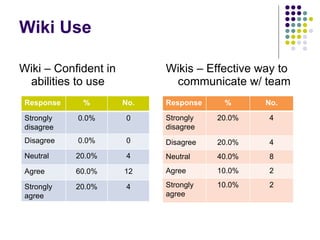
Wiki Use Wiki – Confident in abilities to use  Wikis – Effective way to communicate w/ team  Response % No. Strongly disagree 0.0% 0 Disagree 0.0% 0 Neutral 20.0% 4 Agree 60.0% 12 Strongly agree 20.0% 4 Response % No. Strongly disagree 20.0% 4 Disagree 20.0% 4 Neutral 40.0% 8 Agree 10.0% 2 Strongly agree 10.0% 2
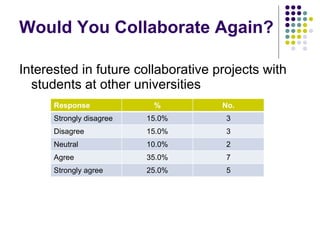
Would You Collaborate Again? Interested in future collaborative projects with students at other universities Response % No. Strongly disagree 15.0% 3 Disagree 15.0% 3 Neutral 10.0% 2 Agree 35.0% 7 Strongly agree 25.0% 5
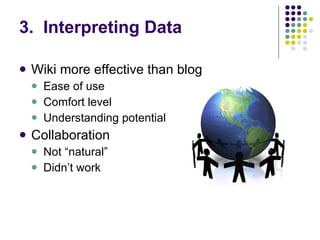
3.  Interpreting Data Wiki more effective than blog Ease of use Comfort level Understanding potential Collaboration  Not “natural” Didn’t work
4. Acting on Evidence Mid-project adjustments More class structure Scaffolding
5.  Evaluating Results Creating effective teams is challenging – especially at a distance. SM tools not seen as valuable. More structured instruction? Motivation Consequences
6. Conclusions Design technology use around learning objectives. Use “scaffolding” – Show  students how to apply  tools in other contexts.
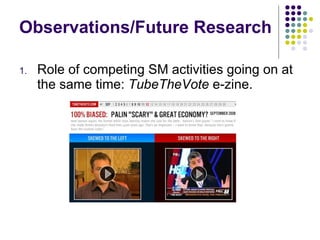
Observations/Future Research Role of competing SM activities going on at the same time:  TubeTheVote  e-zine.
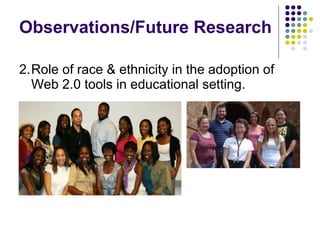
Observations/Future Research 2. Role of race & ethnicity in the adoption of Web 2.0 tools in educational setting.

AEJMC 2008

  • 1.
    Using Web 2.0Technologies to Facilitate Learning: A student collaboration project between Florida A&M University and Midwestern State University Ms. Mitzi Lewis Midwestern State University Dr. LaRae M. Donnellan, APR, CPRC Florida A&M University
  • 2.
    Objectives Investigate usefulnessof Web 2.0 technologies to facilitate learning across distance Use Internet survey to explore college student political beliefs
  • 3.
    Net Generation SocialTechnographics Profile Measures technology use NetGens: Creators, Critics, Collectors Diffusion of Innovations Perceived attributes Type of innovation-decision Communication channels Nature of social system Extent of change agent’s promotion efforts
  • 4.
    1. Identifying ResearchArea “ College Student Election Survey”
  • 5.
    Web 2.0 ToolsTeleconference E-mail Blog Wiki SurveyMonkey
  • 6.
    College Student ElectionSurvey Created in summer 2008 22 questions Political leanings Preferences Issues How learned about the survey 900 responses
  • 7.
    2. Gathering DataTracking student participation on blog & wiki Soliciting feedback via classroom discussions Soliciting feedback via survey Communicating regularly via e-mail & phone
  • 8.
    Blog Use Blogs– Confident in abilities to use Blogs – Effective way to communicate w/ team Response % No. Strongly disagree 0.0% 0 Disagree 0.0% 0 Neutral 15.0% 3 Agree 55.5% 11 Strongly agree 30.0% 6 Response % No. Strongly disagree 10.0% 4 Disagree 35.0% 7 Neutral 35.0% 7 Agree 15.0% 3 Strongly disagree 5.0% 1
  • 9.
    Wiki Use Wiki– Confident in abilities to use Wikis – Effective way to communicate w/ team Response % No. Strongly disagree 0.0% 0 Disagree 0.0% 0 Neutral 20.0% 4 Agree 60.0% 12 Strongly agree 20.0% 4 Response % No. Strongly disagree 20.0% 4 Disagree 20.0% 4 Neutral 40.0% 8 Agree 10.0% 2 Strongly agree 10.0% 2
  • 10.
    Would You CollaborateAgain? Interested in future collaborative projects with students at other universities Response % No. Strongly disagree 15.0% 3 Disagree 15.0% 3 Neutral 10.0% 2 Agree 35.0% 7 Strongly agree 25.0% 5
  • 11.
    3. InterpretingData Wiki more effective than blog Ease of use Comfort level Understanding potential Collaboration Not “natural” Didn’t work
  • 12.
    4. Acting onEvidence Mid-project adjustments More class structure Scaffolding
  • 13.
    5. EvaluatingResults Creating effective teams is challenging – especially at a distance. SM tools not seen as valuable. More structured instruction? Motivation Consequences
  • 14.
    6. Conclusions Designtechnology use around learning objectives. Use “scaffolding” – Show students how to apply tools in other contexts.
  • 15.
    Observations/Future Research Roleof competing SM activities going on at the same time: TubeTheVote e-zine.
  • 16.
    Observations/Future Research 2.Role of race & ethnicity in the adoption of Web 2.0 tools in educational setting.