Dr. Tulika Chaudhary
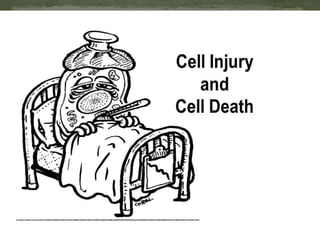
 Cell injury is defined as a variety of stresses a cell
encounters as a result of changes in its internal &
external environment.
 The cellular response to strees may vary & depends
upon following:
 The type of cell and tissue involved
 Extent and type of cell injury
and type of cell injury
 Genetic causes:-
• Developmental defect: errors in morphogenesis
• Cytogenetic defects: chromosomal abnormalities
• Single gene defects
 Hypoxia and ischemia
 Physical agents
 Chemical agents
 Microbial agents
 Immunological agents
 Nutritional derangements
 Ageing
 Psycogenic factors
 Idiopathic disease
 Hypoxia result from reduced blood supply
(Ischemia)
 Loss of oxygen carrying capacity of the blood
(anemia or CO poisoning)
 Trauma
 Heat
 Cold
 Radiation
 Electric shock
 Chemical poisons; cynide,arsenic
 Strong acids and alkali
 Environmental pollutants
 Insecticides and pesticides
 Injuries by microbes include infections caused
by: bacteria,viruses,fungi,protozoa,metazoa and other
parasites.
 Nutritional deficiency disease:
 Marasmus,Anaemia
 Nuritional excess problems:
 Obesity,hypertension,heart disease
 Depletion of ATP
 Mitochondrial damage
 Influx of intracellular calcium and loss of calcium
homeostatis
 Accumulation of oxygen-derived free radical
 Defects in membrane permeability
 ATP depletion and decreased ATP synthesis and are
associated with both hypoxic & chemical injury.
 ATP required for many synthetic and degradative
processes within the cell.
 Reversible cell injury
 Irreversible cell injury
 If the ischaemia or hypoxia is of short duration, the
effect are reversible on rapid restoration of circulation.
 Changes in reversible cell injury are:
• Decreased cellular ATP
• Reduced intracellular PH
• Damage to plasma membrane sodium pump
• Swelling of mitochondria and endoplasmic reticulum
• Cellular swelling and vacuole formation
 Cell death is a state of irreversible cell injury
 The changes are produced by enzymatic digestion of
dead cellular elements, denaturation of protein and
autolysis.
 In nucleus non specific breakdown of DNA, these may
lead to:
 Pyknosis(shrinkage)
 Karyolysis(fading)
 Karyorrhexis(fragmentation)
Cell  injury

Cell injury

  • 1.
  • 3.
     Cell injuryis defined as a variety of stresses a cell encounters as a result of changes in its internal & external environment.  The cellular response to strees may vary & depends upon following:  The type of cell and tissue involved  Extent and type of cell injury and type of cell injury
  • 4.
     Genetic causes:- •Developmental defect: errors in morphogenesis • Cytogenetic defects: chromosomal abnormalities • Single gene defects
  • 5.
     Hypoxia andischemia  Physical agents  Chemical agents  Microbial agents  Immunological agents  Nutritional derangements  Ageing  Psycogenic factors  Idiopathic disease
  • 6.
     Hypoxia resultfrom reduced blood supply (Ischemia)  Loss of oxygen carrying capacity of the blood (anemia or CO poisoning)
  • 7.
     Trauma  Heat Cold  Radiation  Electric shock
  • 8.
     Chemical poisons;cynide,arsenic  Strong acids and alkali  Environmental pollutants  Insecticides and pesticides
  • 9.
     Injuries bymicrobes include infections caused by: bacteria,viruses,fungi,protozoa,metazoa and other parasites.
  • 10.
     Nutritional deficiencydisease:  Marasmus,Anaemia  Nuritional excess problems:  Obesity,hypertension,heart disease
  • 11.
     Depletion ofATP  Mitochondrial damage  Influx of intracellular calcium and loss of calcium homeostatis  Accumulation of oxygen-derived free radical  Defects in membrane permeability
  • 12.
     ATP depletionand decreased ATP synthesis and are associated with both hypoxic & chemical injury.  ATP required for many synthetic and degradative processes within the cell.
  • 13.
     Reversible cellinjury  Irreversible cell injury
  • 15.
     If theischaemia or hypoxia is of short duration, the effect are reversible on rapid restoration of circulation.  Changes in reversible cell injury are: • Decreased cellular ATP • Reduced intracellular PH • Damage to plasma membrane sodium pump • Swelling of mitochondria and endoplasmic reticulum • Cellular swelling and vacuole formation
  • 17.
     Cell deathis a state of irreversible cell injury  The changes are produced by enzymatic digestion of dead cellular elements, denaturation of protein and autolysis.  In nucleus non specific breakdown of DNA, these may lead to:  Pyknosis(shrinkage)  Karyolysis(fading)  Karyorrhexis(fragmentation)