Chapter 7 Respiratory System By: Norma Gongora
Respiratory System
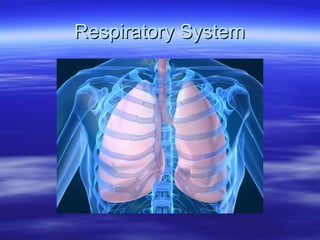
Respiratory System The organs of the respiratory system are responsible for bringing fresh air into the lungs, exchanging oxygen for carbon dioxide between the air sacs of the lungs and the blood stream, and exhaling the stale air.
Organs Nasal Cavity Pharynx Larynx Trachea Bronchial Tubes Lungs
Nasal Cavity A large cavity just behind the external nose that receives the outside air. It is covered with mucous membrane to cleanse the air. The nasal septum divides the nasal cavity into left and right halves.  The Nasal Cavity consists of: cilia, mucous membrane, mucus, nares, nasal septum, palate, paranasal sinuses.
Pharynx Also known as the throat. The passage way that conducts air from the nasal cavity to the trachea and also carries food and drink from the mouth to the esophagus. The pharynx is divided into three sections: the nasopharynx, oropharynx, and laryngopharnx.
Larynx Also known as the voice box. Organ responsible for producing speech. It is located just below the pharynx. The Larynx consists of: Vocal Cords- the folds of the membranous tissue that produce sound and speech. Glottis-opening between the vocal cords. Epiglottis-a flap of cartilage that covers the larynx when a person swallows.
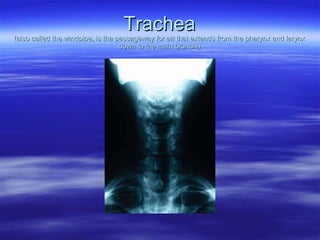
Trachea (also called the windpipe, is the passageway for air that extends from the pharynx and larynx down to the main bronchi)
Bronchial Tubes Organ that carries air into the lungs. It consists of the alveoli, bronchials, bronchus, pulmonary capillaries, and respiratory membrane.
Lungs Is the major organ of respiration. The lungs consist of air passageways, the bronchi abd bronchioles, and the air sacs, alveoli. Gas exchange takes place within the alveoli.

Chapter 7 Presentation

  • 1.
    Chapter 7 RespiratorySystem By: Norma Gongora
  • 2.
  • 3.
    Respiratory System Theorgans of the respiratory system are responsible for bringing fresh air into the lungs, exchanging oxygen for carbon dioxide between the air sacs of the lungs and the blood stream, and exhaling the stale air.
  • 4.
    Organs Nasal CavityPharynx Larynx Trachea Bronchial Tubes Lungs
  • 5.
    Nasal Cavity Alarge cavity just behind the external nose that receives the outside air. It is covered with mucous membrane to cleanse the air. The nasal septum divides the nasal cavity into left and right halves. The Nasal Cavity consists of: cilia, mucous membrane, mucus, nares, nasal septum, palate, paranasal sinuses.
  • 6.
    Pharynx Also knownas the throat. The passage way that conducts air from the nasal cavity to the trachea and also carries food and drink from the mouth to the esophagus. The pharynx is divided into three sections: the nasopharynx, oropharynx, and laryngopharnx.
  • 7.
    Larynx Also knownas the voice box. Organ responsible for producing speech. It is located just below the pharynx. The Larynx consists of: Vocal Cords- the folds of the membranous tissue that produce sound and speech. Glottis-opening between the vocal cords. Epiglottis-a flap of cartilage that covers the larynx when a person swallows.
  • 8.
    Trachea (also calledthe windpipe, is the passageway for air that extends from the pharynx and larynx down to the main bronchi)
  • 9.
    Bronchial Tubes Organthat carries air into the lungs. It consists of the alveoli, bronchials, bronchus, pulmonary capillaries, and respiratory membrane.
  • 10.
    Lungs Is themajor organ of respiration. The lungs consist of air passageways, the bronchi abd bronchioles, and the air sacs, alveoli. Gas exchange takes place within the alveoli.