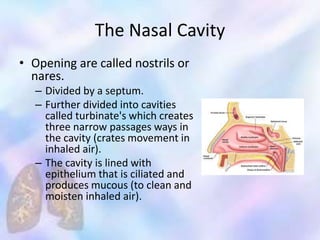
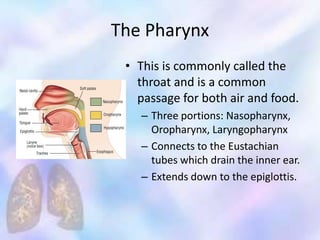
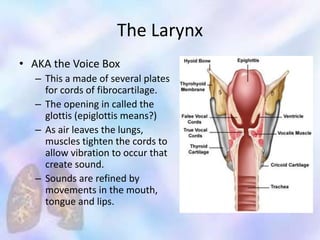
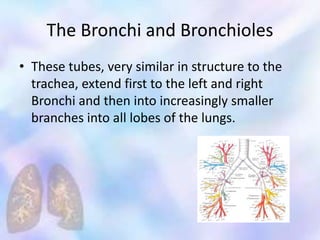
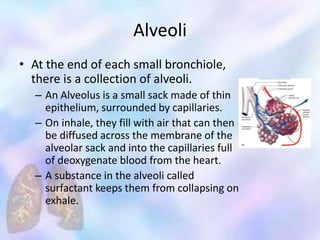
The respiratory system has several functions including providing oxygen for cellular respiration and removing carbon dioxide. It involves gas exchange that occurs in the alveoli between inhaled air and blood. The major structures include the nasal cavity, pharynx, larynx, trachea, lungs, bronchi, bronchioles and alveoli. During inhalation, intercostal muscles and the diaphragm expand the chest cavity to create lower pressure and allow air intake. Exhalation is passive as respiratory muscles relax and pressure decreases within the chest to expel air. The pleura and elasticity of the lungs allow for adequate expansion and contraction during breathing.