Nervous and Endocrine
Systems
IHS Unit 4
Learning Goals
• Discuss the anatomy and basic
physiology of the endocrine and
nervous systems.
• Analyze how these systems work
together to control the body.
The Nervous System
• Includes BILLIONS of neurons.
– Divided into the central nervous system
(brain and spinal cord) and peripheral
nervous system (nerves throughout the
body)
– Brain is the central control center for body
and receives messages from all of the
tissues and organs. It also sends messages
to alter any processes taking place.
The Brain
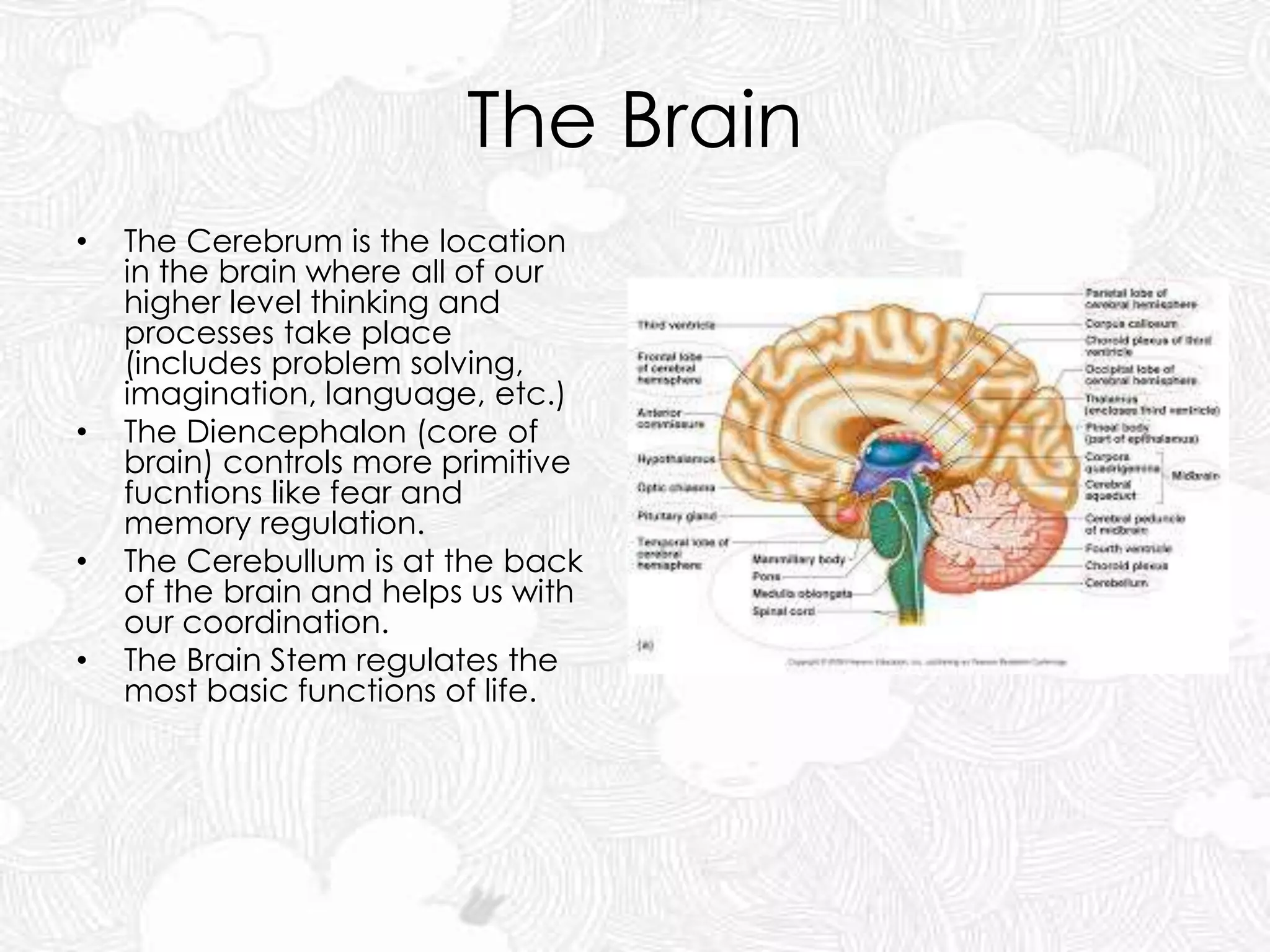
• The Cerebrum is the location
in the brain where all of our
higher level thinking and
processes take place
(includes problem solving,
imagination, language, etc.)
• The Diencephalon (core of
brain) controls more primitive
fucntions like fear and
memory regulation.
• The Cerebullum is at the back
of the brain and helps us with
our coordination.
• The Brain Stem regulates the
most basic functions of life.
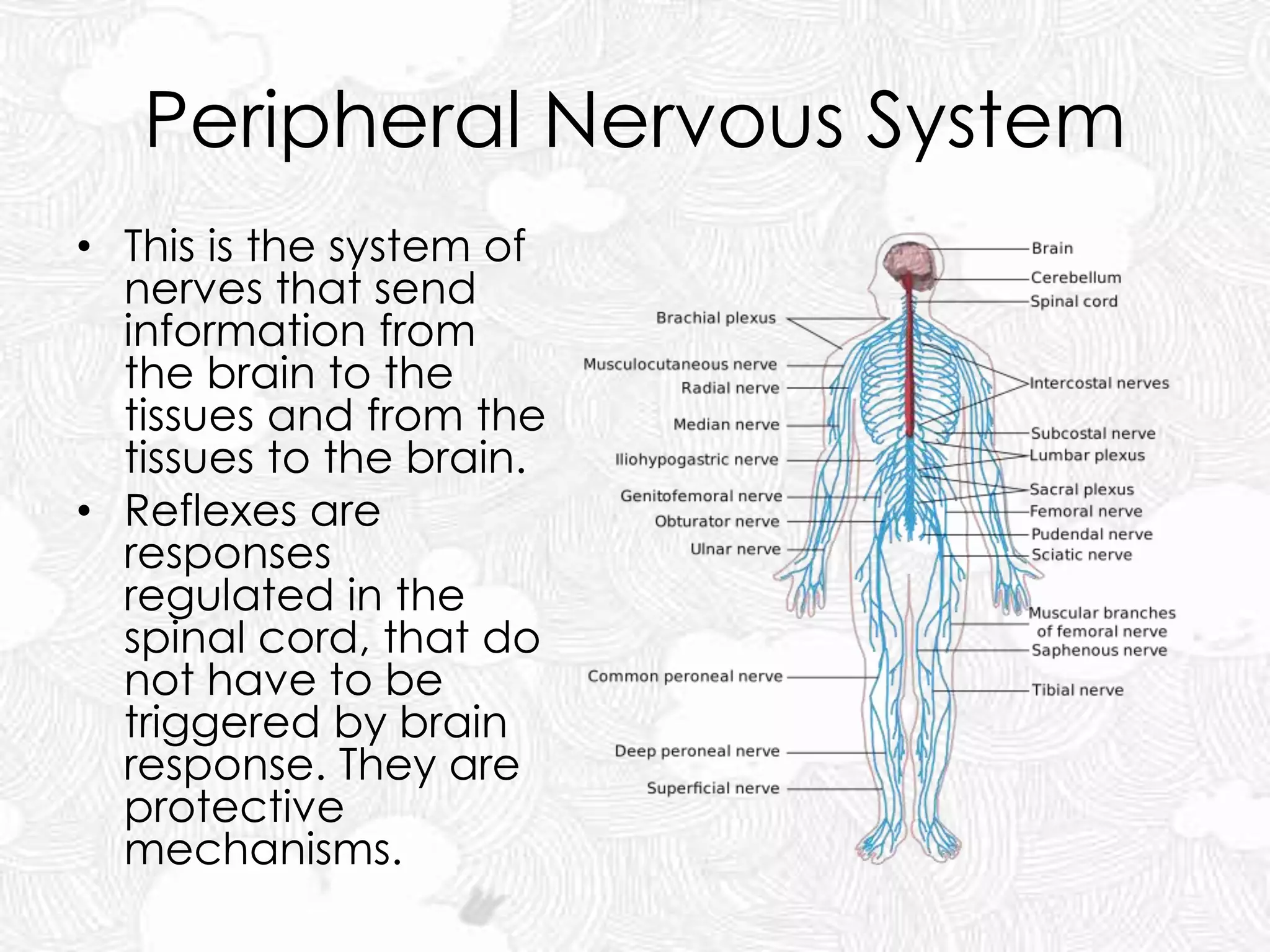
Peripheral Nervous System
• This is the system of
nerves that send
information from
the brain to the
tissues and from the
tissues to the brain.
• Reflexes are
responses
regulated in the
spinal cord, that do
not have to be
triggered by brain
response. They are
protective
mechanisms.
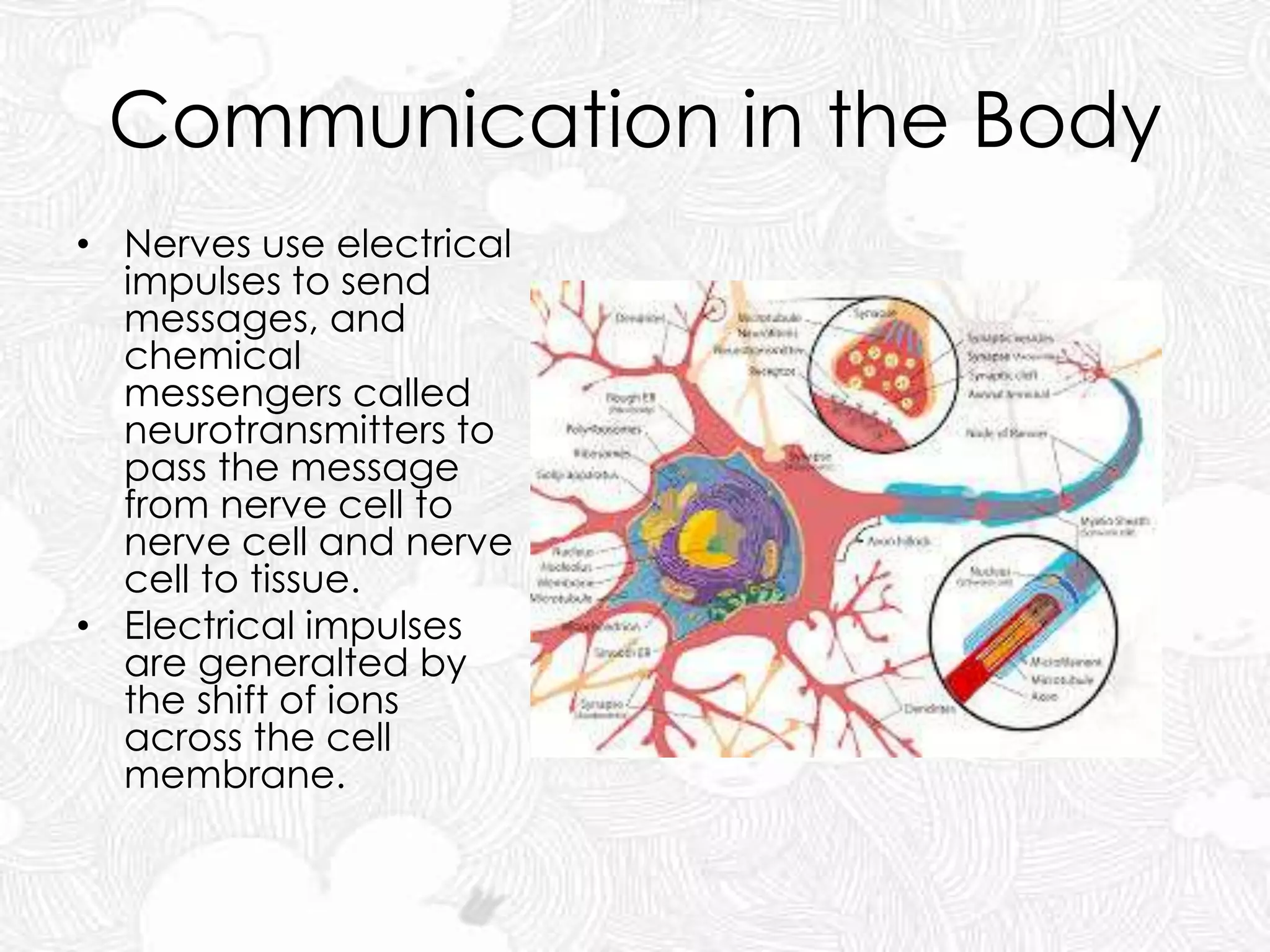
Communication in the Body
• Nerves use electrical
impulses to send
messages, and
chemical
messengers called
neurotransmitters to
pass the message
from nerve cell to
nerve cell and nerve
cell to tissue.
• Electrical impulses
are generalted by
the shift of ions
across the cell
membrane.
The Endocrine System
• This is the collection of hormone-
producing organs through out the
body. They regulate all sorts of body
functions, from growth to hunger,
reproduction to production of urine.
• The pituitary gland, located just under
the brain, is called the master gland
because it controls the function of
many others.
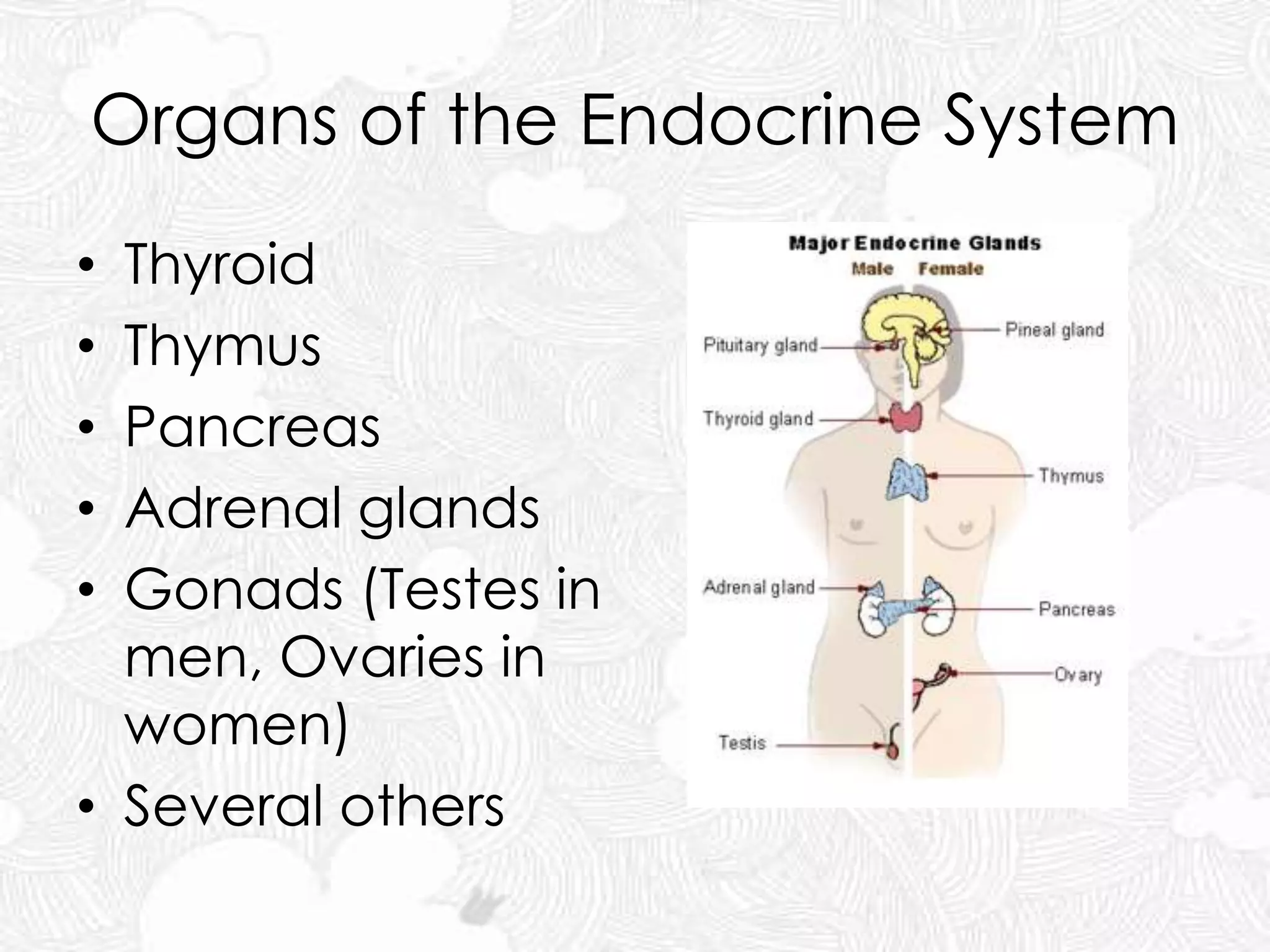
Organs of the Endocrine System
• Thyroid
• Thymus
• Pancreas
• Adrenal glands
• Gonads (Testes in
men, Ovaries in
women)
• Several others
Hormones
• Hormones are chemical messengers
that produce a response in their target
tissues.
• Hormones travel in the blood, and are
filtered out by the kidneys and liver just
like other waste.
• Some hormones include: growth
hormone, adrenaline, estrogen,
testosterone, and insulin.
Shared Control of the Body
Nervous system
• Uses electrical impulses
and chemical
messengers
• Has pathways
throughout the body
• Centrally controlled by
brain
• Reacts FAST to change
(happens in fractions of
a second)
Endocrine System
• Uses chemical
messengers which
travels through the
blood.
• Centrally controlled by
the pituitary gland
• Reacts more slowly to
change (happens over
hours or days)

Endocrine and Nervous System IHS Unit 4

  • 1.
  • 2.
    Learning Goals • Discussthe anatomy and basic physiology of the endocrine and nervous systems. • Analyze how these systems work together to control the body.
  • 3.
    The Nervous System •Includes BILLIONS of neurons. – Divided into the central nervous system (brain and spinal cord) and peripheral nervous system (nerves throughout the body) – Brain is the central control center for body and receives messages from all of the tissues and organs. It also sends messages to alter any processes taking place.
  • 4.
    The Brain • TheCerebrum is the location in the brain where all of our higher level thinking and processes take place (includes problem solving, imagination, language, etc.) • The Diencephalon (core of brain) controls more primitive fucntions like fear and memory regulation. • The Cerebullum is at the back of the brain and helps us with our coordination. • The Brain Stem regulates the most basic functions of life.
  • 5.
    Peripheral Nervous System •This is the system of nerves that send information from the brain to the tissues and from the tissues to the brain. • Reflexes are responses regulated in the spinal cord, that do not have to be triggered by brain response. They are protective mechanisms.
  • 6.
    Communication in theBody • Nerves use electrical impulses to send messages, and chemical messengers called neurotransmitters to pass the message from nerve cell to nerve cell and nerve cell to tissue. • Electrical impulses are generalted by the shift of ions across the cell membrane.
  • 7.
    The Endocrine System •This is the collection of hormone- producing organs through out the body. They regulate all sorts of body functions, from growth to hunger, reproduction to production of urine. • The pituitary gland, located just under the brain, is called the master gland because it controls the function of many others.
  • 8.
    Organs of theEndocrine System • Thyroid • Thymus • Pancreas • Adrenal glands • Gonads (Testes in men, Ovaries in women) • Several others
  • 9.
    Hormones • Hormones arechemical messengers that produce a response in their target tissues. • Hormones travel in the blood, and are filtered out by the kidneys and liver just like other waste. • Some hormones include: growth hormone, adrenaline, estrogen, testosterone, and insulin.
  • 10.
    Shared Control ofthe Body Nervous system • Uses electrical impulses and chemical messengers • Has pathways throughout the body • Centrally controlled by brain • Reacts FAST to change (happens in fractions of a second) Endocrine System • Uses chemical messengers which travels through the blood. • Centrally controlled by the pituitary gland • Reacts more slowly to change (happens over hours or days)