Social Wellness
IHS St 10
Learning Goals
Identify elements of healthy friendships,
relationships, and peer interaction
Understand warning signs of abusive and
unhealthy relationships
We are Social Beings
Humans need social cooperation to survive,
therefore healthy social interaction is key to
wellness and health.
Especially during adolescence, development of
friendships, peer group association, and romantic
relationships is essential to psychological and
emotional development.
Key Elements of Social
Health
Knowing your personal needs and limits
Initiating and being receptive to interaction
Choosing relationships carefully
Maintaining and strengthening good relationships
Balancing conformity with self expression
Learning to communicate effectively with others
Know your limits and
needs
Are you an introvert or an extrovert?
How much time do you need to spend alone?
Do you feel anxious or unhappy when not around
people?
Are you happier in a group?
Choosing Relationships
Connect with people who make you better, are
positive, and encouraging.
Avoid people who make you feel bad about
yourself and your choices, or who display signs
of abusive behavior.
Choose consciously to grow and sustain good
relationships and end bad ones.
Being Yourself
This is an extension of “know your needs and
limits”
Some behavior, style, etc. may not be accepted
readily by general social circles.
Don’t necessarily let that shut you down:
The world is a big place, and there are always
people like you – just maybe not next door.
“Find your village”
Communication
Be honest and kind, whenever possible.
At the same time, express your needs and
expectations clearly. Don’t expect other to read
your mind.
Refrain from name calling and degrading speech.
Peer Pressure
Is the social pressure you feel exerted by your
peer group.
Can be positive or negative.
Positive: “All my friends are going to get together
to study this weekend and they said I should
come too.”
Negative: “All my friends are going to a party and
getting drunk tonight and they said I should go
too.”
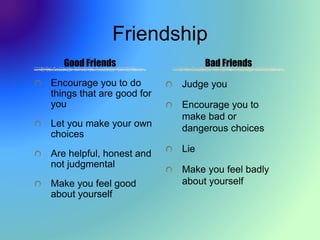
Friendship
Good Friends
Encourage you to do
things that are good for
you
Let you make your own
choices
Are helpful, honest and
not judgmental
Make you feel good
about yourself
Bad Friends
Judge you
Encourage you to
make bad or
dangerous choices
Lie
Make you feel badly
about yourself
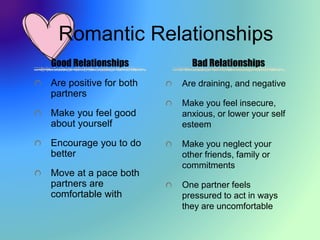
Romantic Relationships
Good Relationships
Are positive for both
partners
Make you feel good
about yourself
Encourage you to do
better
Move at a pace both
partners are
comfortable with
Bad Relationships
Are draining, and negative
Make you feel insecure,
anxious, or lower your self
esteem
Make you neglect your
other friends, family or
commitments
One partner feels
pressured to act in ways
they are uncomfortable
Warning Signs of Abusive
Relationships
Physical Violence, Threats
Verbal Abuse – shouting, threatening, degrading
Emotional Abuse – keeping you from friends or family,
name calling. Extreme jealousy, Fear of your partner
Sexual Abuse – forcing intimacy, or pressuring actions that
are unwanted. This sometimes take place as a process
called “grooming” meaning that the abusive partner slowly
coerces, cons or guilts the other person into a situation that
is negative, abusive, unhealthy or unwanted. The abused
partner will often defend the abuser and say that they are
happy.
Things abusive people
say…
“If you loved me you would ….
What you care about is not important because
you are (stupid, immature, selfish, etc.)
If you don’t (______) I will (harm myself, you)
I’m sorry, I love you and I promise I’ll never do
that to you again.

Social wellness for IHS

  • 1.
  • 2.
    Learning Goals Identify elementsof healthy friendships, relationships, and peer interaction Understand warning signs of abusive and unhealthy relationships
  • 3.
    We are SocialBeings Humans need social cooperation to survive, therefore healthy social interaction is key to wellness and health. Especially during adolescence, development of friendships, peer group association, and romantic relationships is essential to psychological and emotional development.
  • 4.
    Key Elements ofSocial Health Knowing your personal needs and limits Initiating and being receptive to interaction Choosing relationships carefully Maintaining and strengthening good relationships Balancing conformity with self expression Learning to communicate effectively with others
  • 5.
    Know your limitsand needs Are you an introvert or an extrovert? How much time do you need to spend alone? Do you feel anxious or unhappy when not around people? Are you happier in a group?
  • 6.
    Choosing Relationships Connect withpeople who make you better, are positive, and encouraging. Avoid people who make you feel bad about yourself and your choices, or who display signs of abusive behavior. Choose consciously to grow and sustain good relationships and end bad ones.
  • 7.
    Being Yourself This isan extension of “know your needs and limits” Some behavior, style, etc. may not be accepted readily by general social circles. Don’t necessarily let that shut you down: The world is a big place, and there are always people like you – just maybe not next door. “Find your village”
  • 8.
    Communication Be honest andkind, whenever possible. At the same time, express your needs and expectations clearly. Don’t expect other to read your mind. Refrain from name calling and degrading speech.
  • 9.
    Peer Pressure Is thesocial pressure you feel exerted by your peer group. Can be positive or negative. Positive: “All my friends are going to get together to study this weekend and they said I should come too.” Negative: “All my friends are going to a party and getting drunk tonight and they said I should go too.”
  • 10.
    Friendship Good Friends Encourage youto do things that are good for you Let you make your own choices Are helpful, honest and not judgmental Make you feel good about yourself Bad Friends Judge you Encourage you to make bad or dangerous choices Lie Make you feel badly about yourself
  • 11.
    Romantic Relationships Good Relationships Arepositive for both partners Make you feel good about yourself Encourage you to do better Move at a pace both partners are comfortable with Bad Relationships Are draining, and negative Make you feel insecure, anxious, or lower your self esteem Make you neglect your other friends, family or commitments One partner feels pressured to act in ways they are uncomfortable
  • 12.
    Warning Signs ofAbusive Relationships Physical Violence, Threats Verbal Abuse – shouting, threatening, degrading Emotional Abuse – keeping you from friends or family, name calling. Extreme jealousy, Fear of your partner Sexual Abuse – forcing intimacy, or pressuring actions that are unwanted. This sometimes take place as a process called “grooming” meaning that the abusive partner slowly coerces, cons or guilts the other person into a situation that is negative, abusive, unhealthy or unwanted. The abused partner will often defend the abuser and say that they are happy.
  • 13.
    Things abusive people say… “Ifyou loved me you would …. What you care about is not important because you are (stupid, immature, selfish, etc.) If you don’t (______) I will (harm myself, you) I’m sorry, I love you and I promise I’ll never do that to you again.