RESPIRATORY DISORDERS UPPER RESPIRATORY TRACT
UPPER AIRWAY DISORDERS: INFECTIONS RHINITIS ACUTE & CHRONIC SINUSITIS ACUTE & CHRONIC PHARYNGITIS ACUTE & CHRONIC TONSILITIS LARYNGITIS
RHINITIS characterized by inflammation and irritation of the mucous membranes of the nose.  can be: acute or chronic nonallergic or allergic Allergic rhinitis classified as: seasonal  occurs during pollen seasons perennial rhinitis.  occurs throughout the year
Pathophysiology Nonallergic rhinitis may be caused by: environmental factors such as changes in temperature or humidity odors, or foods; Infection Age systemic disease;  drugs (eg, cocaine), over-the-counter (OTC) and prescribed nasal decongestants, and other medications;  presence of a foreign body Most common cause of nonallergic rhinitis is the common cold.  Drug-induced rhinitis is associated with use of: antihypertensive agents  oral contraceptives chronic use of nasal decongestants.  Allergic  Rhinitis  IgE-mediated  response  which  causes the release of vasoactive substances
Causes of Rhinitis Idiopathic Abuse of nasal decongestants (rhinitis medicamentosa) Psychological stimulation (anger, sexual arousal) Irritants (smoke, air pollution, exhaust fumes, cocaine) Vasomotor Causes Category Tumor Deviated septum Crusting Hypertrophied turbinates Foreign body Cerebrospinal fluid leak Mechanical
CAUSES CATEGORY Pregnancy Use of oral contraceptives Hypothyroidism Hormonal Acute viral infection Acute or chronic sinusitis Rare nasal infections (syphilis, tuberculosis) Infectious Polyps (in cystic fibrosis) Sarcoidosis Wegener's granulomatosis Midline granuloma Chronic inflammatory
Pathophysiology  Allergic Rhinitis  Allergens  bind  with  the  cells  in  the  nasal  mucosa -> production of allergen-specific IgE  which has a high affinity to IgE receptors present on the surface of mast cells located in the nasal mucosa Sensitization of mast cells result to degranulation and initiation of inflammatory events (synthesis of interleukin and infiltration of inflammatory cells) Early phase of inflammation Release of preformed mediators such as histamine, tryptase, kinin and heparin Late phase Migration of other inflammatory cells ( eosinophils, lymphocytes, macrophages to the nasal mucosa
Pathophysiology  Infectious Rhinitis Infectious agent comes in contact with ciliated epithelial cells in the nasal mucosa Increased production of mucus and immunoglobulin accompanied by shedding of epithelial cells
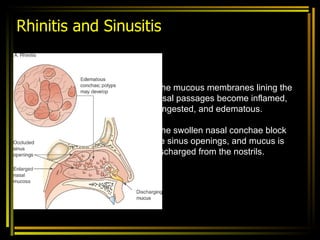
Rhinitis and Sinusitis The mucous membranes lining the nasal passages become inflamed, congested, and edematous.  The swollen nasal conchae block the sinus openings, and mucus is discharged from the nostrils.
Upper Respiratory Tract Disorders in the Elderly URI in the elderly may have more serious consequences if with concurrent medical problems that compromise their respiratory or immune status. Antihistamines to treat upper respiratory disorders must be used cautiously in the elderly  Due to side effects and potential interactions with other medications. Sinusitis in the elderly is often preceded by nasal packing for treatment of epistaxis. Laryngitis & gastroesophageal reflux disease (GERD).  elderly are likely to have impaired esophageal peristalsis and a weaker esophageal sphincter.  Tx: sleeping with the head of the bed elevated Meds: H2-receptor blockers (eg, famotidine [Pepcid], ranitidine [Zantac])  Proton pump inhibitors (omeprazole [Prilosec]).
Clinical Manifestations nonallergic rhinitis include: rhinorrhea (excessive nasal drainage, runny nose);  nasal congestion;  nasal discharge (purulent with bacterial rhinitis);  sneezing;  pruritus of the nose, roof of the mouth, throat, eyes, and ears.  Headache may occur, particularly if sinusitis is also present.  can occur throughout the year.
Medical Management depends on the cause, which may be identified through the history and physical examination.  Assess recent symptoms as well as possible exposure to allergens in the home, environment, or workplace.  If viral rhinitis is the cause, medications are given to relieve the symptoms.  In allergic rhinitis, tests may be performed to identify possible allergens.  desensitizing immunizations and corticosteroids may be required (severity) If bacterial infection, an antimicrobial agent will be used  Patients with nasal septal deformities or nasal polyps may be referred to an ear, nose, and throat specialist.
Pharmacologic Therapy Medication therapy for allergic and nonallergic rhinitis focuses on symptom relief.  Antihistamines for sneezing, pruritus, and rhinorrhea.  1 st  generation:  diphenhydramine (Benadryl) chlorpheniramine (Chlor-Trimeton) brompheniramine.  2 nd  generation:  loratadine (Alavert, Claritin) fexofenadine (Allegra) cetirizine (Zyrtec).  Dimetapp (brompheniramine/pseudoephedrine) is an example of a combination antihistamine.  Oral decongestant agents for nasal obstruction.  cromolyn (Nasalcrom), which inhibits the release of histamine and other chemicals.
Pharmacologic Therapy Use of saline nasal spray  act as a mild decongestant and can liquefy mucus to prevent crusting.  2 inhalations of intranasal ipratropium (Atrovent)  each nostril 2 to 3 times per day for symptomatic relief of rhinorrhea.  Intranasal corticosteroids for severe congestion Ophthalmic agents to relieve irritation, itching, and redness of the eyes.  The choice of medications depends on the symptoms, adverse reactions, adherence factors, risk of drug interactions, and cost to the patient.
Nursing Management Teaching Patients Self-Care Avoid or reduce exposure to allergens and irritants, such as dusts, molds, animals, fumes, odors, powders, sprays, and tobacco smoke.  Patient education in the use of OTC medications.  To prevent possible drug interactions, read drug labels before taking any OTC medication. Instructs the patient about the importance of controlling the environment at home and at work.  Saline nasal or aerosol sprays may be helpful in soothing mucous membranes, softening crusted secretions, and removing irritants.  Instructs the patient in the proper technique for administrating nasal medications.  achieve maximal relief, instructed to blow the nose before applying any medication into the nasal cavity.  patient is taught to keep the head upright; spray quickly and firmly into each nostril away from the nasal septum, and wait at least 1 minute before administering the second spray. The container should be cleaned after each use.
Nursing Management Infectious rhinitis Reviews hand hygiene technique with the patient as a measure to prevent transmission of organisms.  Teaches methods to treat symptoms of viral rhinitis.  In the elderly and other high-risk populations, review the value of receiving an influenza vaccination each year to achieve immunity before the beginning of the ‘flu season.’
Nursing Alert Be aware that some people use a variety of herbal products to prevent and treat nasal infection. Vitamin C, zinc and Echinacea are safe to use but should not be taken in greater amounts. Be aware that some people use a variety of herbal products to prevent and treat nasal infection. Vitamin C, zinc and Echinacea are safe to use but should not be taken in greater amounts.
Viral Rhinitis (Common Cold) most frequent viral infection in the general population.  common cold often is used when referring to a URI that is self-limited and caused by a virus. ‘ cold’ refers to an afebrile, infectious, acute inflammation of the mucous membranes of the nasal cavity. characterized by: nasal congestion, rhinorrhea,  sneezing,  sore throat, general malaise.  Colds are highly contagious, because virus is shed for about 2 days before the symptoms appear and during the first part of the symptomatic phase.
Viral Rhinitis (Common Cold) Etiology: Rhinoviruses  Coronaviruses Adenovirus Respiratory syncytial virus (RSV) Influenza virus Parainfluenza virus.  Each virus may have multiple strains.  Because of this diversity, development of a vaccine is almost impossible.  Immunity after recovery is variable and depends on many factors, including a person's natural host resistance and the specific virus that caused the cold.  Despite popular belief, cold temperatures and exposure to cold rainy weather do not increase the incidence or severity of the common cold.
Clinical Manifestations nasal congestion rhinorrhea and nasal discharge Sneezing tearing watery eyes ‘ scratchy’ or sore throat general malaise low-grade fever, chill often headache and muscle aches As the illness progresses, cough usually appears. In some people, the virus exacerbates herpes simplex, commonly called a ‘cold sore’ (Chart 22-2). may last from 1 to 2 weeks.  If there is significant fever or more severe systemic respiratory symptoms, it is no longer considered viral rhinitis but one of the other acute URIs.  Allergic conditions can also affect the nose, mimicking the symptoms of a cold. nasal congestion rhinorrhea and nasal discharge Sneezing tearing watery eyes ‘ scratchy’ or sore throat general malaise low-grade fever, chill often headache and muscle aches As the illness progresses, cough usually appears. In some people, the virus exacerbates herpes simplex, commonly called a ‘cold sore’ (Chart 22-2). may last from 1 to 2 weeks.  If there is significant fever or more severe systemic respiratory symptoms, it is no longer considered viral rhinitis but one of the other acute URIs.  Allergic conditions can also affect the nose, mimicking the symptoms of a cold.
Medical Management symptomatic therapy.  providing adequate fluid intake encouraging rest preventing chilling  use expectorants as needed.  Warm salt-water gargles soothe the sore throat non-steroidal anti-inflammatory agents (NSAIDs), such as aspirin or ibuprofen relieve the aches, pains, and fever in adults.  Antihistamines  relieve sneezing, rhinorrhea, and nasal congestion.  Topical (nasal) decongestant agents may relieve nasal congestion; however, overused result to rebound congestion
Medical Management zinc lozenges  may reduce the duration of cold symptoms if taken within the first 24 hours of onset (Marshall, 2006).  Amantadine (Symmetrel) or rimantadine (Flumadine) may be prescribed prophylactically  to decrease the signs and symptoms as well.  Antibiotics should not be used do not affect the virus or reduce the incidence of bacterial complications.
Nursing Management Teaching Patients Self-Care TRANSMISSION: direct contact with infected secretions;  inhalation of large particles from others' coughing or sneezing; inhalation of small particles (aerosol) that may be suspended in the air for up to an hour.  Teaches the patient how to break the chain of infection.  Handwashing remains the most effective measure  to prevent transmission of organisms.  Provides both verbal and written information to assist the patient in the prevention and management of URIs.
Preventing and Managing URI Preventive measures  Hand hygiene Use of disposable tissues Cover mouth when coughing or sneezing Avoid crowds during the flu season Avoid people with infections Obtain annual flu vaccines (esp elderly/with chronic illness) Practice good health habits Eat nutritious diet Adequate sleep, rest and exercise Avoid tobacco in all forms Avoid second hand smoke Increase humidity in the home Avoid irritants (dust/chemicals) to include exposure to animals Use central air conditioning with microstatic air filters
Preventing and Managing URI Strategies to relieve symptoms of URI Increase fluid intake Warm fluids (chicken soup) soothing for irritated throat Elevate HOB Gargle with salt water frequently for sore throat (1/4 tsp of salt in 8 oz warm water) Use throat lozenges for cough/sore throat Use saline nose drops/spray
Nursing Alert Due to the risk of gastrointestinal bleeding, the following medication should be avoided: Aspirin Ibuprofen Naproxen Especially persons who are: Not eating well Hx of peptic ulcer or related disorder With aspirin-sensitive asthma Renal dysfunction. Patients who have high blood pressure, diabetes, or thyroid disease, and those who are pregnant should check with their physician before using a decongestant. Pregnant women should avoid use of zinc and dextromethorphan (Benylin) Patients taking monoamine oxidase (MAO) inhibitors (eg, phenelzine sulfate [Nardil], tranylcypromine [Parnate]) should not use dextromethorphan [Robitussin].
Acute Sinusitis
Acute Sinusitis Sinusitis (inflammation of the sinuses)  The sinuses, mucus-lined cavities filled with air, normally drain into the nose and are involved in many URIs.  If their openings into the nasal passages are clear, the infections resolve promptly.  Continuous exposure to environmental hazards such as paint, sawdust, and chemicals may result in chronic inflammation of the nasal passages.
Pathophysiology Acute sinusitis is an infection of the mucous membranes that line the paranasal sinuses.  Five subtypes of sinusitis have been identified: Acute rapid-onset infection in one or more of the paranasal sinuses that resolves with treatment Subacute persistent purulent nasal discharge despite therapy with symptoms lasting less than 3 months.  Chronic occurs with episodes of prolonged inflammation and with repeated or inadequate treatment of acute infections. Irreversible damage to the mucosa may occur. Symptoms last for longer than 3 months. Allergic Hyperplastic sinusitis.
Sinusitis marked by inflammation and congestion, with thickened mucous secretions filling the sinus cavities and occluding the openings.
Sinusitis often follows a URI or cold, such as an unresolved viral or bacterial infection, or an exacerbation of allergic rhinitis.  Nasal congestion, caused by: Inflammation Edema transudation of fluid secondary to URI leads to obstruction of the sinus cavities as this provides an excellent medium for bacterial growth. Other conditions that can block the normal flow of sinus secretions include: abnormal structures of the nose,  enlarged adenoids,  diving and swimming,  tooth infection,  trauma to the nose,  Tumors pressure of foreign objects.  BACTERIAL CAUSES: Streptococcus pneumonia,  Haemophilus influenzae Moraxella catarrhalis
Pathophysiology  Ciliated  mucus membranes  aid the  movement of  fluids  and  microorganisms  from  the  sinuses  into  the  nasal  cavity.  Swelling  can  obstruct  the  sinus  opening  and  impair mucociliary function.  Due  to  the  lower  oxygen  content  in the  sinuses,  growth  of  microorganisms  can  easily  occur  and  alter  immune  cell function.  Changes  in  barometric  pressure  can  lead  to  altered  sinus ventilation and can delay  clearance of secretions.
Clinical Manifestations Symptoms vary among people and dependent on the age of the person.  In adults involve: maxillary and anterior ethmoidal sinuses.  Symptoms may include: facial pain or pressure over the affected sinus area,  nasal obstruction,  fatigue,  purulent nasal discharge,  fever,  headache,  ear pain and a sense of fullness,  dental pain,  decreased sense of smell, sore throat,  early morning periorbital edema, and  cough that worsens when the patient is supine.  < 2 symptoms rules out acute bacterial sinusitis 4 or more symptoms suggest acute bacterial sinusitis  (DeAlleaume, Parker & Reider, 2003).
Assessment and Diagnostic Findings A careful history and physical examination are performed.  There may be tenderness to palpation over the infected sinus area.  The affected area is also transilluminated; with sinusitis, there is a decrease in the transmission of light.  Sinus x-rays and computed tomography (CT) scans may be obtained for patients with frontal headaches,  Sinus aspirate To confirm the diagnosis of maxillary and frontal sinusitis and identify the pathogen.  Flexible endoscopic culture techniques have been used for this purpose as well as swabbing of the sinuses.
Complications If untreated, may lead to severe and occasionally life-threatening complications: meningitis,  brain abscess = occur by direct spread (Frontal epidural abscesses ) ischemic brain infarction, and  osteomyelitis.  severe orbital cellulitis,  subperiosteal abscess,  cavernous sinus thrombosis
Medical Management GOAL:  to treat the infection, shrink the nasal mucosa, and relieve pain.  Antibiotic therapy is used to eradicate the infecting organism.  First-line antibiotics  amoxicillin,  ampicillin,  trimethoprim/sulfamethoxazole (Bactrin, Septra), and  erythromycin.  Second-line antibiotic  cephalosporins such as cefuroxime axetil (Ceftin) and cefprozil (Cefzil) and  amoxicillin clavulanate (Augmentin).  Newer and more expensive antibiotics: Macrolides (clarithromycin [Biaxin], azithromycin [Zithromax]) and  quinolones such as levofloxacin (Levaquin) can be used if the patient has a severe allergy to penicillin.  Deep-seated bacterial sinusitis  treatment for 2 to 3 weeks.
Medical Management nasal decongestants (pseudoephedrine hydrochloride [Sudafed]).  Decongestants or nasal saline spray (improve patency of the ostiomeatal unit and improve drainage of the sinuses.) Topical decongestants are used only in adults and should not be used for longer than 3 or 4 days.  Oral decongestants must be used cautiously in patients with hypertension. OTC antihistamines: diphenhydramine (Benadryl)  cetirizine, fexofenadine are used if an allergic component is suspected. opening blocked passages : Heated mist and saline irrigation  If the patient continues to have symptoms after 7 to 10 days, the sinuses may need to be irrigated and hospitalization may be required. nasal decongestants (pseudoephedrine hydrochloride [Sudafed]).  Decongestants or nasal saline spray (improve patency of the ostiomeatal unit and improve drainage of the sinuses.) Topical decongestants are used only in adults and should not be used for longer than 3 or 4 days.  Oral decongestants must be used cautiously in patients with hypertension. OTC antihistamines: diphenhydramine (Benadryl)  cetirizine, fexofenadine are used if an allergic component is suspected. opening blocked passages : Heated mist and saline irrigation  If the patient continues to have symptoms after 7 to 10 days, the sinuses may need to be irrigated and hospitalization may be required.
Nursing Management Teaching Patients Self-Care Referral to a physician is indicated if periorbital edema and severe pain on palpation occur.  promote drainage of the sinuses, including humidification of the air in the home and use of steam inhalation and warm compresses to relieve pressure.  Advised to avoid swimming, diving, and air travel during the acute infection.  Instructed to immediately stop smoking or using any form of tobacco.  Teaches the patient about the side effects of nasal sprays and about rebound congestion.  body's receptors have become dependent on the decongestant sprays to keep the nasal passages open.
Chronic Sinusitis
Chronic Sinusitis a result of prolonged inflammation or repeated or inadequately treated acute sinus infections.  symptoms lasting longer than 3 months.
Chronic Sinusitis Pathophysiology Causes: Mechanical obstruction of sinuses Obstruction prevents adequate drainage to the nasal passages.  Blockage that persists longer than 3 weeks in an adult may occur:  infection,  allergy,  structural abnormalities Result in stagnant secretions, an ideal medium for growth of bacteria. T Immunocompromised patients are at increased risk for development of fungal sinusitis.
Chronic Sinusitis Clinical Manifestations Impaired mucociliary clearance and ventilation,  Cough -thick discharge constantly drips backward into the nasopharynx Chronic hoarseness Chronic headaches in the periorbital area Facial pain.  Breathe through the mouth.  Snoring Sore throat Periorbital edema and facial pain are common  pronounced on awakening in the morning.  a decrease in smell and taste  a sense of fullness in the ears.
Chronic Sinusitis Complications subperiosteal abscess cavernous sinus thrombosis Meningitis encephalitis, and  ischemic infarction.
Chronic Sinusitis Medical Management same as for acute sinusitis.  Antimicrobial agents of choice include: amoxicillin clavulanate (Augmentin) ampicillin (Ampicin).  Clarithromycin (Biaxin) Cephalosporins Macrolides (eg, clarithromycin [Biaxin]) increase mucociliary clearance  improve sinusitis symptoms  decrease nasal secretions and polyp size associated with chronic sinusitis.  course of treatment may be 3 to 4 weeks.  As with acute sinusitis, decongestant agents, antihistamines, saline sprays, and heated mist may also provide some symptom relief.
Chronic Sinusitis Teaching Patients Self-Care Frequent blowing of nose with force to clear their nasal passages increases the symptoms.  Patient is instructed to blow the nose gently and to use tissue to remove the nasal drainage Increasing the environmental humidity (eg, steam bath, hot shower, vaporizer) increasing fluid intake applying local heat (hot wet packs) elevating the head of the bed promote drainage of the sinuses.  Following the medication regimen
Acute and Chronic Pharyngitis
Pharyngitis Acute Pharyngitis sudden inflammation of the pharynx that is more common in patients younger than 25 years of age (particularly between 5 and 15 years).  most common in adolescents and young adults.  It occurs less frequently in the elderly.  primary symptom is a sore throat  Chronic Pharyngitis persistent inflammation of the pharynx.  common in adults who work or live in dusty surroundings, use their voice to excess, suffer from chronic cough, or habitually use alcohol and tobacco.
Pharyngitis 3 types of chronic pharyngitis: Hypertrophic:  characterized by general thickening and congestion of the pharyngeal mucous membrane Atrophic:  late stage of the first type (the membrane is thin, whitish, glistening, and at times wrinkled) Chronic granular (‘clergyman's sore throat’),  characterized by numerous swollen lymph follicles on the pharyngeal wall.
Pharyngitis Etiology Bacterial: Group  A-hemolytic  streptococci,  Hemophilus  influenza, Moraxella catarrhalis, Corynebacterium gonorrhoeae  Viral: Rhinovirus,  adenovirus,  parainfluenza  virus,  coronavirus,  coxsackie virus  Chronic  causes: postnas al  drip  from  allergic  rhinitis ,  Sinusitis chemical irritation.
Pharyngitis Pathophysiology Beta-hemolytic  streptococcus  causes  acute  pharyngitis  or strep  throat.  As  a  response,  an  inflammatory  reaction occurs resulting to symptoms.
Pharyngitis Clinical  manifestations  of  acute  pharyngitis: swollen &  red  pharyngeal  membrane,  edematous  lymphoid follicles  with  exudates,  enlarged  and  tender  cervical lymph nodes,  fever,  malaise sore throat. Clinical  manifestations  of  chronic  pharyngitis: constant  irritation  or  fullness  of  throat,  frequent coughing to expel mucus difficulty swallowing.  Culture and sensitivity  of the throat may reveal the type of  organism  present  to  determine  the  most  effective antibiotic
Pharyngitis Medical-Surgical Interventions  Acute Pharyngitis Antibiotic Therapy Administer penicllin (drug of choice) Administer erythromycin to those resistant to penicillin Should be administered 10 days Pain medication: Aspirin Acetaminophen (Tylenol) Antitussive (Robitussin DM) may be given to control pain associated with coughing Liquid or soft diet Cool beverages, warm liquids, and flavored frozen desserts such as popsicles are often soothing  Fluid intake at least 2-3 L per day IV therapy may be initiated when situation becomes severe
Medical-Surgical Interventions Chronic Pharyngitis Correction of respiratory or cardiac condition to relieve chronic cough Administer ephedrine sulfate via nasal spray for nasal congestion Acetaminophen and aspirin for pain and inflammation Pharyngitis
Nursing Diagnoses Pain r/t pharyngeal swelling Activity Intolerance r/t body malaise Potential for altered nutrition r/t difficulty in swallowing Impaired verbal communication r/t physiologic changes and irritation secondary to infection or swelling Pharyngitis
Nursing Management Administer  prescribed  antibiotics,  analgesics, antitussives, and decongestants.  Instruct  client  to  gargle  with  warm  saline  or  take  oral lozenges.  Emphasize the importance of proper oral care to relieve sore throat. Encourage a soft or liquid diet. If the client is not able to tolerate  oral  intake,  administer  fluids  intravenously  as ordered. Instruct client  to increase fluid intake to two  liters  a day and to avoid eating spicy food and drinking citrus juice.  Tell  the  client  that  antibiotic  therapy  must  be  taken  for  10 days even if symptoms have already disappeared.  Inform  client  to  avoid  exposure  to  irritant,  secondhand smoke,  and  contact  with  individuals  with  upper respiratory infection.
stay in bed during the febrile stage of illness and to rest frequently once up and about.  Used tissues should be disposed of properly to prevent the spread of infection  Pharyngitis
Acute and Chronic Tonsilitis Tonsillitis and Adenoiditis
Tonsillitis and Adenoiditis tonsils are composed of lymphatic tissue and are situated on each side of the oropharynx  frequently serve as the site of acute infection (tonsillitis  pharyngeal tonsils consist of lymphatic tissue near the center of the posterior wall of the nasopharynx.  Infection of the adenoids frequently accompanies acute tonsillitis.  Caused by:  Group A beta-hemolytic streptococcus
Tonsillitis and Adenoiditis Etiology  Group A Streptococcus Pathophysiology Inflammation occurs when bacteria attacks the lymphoid tissues on the tonsils
Tonsillitis and Adenoiditis Clinical Manifestations Tonsilitis  sore throat,  fever,  snoring,  difficulty swallowing.  may result in acute otitis media which can lead to spontaneous rupture of the tympanic membranes (eardrums)  further cause acute mastoiditis Enlarged adenoids cause: mouth-breathing,  earache,  draining ears,  frequent head colds,  bronchitis,  foul-smelling breath,  voice impairment,  noisy respiration.
Tonsillitis and Adenoiditis Medical-Surgical Interventions Supportive measures that include increased: Fluid intake Analgesics Salt-water gargles Rest Administration of penicillin or other antibiotics 7-10 days Amoxicillin and erythromycin (alternative drugs) Tonsillectomy may be indicated if: Client experiences frequent episodes of tonsilitis despite antibiotic therapy Hypertrophy of the tonsils and adenoids that could cause obstruction and obstructive sleep apnea  Hearing loss is suspected due to otitis media associated with enlarged tonsils Some conditions, such as an exacerbation of asthma or rheumatic fever. Presence peritonsillar abscess occludes the pharynx,  making swallowing difficult endangering the patency of the airway (particularly during sleep).
Tonsillitis and Adenoiditis Nursing Management (Providing Postoperative Care) Continuous observation is required in the immediate postoperative and recovery periods significant risk of hemorrhage.  Immediate postoperative period, position is prone with the head turned to the side to allow drainage from the mouth and pharynx.  The nurse must not remove the oral airway until the patient's gag and swallowing reflexes have returned.  Applies an ice collar to the neck, and a basin and tissues are provided for the expectoration of blood and mucus.
Tonsillitis and Adenoiditis Postop complications: Fever Throat pain Ear pain Bleeding
Tonsillitis and Adenoiditis Teaching Patients Self-Care Post-tonsillectomy = hemorrhage occurs 1 st  12-24hrs Alkaline mouthwashes and warm saline solutions  coping with the thick mucus and halitosis that may be present after surgery.  Explain to the patient that a sore throat, stiff neck, and vomiting may occur in the first 24 hours.  A liquid or semiliquid diet is given for several days.  Sherbet and gelatin are acceptable foods.  Food to avoid: spicy, hot, acidic, or rough foods.  Milk and milk products (ice cream and yogurt)  make removal of mucus more difficult for some patients.  Instructs to avoid vigorous tooth brushing or gargling cause bleeding.
LARYNGITIS
LARYNGITIS an inflammation of the larynx often occurs as a result of: voice abuse  exposure to dust, chemicals, smoke, and other pollutants Part of a complications of URI.  It also may be caused by isolated infection involving only the vocal cords.  is common in the winter and is easily transmitted to others.  Often associated with allergic rhinitis or pharyngitis tends to be more severe in elderly patients and may be complicated by pneumonia.
LARYNGITIS ETIOLOGY:   The  same  pathogens  that  cause  allergic  rhinitis  and pharyngitis.  Onset  of  infection  associated  with: a  change  in temperature,  nutrient  deficiency  or  malnutrition,  immunosuppression.
LARYNGITIS Pathophysiology Inflammation of the vocal cords caused by URI, vocal cord abuse, smoking or reflux esophagitis Vocal cord become edematous due to inflammation that restricts the normal movement of the larynx. Inflammatory response to cell damage by viruses results in hyperemia and fluid exudation Kinins and other inflammatory mediators induce upper airway smooth muscle spasm.
LARYNGITIS CLINICAL MANIFESTATIONS Acute Laryngitis Aphonia  Complete loss of voice Severe cough Sudden onset made worse by cold dry wind Throat feel worse in the morning and improves when indoors in a warmer climate Dry cough and Dry, sore throat worsen in the evening + allergies, uvula - edematous Chronic Laryngitis Persistent hoarseness
LARYNGITIS Diagnostic Test Direct and indirect laryngoscopy  To visualize the vocal cords Videotroboscopy To observe vocal cord and movement through the use of fiberoptic laryngoscopy Electromyography To determine innervations of vocal cord
LARYNGITIS Medical-Surgical Interventions   Pharmacologic Interventions     1.  Antacids to neutralize gastric acid in reflux.     2.  Histamine inhibitors to reduce gastric acid.     3.  Systemic steroids to relieve swelling.     4.  Botulinum toxin injection  - to paralyze spastic movement.    5. Antibacterial therapy - part of URI complications caused by bacteria Tracheotomy if laryngitis becomes chronic .
LARYNGITIS Medical Management : Acute stage Resting the voice Avoiding irritants (including smoking),  Resting Inhaling cool steam or an aerosol
LARYNGITIS Medical Management : Chronic stage Resting the voice Eliminating any primary respiratory tract infection Eliminating smoking Avoiding second hand smoke.  Topical / Inhalation corticosteroids  beclomethasone dipropionate (Vanceril),  few systemic or long-lasting effects  may reduce local inflammatory reactions.
LARYNGITIS Nursing Diagnoses     1.  Acute pain related to vocal cord edema     2.  Activity intolerance related to body malaise     3.  Risk for aspiration related to difficulty swallowing     4.  Risk for bleeding related to surgery     5.  Impaired verbal communication related to throat pain
LARYNGITIS Nursing Management Encourage to rest his/her voice as much as possible and avoid whispering. Provide alternative means of communication during this time. Assess respiratory status, including breath sounds, ABG, pulse oximetry level, rate and depth of respiration Provide instruction on the administration, dosage and side effects of medications, if indicated Ensure availability of emergency equipment, such as endotracheal intubation set and emergency tracheostomy tray Instruct client to avoid exposure to individuals with URI Tell client not to perform strenuous activities because this can increase airway edema, resulting to distress Encourage client to eat food with thick consistency rather than liquids Elevate the HOB and provide supplemental humidification Provide comfort measures such as ice collar and throat irrigation.
Possible Nursing Diagnosis for URI Ineffective airway clearance related to excessive mucus production secondary to retained secretions and inflammation Acute pain related to upper airway irritation secondary to an infection Impaired verbal communication related to physiologic changes and upper airway irritation secondary to infection or swelling Deficient fluid volume related to decreased fluid intake and increased fluid loss secondary to diaphoresis associated with a fever Deficient knowledge regarding prevention of URIs, treatment regimen, surgical procedure, or postoperative care
UPPER AIRWAY DISORDERS: OBSTRUCTION AND TRAUMA EPISTAXIS NASAL POLYPS DEVIATED NASAL SEPTUM & FRACTURE LARYNGEAL OBSTRUCTION
EPISTAXIS
EPISTAXIS a hemorrhage from the nose caused by the rupture of tiny, distended vessels in the mucous membrane of any area of the nose.
EPISTAXIS Anterior septum = most common site 3 major blood vessels enter the nasal cavity:  the anterior ethmoidal artery on the forward part of the roof (Kiesselbach's plexus),  (2) the sphenopalatine artery in the posterosuperior region (3) the internal maxillary branches (the plexus of veins located at the back of the lateral wall under the inferior turbinate).
EPISTAXIS Risk Factors for Epistaxis Local infections  vestibulitis, rhinitis, sinusitis Systemic infections  scarlet fever, malaria Drying of nasal mucous membranes Nasal inhalation of illicit drugs (eg, cocaine) Trauma  digital trauma as in picking the nose; blunt trauma; fracture; forceful nose blowing Arteriosclerosis Hypertension Tumor (sinus or nasopharynx) Thrombocytopenia Use of aspirin Liver disease Redu-Osler-Weber syndrome (hereditary hemorrhagic telangiectasia)
EPISTAXIS Pathophysiology  MOSTLY ORIGINATE ON : Anterior nasal bleeding occurs on the anterior nasal septum  Posterior  nasal  bleeding  occurs  high  in  the nasal  septum  or  in  the  Woodruff’s  plexus  under  the posterior, inferior turbinate.  Nasal  infection  produces  inflammation  and  bleeding  of nasal mucosa.  Blood  disorders that can cause epistaxis: hemophilia,  Immunodeficiency Other contributing factors: Atherosclerosis Hypertension Due to altered contraction of blood vessels and increased BP
EPISTAXIS Clinical Manifestation Nasal bleeding Mouth breathing secondary to nasal obstruction Hypotension secondary to blood loss Increased pulse rate and respiration rate
EPISTAXIS Immediate Medical Mgt Applying direct pressure Sit upright with head tilted forward  To prevent swallowing and aspiration of blood Directed to pinch the soft outer portion of the nose against the midline for 5-10 min For anterior nosebleed Treat with silver nitrate applicator and Gelfoam or by electrocautery.
EPISTAXIS Pharmacologic Interventions Medications that promote vasoconstriction, relieve anxiety and decrease discomfort Topical: adrenaline, cocaine and phenylephrine Topical decongestants to promote vasoconstriction
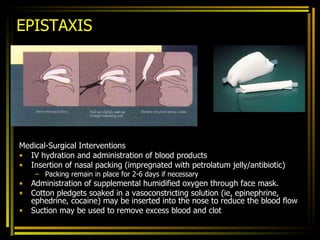
EPISTAXIS Medical-Surgical Interventions IV hydration and administration of blood products Insertion of nasal packing (impregnated with petrolatum jelly/antibiotic) Packing remain in place for 2-6 days if necessary Administration of supplemental humidified oxygen through face mask. Cotton pledgets soaked in a vasoconstricting solution (ie, epinephrine, ephedrine, cocaine) may be inserted into the nose to reduce the blood flow  Suction may be used to remove excess blood and clot
Control of Epistaxis Packing to control bleeding from the posterior nose  Catheter is inserted and packing is attached  Packing is drawn into position as the catheter is removed.  Strip is tied over a bolster to hold the packing in place with an anterior pack installed ‘accordion pleat’ style.  Alternative method, using a balloon catheter instead of gauze packing.
EPISTAXIS Special medical-surgical procedure Ligation of ethmoid maxillary and carotid artery Endoscopic cautery  Angiogram with embolization in clients unable to have surgery
EPISTAXIS Nursing Diagnoses    Risk for fluid volume deficit related to nasal bleeding  Risk for aspiration related to nasal bleeding  Risk for infection related to nasal packing  Ineffective breathing pattern related to nasal bleeding
Nursing Care of Patients with Epistaxis Assessment of bleeding Monitor airway and breathing Vital signs Reduce anxiety Patient teaching Avoid nasal trauma, nose picking, and nose blowing  Air humidification Pressure on the nose to stop bleeding. If bleeding does not stop in 15 minutes, seek medical attention.
EPISTAXIS Nursing Management Assist  the client in a sitting  position  with the head tilted forward  and  apply  direct  pressure  on  the  soft  outer portion  of  the  nose  against  the midline  septum for  5  to 10 minutes.  Administer  topical  vasoconstrictors  such  as  adrenaline, cocaine, or phenylepinephrine.  Practice  universal  precautions  by  wearing  goggles, gloves,  mask,  and  gown  when  treating  a  client  with epistaxis.  Assist  with  the  insertion  of  nasal  packing.  Plain  ribbon gauze  coated  with  antibiotic  ointment  is  inserted  into the anterior  nasal cavity and remains in  place for  48 to 72 hours. Monitor fluid, electrolyte, and hematologic values.  Apply ice compress on the nose and face. Perform  suctioning  if  client  vomits  a  large  amount  of  blood. Monitor  blood  pres sure,  pulse,  respiration,  and  level  of  consciousness.
NASAL POLYPS overgrowths of the mucosa that frequently accompany allergic rhinitis. They are freely movable and nontender.
NASAL POLYPS Etiology Unknown Maybe a response to inflammatory response as a result of chronic viral/bacterial infection Pathophysiology Nasal  polyps  can  cause  obstruction  of  the  sinus  opening and facilitate a sinus infection.  Infections  caused  by  nasal  polyps can  be  self-perpetuation  because  constant  irritation  can  lead  to  growth  of  more polyps.
NASAL POLYPS
NASAL POLYPS Clinical Manifestation: Difficulty breathing thru nose Growth of visible tissue upon nasal examination Mouth breathing Feeling of foreign object in nose Decrease olfaction Rhinorrhea Excessive sneezing Excessive tearing
NASAL POLYPS Pharmacologic interventions  Antihistamines to treat allergy symptoms  Antibiotics  Corticosteroids to reduce size of polyps (Fluticasone and Betamethasone)
NASAL POLYPS Special medical-surgical procedures  Nasal  polypectomy  surgical  of  removal  polyps  from the internal nose  Caldwell-Luc  surgery  making  an  incision  in  the gingival buccal sulcus  to have access into  the  maxillary sinus and facilitate polyp removal
NASAL POLYPS 3. Functional endoscopic sinus surgery to remove polyps
NASAL POLYPS Nursing Diagnoses  Ineffective breathing pattern related to nasal obstruction  Altered  sensory  perception  (olfactory)  related  to  nasal obstruction.  Risk for infection related to nasal obstruction
NASAL POLYPS NURSING MANAGEMENT Increase  humidification  through  the  use  of  humidifier  and nasal saline spray.  Encourage client to increase his/her fluid intake.  Elevate the head of bed. Instruct  client  to  avoid  exposure  to  individuals  with upper respiratory infections.  Administer nasal  steroid spray as ordered. Explain that the  nozzle  of  the  spray  must  be  aimed  towards  the cheek  (sinuses).
DEVIATED NASAL SEPTUM & NASAL FRACTURE
DEVIATED NASAL SEPTUM & NASAL FRACTURE displacement of the nasal septum.  Etiology: Congenital disproportion Trauma during birth Trauma during the life span
DEVIATED NASAL SEPTUM & NASAL FRACTURE Pathophysiology  Anatomical  deformities: dislocation  of  the lower  end of  the  septum  into  one  of  the  nostrils  deviation  of  the posterior part of the septum further back in the nose.  Displacement  causes altered air  flow  through the  nose  and sinuses Lead to impaired ventilation and hypertrophy of middle turbinate bone Facial trauma during sports, assault or accidents Result in fracture of the nasal bone
DEVIATED NASAL SEPTUM & NASAL FRACTURE Medical-Surgical Interventions  Drugs: Systemic decongestant Topical nasal steroid sprays to relieve nasal edema Analgesics for pain Septoplasty – for client with septal dislocation Minimal removal of cartilage, repositioning of septum in midline Nasal packing – to hold fragments together (fractured) Plaster of paris or thermostat splint Fractures left longer than 10-14 days, a formal rhinoplasty may be performed.
DEVIATED NASAL SEPTUM & NASAL FRACTURE CLINICAL MANIFESTATION Obstruction of nasal breathing Mouth breathing Twisting of nasal septum Excoriation of nasal mucosa Nosebleed Facial edema Echhymosis Pain Tenderness on palpation
DEVIATED NASAL SEPTUM & NASAL FRACTURE Nursing Diagnosis Ineffective breathing pattern related to nasal obstruction  Risk for fluid volume deficit related to bleeding
DEVIATED NASAL SEPTUM & NASAL FRACTURE NURSING MANAGEMENT 1.  Elevate the head of the client’s bed.  2.  Administer  systemic  decongestants  and  nasal  sprays as ordered.  3.  Apply ice compress to the nose following acute injury.  4.  Pinch the nostrils at the tip for a minimum of 10 minutes if bleeding occurs .  5.  Increase supplemental humidification.
LARYNGEAL OBSTRUCTION
LARYNGEAL OBSTRUCTION ETIOLOGY: Aspiration of foreign body into the pharynx Hereditary angioedema (HAE)
LARYNGEAL OBSTRUCTION HEREDITARY ANGIOEDEMA (HAE) Disorder characterized by episodes of laryngeal edema Risk factors: Hx fo allergy Heavy alcohol consumption Use of ACE inhibitors Recent throat pain Hx of previous tracheostomy
LARYNGEAL OBSTRUCTION PATHOPHYSIOLOGY Foreign bodies  obstruct  the air passages  in the  larynx  and cause difficulty breathing.  may be pushed down to the bronchi  causing  irritation,  cough,  expectoration  of  blood  or mucus, and labored breathing.
LARYNGEAL OBSTRUCTION CLINICAL MANIFESTATION Use of accessory muscles when breathing Inability to speak Coughing Drooling Inability to swallow Pain/pressure in the throat Edema of esophagus
LARYNGEAL OBSTRUCTION DIAGNOSTIC STUDIES: Soft tissue radiograph Barium swallow CT scan  Aid in visualization of foreign body
LARYNGEAL OBSTRUCTION MEDICAL-SURGICAL INTERVENTIONS If foreign object is visible dislodge it manually If in the larynx/trachea Subdiaphragmatic abdominal thrust maneuver (Heimlich maneuver) If all interventions failed Tracheostomy is required
LARYNGEAL OBSTRUCTION HEIMLICH MANEUVER Stand behind the client Place both arms around his/her waist Make a fist with one hand making use that the thumb is outside the fist. Place the thumb against the client’s abdomen above the navel and below the xiphoid process. Grasp the fist with other hand Apply pressure against the client’s diaphragm using quick, upward thrusts until obstruction is cleared (6-10x)
LARYNGEAL OBSTRUCTION NURSING DIAGNOSIS Ineffective breathing pattern related to foreign body in the airway  Impaired  swallowing  related  to  obstruction  and  edema from trauma  Anxiety related to breathing difficulty  NURSING DIAGNOSIS Ineffective breathing pattern related to foreign body in the airway  Impaired  swallowing  related  to  obstruction  and  edema from trauma  Anxiety related to breathing difficulty
LARYNGEAL OBSTRUCTION NURSING INTERVENTIONS: If  client  is  unable  to  speak ,  instruct  him/her  to  cough deeply.  If unable  to dislodge the object, loosen  clothing and  instruct  client  to  lean  over  a  table  and  cough deeply.  Do  not  give  anything  by  mouth  if  client  has  total laryngeal obstruction.  Place  client  in  a  high-Fowler’s  position  for  partial obstruction.  If  Heimlich maneuver  is unsuccessful, prepare client  for surgical removal of foreign object.  After  surgery,  assess  arterial  blood  gases,  respiratory rate and depth, and breath sounds .
LOWER AIRWAY  AND  PULMONARY VESSEL DISORDERS: RESPIRATORY TRACT INFECTIONS
TRACHEOBRONCHITIS
TRACHEOBRONCHITIS acute inflammation of the mucous membranes of the trachea and the bronchial tree often follows infection of the upper respiratory tract  Adequate treatment of upper respiratory tract infection is one of the major factors in the prevention of acute bronchitis.
TRACHEOBRONCHITIS Etiology: Haemophilus influenzae Mycoplasma pneumoniae Streptococcus pneumoniae  Aspergillus   Inhlation of physical and chemical irritants and gases sputum culture is essential to identify the specific causative organism
TRACHEOBRONCHITIS Pathophysiology  the inflamed mucosa of the bronchi produces mucopurulent sputum, often in response to infection
TRACHEOBRONCHITIS Clinical Manifestations: Dry cough (mucoid sputum) Sternal soreness due to frequent coughing Fever and chills Night sweats Headache Malaise (initial) SOB Inspiratory Stridor & expiratory wheeze Purulent sputum (pus-filled) Blood-streaked secretions (severe case due to irritation on mucosa)
TRACHEOBRONCHITIS Medical-Surgical Interventions  Antibiotic therapy depending on specific agent Endotracheal intubation  if with acute respiratory failure (with co-existing respiratory disorders) Cool vapor therapy and steam inhalation  To relieve laryngeal and tracheal irritation moist heat on chest Relieve soreness and pain Mild analgesic or antipyretic
TRACHEOBRONCHITIS Antihistamine are not prescribe  Can cause excessive drying and make secretions more difficult to expectorate
TRACHEOBRONCHITIS Nursing Diagnoses  Ineffective  airway  clearance  related  to  copious secretions  Ineffective breathing pattern related  bronchial irritation Risk for infection related to stasis of secretions
TRACHEOBRONCHITIS Nursing Interventions: Suction as needed to remove secretions Encourage increased oral fluid intake to thin vicious secretion Assist client to an upright position and teach how to cough and deep-breathe effectively. Emphasize the need for completing the course of antibiotic therapy as prescribed Allow the client to rest to prevent relapse or exacerbation of infection.
BRONCHIECTASIS Dilation of bronchial airway
BRONCHIECTASIS Permanent dilation of a bronchus or bronchi;  the dilated airways become saccular and are a medium for chronic infection.  No longer considered a category of COPD.
BRONCHIECTASIS Etiology: occurs secondary to another chronic respiratory disorder, such as: cystic fibrosis,  asthma,  tuberculosis, bronchitis,  exposure to a toxin.  Predisposing factor:  Airway obstruction from a tumor or foreign body  Airway obstruction from excessive secretions Infection and inflammation of the airways weakens the bronchial walls and reduces ciliary function.
Bronchiectasis Destruction of bronchial  mucosa with fibrous scar  tissue formation  Loss of resilience & airway dilation causes  pooling of secretions  Obstruction of airflow
BRONCHIECTASIS Pathophysiology A form of obstructive lung disease characterized by chronic dilation of bronchus and bronchioles which often begins during childhood. ↓ Chronic inflammation weakens the bronchial walls; as a purulent secretions collect in these areas. ↓ Stasis of secretion leads to recurrent infections which cause increased irritation of the bronchial walls, creating a cycle of inflammation.
BRONCHIECTASIS Clinical Manifestations Chronic, productive cough Foul-smelling purulent sputum Hemoptysis Clubbing of nails Night sweats Fever Cor pulmonale Dyspnea during late stage
BRONCHIECTASIS Medical-Surgical Interventions  Oxygen therapy to maintain oxygen above 55mmHg Administration of BRONCHODILATORS and ANTIBIOTICS To relieve bronchospasm caused by inflammation and infection Use of adrenal GLUCOCORTICOIDS To reduce bronchial inflammation MUCOLYTIC agent help thin secretions Chest physiotherapy and postural drainage to mobilize secretions Intubation and mechanical ventilation if client develops acute respiratory failure. Prevent infection through vaccinations for flu and pneumonia
BRONCHIECTASIS Nursing Diagnosis Impaired gas exchange related to decreased ventilation and presence of mucus plugs Ineffective airway clearance related to thick, copious secretions, respiratory muscle weakness, and ineffective coughing Altered nutrition, less than body requirements related to decreased appetite and dyspnea Activity intolerance related to fatigue and dyspnea Risk for infection related to thick sputum, ineffective coughing and fatigue
BRONCHIECTASIS Nursing Management Monitor respiratory status such as rate, rhythm, depth and use of accessory muscles Monitor ABGs for hypoxemia and hypercapnea Auscultate breath sounds every 4 hours Monitor oxygen saturation via pulse oximeter Monitor sputum for changes in color, consistency, amount and odor Assist client to a high-Fowler’s position to promote lung expansion and improve gas exchange Encourage fluid intake of at least 8 glasses of water a day Teach and encourage proper turning, coughing and deep breathing Provide small, frequent meals. Adjust feeding schedule so as not to interrupt with rest periods
PNEUMONIA inflammation of the lung parenchyma caused by various microorganisms, including bacteria, mycobacteria, chlamydiae, mycoplasma, fungi, parasites, and viruses.
PNEUMONIA “ Pneumonitis” describes as an inflammatory process in the lung tissue that may predispose or place the patient at risk for microbial invasion.
Pneumonia Acute inflammatory process of the alveolar spaces    lung consolidation    exudate [alveoli] Classification CAP:  most common; occurs in the community or 48 H before hospitalization S. pneumoniae, H. influenza, M. pneumoniae Nosocomial:  onset of S/S is 48-72 H post-hospitalization P. aeruginosa, S. pneumoniae, K. pneumoniae Aspiration   pneumonia S. pneumoniae, H. influenzae, S. pneumoniae,  gastric contents
Classifications: Community-Acquired Pneumonia (CAP) Community setting or within 1 st  48 hours after hospitalization Hospital-Acquired (Nosocomial) Pneumonia (HAP) Onset of pneumonia symptoms more than 48 hrs after admission Pneumonia in immunocompromised host Pneumocystis jiroveci  occurs with use of corticosteroids or other immunosuppressive agents, chemotherapy, nutritional depletion, use of broad-spectrum antimicrobial agents, acquired immunodeficiency syndrome (AIDS), genetic immune disorders, and long-term advanced life-support technology (mechanical ventilation).  Aspiration Pneumonia
Pneumonia Types Bacterial pneumonia Lobar [Strep] – constant dry, hacking cough, pleuritic pain, watery to  rust-colored  sputum Bronchopneumonia [Strep/Staph] – due to aspiration, productive cough w/  yellow  or  green  sputum Alveolar pneumonia [viral]  – scanty sputum Atypical pneumonia [rickettsial]  – “walking”, non-productive cough
 
PNEUMONIA CAUSATIVE FACTORS RISK FACTORS TREATMENTS S/SX DX TEST PATHOPHYSIOLOGY
Who are at risk??? RISK FACTORS OLD AGE TOBACCO/ ALCOHOL USE EXPOSURE TO VIRAL/ FLU MECHANICAL VENTILATION
CAUSATIVE FACTORS INFECTIOUS ORGANISMS NONINFECTIOUS  HOSPITAL ACQUIRED COMMUNITY ACQUIRED Bacteria,viruses,fungi, rickettsiae, protozoa, helminths Aspiration of fluids, foods & vomitus Inhalation of toxic gases,chemicals,smoke environment people Equipment & supplies Invasive devices SETTING CAUSATIVE
PNEUMONIA Etiology Bacteria: Streptococcus pneumoniae Staphylococcus aureus Haemophilus influenzae Pseudomonas aeruginosa Klebsiella pneumoniae Virus: Influenza virus Adenovirus Fungi: Candida sp Histoplasma sp Aspergillus sp Coccidoides sp Others: Aspiration of gastric content
 
Pathophysiology  Fluid in lungs Inflammation in interstitial spaces, alveoli and bronchioles By surviving lung defenses (inflammation), organisms penetrate airway mucosa & multiply in alveolar spaces WBCs migrate to infection causing capillary leak,edema & exudate Fluids collect in & around alveoli & walls thicken reducing gas exchange Capillary leak spreads infection to other areas of lung & if + organisms in blood = SEPSIS Fibrin & edema stiffen lung  ↓  vital capacity Alveolar collapse further reducing gas exchange to blood causing hypoxemia ↑ HR, ↑ RR, dyspnea Pain
PNEUMONIA Pathophysiology The  organism  enters  the  lungs  through: aspiration  of oropharyngeal contents,  inhalation of respiratory  secretions from  infected individuals,  through  the  bloodstream,  direct spread to the lungs as a result of surgery or trauma.  To  fight  infection,  inflammatory  cells  and  fibrin  move  into the alveolar spaces of the lungs.  The  defense  mechanisms  of  the  susceptible  individual become  weak.  The  infectious  agent  then  advances  to  the lower airways and begins to proliferate.
PNEUMONIA Clinical Manifestations Fever and chills Nonproductive to productive cough Dyspnea Tachypnea Tachycardia Pleuritic pain Diaphoresis Headache fatigue Bronchial breath sounds over affected area Whispered pectoriloquy Increased tactile fremitus over affected area Dull upon percussion Unequal lung expansion
Diagnostic test Culture & sensitivities CXR (early dx) Pulse oximetry CBC, electrolytes, BUN & creatinine
TREATMENTS Pain control Fluid & oxygen mgt Anti-infective drugs Health promotion Patent airway Bronchodilators = bronchospasm Cough & deep breathe q 2 hrs
PNEUMONIA Medical-Surgical Interventions   Administration  of ANTIMICROBIAL agent  depending on  the identified causative  organism  and  client’s  sensitivity  to  specific antimicrobials.    Oxygen therapy to improve gas exchange.  Chest  wall  percussion  and  postural  drainage  to  loosen secretions and improve ventilation.
Medical Treatment of Pneumonia Supportive treatment includes fluids, oxygen for hypoxia, antipyretics, antitussives, decongestants, and antihistamines. Administration of antibiotic therapy is determined by Gram stain results. If the etiologic agent is not identified, use empiric antibiotic therapy. Antibiotics are not indicated for viral infections but are used for secondary bacterial infection. Supportive treatment includes fluids, oxygen for hypoxia, antipyretics, antitussives, decongestants, and antihistamines. Administration of antibiotic therapy is determined by Gram stain results. If the etiologic agent is not identified, use empiric antibiotic therapy. Antibiotics are not indicated for viral infections but are used for secondary bacterial infection.
Collaborative Problems Continuing symptoms after initiation of therapy Shock Respiratory failure Atelectasis Pleural effusion Confusion Superinfection
PNEUMONIA ASSESSMENT: Changes in temperature and pulse Amount, odor and color of secretions Frequency and severity of cough Degree of tachypnea or SOB Changes in physical assessment findings Changes in CXR ADULT: (in addition) Unusual behavior Altered mental status Dehydration Excessive fatigue Concomitant heart failure
PNEUMONIA Nursing Diagnoses Impaired gas exchange related to  decreased ventilation secondary to inflammation and infection  Ineffective  airway  clearance  related  to  excessive  tracheobronchial secretions  Pain related to inflammatory process  Risk for injury related to resistant infection  Activity intolerance related to impaired respiratory function Risk for deficient fluid volume related to fever and rapid respiratory rate
PNEUMONIA Nursing Management: Observe for  cyanosis, dyspnea, hypoxia and confusion, which indicate worsening of the client’s condition.  Monitor sputum production, noting the color, consistency, amount and odor. Administer nasotracheal suction if indicated. Assist client in an upright position to promote lung expansion and improve aeration. Avoid giving high oxygen concentrations in clients with COPD, particularly with evidence of carbon dioxide retention. Obtain freshly expectorated sputum for culture and sensitivity, most preferably an early morning specimen. Encourage client to increase his/her fluid intake, unless contraindicated, to liquefy thick, viscous secretions and replace fluid losses due to fever, diaphoresis, dehydration and dyspnea. Encourage  ambulation  or  frequent  position  changes  to mobilize secretions and reduce the risk  of atelectasis.
Improving Airway Clearance Encourage hydration; 2-3 L a day, unless contraindicated  Humidification may be used to loosen secretions; by face mask or with oxygen Coughing techniques Chest physiotherapy Position changes Oxygen therapy administered to patient needs
Other Interventions Promoting rest  Encourage rest and avoidance of overexertion. Positioning to promote rest and breathing (semi-Fowler’s) Promoting fluid intake Encourage fluid intake to at least 2 L a day. Maintaining nutrition Provide nutritionally enriched foods and fluids. Patient teaching Promoting rest  Encourage rest and avoidance of overexertion. Positioning to promote rest and breathing  (Semi-Fowler’s) Promoting fluid intake Encourage fluid intake to at least 2 L a day. Maintaining nutrition Provide nutritionally enriched foods and fluids. Patient teaching
SEVERE ACUTE RESPIRATORY SYNDROME  (SARS)
SEVERE ACUTE RESPIRATORY SYNDROME  (SARS) a viral respiratory illness caused by a coronavirus, called SARS-associated coronavirus (Denison, 2004)  first reported in Asia in February 2003.  Illness quickly spread to countries in: North America South America Europe Asia The World Health Organization (WHO) reported that 8098 people worldwide became sick with SARS during the 2003 outbreak, and 774 died (CDC, 2004c).
SEVERE ACUTE RESPIRATORY SYNDROME  (SARS) Transmission: Respiratory droplets (cough/sneeze) Deposited on mucous membrane (mouth,nose,eyes) Direct/close contact with contaminated object Virus can live on human hands for 6hrs  and stool of infected human up to 4 days. Contagious when symptoms are present and during 2 nd  week Limit interaction outside until 10 days after fever
SEVERE ACUTE RESPIRATORY SYNDROME  (SARS) Clinical Manifestations: High fever with headache SOB Headaches, chills Body aches Dry cough (2-7 days) Hypoxemia and subsequent pneumonia
SEVERE ACUTE RESPIRATORY SYNDROME  (SARS) Medical-Surgical Interventions  Provide  supplemental  oxygen,  chest physiotherapy  and mechanical ventilation (in severe cases).  Implement quarantine procedures to prevent transmission.  Administer antibiotics and high doses of corticosteroids.
SEVERE ACUTE RESPIRATORY SYNDROME  (SARS) Diagnosis: Fever greater than 38oC Hx of casual or sexual contact with infected individual within last 10 days Travel to any affected regions  China Hong Kong Singapore Canada Cell culture of SARS-CoV Detection of SARS-CoV RNA by reverse transcription through PCR test Identification of antibodies through ELISA test within 14 days
SEVERE ACUTE RESPIRATORY SYNDROME  (SARS) Nursing Diagnoses: Ineffective breathing pattern related to lethargy and cough Risk for infection transmission
SEVERE ACUTE RESPIRATORY SYNDROME  (SARS) Nursing Managements: Observe standard precautions when providing nursing care Place client in negative-pressure isolated room with an N95 respirator Frequently monitor vital signs and respiratory status Watch out for complications such as respiratory failure, liver failure and heart failure Ensure patent airway Encourage small, frequent meals to prevent adequate nutrition.
TUBERCULOSIS
TUBERCULOSIS an infectious disease that primarily affects the lung parenchyma.  may be transmitted to other parts of the body, including the meninges, kidneys, bones, and lymph nodes.
TUBERCULOSIS Considered as the world’s deadliest disease and remain as a major public health problem in the Philippines. Highly infectious chronic disease caused by the tubercle bacilli. Respiratory disease but can also affect other organs of the body and is common among malnourished individuals living in crowded areas. Common in children of underdeveloped and developing countries in a form of PRIMARY COMPLEX especially after a bout of debilitating childhood disease such as measles. 1993, TB was declared as global emergency by WHO due to resurgence in many parts of the world.
INCIDENCE IN THE PHILIPPINES  Philippines ranks 6 TH  in the leading cause of morbidity (2002) and mortality (2002). Incidence rate of all TB cases in is 243/100,000 population/yr (WHO Report 2006) Philippines ranks 9 th  among the 22 high burdened countries under the WHO watchlist.
Introduction  Estimated to affect 1.7 billion people world wide – about a third of the world’s population 8-10 million cases each year 1.7 million deaths each year 2 nd  leading infectious cause of death after HIV Infection with HIV makes people susceptible to rapidly progressive tuberculosis
Introduction
Tuberculosis Koch’s Disease, Phthisis, galloping consumption, TB Mode of Transmission: Droplet infection, Cow’s Milk containing Mycobacterium bovis.
TB: Global Incidence TB infects both rich and poor people. But 80% of the global TB burden is carried by just 22 countries, already severely impacted by malnutrition, poor sanitation and poverty. Africa  Nigeria  Ethiopia South africa Congo Kenya  Uganda  Mozambique Zimbabwe  Europe/Americas Russian Federation Brazil  Asia  India China Indonesia Bangladesh Philippines Pakistan Vietnam Thailand Myanmar Afghanistan Cambodia
Etiologic agent A chronic infectious disease caused by  mycobacterium  of the “tuberculosis”.  Mycobacterium tuberculosis Mycobacterium africanum from humans  and  Mycobacterium bovis primarily from cattle. Agent can be identified only by culture of the organisms.
At present, there are 23 new strains of TB bacilli found in the US. Thus, TB is no longer considered to be a disease of the past but of the present. It usually affects the lung , but it can affect any organs in the body. Such as digestive system 、 skin.
Mycobacterium tuberculosis Rod-shaped  Slow-growing bacterium, can be detected in 1-3 weeks in selective liquid medium using radiolabeled nutrients(BACTEC) Non-spore forming Thin obligate aerobic bacterium Neutral in Gram’s staining because of it’s content in huge cell-wall  lipids .
Acid-Fast bacillus, AFB (Robert Koch, 1882) M. tuberculosis ,  M. africanum  &  M. bovis   are main species causing  tuberculosis in human.
AFB
Source of infection the open pulmonary tuberculosis patients with viable tubercle bacilli being discharged in the sputum.
Period of Communicability Degree of communicability depends on: On the # of bacilli discharges Virulence of the bacilli Adequacy of ventilation Exposure of the bacilli to sun or UV light Opportunities for their aerosolization by coughing, sneezing, talking or singing  Effective antimicrobial chemotherapy usually reduces communicability to insignificant levels within days to a few weeks. Children with primary TB are generally not infectious.
Susceptibility and Resistance 1 st  6-12 months after infection is the most hazardous period for developing clinical disease Susceptible host: Children under 3 years old (low in later childhood) Adolescents Young adults Elderly (reactivation of latent infection) HIV infected individual Immunosuppressed patients Underweight Undernourished persons with silicosis, diabetes, gastrectomies Substance abusers.
Susceptible population Poverty Over-crowding Poor nutrition  Socioeconomic fall behind (developments slowly )
Transmission person to person by  airborne mucus  droplet nuclei through coughing, singing or sneezing Direct invasion  through mucous membranes or breaks in the skin may occur, but is extremely rare. Bovine tuberculosis results from exposure to tuberculosis cattle, ususally by  ingestion of unpasteurized milk or dairy products. Extrapulmunary tuberculosis, other than laryngeak, is generally not communicable, even if there is a draining sinus.
Transmission
Transmission
 
 
Pathogenicity  The risk for developing tuberculosis disease in children depend on: Immune status of the host ,  the virulence and the quantity of the bacillus tuberculosis,  the status of the cell-mediated immunity (CMI).  After infection, the body produces the allergy and immunity at the same time .
The allergic reaction and immunity of TB PATHOGEN Tubercle bacillus Through infective route (respiratory tract, alimentary canal, skin and placenta) Child  The thymus-dependent LC be sensitized and proliferate Delayed allergic reaction Activating factors Inhibiting factors of Macrophage movement Activating macrophage Engulf and kill tubercle bacillus Eptheloid cells and tubercle Infection is focused TB is surrounded by sensitized TLC
Pathophysiology  M. TUBERCULOSIS SUSCEPTIBLE HOST ALVEOLI 1. DEPOSITED & BEGIN TO MULTIPLY 2. TRANSPORTED THROUGH LYMPH SYSTEM TO DIFF PARTS OF THE BODY IMMUNE RESPONSE (INFLAMMATORY REACTION) NEUTROPHILS & MACROPHAGE  ENGULF  TB-SPECIFIC LC DESTROY BACILLI & NORMAL TISSUE ACCUMULATION OF EXUDATES IN ALVEOLI CAUSING BRONCHO-PNEUMONIA INTIAL INFECTION OCCUR  2-10 WKS  AFTER EXPOSURE GRANULOMAS FORMED (NEW TISSUE OF NEW & DEAD BACILLI SURROUNDED BY MACROPHAGE) TRANSFORMED TO FIBROUS TISSUE MASS, CENTRAL PORTION IS GHON TUBERCLE
BACTERIA & MP BECOMES NECROTIC FORMING CHEESY MASS CALCIFIED&  COLLAGENOUS SCAR FORMED BACTERIA  DORMANT INITIAL EXPOSURE & INFECTION
INITIAL INFECTION DEVELOP ACTIVE DISEASE COMPROMISE LOW IMMUNE SYSTEM REINFECTION REACTIVATION OF DORMANT BACILLI GHON TUBERCLE ULCERATE CHEESY MATERIAL RELEASE TO BRONCHI MICROBE BECOME AIRBORNE (POSSIBLE SPREAD) ULCERATED TUBERCLE HEALS AND FORM SCAR CAUSE INFECTED LUNG BE MORE INFLAMED FURTHER DEV’T OF BRONCHOPNEUMONIA & TUBERCLE FORMATION
Pathophysiology  UNLESS THE PROCESS IS ARRESTED ITS SPREAD SLOWLY DOWNWARD TO THE HILUM OF THE LUNGS AND LATER EXTEND TO ADJACENT LOBES. CHARACTERIZED BY LONG REMISSION WHEN THE DISEASE IS ARRESTED,ONLY TO BE FOLLOWED BY PERIODS OF RENEWED ACTIVITY.  10% OF PEOPLE WHO ARE INITIALLY INFECTED DEVELOP ACTIVE DISEASE.
Pathophysiology  SOME PEOPLE DEVELOPS REACTIVATION TB (ALSO CALLED ADULT TYPE TB) RESULTS FROM A BREAK DOWN OF THE HOST DEPENSES MOST COMMONLY OCCURS: WITHIN THE LUNG, USUALLY IN THE APICAL POSTERIOR SEGMENTS OF THE UPPER LOBES THE SUPERIOR SEGMENT OF THE LOWER LOBES.
 
Manifestations: Low grade fever with night sweats Anorexia Fatigability Body malaise Back pains Productive cough Hemoptysis Weight loss Dyspnea  Anemia  Amenorrhea Chest pain
Image credit :  http://sitemaker.umich.edu/medchem13/files/tb.htm
Classification  (according to extent) a. Minimal - slight lesion without demonstrate excavation, confined to a small part of one or both lungs b. Moderately advance - total diameter of the cavities less than 4cm; lesions not more than the volume of the lungs c. Far advance  –  lesions more extensive than moderately advance
. PPD- Purified Protein Derivative   - given ID - interpreted 48-72 o   +  >10mm in duration +HIV > 5 mm in duration Techniques: Mantoux-like skin testing Exposure to TB due to dev’t of cell-mediated immunity, typically takes between 2-10 weeks from time of exposure CXR – areas of granulomas/cavitation Sputum Test
Methods of Control PREVENTIVE MEASURES: Prompt dx and tx of infectious cases BCG vaccination of newborn, infants and grade I/school entrants Educate the public in mode of spread and method of control and the imporatancde of early diagnosis Improve social conditions, which increase the risk of becoming infected, such as overcrowding
Maintain good personal and environmental hygiene. Adopt a healthy lifestyle, i.e., have balanced diet, adequate exercise and rest. Keep hands clean and wash hands properly. Wash hands when they are dirtied by respiratory secretions e.g. after sneezing. Cover nose and mouth while sneezing or coughing and dispose of nasal and mouth discharge properly. Seek treatment promptly if symptoms similar to tuberculosis appear, particularly persistently cough for more than one month. Receive BCG immunization according to immunization schedule.
Nursing Mgt: 3 Important Aspects of Care Diet if with anorexia small, frequent feedings Drug- strict compliance Rest Contraindicated nursing Care:  Chest Chapping  stimulates hemoptysis
DRUGS DRUGS: ISONIAZID (H) RIFAMPICIN(R ) PYRAZINAMIDE (Z) ETHAMBUTOL (E ) STREPTOMYCIN (S) EXTRAPULMUNARY TB (EPTB) TB DOTS-CENTER (TBDC)
Recommended Category of Treatment Regimen  Category Type of TB patient Treatment Regimen Intensive phase Continuation phase I New smear + PTB 2HRZE 4HR New smear - PTB with extensive parenchymal lesion on CXR as assessed by TBDC EPTB Severe concomitant HIV disease II Treatment Failure 2HRZES/ 1HRZE 5HRE Relapse Return After Default Other III New smear - PTB with minimal parenchymal lesions on CXR as assessed by the TBDC 2HRZE 4HR IV Chronic (still smear + after supervised re-treatment Refer to specialized facility or DOTS plus Center Refer to Provincial/City NTP Coordinator
For diagnosed of Paediatric TB Pulmonary TB Suspect  Fever and/or cough >2 weeks Loss of wt/No wt gain History of contact with suspected or diagnosed case of active TB Sputum Sputum +ve Sputum-ve Case  Course of antibiotics for 7-10 Days Symptoms persists  Do X-ray & Mx  All other situation Mx + and  X-ray abnormal Refer to Paediatrician  Treatment for Pul. TB
Patient on R x Satisfactory response  Improved symptoms No wt. loss Non- satisfactory response  Review at 2 Months. Compliance poor Wt. loss Worsening of symptom Follow up clinically Refer to Pediatrician. Consider sputum exam. X-ray at completion of treatment at 6 months
TB drug: 1. INH; Isoniazid a. Action: bactericidal b. Side effects:  Tingling and numbness (hands and feet) Fatigue Nausea and vomiting  Blurred vision Ataxia Weakness c. Nursing Implications: 1. Administer in an empty stomach 2. Pyridoxine – to counteract peripheral  neuropathies 3. Avoid taking alcohol
2. Rifampicin a. Action – decrease tubercle replication b. Side effects:  heartburn anorexia nausea & vomiting  cramps diarrhea headache dizziness confusion visual disturbances  + reddish-orange secretion (urine, stool) c. Nursing Implication Administer food if GI upset occurs Avoid taking alcohol Inform client avoid the reddish secretion
3. Streptomycin a. Action- protein synthesis in bacterial cell b. Side effect-  Ototoxicity  Nephrotoxicity  Neurotoxicity Agranulocytosis  Thrombocytopenia c. Nursing Implication: Weigh client before treatment Monitor urinalysis and kidney function test Do not mix other drugs in the same syringe
ROUTE, DOSAGE & COMMON SIDE EFFECTS OF ANTI-TB DRUGS Drug Dosage(kg/day) {Maximum dose} Route of administration Major side effects INH 10mg {≤300mg/day} Po/im/iv.drop Hepatotoxicity; Peripheral neuritis Hypersensitivity reaction RFP 10mg {≤450mg/day} po Hepatotoxicity; Gastrointestinal reactions SM 20-30mg {≤0.75/day} im Ototoxicity nepatotoxicity Hypersensitivity reaction PZA 20-30mg {≤0.75/day} po Hepatotoxicity; hyperuricemia Acute gouty arthritis EMB 15-25mg po Optic neuritis
LUNG ABSCESS
LUNG ABSCESS a localized necrotic lesion of the lung parenchyma containing purulent material that collapses and forms a cavity.  generally caused by aspiration of anaerobic bacteria.  CXR: demonstrates a cavity of at least 2 cm.  Risk for aspiration of foreign material and development of a lung abscess:  have impaired cough reflexes cannot close the glottis, and  those with swallowing difficulties
ETIOLOGY Aspiration Chest Trauma Pulmonary embolus Neoplasms  Pneumonia  Dental Infections Debilitating conditions: Congestive heart failure Malnutrition Alcoholism
If left  untreated,  it  can  lead  to  obstruction  and  necrosis  of surrounding tissues.  LUNG ABSCESS A  lung  abscess  is  the  accumulation  of  pus  in  the  lungs resulting in disintegration of tissues.  Location  of  the abscess  depends on  position  at  the time of inhalation.  The  substance  travels  to  the  lowest  portion  of the lungs as an effect of gravity. As  the  material  settles in  the  lungs,  fibrin  surrounds  it  and forms a pocket-filled pus. As  the  pressure  from  the  accumulation  of  pus  increases, the  pocket  ruptures  and  spreads  pus  throughout  other regions. Sometimes,  rupture  results  in  localized  healing.  Other times, it leads to multiple formation of pockets. In  the  early  stage,  lung  abscess  resembles  pneumonia.
LUNG ABSCESS Clinical Manifestations Fever & chills Pleuritic pain (dull chest pain) Dyspnea  Cough Purulent sputum Hemoptysis after abscess rupture Anorexia
LUNG ABSCESS Medical-Surgical Interventions  Administer antibiotics  penicillin – drug of choice  Perform chest physical therapy  and postural drainage to aid drainage of abscess. Lobectomy  or  pneumonectomy  if  the damage  brought  by the abscess is severe.  High protein and calorie diet
Long-term therapy with oral antibiotics replaces IV therapy after the patient shows signs of improvement (usually 3 to 5 days).  Improvement is demonstrated by: normal temperature,  decreased white blood cell count, and  improvement on chest x-ray  (resolution of surrounding infiltrate, reduction in cavity size, absence of fluid).  Oral administration of antibiotic therapy is continued for an additional 4 to 8 weeks.  If treatment is stopped too soon, a relapse may occur.
LUNG ABSCESS ASSESSMENT Dull on percussion Decreased/absent breath sounds  with intermittent pleural friction rub (grating/rubbing sounds) DIAGNOSTIC TEST CXR Infiltrate with air-fluid level Sputum culture Fiberoptic bronchoscopy CT SCAN
LUNG ABSCESS NURSING DIAGNOSIS Ineffective airway clearance related to presence of purulent sputum Impaired gas exchange related to stasis of pulmonary secretions
LUNG ABSCESS NURSING MANAGEMENT Monitor  vital  signs,  especially  the  rate,  rhythm,  and  depth of respirations.  Monitor pulse oximetry results.  Assess  for  mental  status  changes  such  as restlessness, confusion, and irritability.  Assess color, consistency, amount and odor of sputum. Auscultate lungs frequently.  Perform nasotracheal suctioning, if indicated.  Administer antibiotics as ordered. Increase fluid intake to liquefy secretions. Instruct  the  client  about  the  proper  turning,  coughing  and deep-breathing techniques.
PLEURAL CONDITIONS Disorders that involve the membranes: Covering the lungs (visceral pleura) Surface of the chest wall (parietal pleura)  Disorders affecting the pleural space
Pleural Conditions Pleurisy:  An inflammation of both layers of the pleurae Inflamed surfaces rub together with respirations and cause sharp pain that is intensified with inspiration. Pleural effusion:  A collection of fluid in the pleural space, usually secondary to another disease process Large effusions impair lung expansion and cause dyspnea. Empyema:  Accumulation of thick, purulent fluid in the pleural space Patient is usually acutely ill.  Fluid, fibrin development, and loculation will impair lung expansion. Resolution is a prolonged process.
PLEURISY
ETIOLOGY PLEURISY/PLEURITIS Esophageal rupture Postcardiac injury syndrome Tumor in pleura Tuberculosis Subphrenic abscess Pericarditis  Pneumothorax  Pancreatitis
PATHOPHYSIOLOGY Inflamed visceral pleura Inflamed parietal pleura With nerve endings No nerve endings Rubbing during respiration (intensified on inspiration) severe, sharp, knifelike pain
PLEURISY/PLEURITIS CLINICAL MANIFESTATIONS: Chest pain as sharp, shooting or stabbing during respirations mild to severe depending on extent of inflammation Dyspnea & shallow breathing Restricted chest wall motion Pleural friction rubs Dull percussion note due to pleural effusion Increased or decreased tactile fremitus depending on presence of consolidation
PLEURISY/PLEURITIS DIAGNOSTIC TESTS PLEURAL FLUID ANALYSIS (determine cause of inflammation) VENTILATION-PERFUSION SCAN (dx PE) RADIOGRAPHIC STUDY (confirm esophageal rupture) ABDOMINAL CT SCAN (verify subphrenic abscess)
PLEURISY/PLEURITIS MEDICAL-SURGICAL INTERVENTIONS   GOAL: to discover the underlying condition causing the pleurisy and to relieve the pain ) ANALGESIA (facilitate deeper breaths & prevent occurrence of atelectasis) ANTIBIOTICS (bacterial infection) CORTICOSTEROIDS (treat pleural inflammation) THORACENTESIS (remove fluid from pleural space) PLEURAL BIOPSY (confirm presence of TB)
PLEURISY/PLEURITIS NURSING DIAGNOSIS Pain related to pleural inflammation  Ineffective breathing pattern related to chest pain
PLEURISY/PLEURITIS NURSING MANAGEMENT: Assist  client to  lie  on  his/her  affected  side  to  decrease  pleural stretching. Instruct  client  to  splint  the  chest  while  taking  a  deep  breath or coughing.  Provide  nonpharmacologic  measures  such  as application  of  heat,  muscle  relaxation  and  guided imagery. Monitor client for signs of hypox ia  such as  cyanotic  nail  beds, and increasing respiratory rate.
PLEURAL EFFUSION A collection of fluid in the pleural space Usually occurs secondary to other diseases
ETIOLOGY PLEURAL EFFUSION may be a complication of:  Heart failure TB Pneumonia / pulmonary infections (particularly viral infections) Nephrotic syndrome, connective tissue disease Pulmonary embolus Neoplastic tumors.  BRONCHOGENIC CARCINOMA = common malignancy
Pleural Effusion
Pleural Effusion & Pneumothorax Causes Trauma Thoracic surgery Positive pressure ventilation Thoracentesis CVP line insertion Emphysema
Normally: Pleural space contains 5 to 15 Ml of fluids - lubricant that allows the pleural surfaces to move without friction  - fluid comes from capillaries lining the pariental pleura - excessive fluid is absorbed into the visceral pleura and surrounding lymphatics. Pleural effusion occurs when fluid accumulates in the space between the 2 pleura PATHOPHYSIOLOGY
PLEURAL EFFUSION There are three types of fluids:  Transudates  Substances that  have passed through a  membrane  or  tissue;  accumulate  at  the  base  of  the lungs  as  the  pulmonary  venous  pressure  increases;  occurs  in  conditions  involving  protein  loss  and  low protein content.
PLEURAL EFFUSION There are three types of fluids:  2. Exudates Substances that have escaped from blood vessels Accumulate secondary to inflammation, increased capillary permeability, decreased lymphatic drainage Have higher specific gravity & protein content and lactic dehydrogenase
PLEURAL EFFUSION There are three types of fluids:  3. Pleural Empyema Purulent pleural effusion Complication of pneumonia, lung abscess, perforation of tumor May lead to adhesions if not drained
Pleural Effusion & Pneumothorax Clinical Manifestations Sudden sharp chest pain Shortness of breath (SOB) Restlessness/anxiety Tachycardia, tachypnea Diminished/absent BS Chest asymmetry Tracheal deviation towards unaffected side Physical Examination findings: Decreased chest expansion over affected area Flat percusssion Presence of egophony ↓  vocal & tactile fremitus Diminished breath sounds
PLEURAL EFFUSION PLEURAL FLUID ANALYSIS To confirm the diagnosis FINDINGS: Serum CHON >.5 Pleural fluid lactic dehydrogenase < .6 Indicate transudates + of pus  pH <7.3 Indicate empyema
PLEURAL EFFUSION Medical-Surgical Interventions THORACENTESIS & INSERTION OF CHEST TUBE (drain excess p.fluid) OXYGEN THERAPY PLEURODESIS Forming adhesions between 2 pleurathrough thoracostomy, drainage of pleural space and instillation of sclerosing agent (tetracycline) in between pleura
Other Management High-Fowler’s Pain relief Chest x-ray ABGs Monitor for shock
PLEURAL EFFUSION NURSING DIAGNOSES Impaired gas exchange related to ventilation perfusion mismatch Ineffective breathing pattern related to thoracic pain Pain related to pleuritic irritation
PLEURAL EFFUSION Monitor respiratory status, ABG, hemoglobin  hematocrit,  oxygen  saturation,  and  vital signs.  Monitor  chest  tube  drainage  system;  check  the  color, consistency, amount, and fluctuation of drainage.  Assist  the  client  to  a  comfortable  position  for  ease  of respiration.  Offer  other  non-pharmacologic  measures  to  relieve pain
LOWER AIRWAY  AND  PULMONARY VESSEL DISORDERS ATELECTASIS PULMONARY EDEMA ACUTE RESPIRATORY FAILURE ACUTE RESPIRATORY DISTRESS SYNDROME PULMONARY HYPERTENSION COR PULMONALE PULMONARY EMBOLISM SARCOIDOSIS OCCUPATIONAL LUNG DISEASES ASTHMA STATUS ASTHMATICUS CYSTIC FIBROSIS
ATELECTASIS
Atelectasis The collapse or airless condition of the alveoli caused by hypoventilation, obstruction to the airways, or compression. Collapse leads to decreased lung’s capacity to exchange gases, lead to hypoxia Causes: bronchial obstruction by secretions due to impaired cough mechanism  conditions that restrict normal lung expansion on inspiration.  Postoperative patients are at high risk for atelectasis due to: Pain Immobility Medications for pain Anesthesia Lack of deep breathing and coughing Symptoms are insidious and include cough, sputum production, and a low-grade fever. Respiratory distress, anxiety, and symptoms of hypoxia occur if large areas of the lung are affected.
Altered breathing pattern Retained secretions Pain Alteration in airway function Prolonged supine positioning Specific surgery (abd’l, thoracic, open heart surgery) + secretions/mass Areas of the lungs that are not well aerated (reduced alveolar ventilation/blockage) become plugged with mucus. The trapped alveolar air becomes absorbed into the bloodstream and no additional air can enter (if with blockage) prevent inflation of the alveoli COLLAPSE OF ALVEOLI
Ineffective Ventilation Associated with postoperative atelectasis Poor inspiratory effort leas to decreased tidal volume Poor inspiratory effort leads to stasis of secretion  Result to decreased lung volume and increased compliance Causing  postop atelectasis
Reduced Surfactant Levels ↓ blood flow and poor lung expansion  Decreased surfactant levels Result to collapse of alveoli and lung tissues
Atelectasis CLINICAL MANIFESTATIONS Dyspnea Lack of expansion of part of lung Anxiety ↓  oxygenation Tachypnea Attempt to  ↑ available oxygen Tachycardia Tries to  ↑ available oxygen Diaphoresis Result of  ↑ work of respiration Cyanosis ↓  oxygen level Hypoxemia Lack of gas exchange in affected area Decreased breath sounds Lack of air movement in the area of collapse Use of accessory muscle Body tries to get more oxygen
Atelectasis DIAGNOSTIC TEST CXR  Shadow, dense appearance indicate collapse area CT SCAN ABG Decreased PaO2 with normal or decreased PaCO2
Atelectasis TREATMENT Focus on re-inflation of involved lung, removing cause of obstruction and delivery of adequate oxygen Chest physiotherapy & postural drainage Bronchoscopy, for visualization and removal of mucus plugs/foreign bodies Administer oxygen to meet body’s demand Administer mucolytics to help loosen/thin secretions Acetylcystine, inhaled Guaifensin, oral Administer bronchodilators to open airways Albuterol Levalbuterol
Atelectasis NURSING DIAGNOSES Impaired gas exchange related to airway obstruction Ineffective breathing pattern related to pain, central nervous system dysfunction and impaired diaphragmatic movement
Atelectasis NURSING MANAGEMENT: Monitor ABG, RR, rhythm, rate and depth Encourage ambulation and frequent position changes Elevate HOB to improve diaphragmatic movement Cough and deep breathing every 2 hrs Prevent further area of atelectasis Instruct to use incentive spirometry every 2 hours to encourage deep breathing and monitor progress Provide humidified air Monitor breath sounds Abnormalities like diminished sounds Monitor mechanical ventilation if needed Explain to patient: How to perform coughing and deep-breathing Proper use of incentive spirometer
Nursing Management Prevention Frequent turning and early mobilization Strategies to improve ventilation: deep-breathing exercises at least every 2 hours, incentive spirometer Strategies to remove secretions: coughing exercises, suctioning, aerosol therapy, and chest physiotherapy Treatment Strategies to improve ventilation and remove secretions Treatments may include PEEP (positive end-expiratory pressure) and IPPB (intermittent positive-pressure breathing).  Bronchoscopy may also be used to remove obstruction.
PULMONARY EDEMA
PULMONARY EDEMA abnormal accumulation of fluid in the lung tissue, the alveolar space, or both.  It is a severe, life-threatening condition.
PULMONARY EDEMA ETIOLOGY Heart conditions Acute left ventricular failure MI Aortic stenosis Severe mitral valve disease Hypetention CHF Circulatory overload  Drug hypersensitivity, allergy,poisoning Lung injuries (smoke inhalation, pulmonary embolism) CNS injuries (stroke & head trauma) Infection
PULMONARY EDEMA PATHOPHYSIOLOGY occurs as a result of increased microvascular pressure from abnormal cardiac function.  The backup of blood into the pulmonary vasculature resulting from inadequate left ventricular function  Causes an increased microvascular pressure, and fluid begins to leak into the interstitial space and the alveoli
PULMONARY EDEMA “ Flash” pulmonary edema In pneumonectomy All cardiac output goes to the remaining lung as the patient’s pulmonary vasculature attempts to adapt Re-expansion pulmonary edema Result from rapid reinflation of the lung after removal of air from a pneumothorax/evacuation of fluid from pleural effusion
PULMONARY EDEMA CLINICAL MANIFESTATIONS Cough and restlessness  during  sleep,  extreme  dyspnea  and orthopnea,  white  or  pink-tinged frothy  sputum,  anxiety,  inspiratory  and  expiratory  wheezing,  cyanosis,  neck vein distention,  tachycardia, precordial pain.
PULMONARY EDEMA DIAGNOSTIC TESTS: CXR Reveals interstitial edema ECG Detect valvular disease Measurement of pulmonary artery wedge pressure by Swan-Ganz catheter Elevated cardiac enzymes
PULMONARY EDEMA Medical-Surgical Interventions Administration of high concentration oxygen to combat hypoxemia Contractility enhancement therapy Digoxin, lanoxin, dopamine and dobutamine To improve ability of the heart muscle to pump blood effectively
PULMONARY EDEMA Administration of other drugs: Morphine  To reduce anxiety Promote venous pooling of blood in the periphery Reduces resistance CHECK BP = HYPOTENSION BEDSIDE = NALOXONE (antidote) Vasodilators (nitroglycerin & nitroprusside) Reduce the amount of blood that goes back to the heart Diuretics (furosemide & ethacrynic acid) Reduce blood volume and pulmonary congestion
PULMONARY EDEMA NURSING DIAGNOSES Impaired gas exchange related to excessive fluid in the lungs Anxiety related to sensation of suffocation and fear
PULMONARY EDEMA NURSING MANAGEMENT Place in high-Fowler’s position with head and shoulders up and the feet and legs hanging down To decrease venous return Monitor BP before giving medication (morphine), prepare Naloxone at the bedside Monitor electrolyte levels when administering diuretics Stay with the client and express a calm and confident attitude Explain all therapies administered and the reasons for their use Watch for falling BP, tachycardia and decreasing urinary output (signs of hypovolemia)  Indicate that the body is not able to tolerate diuretics
ACUTE RESPIRATORY FAILURE
ACUTE RESPIRATORY FAILURE sudden and life-threatening deterioration of the gas exchange function of the lung.  It exists when the exchange of oxygen for carbon dioxide in the lungs cannot keep up with the rate of oxygen consumption and carbon dioxide production by the cells of the body.  ARF is defined as: ↓ (PaO2) to less than 50 mm Hg (hypoxemia)  ↑   (PaCO2) to greater than 50 mm Hg (hypercapnia), with an arterial pH of less than 7.35.
ACUTE RESPIRATORY FAILURE ETIOLOGY ↓  O2 transport due to ↓ cardiac output and ↓ hemoglobin content COPD and asthma Acute pulmonary disorders Bronchiectasis Pneumothorax Atelectasis Pneumonia Pulmonary embolism Restrictive lung disease Upper airway obstruction and aspiration Rib fracture Thorax deformities –kyphoscoliosis Abdominal/thoracic surgery Neurologic disease (stroke,spinal cord deformities above C4) Medications (narcotics, barbiturates, anesthetics/tranquilizers) Ascites Obesity
ACUTE RESPIRATORY FAILURE PATHOPHYSIOLOGY 3 mechanisms: Ventilation failure (hypoventilation) Ventilation-perfusion mismatching Oxygenation problems due to altered diffusion patterns
ACUTE RESPIRATORY FAILURE Ventilation Failure Primary problem – ALVEOLAR HYPOVENTILATION due to insufficient respiratory center or insufficient chest wall movement ↓ Hypercapnia occurs due to limited amount of CO2 that is removed from the lungs. ↓ The client’s minute ventilation is not sufficient to allow normal gas exchange ↓ CO2 retained in the lungs combines with water to form carbonic acid. ↓ It results in a fall of pH and acidemia ↓ PaCO2 rises and PaO2 fall; hypoxemia occurs
ACUTE RESPIRATORY FAILURE Ventilation-Perfusion Mismatching   Adequate  gas  exchange  depends  on  matching  of  perfusion and ventilation in the alveoli.  ↓ The dead space normally  present  is  compensated  for  by  other  lung units.  ↓   Diseases  such  as  pulmonary  infection,  atelectasis, COPD,  lung cancer, and pulmonary embolism  increase the amount of dead space.  ↓   Ventilation-perfusion  mismatch  (there  is  adequate  perfusion but insufficient ventilation) results in formation of shunt units and hypoxemia.
ACUTE RESPIRATORY FAILURE Altered Diffusion Patterns    There  is  thickening  of  the  barrier  between  the  alveoli and capillaries, making it harder for diffusion to occur.  The  diffusion  of  carbon  dioxide  becomes  20x  faster than that of oxygen; hypoxemia occurs.    Diseases  that  cause  altered  diffusion  patterns  include: - sarcoidosis,  - interstitial  fibrosis,  - pulmonary  fibrosis,  and  - pulmonary edema.
ACUTE RESPIRATORY FAILURE CLINICAL MANIFESTATION Respiratory: Dyspnea Tachypnea Paradoxical breathing pattern Use of accessory muscle upon respiration Cardiovascular: Change in PR Change in BP Dysrythmias Chest pain Palpitation Integumentary: Pallor Cyanosis Cool, clammy skin Others: Jugular vein distention Altered LOC Seizure Anxiety ↓  urinary output
ACUTE RESPIRATORY FAILURE Physical Examination result: ↑  anteroposterior diameter Intercostal retractions Spinal/chest deformities ↑  tactile fremitus with lung consolidation ↓  obstruction of airways Dullness percussion note with consolidation
ACUTE RESPIRATORY FAILURE DIAGNOSTIC STUDIES: ABG  PaCO2 >50mmHg pH 7.25 CXR Oxygen saturation of less than 90% Intrapulmonary shunt greater than 15%
ACUTE RESPIRATORY FAILURE MEDICAL-SURGICAL INTERVENTIONS BRONCHODILATOR THERAPY To reduce bronchospasm and inflammation ANTIBIOTIC THERAPY Tx of infection and  DIURETICS Tx for pulmonary congestion CHEST PHYSIOTHERAPY/POSTURAL DRAINAGE To loosen thick secretions Nasotracheal suctioning To remove retained secretions High flow oxygen delivery system and mechanical ventilation To treat hypoxemia and hypercapnia
ACUTE RESPIRATORY FAILURE NURSING DIAGNOSES Ineffective breathing pattern related to respiratory, muscle fatigue, chronic airflow limitations and chest wall restriction Impaired gas exchange related to diffusion impairments and ventilation-perfusion mismatch Ineffective airway clearance related to thick sputum, respiratory muscle fatigue, pulmonary fibrosis, pain Altered nutrition, less than body requirements related to dyspnea, decreased appetite and generalized fatigue Anxiety related to dyspnea and fear of dying
ACUTE RESPIRATORY FAILURE NURSING MANAGEMENT Administer medications to treat underlying disorders Administer oxygen to maintain PaCO2 of 60 mmHg or SaO2 > 90% Monitor client’s I and O to detect presence of hypervolemia/hypovolemia Provide measures to prevent atelectasis and promote chest expansion and clearance of secretion (use of incentive spirometer, nebulization and elevation of HOB, positioning and turning) Suction as necessary to assist in removal of secretions Teach how to perform pursed-lip breathing to reduce airway obstruction Provide small, frequent meal Auscultate bowel sounds every shift Encourage at risk, especially elderly and with preexisting lung disease, to get yearly vaccines
ACUTE RESPIRATORY DISTRESS SYNDROME (ARDS)
Acute Respiratory Distress Syndrome A severe form of acute lung injury A syndrome characterized by: sudden and progressive pulmonary edema,  increasing bilateral lung infiltrates on CXR,  hypoxemia refractory to oxygen therapy, and  decreased lung compliance Symptoms:  Rapid onset of severe dyspnea Hypoxemia that does not respond to supplemental oxygen
ACUTE RESPIRATORY DISTRESS SYNDROME a form of pulmonary edema that can quickly lead to acute respiratory failure.  Also known as “shock, stiff, white, wet, or Da Nang lung.” It may follow direct or indirect lung injury. Increased permeability of the alveoli capillary membranes allows fluid to accumulate in the lung interstitium, alveolar spaces, and small airways, causing the lung to stiffen.  This impairs ventilation, reducing oxygenation of pulmonary capillary blood. Difficult to recognize, the disorder can prove fatal within 48 hours of onset if not promptly diagnosed and treated.  This four-stage syndrome can progress to intractable and fatal hypoxemia; patients who recover may have little or no permanent lung damage. In some patients, the syndrome may coexist with disseminated intravascular coagulation (DIC). It remains unclear whether ARDS stems from DIC or develops independently.
ACUTE RESPIRATORY DISTRESS SYNDROME ETIOLOGY Direct lung injury  Lung contusion Fat embolus Pneumonia Aspiration Sepsis Shock Head trauma Drug overdose Anaphylaxis Pancreatitis Uremia DIC
Pathophysiology of ARDS
ACUTE RESPIRATORY DISTRESS SYNDROME PATHOPHYSIOLOGY Pulmonary or non-pulmonary insult to alveolar-capillary membrane reduces blood flow to the lungs. ↓ Platelets aggregate at the site of injury ↓ Releasing of histamine, serotonin and bradykinin ↓ Fluids build up in the alveoli and production of surfactant falls. ↓ Alveoli collapse and lungs become stiff due to decreased compliance
ACUTE RESPIRATORY DISTRESS SYNDROME Oxygen is unable to pass through the alveolar membrane, while CO passes easily and is lost during exhalation ↓ Blood levels of oxygen & carbon dioxide fall ↓ If left untreated, pulmonary edema worsens ↓ Inflammation causes fibrosis ↓ Hypoxemia and death may occur
ACUTE RESPIRATORY DISTRESS SYNDROME CLINICAL MANIFESTATION Tachypnea Dyspnea Hypoxemia Cyanosis hypocapnea Diagnostic studies ↓  serum pH & PaO2 ↑  PaCO2 level Chest radiograph (presence of interstitial/alveolar infiltrates)
ACUTE RESPIRATORY DISTRESS SYNDROME Complications Metabolic and respiratory acidosis Ensuing cardiac arrest.
ACUTE RESPIRATORY DISTRESS SYNDROME MEDICAL-SURGICAL INTERVENTION Pharmacologic Interventions: Sedatives  to reduce anxiety and restlessness Inotropic agents To improve cardiac output and increase systemic BP Diuretics To reduce edema Surfactant replacement Antioxidant therapy Corticosteroids therapy
ACUTE RESPIRATORY DISTRESS SYNDROME SPECIAL PROCEDURES: Endotracheal intubation Mechanical ventilation Oxygen therapy To maintain blood oxygen level Chest physiotherapy and suctioning To remove secretions Enteral feeding/parenteral nutrition
ACUTE RESPIRATORY DISTRESS SYNDROME NURSING DIAGNOSES Ineffective breathing pattern related to decreased lung compliance Ineffective airway clearance related to pulmonary edema Impaired gas exchange related to impaired alveolar-capillary membrane
ACUTE RESPIRATORY DISTRESS SYNDROME NURSING MANAGEMENT Monitor RR, rhythm and depth Encourage to do purse-lip breathing exercises Assist to semi-fowler’s position Monitor pulmonary artery pressure and pulmonary capillary wedge pressure Monitor ABG Encourage to turn, cough and breathe deeply Suction as necessary Diet: 35-45 kcal/kg per day NURSING MANAGEMENT Monitor RR, rhythm and depth Encourage to do purse-lip breathing exercises Assist to semi-fowler’s position Monitor pulmonary artery pressure and pulmonary capillary wedge pressure Monitor ABG Encourage to turn, cough and breathe deeply Suction as necessary Diet: 35-45 kcal/kg per day
PULMONARY HYPERTENSION
PULMONARY HYPERTENSION exists when the systolic pulmonary artery pressure >30 mm Hg or the mean pulmonary artery pressure >25 mm Hg at rest or 30 mm Hg with activities.  pressures cannot be measured indirectly as can systemic blood pressure measured during right-sided heart catheterization.  a condition that is not clinically evident until late in its progression.
PULMONARY HYPERTENSION 2 types: Idiopathic (primary) pulmonary hypertension Uncommon, 1-2 cases per million per year Most in women 20-40 y.o. Fatal within 5yrs of dx Pulmonary hypertension due to known cause Common Results from existing cardiac/pulmonary disease Common cause: constriction due to hypoxemia from COPD (cor pulmonale)
PULMONARY HYPERTENSION PATHOPHYSIOLOGY Normally: The pulmonary vasculature is a low-pressure, low-resistance system allowing a large increase in blood volume without increase in vascular resistance
PULMONARY HYPERTENSION When the vascular resistance forms due to hypoxia or  ↑ volume, pressure within the system increases. ↓ Workload of the right side of the heart (pumps blood into the system), also increases. ↓ As a compensatory mechanism, the right ventricle hypertrophies until it fails to eject all its volume. ↓ Cause stasis of venous blood in the systemic circulation (cor pulmonale)
PULMONARY HYPERTENSION CLINICAL MANIFESTATIONS Peripheral edema Cyanosis Change in mental status Dyspnea Increased jugular vein distention Fatigue Ascites Nocturia Weight gain Anorexia nausea
PULMONARY HYPERTENSION MEDICAL-SURGICAL INTERVENTION Oxygen therapy (mild case=during exercise, severe case= even at rest) To decrease constriction of airways related to hypoxemia BRONCHODILATORS To improve lung aeration DIURETICS To remove excess fluid Bosetan, an endothelin receptor antagonist Causes vasodilation and has antihypertensive effect Other drugs: Anticoagulant therapy Calcium-blockers (nifedipine) Prostaglandin – relaxes vascular smooth muscle
PULMONARY HYPERTENSION DIAGNOSTIC TESTS ↑  pulmonary artery catheter pressure (normal value is 20/10) CXR  large ventricle ABG Low PaO2 and High PaCO2 Increased hct and hgb Due to hypoxemia DIAGNOSTIC TESTS ↑  pulmonary artery catheter pressure (normal value is 20/10) CXR  large ventricle ABG Low PaO2 and High PaCO2 Increased hct and hgb Due to hypoxemia
PULMONARY HYPERTENSION NURSING DIAGNOSES Impaired gas exchange related to pulmonary vascular resistance and fluid overload Fluid volume excess related to impaired cardiac function Risk for infection related to invasive procedures
PULMONARY HYPERTENSION NURSING MANAGEMENT Use sterile techniques in assisting with pulmonary artery catheter insertion Document pulmonary artery catheter readings and report significant changes to medical team Evaluate chest pain using pain rating scale  Provide comfort measures aside from ordered medication Reduce energy demands by assisting the client to a position of comfort, such as semi-fowler or fowler position
PULMONARY HYPERTENSION NURSING MANAGEMENT Monitor for development of cardiac dysrhythmias Monitor I & O and restrict fluids as ordered Instruct to adhere to low sodium diet to prevent further edema Allow to verbalize fears regarding condition Incorporate family members and other support system members as appropriate NURSING MANAGEMENT Monitor for development of cardiac dysrhythmias Monitor I & O and restrict fluids as ordered Instruct to adhere to low sodium diet to prevent further edema Allow to verbalize fears regarding condition Incorporate family members and other support system members as appropriate
COR PULMONALE results from pulmonary hypertension, which causes the right side of the heart to enlarge because of the increased work required to pump blood against high resistance through the pulmonary vascular system.
COR PULMONALE right ventricle of the heart enlarges (with or without right-sided heart failure) as a result of diseases that affect the structure or function of the lung or its vasculature.  A type of pulmonary arterial hypertension due to a known cause.  Any disease affecting the lungs + hypoxemia may result in cor pulmonale.  The most frequent cause is severe COPD
COR PULMONALE ETIOLOGY Pulmonary vascular disease Pulmonary embolism COPD
COR PULMONALE PATHOPHYSIOLOGY Pulmonary disease can produce physiologic changes that in time affect the heart and cause right ventricle to enlarge and eventually fail. ↓ Hypoxemia and hypercapnea may result ↓ Leads to ventilatory insufficiency ↓ Also leads to pulmonary vasoconstriction and reduction of pulmonary vascular bed.
COR PULMONALE Increased resistance in pulmonary circulation ↓ Increase pulmonary BP ↓ Right ventricular hypertrophy to right ventricular failure
COR PULMONALE CLINICAL MANIFESTATIONS Increasing edema of feet and legs Distended neck veins Enlarged palpable liver Pleural effusion Ascites Heart murmurs SOB Wheezing,cough ↑  CO2: Headache Confusion somnolence
COR PULMONALE MEDICAL-SURGICAL INTERVENTION GOAL: improve ventilation and tx underlying lung disease and heart disease Long term low-flow oxygen Improve oxygenation of peripheral tissues, decreasing cardiac work load and decreasing sympathetic vasoconstriction Diuretics  To reduce pulmonary artery pressure by removing excess fluid in lungs Pulmonary vasodilators Nitropruside, calcium-blockers and hydralazine To reduce pulmonary vascular resistance ECG monitoring To detect disturbance in cardiac rhythm Mechanical ventilation for respiratory failure
COR PULMONALE DIAGNOSTIC STUDIES ABG Low PaO2, pH PaCO2 Pulmonary function test Reveals airway obstruction Chest x-ray ECG Show right ventricular hypertrophy DIAGNOSTIC STUDIES ABG Low PaO2, pH Pulmonary function test Reveals airway obstruction Chest x-ray ECG Show right ventricular hypertrophy
COR PULMONALE NURSING DIAGNOSES Impaired  gas exchange related to excess fluid in lungs and increased pulmonary vascular resistance Fluid volume excess related to right sided heart failure
COR PULMONALE NURSING MANAGEMENT Monitor ABG values and/or oxygen saturation To assess adequacy of ventilation  Use continuous low-flow oxygen as ordered Avoid CNS depressants  Mask symptoms of hypercapnia Monitor signs of respiratory infection Infection causes CO2 retention and hypoxemia Monitor potassium levels  can lead to cardiac rhythm disturbance Limit physical activity Restrict sodium intake  to prevent further fluid retention Emphasize importance of smoking cessation  preventing pulmonary heart disease
PULMONARY EMBOLISM
Pulmonary Emboli The obstruction of a pulmonary artery or branch by blood clot, air, fat, amniotic fluid, or septic thrombus. Most thrombi are blood clots from the veins of the legs.  The obstructed area has diminished or absent blood flow.  Although this area is ventilated, no gas exchange takes place.  Inflammatory process causes regional blood vessels and bronchioles to constrict  ↓ increases pulmonary vascular resistance, pulmonary arterial pressure, and right ventricular workload.  ↓ Ventilation-perfusion imbalance, right ventricular failure, and shock occur.
Risk Factors for Pulmonary Emboli Venous stasis Hypercoagulabilty Venous endothelial disease Certain disease states: heart disease, trauma, postoperative/postpartum, diabetes mellitus, COPD  Other conditions: pregnancy, obesity, oral contraceptive use, constrictive clothing Previous history of thrombophlebitis Venous stasis Hypercoagulabilty Venous endothelial disease Certain disease states: heart disease, trauma, postoperative/postpartum, diabetes mellitus, COPD  Other conditions: pregnancy, obesity, oral contraceptive use, constrictive clothing Previous history of thrombophlebitis
 
Pulmonary Embolism Clinical Manifestations Dyspnea, tachypnea, crackles Diagnostics ABGs Respiratory alkalosis, hypoxemia Lung Scan    Pulmonary circulation & blood flow obstruction Angiography Location of embolus Filling defect of pulmonary artery
Pulmonary Emboli MEDICAL-SURGICAL INTERVENTIONS PHARMACOLOGIC INTERVENTIONS: Heparin and oral anticoagulant Reduce the size of thrombus to maintain cardiopulmonary stability Continues administration until partial thromboplastin time is 2-2.5x the baseline Warfarin serves as transition to oral anticoagulant use
Pulmonary Emboli MEDICAL-SURGICAL INTERVENTIONS PHARMACOLOGIC INTERVENTIONS: 2. Thrombolytic therapy Life-threatening pulmonary emboli Rapidly dissolve clots Used after discontinuing thrombolytics IV heparin should begin Streptokinase and urokinase
Pulmonary Emboli MEDICAL-SURGICAL INTERVENTIONS SPECIAL PROCEDURES: Vein ligation To prevent embolus from travelling to heart Insertion of vena caval umbrella To catch embolism before dislodging the lungs MEDICAL-SURGICAL INTERVENTIONS SPECIAL PROCEDURES: Vein ligation To prevent embolus from travelling to heart Insertion of vena caval umbrella To catch embolism before dislodging the lungs
Immediate objective  stabilize the cardiopulmonary system.  A sudden increase in pulmonary resistance increases the work of the right ventricle,  ↓ Can cause acute right-sided heart failure with cardiogenic shock.
Emergency management: Nasal oxygen is administered immediately to relieve hypoxemia, respiratory distress, and central cyanosis. Intravenous infusion lines are inserted to establish routes for medications or fluids that will be needed. A perfusion scan, hemodynamic measurements, and arterial blood gas determinations are performed Hypotension is treated by a slow infusion of dobutamine (Dobutrex), which has a dilating effect on the pulmonary vessels and bronchi, or dopamine (Intropin). The ECG is monitored continuously for dysrhythmias and right ventricular failure, which may occur suddenly.
Digitalis glycosides, IV diuretics, and antiarrhythmic agents are administered when appropriate. Blood is drawn for serum electrolytes, complete blood count, and hematocrit. If clinical assessment and arterial blood gas analysis indicate the need, the patient is intubated and placed on a mechanical ventilator. If the patient has suffered massive embolism and is hypotensive, an indwelling urinary catheter is inserted to monitor urinary output. Small doses of IV morphine or sedatives are administered to relieve patient anxiety, to alleviate chest discomfort, to improve tolerance of the endotracheal tube, and to ease adaptation to the mechanical ventilator.
Pulmonary Emboli NURSING DIAGNOSES Ineffective breathing pattern related to acute increase in alveolar dead space and possible changes in lung mechanics Altered pulmonary tissue perfusion related to decreased blood circulation Pain related to congestion Anxiety related to dyspnea and pain Risk for injury related to hemodynamic factors and anticoagulant therapy
Pulmonary Emboli NURSING MANAGEMENT Monitor for hypoxia, headache, restlessness, apprehension, pallor, cyanosis and behavioral changes Monitor v/s, ECG changes and ABG levels for adequacy in oxygenation Monitor response to vasopressors Prepare for assisted ventilation when hypoxemia becomes severe Watch out for signs of shock (decrease BP, tachycardia, cool, clammy skin)
Pulmonary Emboli Monitor for SE of prescribed medications given to preserve right ventricular filling pressure and increase blood pressure Maintain client on bed rest to reduce oxygen demand Monitor urine output hourly to detect reduced renal perfusion Assess if pain becomes worse and teach client to perform deep-breathing and coughing exercise Position with HOB slightly elevated, unless contraindicated Explain diagnostic procedures to correct any misconceptions Listen to client’s concerns to reduce anxiety and emotional stress Monitor for signs of bleeding as a result of anticoagulant therapy
Prevention and Treatment of Pulmonary  Emboli Prevention Exercises to avoid venous stasis Early ambulation Anticoagulant therapy Sequential compression devices (SCDs) Treatment Measures to improve respiratory and CV status  Anticoagulation and thrombolytic therapy Prevention Exercises to avoid venous stasis Early ambulation Anticoagulant therapy Sequential compression devices (SCDs) Treatment Measures to improve respiratory and CV status  Anticoagulation and thrombolytic therapy
SARCOIDOSIS A granulomatous disease characterized by the formation of clumps of inflammatory epithelial cells in many organs, primarily lungs
SARCOIDOSIS a multisystem, granulomatous disease unknown etiology It may involve almost any organ or tissue but most commonly involves the lungs, lymph nodes, liver, spleen, central nervous system, skin, eyes, fingers, and parotid glands.  The disease is not gender-specific, but some manifestations are more common in women.
SARCOIDOSIS ETIOLOGY Unknown May be: Hypersensitivity response to agents such as fungi, bacteria, virus and chemicals
SARCOIDOSIS PATHOPHYSIOLOGY Hypersensitivity response results in granulomatous formation due to cytokine release and consequent replication of fibroblasts. ↓ Fibrosis and granulomatous formation result to decreased lung compliance, impaired diffusing capacity and reduced lung volume
SARCOIDOSIS CLINICAL MANIFESTATIONS Dyspnea Cough Hemoptysis Congestion Anorexia Fatigue Weight loss
SARCOIDOSIS MEDICAL-SURGICAL INTERVENTION Administration of corticosteroids to reduce inflammation Multiple diagnostic tests depending on the system involved
SARCOIDOSIS DIAGNOSTIC TESTS: CXR Nodular lesions in the lungs and right paratracheal adenopathy with or without diffuse interstitial infiltrates Pulmonary function tests Abnormal if there is restricted lung function Indicate decrease total lung capacity and compliance
SARCOIDOSIS DIAGNOSTIC TESTS: 3. ABG Decrease PaO2 4. + Kveim-Siltzbach skin test ID route an antigen prepared from human sarcoidal spleen or lymph nodes from client with sarcoidosis + = granuloma develops in the injection site in 2-6 weeks DIAGNOSTIC TESTS: 3. ABG Decrease PaO2 4. + Kveim-Siltzbach skin test ID route an antigen prepared from human sarcoidal spleen or lymph nodes from client with sarcoidosis + = granuloma develops in the injection site in 2-6 weeks
SARCOIDOSIS NURSING DIAGNOSES Impaired gas exchange r/t potential pulmonary fibrosis Risk for injury related to neurologic abnormalities
SARCOIDOSIS NURSING MANAGEMENT Administer analgesic for arthralgia Encourage high-calorie nutritious diet with plenty of fluids Institute safety precautions if neurologic abnormalities occur Listen to concerns and stay with the client during periods of emotional stress Document and report any signs of progressice weakness Watch out for any bloody or increased sputum production
OCCUPATIONAL LUNG DISEASES ASBESTOSIS SILICOSIS
OCCUPATIONAL LUNG DISEASES ASBESTOSIS a disease characterized by diffuse pulmonary fibrosis from the inhalation of asbestos dust.  asbestos mining and manufacturing, shipbuilding, demolition of structures containing asbestos, and roofing.  Materials such as shingles, cement, vinyl asbestos tile, fireproof paint and clothing, brake linings, and filters all contained asbestos at one time, and many of these materials are still in existence.  Chronic exposure may also occur by washing clothes that have been in contact with asbestos.  Additional diseases related to asbestos exposure include lung cancer, mesothelioma, and asbestos-related pleural effusion.
PATHOPHYSIOLOGY – ASBESTOSIS Asbestosis fibers are inhaled and enter the alveoli which are obliterated by fibrous tissue surrounding the asbestos particles ↓ Fibrous pleural thickening and pleural plaque formation lead to restrictive lung disease, decrease in lung volume, reduced gas transfer, hypoxemia and eventually, cor pulmonale
CLINICAL MANIFESTATIONS - ASBESTOSIS Dyspnea Persistent, dry cough Mild-moderate chest pain Anorexia Weight loss  Malaise Clubbing of fingers (advanced) If smoking=high risk for lung cancer Malignant mesothelioma Rare cancer of pleura or peritoneum associated with asbestos exposure
MEDICAL MANAGEMENT – ASBESTOSIS No effective treatment as lung damage is permanent and often progressive Goal: controlling infection and treating lung disease Oxygen therapy to improve activity tolerance Advice to avoid additional exposure to asbestos and stop smoking High incidence of lung carcinoma
SILICOSIS a chronic fibrotic pulmonary disease caused by inhalation of silica dust (crystalline silicon dioxide particles).  Exposure to silica and silicates occurs in almost all mining, quarrying, and tunneling operations.  Glass manufacturing, stone-cutting, manufacturing of abrasives and pottery, and foundry work are other occupations with exposure hazards.  Finely ground silica, such as that found in soaps, polishes and filters, is extremely dangerous.
PATHOPHYSIOLOGY – SILICOSIS Silica  particles  are  inhaled,  and  nodular  lesions  are produced throughout the lungs.  ↓ These nodules increase in size and undergo fibrosis  and fusion.  ↓ Dense  masses  form  in  the  upper  portion  of  the  lungs resulting in restrictive and obstructive lung disease.  ↓ Cavities can form as a result of superimposed TB ↓ Exposure of 15-20 yrs is required before onset and SOB occurs ↓ Fibrotic destruction of pulmonary tissue can lead to emphysema, pulmonary hypertension and cor pulmonale
CLINICAL MANIFESTATION –SILICOSIS Dyspnea Fever Cough and weight loss Signs of hypoxemia, right-sided failure, edema
MEDICAL MANAGEMENT – SILICOSIS No specific treatment since fibrotic process in the lung is irreversible Supportive therapy in managing complications and preventing infections Additional therapy: oxygen, diuretics, inhaled beta-adrenergic agonists, anticholinergics and bronchodilator therapy
NURSING MANAGEMENT Administer ox ygen as ordered.  Emphasize  the  need  to  quit  smoking  to  decrease  the risk  of developing lung cancer.  Encourage  to  increase  oral  fluid  intake  to  loosen  thick  secretions.  Teach  breathing  and  coughing  exercis es  to  promote  mobilization of secretions.  Teach  client  about  methods  of  health  promotion,  such as  adequate  nutrition  and  exerc ise  to  prevent development of further medical problems.
ASTHMA
Asthma A chronic inflammatory disease of the airways that causes hyperresponsiveness, mucosal edema, and mucus production Inflammation leads to cough, chest tightness, wheezing, and dyspnea. The most common chronic disease of childhood  Can occur at any age Allergy is the strongest predisposing factor.
Pathophysiology of Asthma
Pathophysiology of Asthma Neuromechanisms Viral respiratory infections, air pollutants and other stimuli  ↓ stimulate the vagus nerve  ↓ cause bronchoconstriction, increased mucus secretion, and pulmonary vessel dilation ↓ Abnormal functions of B-adrenergic receptor cells lining the airways also predispose client to bronchoconstriction.
Expulsion of parasites through release of granules Histamine, leukotrienes, chemokines, cytokines Also involved in allergic responses
Pathophysiology of Asthma Antigen-Antibody Reaction Susceptible individuals from abnormally large amount of IgE when exposed to certain allergens. ↓ This type of immunoglobulin fixes itself to the mast cells of the bronchial mucosa ↓ When exposed to allergens, allergens combine with cell-bound IgE molecules, ↓ Causing mast cell to degranulate and release chemical mediators ↓ Mediators act on: bronchial smooth muscle to cause bronchoconstriction on dilated epithelium to reduce mucociliary clearance,  on bronchial glands to cause mucus secretion,  on blood vessels to cause vasodilation and increased permeability, and  on leukocytes to cause cellular infiltration and inflammation ↓ Reactions in the late stage: Influx of eosinophils, neutrophils, lymphocytes and monocytes
Pathophysiology of Asthma Classifications 1. Extrinsic (Allergic) Asthma Production of IgE during allergen sensitization and binding of IgE to mast cells in the bronchial mucosa ↓ Degranulation and release of chemical mediators upon subsequent exposure to allergens causing bronchospasm, airway inflammation and excessive mucus secretion ↓ Perfusion is shunted to areas with the best air flow in order to maintain a normal ventilation-perfusion ratio ↓ As the attack progresses, the V/Q ratio becomes abnormal due to decrease ventilation and PaO2 decreases. ↓ Air is trapped in alveoli and the lungs become overinflated; pressure in lungs and pulmonary artery increases and cause a decrease in perfusion of pulmonary vasculature ↓ Leading to hypoxia
2. Intrinsic Asthma Respiratory infection, exercise, smike, fumes and emotional stress The irritants stimulate the parasympathetic nerve fibers, causing bronchoconstriction and activation of inflammatory response
[email_address] respi disorders Asthma ALLERGY (Extrinsic) INFLAMMATION (Intrinsic) Bronchospasm Mucosal edema Hypersecretion of mucus Histamine,  Bradykinin, PG, Serotonin,  Leukotrienes… Narrowing of AWs,    work of breathing Hypoxia & Respiratory Acidosis Respiratory effort Exhaustion Hypoventilation Air trapping
Chronic Obstructive Pulmonary Disease Clinical  Manifestations Orthopnea Restlessness Dyspnea, tachypnea Tachycardia Nasal flaring Retractions Cough Chest tightness Cold, clammy skin Wheezing Cyanosis Asthma Management Pharmacotherapy Beta agonists  [Epinephrine, Terbutaline] Methylxanthines  [Aminophylline] Corticosteroids Anticholinergics  [Atropine] Mast cell inhibitors  [Cromolyn] Oxygen via nasal cannula Fluids to 3L/day Breathing exercises Metered dose inhaler
Medications Used for Asthma Quick-relief medications See  Table 24-2 Beta 2 -adrenergic agonists Anticholinergics Long-acting medications See  Table 24-4 Corticosteroids Long-acting beta 2 -adrenergic agonists Leukotriene modifiers
Examples of Metered-Dose Inhalers and Spacers
Nursing management: Monitor v/s, skin color and degree of restlessness to detect hypoxia Monitor airway functioning through peak flow meter or pulmonary function testing to assess effectiveness of tx Hydration to liquefy secretions Sit upright (leaning forward on a table) to facilitate breathing Teach purse-lip breathing to decrease work of respiration
Explain the rationale for specific nursing interventions to gain client cooperation Clarify misconceptions to reduce anxiety  Demonstrate use of meter-dose inhaler Encourage participation in adhering to care Discuss environmental control to prevent further attacks Avoid persons with respiratory infection Avoid exposure to irritants that trigger bronchospasm (allergens, strong odors, gases, fumes and smoke) Wear mask if cold weather precipitates bronchospasm
Patient Teaching The nature of asthma as a chronic inflammatory disease Definition of inflammation and bronchoconstriction Purpose and action of each medication Identification of triggers and how to avoid them Proper inhalation techniques
Using a Peak Flow Meter
STATUS ASTHMATICUS severe and persistent asthma that does not respond to conventional therapy
STATUS ASTHMATICUS The attacks can occur with little or no warning and can progress rapidly to asphyxiation.  Infection, anxiety, nebulizer abuse, dehydration, increased adrenergic blockage, and nonspecific irritants may contribute to these episodes.  An acute episode may be precipitated by hypersensitivity to aspirin.
STATUS ASTHMATICUS ETIOLOGY Infection Inhalation of pollutants and allergens Noncompliance in medications Ingestion of aspirin or other related drugs Aspiration of gastric acid
STATUS ASTHMATICUS PATHOPHYSIOLOGY The basic characteristics of asthma: inflammation of bronchial mucosa constriction of the bronchiolar smooth muscle,  thickened secretions decrease the diameter of the bronchi and occur in status asthmaticus.  ↓ Severe bronchospasm, with mucus plugging leading to asphyxia.  ↓ Ventilation–perfusion abnormality results in hypoxemia and respiratory alkalosis initially, followed by respiratory acidosis.  ↓ There is a reduced PaO2 and initial respiratory alkalosis, with a decreased PaCO2 and an increased pH.  ↓ As status asthmaticus worsens, the PaCO2 increases and the pH decreases, reflecting respiratory acidosis.
STATUS ASTHMATICUS CLINICAL MANIFESTATIONS Tachypnea Labored respiration Suprasternal retractions Decreased breath sounds SUFFOCATION: Anxiety Irritability Fatigue Impaired mental functioning Muscle twitching Somnolence Diaphoresis Tachycardia Elevated BP
STATUS ASTHMATICUS MEDICAL-SURGICAL INTERVENTIONS Continuous humidified oxygen via nasal cannula Aerosol treatment with Beta-agonist bronchodilators (Albuterol) combines with ipratropium bromide (Atrovent) IV infusion with Aminophylline Corticosteroids to relieve airway inflammation
CYSTIC FIBROSIS
Cystic Fibrosis The most common fatal autosomal recessive disease among the Caucasian population A person must inherit a defective copy of the CF gene (one from each parent) to have CF.  Genetic screening can detect carriers of this disease. Genetic counseling for couples at risk A mutation of a gene causes changes in chloride transport, which leads to thick, viscous secretions in the lungs, pancreas, liver, intestines, and reproductive tract. Pulmonary problems are the leading cause of morbidity and mortality.
Cystic Fibrosis ETIOLOGY Inherited genetic disorder Mutation in the cystic fibrosis transmembrane conductance regulator (CFTCR) gene  changes the structure and stability of the chloride channel chloride channel found in all exocrine tissues  problems lead to thick, viscous secretions  lungs, pancreas, liver, intestine, and reproductive tract as well as increased salt content in sweat gland secretions.
Cystic Fibrosis PATHOPHYSIOLOGY Defective chloride ion channel impairs transport of chloride ions and movement of water in and out of the cells. ↓ Result in increase secretions such as sweat, mucus, and digestive fluid ↓ Secretions are thick and sticky
Cystic Fibrosis Pulmonary involvement Decreased ciliary action Production of thick secretions due to metaplasia and hyperplasia of mucus-secreting glands Plugged bronchi and bronchioles Atelectasis Hyperinflation of lungs
Cystic Fibrosis Gastrointestinal and Pancreatic involvement Obstruction of pancreas with thick mucus Impaired digestion Trypsin, chymotrypsin, lipase and amylase do not reach the small intestine Interruption of the enterohepatic circulation Meconium ileus in infant Biliary cirrhosis
Cystic Fibrosis Sweat Gland Involvement Excessive amount of sodium-filled secretions
Cystic Fibrosis CLINICAL MANIFESTATIONS Usually appear in children < 6mos but can occur at any age GI s/sx: Meconium ileus Failure to thrive/gain weight Abnormal distention Vomiting Dehydration Electrolyte imbalance Maldigestion Steatorrhea  Respi s/sx: Recurrent pulmonary infection Dry/productive cough Wheezing Dyspnea Barrel-shaped chest Cyanosis Clubbing of fingers and toes Presence of nasal polyps Other s/sx: Thin extremities Wasted buttocks Hyperglycemia Glucosuria Polyuria Sterility in males Bleeding hyponatremia
Cystic Fibrosis DIAGNOSTIC TESTS: Sweat chloride test to measure sodium and chloride in sweat Cl level >60mEq/L is DIAGNOSTIC Cl of 40-60mEq/L is BORDERLINE and test should be repeated Na level of >60mEq/L is DIAGNOSTIC Measurement of trypsin in duodenal secretions and analysis of other digestive enzymes in stool CXR Areas of infections Overinflation Bronchial thickening and plugging Atelectasis Fibrosis and obstructive emphysema
Cystic Fibrosis DIAGNOSTIC TESTS: Stool analysis for steatorrhea BMC (Boehringer-Mannheim Corp) meconium strip test  Determine lactose and protein content of stool Pulmonary function studies (children>4yo) May reveal decreased vital capacity and increased residual volume or increased lung capacity Prenatal genetic screening= chorionic villus sampling = 12 weeks
Cystic Fibrosis Diagnosis is confirm with + SWEAT CHLORIDE TEST and: family hx Typical chronic obstructive lung disease Exocrine pancreatic insufficiency Failure to thrive Hx of recurrent respi infections
Cystic Fibrosis MEDICAL-SURGICAL INTERVENTIONS PHARMACOLOGIC INTERVENTIONS Antibiotics  For pulmonary infection Oral antibiotic for prophylaxis Inhaled antibiotics (Gentamicin/Tobramycin) for severe lung disease/colonization of organisms Bronchodilators (Beta-adrenergic agonist and anticholinergics) To treat airway hyperactivity and reverse bronchospasm Aerosol expectorants Mucolytics (Pulmozyme or Mucomyst) Pancreatic enzyme supplementation Corticosteroids Decrease inflammation and ongoing destruction of airways
Cystic Fibrosis MEDICAL-SURGICAL INTERVENTIONS SPECIAL PROCEDURES: Bronchopulmonary lavage To treat atelectasis and mucoid impaction using large volumes of saline Resection of the affected lobe To prevent total lung involvement Lung transplant for end-stage lung disease Correction of defected gene Virus carrying the correct gene sequence is introduced to the affected kung via nebulization
Cystic Fibrosis NURSING DIAGNOSES Ineffective airway clearance r/t thick pulmonary secretions Risk for infection r/t thick, tenacious secretions Altered nutrition:less than body requirements r/t decreased appetite and inadequate absorption Body image disturbance r/t nature of chronic disease
Cystic Fibrosis NURSING MANAGEMENT Perform chest physiotherapy 3-4x/day after aerosol therapy as ordered Suction client if unable to expectorate secretions Teach breathing exercises using purse-lips to prolong exhalation Monitor for signs of pneumothorax (common complication)  Tachypnea, tachycardia, pallor, dyspnea and cyanosis Monitor for hemoptysis (life-threatening) Provide good skin care and assist in frequent turning and positioning to prevent skin breakdown
Cystic Fibrosis NURSING MANAGEMENT Encourage a high-calorie, high protein and moderate to high-fat diet Administer fat-soluble vitamins to counteract malabsorption: Vit A, D, E daily while vitamin K when client has infection or being treated with antibiotics) Administer pancreatic enzymes with every meal and snack, mix capsule/powder with food Increase salt intake during hot weather, presence of fever or exercise to prevent sodium depletion Monitor weight gain weekly to evaluate nutritional interventions
LOWER AIRWAY AND PULMONARY VESSEL DISORDERS: CHRONIC OBSTRUCTIVE PULMONARY DISORDERS CHRONIC BRONCHITIS EMPHYSEMA
COPD Chronic obstructive pulmonary disease A disease state characterized by airflow limitation that is not full reversible (GOLD) COPD is currently the fourth leading cause of death and the twelfth leading cause of disability.  COPD includes diseases that cause airflow obstruction (emphysema, chronic bronchitis) or a combination of these disorders. Asthma is now considered a separate disorder but can coexist with COPD.
Pathophysiology of COPD Airflow limitation is progressive and is associated with abnormal inflammatory response of the lungs to noxious agents.  Inflammatory response occurs throughout the airways, lung parenchyma, and pulmonary vasculature. Scar tissue and narrowing occur in airways. Substances activated by chronic inflammation damage the parenchyma.  Inflammatory response causes changes in pulmonary vasculature.
Chronic Obstructive Pulmonary Disease B ronchitis E mphysema Causes Congenital weakness Respiratory irritants: smoke, polluted air, chemical irritants Respiratory tract infections Genetic predisposition
CHRONIC BRONCHITIS “BLUE BLOATERS”
Chronic Bronchitis The presence of a cough and sputum production for at least 3 months in each of 2 consecutive years Irritation of airways (smoke/environmental pollutants) results in inflammation and hypersecretion of mucus. Constant irritation causes mucus-secreting glands and goblet cells increase in number. Ciliary function is reduced, bronchial walls thicken, bronchial airways narrow, and mucus may plug airways.  Alveoli become damaged and fibrosed, and alveolar macrophage function diminishes. The patient is more susceptible to respiratory infections.
Pathophysiology of Chronic Bronchitis In bronchus is narrowed and has impaired air flow due to multiple mechanisms: Inflammation Excess mucus production Potential smooth muscle constriction (bronchospasm)
Chronic Obstructive Pulmonary Disease Chronic  Bronchitis Excessive  bronchial mucus  production Chronic or  recurrent  productive  cough Smoking, RTI, Pollutants Mucosal edema Inflammation Bradykinin, Histamine, PGs Fluid/Cellular Exudation Hypersecretion of mucus Persistent Cough    Capillary permeability
Chronic Bronchitis ETIOLOGY Smoking Recurrent respiratory tract infections Air pollutants and industrial irritants Hereditary predisposition (deficiency in alpha 1-antitrypsin level)
Chronic Bronchitis MEDICAL-SURGICAL INTERVENTIONS: PHARMACOLOGIC INTERVENTIONS: Bronchodilators Anticholinergic – Ipatropium (Atrovent) and beta agonist (Albuterol) to reduce bronchospasm delivered via aerosol formulation/meterd dose inhaler Methylxsntine – theophylline (Theodur) given orally as sustained-released formulation for maintenance Antimicrobial therapy (infection) Corticosteroids for acute exacerbations
Chronic Bronchitis CLINICAL MANIFESTATIONS Dyspnea on exertion Diminished breath sounds with intermittent wheezes + of rhonchi Consistent, thick, copious sputum Cyanosis Peripheral edema Prolonged expiratory phase Jugular vein distention DIAGNOSTIC TESTS Pulmonary function test ↓ vital capacity, ↑ reserve vol CXR Brocnovesicular markings ABG ↑  PaCO2 with  compensation and ↓ PaO2 as disease progresses
Chronic Bronchitis NURSING DIAGNOSES Impaired gas exchange related to decreased ventilation and presence of mucus plugs  Ineffective  airway  clearance  related  thick,  copious secretions,  weak  respiratory  muscles,  and  ineffective cough  Altered nutrition: less than body requirements related to decreased appetite and dyspnea  Anxiety related to dyspnea and fear of dying    Activity intolerance related to fatigue and dyspnea    Risk  for  infection  related  to  thick  sputum,  ineffective  cough and weakness
Chronic Bronchitis NURSING MANAGEMENT Encourage elimination of pulmonary irritants, especially cigarette smoking Monitor side effects of bronchodilators Tremors, tachycardia, cardiac dysrhythmias and hypertension Encourage at least 8-10 glasses/ 2-2.5L of water daily, unless contraindicated Provide inhalation of nebulized water or saline to humidify bronchial tree and liquefy secretions Teach diaphragmatic and abdominal breathing using slow and relaxed breathing pattern to reduce respiratory rate and decreased energy demands for breathing Teach purse-lip breathing during periods of dyspnea To control rate and depth of respiration and improve coordination of respiratory muscles Client should perfomr 10 breaths 4x daily before meals and before going to sleep; I/E ration= 1:2
Chronic Bronchitis NURSING MANAGEMENT Assist to position of comfort during episodes of dyspnea Watch out for early signs of infection such as increased dyspnea, fatigue, change in color and amnt of sputum, nervousness, irritability and low-grade fever Monitor ABG and O2 saturation level Provide supplemental oxygen as ordered to correct hypoxemia Be prepared to assist with intubation and mechanical ventilation if client progresses to acute respiratory failure Avoid consumption of dairy products if this increases sputum production Encourage to participate in regular exercise program to increase physical endurance Instruct to make a schedule of activities with balanced periods of rest
EMPHYSEMA “PINK PUFFER”
Emphysema Abnormal distention of air spaces beyond the terminal bronchioles with destruction of the walls of the alveoli Decreased alveolar surface area causes an increase in “dead space” and impaired oxygen diffusion. Reduction of the pulmonary capillary bed increases pulmonary vascular resistance and pulmonary artery pressures. Hypoxemia is the result of these pathologic changes.
Emphysema In the later stages of disease, carbon dioxide elimination is impaired, resulting in increased carbon dioxide tension in arterial blood (hypercapnia) and causing respiratory acidosis.  As the alveolar walls continue to break down, the pulmonary capillary bed is reduced in size  Increased pulmonary artery pressure may cause right-sided heart failure (cor pulmonale).
Changes in Alveolar Structure with Emphysema
Emphysema Emphysema Destruction of elastin  alters alveolar walls & narrows airways Enlargement  of air spaces distal to terminal bronchioles  leads to coalesced alveoli & air trapping Smoking, heredity, aging process Loss of elastic recoil Disequilibrium between elastase & antielastase Overdistention of alveoli CO2 retention Hypoxia Respiratory acidosis
Emphysema
Emphysema No cyanosis (Pink) Thin appearance Exertional dyspnea Ineffective cough Barrel chest Pursed-lip breathing Prolonged expiration Use of accessory muscles R-sided Heart Failure Pulmonary HPN Spontaneous pneumothorax Chronic Bronchitis Cyanosis (Blue) Edematous Exertional dyspnea Recurrent cough w/ Sputum production Digital clubbing Respiratory rate Use of accessory muscles R-sided Heart Failure Cor pulmonale
Emphysema DIAGNOSTIC TESTS: Pulmonary function tests ↑  residual volume ↑  total lung capacity ABG ↓  O2 ↓  pH ↑  CO2 CXR Hyperinflation Flattened diaphragm ↑  retrosternal space
Chronic Obstructive Pulmonary Disease Management Rest:    O2 demand of tissues    Fluid intake: 3 L/day Diet:     calorie,    CHON,    CHO,    vit. C Low-flow O2 therapy: 1-3 LPM Breathing exercises [pursed-lip] Avoid cigarette smoking, alcohol, pollutants  CPT:  postural drainage    percussion    vibration Bronchial hygiene measures: steam, aerosol, medimist inhalation Pharmacotherapy:  Antitussives, bronchodilators, antihistamine, steroids, antimicrobials
Normal Chest Wall and Chest Wall Changes with Emphysema
Typical Posture of a Person with COPD
Risk Factors for COPD Tobacco smoke causes 80-90% of COPD cases! Passive smoking Occupational exposure Ambient air pollution Genetic abnormalities Alpha 1 -antitrypsin Tobacco smoke causes 80-90% of COPD cases! Passive smoking Occupational exposure Ambient air pollution Genetic abnormalities Alpha 1 -antitrypsin
Collaborative Problems Respiratory insufficiency or failure Atelectasis Pulmonary infection Pneumonia Pneumothorax Pulmonary hypertension
Nursing Process: The Care of Patients with COPD: Planning Smoking cessation Improved activity tolerance Maximal self-management Improved coping ability Adherence to therapeutic regimen and home care Absence of complications
Improving Gas Exchange Proper administration of bronchodilators and corticosteroids Reduction of pulmonary irritants Directed coughing, “huff” coughing Chest physiotherapy Breathing exercises to reduce air trapping Diaphragmatic breathing  Pursed-lip breathing Use of supplemental oxygen
Improving Activity Tolerance Focus on rehabilitation activities to improve ADLs and promote independence. Pacing of activities Exercise training Walking aids Use a collaborative approach.
Other Interventions Set realistic goals. Avoid extreme temperatures. Enhance coping strategies. Monitor for and manage potential complications.
Patient Teaching Disease process Medications  Procedures  When and how to seek help Prevention of infections  Avoidance of irritants; indoor and outdoor pollution and  occupational exposure  Lifestyle changes, including cessation of smoking
LOWER AIRWAY AND PULMONARY VESSEL DISORDERS: CHEST TRAUMA PNEUMOTHORAX CARDIAC TAMPONADE
PNEUMOTHORAX
PNEUMOTHORAX - A condition where there is air in the pleural space between the lung and the chest wall. TYPES: Closed pneumothorax Injury to the lungs from mechanical ventilation Perforation of the esophagus Injury to the lungs from the broken ribs Ruptured blebs or bullae in patients with COPD
2. Open pneumothorax  Gunshot wounds Stab wounds Surgical thoracotomies air  enters  the  chest  during inspiration  and  exits  during  expiration ↓ a  slight  inflation  of the  affected  lung  occurs  due  to  a  decrease  in  pressure  as air moves out of the chest.
PNEUMOTHORAX 3. Tension pneumothorax True medical emergency Air enters but is unable to leave the chest ↓ Pressure increases ↓ Compression of the heart and great vessels occur ↓ Mediastinal structures are shifted toward unaffected side
Clinical Manifestations Sharp pain on inspiration Increasing dyspnea Diaphoresis Hypotension Tachycardia Mediastinal shift Unequal chest movement Absence of breath sounds on affected side Diminished heart sounds
Closed Pneumothorax Open Pneumothorax
Hemothorax
Open Pneumothorax and Tension Pneumothorax
Tension Pneumothorax
Medical Management Occlusion of open wound Chest tube insertion Pleurodesis
PNEUMOTHORAX MEDICAL-SURGICAL INTERVENTION: OPEN PNEUMOTHORAX Immediate closure of the chest wound To restore adequate ventilation Insertion of chest tube To allow evacuation of fluid/air and promote reexpansion
PNEUMOTHORAX MEDICAL-SURGICAL INTERVENTION TENSION PNEUMOTHORAX Decompression To prevent cardiovascular collapse through thoracentesis Chest tube drainage with water-seal suction To allow full lung expansion
PNEUMOTHORAX MEDICAL-SURGICAL INTERVENTION SPONTANEOUS PNEUMOTHORAX Needle aspiration Chest tube drainage Thoracotomy


PNEUMOTHORAX NURSING MANAGEMENT Emergency care – instruct to inhale and exhale against a closed glottis (valsalva maneuver) while pressure dressing (petraolatum gauze) is applied
PNEUMOTHORAX NURSING MANAGEMENT Assist with emergency thoracentesis or thoracotomy Prepare to perform cardiopulmonary resuscitation if cardiovascular collapse occur Suction clients as needed to maintain patent airway Assist to an upright position to allow lung expansion Instruct to splint the chest while turning or coughing Administer pain medications as needed Teach on how to use incentive spirometer Monitor ABG level to determine oxygenation Maintain patency of chest tubes
Nursing Management Monitor V/S frequently. Report to MD if dyspnea worsens Semi-Fowler’s position Occlude wound with non-porous covering Care of chest tubes
Chest Tubes Placement after thoracotomy Drainage system Care required: Monitor hourly to ensure sterility and patency. Tape tubing junctions. Keep occlusive dressing at insertion site. Position correctly to prevent kinks and large loops.
 
 
CHEST TUBES
Nursing Management Care of chest tube Keep all tubing as straight as possible. Keep all connections tight Observe for air bubbles and fluctuations Monitor V/S and breath sounds regularly Never elevate the drainage system at the level of the patient’s chest.
Interventions for Palliation Oxygen therapy Drug therapy Radiation therapy Laser therapy Thoracentesis and pleurodesis Dyspnea management Pain management Oxygen therapy Drug therapy Radiation therapy Laser therapy Thoracentesis and pleurodesis Dyspnea management Pain management
CARDIAC TAMPONADE
CARDIAC TAMPONADE compression of the heart resulting from fluid or blood within the pericardial sac. It usually is caused by blunt or penetrating trauma to the chest
CARDIAC TAMPONADE ETIOLOGY Any form of pericarditis Hemopericardium Accumulation of blood in pericardial cavity (trauma/perforation during cardiac cath) Post cardiac surgery Rupture of heart after MI Aortic dissection Rupture of aortic aneurysm Anticoagulant therapy chemotherapy
CARDIAC TAMPONADE PATHOPHYSIOLOGY Accumulation  of  fluid  in  the  pericardium  ↓ increased pericardial pressure.  ↓ pericardial  pressure  exceeds  diastolic filling pressures in the  heart ↓ ventricular filling is  restricted ↓ stroke volume decreases, and cardiac output decreases.
CARDIAC TAMPONADE CLINICAL MANIFESTATION Anxiety Jugular vein distention Tachypnea Dyspnea Orthopnea Tachycardia Sweating ↓  systolic BP Pulsus paradoxus Pericardial rub DIAGNOSTIC TEST ECG Confirm dx of the disease
CARDIAC TAMPONADE MEDICAL-SURGICAL INTERVENTION DIURETICS, CORTICOSTEROIDS, ANXIOLYTICS, ANALGESICS Transfusion of blood products Oxygen therapy Pericardiocentesis with ECG and fluoroscopic guidance to drain secretion Bleomycin sulfate (Blenoxane) or (Mustargen) to sclerose the pericardium Removal of small portion of pericardium Allow drainage of mediastinal contents or peritoneal compartment
CARDIAC TAMPONADE NURSING DIAGNOSES Decreased cardiac output r/t restricted ventricular filing Anxiety r/t pain, SOB or emergency situation
CARDIAC TAMPONADE NURSING MANAGEMENT Administer medications and fluids as ordered and monitor for side effect Emphasize the need to limit activities and to avoid increased stress on the heart muscle (straining during bowel movement) Prepare for pericardiocentesis or any surgical intervention required for the client Initiate basic life support if necessary Maintain a calm and professional manner when providing care for the client
Lung Cancer May be metastatic or primary #1 cause of mortality Associated with smoking Poor prognosis Adenocarcinoma- most prevalent type Small cell carcinoma- poorest prognosis
Adenocarcinoma Small cell carcinoma
Signs and Symptoms Asymptomatic Cough Hemoptysis Pain on inspiration Dyspnea Pleural effusion Easy fatigability Clubbing of fingers Weight loss
Diagnostics Chest X-ray Fiberoptic bronchoscopy CT Scan MRI Thoracentesis Pulmonary function tests
 
Medical Management Surgery Pneumonectomy Lobectomy Segmentectomy Wedge resection Decortication Radiation Chemotherapy
Nursing Management Administer O 2  as ordered Post-op: flat on bed until BP is stable, after which semi-fowler’s position Position on  unoperated side,  but for pneumonectomy on  operated side  Coughing and deep breathing exercises Assist patient in abdominal breathing Mist therapy
Nursing Management Suctioning as needed Pain medications as ordered Assist patient in performing arm exercises Check dressings periodically Check for presence of subcutaneous emphysema, report to MD if worsening
ABG READING
Normal ABG Values :  Ph : 7.35 – 7.45  PCO2 : 35 – 45 mgHG  HCO3 : 22-26 meq/L  PO2 : 80-100 mgHg  Base excess : (+2 or –2)  ACID-BASE BALANCE  Respiratory System: CO2 (acid)  Metabolic acidosis – (Lungs) excrete CO2  Metabolic alkalosis – (Lungs) retain CO2  Renal or Metabolic System: H ion(acid) ; HCO3(base)  Respi. acidosis – (Kidney) excrete H+ ; retain HCO3  Respi. alkalosis – (Kidney) retain H+ ; excrete HCO3
Mnemonics ABG RESULT R O M E RESPIRATORY OPPOSITE METABOLIC EQUAL ROME =  UNCOMPENSATED FOLLOWS  PCO3  =  PARTIALLY  pH is  NORMAL =  FULLY COMPENSATED
ARTERIAL BLOOD GAS SITE: Radial Artery TEST: Allens Test  UNCOMPENSATED CONDITIONS: ACIDOSIS ALKALOSIS ACIDOSIS ALKALOSIS ↓ ↑ ↑ ↓ N N PCO2 ↓ ↑ METABOLIC N ↓ N ↑ RESPIRATORY PCO3 pH
RESPIRATORY ALKALOSIS ↑ ↓ N N ↑ ↓ ↓ ↓ ↓ Hyperventilation Causes RESPIRATORY ALKALOSIS s/sx: dizziness, weakness, tetany, tingling syncope Mgt: 1. Brown paper bag/breath through cupped hands   2. give anxiolytics (anti-anxiety)   3. sedative - transquilizera Fully Compensated Partially Compensated Uncompensated HCO3 PCO2 pH RESPIRATORY ALKALOSIS
RESPIRATORY ACIDOSIS ↑ ↑ N N ↓ ↑ ↓ ↑ ↑ Ex.  COPD HYPOVENTILATION =  ↑ CO2 s/sx: restlessness, dyspnea, headache, anxiety, confusion, somnolence, lethargy, coma Mgt: Acute acidosis: Give sodium bicarbonate if pH 7.15 NURSING ALERT: Give sodium bicarbonate slowly Put patient on mechanical ventilator to correct the condition Fully Compensated Partially Compensated Uncompensated HCO3 PCO2 pH RESPIRATORY ACIDOSIS
METABOLIC ACIDOSIS ↓ ↓ ↓ N ↓ ↓ N ↓ ↓ Common among children (faster metabolism) Causes: diarrhea, DKA, addison’s disease Mgt: same with respiratory acidosis Fully Compensated Partially Compensated Uncompensated HCO3 PCO2 pH METABOLIC ACIDOSIS
METABOLIC ALKALOSIS ↑ ↑ ↑ N ↑ ↑ N ↑ ↑ ETIOLOGY: Vomiting Excessive administration of sodium bicarbonate Water retention Fully Compensated Partially Compensated Uncompensated HCO3 PCO2 pH METABOLIC ALKALOSIS
METABOLIC ALKALOSIS Mgt: Mild = no tx Severe: 1. Administer KCl and NSS (replace gastric losses) 2. Administer IV Ammonium Chloride Do not give faster than 1L over 4 hrs Can cause RBC lysis KCl (use in lethal injection) Do not give in bolus or in ↑ conc = can cause CARDIAC ARREST 3. Oral/IV Acetazolamide – (diuretic) Enhances renal HCO 3 /K +  excretion NURSING ALERT: Give K  +  supplement before giving this drug
NOTE: Normal ABG Values :  Ph : 7.35 – 7.45  PCO2 : 35 – 45 mgHG  HCO3 : 22-26 mEq/L  PO2 : 80-100 mmHg ROME = UNCOMPENSATED FOLLOWS  PCO3  = PARTIALLY  pH is  NORMAL =FULLY COMPENSATED  pH and PCO2 involvement = RESPIRATORY pH and HCO3 involvement = METABOLIC
ABG READING EXERCISE pH = 7.32 PCO2  = 48 HCO3  = 24 PO2  = 90 pH = 7.48 PCO2  = 33 HCO3  = 24 PO2  = 90 ↓ ↑ N N acidic/alkalinic? Compensated/ uncompensated? Respiratory/ metabolic? Normal ABG Values :  Ph : 7.35 – 7.45  PCO2 : 35 – 45 mgHG  HCO3 : 22-26 mEq/L  PO2 : 80-100 mmHg UNCOMPENSATED RESPIRATORY ACIDOSIS ↑ ↓ N N acidic/alkalinic? Compensated/ uncompensated? Respiratory/ metabolic? UNCOMPENSATED RESPIRATORY ALKALOSIS
ABG READING EXERCISE pH = 7.32 PCO2  = 40 HCO3  = 20 PO2  = 90 pH = 7.48 PCO2  = 38 HCO3  = 31 PO2  = 90 ↓ N ↓ N acidic/alkalinic? Compensated/ uncompensated? Respiratory/ metabolic? Normal ABG Values :  Ph : 7.35 – 7.45  PCO2 : 35 – 45 mgHG  HCO3 : 22-26 mEq/L  PO2 : 80-100 mmHg UNCOMPENSATED METABOLIC ACIDOSIS ↑ N ↑ N acidic/alkalinic? Compensated/ uncompensated? Respiratory/ metabolic? UNCOMPENSATED METABOLIC ALKALOSIS
ABG READING EXERCISE pH = 7.31 PCO2  = 50 HCO3  = 31 PO2  = 90 pH = 7.51 PCO2  = 30 HCO3  = 20 PO2  = 90 ↓ ↑ ↑ N acidic/alkalinic? Compensated/ uncompensated? Respiratory/ metabolic? Normal ABG Values :  Ph : 7.35 – 7.45  PCO2 : 35 – 45 mgHG  HCO3 : 22-26 mEq/L  PO2 : 80-100 mmHg PARTIALLY COMPENSATED RESPIRATORY ACIDOSIS ↑ ↓ ↓ N acidic/alkalinic? Compensated/ uncompensated? Respiratory/ metabolic? PARTIALLY COMPENSATED RESPIRATORY  ALKALOSIS
ABG READING EXERCISE pH = 7.30 PCO2  = 30 HCO3  = 20 PO2  = 90 pH = 7.49 PCO2  = 50 HCO3  = 32 PO2  = 90 ↓ ↓ ↓ N acidic/alkalinic? Compensated/ uncompensated? Respiratory/ metabolic? Normal ABG Values :  Ph : 7.35 – 7.45  PCO2 : 35 – 45 mgHG  HCO3 : 22-26 mEq/L  PO2 : 80-100 mmHg PARTIALLY COMPENSATED METABOLIC ACIDOSIS ↑ ↑ ↑ N acidic/alkalinic? Compensated/ uncompensated? Respiratory/ metabolic? PARTIALLY COMPENSATED  METABOLIC  ALKALOSIS

RESPIRATORY DISORDERS

  • 1.
    RESPIRATORY DISORDERS UPPERRESPIRATORY TRACT
  • 2.
    UPPER AIRWAY DISORDERS:INFECTIONS RHINITIS ACUTE & CHRONIC SINUSITIS ACUTE & CHRONIC PHARYNGITIS ACUTE & CHRONIC TONSILITIS LARYNGITIS
  • 3.
    RHINITIS characterized byinflammation and irritation of the mucous membranes of the nose. can be: acute or chronic nonallergic or allergic Allergic rhinitis classified as: seasonal occurs during pollen seasons perennial rhinitis. occurs throughout the year
  • 4.
    Pathophysiology Nonallergic rhinitismay be caused by: environmental factors such as changes in temperature or humidity odors, or foods; Infection Age systemic disease; drugs (eg, cocaine), over-the-counter (OTC) and prescribed nasal decongestants, and other medications; presence of a foreign body Most common cause of nonallergic rhinitis is the common cold. Drug-induced rhinitis is associated with use of: antihypertensive agents oral contraceptives chronic use of nasal decongestants. Allergic Rhinitis IgE-mediated response which causes the release of vasoactive substances
  • 5.
    Causes of RhinitisIdiopathic Abuse of nasal decongestants (rhinitis medicamentosa) Psychological stimulation (anger, sexual arousal) Irritants (smoke, air pollution, exhaust fumes, cocaine) Vasomotor Causes Category Tumor Deviated septum Crusting Hypertrophied turbinates Foreign body Cerebrospinal fluid leak Mechanical
  • 6.
    CAUSES CATEGORY PregnancyUse of oral contraceptives Hypothyroidism Hormonal Acute viral infection Acute or chronic sinusitis Rare nasal infections (syphilis, tuberculosis) Infectious Polyps (in cystic fibrosis) Sarcoidosis Wegener's granulomatosis Midline granuloma Chronic inflammatory
  • 7.
    Pathophysiology AllergicRhinitis Allergens bind with the cells in the nasal mucosa -> production of allergen-specific IgE which has a high affinity to IgE receptors present on the surface of mast cells located in the nasal mucosa Sensitization of mast cells result to degranulation and initiation of inflammatory events (synthesis of interleukin and infiltration of inflammatory cells) Early phase of inflammation Release of preformed mediators such as histamine, tryptase, kinin and heparin Late phase Migration of other inflammatory cells ( eosinophils, lymphocytes, macrophages to the nasal mucosa
  • 8.
    Pathophysiology InfectiousRhinitis Infectious agent comes in contact with ciliated epithelial cells in the nasal mucosa Increased production of mucus and immunoglobulin accompanied by shedding of epithelial cells
  • 9.
    Rhinitis and SinusitisThe mucous membranes lining the nasal passages become inflamed, congested, and edematous. The swollen nasal conchae block the sinus openings, and mucus is discharged from the nostrils.
  • 10.
    Upper Respiratory TractDisorders in the Elderly URI in the elderly may have more serious consequences if with concurrent medical problems that compromise their respiratory or immune status. Antihistamines to treat upper respiratory disorders must be used cautiously in the elderly Due to side effects and potential interactions with other medications. Sinusitis in the elderly is often preceded by nasal packing for treatment of epistaxis. Laryngitis & gastroesophageal reflux disease (GERD). elderly are likely to have impaired esophageal peristalsis and a weaker esophageal sphincter. Tx: sleeping with the head of the bed elevated Meds: H2-receptor blockers (eg, famotidine [Pepcid], ranitidine [Zantac]) Proton pump inhibitors (omeprazole [Prilosec]).
  • 11.
    Clinical Manifestations nonallergicrhinitis include: rhinorrhea (excessive nasal drainage, runny nose); nasal congestion; nasal discharge (purulent with bacterial rhinitis); sneezing; pruritus of the nose, roof of the mouth, throat, eyes, and ears. Headache may occur, particularly if sinusitis is also present. can occur throughout the year.
  • 12.
    Medical Management dependson the cause, which may be identified through the history and physical examination. Assess recent symptoms as well as possible exposure to allergens in the home, environment, or workplace. If viral rhinitis is the cause, medications are given to relieve the symptoms. In allergic rhinitis, tests may be performed to identify possible allergens. desensitizing immunizations and corticosteroids may be required (severity) If bacterial infection, an antimicrobial agent will be used Patients with nasal septal deformities or nasal polyps may be referred to an ear, nose, and throat specialist.
  • 13.
    Pharmacologic Therapy Medicationtherapy for allergic and nonallergic rhinitis focuses on symptom relief. Antihistamines for sneezing, pruritus, and rhinorrhea. 1 st generation: diphenhydramine (Benadryl) chlorpheniramine (Chlor-Trimeton) brompheniramine. 2 nd generation: loratadine (Alavert, Claritin) fexofenadine (Allegra) cetirizine (Zyrtec). Dimetapp (brompheniramine/pseudoephedrine) is an example of a combination antihistamine. Oral decongestant agents for nasal obstruction. cromolyn (Nasalcrom), which inhibits the release of histamine and other chemicals.
  • 14.
    Pharmacologic Therapy Useof saline nasal spray act as a mild decongestant and can liquefy mucus to prevent crusting. 2 inhalations of intranasal ipratropium (Atrovent) each nostril 2 to 3 times per day for symptomatic relief of rhinorrhea. Intranasal corticosteroids for severe congestion Ophthalmic agents to relieve irritation, itching, and redness of the eyes. The choice of medications depends on the symptoms, adverse reactions, adherence factors, risk of drug interactions, and cost to the patient.
  • 15.
    Nursing Management TeachingPatients Self-Care Avoid or reduce exposure to allergens and irritants, such as dusts, molds, animals, fumes, odors, powders, sprays, and tobacco smoke. Patient education in the use of OTC medications. To prevent possible drug interactions, read drug labels before taking any OTC medication. Instructs the patient about the importance of controlling the environment at home and at work. Saline nasal or aerosol sprays may be helpful in soothing mucous membranes, softening crusted secretions, and removing irritants. Instructs the patient in the proper technique for administrating nasal medications. achieve maximal relief, instructed to blow the nose before applying any medication into the nasal cavity. patient is taught to keep the head upright; spray quickly and firmly into each nostril away from the nasal septum, and wait at least 1 minute before administering the second spray. The container should be cleaned after each use.
  • 16.
    Nursing Management Infectiousrhinitis Reviews hand hygiene technique with the patient as a measure to prevent transmission of organisms. Teaches methods to treat symptoms of viral rhinitis. In the elderly and other high-risk populations, review the value of receiving an influenza vaccination each year to achieve immunity before the beginning of the ‘flu season.’
  • 17.
    Nursing Alert Beaware that some people use a variety of herbal products to prevent and treat nasal infection. Vitamin C, zinc and Echinacea are safe to use but should not be taken in greater amounts. Be aware that some people use a variety of herbal products to prevent and treat nasal infection. Vitamin C, zinc and Echinacea are safe to use but should not be taken in greater amounts.
  • 18.
    Viral Rhinitis (CommonCold) most frequent viral infection in the general population. common cold often is used when referring to a URI that is self-limited and caused by a virus. ‘ cold’ refers to an afebrile, infectious, acute inflammation of the mucous membranes of the nasal cavity. characterized by: nasal congestion, rhinorrhea, sneezing, sore throat, general malaise. Colds are highly contagious, because virus is shed for about 2 days before the symptoms appear and during the first part of the symptomatic phase.
  • 19.
    Viral Rhinitis (CommonCold) Etiology: Rhinoviruses Coronaviruses Adenovirus Respiratory syncytial virus (RSV) Influenza virus Parainfluenza virus. Each virus may have multiple strains. Because of this diversity, development of a vaccine is almost impossible. Immunity after recovery is variable and depends on many factors, including a person's natural host resistance and the specific virus that caused the cold. Despite popular belief, cold temperatures and exposure to cold rainy weather do not increase the incidence or severity of the common cold.
  • 20.
    Clinical Manifestations nasalcongestion rhinorrhea and nasal discharge Sneezing tearing watery eyes ‘ scratchy’ or sore throat general malaise low-grade fever, chill often headache and muscle aches As the illness progresses, cough usually appears. In some people, the virus exacerbates herpes simplex, commonly called a ‘cold sore’ (Chart 22-2). may last from 1 to 2 weeks. If there is significant fever or more severe systemic respiratory symptoms, it is no longer considered viral rhinitis but one of the other acute URIs. Allergic conditions can also affect the nose, mimicking the symptoms of a cold. nasal congestion rhinorrhea and nasal discharge Sneezing tearing watery eyes ‘ scratchy’ or sore throat general malaise low-grade fever, chill often headache and muscle aches As the illness progresses, cough usually appears. In some people, the virus exacerbates herpes simplex, commonly called a ‘cold sore’ (Chart 22-2). may last from 1 to 2 weeks. If there is significant fever or more severe systemic respiratory symptoms, it is no longer considered viral rhinitis but one of the other acute URIs. Allergic conditions can also affect the nose, mimicking the symptoms of a cold.
  • 21.
    Medical Management symptomatictherapy. providing adequate fluid intake encouraging rest preventing chilling use expectorants as needed. Warm salt-water gargles soothe the sore throat non-steroidal anti-inflammatory agents (NSAIDs), such as aspirin or ibuprofen relieve the aches, pains, and fever in adults. Antihistamines relieve sneezing, rhinorrhea, and nasal congestion. Topical (nasal) decongestant agents may relieve nasal congestion; however, overused result to rebound congestion
  • 22.
    Medical Management zinclozenges may reduce the duration of cold symptoms if taken within the first 24 hours of onset (Marshall, 2006). Amantadine (Symmetrel) or rimantadine (Flumadine) may be prescribed prophylactically to decrease the signs and symptoms as well. Antibiotics should not be used do not affect the virus or reduce the incidence of bacterial complications.
  • 23.
    Nursing Management TeachingPatients Self-Care TRANSMISSION: direct contact with infected secretions; inhalation of large particles from others' coughing or sneezing; inhalation of small particles (aerosol) that may be suspended in the air for up to an hour. Teaches the patient how to break the chain of infection. Handwashing remains the most effective measure to prevent transmission of organisms. Provides both verbal and written information to assist the patient in the prevention and management of URIs.
  • 24.
    Preventing and ManagingURI Preventive measures Hand hygiene Use of disposable tissues Cover mouth when coughing or sneezing Avoid crowds during the flu season Avoid people with infections Obtain annual flu vaccines (esp elderly/with chronic illness) Practice good health habits Eat nutritious diet Adequate sleep, rest and exercise Avoid tobacco in all forms Avoid second hand smoke Increase humidity in the home Avoid irritants (dust/chemicals) to include exposure to animals Use central air conditioning with microstatic air filters
  • 25.
    Preventing and ManagingURI Strategies to relieve symptoms of URI Increase fluid intake Warm fluids (chicken soup) soothing for irritated throat Elevate HOB Gargle with salt water frequently for sore throat (1/4 tsp of salt in 8 oz warm water) Use throat lozenges for cough/sore throat Use saline nose drops/spray
  • 26.
    Nursing Alert Dueto the risk of gastrointestinal bleeding, the following medication should be avoided: Aspirin Ibuprofen Naproxen Especially persons who are: Not eating well Hx of peptic ulcer or related disorder With aspirin-sensitive asthma Renal dysfunction. Patients who have high blood pressure, diabetes, or thyroid disease, and those who are pregnant should check with their physician before using a decongestant. Pregnant women should avoid use of zinc and dextromethorphan (Benylin) Patients taking monoamine oxidase (MAO) inhibitors (eg, phenelzine sulfate [Nardil], tranylcypromine [Parnate]) should not use dextromethorphan [Robitussin].
  • 27.
  • 28.
    Acute Sinusitis Sinusitis(inflammation of the sinuses) The sinuses, mucus-lined cavities filled with air, normally drain into the nose and are involved in many URIs. If their openings into the nasal passages are clear, the infections resolve promptly. Continuous exposure to environmental hazards such as paint, sawdust, and chemicals may result in chronic inflammation of the nasal passages.
  • 29.
    Pathophysiology Acute sinusitisis an infection of the mucous membranes that line the paranasal sinuses. Five subtypes of sinusitis have been identified: Acute rapid-onset infection in one or more of the paranasal sinuses that resolves with treatment Subacute persistent purulent nasal discharge despite therapy with symptoms lasting less than 3 months. Chronic occurs with episodes of prolonged inflammation and with repeated or inadequate treatment of acute infections. Irreversible damage to the mucosa may occur. Symptoms last for longer than 3 months. Allergic Hyperplastic sinusitis.
  • 30.
    Sinusitis marked byinflammation and congestion, with thickened mucous secretions filling the sinus cavities and occluding the openings.
  • 31.
    Sinusitis often followsa URI or cold, such as an unresolved viral or bacterial infection, or an exacerbation of allergic rhinitis. Nasal congestion, caused by: Inflammation Edema transudation of fluid secondary to URI leads to obstruction of the sinus cavities as this provides an excellent medium for bacterial growth. Other conditions that can block the normal flow of sinus secretions include: abnormal structures of the nose, enlarged adenoids, diving and swimming, tooth infection, trauma to the nose, Tumors pressure of foreign objects. BACTERIAL CAUSES: Streptococcus pneumonia, Haemophilus influenzae Moraxella catarrhalis
  • 32.
    Pathophysiology Ciliated mucus membranes aid the movement of fluids and microorganisms from the sinuses into the nasal cavity. Swelling can obstruct the sinus opening and impair mucociliary function. Due to the lower oxygen content in the sinuses, growth of microorganisms can easily occur and alter immune cell function. Changes in barometric pressure can lead to altered sinus ventilation and can delay clearance of secretions.
  • 33.
    Clinical Manifestations Symptomsvary among people and dependent on the age of the person. In adults involve: maxillary and anterior ethmoidal sinuses. Symptoms may include: facial pain or pressure over the affected sinus area, nasal obstruction, fatigue, purulent nasal discharge, fever, headache, ear pain and a sense of fullness, dental pain, decreased sense of smell, sore throat, early morning periorbital edema, and cough that worsens when the patient is supine. < 2 symptoms rules out acute bacterial sinusitis 4 or more symptoms suggest acute bacterial sinusitis (DeAlleaume, Parker & Reider, 2003).
  • 34.
    Assessment and DiagnosticFindings A careful history and physical examination are performed. There may be tenderness to palpation over the infected sinus area. The affected area is also transilluminated; with sinusitis, there is a decrease in the transmission of light. Sinus x-rays and computed tomography (CT) scans may be obtained for patients with frontal headaches, Sinus aspirate To confirm the diagnosis of maxillary and frontal sinusitis and identify the pathogen. Flexible endoscopic culture techniques have been used for this purpose as well as swabbing of the sinuses.
  • 35.
    Complications If untreated,may lead to severe and occasionally life-threatening complications: meningitis, brain abscess = occur by direct spread (Frontal epidural abscesses ) ischemic brain infarction, and osteomyelitis. severe orbital cellulitis, subperiosteal abscess, cavernous sinus thrombosis
  • 36.
    Medical Management GOAL: to treat the infection, shrink the nasal mucosa, and relieve pain. Antibiotic therapy is used to eradicate the infecting organism. First-line antibiotics amoxicillin, ampicillin, trimethoprim/sulfamethoxazole (Bactrin, Septra), and erythromycin. Second-line antibiotic cephalosporins such as cefuroxime axetil (Ceftin) and cefprozil (Cefzil) and amoxicillin clavulanate (Augmentin). Newer and more expensive antibiotics: Macrolides (clarithromycin [Biaxin], azithromycin [Zithromax]) and quinolones such as levofloxacin (Levaquin) can be used if the patient has a severe allergy to penicillin. Deep-seated bacterial sinusitis treatment for 2 to 3 weeks.
  • 37.
    Medical Management nasaldecongestants (pseudoephedrine hydrochloride [Sudafed]). Decongestants or nasal saline spray (improve patency of the ostiomeatal unit and improve drainage of the sinuses.) Topical decongestants are used only in adults and should not be used for longer than 3 or 4 days. Oral decongestants must be used cautiously in patients with hypertension. OTC antihistamines: diphenhydramine (Benadryl) cetirizine, fexofenadine are used if an allergic component is suspected. opening blocked passages : Heated mist and saline irrigation If the patient continues to have symptoms after 7 to 10 days, the sinuses may need to be irrigated and hospitalization may be required. nasal decongestants (pseudoephedrine hydrochloride [Sudafed]). Decongestants or nasal saline spray (improve patency of the ostiomeatal unit and improve drainage of the sinuses.) Topical decongestants are used only in adults and should not be used for longer than 3 or 4 days. Oral decongestants must be used cautiously in patients with hypertension. OTC antihistamines: diphenhydramine (Benadryl) cetirizine, fexofenadine are used if an allergic component is suspected. opening blocked passages : Heated mist and saline irrigation If the patient continues to have symptoms after 7 to 10 days, the sinuses may need to be irrigated and hospitalization may be required.
  • 38.
    Nursing Management TeachingPatients Self-Care Referral to a physician is indicated if periorbital edema and severe pain on palpation occur. promote drainage of the sinuses, including humidification of the air in the home and use of steam inhalation and warm compresses to relieve pressure. Advised to avoid swimming, diving, and air travel during the acute infection. Instructed to immediately stop smoking or using any form of tobacco. Teaches the patient about the side effects of nasal sprays and about rebound congestion. body's receptors have become dependent on the decongestant sprays to keep the nasal passages open.
  • 39.
  • 40.
    Chronic Sinusitis aresult of prolonged inflammation or repeated or inadequately treated acute sinus infections. symptoms lasting longer than 3 months.
  • 41.
    Chronic Sinusitis PathophysiologyCauses: Mechanical obstruction of sinuses Obstruction prevents adequate drainage to the nasal passages. Blockage that persists longer than 3 weeks in an adult may occur: infection, allergy, structural abnormalities Result in stagnant secretions, an ideal medium for growth of bacteria. T Immunocompromised patients are at increased risk for development of fungal sinusitis.
  • 42.
    Chronic Sinusitis ClinicalManifestations Impaired mucociliary clearance and ventilation, Cough -thick discharge constantly drips backward into the nasopharynx Chronic hoarseness Chronic headaches in the periorbital area Facial pain. Breathe through the mouth. Snoring Sore throat Periorbital edema and facial pain are common pronounced on awakening in the morning. a decrease in smell and taste a sense of fullness in the ears.
  • 43.
    Chronic Sinusitis Complicationssubperiosteal abscess cavernous sinus thrombosis Meningitis encephalitis, and ischemic infarction.
  • 44.
    Chronic Sinusitis MedicalManagement same as for acute sinusitis. Antimicrobial agents of choice include: amoxicillin clavulanate (Augmentin) ampicillin (Ampicin). Clarithromycin (Biaxin) Cephalosporins Macrolides (eg, clarithromycin [Biaxin]) increase mucociliary clearance improve sinusitis symptoms decrease nasal secretions and polyp size associated with chronic sinusitis. course of treatment may be 3 to 4 weeks. As with acute sinusitis, decongestant agents, antihistamines, saline sprays, and heated mist may also provide some symptom relief.
  • 45.
    Chronic Sinusitis TeachingPatients Self-Care Frequent blowing of nose with force to clear their nasal passages increases the symptoms. Patient is instructed to blow the nose gently and to use tissue to remove the nasal drainage Increasing the environmental humidity (eg, steam bath, hot shower, vaporizer) increasing fluid intake applying local heat (hot wet packs) elevating the head of the bed promote drainage of the sinuses. Following the medication regimen
  • 46.
    Acute and ChronicPharyngitis
  • 47.
    Pharyngitis Acute Pharyngitissudden inflammation of the pharynx that is more common in patients younger than 25 years of age (particularly between 5 and 15 years). most common in adolescents and young adults. It occurs less frequently in the elderly. primary symptom is a sore throat Chronic Pharyngitis persistent inflammation of the pharynx. common in adults who work or live in dusty surroundings, use their voice to excess, suffer from chronic cough, or habitually use alcohol and tobacco.
  • 48.
    Pharyngitis 3 typesof chronic pharyngitis: Hypertrophic: characterized by general thickening and congestion of the pharyngeal mucous membrane Atrophic: late stage of the first type (the membrane is thin, whitish, glistening, and at times wrinkled) Chronic granular (‘clergyman's sore throat’), characterized by numerous swollen lymph follicles on the pharyngeal wall.
  • 49.
    Pharyngitis Etiology Bacterial:Group A-hemolytic streptococci, Hemophilus influenza, Moraxella catarrhalis, Corynebacterium gonorrhoeae Viral: Rhinovirus, adenovirus, parainfluenza virus, coronavirus, coxsackie virus Chronic causes: postnas al drip from allergic rhinitis , Sinusitis chemical irritation.
  • 50.
    Pharyngitis Pathophysiology Beta-hemolytic streptococcus causes acute pharyngitis or strep throat. As a response, an inflammatory reaction occurs resulting to symptoms.
  • 51.
    Pharyngitis Clinical manifestations of acute pharyngitis: swollen & red pharyngeal membrane, edematous lymphoid follicles with exudates, enlarged and tender cervical lymph nodes, fever, malaise sore throat. Clinical manifestations of chronic pharyngitis: constant irritation or fullness of throat, frequent coughing to expel mucus difficulty swallowing. Culture and sensitivity of the throat may reveal the type of organism present to determine the most effective antibiotic
  • 52.
    Pharyngitis Medical-Surgical Interventions Acute Pharyngitis Antibiotic Therapy Administer penicllin (drug of choice) Administer erythromycin to those resistant to penicillin Should be administered 10 days Pain medication: Aspirin Acetaminophen (Tylenol) Antitussive (Robitussin DM) may be given to control pain associated with coughing Liquid or soft diet Cool beverages, warm liquids, and flavored frozen desserts such as popsicles are often soothing Fluid intake at least 2-3 L per day IV therapy may be initiated when situation becomes severe
  • 53.
    Medical-Surgical Interventions ChronicPharyngitis Correction of respiratory or cardiac condition to relieve chronic cough Administer ephedrine sulfate via nasal spray for nasal congestion Acetaminophen and aspirin for pain and inflammation Pharyngitis
  • 54.
    Nursing Diagnoses Painr/t pharyngeal swelling Activity Intolerance r/t body malaise Potential for altered nutrition r/t difficulty in swallowing Impaired verbal communication r/t physiologic changes and irritation secondary to infection or swelling Pharyngitis
  • 55.
    Nursing Management Administer prescribed antibiotics, analgesics, antitussives, and decongestants. Instruct client to gargle with warm saline or take oral lozenges. Emphasize the importance of proper oral care to relieve sore throat. Encourage a soft or liquid diet. If the client is not able to tolerate oral intake, administer fluids intravenously as ordered. Instruct client to increase fluid intake to two liters a day and to avoid eating spicy food and drinking citrus juice. Tell the client that antibiotic therapy must be taken for 10 days even if symptoms have already disappeared. Inform client to avoid exposure to irritant, secondhand smoke, and contact with individuals with upper respiratory infection.
  • 56.
    stay in bedduring the febrile stage of illness and to rest frequently once up and about. Used tissues should be disposed of properly to prevent the spread of infection Pharyngitis
  • 57.
    Acute and ChronicTonsilitis Tonsillitis and Adenoiditis
  • 58.
    Tonsillitis and Adenoiditistonsils are composed of lymphatic tissue and are situated on each side of the oropharynx frequently serve as the site of acute infection (tonsillitis pharyngeal tonsils consist of lymphatic tissue near the center of the posterior wall of the nasopharynx. Infection of the adenoids frequently accompanies acute tonsillitis. Caused by: Group A beta-hemolytic streptococcus
  • 59.
    Tonsillitis and AdenoiditisEtiology Group A Streptococcus Pathophysiology Inflammation occurs when bacteria attacks the lymphoid tissues on the tonsils
  • 60.
    Tonsillitis and AdenoiditisClinical Manifestations Tonsilitis sore throat, fever, snoring, difficulty swallowing. may result in acute otitis media which can lead to spontaneous rupture of the tympanic membranes (eardrums) further cause acute mastoiditis Enlarged adenoids cause: mouth-breathing, earache, draining ears, frequent head colds, bronchitis, foul-smelling breath, voice impairment, noisy respiration.
  • 61.
    Tonsillitis and AdenoiditisMedical-Surgical Interventions Supportive measures that include increased: Fluid intake Analgesics Salt-water gargles Rest Administration of penicillin or other antibiotics 7-10 days Amoxicillin and erythromycin (alternative drugs) Tonsillectomy may be indicated if: Client experiences frequent episodes of tonsilitis despite antibiotic therapy Hypertrophy of the tonsils and adenoids that could cause obstruction and obstructive sleep apnea Hearing loss is suspected due to otitis media associated with enlarged tonsils Some conditions, such as an exacerbation of asthma or rheumatic fever. Presence peritonsillar abscess occludes the pharynx, making swallowing difficult endangering the patency of the airway (particularly during sleep).
  • 62.
    Tonsillitis and AdenoiditisNursing Management (Providing Postoperative Care) Continuous observation is required in the immediate postoperative and recovery periods significant risk of hemorrhage. Immediate postoperative period, position is prone with the head turned to the side to allow drainage from the mouth and pharynx. The nurse must not remove the oral airway until the patient's gag and swallowing reflexes have returned. Applies an ice collar to the neck, and a basin and tissues are provided for the expectoration of blood and mucus.
  • 63.
    Tonsillitis and AdenoiditisPostop complications: Fever Throat pain Ear pain Bleeding
  • 64.
    Tonsillitis and AdenoiditisTeaching Patients Self-Care Post-tonsillectomy = hemorrhage occurs 1 st 12-24hrs Alkaline mouthwashes and warm saline solutions coping with the thick mucus and halitosis that may be present after surgery. Explain to the patient that a sore throat, stiff neck, and vomiting may occur in the first 24 hours. A liquid or semiliquid diet is given for several days. Sherbet and gelatin are acceptable foods. Food to avoid: spicy, hot, acidic, or rough foods. Milk and milk products (ice cream and yogurt) make removal of mucus more difficult for some patients. Instructs to avoid vigorous tooth brushing or gargling cause bleeding.
  • 65.
  • 66.
    LARYNGITIS an inflammationof the larynx often occurs as a result of: voice abuse exposure to dust, chemicals, smoke, and other pollutants Part of a complications of URI. It also may be caused by isolated infection involving only the vocal cords. is common in the winter and is easily transmitted to others. Often associated with allergic rhinitis or pharyngitis tends to be more severe in elderly patients and may be complicated by pneumonia.
  • 67.
    LARYNGITIS ETIOLOGY: The same pathogens that cause allergic rhinitis and pharyngitis. Onset of infection associated with: a change in temperature, nutrient deficiency or malnutrition, immunosuppression.
  • 68.
    LARYNGITIS Pathophysiology Inflammationof the vocal cords caused by URI, vocal cord abuse, smoking or reflux esophagitis Vocal cord become edematous due to inflammation that restricts the normal movement of the larynx. Inflammatory response to cell damage by viruses results in hyperemia and fluid exudation Kinins and other inflammatory mediators induce upper airway smooth muscle spasm.
  • 69.
    LARYNGITIS CLINICAL MANIFESTATIONSAcute Laryngitis Aphonia Complete loss of voice Severe cough Sudden onset made worse by cold dry wind Throat feel worse in the morning and improves when indoors in a warmer climate Dry cough and Dry, sore throat worsen in the evening + allergies, uvula - edematous Chronic Laryngitis Persistent hoarseness
  • 70.
    LARYNGITIS Diagnostic TestDirect and indirect laryngoscopy To visualize the vocal cords Videotroboscopy To observe vocal cord and movement through the use of fiberoptic laryngoscopy Electromyography To determine innervations of vocal cord
  • 71.
    LARYNGITIS Medical-Surgical Interventions Pharmacologic Interventions 1. Antacids to neutralize gastric acid in reflux. 2. Histamine inhibitors to reduce gastric acid. 3. Systemic steroids to relieve swelling. 4. Botulinum toxin injection - to paralyze spastic movement. 5. Antibacterial therapy - part of URI complications caused by bacteria Tracheotomy if laryngitis becomes chronic .
  • 72.
    LARYNGITIS Medical Management: Acute stage Resting the voice Avoiding irritants (including smoking), Resting Inhaling cool steam or an aerosol
  • 73.
    LARYNGITIS Medical Management: Chronic stage Resting the voice Eliminating any primary respiratory tract infection Eliminating smoking Avoiding second hand smoke. Topical / Inhalation corticosteroids beclomethasone dipropionate (Vanceril), few systemic or long-lasting effects may reduce local inflammatory reactions.
  • 74.
    LARYNGITIS Nursing Diagnoses 1. Acute pain related to vocal cord edema 2. Activity intolerance related to body malaise 3. Risk for aspiration related to difficulty swallowing 4. Risk for bleeding related to surgery 5. Impaired verbal communication related to throat pain
  • 75.
    LARYNGITIS Nursing ManagementEncourage to rest his/her voice as much as possible and avoid whispering. Provide alternative means of communication during this time. Assess respiratory status, including breath sounds, ABG, pulse oximetry level, rate and depth of respiration Provide instruction on the administration, dosage and side effects of medications, if indicated Ensure availability of emergency equipment, such as endotracheal intubation set and emergency tracheostomy tray Instruct client to avoid exposure to individuals with URI Tell client not to perform strenuous activities because this can increase airway edema, resulting to distress Encourage client to eat food with thick consistency rather than liquids Elevate the HOB and provide supplemental humidification Provide comfort measures such as ice collar and throat irrigation.
  • 76.
    Possible Nursing Diagnosisfor URI Ineffective airway clearance related to excessive mucus production secondary to retained secretions and inflammation Acute pain related to upper airway irritation secondary to an infection Impaired verbal communication related to physiologic changes and upper airway irritation secondary to infection or swelling Deficient fluid volume related to decreased fluid intake and increased fluid loss secondary to diaphoresis associated with a fever Deficient knowledge regarding prevention of URIs, treatment regimen, surgical procedure, or postoperative care
  • 77.
    UPPER AIRWAY DISORDERS:OBSTRUCTION AND TRAUMA EPISTAXIS NASAL POLYPS DEVIATED NASAL SEPTUM & FRACTURE LARYNGEAL OBSTRUCTION
  • 78.
  • 79.
    EPISTAXIS a hemorrhagefrom the nose caused by the rupture of tiny, distended vessels in the mucous membrane of any area of the nose.
  • 80.
    EPISTAXIS Anterior septum= most common site 3 major blood vessels enter the nasal cavity: the anterior ethmoidal artery on the forward part of the roof (Kiesselbach's plexus), (2) the sphenopalatine artery in the posterosuperior region (3) the internal maxillary branches (the plexus of veins located at the back of the lateral wall under the inferior turbinate).
  • 81.
    EPISTAXIS Risk Factorsfor Epistaxis Local infections vestibulitis, rhinitis, sinusitis Systemic infections scarlet fever, malaria Drying of nasal mucous membranes Nasal inhalation of illicit drugs (eg, cocaine) Trauma digital trauma as in picking the nose; blunt trauma; fracture; forceful nose blowing Arteriosclerosis Hypertension Tumor (sinus or nasopharynx) Thrombocytopenia Use of aspirin Liver disease Redu-Osler-Weber syndrome (hereditary hemorrhagic telangiectasia)
  • 82.
    EPISTAXIS Pathophysiology MOSTLY ORIGINATE ON : Anterior nasal bleeding occurs on the anterior nasal septum Posterior nasal bleeding occurs high in the nasal septum or in the Woodruff’s plexus under the posterior, inferior turbinate. Nasal infection produces inflammation and bleeding of nasal mucosa. Blood disorders that can cause epistaxis: hemophilia, Immunodeficiency Other contributing factors: Atherosclerosis Hypertension Due to altered contraction of blood vessels and increased BP
  • 83.
    EPISTAXIS Clinical ManifestationNasal bleeding Mouth breathing secondary to nasal obstruction Hypotension secondary to blood loss Increased pulse rate and respiration rate
  • 84.
    EPISTAXIS Immediate MedicalMgt Applying direct pressure Sit upright with head tilted forward To prevent swallowing and aspiration of blood Directed to pinch the soft outer portion of the nose against the midline for 5-10 min For anterior nosebleed Treat with silver nitrate applicator and Gelfoam or by electrocautery.
  • 85.
    EPISTAXIS Pharmacologic InterventionsMedications that promote vasoconstriction, relieve anxiety and decrease discomfort Topical: adrenaline, cocaine and phenylephrine Topical decongestants to promote vasoconstriction
  • 86.
    EPISTAXIS Medical-Surgical InterventionsIV hydration and administration of blood products Insertion of nasal packing (impregnated with petrolatum jelly/antibiotic) Packing remain in place for 2-6 days if necessary Administration of supplemental humidified oxygen through face mask. Cotton pledgets soaked in a vasoconstricting solution (ie, epinephrine, ephedrine, cocaine) may be inserted into the nose to reduce the blood flow Suction may be used to remove excess blood and clot
  • 87.
    Control of EpistaxisPacking to control bleeding from the posterior nose Catheter is inserted and packing is attached Packing is drawn into position as the catheter is removed. Strip is tied over a bolster to hold the packing in place with an anterior pack installed ‘accordion pleat’ style. Alternative method, using a balloon catheter instead of gauze packing.
  • 88.
    EPISTAXIS Special medical-surgicalprocedure Ligation of ethmoid maxillary and carotid artery Endoscopic cautery Angiogram with embolization in clients unable to have surgery
  • 89.
    EPISTAXIS Nursing Diagnoses Risk for fluid volume deficit related to nasal bleeding Risk for aspiration related to nasal bleeding Risk for infection related to nasal packing Ineffective breathing pattern related to nasal bleeding
  • 90.
    Nursing Care ofPatients with Epistaxis Assessment of bleeding Monitor airway and breathing Vital signs Reduce anxiety Patient teaching Avoid nasal trauma, nose picking, and nose blowing Air humidification Pressure on the nose to stop bleeding. If bleeding does not stop in 15 minutes, seek medical attention.
  • 91.
    EPISTAXIS Nursing ManagementAssist the client in a sitting position with the head tilted forward and apply direct pressure on the soft outer portion of the nose against the midline septum for 5 to 10 minutes. Administer topical vasoconstrictors such as adrenaline, cocaine, or phenylepinephrine. Practice universal precautions by wearing goggles, gloves, mask, and gown when treating a client with epistaxis. Assist with the insertion of nasal packing. Plain ribbon gauze coated with antibiotic ointment is inserted into the anterior nasal cavity and remains in place for 48 to 72 hours. Monitor fluid, electrolyte, and hematologic values. Apply ice compress on the nose and face. Perform suctioning if client vomits a large amount of blood. Monitor blood pres sure, pulse, respiration, and level of consciousness.
  • 92.
    NASAL POLYPS overgrowthsof the mucosa that frequently accompany allergic rhinitis. They are freely movable and nontender.
  • 93.
    NASAL POLYPS EtiologyUnknown Maybe a response to inflammatory response as a result of chronic viral/bacterial infection Pathophysiology Nasal polyps can cause obstruction of the sinus opening and facilitate a sinus infection. Infections caused by nasal polyps can be self-perpetuation because constant irritation can lead to growth of more polyps.
  • 94.
  • 95.
    NASAL POLYPS ClinicalManifestation: Difficulty breathing thru nose Growth of visible tissue upon nasal examination Mouth breathing Feeling of foreign object in nose Decrease olfaction Rhinorrhea Excessive sneezing Excessive tearing
  • 96.
    NASAL POLYPS Pharmacologicinterventions Antihistamines to treat allergy symptoms Antibiotics Corticosteroids to reduce size of polyps (Fluticasone and Betamethasone)
  • 97.
    NASAL POLYPS Specialmedical-surgical procedures Nasal polypectomy surgical of removal polyps from the internal nose Caldwell-Luc surgery making an incision in the gingival buccal sulcus to have access into the maxillary sinus and facilitate polyp removal
  • 98.
    NASAL POLYPS 3.Functional endoscopic sinus surgery to remove polyps
  • 99.
    NASAL POLYPS NursingDiagnoses Ineffective breathing pattern related to nasal obstruction Altered sensory perception (olfactory) related to nasal obstruction. Risk for infection related to nasal obstruction
  • 100.
    NASAL POLYPS NURSINGMANAGEMENT Increase humidification through the use of humidifier and nasal saline spray. Encourage client to increase his/her fluid intake. Elevate the head of bed. Instruct client to avoid exposure to individuals with upper respiratory infections. Administer nasal steroid spray as ordered. Explain that the nozzle of the spray must be aimed towards the cheek (sinuses).
  • 101.
    DEVIATED NASAL SEPTUM& NASAL FRACTURE
  • 102.
    DEVIATED NASAL SEPTUM& NASAL FRACTURE displacement of the nasal septum. Etiology: Congenital disproportion Trauma during birth Trauma during the life span
  • 103.
    DEVIATED NASAL SEPTUM& NASAL FRACTURE Pathophysiology Anatomical deformities: dislocation of the lower end of the septum into one of the nostrils deviation of the posterior part of the septum further back in the nose. Displacement causes altered air flow through the nose and sinuses Lead to impaired ventilation and hypertrophy of middle turbinate bone Facial trauma during sports, assault or accidents Result in fracture of the nasal bone
  • 104.
    DEVIATED NASAL SEPTUM& NASAL FRACTURE Medical-Surgical Interventions Drugs: Systemic decongestant Topical nasal steroid sprays to relieve nasal edema Analgesics for pain Septoplasty – for client with septal dislocation Minimal removal of cartilage, repositioning of septum in midline Nasal packing – to hold fragments together (fractured) Plaster of paris or thermostat splint Fractures left longer than 10-14 days, a formal rhinoplasty may be performed.
  • 105.
    DEVIATED NASAL SEPTUM& NASAL FRACTURE CLINICAL MANIFESTATION Obstruction of nasal breathing Mouth breathing Twisting of nasal septum Excoriation of nasal mucosa Nosebleed Facial edema Echhymosis Pain Tenderness on palpation
  • 106.
    DEVIATED NASAL SEPTUM& NASAL FRACTURE Nursing Diagnosis Ineffective breathing pattern related to nasal obstruction Risk for fluid volume deficit related to bleeding
  • 107.
    DEVIATED NASAL SEPTUM& NASAL FRACTURE NURSING MANAGEMENT 1. Elevate the head of the client’s bed. 2. Administer systemic decongestants and nasal sprays as ordered. 3. Apply ice compress to the nose following acute injury. 4. Pinch the nostrils at the tip for a minimum of 10 minutes if bleeding occurs . 5. Increase supplemental humidification.
  • 108.
  • 109.
    LARYNGEAL OBSTRUCTION ETIOLOGY:Aspiration of foreign body into the pharynx Hereditary angioedema (HAE)
  • 110.
    LARYNGEAL OBSTRUCTION HEREDITARYANGIOEDEMA (HAE) Disorder characterized by episodes of laryngeal edema Risk factors: Hx fo allergy Heavy alcohol consumption Use of ACE inhibitors Recent throat pain Hx of previous tracheostomy
  • 111.
    LARYNGEAL OBSTRUCTION PATHOPHYSIOLOGYForeign bodies obstruct the air passages in the larynx and cause difficulty breathing. may be pushed down to the bronchi causing irritation, cough, expectoration of blood or mucus, and labored breathing.
  • 112.
    LARYNGEAL OBSTRUCTION CLINICALMANIFESTATION Use of accessory muscles when breathing Inability to speak Coughing Drooling Inability to swallow Pain/pressure in the throat Edema of esophagus
  • 113.
    LARYNGEAL OBSTRUCTION DIAGNOSTICSTUDIES: Soft tissue radiograph Barium swallow CT scan Aid in visualization of foreign body
  • 114.
    LARYNGEAL OBSTRUCTION MEDICAL-SURGICALINTERVENTIONS If foreign object is visible dislodge it manually If in the larynx/trachea Subdiaphragmatic abdominal thrust maneuver (Heimlich maneuver) If all interventions failed Tracheostomy is required
  • 115.
    LARYNGEAL OBSTRUCTION HEIMLICHMANEUVER Stand behind the client Place both arms around his/her waist Make a fist with one hand making use that the thumb is outside the fist. Place the thumb against the client’s abdomen above the navel and below the xiphoid process. Grasp the fist with other hand Apply pressure against the client’s diaphragm using quick, upward thrusts until obstruction is cleared (6-10x)
  • 116.
    LARYNGEAL OBSTRUCTION NURSINGDIAGNOSIS Ineffective breathing pattern related to foreign body in the airway Impaired swallowing related to obstruction and edema from trauma Anxiety related to breathing difficulty NURSING DIAGNOSIS Ineffective breathing pattern related to foreign body in the airway Impaired swallowing related to obstruction and edema from trauma Anxiety related to breathing difficulty
  • 117.
    LARYNGEAL OBSTRUCTION NURSINGINTERVENTIONS: If client is unable to speak , instruct him/her to cough deeply. If unable to dislodge the object, loosen clothing and instruct client to lean over a table and cough deeply. Do not give anything by mouth if client has total laryngeal obstruction. Place client in a high-Fowler’s position for partial obstruction. If Heimlich maneuver is unsuccessful, prepare client for surgical removal of foreign object. After surgery, assess arterial blood gases, respiratory rate and depth, and breath sounds .
  • 118.
    LOWER AIRWAY AND PULMONARY VESSEL DISORDERS: RESPIRATORY TRACT INFECTIONS
  • 119.
  • 120.
    TRACHEOBRONCHITIS acute inflammationof the mucous membranes of the trachea and the bronchial tree often follows infection of the upper respiratory tract Adequate treatment of upper respiratory tract infection is one of the major factors in the prevention of acute bronchitis.
  • 121.
    TRACHEOBRONCHITIS Etiology: Haemophilusinfluenzae Mycoplasma pneumoniae Streptococcus pneumoniae Aspergillus Inhlation of physical and chemical irritants and gases sputum culture is essential to identify the specific causative organism
  • 122.
    TRACHEOBRONCHITIS Pathophysiology the inflamed mucosa of the bronchi produces mucopurulent sputum, often in response to infection
  • 123.
    TRACHEOBRONCHITIS Clinical Manifestations:Dry cough (mucoid sputum) Sternal soreness due to frequent coughing Fever and chills Night sweats Headache Malaise (initial) SOB Inspiratory Stridor & expiratory wheeze Purulent sputum (pus-filled) Blood-streaked secretions (severe case due to irritation on mucosa)
  • 124.
    TRACHEOBRONCHITIS Medical-Surgical Interventions Antibiotic therapy depending on specific agent Endotracheal intubation if with acute respiratory failure (with co-existing respiratory disorders) Cool vapor therapy and steam inhalation To relieve laryngeal and tracheal irritation moist heat on chest Relieve soreness and pain Mild analgesic or antipyretic
  • 125.
    TRACHEOBRONCHITIS Antihistamine arenot prescribe Can cause excessive drying and make secretions more difficult to expectorate
  • 126.
    TRACHEOBRONCHITIS Nursing Diagnoses Ineffective airway clearance related to copious secretions Ineffective breathing pattern related bronchial irritation Risk for infection related to stasis of secretions
  • 127.
    TRACHEOBRONCHITIS Nursing Interventions:Suction as needed to remove secretions Encourage increased oral fluid intake to thin vicious secretion Assist client to an upright position and teach how to cough and deep-breathe effectively. Emphasize the need for completing the course of antibiotic therapy as prescribed Allow the client to rest to prevent relapse or exacerbation of infection.
  • 128.
  • 129.
    BRONCHIECTASIS Permanent dilationof a bronchus or bronchi; the dilated airways become saccular and are a medium for chronic infection. No longer considered a category of COPD.
  • 130.
    BRONCHIECTASIS Etiology: occurssecondary to another chronic respiratory disorder, such as: cystic fibrosis, asthma, tuberculosis, bronchitis, exposure to a toxin. Predisposing factor: Airway obstruction from a tumor or foreign body Airway obstruction from excessive secretions Infection and inflammation of the airways weakens the bronchial walls and reduces ciliary function.
  • 131.
    Bronchiectasis Destruction ofbronchial mucosa with fibrous scar tissue formation  Loss of resilience & airway dilation causes pooling of secretions  Obstruction of airflow
  • 132.
    BRONCHIECTASIS Pathophysiology Aform of obstructive lung disease characterized by chronic dilation of bronchus and bronchioles which often begins during childhood. ↓ Chronic inflammation weakens the bronchial walls; as a purulent secretions collect in these areas. ↓ Stasis of secretion leads to recurrent infections which cause increased irritation of the bronchial walls, creating a cycle of inflammation.
  • 133.
    BRONCHIECTASIS Clinical ManifestationsChronic, productive cough Foul-smelling purulent sputum Hemoptysis Clubbing of nails Night sweats Fever Cor pulmonale Dyspnea during late stage
  • 134.
    BRONCHIECTASIS Medical-Surgical Interventions Oxygen therapy to maintain oxygen above 55mmHg Administration of BRONCHODILATORS and ANTIBIOTICS To relieve bronchospasm caused by inflammation and infection Use of adrenal GLUCOCORTICOIDS To reduce bronchial inflammation MUCOLYTIC agent help thin secretions Chest physiotherapy and postural drainage to mobilize secretions Intubation and mechanical ventilation if client develops acute respiratory failure. Prevent infection through vaccinations for flu and pneumonia
  • 135.
    BRONCHIECTASIS Nursing DiagnosisImpaired gas exchange related to decreased ventilation and presence of mucus plugs Ineffective airway clearance related to thick, copious secretions, respiratory muscle weakness, and ineffective coughing Altered nutrition, less than body requirements related to decreased appetite and dyspnea Activity intolerance related to fatigue and dyspnea Risk for infection related to thick sputum, ineffective coughing and fatigue
  • 136.
    BRONCHIECTASIS Nursing ManagementMonitor respiratory status such as rate, rhythm, depth and use of accessory muscles Monitor ABGs for hypoxemia and hypercapnea Auscultate breath sounds every 4 hours Monitor oxygen saturation via pulse oximeter Monitor sputum for changes in color, consistency, amount and odor Assist client to a high-Fowler’s position to promote lung expansion and improve gas exchange Encourage fluid intake of at least 8 glasses of water a day Teach and encourage proper turning, coughing and deep breathing Provide small, frequent meals. Adjust feeding schedule so as not to interrupt with rest periods
  • 137.
    PNEUMONIA inflammation ofthe lung parenchyma caused by various microorganisms, including bacteria, mycobacteria, chlamydiae, mycoplasma, fungi, parasites, and viruses.
  • 138.
    PNEUMONIA “ Pneumonitis”describes as an inflammatory process in the lung tissue that may predispose or place the patient at risk for microbial invasion.
  • 139.
    Pneumonia Acute inflammatoryprocess of the alveolar spaces  lung consolidation  exudate [alveoli] Classification CAP: most common; occurs in the community or 48 H before hospitalization S. pneumoniae, H. influenza, M. pneumoniae Nosocomial: onset of S/S is 48-72 H post-hospitalization P. aeruginosa, S. pneumoniae, K. pneumoniae Aspiration pneumonia S. pneumoniae, H. influenzae, S. pneumoniae, gastric contents
  • 140.
    Classifications: Community-Acquired Pneumonia(CAP) Community setting or within 1 st 48 hours after hospitalization Hospital-Acquired (Nosocomial) Pneumonia (HAP) Onset of pneumonia symptoms more than 48 hrs after admission Pneumonia in immunocompromised host Pneumocystis jiroveci occurs with use of corticosteroids or other immunosuppressive agents, chemotherapy, nutritional depletion, use of broad-spectrum antimicrobial agents, acquired immunodeficiency syndrome (AIDS), genetic immune disorders, and long-term advanced life-support technology (mechanical ventilation). Aspiration Pneumonia
  • 141.
    Pneumonia Types Bacterialpneumonia Lobar [Strep] – constant dry, hacking cough, pleuritic pain, watery to rust-colored sputum Bronchopneumonia [Strep/Staph] – due to aspiration, productive cough w/ yellow or green sputum Alveolar pneumonia [viral] – scanty sputum Atypical pneumonia [rickettsial] – “walking”, non-productive cough
  • 142.
  • 143.
    PNEUMONIA CAUSATIVE FACTORSRISK FACTORS TREATMENTS S/SX DX TEST PATHOPHYSIOLOGY
  • 144.
    Who are atrisk??? RISK FACTORS OLD AGE TOBACCO/ ALCOHOL USE EXPOSURE TO VIRAL/ FLU MECHANICAL VENTILATION
  • 145.
    CAUSATIVE FACTORS INFECTIOUSORGANISMS NONINFECTIOUS HOSPITAL ACQUIRED COMMUNITY ACQUIRED Bacteria,viruses,fungi, rickettsiae, protozoa, helminths Aspiration of fluids, foods & vomitus Inhalation of toxic gases,chemicals,smoke environment people Equipment & supplies Invasive devices SETTING CAUSATIVE
  • 146.
    PNEUMONIA Etiology Bacteria:Streptococcus pneumoniae Staphylococcus aureus Haemophilus influenzae Pseudomonas aeruginosa Klebsiella pneumoniae Virus: Influenza virus Adenovirus Fungi: Candida sp Histoplasma sp Aspergillus sp Coccidoides sp Others: Aspiration of gastric content
  • 147.
  • 148.
    Pathophysiology Fluidin lungs Inflammation in interstitial spaces, alveoli and bronchioles By surviving lung defenses (inflammation), organisms penetrate airway mucosa & multiply in alveolar spaces WBCs migrate to infection causing capillary leak,edema & exudate Fluids collect in & around alveoli & walls thicken reducing gas exchange Capillary leak spreads infection to other areas of lung & if + organisms in blood = SEPSIS Fibrin & edema stiffen lung ↓ vital capacity Alveolar collapse further reducing gas exchange to blood causing hypoxemia ↑ HR, ↑ RR, dyspnea Pain
  • 149.
    PNEUMONIA Pathophysiology The organism enters the lungs through: aspiration of oropharyngeal contents, inhalation of respiratory secretions from infected individuals, through the bloodstream, direct spread to the lungs as a result of surgery or trauma. To fight infection, inflammatory cells and fibrin move into the alveolar spaces of the lungs. The defense mechanisms of the susceptible individual become weak. The infectious agent then advances to the lower airways and begins to proliferate.
  • 150.
    PNEUMONIA Clinical ManifestationsFever and chills Nonproductive to productive cough Dyspnea Tachypnea Tachycardia Pleuritic pain Diaphoresis Headache fatigue Bronchial breath sounds over affected area Whispered pectoriloquy Increased tactile fremitus over affected area Dull upon percussion Unequal lung expansion
  • 151.
    Diagnostic test Culture& sensitivities CXR (early dx) Pulse oximetry CBC, electrolytes, BUN & creatinine
  • 152.
    TREATMENTS Pain controlFluid & oxygen mgt Anti-infective drugs Health promotion Patent airway Bronchodilators = bronchospasm Cough & deep breathe q 2 hrs
  • 153.
    PNEUMONIA Medical-Surgical Interventions Administration of ANTIMICROBIAL agent depending on the identified causative organism and client’s sensitivity to specific antimicrobials. Oxygen therapy to improve gas exchange. Chest wall percussion and postural drainage to loosen secretions and improve ventilation.
  • 154.
    Medical Treatment ofPneumonia Supportive treatment includes fluids, oxygen for hypoxia, antipyretics, antitussives, decongestants, and antihistamines. Administration of antibiotic therapy is determined by Gram stain results. If the etiologic agent is not identified, use empiric antibiotic therapy. Antibiotics are not indicated for viral infections but are used for secondary bacterial infection. Supportive treatment includes fluids, oxygen for hypoxia, antipyretics, antitussives, decongestants, and antihistamines. Administration of antibiotic therapy is determined by Gram stain results. If the etiologic agent is not identified, use empiric antibiotic therapy. Antibiotics are not indicated for viral infections but are used for secondary bacterial infection.
  • 155.
    Collaborative Problems Continuingsymptoms after initiation of therapy Shock Respiratory failure Atelectasis Pleural effusion Confusion Superinfection
  • 156.
    PNEUMONIA ASSESSMENT: Changesin temperature and pulse Amount, odor and color of secretions Frequency and severity of cough Degree of tachypnea or SOB Changes in physical assessment findings Changes in CXR ADULT: (in addition) Unusual behavior Altered mental status Dehydration Excessive fatigue Concomitant heart failure
  • 157.
    PNEUMONIA Nursing DiagnosesImpaired gas exchange related to decreased ventilation secondary to inflammation and infection Ineffective airway clearance related to excessive tracheobronchial secretions Pain related to inflammatory process Risk for injury related to resistant infection Activity intolerance related to impaired respiratory function Risk for deficient fluid volume related to fever and rapid respiratory rate
  • 158.
    PNEUMONIA Nursing Management:Observe for cyanosis, dyspnea, hypoxia and confusion, which indicate worsening of the client’s condition. Monitor sputum production, noting the color, consistency, amount and odor. Administer nasotracheal suction if indicated. Assist client in an upright position to promote lung expansion and improve aeration. Avoid giving high oxygen concentrations in clients with COPD, particularly with evidence of carbon dioxide retention. Obtain freshly expectorated sputum for culture and sensitivity, most preferably an early morning specimen. Encourage client to increase his/her fluid intake, unless contraindicated, to liquefy thick, viscous secretions and replace fluid losses due to fever, diaphoresis, dehydration and dyspnea. Encourage ambulation or frequent position changes to mobilize secretions and reduce the risk of atelectasis.
  • 159.
    Improving Airway ClearanceEncourage hydration; 2-3 L a day, unless contraindicated Humidification may be used to loosen secretions; by face mask or with oxygen Coughing techniques Chest physiotherapy Position changes Oxygen therapy administered to patient needs
  • 160.
    Other Interventions Promotingrest Encourage rest and avoidance of overexertion. Positioning to promote rest and breathing (semi-Fowler’s) Promoting fluid intake Encourage fluid intake to at least 2 L a day. Maintaining nutrition Provide nutritionally enriched foods and fluids. Patient teaching Promoting rest Encourage rest and avoidance of overexertion. Positioning to promote rest and breathing (Semi-Fowler’s) Promoting fluid intake Encourage fluid intake to at least 2 L a day. Maintaining nutrition Provide nutritionally enriched foods and fluids. Patient teaching
  • 161.
    SEVERE ACUTE RESPIRATORYSYNDROME (SARS)
  • 162.
    SEVERE ACUTE RESPIRATORYSYNDROME (SARS) a viral respiratory illness caused by a coronavirus, called SARS-associated coronavirus (Denison, 2004) first reported in Asia in February 2003. Illness quickly spread to countries in: North America South America Europe Asia The World Health Organization (WHO) reported that 8098 people worldwide became sick with SARS during the 2003 outbreak, and 774 died (CDC, 2004c).
  • 163.
    SEVERE ACUTE RESPIRATORYSYNDROME (SARS) Transmission: Respiratory droplets (cough/sneeze) Deposited on mucous membrane (mouth,nose,eyes) Direct/close contact with contaminated object Virus can live on human hands for 6hrs and stool of infected human up to 4 days. Contagious when symptoms are present and during 2 nd week Limit interaction outside until 10 days after fever
  • 164.
    SEVERE ACUTE RESPIRATORYSYNDROME (SARS) Clinical Manifestations: High fever with headache SOB Headaches, chills Body aches Dry cough (2-7 days) Hypoxemia and subsequent pneumonia
  • 165.
    SEVERE ACUTE RESPIRATORYSYNDROME (SARS) Medical-Surgical Interventions Provide supplemental oxygen, chest physiotherapy and mechanical ventilation (in severe cases). Implement quarantine procedures to prevent transmission. Administer antibiotics and high doses of corticosteroids.
  • 166.
    SEVERE ACUTE RESPIRATORYSYNDROME (SARS) Diagnosis: Fever greater than 38oC Hx of casual or sexual contact with infected individual within last 10 days Travel to any affected regions China Hong Kong Singapore Canada Cell culture of SARS-CoV Detection of SARS-CoV RNA by reverse transcription through PCR test Identification of antibodies through ELISA test within 14 days
  • 167.
    SEVERE ACUTE RESPIRATORYSYNDROME (SARS) Nursing Diagnoses: Ineffective breathing pattern related to lethargy and cough Risk for infection transmission
  • 168.
    SEVERE ACUTE RESPIRATORYSYNDROME (SARS) Nursing Managements: Observe standard precautions when providing nursing care Place client in negative-pressure isolated room with an N95 respirator Frequently monitor vital signs and respiratory status Watch out for complications such as respiratory failure, liver failure and heart failure Ensure patent airway Encourage small, frequent meals to prevent adequate nutrition.
  • 169.
  • 170.
    TUBERCULOSIS an infectiousdisease that primarily affects the lung parenchyma. may be transmitted to other parts of the body, including the meninges, kidneys, bones, and lymph nodes.
  • 171.
    TUBERCULOSIS Considered asthe world’s deadliest disease and remain as a major public health problem in the Philippines. Highly infectious chronic disease caused by the tubercle bacilli. Respiratory disease but can also affect other organs of the body and is common among malnourished individuals living in crowded areas. Common in children of underdeveloped and developing countries in a form of PRIMARY COMPLEX especially after a bout of debilitating childhood disease such as measles. 1993, TB was declared as global emergency by WHO due to resurgence in many parts of the world.
  • 172.
    INCIDENCE IN THEPHILIPPINES Philippines ranks 6 TH in the leading cause of morbidity (2002) and mortality (2002). Incidence rate of all TB cases in is 243/100,000 population/yr (WHO Report 2006) Philippines ranks 9 th among the 22 high burdened countries under the WHO watchlist.
  • 173.
    Introduction Estimatedto affect 1.7 billion people world wide – about a third of the world’s population 8-10 million cases each year 1.7 million deaths each year 2 nd leading infectious cause of death after HIV Infection with HIV makes people susceptible to rapidly progressive tuberculosis
  • 174.
  • 175.
    Tuberculosis Koch’s Disease,Phthisis, galloping consumption, TB Mode of Transmission: Droplet infection, Cow’s Milk containing Mycobacterium bovis.
  • 176.
    TB: Global IncidenceTB infects both rich and poor people. But 80% of the global TB burden is carried by just 22 countries, already severely impacted by malnutrition, poor sanitation and poverty. Africa Nigeria Ethiopia South africa Congo Kenya Uganda Mozambique Zimbabwe Europe/Americas Russian Federation Brazil Asia India China Indonesia Bangladesh Philippines Pakistan Vietnam Thailand Myanmar Afghanistan Cambodia
  • 177.
    Etiologic agent Achronic infectious disease caused by mycobacterium of the “tuberculosis”. Mycobacterium tuberculosis Mycobacterium africanum from humans and Mycobacterium bovis primarily from cattle. Agent can be identified only by culture of the organisms.
  • 178.
    At present, thereare 23 new strains of TB bacilli found in the US. Thus, TB is no longer considered to be a disease of the past but of the present. It usually affects the lung , but it can affect any organs in the body. Such as digestive system 、 skin.
  • 179.
    Mycobacterium tuberculosis Rod-shaped Slow-growing bacterium, can be detected in 1-3 weeks in selective liquid medium using radiolabeled nutrients(BACTEC) Non-spore forming Thin obligate aerobic bacterium Neutral in Gram’s staining because of it’s content in huge cell-wall lipids .
  • 180.
    Acid-Fast bacillus, AFB(Robert Koch, 1882) M. tuberculosis , M. africanum & M. bovis are main species causing tuberculosis in human.
  • 181.
  • 182.
    Source of infectionthe open pulmonary tuberculosis patients with viable tubercle bacilli being discharged in the sputum.
  • 183.
    Period of CommunicabilityDegree of communicability depends on: On the # of bacilli discharges Virulence of the bacilli Adequacy of ventilation Exposure of the bacilli to sun or UV light Opportunities for their aerosolization by coughing, sneezing, talking or singing Effective antimicrobial chemotherapy usually reduces communicability to insignificant levels within days to a few weeks. Children with primary TB are generally not infectious.
  • 184.
    Susceptibility and Resistance1 st 6-12 months after infection is the most hazardous period for developing clinical disease Susceptible host: Children under 3 years old (low in later childhood) Adolescents Young adults Elderly (reactivation of latent infection) HIV infected individual Immunosuppressed patients Underweight Undernourished persons with silicosis, diabetes, gastrectomies Substance abusers.
  • 185.
    Susceptible population PovertyOver-crowding Poor nutrition Socioeconomic fall behind (developments slowly )
  • 186.
    Transmission person toperson by airborne mucus droplet nuclei through coughing, singing or sneezing Direct invasion through mucous membranes or breaks in the skin may occur, but is extremely rare. Bovine tuberculosis results from exposure to tuberculosis cattle, ususally by ingestion of unpasteurized milk or dairy products. Extrapulmunary tuberculosis, other than laryngeak, is generally not communicable, even if there is a draining sinus.
  • 187.
  • 188.
  • 189.
  • 190.
  • 191.
    Pathogenicity Therisk for developing tuberculosis disease in children depend on: Immune status of the host , the virulence and the quantity of the bacillus tuberculosis, the status of the cell-mediated immunity (CMI). After infection, the body produces the allergy and immunity at the same time .
  • 192.
    The allergic reactionand immunity of TB PATHOGEN Tubercle bacillus Through infective route (respiratory tract, alimentary canal, skin and placenta) Child The thymus-dependent LC be sensitized and proliferate Delayed allergic reaction Activating factors Inhibiting factors of Macrophage movement Activating macrophage Engulf and kill tubercle bacillus Eptheloid cells and tubercle Infection is focused TB is surrounded by sensitized TLC
  • 193.
    Pathophysiology M.TUBERCULOSIS SUSCEPTIBLE HOST ALVEOLI 1. DEPOSITED & BEGIN TO MULTIPLY 2. TRANSPORTED THROUGH LYMPH SYSTEM TO DIFF PARTS OF THE BODY IMMUNE RESPONSE (INFLAMMATORY REACTION) NEUTROPHILS & MACROPHAGE ENGULF TB-SPECIFIC LC DESTROY BACILLI & NORMAL TISSUE ACCUMULATION OF EXUDATES IN ALVEOLI CAUSING BRONCHO-PNEUMONIA INTIAL INFECTION OCCUR 2-10 WKS AFTER EXPOSURE GRANULOMAS FORMED (NEW TISSUE OF NEW & DEAD BACILLI SURROUNDED BY MACROPHAGE) TRANSFORMED TO FIBROUS TISSUE MASS, CENTRAL PORTION IS GHON TUBERCLE
  • 194.
    BACTERIA & MPBECOMES NECROTIC FORMING CHEESY MASS CALCIFIED& COLLAGENOUS SCAR FORMED BACTERIA DORMANT INITIAL EXPOSURE & INFECTION
  • 195.
    INITIAL INFECTION DEVELOPACTIVE DISEASE COMPROMISE LOW IMMUNE SYSTEM REINFECTION REACTIVATION OF DORMANT BACILLI GHON TUBERCLE ULCERATE CHEESY MATERIAL RELEASE TO BRONCHI MICROBE BECOME AIRBORNE (POSSIBLE SPREAD) ULCERATED TUBERCLE HEALS AND FORM SCAR CAUSE INFECTED LUNG BE MORE INFLAMED FURTHER DEV’T OF BRONCHOPNEUMONIA & TUBERCLE FORMATION
  • 196.
    Pathophysiology UNLESSTHE PROCESS IS ARRESTED ITS SPREAD SLOWLY DOWNWARD TO THE HILUM OF THE LUNGS AND LATER EXTEND TO ADJACENT LOBES. CHARACTERIZED BY LONG REMISSION WHEN THE DISEASE IS ARRESTED,ONLY TO BE FOLLOWED BY PERIODS OF RENEWED ACTIVITY. 10% OF PEOPLE WHO ARE INITIALLY INFECTED DEVELOP ACTIVE DISEASE.
  • 197.
    Pathophysiology SOMEPEOPLE DEVELOPS REACTIVATION TB (ALSO CALLED ADULT TYPE TB) RESULTS FROM A BREAK DOWN OF THE HOST DEPENSES MOST COMMONLY OCCURS: WITHIN THE LUNG, USUALLY IN THE APICAL POSTERIOR SEGMENTS OF THE UPPER LOBES THE SUPERIOR SEGMENT OF THE LOWER LOBES.
  • 198.
  • 199.
    Manifestations: Low gradefever with night sweats Anorexia Fatigability Body malaise Back pains Productive cough Hemoptysis Weight loss Dyspnea Anemia Amenorrhea Chest pain
  • 200.
    Image credit : http://sitemaker.umich.edu/medchem13/files/tb.htm
  • 201.
    Classification (accordingto extent) a. Minimal - slight lesion without demonstrate excavation, confined to a small part of one or both lungs b. Moderately advance - total diameter of the cavities less than 4cm; lesions not more than the volume of the lungs c. Far advance – lesions more extensive than moderately advance
  • 202.
    . PPD- PurifiedProtein Derivative - given ID - interpreted 48-72 o + >10mm in duration +HIV > 5 mm in duration Techniques: Mantoux-like skin testing Exposure to TB due to dev’t of cell-mediated immunity, typically takes between 2-10 weeks from time of exposure CXR – areas of granulomas/cavitation Sputum Test
  • 203.
    Methods of ControlPREVENTIVE MEASURES: Prompt dx and tx of infectious cases BCG vaccination of newborn, infants and grade I/school entrants Educate the public in mode of spread and method of control and the imporatancde of early diagnosis Improve social conditions, which increase the risk of becoming infected, such as overcrowding
  • 204.
    Maintain good personaland environmental hygiene. Adopt a healthy lifestyle, i.e., have balanced diet, adequate exercise and rest. Keep hands clean and wash hands properly. Wash hands when they are dirtied by respiratory secretions e.g. after sneezing. Cover nose and mouth while sneezing or coughing and dispose of nasal and mouth discharge properly. Seek treatment promptly if symptoms similar to tuberculosis appear, particularly persistently cough for more than one month. Receive BCG immunization according to immunization schedule.
  • 205.
    Nursing Mgt: 3Important Aspects of Care Diet if with anorexia small, frequent feedings Drug- strict compliance Rest Contraindicated nursing Care: Chest Chapping stimulates hemoptysis
  • 206.
    DRUGS DRUGS: ISONIAZID(H) RIFAMPICIN(R ) PYRAZINAMIDE (Z) ETHAMBUTOL (E ) STREPTOMYCIN (S) EXTRAPULMUNARY TB (EPTB) TB DOTS-CENTER (TBDC)
  • 207.
    Recommended Category ofTreatment Regimen Category Type of TB patient Treatment Regimen Intensive phase Continuation phase I New smear + PTB 2HRZE 4HR New smear - PTB with extensive parenchymal lesion on CXR as assessed by TBDC EPTB Severe concomitant HIV disease II Treatment Failure 2HRZES/ 1HRZE 5HRE Relapse Return After Default Other III New smear - PTB with minimal parenchymal lesions on CXR as assessed by the TBDC 2HRZE 4HR IV Chronic (still smear + after supervised re-treatment Refer to specialized facility or DOTS plus Center Refer to Provincial/City NTP Coordinator
  • 208.
    For diagnosed ofPaediatric TB Pulmonary TB Suspect Fever and/or cough >2 weeks Loss of wt/No wt gain History of contact with suspected or diagnosed case of active TB Sputum Sputum +ve Sputum-ve Case Course of antibiotics for 7-10 Days Symptoms persists Do X-ray & Mx All other situation Mx + and X-ray abnormal Refer to Paediatrician Treatment for Pul. TB
  • 209.
    Patient on Rx Satisfactory response Improved symptoms No wt. loss Non- satisfactory response Review at 2 Months. Compliance poor Wt. loss Worsening of symptom Follow up clinically Refer to Pediatrician. Consider sputum exam. X-ray at completion of treatment at 6 months
  • 210.
    TB drug: 1.INH; Isoniazid a. Action: bactericidal b. Side effects: Tingling and numbness (hands and feet) Fatigue Nausea and vomiting Blurred vision Ataxia Weakness c. Nursing Implications: 1. Administer in an empty stomach 2. Pyridoxine – to counteract peripheral neuropathies 3. Avoid taking alcohol
  • 211.
    2. Rifampicin a.Action – decrease tubercle replication b. Side effects: heartburn anorexia nausea & vomiting cramps diarrhea headache dizziness confusion visual disturbances + reddish-orange secretion (urine, stool) c. Nursing Implication Administer food if GI upset occurs Avoid taking alcohol Inform client avoid the reddish secretion
  • 212.
    3. Streptomycin a.Action- protein synthesis in bacterial cell b. Side effect- Ototoxicity Nephrotoxicity Neurotoxicity Agranulocytosis Thrombocytopenia c. Nursing Implication: Weigh client before treatment Monitor urinalysis and kidney function test Do not mix other drugs in the same syringe
  • 213.
    ROUTE, DOSAGE &COMMON SIDE EFFECTS OF ANTI-TB DRUGS Drug Dosage(kg/day) {Maximum dose} Route of administration Major side effects INH 10mg {≤300mg/day} Po/im/iv.drop Hepatotoxicity; Peripheral neuritis Hypersensitivity reaction RFP 10mg {≤450mg/day} po Hepatotoxicity; Gastrointestinal reactions SM 20-30mg {≤0.75/day} im Ototoxicity nepatotoxicity Hypersensitivity reaction PZA 20-30mg {≤0.75/day} po Hepatotoxicity; hyperuricemia Acute gouty arthritis EMB 15-25mg po Optic neuritis
  • 214.
  • 215.
    LUNG ABSCESS alocalized necrotic lesion of the lung parenchyma containing purulent material that collapses and forms a cavity. generally caused by aspiration of anaerobic bacteria. CXR: demonstrates a cavity of at least 2 cm. Risk for aspiration of foreign material and development of a lung abscess: have impaired cough reflexes cannot close the glottis, and those with swallowing difficulties
  • 216.
    ETIOLOGY Aspiration ChestTrauma Pulmonary embolus Neoplasms Pneumonia Dental Infections Debilitating conditions: Congestive heart failure Malnutrition Alcoholism
  • 217.
    If left untreated, it can lead to obstruction and necrosis of surrounding tissues. LUNG ABSCESS A lung abscess is the accumulation of pus in the lungs resulting in disintegration of tissues. Location of the abscess depends on position at the time of inhalation. The substance travels to the lowest portion of the lungs as an effect of gravity. As the material settles in the lungs, fibrin surrounds it and forms a pocket-filled pus. As the pressure from the accumulation of pus increases, the pocket ruptures and spreads pus throughout other regions. Sometimes, rupture results in localized healing. Other times, it leads to multiple formation of pockets. In the early stage, lung abscess resembles pneumonia.
  • 218.
    LUNG ABSCESS ClinicalManifestations Fever & chills Pleuritic pain (dull chest pain) Dyspnea Cough Purulent sputum Hemoptysis after abscess rupture Anorexia
  • 219.
    LUNG ABSCESS Medical-SurgicalInterventions Administer antibiotics penicillin – drug of choice Perform chest physical therapy and postural drainage to aid drainage of abscess. Lobectomy or pneumonectomy if the damage brought by the abscess is severe. High protein and calorie diet
  • 220.
    Long-term therapy withoral antibiotics replaces IV therapy after the patient shows signs of improvement (usually 3 to 5 days). Improvement is demonstrated by: normal temperature, decreased white blood cell count, and improvement on chest x-ray (resolution of surrounding infiltrate, reduction in cavity size, absence of fluid). Oral administration of antibiotic therapy is continued for an additional 4 to 8 weeks. If treatment is stopped too soon, a relapse may occur.
  • 221.
    LUNG ABSCESS ASSESSMENTDull on percussion Decreased/absent breath sounds with intermittent pleural friction rub (grating/rubbing sounds) DIAGNOSTIC TEST CXR Infiltrate with air-fluid level Sputum culture Fiberoptic bronchoscopy CT SCAN
  • 222.
    LUNG ABSCESS NURSINGDIAGNOSIS Ineffective airway clearance related to presence of purulent sputum Impaired gas exchange related to stasis of pulmonary secretions
  • 223.
    LUNG ABSCESS NURSINGMANAGEMENT Monitor vital signs, especially the rate, rhythm, and depth of respirations. Monitor pulse oximetry results. Assess for mental status changes such as restlessness, confusion, and irritability. Assess color, consistency, amount and odor of sputum. Auscultate lungs frequently. Perform nasotracheal suctioning, if indicated. Administer antibiotics as ordered. Increase fluid intake to liquefy secretions. Instruct the client about the proper turning, coughing and deep-breathing techniques.
  • 224.
    PLEURAL CONDITIONS Disordersthat involve the membranes: Covering the lungs (visceral pleura) Surface of the chest wall (parietal pleura) Disorders affecting the pleural space
  • 225.
    Pleural Conditions Pleurisy: An inflammation of both layers of the pleurae Inflamed surfaces rub together with respirations and cause sharp pain that is intensified with inspiration. Pleural effusion: A collection of fluid in the pleural space, usually secondary to another disease process Large effusions impair lung expansion and cause dyspnea. Empyema: Accumulation of thick, purulent fluid in the pleural space Patient is usually acutely ill. Fluid, fibrin development, and loculation will impair lung expansion. Resolution is a prolonged process.
  • 226.
  • 227.
    ETIOLOGY PLEURISY/PLEURITIS Esophagealrupture Postcardiac injury syndrome Tumor in pleura Tuberculosis Subphrenic abscess Pericarditis Pneumothorax Pancreatitis
  • 228.
    PATHOPHYSIOLOGY Inflamed visceralpleura Inflamed parietal pleura With nerve endings No nerve endings Rubbing during respiration (intensified on inspiration) severe, sharp, knifelike pain
  • 229.
    PLEURISY/PLEURITIS CLINICAL MANIFESTATIONS:Chest pain as sharp, shooting or stabbing during respirations mild to severe depending on extent of inflammation Dyspnea & shallow breathing Restricted chest wall motion Pleural friction rubs Dull percussion note due to pleural effusion Increased or decreased tactile fremitus depending on presence of consolidation
  • 230.
    PLEURISY/PLEURITIS DIAGNOSTIC TESTSPLEURAL FLUID ANALYSIS (determine cause of inflammation) VENTILATION-PERFUSION SCAN (dx PE) RADIOGRAPHIC STUDY (confirm esophageal rupture) ABDOMINAL CT SCAN (verify subphrenic abscess)
  • 231.
    PLEURISY/PLEURITIS MEDICAL-SURGICAL INTERVENTIONS GOAL: to discover the underlying condition causing the pleurisy and to relieve the pain ) ANALGESIA (facilitate deeper breaths & prevent occurrence of atelectasis) ANTIBIOTICS (bacterial infection) CORTICOSTEROIDS (treat pleural inflammation) THORACENTESIS (remove fluid from pleural space) PLEURAL BIOPSY (confirm presence of TB)
  • 232.
    PLEURISY/PLEURITIS NURSING DIAGNOSISPain related to pleural inflammation Ineffective breathing pattern related to chest pain
  • 233.
    PLEURISY/PLEURITIS NURSING MANAGEMENT:Assist client to lie on his/her affected side to decrease pleural stretching. Instruct client to splint the chest while taking a deep breath or coughing. Provide nonpharmacologic measures such as application of heat, muscle relaxation and guided imagery. Monitor client for signs of hypox ia such as cyanotic nail beds, and increasing respiratory rate.
  • 234.
    PLEURAL EFFUSION Acollection of fluid in the pleural space Usually occurs secondary to other diseases
  • 235.
    ETIOLOGY PLEURAL EFFUSIONmay be a complication of: Heart failure TB Pneumonia / pulmonary infections (particularly viral infections) Nephrotic syndrome, connective tissue disease Pulmonary embolus Neoplastic tumors. BRONCHOGENIC CARCINOMA = common malignancy
  • 236.
  • 237.
    Pleural Effusion &Pneumothorax Causes Trauma Thoracic surgery Positive pressure ventilation Thoracentesis CVP line insertion Emphysema
  • 238.
    Normally: Pleural spacecontains 5 to 15 Ml of fluids - lubricant that allows the pleural surfaces to move without friction - fluid comes from capillaries lining the pariental pleura - excessive fluid is absorbed into the visceral pleura and surrounding lymphatics. Pleural effusion occurs when fluid accumulates in the space between the 2 pleura PATHOPHYSIOLOGY
  • 239.
    PLEURAL EFFUSION Thereare three types of fluids: Transudates Substances that have passed through a membrane or tissue; accumulate at the base of the lungs as the pulmonary venous pressure increases; occurs in conditions involving protein loss and low protein content.
  • 240.
    PLEURAL EFFUSION Thereare three types of fluids: 2. Exudates Substances that have escaped from blood vessels Accumulate secondary to inflammation, increased capillary permeability, decreased lymphatic drainage Have higher specific gravity & protein content and lactic dehydrogenase
  • 241.
    PLEURAL EFFUSION Thereare three types of fluids: 3. Pleural Empyema Purulent pleural effusion Complication of pneumonia, lung abscess, perforation of tumor May lead to adhesions if not drained
  • 242.
    Pleural Effusion &Pneumothorax Clinical Manifestations Sudden sharp chest pain Shortness of breath (SOB) Restlessness/anxiety Tachycardia, tachypnea Diminished/absent BS Chest asymmetry Tracheal deviation towards unaffected side Physical Examination findings: Decreased chest expansion over affected area Flat percusssion Presence of egophony ↓ vocal & tactile fremitus Diminished breath sounds
  • 243.
    PLEURAL EFFUSION PLEURALFLUID ANALYSIS To confirm the diagnosis FINDINGS: Serum CHON >.5 Pleural fluid lactic dehydrogenase < .6 Indicate transudates + of pus pH <7.3 Indicate empyema
  • 244.
    PLEURAL EFFUSION Medical-SurgicalInterventions THORACENTESIS & INSERTION OF CHEST TUBE (drain excess p.fluid) OXYGEN THERAPY PLEURODESIS Forming adhesions between 2 pleurathrough thoracostomy, drainage of pleural space and instillation of sclerosing agent (tetracycline) in between pleura
  • 245.
    Other Management High-Fowler’sPain relief Chest x-ray ABGs Monitor for shock
  • 246.
    PLEURAL EFFUSION NURSINGDIAGNOSES Impaired gas exchange related to ventilation perfusion mismatch Ineffective breathing pattern related to thoracic pain Pain related to pleuritic irritation
  • 247.
    PLEURAL EFFUSION Monitorrespiratory status, ABG, hemoglobin hematocrit, oxygen saturation, and vital signs. Monitor chest tube drainage system; check the color, consistency, amount, and fluctuation of drainage. Assist the client to a comfortable position for ease of respiration. Offer other non-pharmacologic measures to relieve pain
  • 248.
    LOWER AIRWAY AND PULMONARY VESSEL DISORDERS ATELECTASIS PULMONARY EDEMA ACUTE RESPIRATORY FAILURE ACUTE RESPIRATORY DISTRESS SYNDROME PULMONARY HYPERTENSION COR PULMONALE PULMONARY EMBOLISM SARCOIDOSIS OCCUPATIONAL LUNG DISEASES ASTHMA STATUS ASTHMATICUS CYSTIC FIBROSIS
  • 249.
  • 250.
    Atelectasis The collapseor airless condition of the alveoli caused by hypoventilation, obstruction to the airways, or compression. Collapse leads to decreased lung’s capacity to exchange gases, lead to hypoxia Causes: bronchial obstruction by secretions due to impaired cough mechanism conditions that restrict normal lung expansion on inspiration. Postoperative patients are at high risk for atelectasis due to: Pain Immobility Medications for pain Anesthesia Lack of deep breathing and coughing Symptoms are insidious and include cough, sputum production, and a low-grade fever. Respiratory distress, anxiety, and symptoms of hypoxia occur if large areas of the lung are affected.
  • 251.
    Altered breathing patternRetained secretions Pain Alteration in airway function Prolonged supine positioning Specific surgery (abd’l, thoracic, open heart surgery) + secretions/mass Areas of the lungs that are not well aerated (reduced alveolar ventilation/blockage) become plugged with mucus. The trapped alveolar air becomes absorbed into the bloodstream and no additional air can enter (if with blockage) prevent inflation of the alveoli COLLAPSE OF ALVEOLI
  • 252.
    Ineffective Ventilation Associatedwith postoperative atelectasis Poor inspiratory effort leas to decreased tidal volume Poor inspiratory effort leads to stasis of secretion Result to decreased lung volume and increased compliance Causing postop atelectasis
  • 253.
    Reduced Surfactant Levels↓ blood flow and poor lung expansion Decreased surfactant levels Result to collapse of alveoli and lung tissues
  • 254.
    Atelectasis CLINICAL MANIFESTATIONSDyspnea Lack of expansion of part of lung Anxiety ↓ oxygenation Tachypnea Attempt to ↑ available oxygen Tachycardia Tries to ↑ available oxygen Diaphoresis Result of ↑ work of respiration Cyanosis ↓ oxygen level Hypoxemia Lack of gas exchange in affected area Decreased breath sounds Lack of air movement in the area of collapse Use of accessory muscle Body tries to get more oxygen
  • 255.
    Atelectasis DIAGNOSTIC TESTCXR Shadow, dense appearance indicate collapse area CT SCAN ABG Decreased PaO2 with normal or decreased PaCO2
  • 256.
    Atelectasis TREATMENT Focuson re-inflation of involved lung, removing cause of obstruction and delivery of adequate oxygen Chest physiotherapy & postural drainage Bronchoscopy, for visualization and removal of mucus plugs/foreign bodies Administer oxygen to meet body’s demand Administer mucolytics to help loosen/thin secretions Acetylcystine, inhaled Guaifensin, oral Administer bronchodilators to open airways Albuterol Levalbuterol
  • 257.
    Atelectasis NURSING DIAGNOSESImpaired gas exchange related to airway obstruction Ineffective breathing pattern related to pain, central nervous system dysfunction and impaired diaphragmatic movement
  • 258.
    Atelectasis NURSING MANAGEMENT:Monitor ABG, RR, rhythm, rate and depth Encourage ambulation and frequent position changes Elevate HOB to improve diaphragmatic movement Cough and deep breathing every 2 hrs Prevent further area of atelectasis Instruct to use incentive spirometry every 2 hours to encourage deep breathing and monitor progress Provide humidified air Monitor breath sounds Abnormalities like diminished sounds Monitor mechanical ventilation if needed Explain to patient: How to perform coughing and deep-breathing Proper use of incentive spirometer
  • 259.
    Nursing Management PreventionFrequent turning and early mobilization Strategies to improve ventilation: deep-breathing exercises at least every 2 hours, incentive spirometer Strategies to remove secretions: coughing exercises, suctioning, aerosol therapy, and chest physiotherapy Treatment Strategies to improve ventilation and remove secretions Treatments may include PEEP (positive end-expiratory pressure) and IPPB (intermittent positive-pressure breathing). Bronchoscopy may also be used to remove obstruction.
  • 260.
  • 261.
    PULMONARY EDEMA abnormalaccumulation of fluid in the lung tissue, the alveolar space, or both. It is a severe, life-threatening condition.
  • 262.
    PULMONARY EDEMA ETIOLOGYHeart conditions Acute left ventricular failure MI Aortic stenosis Severe mitral valve disease Hypetention CHF Circulatory overload Drug hypersensitivity, allergy,poisoning Lung injuries (smoke inhalation, pulmonary embolism) CNS injuries (stroke & head trauma) Infection
  • 263.
    PULMONARY EDEMA PATHOPHYSIOLOGYoccurs as a result of increased microvascular pressure from abnormal cardiac function. The backup of blood into the pulmonary vasculature resulting from inadequate left ventricular function Causes an increased microvascular pressure, and fluid begins to leak into the interstitial space and the alveoli
  • 264.
    PULMONARY EDEMA “Flash” pulmonary edema In pneumonectomy All cardiac output goes to the remaining lung as the patient’s pulmonary vasculature attempts to adapt Re-expansion pulmonary edema Result from rapid reinflation of the lung after removal of air from a pneumothorax/evacuation of fluid from pleural effusion
  • 265.
    PULMONARY EDEMA CLINICALMANIFESTATIONS Cough and restlessness during sleep, extreme dyspnea and orthopnea, white or pink-tinged frothy sputum, anxiety, inspiratory and expiratory wheezing, cyanosis, neck vein distention, tachycardia, precordial pain.
  • 266.
    PULMONARY EDEMA DIAGNOSTICTESTS: CXR Reveals interstitial edema ECG Detect valvular disease Measurement of pulmonary artery wedge pressure by Swan-Ganz catheter Elevated cardiac enzymes
  • 267.
    PULMONARY EDEMA Medical-SurgicalInterventions Administration of high concentration oxygen to combat hypoxemia Contractility enhancement therapy Digoxin, lanoxin, dopamine and dobutamine To improve ability of the heart muscle to pump blood effectively
  • 268.
    PULMONARY EDEMA Administrationof other drugs: Morphine To reduce anxiety Promote venous pooling of blood in the periphery Reduces resistance CHECK BP = HYPOTENSION BEDSIDE = NALOXONE (antidote) Vasodilators (nitroglycerin & nitroprusside) Reduce the amount of blood that goes back to the heart Diuretics (furosemide & ethacrynic acid) Reduce blood volume and pulmonary congestion
  • 269.
    PULMONARY EDEMA NURSINGDIAGNOSES Impaired gas exchange related to excessive fluid in the lungs Anxiety related to sensation of suffocation and fear
  • 270.
    PULMONARY EDEMA NURSINGMANAGEMENT Place in high-Fowler’s position with head and shoulders up and the feet and legs hanging down To decrease venous return Monitor BP before giving medication (morphine), prepare Naloxone at the bedside Monitor electrolyte levels when administering diuretics Stay with the client and express a calm and confident attitude Explain all therapies administered and the reasons for their use Watch for falling BP, tachycardia and decreasing urinary output (signs of hypovolemia) Indicate that the body is not able to tolerate diuretics
  • 271.
  • 272.
    ACUTE RESPIRATORY FAILUREsudden and life-threatening deterioration of the gas exchange function of the lung. It exists when the exchange of oxygen for carbon dioxide in the lungs cannot keep up with the rate of oxygen consumption and carbon dioxide production by the cells of the body. ARF is defined as: ↓ (PaO2) to less than 50 mm Hg (hypoxemia) ↑ (PaCO2) to greater than 50 mm Hg (hypercapnia), with an arterial pH of less than 7.35.
  • 273.
    ACUTE RESPIRATORY FAILUREETIOLOGY ↓ O2 transport due to ↓ cardiac output and ↓ hemoglobin content COPD and asthma Acute pulmonary disorders Bronchiectasis Pneumothorax Atelectasis Pneumonia Pulmonary embolism Restrictive lung disease Upper airway obstruction and aspiration Rib fracture Thorax deformities –kyphoscoliosis Abdominal/thoracic surgery Neurologic disease (stroke,spinal cord deformities above C4) Medications (narcotics, barbiturates, anesthetics/tranquilizers) Ascites Obesity
  • 274.
    ACUTE RESPIRATORY FAILUREPATHOPHYSIOLOGY 3 mechanisms: Ventilation failure (hypoventilation) Ventilation-perfusion mismatching Oxygenation problems due to altered diffusion patterns
  • 275.
    ACUTE RESPIRATORY FAILUREVentilation Failure Primary problem – ALVEOLAR HYPOVENTILATION due to insufficient respiratory center or insufficient chest wall movement ↓ Hypercapnia occurs due to limited amount of CO2 that is removed from the lungs. ↓ The client’s minute ventilation is not sufficient to allow normal gas exchange ↓ CO2 retained in the lungs combines with water to form carbonic acid. ↓ It results in a fall of pH and acidemia ↓ PaCO2 rises and PaO2 fall; hypoxemia occurs
  • 276.
    ACUTE RESPIRATORY FAILUREVentilation-Perfusion Mismatching Adequate gas exchange depends on matching of perfusion and ventilation in the alveoli. ↓ The dead space normally present is compensated for by other lung units. ↓ Diseases such as pulmonary infection, atelectasis, COPD, lung cancer, and pulmonary embolism increase the amount of dead space. ↓ Ventilation-perfusion mismatch (there is adequate perfusion but insufficient ventilation) results in formation of shunt units and hypoxemia.
  • 277.
    ACUTE RESPIRATORY FAILUREAltered Diffusion Patterns There is thickening of the barrier between the alveoli and capillaries, making it harder for diffusion to occur. The diffusion of carbon dioxide becomes 20x faster than that of oxygen; hypoxemia occurs. Diseases that cause altered diffusion patterns include: - sarcoidosis, - interstitial fibrosis, - pulmonary fibrosis, and - pulmonary edema.
  • 278.
    ACUTE RESPIRATORY FAILURECLINICAL MANIFESTATION Respiratory: Dyspnea Tachypnea Paradoxical breathing pattern Use of accessory muscle upon respiration Cardiovascular: Change in PR Change in BP Dysrythmias Chest pain Palpitation Integumentary: Pallor Cyanosis Cool, clammy skin Others: Jugular vein distention Altered LOC Seizure Anxiety ↓ urinary output
  • 279.
    ACUTE RESPIRATORY FAILUREPhysical Examination result: ↑ anteroposterior diameter Intercostal retractions Spinal/chest deformities ↑ tactile fremitus with lung consolidation ↓ obstruction of airways Dullness percussion note with consolidation
  • 280.
    ACUTE RESPIRATORY FAILUREDIAGNOSTIC STUDIES: ABG PaCO2 >50mmHg pH 7.25 CXR Oxygen saturation of less than 90% Intrapulmonary shunt greater than 15%
  • 281.
    ACUTE RESPIRATORY FAILUREMEDICAL-SURGICAL INTERVENTIONS BRONCHODILATOR THERAPY To reduce bronchospasm and inflammation ANTIBIOTIC THERAPY Tx of infection and DIURETICS Tx for pulmonary congestion CHEST PHYSIOTHERAPY/POSTURAL DRAINAGE To loosen thick secretions Nasotracheal suctioning To remove retained secretions High flow oxygen delivery system and mechanical ventilation To treat hypoxemia and hypercapnia
  • 282.
    ACUTE RESPIRATORY FAILURENURSING DIAGNOSES Ineffective breathing pattern related to respiratory, muscle fatigue, chronic airflow limitations and chest wall restriction Impaired gas exchange related to diffusion impairments and ventilation-perfusion mismatch Ineffective airway clearance related to thick sputum, respiratory muscle fatigue, pulmonary fibrosis, pain Altered nutrition, less than body requirements related to dyspnea, decreased appetite and generalized fatigue Anxiety related to dyspnea and fear of dying
  • 283.
    ACUTE RESPIRATORY FAILURENURSING MANAGEMENT Administer medications to treat underlying disorders Administer oxygen to maintain PaCO2 of 60 mmHg or SaO2 > 90% Monitor client’s I and O to detect presence of hypervolemia/hypovolemia Provide measures to prevent atelectasis and promote chest expansion and clearance of secretion (use of incentive spirometer, nebulization and elevation of HOB, positioning and turning) Suction as necessary to assist in removal of secretions Teach how to perform pursed-lip breathing to reduce airway obstruction Provide small, frequent meal Auscultate bowel sounds every shift Encourage at risk, especially elderly and with preexisting lung disease, to get yearly vaccines
  • 284.
  • 285.
    Acute Respiratory DistressSyndrome A severe form of acute lung injury A syndrome characterized by: sudden and progressive pulmonary edema, increasing bilateral lung infiltrates on CXR, hypoxemia refractory to oxygen therapy, and decreased lung compliance Symptoms: Rapid onset of severe dyspnea Hypoxemia that does not respond to supplemental oxygen
  • 286.
    ACUTE RESPIRATORY DISTRESSSYNDROME a form of pulmonary edema that can quickly lead to acute respiratory failure. Also known as “shock, stiff, white, wet, or Da Nang lung.” It may follow direct or indirect lung injury. Increased permeability of the alveoli capillary membranes allows fluid to accumulate in the lung interstitium, alveolar spaces, and small airways, causing the lung to stiffen. This impairs ventilation, reducing oxygenation of pulmonary capillary blood. Difficult to recognize, the disorder can prove fatal within 48 hours of onset if not promptly diagnosed and treated. This four-stage syndrome can progress to intractable and fatal hypoxemia; patients who recover may have little or no permanent lung damage. In some patients, the syndrome may coexist with disseminated intravascular coagulation (DIC). It remains unclear whether ARDS stems from DIC or develops independently.
  • 287.
    ACUTE RESPIRATORY DISTRESSSYNDROME ETIOLOGY Direct lung injury Lung contusion Fat embolus Pneumonia Aspiration Sepsis Shock Head trauma Drug overdose Anaphylaxis Pancreatitis Uremia DIC
  • 288.
  • 289.
    ACUTE RESPIRATORY DISTRESSSYNDROME PATHOPHYSIOLOGY Pulmonary or non-pulmonary insult to alveolar-capillary membrane reduces blood flow to the lungs. ↓ Platelets aggregate at the site of injury ↓ Releasing of histamine, serotonin and bradykinin ↓ Fluids build up in the alveoli and production of surfactant falls. ↓ Alveoli collapse and lungs become stiff due to decreased compliance
  • 290.
    ACUTE RESPIRATORY DISTRESSSYNDROME Oxygen is unable to pass through the alveolar membrane, while CO passes easily and is lost during exhalation ↓ Blood levels of oxygen & carbon dioxide fall ↓ If left untreated, pulmonary edema worsens ↓ Inflammation causes fibrosis ↓ Hypoxemia and death may occur
  • 291.
    ACUTE RESPIRATORY DISTRESSSYNDROME CLINICAL MANIFESTATION Tachypnea Dyspnea Hypoxemia Cyanosis hypocapnea Diagnostic studies ↓ serum pH & PaO2 ↑ PaCO2 level Chest radiograph (presence of interstitial/alveolar infiltrates)
  • 292.
    ACUTE RESPIRATORY DISTRESSSYNDROME Complications Metabolic and respiratory acidosis Ensuing cardiac arrest.
  • 293.
    ACUTE RESPIRATORY DISTRESSSYNDROME MEDICAL-SURGICAL INTERVENTION Pharmacologic Interventions: Sedatives to reduce anxiety and restlessness Inotropic agents To improve cardiac output and increase systemic BP Diuretics To reduce edema Surfactant replacement Antioxidant therapy Corticosteroids therapy
  • 294.
    ACUTE RESPIRATORY DISTRESSSYNDROME SPECIAL PROCEDURES: Endotracheal intubation Mechanical ventilation Oxygen therapy To maintain blood oxygen level Chest physiotherapy and suctioning To remove secretions Enteral feeding/parenteral nutrition
  • 295.
    ACUTE RESPIRATORY DISTRESSSYNDROME NURSING DIAGNOSES Ineffective breathing pattern related to decreased lung compliance Ineffective airway clearance related to pulmonary edema Impaired gas exchange related to impaired alveolar-capillary membrane
  • 296.
    ACUTE RESPIRATORY DISTRESSSYNDROME NURSING MANAGEMENT Monitor RR, rhythm and depth Encourage to do purse-lip breathing exercises Assist to semi-fowler’s position Monitor pulmonary artery pressure and pulmonary capillary wedge pressure Monitor ABG Encourage to turn, cough and breathe deeply Suction as necessary Diet: 35-45 kcal/kg per day NURSING MANAGEMENT Monitor RR, rhythm and depth Encourage to do purse-lip breathing exercises Assist to semi-fowler’s position Monitor pulmonary artery pressure and pulmonary capillary wedge pressure Monitor ABG Encourage to turn, cough and breathe deeply Suction as necessary Diet: 35-45 kcal/kg per day
  • 297.
  • 298.
    PULMONARY HYPERTENSION existswhen the systolic pulmonary artery pressure >30 mm Hg or the mean pulmonary artery pressure >25 mm Hg at rest or 30 mm Hg with activities. pressures cannot be measured indirectly as can systemic blood pressure measured during right-sided heart catheterization. a condition that is not clinically evident until late in its progression.
  • 299.
    PULMONARY HYPERTENSION 2types: Idiopathic (primary) pulmonary hypertension Uncommon, 1-2 cases per million per year Most in women 20-40 y.o. Fatal within 5yrs of dx Pulmonary hypertension due to known cause Common Results from existing cardiac/pulmonary disease Common cause: constriction due to hypoxemia from COPD (cor pulmonale)
  • 300.
    PULMONARY HYPERTENSION PATHOPHYSIOLOGYNormally: The pulmonary vasculature is a low-pressure, low-resistance system allowing a large increase in blood volume without increase in vascular resistance
  • 301.
    PULMONARY HYPERTENSION Whenthe vascular resistance forms due to hypoxia or ↑ volume, pressure within the system increases. ↓ Workload of the right side of the heart (pumps blood into the system), also increases. ↓ As a compensatory mechanism, the right ventricle hypertrophies until it fails to eject all its volume. ↓ Cause stasis of venous blood in the systemic circulation (cor pulmonale)
  • 302.
    PULMONARY HYPERTENSION CLINICALMANIFESTATIONS Peripheral edema Cyanosis Change in mental status Dyspnea Increased jugular vein distention Fatigue Ascites Nocturia Weight gain Anorexia nausea
  • 303.
    PULMONARY HYPERTENSION MEDICAL-SURGICALINTERVENTION Oxygen therapy (mild case=during exercise, severe case= even at rest) To decrease constriction of airways related to hypoxemia BRONCHODILATORS To improve lung aeration DIURETICS To remove excess fluid Bosetan, an endothelin receptor antagonist Causes vasodilation and has antihypertensive effect Other drugs: Anticoagulant therapy Calcium-blockers (nifedipine) Prostaglandin – relaxes vascular smooth muscle
  • 304.
    PULMONARY HYPERTENSION DIAGNOSTICTESTS ↑ pulmonary artery catheter pressure (normal value is 20/10) CXR large ventricle ABG Low PaO2 and High PaCO2 Increased hct and hgb Due to hypoxemia DIAGNOSTIC TESTS ↑ pulmonary artery catheter pressure (normal value is 20/10) CXR large ventricle ABG Low PaO2 and High PaCO2 Increased hct and hgb Due to hypoxemia
  • 305.
    PULMONARY HYPERTENSION NURSINGDIAGNOSES Impaired gas exchange related to pulmonary vascular resistance and fluid overload Fluid volume excess related to impaired cardiac function Risk for infection related to invasive procedures
  • 306.
    PULMONARY HYPERTENSION NURSINGMANAGEMENT Use sterile techniques in assisting with pulmonary artery catheter insertion Document pulmonary artery catheter readings and report significant changes to medical team Evaluate chest pain using pain rating scale Provide comfort measures aside from ordered medication Reduce energy demands by assisting the client to a position of comfort, such as semi-fowler or fowler position
  • 307.
    PULMONARY HYPERTENSION NURSINGMANAGEMENT Monitor for development of cardiac dysrhythmias Monitor I & O and restrict fluids as ordered Instruct to adhere to low sodium diet to prevent further edema Allow to verbalize fears regarding condition Incorporate family members and other support system members as appropriate NURSING MANAGEMENT Monitor for development of cardiac dysrhythmias Monitor I & O and restrict fluids as ordered Instruct to adhere to low sodium diet to prevent further edema Allow to verbalize fears regarding condition Incorporate family members and other support system members as appropriate
  • 308.
    COR PULMONALE resultsfrom pulmonary hypertension, which causes the right side of the heart to enlarge because of the increased work required to pump blood against high resistance through the pulmonary vascular system.
  • 309.
    COR PULMONALE rightventricle of the heart enlarges (with or without right-sided heart failure) as a result of diseases that affect the structure or function of the lung or its vasculature. A type of pulmonary arterial hypertension due to a known cause. Any disease affecting the lungs + hypoxemia may result in cor pulmonale. The most frequent cause is severe COPD
  • 310.
    COR PULMONALE ETIOLOGYPulmonary vascular disease Pulmonary embolism COPD
  • 311.
    COR PULMONALE PATHOPHYSIOLOGYPulmonary disease can produce physiologic changes that in time affect the heart and cause right ventricle to enlarge and eventually fail. ↓ Hypoxemia and hypercapnea may result ↓ Leads to ventilatory insufficiency ↓ Also leads to pulmonary vasoconstriction and reduction of pulmonary vascular bed.
  • 312.
    COR PULMONALE Increasedresistance in pulmonary circulation ↓ Increase pulmonary BP ↓ Right ventricular hypertrophy to right ventricular failure
  • 313.
    COR PULMONALE CLINICALMANIFESTATIONS Increasing edema of feet and legs Distended neck veins Enlarged palpable liver Pleural effusion Ascites Heart murmurs SOB Wheezing,cough ↑ CO2: Headache Confusion somnolence
  • 314.
    COR PULMONALE MEDICAL-SURGICALINTERVENTION GOAL: improve ventilation and tx underlying lung disease and heart disease Long term low-flow oxygen Improve oxygenation of peripheral tissues, decreasing cardiac work load and decreasing sympathetic vasoconstriction Diuretics To reduce pulmonary artery pressure by removing excess fluid in lungs Pulmonary vasodilators Nitropruside, calcium-blockers and hydralazine To reduce pulmonary vascular resistance ECG monitoring To detect disturbance in cardiac rhythm Mechanical ventilation for respiratory failure
  • 315.
    COR PULMONALE DIAGNOSTICSTUDIES ABG Low PaO2, pH PaCO2 Pulmonary function test Reveals airway obstruction Chest x-ray ECG Show right ventricular hypertrophy DIAGNOSTIC STUDIES ABG Low PaO2, pH Pulmonary function test Reveals airway obstruction Chest x-ray ECG Show right ventricular hypertrophy
  • 316.
    COR PULMONALE NURSINGDIAGNOSES Impaired gas exchange related to excess fluid in lungs and increased pulmonary vascular resistance Fluid volume excess related to right sided heart failure
  • 317.
    COR PULMONALE NURSINGMANAGEMENT Monitor ABG values and/or oxygen saturation To assess adequacy of ventilation Use continuous low-flow oxygen as ordered Avoid CNS depressants Mask symptoms of hypercapnia Monitor signs of respiratory infection Infection causes CO2 retention and hypoxemia Monitor potassium levels can lead to cardiac rhythm disturbance Limit physical activity Restrict sodium intake to prevent further fluid retention Emphasize importance of smoking cessation preventing pulmonary heart disease
  • 318.
  • 319.
    Pulmonary Emboli Theobstruction of a pulmonary artery or branch by blood clot, air, fat, amniotic fluid, or septic thrombus. Most thrombi are blood clots from the veins of the legs. The obstructed area has diminished or absent blood flow. Although this area is ventilated, no gas exchange takes place. Inflammatory process causes regional blood vessels and bronchioles to constrict ↓ increases pulmonary vascular resistance, pulmonary arterial pressure, and right ventricular workload. ↓ Ventilation-perfusion imbalance, right ventricular failure, and shock occur.
  • 320.
    Risk Factors forPulmonary Emboli Venous stasis Hypercoagulabilty Venous endothelial disease Certain disease states: heart disease, trauma, postoperative/postpartum, diabetes mellitus, COPD Other conditions: pregnancy, obesity, oral contraceptive use, constrictive clothing Previous history of thrombophlebitis Venous stasis Hypercoagulabilty Venous endothelial disease Certain disease states: heart disease, trauma, postoperative/postpartum, diabetes mellitus, COPD Other conditions: pregnancy, obesity, oral contraceptive use, constrictive clothing Previous history of thrombophlebitis
  • 321.
  • 322.
    Pulmonary Embolism ClinicalManifestations Dyspnea, tachypnea, crackles Diagnostics ABGs Respiratory alkalosis, hypoxemia Lung Scan  Pulmonary circulation & blood flow obstruction Angiography Location of embolus Filling defect of pulmonary artery
  • 323.
    Pulmonary Emboli MEDICAL-SURGICALINTERVENTIONS PHARMACOLOGIC INTERVENTIONS: Heparin and oral anticoagulant Reduce the size of thrombus to maintain cardiopulmonary stability Continues administration until partial thromboplastin time is 2-2.5x the baseline Warfarin serves as transition to oral anticoagulant use
  • 324.
    Pulmonary Emboli MEDICAL-SURGICALINTERVENTIONS PHARMACOLOGIC INTERVENTIONS: 2. Thrombolytic therapy Life-threatening pulmonary emboli Rapidly dissolve clots Used after discontinuing thrombolytics IV heparin should begin Streptokinase and urokinase
  • 325.
    Pulmonary Emboli MEDICAL-SURGICALINTERVENTIONS SPECIAL PROCEDURES: Vein ligation To prevent embolus from travelling to heart Insertion of vena caval umbrella To catch embolism before dislodging the lungs MEDICAL-SURGICAL INTERVENTIONS SPECIAL PROCEDURES: Vein ligation To prevent embolus from travelling to heart Insertion of vena caval umbrella To catch embolism before dislodging the lungs
  • 326.
    Immediate objective stabilize the cardiopulmonary system. A sudden increase in pulmonary resistance increases the work of the right ventricle, ↓ Can cause acute right-sided heart failure with cardiogenic shock.
  • 327.
    Emergency management: Nasaloxygen is administered immediately to relieve hypoxemia, respiratory distress, and central cyanosis. Intravenous infusion lines are inserted to establish routes for medications or fluids that will be needed. A perfusion scan, hemodynamic measurements, and arterial blood gas determinations are performed Hypotension is treated by a slow infusion of dobutamine (Dobutrex), which has a dilating effect on the pulmonary vessels and bronchi, or dopamine (Intropin). The ECG is monitored continuously for dysrhythmias and right ventricular failure, which may occur suddenly.
  • 328.
    Digitalis glycosides, IVdiuretics, and antiarrhythmic agents are administered when appropriate. Blood is drawn for serum electrolytes, complete blood count, and hematocrit. If clinical assessment and arterial blood gas analysis indicate the need, the patient is intubated and placed on a mechanical ventilator. If the patient has suffered massive embolism and is hypotensive, an indwelling urinary catheter is inserted to monitor urinary output. Small doses of IV morphine or sedatives are administered to relieve patient anxiety, to alleviate chest discomfort, to improve tolerance of the endotracheal tube, and to ease adaptation to the mechanical ventilator.
  • 329.
    Pulmonary Emboli NURSINGDIAGNOSES Ineffective breathing pattern related to acute increase in alveolar dead space and possible changes in lung mechanics Altered pulmonary tissue perfusion related to decreased blood circulation Pain related to congestion Anxiety related to dyspnea and pain Risk for injury related to hemodynamic factors and anticoagulant therapy
  • 330.
    Pulmonary Emboli NURSINGMANAGEMENT Monitor for hypoxia, headache, restlessness, apprehension, pallor, cyanosis and behavioral changes Monitor v/s, ECG changes and ABG levels for adequacy in oxygenation Monitor response to vasopressors Prepare for assisted ventilation when hypoxemia becomes severe Watch out for signs of shock (decrease BP, tachycardia, cool, clammy skin)
  • 331.
    Pulmonary Emboli Monitorfor SE of prescribed medications given to preserve right ventricular filling pressure and increase blood pressure Maintain client on bed rest to reduce oxygen demand Monitor urine output hourly to detect reduced renal perfusion Assess if pain becomes worse and teach client to perform deep-breathing and coughing exercise Position with HOB slightly elevated, unless contraindicated Explain diagnostic procedures to correct any misconceptions Listen to client’s concerns to reduce anxiety and emotional stress Monitor for signs of bleeding as a result of anticoagulant therapy
  • 332.
    Prevention and Treatmentof Pulmonary Emboli Prevention Exercises to avoid venous stasis Early ambulation Anticoagulant therapy Sequential compression devices (SCDs) Treatment Measures to improve respiratory and CV status Anticoagulation and thrombolytic therapy Prevention Exercises to avoid venous stasis Early ambulation Anticoagulant therapy Sequential compression devices (SCDs) Treatment Measures to improve respiratory and CV status Anticoagulation and thrombolytic therapy
  • 333.
    SARCOIDOSIS A granulomatousdisease characterized by the formation of clumps of inflammatory epithelial cells in many organs, primarily lungs
  • 334.
    SARCOIDOSIS a multisystem,granulomatous disease unknown etiology It may involve almost any organ or tissue but most commonly involves the lungs, lymph nodes, liver, spleen, central nervous system, skin, eyes, fingers, and parotid glands. The disease is not gender-specific, but some manifestations are more common in women.
  • 335.
    SARCOIDOSIS ETIOLOGY UnknownMay be: Hypersensitivity response to agents such as fungi, bacteria, virus and chemicals
  • 336.
    SARCOIDOSIS PATHOPHYSIOLOGY Hypersensitivityresponse results in granulomatous formation due to cytokine release and consequent replication of fibroblasts. ↓ Fibrosis and granulomatous formation result to decreased lung compliance, impaired diffusing capacity and reduced lung volume
  • 337.
    SARCOIDOSIS CLINICAL MANIFESTATIONSDyspnea Cough Hemoptysis Congestion Anorexia Fatigue Weight loss
  • 338.
    SARCOIDOSIS MEDICAL-SURGICAL INTERVENTIONAdministration of corticosteroids to reduce inflammation Multiple diagnostic tests depending on the system involved
  • 339.
    SARCOIDOSIS DIAGNOSTIC TESTS:CXR Nodular lesions in the lungs and right paratracheal adenopathy with or without diffuse interstitial infiltrates Pulmonary function tests Abnormal if there is restricted lung function Indicate decrease total lung capacity and compliance
  • 340.
    SARCOIDOSIS DIAGNOSTIC TESTS:3. ABG Decrease PaO2 4. + Kveim-Siltzbach skin test ID route an antigen prepared from human sarcoidal spleen or lymph nodes from client with sarcoidosis + = granuloma develops in the injection site in 2-6 weeks DIAGNOSTIC TESTS: 3. ABG Decrease PaO2 4. + Kveim-Siltzbach skin test ID route an antigen prepared from human sarcoidal spleen or lymph nodes from client with sarcoidosis + = granuloma develops in the injection site in 2-6 weeks
  • 341.
    SARCOIDOSIS NURSING DIAGNOSESImpaired gas exchange r/t potential pulmonary fibrosis Risk for injury related to neurologic abnormalities
  • 342.
    SARCOIDOSIS NURSING MANAGEMENTAdminister analgesic for arthralgia Encourage high-calorie nutritious diet with plenty of fluids Institute safety precautions if neurologic abnormalities occur Listen to concerns and stay with the client during periods of emotional stress Document and report any signs of progressice weakness Watch out for any bloody or increased sputum production
  • 343.
    OCCUPATIONAL LUNG DISEASESASBESTOSIS SILICOSIS
  • 344.
    OCCUPATIONAL LUNG DISEASESASBESTOSIS a disease characterized by diffuse pulmonary fibrosis from the inhalation of asbestos dust. asbestos mining and manufacturing, shipbuilding, demolition of structures containing asbestos, and roofing. Materials such as shingles, cement, vinyl asbestos tile, fireproof paint and clothing, brake linings, and filters all contained asbestos at one time, and many of these materials are still in existence. Chronic exposure may also occur by washing clothes that have been in contact with asbestos. Additional diseases related to asbestos exposure include lung cancer, mesothelioma, and asbestos-related pleural effusion.
  • 345.
    PATHOPHYSIOLOGY – ASBESTOSISAsbestosis fibers are inhaled and enter the alveoli which are obliterated by fibrous tissue surrounding the asbestos particles ↓ Fibrous pleural thickening and pleural plaque formation lead to restrictive lung disease, decrease in lung volume, reduced gas transfer, hypoxemia and eventually, cor pulmonale
  • 346.
    CLINICAL MANIFESTATIONS -ASBESTOSIS Dyspnea Persistent, dry cough Mild-moderate chest pain Anorexia Weight loss Malaise Clubbing of fingers (advanced) If smoking=high risk for lung cancer Malignant mesothelioma Rare cancer of pleura or peritoneum associated with asbestos exposure
  • 347.
    MEDICAL MANAGEMENT –ASBESTOSIS No effective treatment as lung damage is permanent and often progressive Goal: controlling infection and treating lung disease Oxygen therapy to improve activity tolerance Advice to avoid additional exposure to asbestos and stop smoking High incidence of lung carcinoma
  • 348.
    SILICOSIS a chronicfibrotic pulmonary disease caused by inhalation of silica dust (crystalline silicon dioxide particles). Exposure to silica and silicates occurs in almost all mining, quarrying, and tunneling operations. Glass manufacturing, stone-cutting, manufacturing of abrasives and pottery, and foundry work are other occupations with exposure hazards. Finely ground silica, such as that found in soaps, polishes and filters, is extremely dangerous.
  • 349.
    PATHOPHYSIOLOGY – SILICOSISSilica particles are inhaled, and nodular lesions are produced throughout the lungs. ↓ These nodules increase in size and undergo fibrosis and fusion. ↓ Dense masses form in the upper portion of the lungs resulting in restrictive and obstructive lung disease. ↓ Cavities can form as a result of superimposed TB ↓ Exposure of 15-20 yrs is required before onset and SOB occurs ↓ Fibrotic destruction of pulmonary tissue can lead to emphysema, pulmonary hypertension and cor pulmonale
  • 350.
    CLINICAL MANIFESTATION –SILICOSISDyspnea Fever Cough and weight loss Signs of hypoxemia, right-sided failure, edema
  • 351.
    MEDICAL MANAGEMENT –SILICOSIS No specific treatment since fibrotic process in the lung is irreversible Supportive therapy in managing complications and preventing infections Additional therapy: oxygen, diuretics, inhaled beta-adrenergic agonists, anticholinergics and bronchodilator therapy
  • 352.
    NURSING MANAGEMENT Administerox ygen as ordered. Emphasize the need to quit smoking to decrease the risk of developing lung cancer. Encourage to increase oral fluid intake to loosen thick secretions. Teach breathing and coughing exercis es to promote mobilization of secretions. Teach client about methods of health promotion, such as adequate nutrition and exerc ise to prevent development of further medical problems.
  • 353.
  • 354.
    Asthma A chronicinflammatory disease of the airways that causes hyperresponsiveness, mucosal edema, and mucus production Inflammation leads to cough, chest tightness, wheezing, and dyspnea. The most common chronic disease of childhood Can occur at any age Allergy is the strongest predisposing factor.
  • 355.
  • 356.
    Pathophysiology of AsthmaNeuromechanisms Viral respiratory infections, air pollutants and other stimuli ↓ stimulate the vagus nerve ↓ cause bronchoconstriction, increased mucus secretion, and pulmonary vessel dilation ↓ Abnormal functions of B-adrenergic receptor cells lining the airways also predispose client to bronchoconstriction.
  • 357.
    Expulsion of parasitesthrough release of granules Histamine, leukotrienes, chemokines, cytokines Also involved in allergic responses
  • 358.
    Pathophysiology of AsthmaAntigen-Antibody Reaction Susceptible individuals from abnormally large amount of IgE when exposed to certain allergens. ↓ This type of immunoglobulin fixes itself to the mast cells of the bronchial mucosa ↓ When exposed to allergens, allergens combine with cell-bound IgE molecules, ↓ Causing mast cell to degranulate and release chemical mediators ↓ Mediators act on: bronchial smooth muscle to cause bronchoconstriction on dilated epithelium to reduce mucociliary clearance, on bronchial glands to cause mucus secretion, on blood vessels to cause vasodilation and increased permeability, and on leukocytes to cause cellular infiltration and inflammation ↓ Reactions in the late stage: Influx of eosinophils, neutrophils, lymphocytes and monocytes
  • 359.
    Pathophysiology of AsthmaClassifications 1. Extrinsic (Allergic) Asthma Production of IgE during allergen sensitization and binding of IgE to mast cells in the bronchial mucosa ↓ Degranulation and release of chemical mediators upon subsequent exposure to allergens causing bronchospasm, airway inflammation and excessive mucus secretion ↓ Perfusion is shunted to areas with the best air flow in order to maintain a normal ventilation-perfusion ratio ↓ As the attack progresses, the V/Q ratio becomes abnormal due to decrease ventilation and PaO2 decreases. ↓ Air is trapped in alveoli and the lungs become overinflated; pressure in lungs and pulmonary artery increases and cause a decrease in perfusion of pulmonary vasculature ↓ Leading to hypoxia
  • 360.
    2. Intrinsic AsthmaRespiratory infection, exercise, smike, fumes and emotional stress The irritants stimulate the parasympathetic nerve fibers, causing bronchoconstriction and activation of inflammatory response
  • 361.
    [email_address] respi disordersAsthma ALLERGY (Extrinsic) INFLAMMATION (Intrinsic) Bronchospasm Mucosal edema Hypersecretion of mucus Histamine, Bradykinin, PG, Serotonin, Leukotrienes… Narrowing of AWs,  work of breathing Hypoxia & Respiratory Acidosis Respiratory effort Exhaustion Hypoventilation Air trapping
  • 362.
    Chronic Obstructive PulmonaryDisease Clinical Manifestations Orthopnea Restlessness Dyspnea, tachypnea Tachycardia Nasal flaring Retractions Cough Chest tightness Cold, clammy skin Wheezing Cyanosis Asthma Management Pharmacotherapy Beta agonists [Epinephrine, Terbutaline] Methylxanthines [Aminophylline] Corticosteroids Anticholinergics [Atropine] Mast cell inhibitors [Cromolyn] Oxygen via nasal cannula Fluids to 3L/day Breathing exercises Metered dose inhaler
  • 363.
    Medications Used forAsthma Quick-relief medications See Table 24-2 Beta 2 -adrenergic agonists Anticholinergics Long-acting medications See Table 24-4 Corticosteroids Long-acting beta 2 -adrenergic agonists Leukotriene modifiers
  • 364.
    Examples of Metered-DoseInhalers and Spacers
  • 365.
    Nursing management: Monitorv/s, skin color and degree of restlessness to detect hypoxia Monitor airway functioning through peak flow meter or pulmonary function testing to assess effectiveness of tx Hydration to liquefy secretions Sit upright (leaning forward on a table) to facilitate breathing Teach purse-lip breathing to decrease work of respiration
  • 366.
    Explain the rationalefor specific nursing interventions to gain client cooperation Clarify misconceptions to reduce anxiety Demonstrate use of meter-dose inhaler Encourage participation in adhering to care Discuss environmental control to prevent further attacks Avoid persons with respiratory infection Avoid exposure to irritants that trigger bronchospasm (allergens, strong odors, gases, fumes and smoke) Wear mask if cold weather precipitates bronchospasm
  • 367.
    Patient Teaching Thenature of asthma as a chronic inflammatory disease Definition of inflammation and bronchoconstriction Purpose and action of each medication Identification of triggers and how to avoid them Proper inhalation techniques
  • 368.
    Using a PeakFlow Meter
  • 369.
    STATUS ASTHMATICUS severeand persistent asthma that does not respond to conventional therapy
  • 370.
    STATUS ASTHMATICUS Theattacks can occur with little or no warning and can progress rapidly to asphyxiation. Infection, anxiety, nebulizer abuse, dehydration, increased adrenergic blockage, and nonspecific irritants may contribute to these episodes. An acute episode may be precipitated by hypersensitivity to aspirin.
  • 371.
    STATUS ASTHMATICUS ETIOLOGYInfection Inhalation of pollutants and allergens Noncompliance in medications Ingestion of aspirin or other related drugs Aspiration of gastric acid
  • 372.
    STATUS ASTHMATICUS PATHOPHYSIOLOGYThe basic characteristics of asthma: inflammation of bronchial mucosa constriction of the bronchiolar smooth muscle, thickened secretions decrease the diameter of the bronchi and occur in status asthmaticus. ↓ Severe bronchospasm, with mucus plugging leading to asphyxia. ↓ Ventilation–perfusion abnormality results in hypoxemia and respiratory alkalosis initially, followed by respiratory acidosis. ↓ There is a reduced PaO2 and initial respiratory alkalosis, with a decreased PaCO2 and an increased pH. ↓ As status asthmaticus worsens, the PaCO2 increases and the pH decreases, reflecting respiratory acidosis.
  • 373.
    STATUS ASTHMATICUS CLINICALMANIFESTATIONS Tachypnea Labored respiration Suprasternal retractions Decreased breath sounds SUFFOCATION: Anxiety Irritability Fatigue Impaired mental functioning Muscle twitching Somnolence Diaphoresis Tachycardia Elevated BP
  • 374.
    STATUS ASTHMATICUS MEDICAL-SURGICALINTERVENTIONS Continuous humidified oxygen via nasal cannula Aerosol treatment with Beta-agonist bronchodilators (Albuterol) combines with ipratropium bromide (Atrovent) IV infusion with Aminophylline Corticosteroids to relieve airway inflammation
  • 375.
  • 376.
    Cystic Fibrosis Themost common fatal autosomal recessive disease among the Caucasian population A person must inherit a defective copy of the CF gene (one from each parent) to have CF. Genetic screening can detect carriers of this disease. Genetic counseling for couples at risk A mutation of a gene causes changes in chloride transport, which leads to thick, viscous secretions in the lungs, pancreas, liver, intestines, and reproductive tract. Pulmonary problems are the leading cause of morbidity and mortality.
  • 377.
    Cystic Fibrosis ETIOLOGYInherited genetic disorder Mutation in the cystic fibrosis transmembrane conductance regulator (CFTCR) gene changes the structure and stability of the chloride channel chloride channel found in all exocrine tissues problems lead to thick, viscous secretions lungs, pancreas, liver, intestine, and reproductive tract as well as increased salt content in sweat gland secretions.
  • 378.
    Cystic Fibrosis PATHOPHYSIOLOGYDefective chloride ion channel impairs transport of chloride ions and movement of water in and out of the cells. ↓ Result in increase secretions such as sweat, mucus, and digestive fluid ↓ Secretions are thick and sticky
  • 379.
    Cystic Fibrosis Pulmonaryinvolvement Decreased ciliary action Production of thick secretions due to metaplasia and hyperplasia of mucus-secreting glands Plugged bronchi and bronchioles Atelectasis Hyperinflation of lungs
  • 380.
    Cystic Fibrosis Gastrointestinaland Pancreatic involvement Obstruction of pancreas with thick mucus Impaired digestion Trypsin, chymotrypsin, lipase and amylase do not reach the small intestine Interruption of the enterohepatic circulation Meconium ileus in infant Biliary cirrhosis
  • 381.
    Cystic Fibrosis SweatGland Involvement Excessive amount of sodium-filled secretions
  • 382.
    Cystic Fibrosis CLINICALMANIFESTATIONS Usually appear in children < 6mos but can occur at any age GI s/sx: Meconium ileus Failure to thrive/gain weight Abnormal distention Vomiting Dehydration Electrolyte imbalance Maldigestion Steatorrhea Respi s/sx: Recurrent pulmonary infection Dry/productive cough Wheezing Dyspnea Barrel-shaped chest Cyanosis Clubbing of fingers and toes Presence of nasal polyps Other s/sx: Thin extremities Wasted buttocks Hyperglycemia Glucosuria Polyuria Sterility in males Bleeding hyponatremia
  • 383.
    Cystic Fibrosis DIAGNOSTICTESTS: Sweat chloride test to measure sodium and chloride in sweat Cl level >60mEq/L is DIAGNOSTIC Cl of 40-60mEq/L is BORDERLINE and test should be repeated Na level of >60mEq/L is DIAGNOSTIC Measurement of trypsin in duodenal secretions and analysis of other digestive enzymes in stool CXR Areas of infections Overinflation Bronchial thickening and plugging Atelectasis Fibrosis and obstructive emphysema
  • 384.
    Cystic Fibrosis DIAGNOSTICTESTS: Stool analysis for steatorrhea BMC (Boehringer-Mannheim Corp) meconium strip test Determine lactose and protein content of stool Pulmonary function studies (children>4yo) May reveal decreased vital capacity and increased residual volume or increased lung capacity Prenatal genetic screening= chorionic villus sampling = 12 weeks
  • 385.
    Cystic Fibrosis Diagnosisis confirm with + SWEAT CHLORIDE TEST and: family hx Typical chronic obstructive lung disease Exocrine pancreatic insufficiency Failure to thrive Hx of recurrent respi infections
  • 386.
    Cystic Fibrosis MEDICAL-SURGICALINTERVENTIONS PHARMACOLOGIC INTERVENTIONS Antibiotics For pulmonary infection Oral antibiotic for prophylaxis Inhaled antibiotics (Gentamicin/Tobramycin) for severe lung disease/colonization of organisms Bronchodilators (Beta-adrenergic agonist and anticholinergics) To treat airway hyperactivity and reverse bronchospasm Aerosol expectorants Mucolytics (Pulmozyme or Mucomyst) Pancreatic enzyme supplementation Corticosteroids Decrease inflammation and ongoing destruction of airways
  • 387.
    Cystic Fibrosis MEDICAL-SURGICALINTERVENTIONS SPECIAL PROCEDURES: Bronchopulmonary lavage To treat atelectasis and mucoid impaction using large volumes of saline Resection of the affected lobe To prevent total lung involvement Lung transplant for end-stage lung disease Correction of defected gene Virus carrying the correct gene sequence is introduced to the affected kung via nebulization
  • 388.
    Cystic Fibrosis NURSINGDIAGNOSES Ineffective airway clearance r/t thick pulmonary secretions Risk for infection r/t thick, tenacious secretions Altered nutrition:less than body requirements r/t decreased appetite and inadequate absorption Body image disturbance r/t nature of chronic disease
  • 389.
    Cystic Fibrosis NURSINGMANAGEMENT Perform chest physiotherapy 3-4x/day after aerosol therapy as ordered Suction client if unable to expectorate secretions Teach breathing exercises using purse-lips to prolong exhalation Monitor for signs of pneumothorax (common complication) Tachypnea, tachycardia, pallor, dyspnea and cyanosis Monitor for hemoptysis (life-threatening) Provide good skin care and assist in frequent turning and positioning to prevent skin breakdown
  • 390.
    Cystic Fibrosis NURSINGMANAGEMENT Encourage a high-calorie, high protein and moderate to high-fat diet Administer fat-soluble vitamins to counteract malabsorption: Vit A, D, E daily while vitamin K when client has infection or being treated with antibiotics) Administer pancreatic enzymes with every meal and snack, mix capsule/powder with food Increase salt intake during hot weather, presence of fever or exercise to prevent sodium depletion Monitor weight gain weekly to evaluate nutritional interventions
  • 391.
    LOWER AIRWAY ANDPULMONARY VESSEL DISORDERS: CHRONIC OBSTRUCTIVE PULMONARY DISORDERS CHRONIC BRONCHITIS EMPHYSEMA
  • 392.
    COPD Chronic obstructivepulmonary disease A disease state characterized by airflow limitation that is not full reversible (GOLD) COPD is currently the fourth leading cause of death and the twelfth leading cause of disability. COPD includes diseases that cause airflow obstruction (emphysema, chronic bronchitis) or a combination of these disorders. Asthma is now considered a separate disorder but can coexist with COPD.
  • 393.
    Pathophysiology of COPDAirflow limitation is progressive and is associated with abnormal inflammatory response of the lungs to noxious agents. Inflammatory response occurs throughout the airways, lung parenchyma, and pulmonary vasculature. Scar tissue and narrowing occur in airways. Substances activated by chronic inflammation damage the parenchyma. Inflammatory response causes changes in pulmonary vasculature.
  • 394.
    Chronic Obstructive PulmonaryDisease B ronchitis E mphysema Causes Congenital weakness Respiratory irritants: smoke, polluted air, chemical irritants Respiratory tract infections Genetic predisposition
  • 395.
  • 396.
    Chronic Bronchitis Thepresence of a cough and sputum production for at least 3 months in each of 2 consecutive years Irritation of airways (smoke/environmental pollutants) results in inflammation and hypersecretion of mucus. Constant irritation causes mucus-secreting glands and goblet cells increase in number. Ciliary function is reduced, bronchial walls thicken, bronchial airways narrow, and mucus may plug airways. Alveoli become damaged and fibrosed, and alveolar macrophage function diminishes. The patient is more susceptible to respiratory infections.
  • 397.
    Pathophysiology of ChronicBronchitis In bronchus is narrowed and has impaired air flow due to multiple mechanisms: Inflammation Excess mucus production Potential smooth muscle constriction (bronchospasm)
  • 398.
    Chronic Obstructive PulmonaryDisease Chronic Bronchitis Excessive bronchial mucus production Chronic or recurrent productive cough Smoking, RTI, Pollutants Mucosal edema Inflammation Bradykinin, Histamine, PGs Fluid/Cellular Exudation Hypersecretion of mucus Persistent Cough  Capillary permeability
  • 399.
    Chronic Bronchitis ETIOLOGYSmoking Recurrent respiratory tract infections Air pollutants and industrial irritants Hereditary predisposition (deficiency in alpha 1-antitrypsin level)
  • 400.
    Chronic Bronchitis MEDICAL-SURGICALINTERVENTIONS: PHARMACOLOGIC INTERVENTIONS: Bronchodilators Anticholinergic – Ipatropium (Atrovent) and beta agonist (Albuterol) to reduce bronchospasm delivered via aerosol formulation/meterd dose inhaler Methylxsntine – theophylline (Theodur) given orally as sustained-released formulation for maintenance Antimicrobial therapy (infection) Corticosteroids for acute exacerbations
  • 401.
    Chronic Bronchitis CLINICALMANIFESTATIONS Dyspnea on exertion Diminished breath sounds with intermittent wheezes + of rhonchi Consistent, thick, copious sputum Cyanosis Peripheral edema Prolonged expiratory phase Jugular vein distention DIAGNOSTIC TESTS Pulmonary function test ↓ vital capacity, ↑ reserve vol CXR Brocnovesicular markings ABG ↑ PaCO2 with compensation and ↓ PaO2 as disease progresses
  • 402.
    Chronic Bronchitis NURSINGDIAGNOSES Impaired gas exchange related to decreased ventilation and presence of mucus plugs Ineffective airway clearance related thick, copious secretions, weak respiratory muscles, and ineffective cough Altered nutrition: less than body requirements related to decreased appetite and dyspnea Anxiety related to dyspnea and fear of dying Activity intolerance related to fatigue and dyspnea Risk for infection related to thick sputum, ineffective cough and weakness
  • 403.
    Chronic Bronchitis NURSINGMANAGEMENT Encourage elimination of pulmonary irritants, especially cigarette smoking Monitor side effects of bronchodilators Tremors, tachycardia, cardiac dysrhythmias and hypertension Encourage at least 8-10 glasses/ 2-2.5L of water daily, unless contraindicated Provide inhalation of nebulized water or saline to humidify bronchial tree and liquefy secretions Teach diaphragmatic and abdominal breathing using slow and relaxed breathing pattern to reduce respiratory rate and decreased energy demands for breathing Teach purse-lip breathing during periods of dyspnea To control rate and depth of respiration and improve coordination of respiratory muscles Client should perfomr 10 breaths 4x daily before meals and before going to sleep; I/E ration= 1:2
  • 404.
    Chronic Bronchitis NURSINGMANAGEMENT Assist to position of comfort during episodes of dyspnea Watch out for early signs of infection such as increased dyspnea, fatigue, change in color and amnt of sputum, nervousness, irritability and low-grade fever Monitor ABG and O2 saturation level Provide supplemental oxygen as ordered to correct hypoxemia Be prepared to assist with intubation and mechanical ventilation if client progresses to acute respiratory failure Avoid consumption of dairy products if this increases sputum production Encourage to participate in regular exercise program to increase physical endurance Instruct to make a schedule of activities with balanced periods of rest
  • 405.
  • 406.
    Emphysema Abnormal distentionof air spaces beyond the terminal bronchioles with destruction of the walls of the alveoli Decreased alveolar surface area causes an increase in “dead space” and impaired oxygen diffusion. Reduction of the pulmonary capillary bed increases pulmonary vascular resistance and pulmonary artery pressures. Hypoxemia is the result of these pathologic changes.
  • 407.
    Emphysema In thelater stages of disease, carbon dioxide elimination is impaired, resulting in increased carbon dioxide tension in arterial blood (hypercapnia) and causing respiratory acidosis. As the alveolar walls continue to break down, the pulmonary capillary bed is reduced in size Increased pulmonary artery pressure may cause right-sided heart failure (cor pulmonale).
  • 408.
    Changes in AlveolarStructure with Emphysema
  • 409.
    Emphysema Emphysema Destructionof elastin alters alveolar walls & narrows airways Enlargement of air spaces distal to terminal bronchioles leads to coalesced alveoli & air trapping Smoking, heredity, aging process Loss of elastic recoil Disequilibrium between elastase & antielastase Overdistention of alveoli CO2 retention Hypoxia Respiratory acidosis
  • 410.
  • 411.
    Emphysema No cyanosis(Pink) Thin appearance Exertional dyspnea Ineffective cough Barrel chest Pursed-lip breathing Prolonged expiration Use of accessory muscles R-sided Heart Failure Pulmonary HPN Spontaneous pneumothorax Chronic Bronchitis Cyanosis (Blue) Edematous Exertional dyspnea Recurrent cough w/ Sputum production Digital clubbing Respiratory rate Use of accessory muscles R-sided Heart Failure Cor pulmonale
  • 412.
    Emphysema DIAGNOSTIC TESTS:Pulmonary function tests ↑ residual volume ↑ total lung capacity ABG ↓ O2 ↓ pH ↑ CO2 CXR Hyperinflation Flattened diaphragm ↑ retrosternal space
  • 413.
    Chronic Obstructive PulmonaryDisease Management Rest:  O2 demand of tissues  Fluid intake: 3 L/day Diet:  calorie,  CHON,  CHO,  vit. C Low-flow O2 therapy: 1-3 LPM Breathing exercises [pursed-lip] Avoid cigarette smoking, alcohol, pollutants CPT: postural drainage  percussion  vibration Bronchial hygiene measures: steam, aerosol, medimist inhalation Pharmacotherapy: Antitussives, bronchodilators, antihistamine, steroids, antimicrobials
  • 414.
    Normal Chest Walland Chest Wall Changes with Emphysema
  • 415.
    Typical Posture ofa Person with COPD
  • 416.
    Risk Factors forCOPD Tobacco smoke causes 80-90% of COPD cases! Passive smoking Occupational exposure Ambient air pollution Genetic abnormalities Alpha 1 -antitrypsin Tobacco smoke causes 80-90% of COPD cases! Passive smoking Occupational exposure Ambient air pollution Genetic abnormalities Alpha 1 -antitrypsin
  • 417.
    Collaborative Problems Respiratoryinsufficiency or failure Atelectasis Pulmonary infection Pneumonia Pneumothorax Pulmonary hypertension
  • 418.
    Nursing Process: TheCare of Patients with COPD: Planning Smoking cessation Improved activity tolerance Maximal self-management Improved coping ability Adherence to therapeutic regimen and home care Absence of complications
  • 419.
    Improving Gas ExchangeProper administration of bronchodilators and corticosteroids Reduction of pulmonary irritants Directed coughing, “huff” coughing Chest physiotherapy Breathing exercises to reduce air trapping Diaphragmatic breathing Pursed-lip breathing Use of supplemental oxygen
  • 420.
    Improving Activity ToleranceFocus on rehabilitation activities to improve ADLs and promote independence. Pacing of activities Exercise training Walking aids Use a collaborative approach.
  • 421.
    Other Interventions Setrealistic goals. Avoid extreme temperatures. Enhance coping strategies. Monitor for and manage potential complications.
  • 422.
    Patient Teaching Diseaseprocess Medications Procedures When and how to seek help Prevention of infections Avoidance of irritants; indoor and outdoor pollution and occupational exposure Lifestyle changes, including cessation of smoking
  • 423.
    LOWER AIRWAY ANDPULMONARY VESSEL DISORDERS: CHEST TRAUMA PNEUMOTHORAX CARDIAC TAMPONADE
  • 424.
  • 425.
    PNEUMOTHORAX - Acondition where there is air in the pleural space between the lung and the chest wall. TYPES: Closed pneumothorax Injury to the lungs from mechanical ventilation Perforation of the esophagus Injury to the lungs from the broken ribs Ruptured blebs or bullae in patients with COPD
  • 426.
    2. Open pneumothorax Gunshot wounds Stab wounds Surgical thoracotomies air enters the chest during inspiration and exits during expiration ↓ a slight inflation of the affected lung occurs due to a decrease in pressure as air moves out of the chest.
  • 427.
    PNEUMOTHORAX 3. Tensionpneumothorax True medical emergency Air enters but is unable to leave the chest ↓ Pressure increases ↓ Compression of the heart and great vessels occur ↓ Mediastinal structures are shifted toward unaffected side
  • 428.
    Clinical Manifestations Sharppain on inspiration Increasing dyspnea Diaphoresis Hypotension Tachycardia Mediastinal shift Unequal chest movement Absence of breath sounds on affected side Diminished heart sounds
  • 429.
  • 430.
  • 431.
    Open Pneumothorax andTension Pneumothorax
  • 432.
  • 433.
    Medical Management Occlusionof open wound Chest tube insertion Pleurodesis
  • 434.
    PNEUMOTHORAX MEDICAL-SURGICAL INTERVENTION:OPEN PNEUMOTHORAX Immediate closure of the chest wound To restore adequate ventilation Insertion of chest tube To allow evacuation of fluid/air and promote reexpansion
  • 435.
    PNEUMOTHORAX MEDICAL-SURGICAL INTERVENTIONTENSION PNEUMOTHORAX Decompression To prevent cardiovascular collapse through thoracentesis Chest tube drainage with water-seal suction To allow full lung expansion
  • 436.
    PNEUMOTHORAX MEDICAL-SURGICAL INTERVENTIONSPONTANEOUS PNEUMOTHORAX Needle aspiration Chest tube drainage Thoracotomy
  • 437.
  • 438.
  • 439.
  • 440.
    PNEUMOTHORAX NURSING MANAGEMENTEmergency care – instruct to inhale and exhale against a closed glottis (valsalva maneuver) while pressure dressing (petraolatum gauze) is applied
  • 441.
    PNEUMOTHORAX NURSING MANAGEMENTAssist with emergency thoracentesis or thoracotomy Prepare to perform cardiopulmonary resuscitation if cardiovascular collapse occur Suction clients as needed to maintain patent airway Assist to an upright position to allow lung expansion Instruct to splint the chest while turning or coughing Administer pain medications as needed Teach on how to use incentive spirometer Monitor ABG level to determine oxygenation Maintain patency of chest tubes
  • 442.
    Nursing Management MonitorV/S frequently. Report to MD if dyspnea worsens Semi-Fowler’s position Occlude wound with non-porous covering Care of chest tubes
  • 443.
    Chest Tubes Placementafter thoracotomy Drainage system Care required: Monitor hourly to ensure sterility and patency. Tape tubing junctions. Keep occlusive dressing at insertion site. Position correctly to prevent kinks and large loops.
  • 444.
  • 445.
  • 446.
  • 447.
    Nursing Management Careof chest tube Keep all tubing as straight as possible. Keep all connections tight Observe for air bubbles and fluctuations Monitor V/S and breath sounds regularly Never elevate the drainage system at the level of the patient’s chest.
  • 448.
    Interventions for PalliationOxygen therapy Drug therapy Radiation therapy Laser therapy Thoracentesis and pleurodesis Dyspnea management Pain management Oxygen therapy Drug therapy Radiation therapy Laser therapy Thoracentesis and pleurodesis Dyspnea management Pain management
  • 449.
  • 450.
    CARDIAC TAMPONADE compressionof the heart resulting from fluid or blood within the pericardial sac. It usually is caused by blunt or penetrating trauma to the chest
  • 451.
    CARDIAC TAMPONADE ETIOLOGYAny form of pericarditis Hemopericardium Accumulation of blood in pericardial cavity (trauma/perforation during cardiac cath) Post cardiac surgery Rupture of heart after MI Aortic dissection Rupture of aortic aneurysm Anticoagulant therapy chemotherapy
  • 452.
    CARDIAC TAMPONADE PATHOPHYSIOLOGYAccumulation of fluid in the pericardium ↓ increased pericardial pressure. ↓ pericardial pressure exceeds diastolic filling pressures in the heart ↓ ventricular filling is restricted ↓ stroke volume decreases, and cardiac output decreases.
  • 453.
    CARDIAC TAMPONADE CLINICALMANIFESTATION Anxiety Jugular vein distention Tachypnea Dyspnea Orthopnea Tachycardia Sweating ↓ systolic BP Pulsus paradoxus Pericardial rub DIAGNOSTIC TEST ECG Confirm dx of the disease
  • 454.
    CARDIAC TAMPONADE MEDICAL-SURGICALINTERVENTION DIURETICS, CORTICOSTEROIDS, ANXIOLYTICS, ANALGESICS Transfusion of blood products Oxygen therapy Pericardiocentesis with ECG and fluoroscopic guidance to drain secretion Bleomycin sulfate (Blenoxane) or (Mustargen) to sclerose the pericardium Removal of small portion of pericardium Allow drainage of mediastinal contents or peritoneal compartment
  • 455.
    CARDIAC TAMPONADE NURSINGDIAGNOSES Decreased cardiac output r/t restricted ventricular filing Anxiety r/t pain, SOB or emergency situation
  • 456.
    CARDIAC TAMPONADE NURSINGMANAGEMENT Administer medications and fluids as ordered and monitor for side effect Emphasize the need to limit activities and to avoid increased stress on the heart muscle (straining during bowel movement) Prepare for pericardiocentesis or any surgical intervention required for the client Initiate basic life support if necessary Maintain a calm and professional manner when providing care for the client
  • 457.
    Lung Cancer Maybe metastatic or primary #1 cause of mortality Associated with smoking Poor prognosis Adenocarcinoma- most prevalent type Small cell carcinoma- poorest prognosis
  • 458.
  • 459.
    Signs and SymptomsAsymptomatic Cough Hemoptysis Pain on inspiration Dyspnea Pleural effusion Easy fatigability Clubbing of fingers Weight loss
  • 460.
    Diagnostics Chest X-rayFiberoptic bronchoscopy CT Scan MRI Thoracentesis Pulmonary function tests
  • 461.
  • 462.
    Medical Management SurgeryPneumonectomy Lobectomy Segmentectomy Wedge resection Decortication Radiation Chemotherapy
  • 463.
    Nursing Management AdministerO 2 as ordered Post-op: flat on bed until BP is stable, after which semi-fowler’s position Position on unoperated side, but for pneumonectomy on operated side Coughing and deep breathing exercises Assist patient in abdominal breathing Mist therapy
  • 464.
    Nursing Management Suctioningas needed Pain medications as ordered Assist patient in performing arm exercises Check dressings periodically Check for presence of subcutaneous emphysema, report to MD if worsening
  • 465.
  • 466.
    Normal ABG Values: Ph : 7.35 – 7.45 PCO2 : 35 – 45 mgHG HCO3 : 22-26 meq/L PO2 : 80-100 mgHg Base excess : (+2 or –2) ACID-BASE BALANCE Respiratory System: CO2 (acid) Metabolic acidosis – (Lungs) excrete CO2 Metabolic alkalosis – (Lungs) retain CO2 Renal or Metabolic System: H ion(acid) ; HCO3(base) Respi. acidosis – (Kidney) excrete H+ ; retain HCO3 Respi. alkalosis – (Kidney) retain H+ ; excrete HCO3
  • 467.
    Mnemonics ABG RESULTR O M E RESPIRATORY OPPOSITE METABOLIC EQUAL ROME = UNCOMPENSATED FOLLOWS PCO3 = PARTIALLY pH is NORMAL = FULLY COMPENSATED
  • 468.
    ARTERIAL BLOOD GASSITE: Radial Artery TEST: Allens Test UNCOMPENSATED CONDITIONS: ACIDOSIS ALKALOSIS ACIDOSIS ALKALOSIS ↓ ↑ ↑ ↓ N N PCO2 ↓ ↑ METABOLIC N ↓ N ↑ RESPIRATORY PCO3 pH
  • 469.
    RESPIRATORY ALKALOSIS ↑↓ N N ↑ ↓ ↓ ↓ ↓ Hyperventilation Causes RESPIRATORY ALKALOSIS s/sx: dizziness, weakness, tetany, tingling syncope Mgt: 1. Brown paper bag/breath through cupped hands 2. give anxiolytics (anti-anxiety) 3. sedative - transquilizera Fully Compensated Partially Compensated Uncompensated HCO3 PCO2 pH RESPIRATORY ALKALOSIS
  • 470.
    RESPIRATORY ACIDOSIS ↑↑ N N ↓ ↑ ↓ ↑ ↑ Ex. COPD HYPOVENTILATION = ↑ CO2 s/sx: restlessness, dyspnea, headache, anxiety, confusion, somnolence, lethargy, coma Mgt: Acute acidosis: Give sodium bicarbonate if pH 7.15 NURSING ALERT: Give sodium bicarbonate slowly Put patient on mechanical ventilator to correct the condition Fully Compensated Partially Compensated Uncompensated HCO3 PCO2 pH RESPIRATORY ACIDOSIS
  • 471.
    METABOLIC ACIDOSIS ↓↓ ↓ N ↓ ↓ N ↓ ↓ Common among children (faster metabolism) Causes: diarrhea, DKA, addison’s disease Mgt: same with respiratory acidosis Fully Compensated Partially Compensated Uncompensated HCO3 PCO2 pH METABOLIC ACIDOSIS
  • 472.
    METABOLIC ALKALOSIS ↑↑ ↑ N ↑ ↑ N ↑ ↑ ETIOLOGY: Vomiting Excessive administration of sodium bicarbonate Water retention Fully Compensated Partially Compensated Uncompensated HCO3 PCO2 pH METABOLIC ALKALOSIS
  • 473.
    METABOLIC ALKALOSIS Mgt:Mild = no tx Severe: 1. Administer KCl and NSS (replace gastric losses) 2. Administer IV Ammonium Chloride Do not give faster than 1L over 4 hrs Can cause RBC lysis KCl (use in lethal injection) Do not give in bolus or in ↑ conc = can cause CARDIAC ARREST 3. Oral/IV Acetazolamide – (diuretic) Enhances renal HCO 3 /K + excretion NURSING ALERT: Give K + supplement before giving this drug
  • 474.
    NOTE: Normal ABGValues : Ph : 7.35 – 7.45 PCO2 : 35 – 45 mgHG HCO3 : 22-26 mEq/L PO2 : 80-100 mmHg ROME = UNCOMPENSATED FOLLOWS PCO3 = PARTIALLY pH is NORMAL =FULLY COMPENSATED pH and PCO2 involvement = RESPIRATORY pH and HCO3 involvement = METABOLIC
  • 475.
    ABG READING EXERCISEpH = 7.32 PCO2 = 48 HCO3 = 24 PO2 = 90 pH = 7.48 PCO2 = 33 HCO3 = 24 PO2 = 90 ↓ ↑ N N acidic/alkalinic? Compensated/ uncompensated? Respiratory/ metabolic? Normal ABG Values : Ph : 7.35 – 7.45 PCO2 : 35 – 45 mgHG HCO3 : 22-26 mEq/L PO2 : 80-100 mmHg UNCOMPENSATED RESPIRATORY ACIDOSIS ↑ ↓ N N acidic/alkalinic? Compensated/ uncompensated? Respiratory/ metabolic? UNCOMPENSATED RESPIRATORY ALKALOSIS
  • 476.
    ABG READING EXERCISEpH = 7.32 PCO2 = 40 HCO3 = 20 PO2 = 90 pH = 7.48 PCO2 = 38 HCO3 = 31 PO2 = 90 ↓ N ↓ N acidic/alkalinic? Compensated/ uncompensated? Respiratory/ metabolic? Normal ABG Values : Ph : 7.35 – 7.45 PCO2 : 35 – 45 mgHG HCO3 : 22-26 mEq/L PO2 : 80-100 mmHg UNCOMPENSATED METABOLIC ACIDOSIS ↑ N ↑ N acidic/alkalinic? Compensated/ uncompensated? Respiratory/ metabolic? UNCOMPENSATED METABOLIC ALKALOSIS
  • 477.
    ABG READING EXERCISEpH = 7.31 PCO2 = 50 HCO3 = 31 PO2 = 90 pH = 7.51 PCO2 = 30 HCO3 = 20 PO2 = 90 ↓ ↑ ↑ N acidic/alkalinic? Compensated/ uncompensated? Respiratory/ metabolic? Normal ABG Values : Ph : 7.35 – 7.45 PCO2 : 35 – 45 mgHG HCO3 : 22-26 mEq/L PO2 : 80-100 mmHg PARTIALLY COMPENSATED RESPIRATORY ACIDOSIS ↑ ↓ ↓ N acidic/alkalinic? Compensated/ uncompensated? Respiratory/ metabolic? PARTIALLY COMPENSATED RESPIRATORY ALKALOSIS
  • 478.
    ABG READING EXERCISEpH = 7.30 PCO2 = 30 HCO3 = 20 PO2 = 90 pH = 7.49 PCO2 = 50 HCO3 = 32 PO2 = 90 ↓ ↓ ↓ N acidic/alkalinic? Compensated/ uncompensated? Respiratory/ metabolic? Normal ABG Values : Ph : 7.35 – 7.45 PCO2 : 35 – 45 mgHG HCO3 : 22-26 mEq/L PO2 : 80-100 mmHg PARTIALLY COMPENSATED METABOLIC ACIDOSIS ↑ ↑ ↑ N acidic/alkalinic? Compensated/ uncompensated? Respiratory/ metabolic? PARTIALLY COMPENSATED METABOLIC ALKALOSIS

Editor's Notes

  • #69 Exudation the escape of fluid, cells, and cellular debris from blood vessels and their deposition in or on the tissues, usually as the result of inflammation.
  • #83 Other causes: disorders that prolong bleeding or clotting time, decreased platelet count all cause epistaxis.
  • #95 Nasal spray : Beclometasone, Fluticasone, Flunisolide and Budesonide Nasal drop: steroid medicines are used to reduce swelling in the nose. Nasal drop for 4-6 weeks
  • #141 Viruses are the most common cause of pneumonia in infants and children but are relatively uncommon causes of CAP in adults. In immunocompetent adults, the chief causes of viral pneumonia are influenza viruses types A and B, adenovirus, parainfluenza virus, coronavirus, and varicella-zoster virus. In immunocompromised adults, cytomegalovirus is the most common viral pathogen, followed by herpes simplex virus, adenovirus, and respiratory syncytial virus. The acute stage of a viral respiratory infection occurs within the ciliated cells of the airways.
  • #143 ACTIVITY: MAKE A CONCEPT MAP ON THE DIFFERENT TOPICS: PRESENT TO THE CLASS… THE GROUP WILL FACILITATE THE DISCUSSION BUT NOT DISCUSS THE TOPIC
  • #150 Upper airway characteristics normally prevent potentially infectious particles from reaching the sterile lower respiratory tract. Pneumonia arises from normal flora present in patients whose resistance has been altered or from aspiration of flora present in the oropharynx; patients often have an acute or chronic underlying disease that impairs host defenses. Pneumonia may also result from bloodborne organisms that enter the pulmonary circulation and are trapped in the pulmonary capillary bed. Pneumonia affects both ventilation and diffusion. An inflammatory reaction can occur in the alveoli, producing an exudate that interferes with the diffusion of oxygen and carbon dioxide. White blood cells, mostly neutrophils, also migrate into the alveoli and fill the normally air-containing spaces. Areas of the lung are not adequately ventilated because of secretions and mucosal edema that cause partial occlusion of the bronchi or alveoli, with a resultant decrease in alveolar oxygen tension. Bronchospasm may also occur in patients with reactive airway disease. Because of hypoventilation, a ventilation–perfusion mismatch occurs in the affected area of the lung. Venous blood entering the pulmonary circulation passes through the underventilated area and travels to the left side of the heart poorly oxygenated. The mixing of oxygenated and unoxygenated or poorly oxygenated blood eventually results in arterial hypoxemia. If a substantial portion of one or more lobes is involved, the disease is referred to as “lobar pneumonia.” The term “bronchopneumonia” is used to describe pneumonia that is distributed in a patchy fashion, having originated in one or more localized areas within the bronchi and extending to the adjacent surrounding lung parenchyma. Bronchopneumonia is more common than lobar pneumonia (Fig. 23-2).
  • #350 Restrictive lung disease (disease of the lungs that limits their ability to expand fully) and obstructive lung disease from secondary emphysema result.
  • #356 Atopy = term often used to describe immunoglobulin E–mediated diseases (ie, atopic dermatitis, asthma, and allergic rhinitis) with a genetic component
  • #362 The inflammation leads to obstruction due to the following factors: (1) swelling of the membranes that line the airways (mucosal edema), which reduces the airway diameter; (2) contraction of the bronchial smooth muscle that encircles the airways (bronchospasm), which causes further narrowing; and (3) increased mucus production, which diminishes airway size and may entirely plug the bronchi.
  • #380 Metaplasia = that conversion of tissue into an abnormal form Hyperplasia = excessive proliferation of cells
  • #381 Meconium ileus = caused by meconium obstruction in neonate Biliary cirrhosis = marked by prolonged jaundice, chronic retention of bile with inflammation of the ducts by tumors or calculus = hepatomegaly
  • #383 Steatorrhea = seborrhea – fatty stools of pancreatic disease. Increase in sebaceous gland secretion
  • #384 Trypsin = pancreatic enzyme; aids in protein digestion
  • #388 Resection = partial excision of a body part or organ
  • #454 Pulsus paradoxus = systolic BP of more than 10mmHg higher during exhalation than during inspiration; difference is normally less than 10mmHg