DRUGS AFFECTING
RESPIRATORY SYSTEM
DRUGS ACTING ON URT

• Antitussives
• Decongestants
• Antihistamines / H1 Receptor
  Agonists
• Expectorants
• Mucolytics
DRUGS ACTING ON URT

1. Antitussive
  – Therapeutic action:
    •   Suppress cough reflex by acting on
        medulla’s cough center

    •   Anesthesize cough receptors of vagal
        afferent fibers throughout the
        bronchi,alveoli and pleura
1. Antitussive
  –       Indications:
      •     Tx for nonproductive cough
            –   Common colds
            –   Sinusitis
            –   Pharyngitis
            –   Pneumonia
  –       Pharmacokinetics
      •     Rapidly absorbed thru GI tract
      •     Metabolized in liver
      •     Excrete to urine
      •     Cross placenta and enter breastmilk
1. Antitussive
  – Contraindications:
    •   Hypersensitive to drug
    •   Pregnant
    •   Lactating
    •   CNS depression
  – Cautions: (secretion can accumulate as a
    result of cough suppression)
    • Asthma
    • Emphysema
    • Hx of narcotic addiction (cause sedation/drowsy)
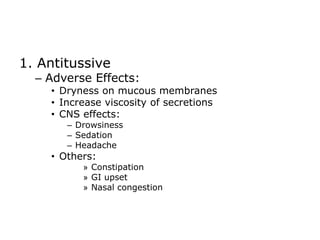
1. Antitussive
  – Adverse Effects:
    • Dryness on mucous membranes
    • Increase viscosity of secretions
    • CNS effects:
       – Drowsiness
       – Sedation
       – Headache
    • Others:
          » Constipation
          » GI upset
          » Nasal congestion
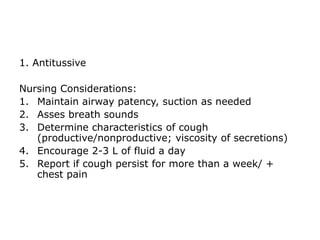
1. Antitussive

Nursing Considerations:
1. Maintain airway patency, suction as needed
2. Asses breath sounds
3. Determine characteristics of cough
   (productive/nonproductive; viscosity of secretions)
4. Encourage 2-3 L of fluid a day
5. Report if cough persist for more than a week/ +
   chest pain
2. Decongestants

PHARMA-RESPIRATORY DRUGS

  • 1.
  • 2.
    DRUGS ACTING ONURT • Antitussives • Decongestants • Antihistamines / H1 Receptor Agonists • Expectorants • Mucolytics
  • 3.
    DRUGS ACTING ONURT 1. Antitussive – Therapeutic action: • Suppress cough reflex by acting on medulla’s cough center • Anesthesize cough receptors of vagal afferent fibers throughout the bronchi,alveoli and pleura
  • 4.
    1. Antitussive – Indications: • Tx for nonproductive cough – Common colds – Sinusitis – Pharyngitis – Pneumonia – Pharmacokinetics • Rapidly absorbed thru GI tract • Metabolized in liver • Excrete to urine • Cross placenta and enter breastmilk
  • 5.
    1. Antitussive – Contraindications: • Hypersensitive to drug • Pregnant • Lactating • CNS depression – Cautions: (secretion can accumulate as a result of cough suppression) • Asthma • Emphysema • Hx of narcotic addiction (cause sedation/drowsy)
  • 6.
    1. Antitussive – Adverse Effects: • Dryness on mucous membranes • Increase viscosity of secretions • CNS effects: – Drowsiness – Sedation – Headache • Others: » Constipation » GI upset » Nasal congestion
  • 7.
    1. Antitussive Nursing Considerations: 1.Maintain airway patency, suction as needed 2. Asses breath sounds 3. Determine characteristics of cough (productive/nonproductive; viscosity of secretions) 4. Encourage 2-3 L of fluid a day 5. Report if cough persist for more than a week/ + chest pain
  • 8.