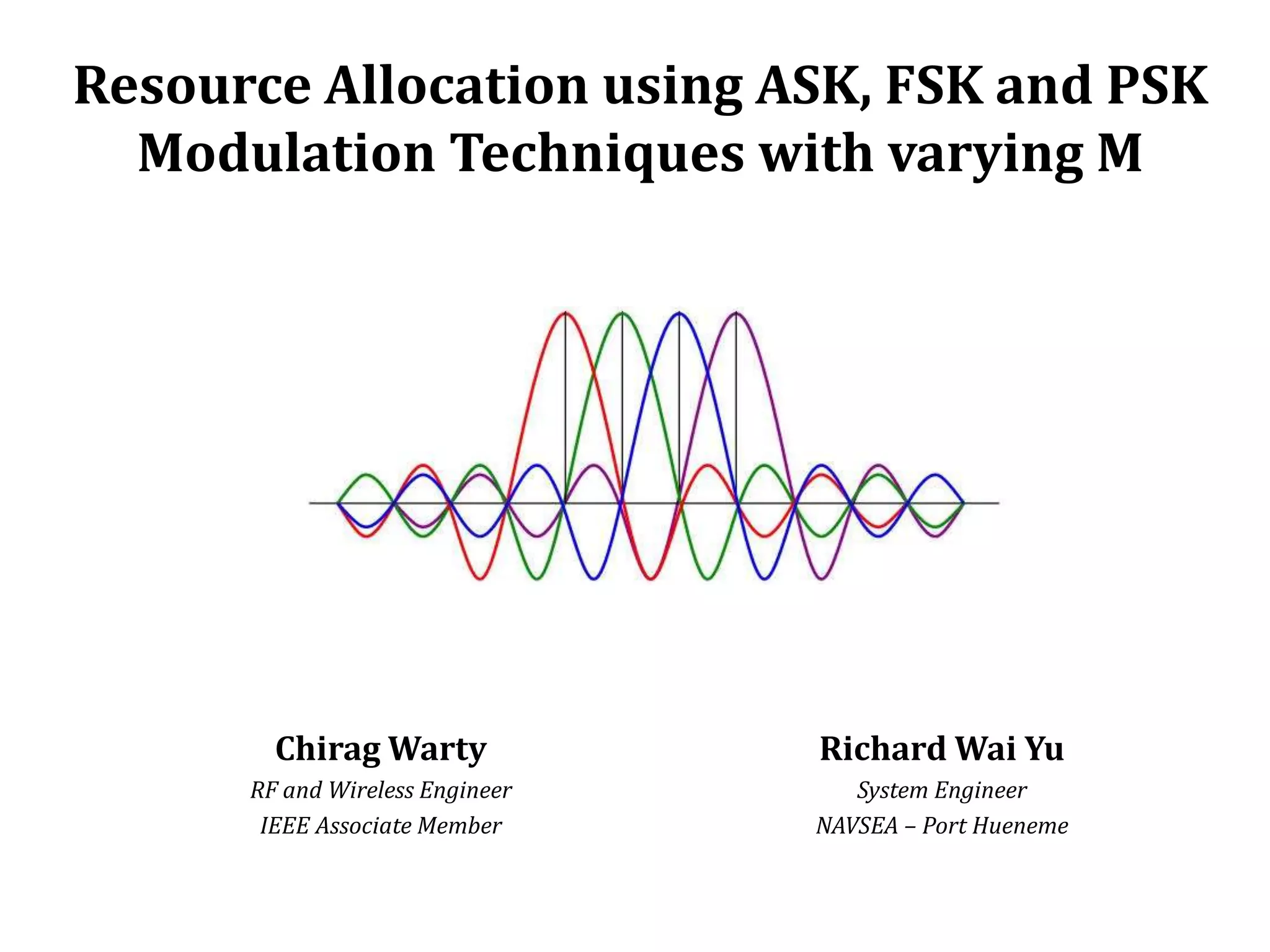
Resource Allocation using ASK, FSK and PSK
  Modulation Techniques with varying M


        Chirag Warty             Richard Wai Yu
      RF and Wireless Engineer      System Engineer
       IEEE Associate Member     NAVSEA – Port Hueneme
INDEX
•   Introduction

•   Point to Point Communication Links

•   Point to Multi Point Communication Links

•   Channel Aware Radio System

•   Adaptive Modulation with Varying M

•   Resource Allocation

•   Conclusion
Introduction
•   Analog to Digital

•   Economies of Scale

•   Bandwidth versus data rate

•   Demand for high Data rates
         •   Video and real time monitoring
         •   Military Sensor Networks
         •   Natural Disaster warning Systems (Tsunami, Active Volcones etc)
         •   Remote medical procedures


•   Development and existence of a strong backbone

•   Ever growing demand for Mobility and networking
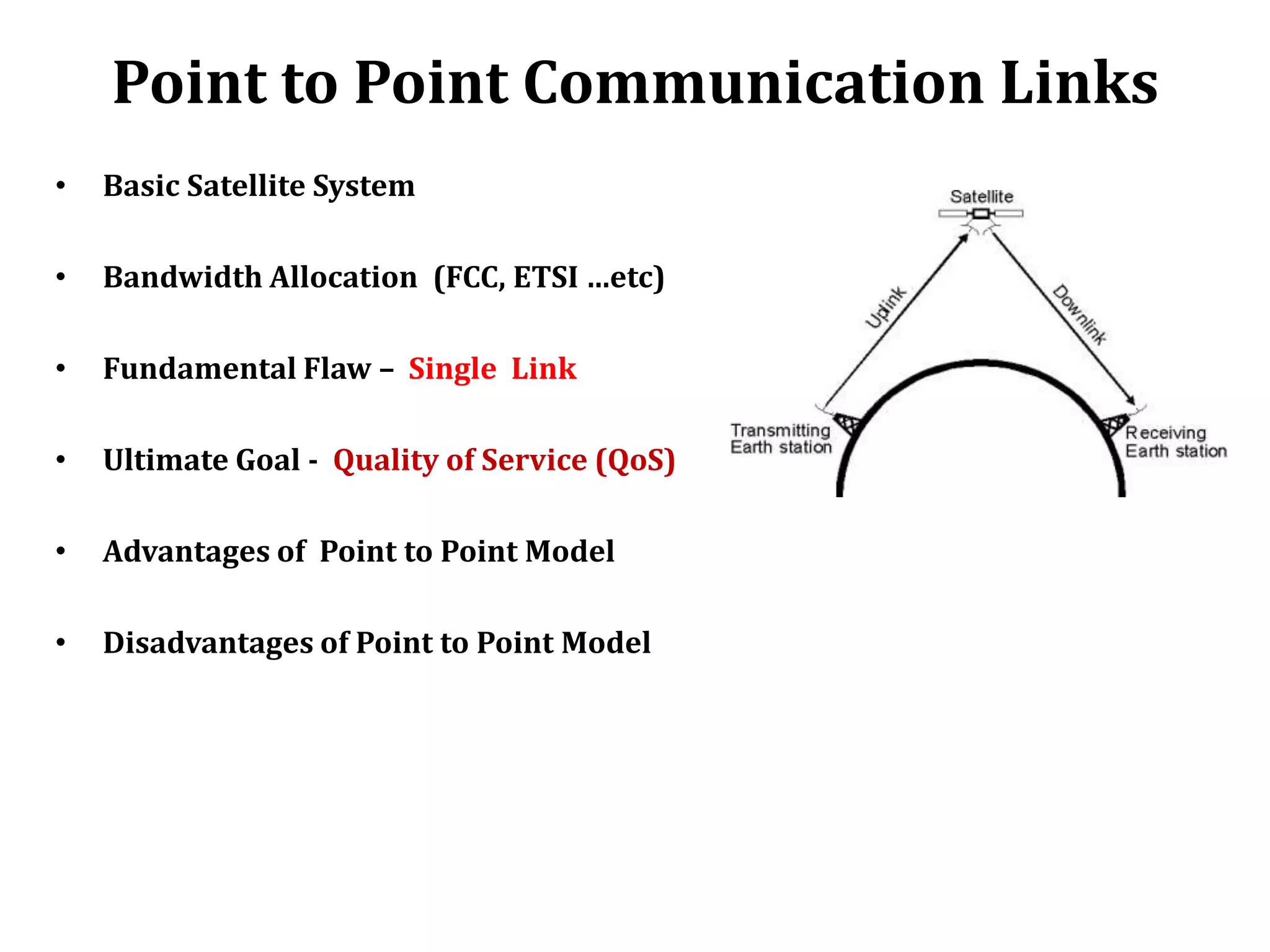
Point to Point Communication Links
•   Basic Satellite System

•   Bandwidth Allocation (FCC, ETSI …etc)

•   Fundamental Flaw – Single Link

•   Ultimate Goal - Quality of Service (QoS)

•   Advantages of Point to Point Model

•   Disadvantages of Point to Point Model
Point to Multi-Point Communication
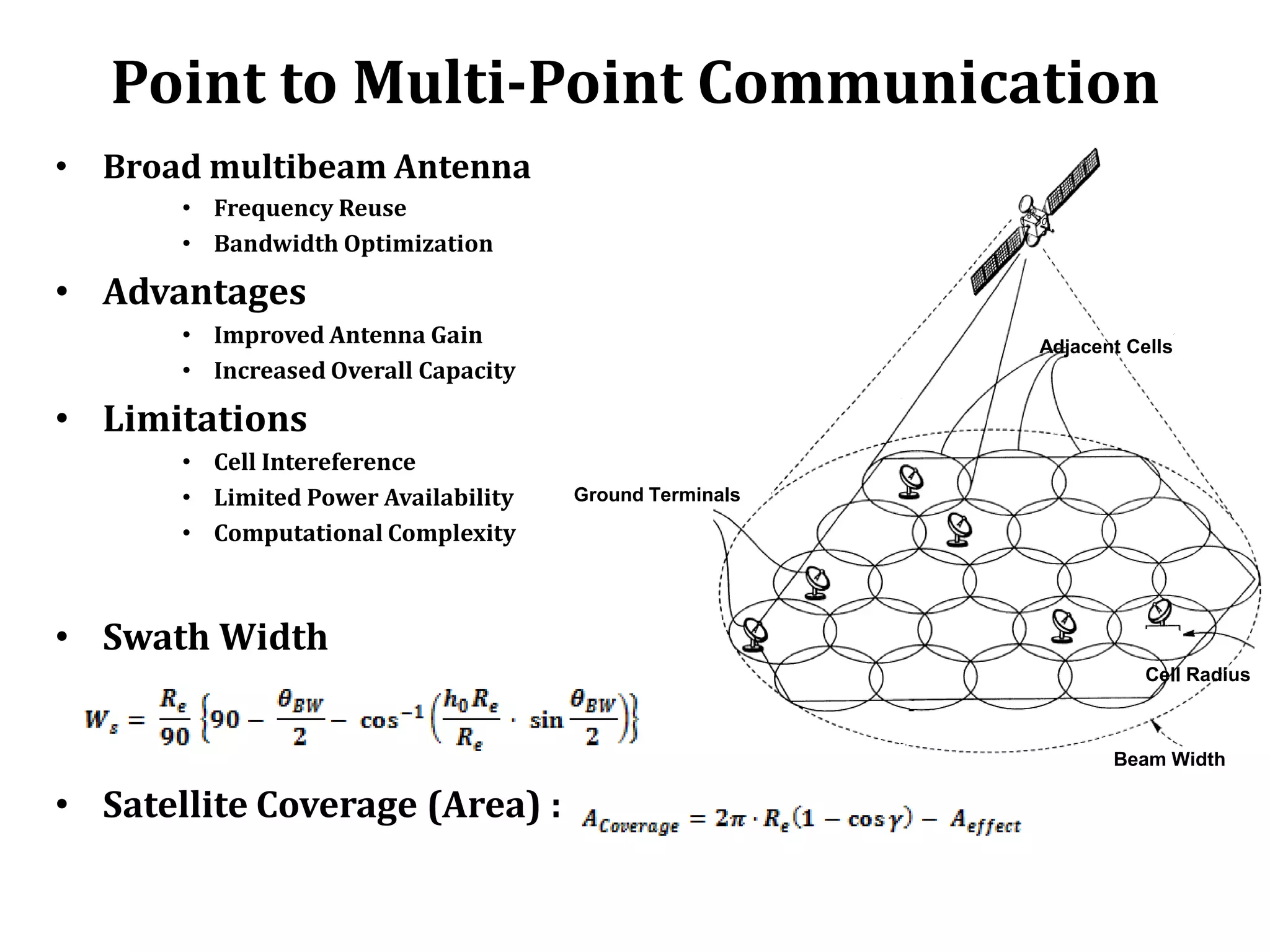
• Broad multibeam Antenna
       • Frequency Reuse
       • Bandwidth Optimization

• Advantages
       • Improved Antenna Gain                           Adjacent Cells
       • Increased Overall Capacity

• Limitations
       • Cell Intereference
       • Limited Power Availability   Ground Terminals

       • Computational Complexity


• Swath Width
                                                                    Cell Radius


                                                                Beam Width

• Satellite Coverage (Area) :
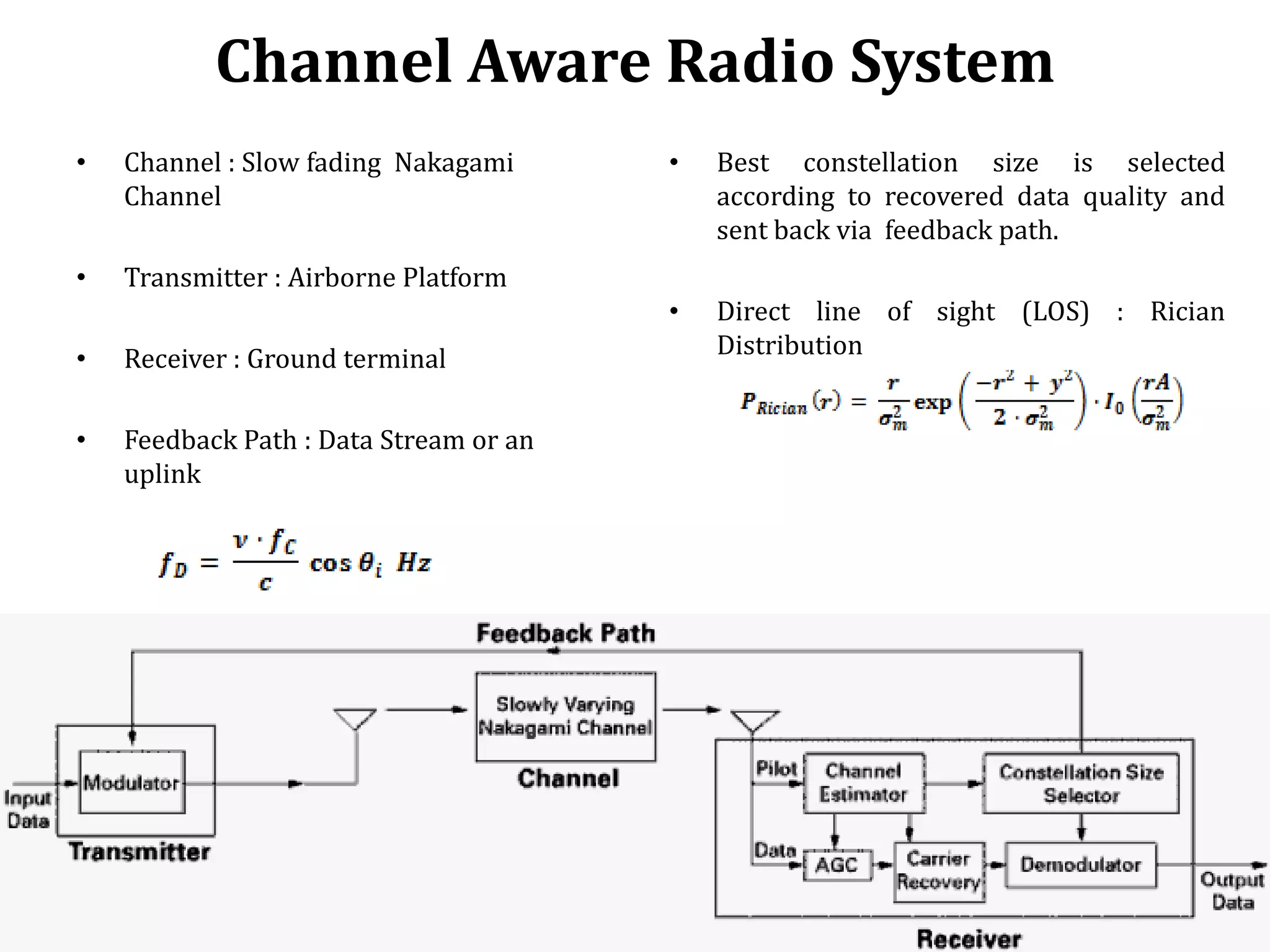
Channel Aware Radio System
•   Channel : Slow fading Nakagami      •   Best constellation size is selected
    Channel                                 according to recovered data quality and
                                            sent back via feedback path.
•   Transmitter : Airborne Platform
                                        •   Direct line of sight (LOS) : Rician
•   Receiver : Ground terminal              Distribution


•   Feedback Path : Data Stream or an
    uplink
Adaptive Modulation with Varying M
• Real time balancing of the link budget by adaptive variations
       •   Transmitted power level
       •   Symbol Transmission rate
       •   Constellation Size
       •   Bit Error Rate (BER)


• Types of rate adaptation
       • Source rate adaptation in the application layer
       • Rate control for data communication in Network/MAC layer
       • Channel Protection adaptation in Physical layer


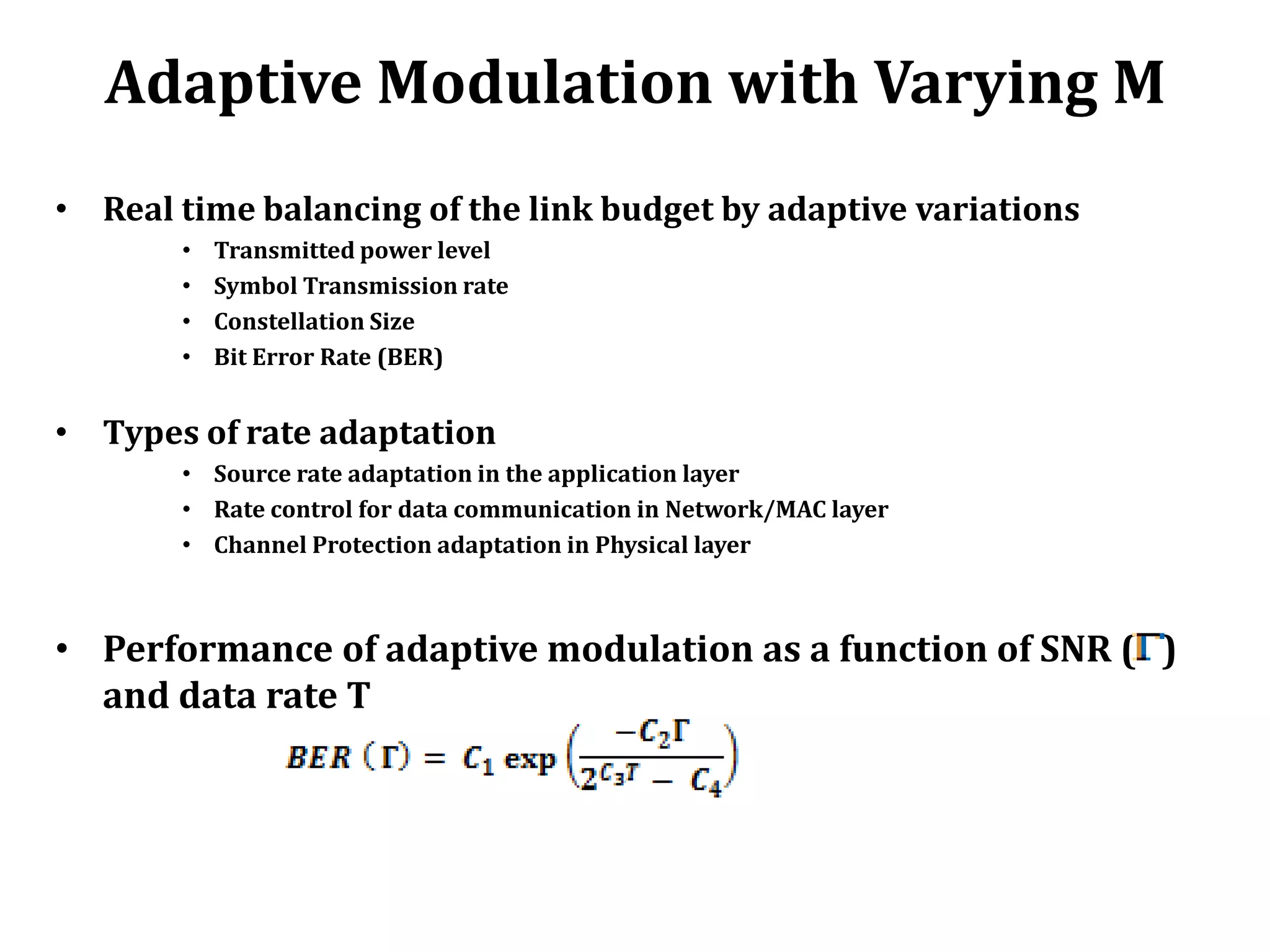
• Performance of adaptive modulation as a function of SNR ( )
  and data rate T
Resource Allocation

• Basic Digital modulation
  Schemes
     – Amplitude Shift Keying (ASK)
     – Frequency Shift Keying (FSK)
     – Phase Shift Keying (PSK)


• Modulation Schemes can have
  varying M
     – M-ary ASK
     – M-ary FSK
     – M-ary PSK


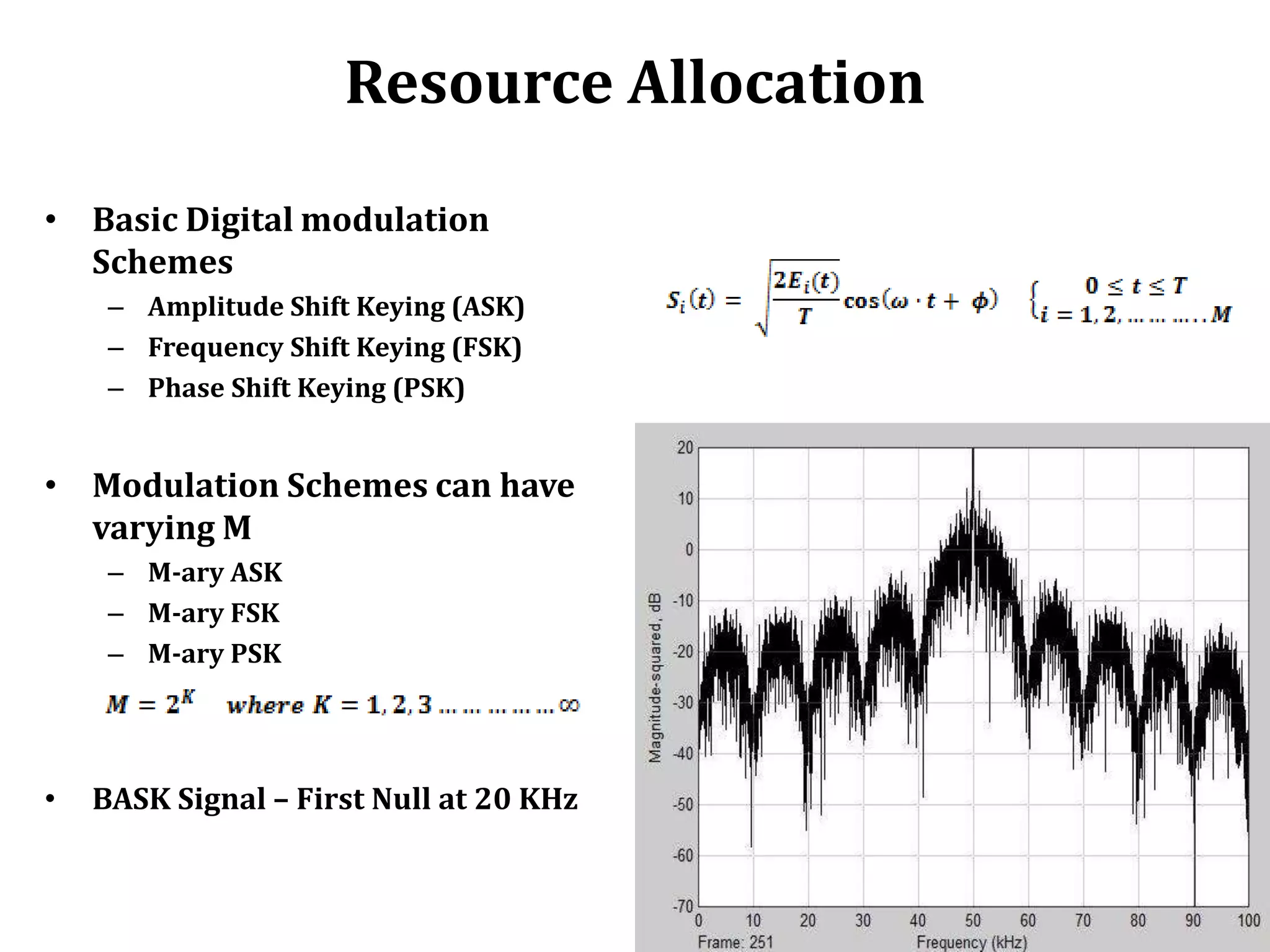
•   BASK Signal – First Null at 20 KHz
Resource Allocation

• M-ary Frequency Shift Keying

•   Frequency component varies in
    time with discrete values of M
                                                                              SNR Vs. P(BER) for M-ary Frequency Shift Keying
•   PB versus Eb/No for coherently                                    0
                                                                                                                                BFSK
    detected FSK over a Gaussian                                     10                                                         4-FSK
                                                                                                                                8-FSK
    channel


                                     Probability of Bit Error Rate
                                                                                                                                16-FSK

                                                                      -2
                                                                     10


                                                                      -4
                                                                     10


                                                                      -6
                                                                     10


                                                                          0                5                   10                    15
                                                                                                Eb/No [dB]
Resource Allocation
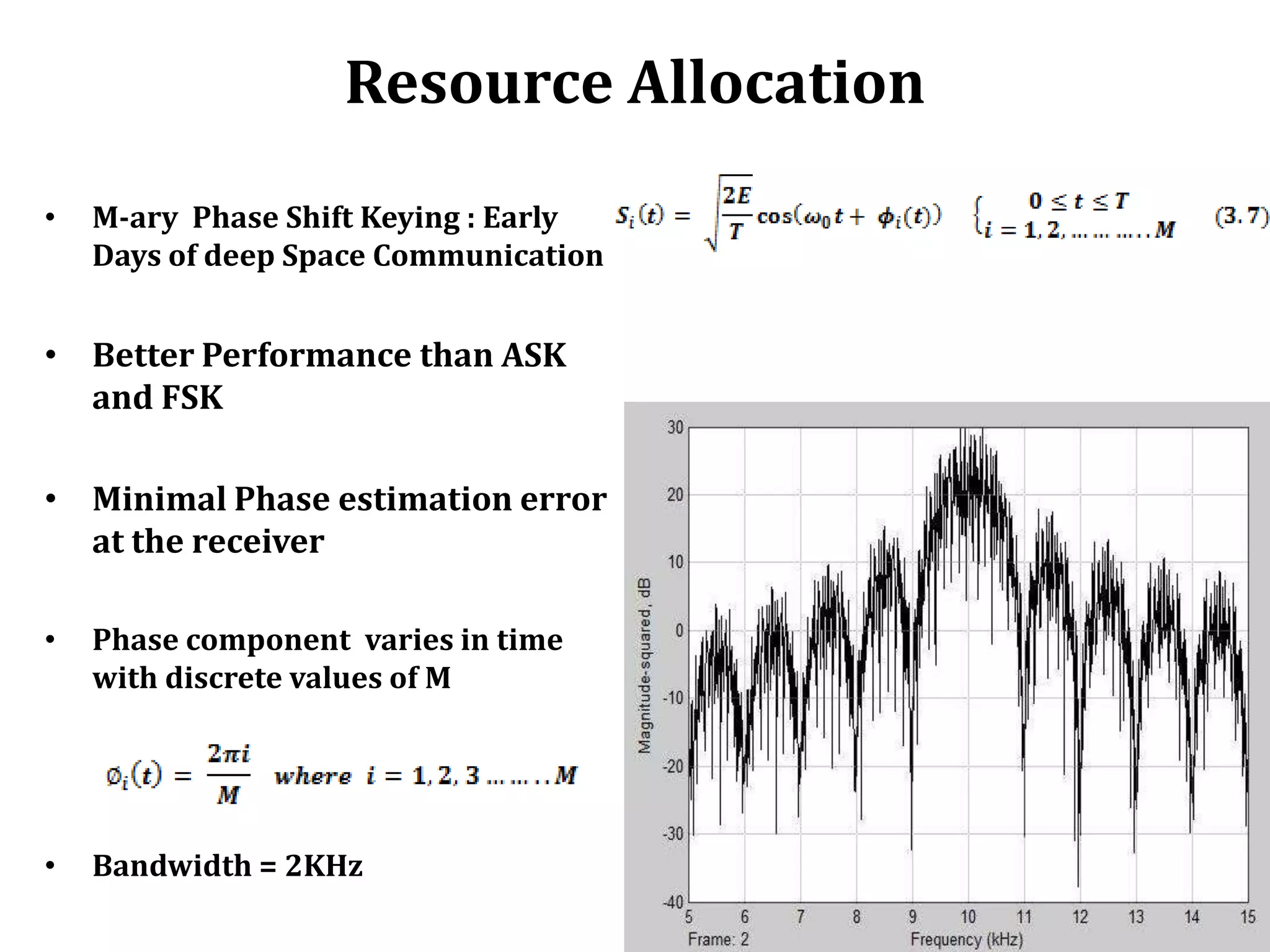
•   M-ary Phase Shift Keying : Early
    Days of deep Space Communication


• Better Performance than ASK
  and FSK

• Minimal Phase estimation error
  at the receiver

•   Phase component varies in time
    with discrete values of M


•   Bandwidth = 2KHz
Conclusion
•   A hybrid channel allocation technique seems to be the most suitable
    one, combining the fixed and the dynamic channel allocation methods.

•   The Resource allocation techniques can be further expanded to include
         • Code Division Multiple access (CDMA)
         • Orthogonal frequency Division Multiplexing (OFDM)
         • Etc….


•   Need to decide physical factor for maintaining the pre determined QoS
    in the individual cell beam width

•   Increase Capacity while conserving bandwidth

•   Collaborative effort with other agencies to share unused bandwidth can
    economic benefits
Questions


• Redundancy versus Resource Allocation
Resource Allocation using ASK, FSK and PSK Modulation Techniques with varying M

Resource Allocation using ASK, FSK and PSK Modulation Techniques with varying M

  • 1.
    Resource Allocation usingASK, FSK and PSK Modulation Techniques with varying M Chirag Warty Richard Wai Yu RF and Wireless Engineer System Engineer IEEE Associate Member NAVSEA – Port Hueneme
  • 2.
    INDEX • Introduction • Point to Point Communication Links • Point to Multi Point Communication Links • Channel Aware Radio System • Adaptive Modulation with Varying M • Resource Allocation • Conclusion
  • 3.
    Introduction • Analog to Digital • Economies of Scale • Bandwidth versus data rate • Demand for high Data rates • Video and real time monitoring • Military Sensor Networks • Natural Disaster warning Systems (Tsunami, Active Volcones etc) • Remote medical procedures • Development and existence of a strong backbone • Ever growing demand for Mobility and networking
  • 4.
    Point to PointCommunication Links • Basic Satellite System • Bandwidth Allocation (FCC, ETSI …etc) • Fundamental Flaw – Single Link • Ultimate Goal - Quality of Service (QoS) • Advantages of Point to Point Model • Disadvantages of Point to Point Model
  • 5.
    Point to Multi-PointCommunication • Broad multibeam Antenna • Frequency Reuse • Bandwidth Optimization • Advantages • Improved Antenna Gain Adjacent Cells • Increased Overall Capacity • Limitations • Cell Intereference • Limited Power Availability Ground Terminals • Computational Complexity • Swath Width Cell Radius Beam Width • Satellite Coverage (Area) :
  • 6.
    Channel Aware RadioSystem • Channel : Slow fading Nakagami • Best constellation size is selected Channel according to recovered data quality and sent back via feedback path. • Transmitter : Airborne Platform • Direct line of sight (LOS) : Rician • Receiver : Ground terminal Distribution • Feedback Path : Data Stream or an uplink
  • 7.
    Adaptive Modulation withVarying M • Real time balancing of the link budget by adaptive variations • Transmitted power level • Symbol Transmission rate • Constellation Size • Bit Error Rate (BER) • Types of rate adaptation • Source rate adaptation in the application layer • Rate control for data communication in Network/MAC layer • Channel Protection adaptation in Physical layer • Performance of adaptive modulation as a function of SNR ( ) and data rate T
  • 8.
    Resource Allocation • BasicDigital modulation Schemes – Amplitude Shift Keying (ASK) – Frequency Shift Keying (FSK) – Phase Shift Keying (PSK) • Modulation Schemes can have varying M – M-ary ASK – M-ary FSK – M-ary PSK • BASK Signal – First Null at 20 KHz
  • 9.
    Resource Allocation • M-aryFrequency Shift Keying • Frequency component varies in time with discrete values of M SNR Vs. P(BER) for M-ary Frequency Shift Keying • PB versus Eb/No for coherently 0 BFSK detected FSK over a Gaussian 10 4-FSK 8-FSK channel Probability of Bit Error Rate 16-FSK -2 10 -4 10 -6 10 0 5 10 15 Eb/No [dB]
  • 10.
    Resource Allocation • M-ary Phase Shift Keying : Early Days of deep Space Communication • Better Performance than ASK and FSK • Minimal Phase estimation error at the receiver • Phase component varies in time with discrete values of M • Bandwidth = 2KHz
  • 11.
    Conclusion • A hybrid channel allocation technique seems to be the most suitable one, combining the fixed and the dynamic channel allocation methods. • The Resource allocation techniques can be further expanded to include • Code Division Multiple access (CDMA) • Orthogonal frequency Division Multiplexing (OFDM) • Etc…. • Need to decide physical factor for maintaining the pre determined QoS in the individual cell beam width • Increase Capacity while conserving bandwidth • Collaborative effort with other agencies to share unused bandwidth can economic benefits
  • 12.