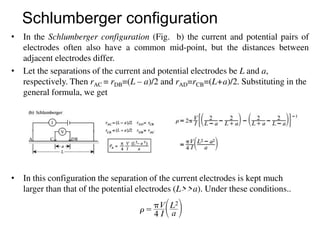
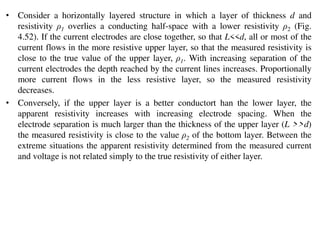
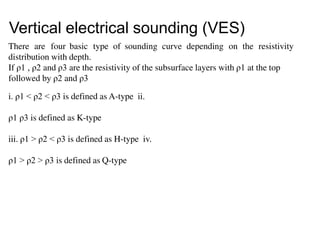
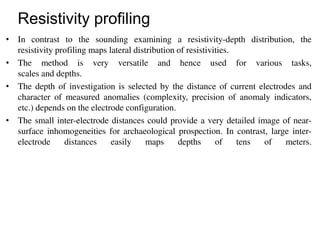
The electrical resistivity method is utilized to map subsurface structures and materials by measuring their resistivity, influenced by factors like porosity and dissolved solids. While offering advantages such as quantitative modeling and stratigraphic estimation, it faces limitations in industrial areas due to electrical noise and requires specific site conditions for effectiveness. Survey designs vary according to objectives, with common arrays like Schlumberger and Wenner facilitating both sounding and profiling modes to investigate subsurface resistivity distributions.














![Human Reproduction [ Reproductive System ] Notes @irfanullah_mehar Irfanullah...](https://cdn.slidesharecdn.com/ss_thumbnails/humanreproductionreproductivesystemnotesirfanullahmeharirfanullahmeharjanantantra-260111172350-56e85778-thumbnail.jpg?width=640&height=640&fit=bounds)


