



GROUP 19
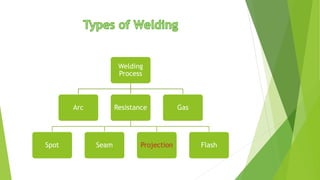
Welding
Process
Arc Resistance
Spot Seam Projection Flash
Gas
Projection welding is a process in which
contacting metal surfaces are joined by
the heat obtained from resistance to
electric current. Work-pieces are held
together under pressure exerted by
electrodes
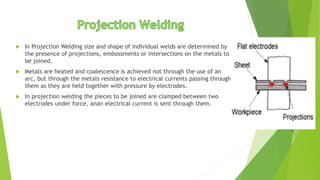
 In Projection Welding size and shape of individual welds are determined by
the presence of projections, embossments or intersections on the metals to
be joined.
 Metals are heated and coalescence is achieved not through the use of an
arc, but through the metals resistance to electrical currents passing through
them as they are held together with pressure by electrodes.
 In projection welding the pieces to be joined are clamped between two
electrodes under force, anan electrical current is sent through them.
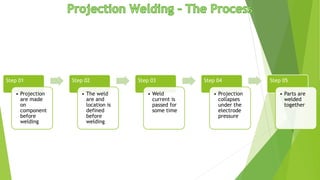
Step 01
• Projection
are made
on
component
before
welding
Step 02
• The weld
are and
location is
defined
before
welding
Step 03
• Weld
current is
passed for
some time
Step 04
• Projection
collapses
under the
electrode
pressure
Step 05
• Parts are
welded
together
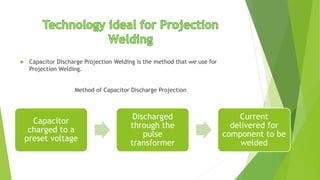
 Capacitor Discharge Projection Welding is the method that we use for
Projection Welding.
Method of Capacitor Discharge Projection
Capacitor
charged to a
preset voltage
Discharged
through the
pulse
transformer
Current
delivered for
component to be
welded
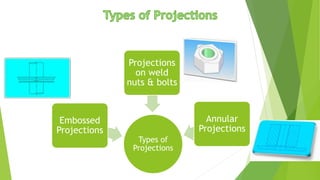
Types of
Projections
Embossed
Projections
Projections
on weld
nuts & bolts
Annular
Projections
 Simultaneously we can make any number of welds in heavier materials easily.
 Welding can be made in metals that are too thick to be joined by spot
welding.
 Lower electrode maintenance.
 Lower amount of current and pressure needs to joint metals.
 Faster and Quicker and used in mass production.
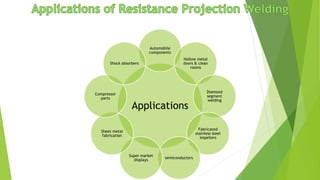
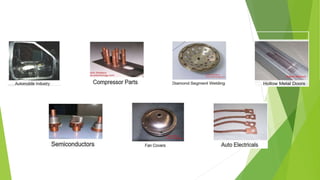
Applications
Automobile
components
Hollow metal
doors & clean
rooms
Diamond
segment
welding
Fabricated
stainless steel
impellers
semiconductors
Super market
displays
Sheet metal
fabrication
Compressor
parts
Shock absorbers
Resistance projection welding

Resistance projection welding

  • 1.
  • 2.
  • 3.
    Projection welding isa process in which contacting metal surfaces are joined by the heat obtained from resistance to electric current. Work-pieces are held together under pressure exerted by electrodes
  • 4.
     In ProjectionWelding size and shape of individual welds are determined by the presence of projections, embossments or intersections on the metals to be joined.  Metals are heated and coalescence is achieved not through the use of an arc, but through the metals resistance to electrical currents passing through them as they are held together with pressure by electrodes.  In projection welding the pieces to be joined are clamped between two electrodes under force, anan electrical current is sent through them.
  • 5.
    Step 01 • Projection aremade on component before welding Step 02 • The weld are and location is defined before welding Step 03 • Weld current is passed for some time Step 04 • Projection collapses under the electrode pressure Step 05 • Parts are welded together
  • 6.
     Capacitor DischargeProjection Welding is the method that we use for Projection Welding. Method of Capacitor Discharge Projection Capacitor charged to a preset voltage Discharged through the pulse transformer Current delivered for component to be welded
  • 7.
  • 9.
     Simultaneously wecan make any number of welds in heavier materials easily.  Welding can be made in metals that are too thick to be joined by spot welding.  Lower electrode maintenance.  Lower amount of current and pressure needs to joint metals.  Faster and Quicker and used in mass production.
  • 10.
    Applications Automobile components Hollow metal doors &clean rooms Diamond segment welding Fabricated stainless steel impellers semiconductors Super market displays Sheet metal fabrication Compressor parts Shock absorbers