SPOT WELDING
Introduction to
Welding
Welding is the process of joining two or more
metal components together through the
application of heat, pressure, or a combination of
both. It is a fundamental technique used in a wide
range of industries, from construction and
manufacturing to automotive and aerospace
engineering.
Definition and Importance of
Welding
What is Welding?
Welding is a fabrication
process that joins
materials, usually metals
or thermoplastics, by
causing fusion through the
application of heat,
pressure, or both.
Importance of Welding
Welding is a critical
technique used in
construction, manufacturing,
and repair industries to
create strong, durable, and
long-lasting structures and
products.
Wide Applications
Welding is employed in a vast array of industries, from
automotive and aerospace to shipbuilding and
infrastructure development, making it an indispensable
skill.
Classification of Welding
Processes
1.Fusion Welding Processes: Utilize heat
to melt and fuse the base metals, such as
Arc Welding, Gas Welding, and
Resistance Welding.
2.Solid-State Welding Processes: Join
metals without melting, relying on pressure
and/or heat, like Friction Welding and
Ultrasonic Welding.
3.Other Welding Processes: Include Laser
Welding, Electron Beam Welding, and
Brazing, each with their unique
characteristics and applications.
Fusion Welding Processes
1 Oxy-Fuel Welding
Utilizes a mixture of oxygen and fuel gas, such as
acetylene, to produce a high-temperature flame that
melts the base metal and filler material, fusing them
together.
2 Arc Welding
An electric arc is struck between an electrode and
the workpiece, generating intense heat to melt and
fuse the base metals. This includes popular
techniques like MIG, TIG, and stick welding.
3 Laser Welding
Highly focused laser beams are used to melt and
join materials with high precision and minimal
distortion. Ideal for delicate and intricate welding
applications.
Solid-State Welding Processes
Diffusion Welding
This process
involves joining
materials by heating
them under
pressure, causing
atoms to diffuse
across the interface,
creating a strong
bond without
melting the base
metals.
Friction Welding
In this technique,
the heat is
generated by the
friction between
the workpieces,
which are
pressed together
and rotated or
oscillated. The
high heat and
pressure forge
the materials
together.
Ultrasonic Welding
Ultrasonic welding
uses high-
frequency
vibrations and
moderate
pressure to create
a metallurgical
bond between the
parts, without the
need for melting
the base metals.
Explosive Welding
This process uses
the controlled
detonation of
explosives to
accelerate one
metal toward
another, creating a
metallurgical bond
through intense
pressure and
temperature, but
without melting.
Arc Welding Processes
Arc welding is a versatile and widely used
welding technique that utilizes an electric arc to
fuse metals together. It involves the creation of an
electric arc between an electrode and the base
metal, which generates intense heat to melt and
join the materials.
Arc welding processes include Shielded Metal
Arc Welding (SMAW), Gas Tungsten Arc Welding
(GTAW), and Gas Metal Arc Welding (GMAW),
each with its own unique characteristics and
applications.
Gas Welding Processes
Oxyacetylene Welding
Uses a mixture of
oxygen and
acetylene gases to
create a high-
temperature flame
that melts the base
metal and filler
material.
MIG Welding
Utilizes a
consumable wire
electrode and
shielding gas to
create an arc that
melts the
workpiece and
filler.
TIG Welding
Employs a non-
consumable
tungsten electrode
and shielding gas
to create a stable
arc and higher
quality welds.
Resistance Welding Processes
1
Spot Welding
Joining metals by applying heat and pressure
at localized points.
2
Seam Welding
Joining metals by continuously applying
heat and pressure
3
Projection Welding
Joining metals using localized
projection points for focused heat
Resistance welding is a group of welding processes that join metals by
passing an electric current through the workpieces, creating heat at
the joint interface. This heat, combined with pressure, fuses the metals
without the use of a filler material. Resistance welding is known for its
speed, precision, and ability to join dissimilar metals.
Spot Welding Process
Spot welding (also known as resistance spot welding) is a
resistance welding process. This welding process is used
primarily for welding two or more metal sheets together
by applying pressure and heat from an electric current to
the weld area.
Construction of Spot welding
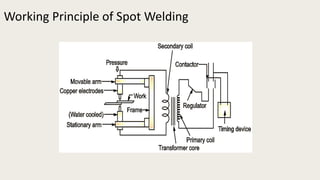
The setup for Resistance Spot welding includes essential
components are a transformer, two copper electrodes,
two tongs, and the workpieces.
Working Principle of Spot Welding
Applications and advantages of spot welding
Resistance Spot Welding is used for: Joining of vehicle body parts; Fuel tanks; Pipes of gas oil and water
pipelines; Domestic radiators; Turbine blades; utensil etc.
The advantages of Resistance Spot Welding are as follows.
• Easy automation
• Low fumes
• Cost-effectiveness
• No filler materials are required. o Disadvantages of Resistance Spot Welding:
Defects and disadvantages of spot welding
The defects of Resistance Spot Welding are as follows.
• Asymmetrical Spot Weld Marks
• The explosion of metal near weld site
• Cracks in the Weld Area
The disadvantages of Resistance Spot Welding are as follows.
• Low strength in the case of discontinuous welds.
• High equipment cost.
• The thickness of welded sheets is limited - 6 mm only.
welding draft for engineering hahah.pptx

welding draft for engineering hahah.pptx

  • 1.
  • 2.
    Introduction to Welding Welding isthe process of joining two or more metal components together through the application of heat, pressure, or a combination of both. It is a fundamental technique used in a wide range of industries, from construction and manufacturing to automotive and aerospace engineering.
  • 3.
    Definition and Importanceof Welding What is Welding? Welding is a fabrication process that joins materials, usually metals or thermoplastics, by causing fusion through the application of heat, pressure, or both. Importance of Welding Welding is a critical technique used in construction, manufacturing, and repair industries to create strong, durable, and long-lasting structures and products. Wide Applications Welding is employed in a vast array of industries, from automotive and aerospace to shipbuilding and infrastructure development, making it an indispensable skill.
  • 4.
    Classification of Welding Processes 1.FusionWelding Processes: Utilize heat to melt and fuse the base metals, such as Arc Welding, Gas Welding, and Resistance Welding. 2.Solid-State Welding Processes: Join metals without melting, relying on pressure and/or heat, like Friction Welding and Ultrasonic Welding. 3.Other Welding Processes: Include Laser Welding, Electron Beam Welding, and Brazing, each with their unique characteristics and applications.
  • 5.
    Fusion Welding Processes 1Oxy-Fuel Welding Utilizes a mixture of oxygen and fuel gas, such as acetylene, to produce a high-temperature flame that melts the base metal and filler material, fusing them together. 2 Arc Welding An electric arc is struck between an electrode and the workpiece, generating intense heat to melt and fuse the base metals. This includes popular techniques like MIG, TIG, and stick welding. 3 Laser Welding Highly focused laser beams are used to melt and join materials with high precision and minimal distortion. Ideal for delicate and intricate welding applications.
  • 6.
    Solid-State Welding Processes DiffusionWelding This process involves joining materials by heating them under pressure, causing atoms to diffuse across the interface, creating a strong bond without melting the base metals. Friction Welding In this technique, the heat is generated by the friction between the workpieces, which are pressed together and rotated or oscillated. The high heat and pressure forge the materials together. Ultrasonic Welding Ultrasonic welding uses high- frequency vibrations and moderate pressure to create a metallurgical bond between the parts, without the need for melting the base metals. Explosive Welding This process uses the controlled detonation of explosives to accelerate one metal toward another, creating a metallurgical bond through intense pressure and temperature, but without melting.
  • 7.
    Arc Welding Processes Arcwelding is a versatile and widely used welding technique that utilizes an electric arc to fuse metals together. It involves the creation of an electric arc between an electrode and the base metal, which generates intense heat to melt and join the materials. Arc welding processes include Shielded Metal Arc Welding (SMAW), Gas Tungsten Arc Welding (GTAW), and Gas Metal Arc Welding (GMAW), each with its own unique characteristics and applications.
  • 8.
    Gas Welding Processes OxyacetyleneWelding Uses a mixture of oxygen and acetylene gases to create a high- temperature flame that melts the base metal and filler material. MIG Welding Utilizes a consumable wire electrode and shielding gas to create an arc that melts the workpiece and filler. TIG Welding Employs a non- consumable tungsten electrode and shielding gas to create a stable arc and higher quality welds.
  • 10.
    Resistance Welding Processes 1 SpotWelding Joining metals by applying heat and pressure at localized points. 2 Seam Welding Joining metals by continuously applying heat and pressure 3 Projection Welding Joining metals using localized projection points for focused heat Resistance welding is a group of welding processes that join metals by passing an electric current through the workpieces, creating heat at the joint interface. This heat, combined with pressure, fuses the metals without the use of a filler material. Resistance welding is known for its speed, precision, and ability to join dissimilar metals.
  • 11.
    Spot Welding Process Spotwelding (also known as resistance spot welding) is a resistance welding process. This welding process is used primarily for welding two or more metal sheets together by applying pressure and heat from an electric current to the weld area. Construction of Spot welding The setup for Resistance Spot welding includes essential components are a transformer, two copper electrodes, two tongs, and the workpieces.
  • 13.
  • 14.
    Applications and advantagesof spot welding Resistance Spot Welding is used for: Joining of vehicle body parts; Fuel tanks; Pipes of gas oil and water pipelines; Domestic radiators; Turbine blades; utensil etc. The advantages of Resistance Spot Welding are as follows. • Easy automation • Low fumes • Cost-effectiveness • No filler materials are required. o Disadvantages of Resistance Spot Welding:
  • 15.
    Defects and disadvantagesof spot welding The defects of Resistance Spot Welding are as follows. • Asymmetrical Spot Weld Marks • The explosion of metal near weld site • Cracks in the Weld Area The disadvantages of Resistance Spot Welding are as follows. • Low strength in the case of discontinuous welds. • High equipment cost. • The thickness of welded sheets is limited - 6 mm only.