ARC WELDING
TEAM MEMBERS
Indal Patel
Anshita Agrawal
WELDING
1. Process in which two (or more) parts are coalesced
at their contacting surfaces by application of:
 Heat and pressure
 Some welding processes use a filler material
added to facilitate coalescence
WHAT IS ARC WELDING?
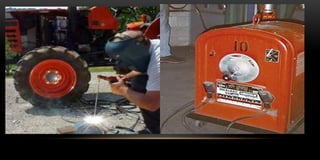
• The fusing of two or more pieces of metal together by
using the heat produced from an electric arc welding
machine.
BASICS OF ARC WELDING
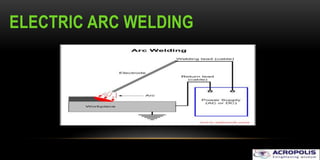
• The arc is struck between the electrode and
the metal. It then heats the metal to a melting
point. The electrode is then removed,
breaking the arc between the electrode and
the metal. This allows the molten metal to
“freeze” or solidify.
HOW AN ARC IS FORMED?
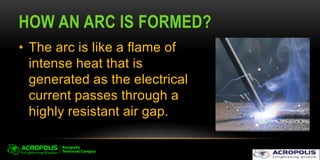
• The arc is like a flame of
intense heat that is
generated as the electrical
current passes through a
highly resistant air gap.
8
BASIC STEPS OF ARC WELDING
• Prepare the base materials: remove paint and rust
• Choose the right welding process
• Choose the right filler material
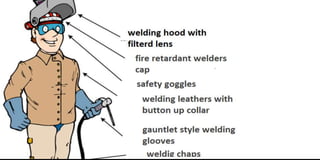
• Assess and comply with safety requirements
• Use proper welding techniques and be sure to protect the
molten puddle from contaminants in the air
• Inspect the weld
PRINCIPLE OF ARC
• A suitable gap is kept between the work and electrode
• A high current is passed through the circuit.
• The electric energy is converted into heat energy, producing a
temperature of 3000°C to 4000°C.
• This heat melts the edges to be welded and molten pool is
formed.
• On solidification the welding joint is obtained
USES OF ARC WELDING
• Many things around us are welded …
• Pipelines that bring fresh water
• Towers that carry electricity to houses
• Cars and buses that take people where they need to go
• Arc welding continues to be used extensively in the construction of steel structures and
in industrial fabrication.
• The process is used primarily to weld iron and steels (including stainless steel) but
aluminium, nickel and copper alloys can also be welded with this method.
• It dominates other welding processes in the maintenance and repair industry, and though
flux-cored arc welding is growing in popularity
• Is popular because it can be used in the field without complicated equipment and gases
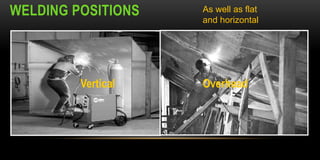
WELDING POSITIONS As well as flat
and horizontal
Vertical Overhead
ELECTRIC ARC WELDING
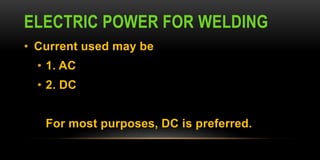
ELECTRIC POWER FOR WELDING
• Current used may be
• 1. AC
• 2. DC
For most purposes, DC is preferred.
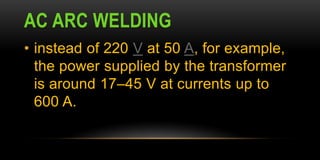
AC ARC WELDING
• instead of 220 V at 50 A, for example,
the power supplied by the transformer
is around 17–45 V at currents up to
600 A.
DC ARC WELDING
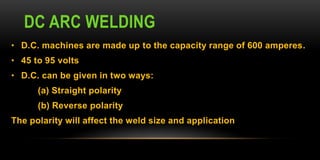
• D.C. machines are made up to the capacity range of 600 amperes.
• 45 to 95 volts
• D.C. can be given in two ways:
(a) Straight polarity
(b) Reverse polarity
The polarity will affect the weld size and application
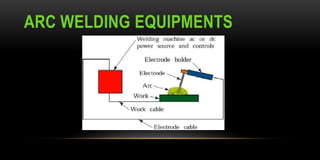
ARC WELDING EQUIPMENTS
ADVANTAGES OF ARC WELDING
• 1. Simple welding equipment
• 2. Portable
• 3. Inexpensive power source
• 4. Relatively inexpensive equipment
• 5. Welders use standard domestic current.
• 6. Process is fast and reliable
• 7. Short learning curve
• 8. Equipment can be used for multiple functions
• 9. Electric arc is about 5,000 oC
• 10. Used for maintenance, repair, and field construction
DISADVANTAGES
• Not clean enough for reactive metals such as
aluminium and titanium.
• The deposition rate is limited because the electrode
covering tends to overheat and fall off.
• The electrode length is ~ 35 mm and requires electrode
changing lower the overall production rate.
•Thank You

ARC WELDING

  • 1.
  • 2.
  • 3.
    WELDING 1. Process inwhich two (or more) parts are coalesced at their contacting surfaces by application of:  Heat and pressure  Some welding processes use a filler material added to facilitate coalescence
  • 4.
    WHAT IS ARCWELDING? • The fusing of two or more pieces of metal together by using the heat produced from an electric arc welding machine.
  • 5.
    BASICS OF ARCWELDING • The arc is struck between the electrode and the metal. It then heats the metal to a melting point. The electrode is then removed, breaking the arc between the electrode and the metal. This allows the molten metal to “freeze” or solidify.
  • 6.
    HOW AN ARCIS FORMED? • The arc is like a flame of intense heat that is generated as the electrical current passes through a highly resistant air gap.
  • 8.
    8 BASIC STEPS OFARC WELDING • Prepare the base materials: remove paint and rust • Choose the right welding process • Choose the right filler material • Assess and comply with safety requirements • Use proper welding techniques and be sure to protect the molten puddle from contaminants in the air • Inspect the weld
  • 9.
    PRINCIPLE OF ARC •A suitable gap is kept between the work and electrode • A high current is passed through the circuit. • The electric energy is converted into heat energy, producing a temperature of 3000°C to 4000°C. • This heat melts the edges to be welded and molten pool is formed. • On solidification the welding joint is obtained
  • 10.
    USES OF ARCWELDING • Many things around us are welded … • Pipelines that bring fresh water • Towers that carry electricity to houses • Cars and buses that take people where they need to go • Arc welding continues to be used extensively in the construction of steel structures and in industrial fabrication. • The process is used primarily to weld iron and steels (including stainless steel) but aluminium, nickel and copper alloys can also be welded with this method. • It dominates other welding processes in the maintenance and repair industry, and though flux-cored arc welding is growing in popularity • Is popular because it can be used in the field without complicated equipment and gases
  • 12.
    WELDING POSITIONS Aswell as flat and horizontal Vertical Overhead
  • 13.
  • 14.
    ELECTRIC POWER FORWELDING • Current used may be • 1. AC • 2. DC For most purposes, DC is preferred.
  • 15.
    AC ARC WELDING •instead of 220 V at 50 A, for example, the power supplied by the transformer is around 17–45 V at currents up to 600 A.
  • 16.
    DC ARC WELDING •D.C. machines are made up to the capacity range of 600 amperes. • 45 to 95 volts • D.C. can be given in two ways: (a) Straight polarity (b) Reverse polarity The polarity will affect the weld size and application
  • 17.
  • 18.
    ADVANTAGES OF ARCWELDING • 1. Simple welding equipment • 2. Portable • 3. Inexpensive power source • 4. Relatively inexpensive equipment • 5. Welders use standard domestic current. • 6. Process is fast and reliable • 7. Short learning curve • 8. Equipment can be used for multiple functions • 9. Electric arc is about 5,000 oC • 10. Used for maintenance, repair, and field construction
  • 19.
    DISADVANTAGES • Not cleanenough for reactive metals such as aluminium and titanium. • The deposition rate is limited because the electrode covering tends to overheat and fall off. • The electrode length is ~ 35 mm and requires electrode changing lower the overall production rate.
  • 20.