
• Human activities are now changing the composition
of the atmosphere in ways that most authorities
conclude will be damaging or, in the long
run, disastrous.
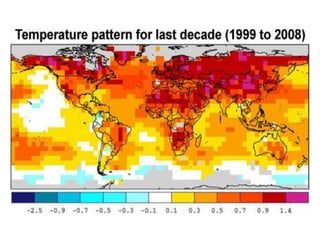
• Global warming
–Changes in atmospheric composition
–Average temperature of the Earth’s surface is
increasing
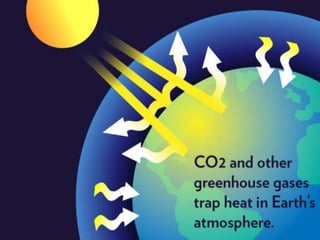
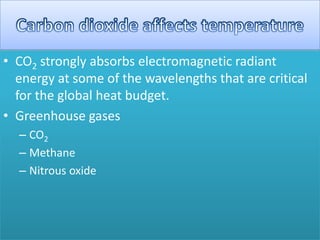
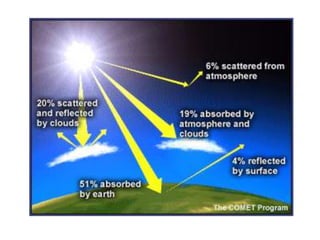
• CO2 strongly absorbs electromagnetic radiant
energy at some of the wavelengths that are critical
for the global heat budget.
• Greenhouse gases
– CO2
– Methane
– Nitrous oxide
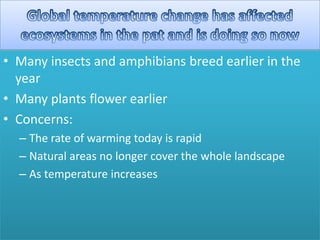
• Many insects and amphibians breed earlier in the
year
• Many plants flower earlier
• Concerns:
– The rate of warming today is rapid
– Natural areas no longer cover the whole landscape
– As temperature increases
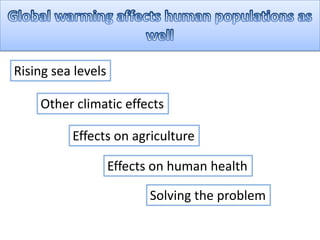
Rising sea levels
Other climatic effects
Effects on agriculture
Effects on human health
Solving the problem
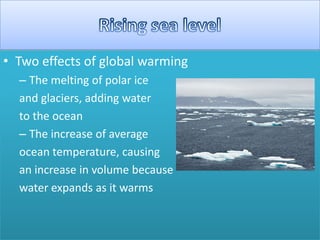
• Two effects of global warming
– The melting of polar ice
and glaciers, adding water
to the ocean
– The increase of average
ocean temperature, causing
an increase in volume because
water expands as it warms
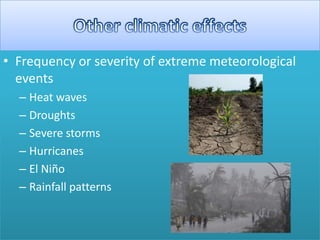
• Frequency or severity of extreme meteorological
events
– Heat waves
– Droughts
– Severe storms
– Hurricanes
– El Niño
– Rainfall patterns
• Positive side
– Warmer temperatures and increase atmospheric CO2
tend to increase growth of some crops and thus may
increase agricultural yields.
• Negative side
– Droughts
– Changes in rainfall patterns
– Temperature
– Pest distributions
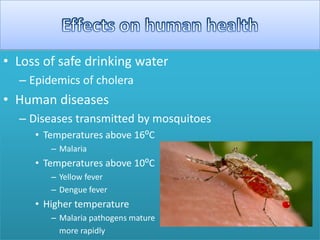
• Loss of safe drinking water
– Epidemics of cholera
• Human diseases
– Diseases transmitted by mosquitoes
• Temperatures above 16⁰C
– Malaria
• Temperatures above 10⁰C
– Yellow fever
– Dengue fever
• Higher temperature
– Malaria pathogens mature
more rapidly
• “green” technologies
• Concerted efforts from:
– Citizens
– Corporations
– Governments

Human Impacts on the biosphere: Climate Change

  • 2.
    • Human activitiesare now changing the composition of the atmosphere in ways that most authorities conclude will be damaging or, in the long run, disastrous. • Global warming –Changes in atmospheric composition –Average temperature of the Earth’s surface is increasing
  • 5.
    • CO2 stronglyabsorbs electromagnetic radiant energy at some of the wavelengths that are critical for the global heat budget. • Greenhouse gases – CO2 – Methane – Nitrous oxide
  • 7.
    • Many insectsand amphibians breed earlier in the year • Many plants flower earlier • Concerns: – The rate of warming today is rapid – Natural areas no longer cover the whole landscape – As temperature increases
  • 8.
    Rising sea levels Otherclimatic effects Effects on agriculture Effects on human health Solving the problem
  • 9.
    • Two effectsof global warming – The melting of polar ice and glaciers, adding water to the ocean – The increase of average ocean temperature, causing an increase in volume because water expands as it warms
  • 10.
    • Frequency orseverity of extreme meteorological events – Heat waves – Droughts – Severe storms – Hurricanes – El Niño – Rainfall patterns
  • 11.
    • Positive side –Warmer temperatures and increase atmospheric CO2 tend to increase growth of some crops and thus may increase agricultural yields. • Negative side – Droughts – Changes in rainfall patterns – Temperature – Pest distributions
  • 12.
    • Loss ofsafe drinking water – Epidemics of cholera • Human diseases – Diseases transmitted by mosquitoes • Temperatures above 16⁰C – Malaria • Temperatures above 10⁰C – Yellow fever – Dengue fever • Higher temperature – Malaria pathogens mature more rapidly
  • 13.
    • “green” technologies •Concerted efforts from: – Citizens – Corporations – Governments