Global WarmingGreatest Threat To HumanityT. Umapathysivam10. 08. 2010
Our Focus  Global warming – OverviewCauses of global warmingEffects of global warmingControl global warming
What is Global Warming? Global warming is when the earth heats up (the temperature rises).  It happens when greenhouse gases (carbon dioxide, water vapor, nitrous oxide, and methane) trap heat and light from the sun in the earth’s atmosphere, which increases the temperature.  This hurts many people, animals, and plants.  Many cannot take the change, so they die.
Global Warming - ExamplesDec 2003June 2002Colorado River, Arizona
Global Warming - Examples19142004Portage Glacier, Alaska
Why it is happening?
Main causeRaise in normal temperatureImbalance in greenhouse effect
Greenhouce GasesCarbon dioxideNitrous oxideMethaneSulfur hexafluorideWater
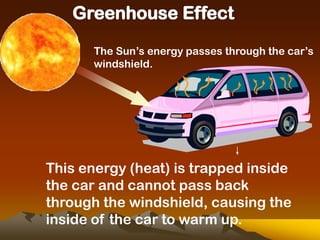
Greenhouse EffectThe Sun’s energy passes through the car’s windshield.This energy (heat) is trapped inside the car and cannot pass back through the windshield, causing the inside of the car to warm up.
Why it happens?C+O2=CO2Burning carbon-containing fossil fuels produces carbon dioxide
CO2   Significant greenhouse pollutant Humans have increased carbon dioxide (CO2) in the atmosphere by more than 37% since the Industrial Revolution. -  NOAA 2008
The most carbon dioxide(385 ppm) in 800,000 years.        -  Prof. Thomas Blunier,  Univ. of Copenhagen; Monaco Declaration 2008.Methane from rice paddies both ends of animals, garbage in landfills and mining operations
Global Warming - EffectsGeographical  effects
Climate change
Wildlife
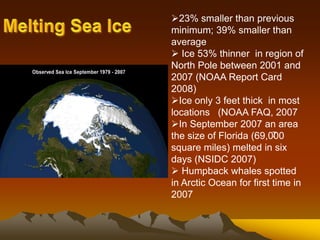
humans23% smaller than previous minimum; 39% smaller than average
 Ice 53% thinner  in region of North Pole between 2001 and 2007 (NOAA Report Card 2008)
Ice only 3 feet thick  in most locations   (NOAA FAQ, 2007
In September 2007 an area the size of Florida (69,000 square miles) melted in six days (NSIDC 2007)
 Humpback whales spotted in Arctic Ocean for first time in 2007Melting Sea Ice7
Melting Sea IceThe Arctic Ocean could be ice-free in summer by 2040(U.S National Center for Atmospheric Research, 2006)“Society can stillminimize the impacts on Arctic ice.”Dr. Marika Holland, National Center for Atmospheric Research20002040
Sea-level rise  projections : a few inches to a few feet2 ft: U.S. would lose 10,000 square miles
3 ft: Would inundate Miami
Affects erosion, loss of wetlands, freshwater supplies
Half of the world’s population lives along coasts
Big question:  Ice sheetsSpread of diseaseAs northern countries warm, disease carrying insects migrate north, bringing swine flu and other disease with them. Warmer waters and more hurricanesAs the temperature of oceans rise, so will the probability of more frequent and stronger hurricanes.
Increased probability and intensity of droughts and heat waves
Increase in frequent volcanic eruptions due to rise in temperatures
Forest fire increased due to hot winds
Nitrous oxide from fertilizers and other chemicals
Climate ChangeImportant factor affected  as a result of global warmingClimate change happens when there is a change inSun’s outputEarth’s orbitDrifting continentsVolcanic eruptionsGreenhouse gases
Weather Vs ClimatePhoto courtesy of Parker Rittgers / ADN reader submission“Climate is what we expect, weather is what we get.”  Mark TwainUS National Weather Service
Wildlife effects
Wildlife effectsEffects of global warming on animals is one of serious threat to BiodiversityExtinction  Some species migrates from one place to other for survival
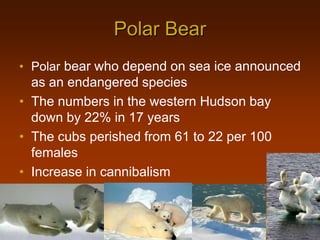
Polar BearPolar bear who depend on sea ice announced as an endangered speciesThe numbers in the western Hudson bay  down by 22% in 17 yearsThe cubs perished from 61 to 22 per 100 femalesIncrease in cannibalism
Brown BearFactors of Concern:Diet impairment: fish and berries (Kenai Brown Bears – fish 90% of diet v.    black bears 10%)
Hibernation disturbances for reproducing females (Jan-May)
2 months to implant
Cub growth
Flooding of dens
Reduction in productivity and survival rates following salmon decline in Caribou The Western Arctic Caribou Herd shrank by 113,000
Since 1989, the Porcupine Caribou Herd has declined at 3.5% per year        to a low of 123,000 animals        in 2001Freezing rain coats lichen
Changing rivers
Less tundraBirds Threatened   Birds flying higher, farther away
  Lakes and rivers too low
  Fewer birds seenMigratory BirdsPopulation appears to be “in peril”(Consensus Report, 2006)
Declined from over 7 million  to 3.39 million
Record low in 2006: 3.2 million
70% breed in western boreal forest;
  Fastest rate of decline there “Declines reflect breeding season events.

Global warming

  • 1.
    Global WarmingGreatest ThreatTo HumanityT. Umapathysivam10. 08. 2010
  • 2.
    Our Focus Global warming – OverviewCauses of global warmingEffects of global warmingControl global warming
  • 3.
    What is GlobalWarming? Global warming is when the earth heats up (the temperature rises). It happens when greenhouse gases (carbon dioxide, water vapor, nitrous oxide, and methane) trap heat and light from the sun in the earth’s atmosphere, which increases the temperature. This hurts many people, animals, and plants. Many cannot take the change, so they die.
  • 4.
    Global Warming -ExamplesDec 2003June 2002Colorado River, Arizona
  • 5.
    Global Warming -Examples19142004Portage Glacier, Alaska
  • 6.
    Why it ishappening?
  • 7.
    Main causeRaise innormal temperatureImbalance in greenhouse effect
  • 8.
    Greenhouce GasesCarbon dioxideNitrousoxideMethaneSulfur hexafluorideWater
  • 9.
    Greenhouse EffectThe Sun’senergy passes through the car’s windshield.This energy (heat) is trapped inside the car and cannot pass back through the windshield, causing the inside of the car to warm up.
  • 10.
    Why it happens?C+O2=CO2Burningcarbon-containing fossil fuels produces carbon dioxide
  • 11.
    CO2 Significant greenhouse pollutant Humans have increased carbon dioxide (CO2) in the atmosphere by more than 37% since the Industrial Revolution. - NOAA 2008
  • 12.
    The most carbondioxide(385 ppm) in 800,000 years. - Prof. Thomas Blunier, Univ. of Copenhagen; Monaco Declaration 2008.Methane from rice paddies both ends of animals, garbage in landfills and mining operations
  • 13.
    Global Warming -EffectsGeographical effects
  • 14.
  • 15.
  • 16.
    humans23% smaller thanprevious minimum; 39% smaller than average
  • 17.
    Ice 53%thinner in region of North Pole between 2001 and 2007 (NOAA Report Card 2008)
  • 18.
    Ice only 3feet thick in most locations (NOAA FAQ, 2007
  • 19.
    In September 2007an area the size of Florida (69,000 square miles) melted in six days (NSIDC 2007)
  • 20.
    Humpback whalesspotted in Arctic Ocean for first time in 2007Melting Sea Ice7
  • 21.
    Melting Sea IceTheArctic Ocean could be ice-free in summer by 2040(U.S National Center for Atmospheric Research, 2006)“Society can stillminimize the impacts on Arctic ice.”Dr. Marika Holland, National Center for Atmospheric Research20002040
  • 22.
    Sea-level rise projections : a few inches to a few feet2 ft: U.S. would lose 10,000 square miles
  • 23.
    3 ft: Wouldinundate Miami
  • 24.
    Affects erosion, lossof wetlands, freshwater supplies
  • 25.
    Half of theworld’s population lives along coasts
  • 26.
    Big question: Ice sheetsSpread of diseaseAs northern countries warm, disease carrying insects migrate north, bringing swine flu and other disease with them. Warmer waters and more hurricanesAs the temperature of oceans rise, so will the probability of more frequent and stronger hurricanes.
  • 27.
    Increased probability andintensity of droughts and heat waves
  • 28.
    Increase in frequentvolcanic eruptions due to rise in temperatures
  • 29.
    Forest fire increaseddue to hot winds
  • 30.
    Nitrous oxide fromfertilizers and other chemicals
  • 31.
    Climate ChangeImportant factoraffected as a result of global warmingClimate change happens when there is a change inSun’s outputEarth’s orbitDrifting continentsVolcanic eruptionsGreenhouse gases
  • 32.
    Weather Vs ClimatePhotocourtesy of Parker Rittgers / ADN reader submission“Climate is what we expect, weather is what we get.” Mark TwainUS National Weather Service
  • 34.
  • 35.
    Wildlife effectsEffects ofglobal warming on animals is one of serious threat to BiodiversityExtinction Some species migrates from one place to other for survival
  • 36.
    Polar BearPolar bearwho depend on sea ice announced as an endangered speciesThe numbers in the western Hudson bay down by 22% in 17 yearsThe cubs perished from 61 to 22 per 100 femalesIncrease in cannibalism
  • 37.
    Brown BearFactors ofConcern:Diet impairment: fish and berries (Kenai Brown Bears – fish 90% of diet v. black bears 10%)
  • 38.
    Hibernation disturbances forreproducing females (Jan-May)
  • 39.
  • 40.
  • 41.
  • 42.
    Reduction in productivityand survival rates following salmon decline in Caribou The Western Arctic Caribou Herd shrank by 113,000
  • 43.
    Since 1989, thePorcupine Caribou Herd has declined at 3.5% per year to a low of 123,000 animals in 2001Freezing rain coats lichen
  • 44.
  • 45.
    Less tundraBirds Threatened Birds flying higher, farther away
  • 46.
    Lakesand rivers too low
  • 47.
    Fewerbirds seenMigratory BirdsPopulation appears to be “in peril”(Consensus Report, 2006)
  • 48.
    Declined from over7 million to 3.39 million
  • 49.
    Record low in2006: 3.2 million
  • 50.
    70% breed inwestern boreal forest;
  • 51.
    Fastestrate of decline there “Declines reflect breeding season events.