AIR, WATER AND SOIL
POLLUTION
eTeens Think Twice eTwinning Project
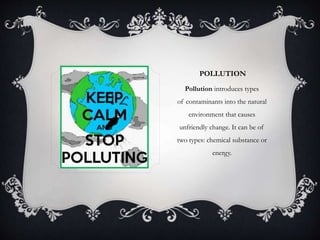
POLLUTION
Pollution introduces types
of contaminants into the natural
environment that causes
unfriendly change. It can be of
two types: chemical substance or
energy.
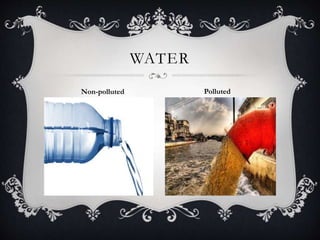
WATER
Non-polluted Polluted
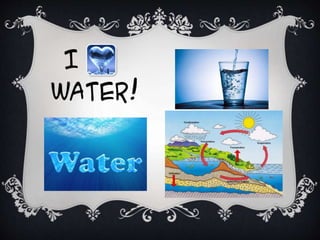
WATER
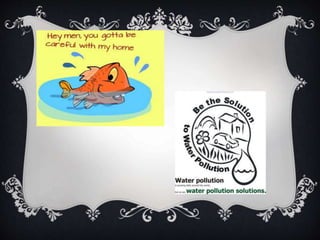
 The specific contaminants leading to pollution in water include a
wide spectrum of chemicals, pathogens and physical changes such as
elevated temperature and discoloration. High concentrations of
naturally occurring substances can have negative impacts on aquatic
flora and fauna.
 Contaminants can be organic and inorganic substances.
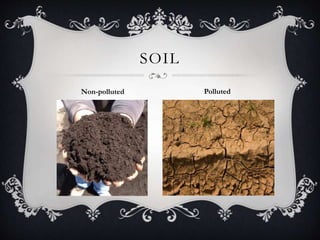
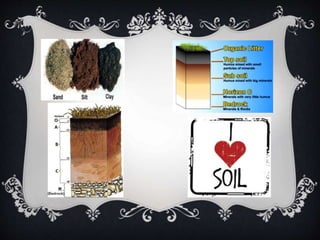
SOIL
Non-polluted Polluted
SOIL
 Soil can be polluted in many ways. This happens because chemicals are spilt by leak or spill.
Soil may be lost too.
 Heavy wind or rain that may occur at any time will carry the soil or flood by too rain.
 Sometimes this is even polluted by human made chemicals,. It is usually caused by industries,
or improper disposal of waste.
 This is a list of what can cause this:
 Accidental Spills
 Acid rain
 Intensive farming
 Deforestation
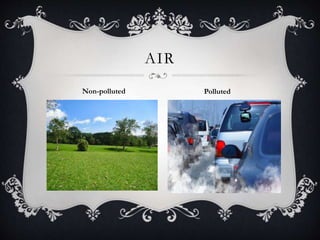
AIR
Non-polluted Polluted
AIR
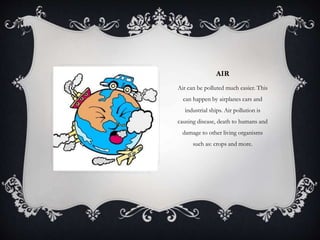
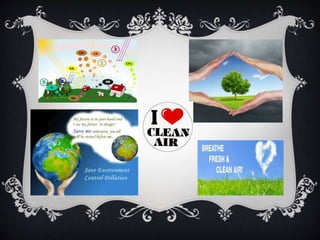
Air can be polluted much easier. This
can happen by airplanes cars and
industrial ships. Air pollution is
causing disease, death to humans and
damage to other living organisms
such as: crops and more.
AIR
 Air pollutant is a substance in the air that can have unfriendly effects on
humans and the ecosystem. The substance can be solid, liquid, or gas. A
pollutant can be of natural origin or human-made. Pollutants are classified as
primary or secondary. Primary pollutants are usually produced from a process,
such as ash from a volcanic eruption. Secondary pollutants indirectly emitted.
Rather, they form in the air when primary pollutants react or interact. Some
pollutants may be both primary and secondary: they are both emitted directly
and formed from other primary pollutants.
THE END
Kimberly Stellini
Tania Debrincat

Air, water and soil pollution

  • 1.
    AIR, WATER ANDSOIL POLLUTION eTeens Think Twice eTwinning Project
  • 2.
    POLLUTION Pollution introduces types ofcontaminants into the natural environment that causes unfriendly change. It can be of two types: chemical substance or energy.
  • 4.
  • 5.
    WATER  The specificcontaminants leading to pollution in water include a wide spectrum of chemicals, pathogens and physical changes such as elevated temperature and discoloration. High concentrations of naturally occurring substances can have negative impacts on aquatic flora and fauna.  Contaminants can be organic and inorganic substances.
  • 8.
  • 9.
    SOIL  Soil canbe polluted in many ways. This happens because chemicals are spilt by leak or spill. Soil may be lost too.  Heavy wind or rain that may occur at any time will carry the soil or flood by too rain.  Sometimes this is even polluted by human made chemicals,. It is usually caused by industries, or improper disposal of waste.  This is a list of what can cause this:  Accidental Spills  Acid rain  Intensive farming  Deforestation
  • 11.
  • 12.
    AIR Air can bepolluted much easier. This can happen by airplanes cars and industrial ships. Air pollution is causing disease, death to humans and damage to other living organisms such as: crops and more.
  • 13.
    AIR  Air pollutantis a substance in the air that can have unfriendly effects on humans and the ecosystem. The substance can be solid, liquid, or gas. A pollutant can be of natural origin or human-made. Pollutants are classified as primary or secondary. Primary pollutants are usually produced from a process, such as ash from a volcanic eruption. Secondary pollutants indirectly emitted. Rather, they form in the air when primary pollutants react or interact. Some pollutants may be both primary and secondary: they are both emitted directly and formed from other primary pollutants.
  • 15.