What is replication?
 Unique property of double stranded

molecules of DNA
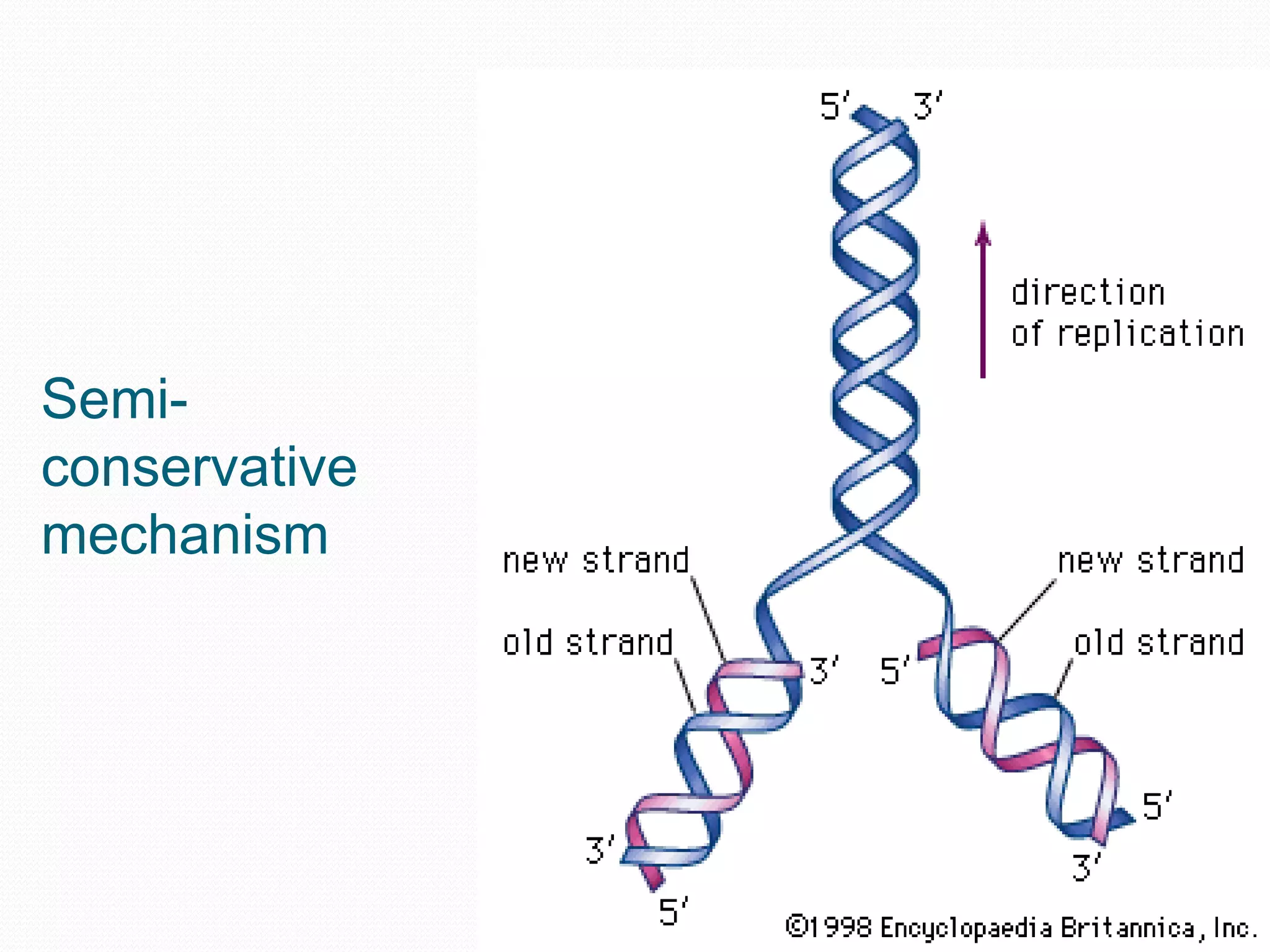
 Semi-conservative synthesis of DNA based
on a template
 Duplication of genetic material
 The main mechanism that assures
transmission of information from cell to cell
and from one generation – to another.
Why replication is required?
 Assures exact transmission of

information;
 Determines self-reproduction;
 Represents the support of heredity;
 Assures material linkages between
generation.
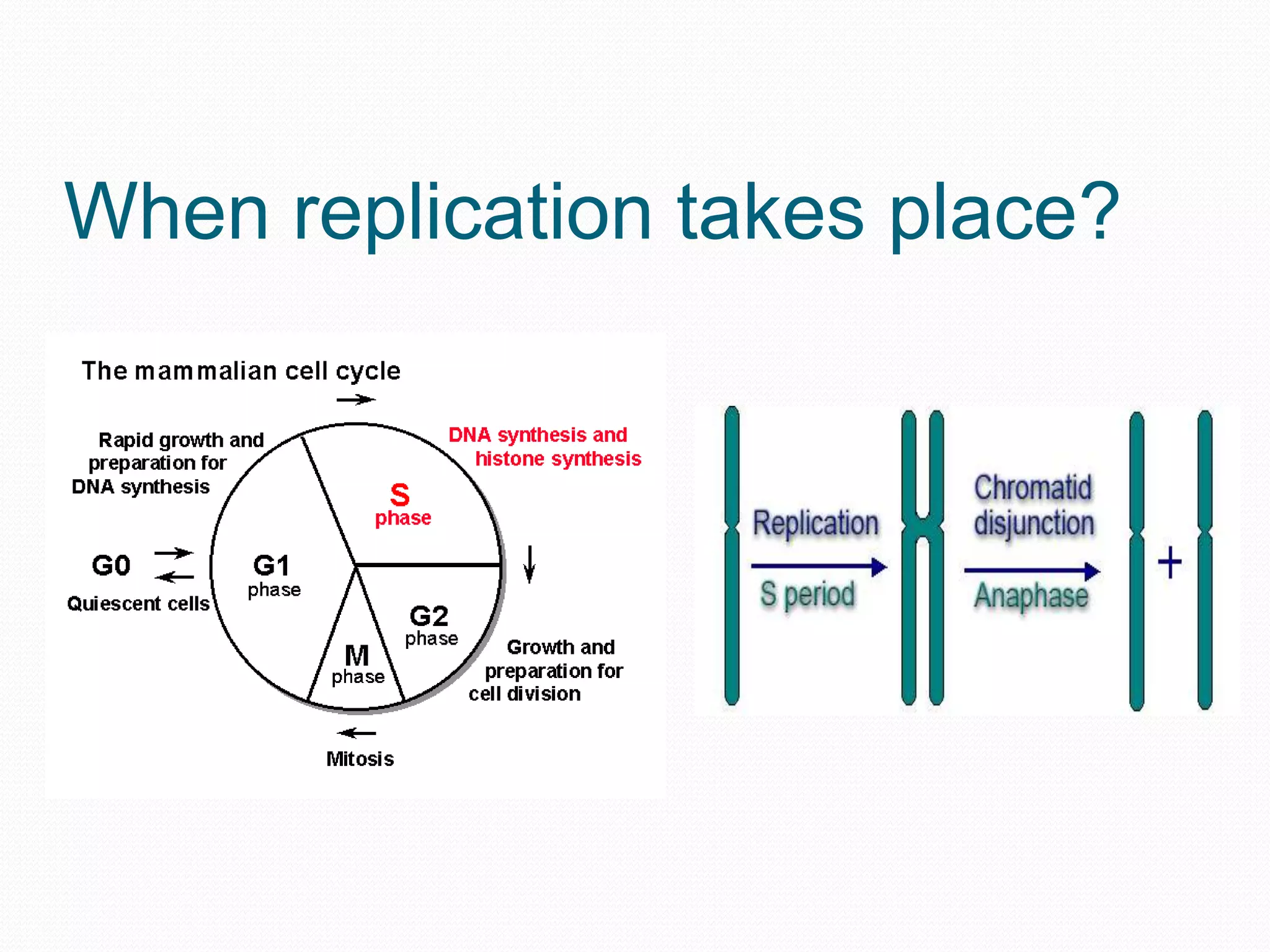
When replication takes place?
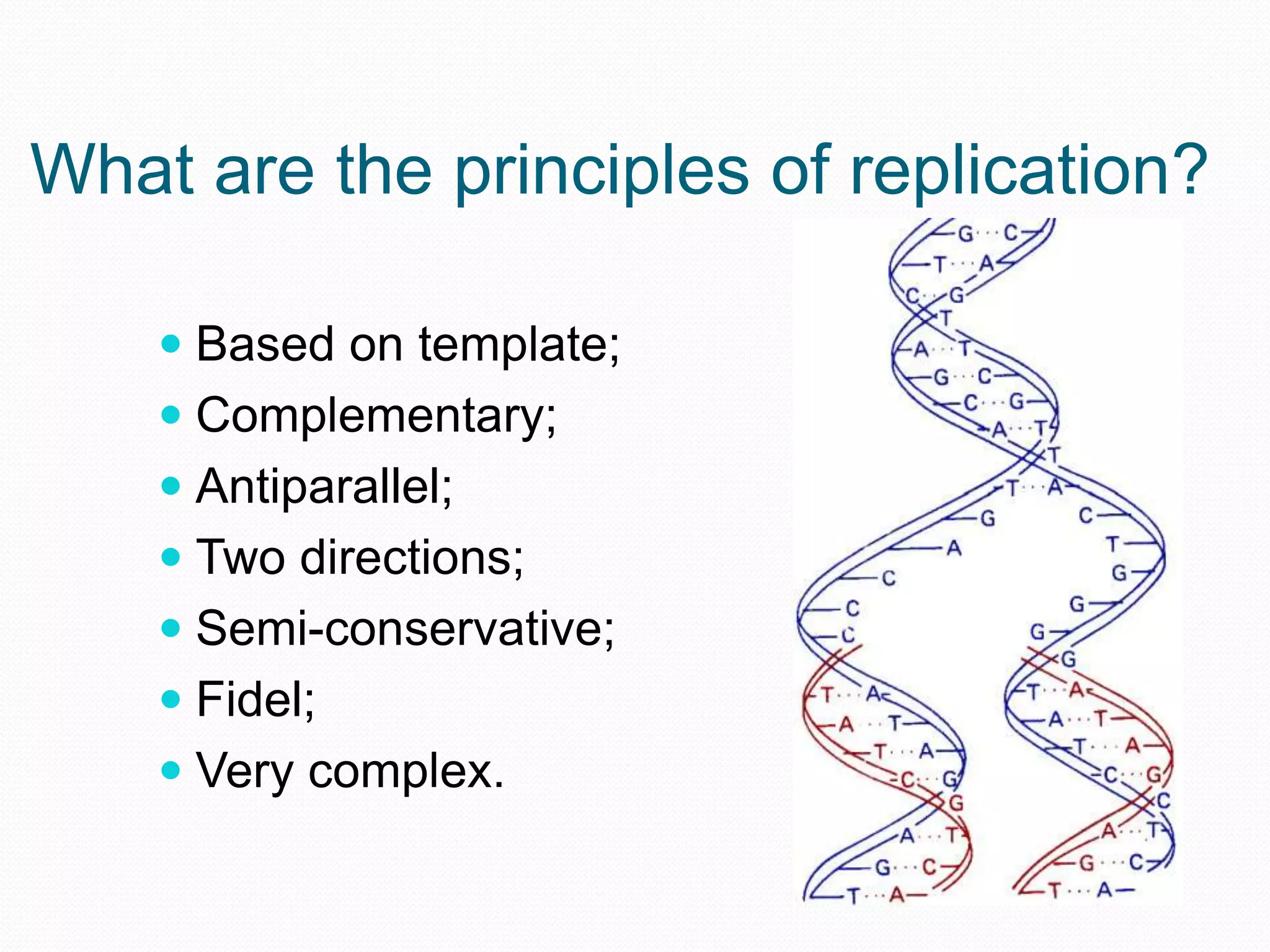
What are the principles of replication?
 Based on template;
 Complementary;

 Antiparallel;
 Two directions;
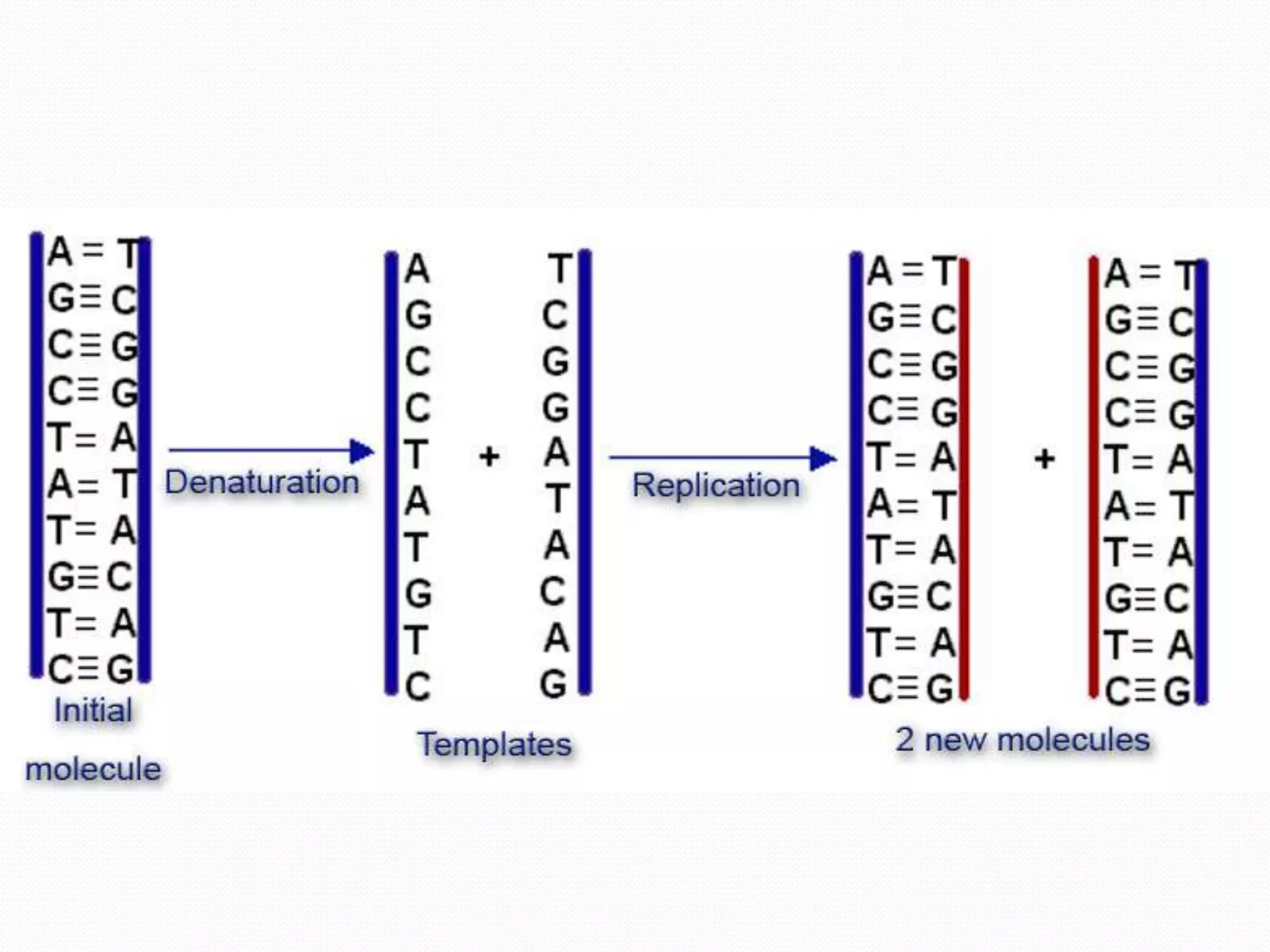
 Semi-conservative;

 Fidel;
 Very complex.
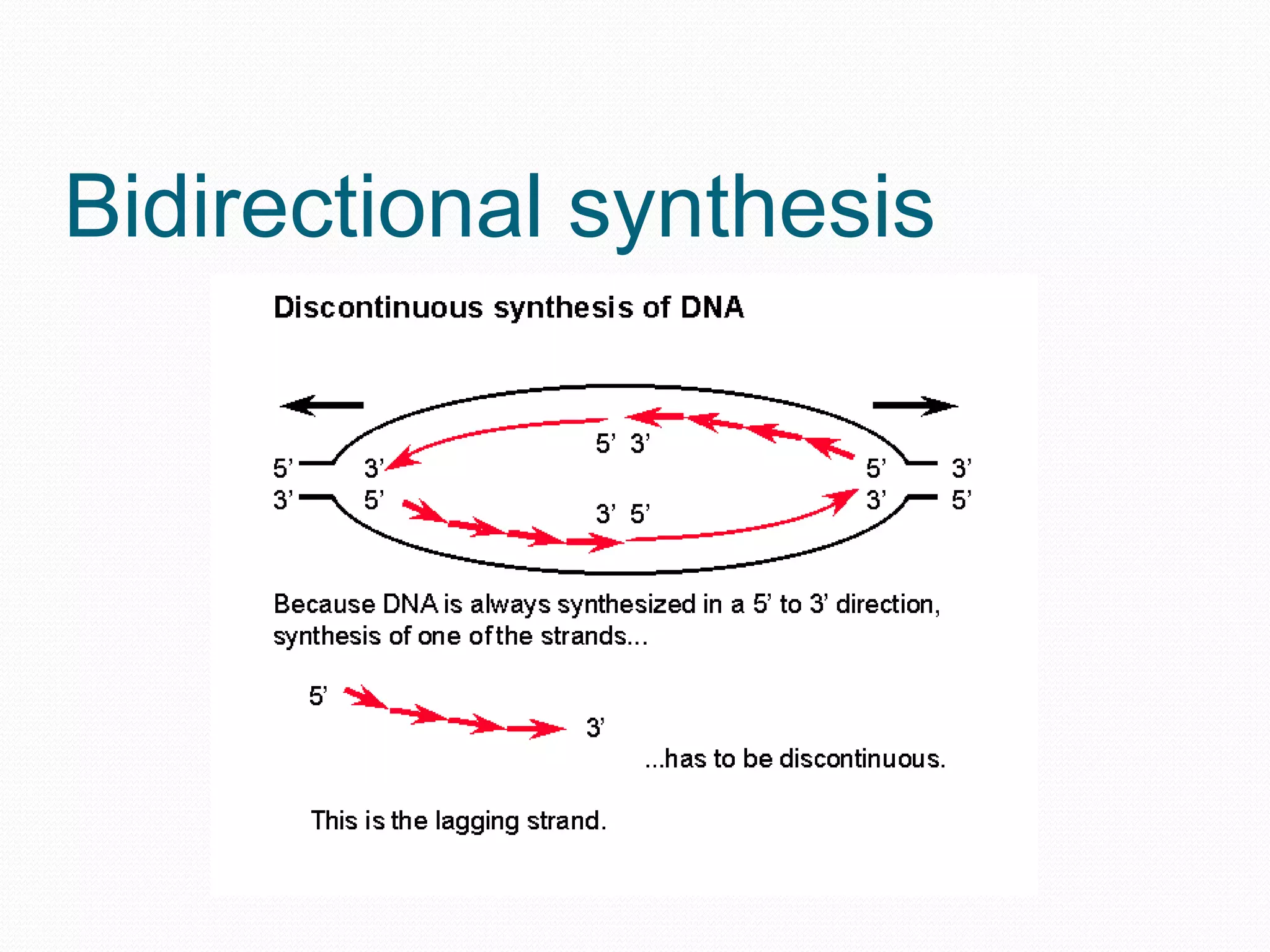
Bidirectional synthesis
Principles of replication:
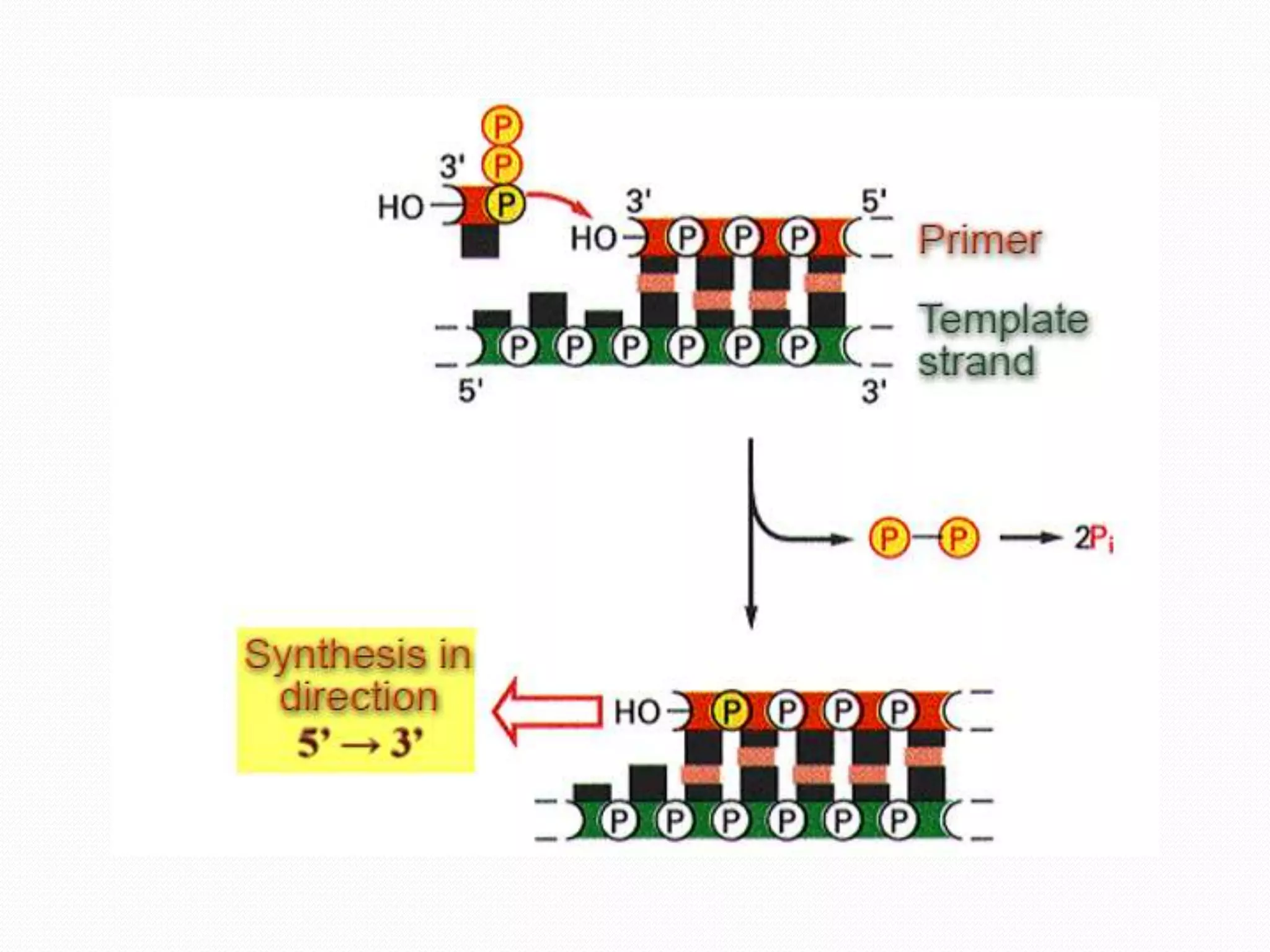
 The monomers (nucleotides) are added to 3’ of
one strand by enzyme DNA polymerase;
 Newly syntheses strand is complementary to
template strand;

 Synthesis is semi-conservative: each new
double-stranded molecule contains an old strand
(template strand) a new strand (daughter strand).
Semiconservative
mechanism
Components required for
replications
 DNA molecule - template
 Origin of replication – point ORI
 Enzymes
 Nucleotides (dNTP and NTP)
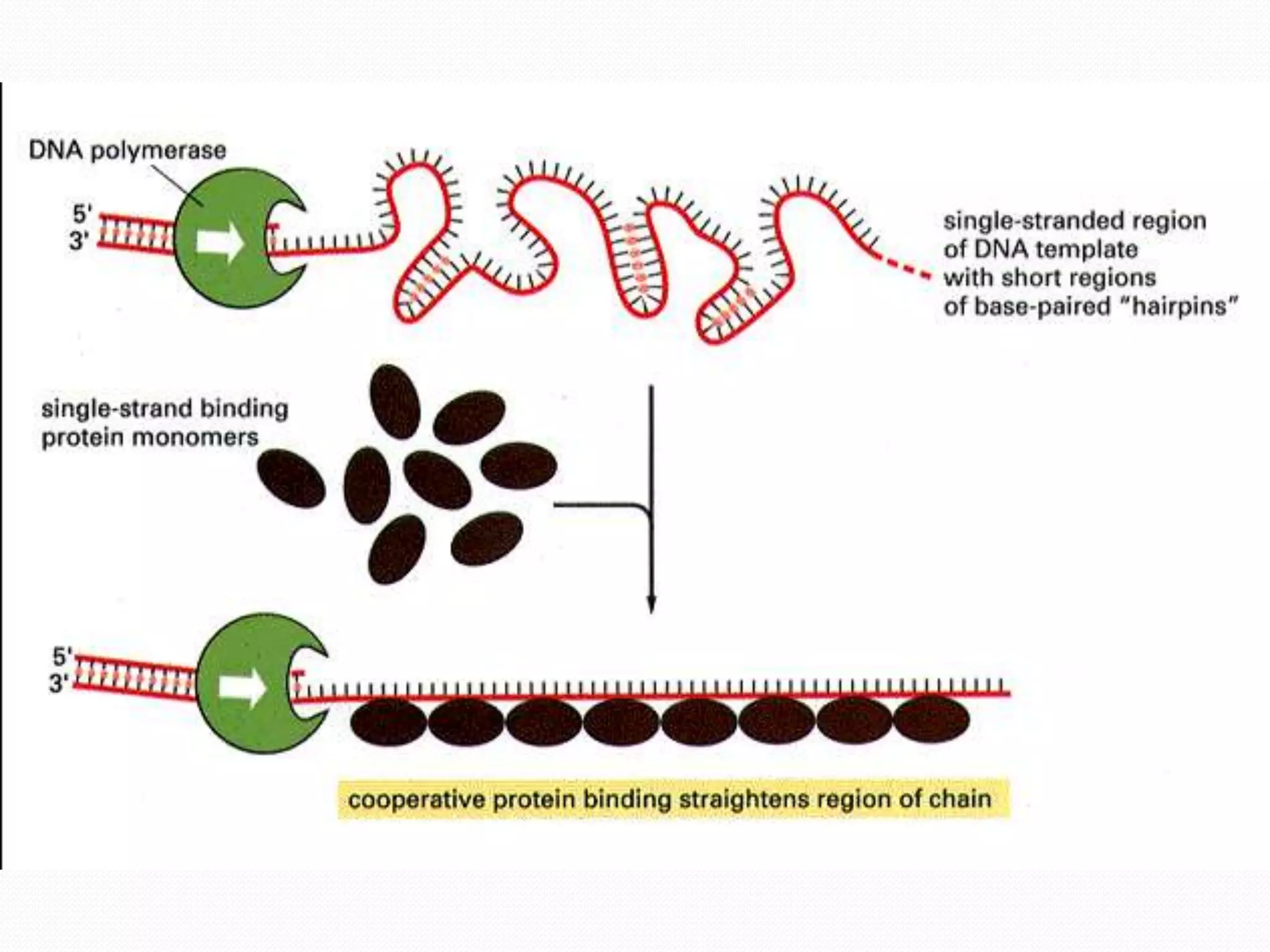
 SSB proteins
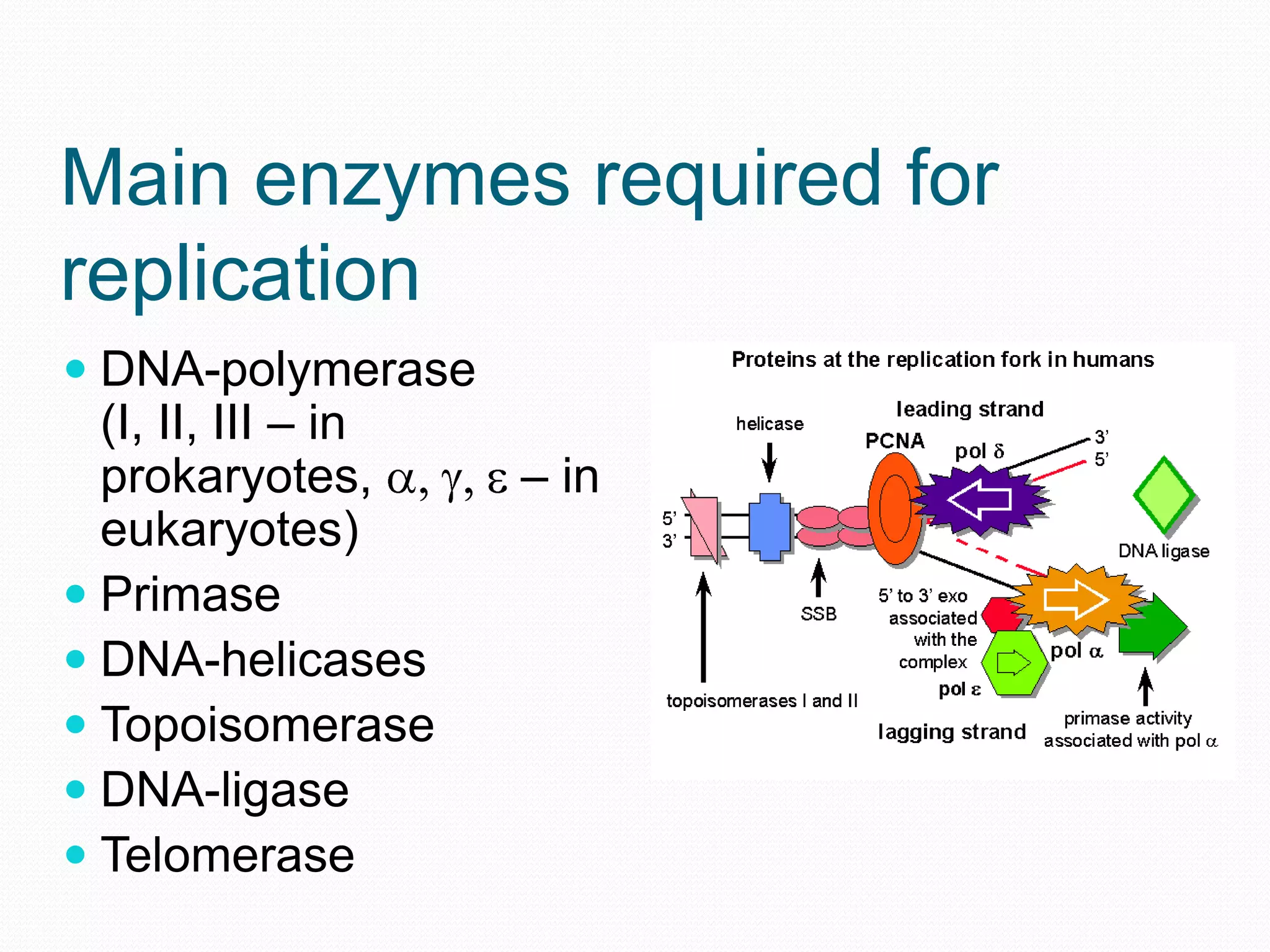
Main enzymes required for
replication
 DNA-polymerase
(I, II, III – in
prokaryotes,
– in
eukaryotes)
 Primase
 DNA-helicases
 Topoisomerase
 DNA-ligase
 Telomerase
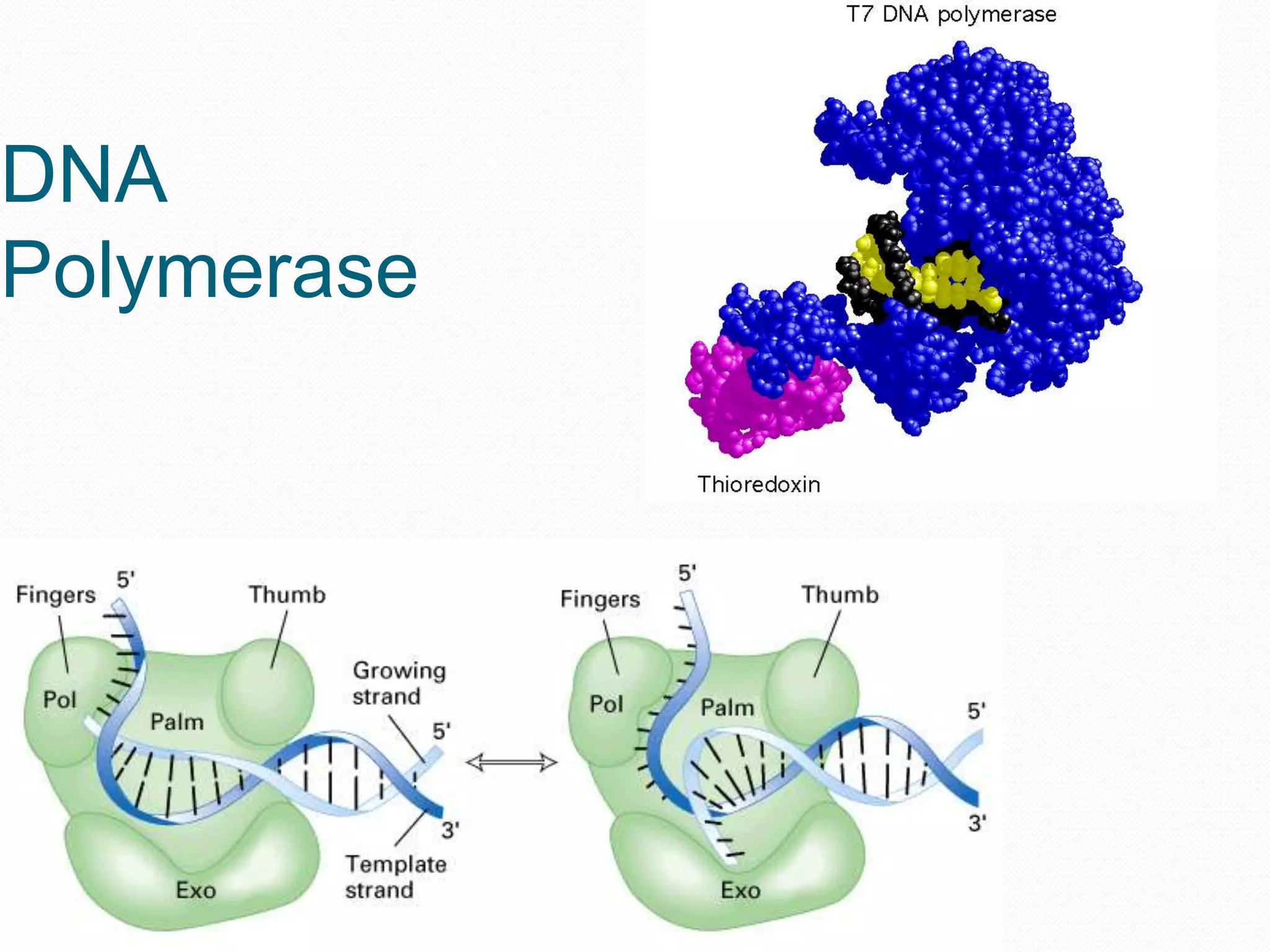
DNA
Polymerase
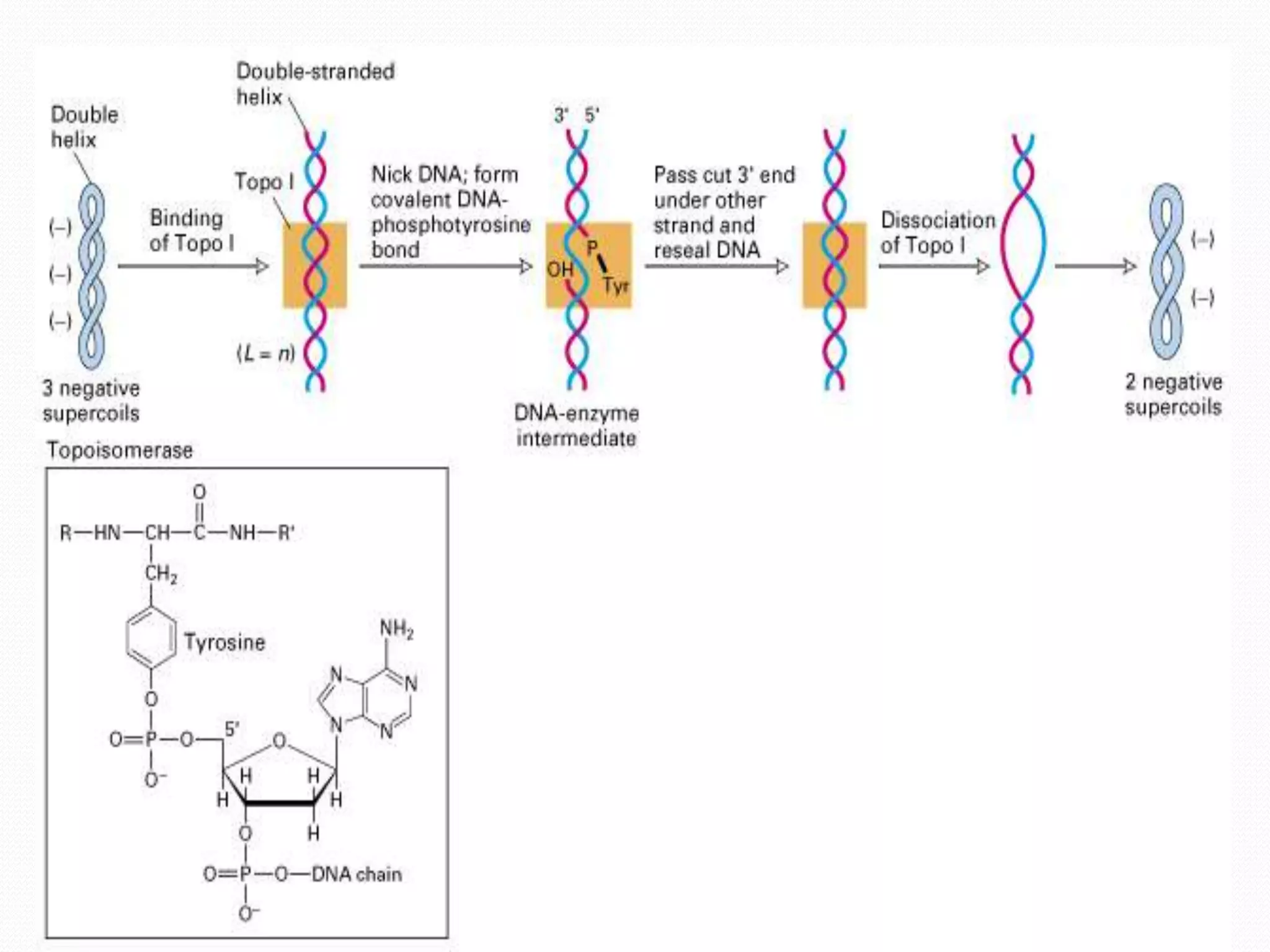
Topoisomerase
What are the main steps of
replication?
 Initiation
 Elongation
 Termination
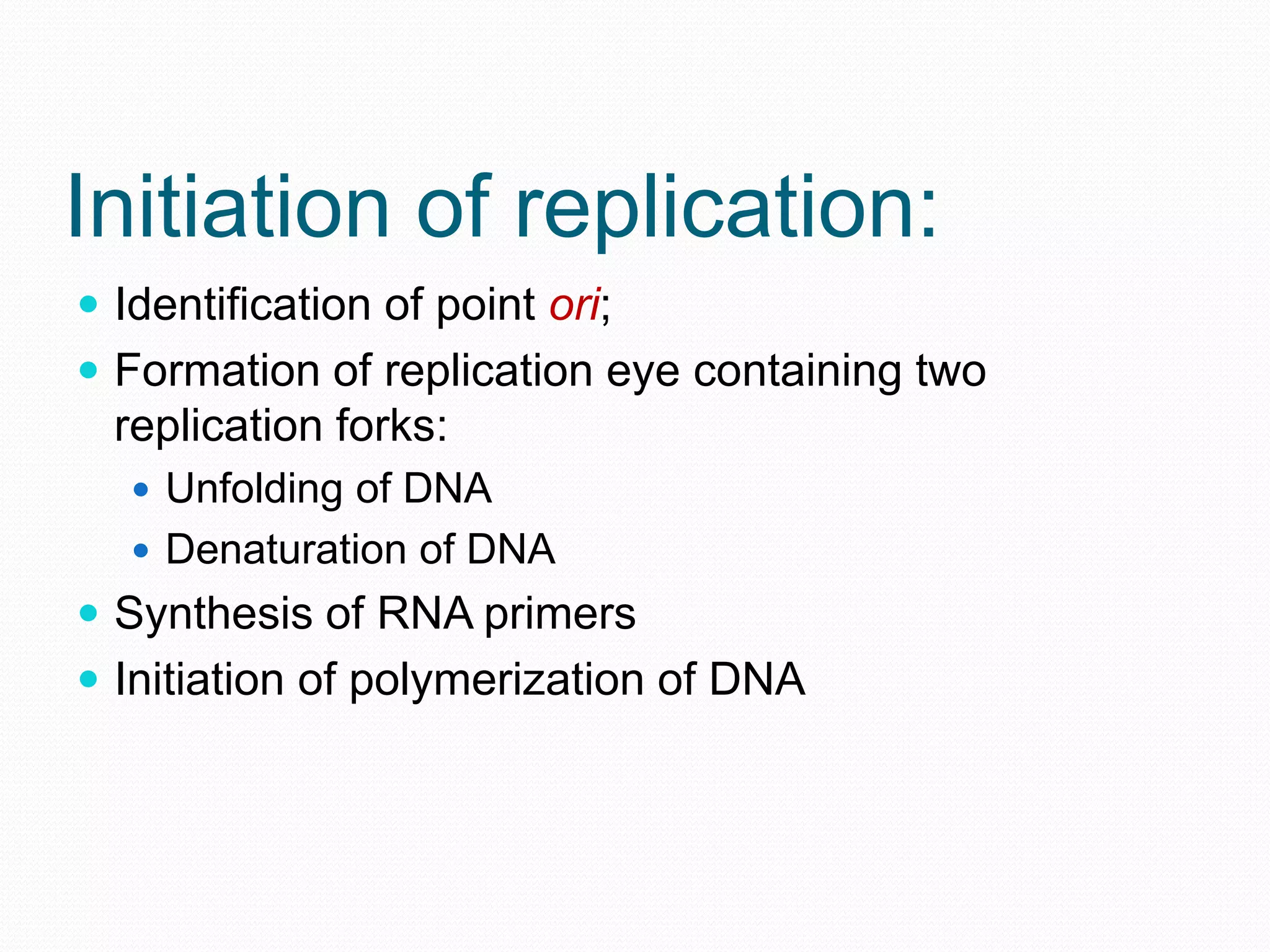
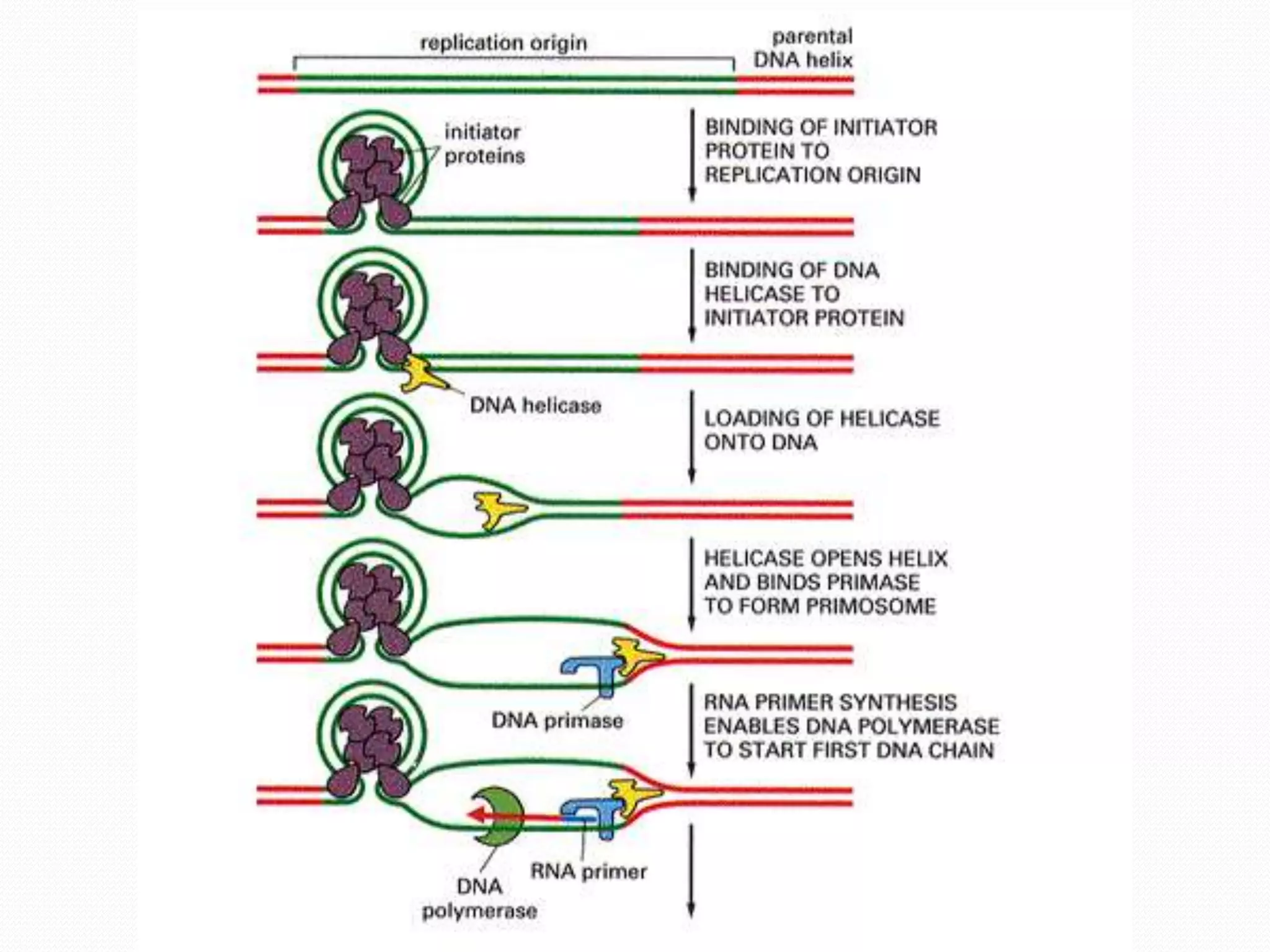
Initiation of replication:
 Identification of point ori;
 Formation of replication eye containing two

replication forks:
 Unfolding of DNA
 Denaturation of DNA

 Synthesis of RNA primers
 Initiation of polymerization of DNA
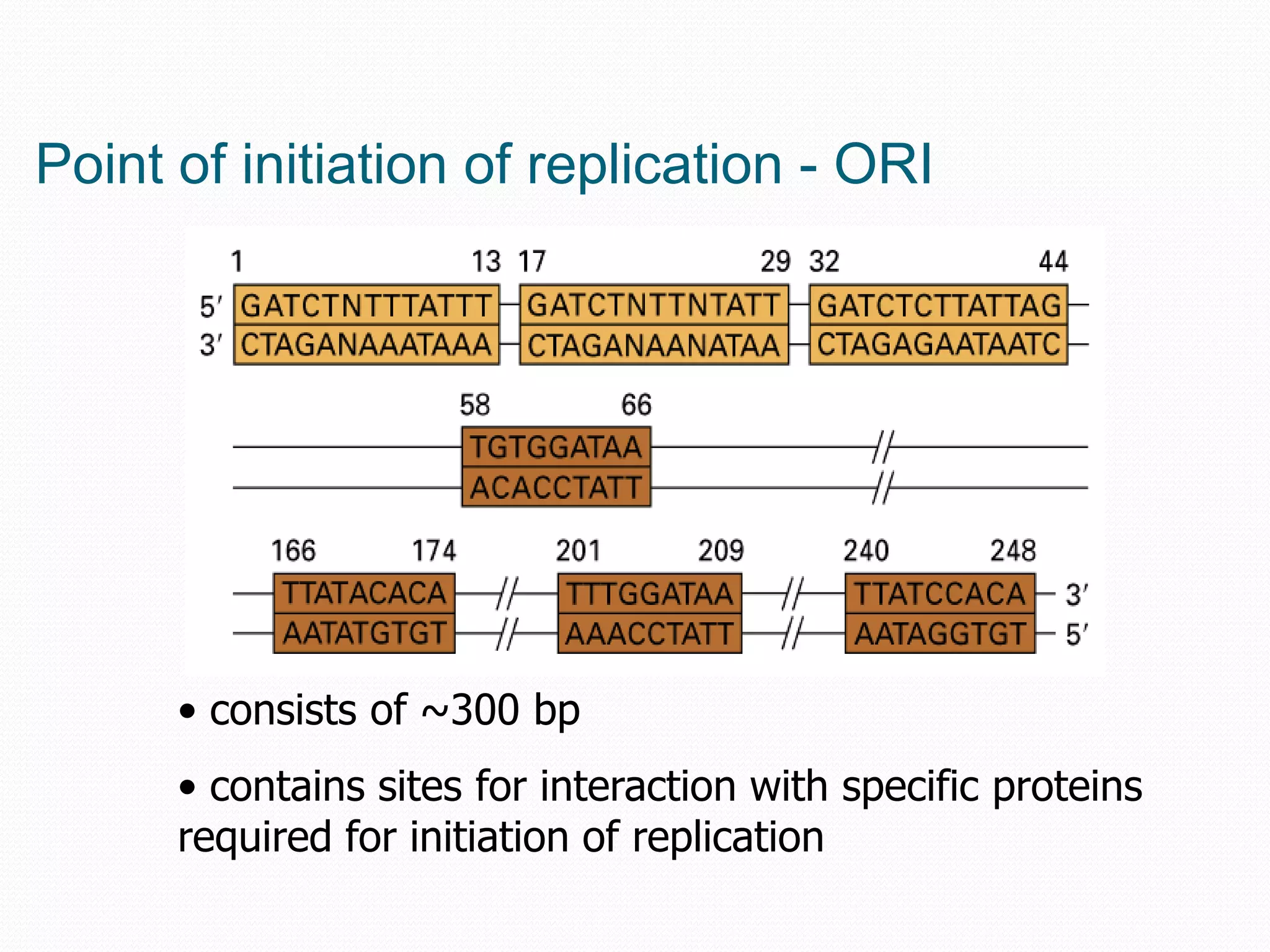
Point of initiation of replication - ORI

• consists of ~300 bp

• contains sites for interaction with specific proteins
required for initiation of replication
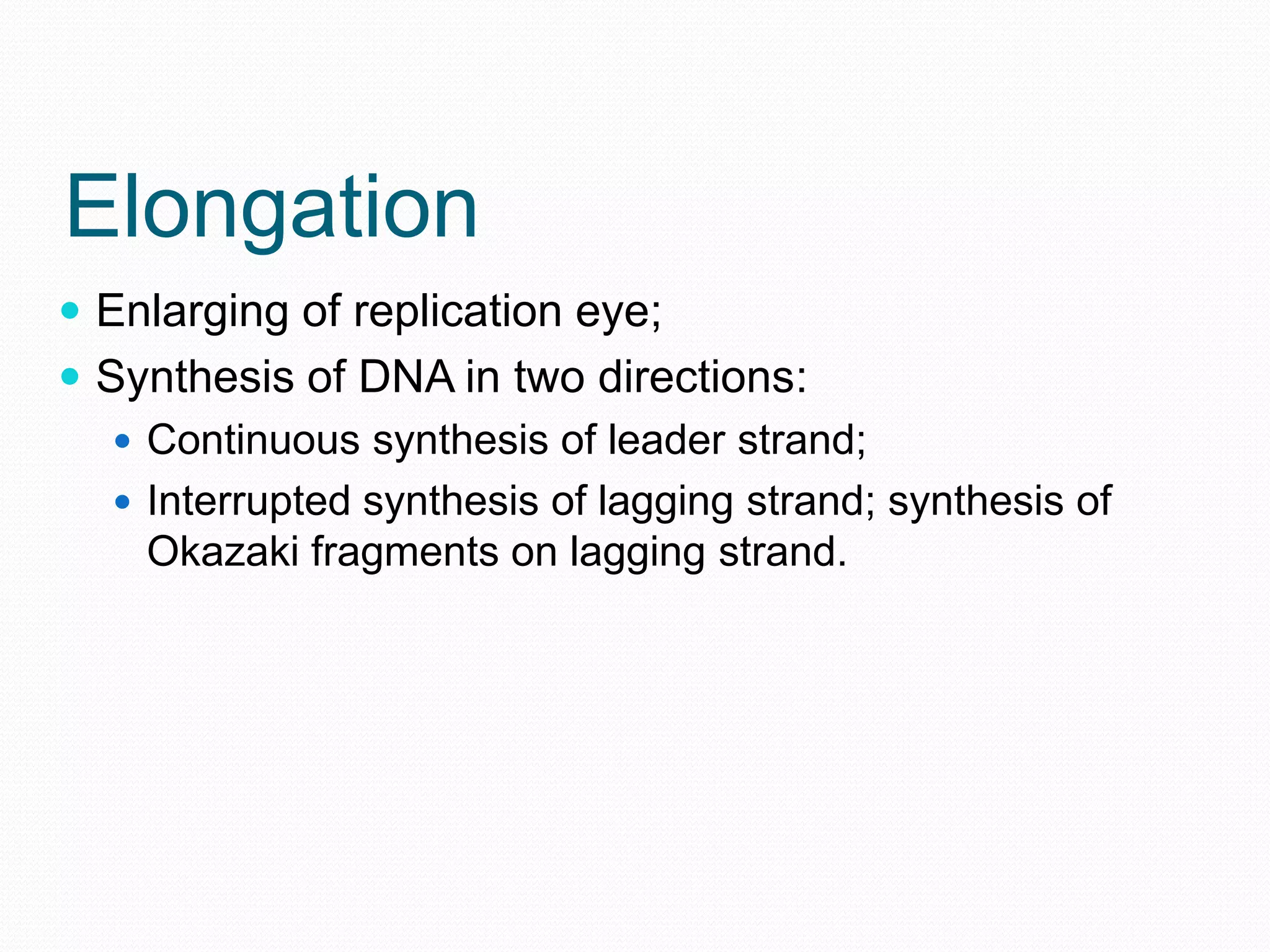
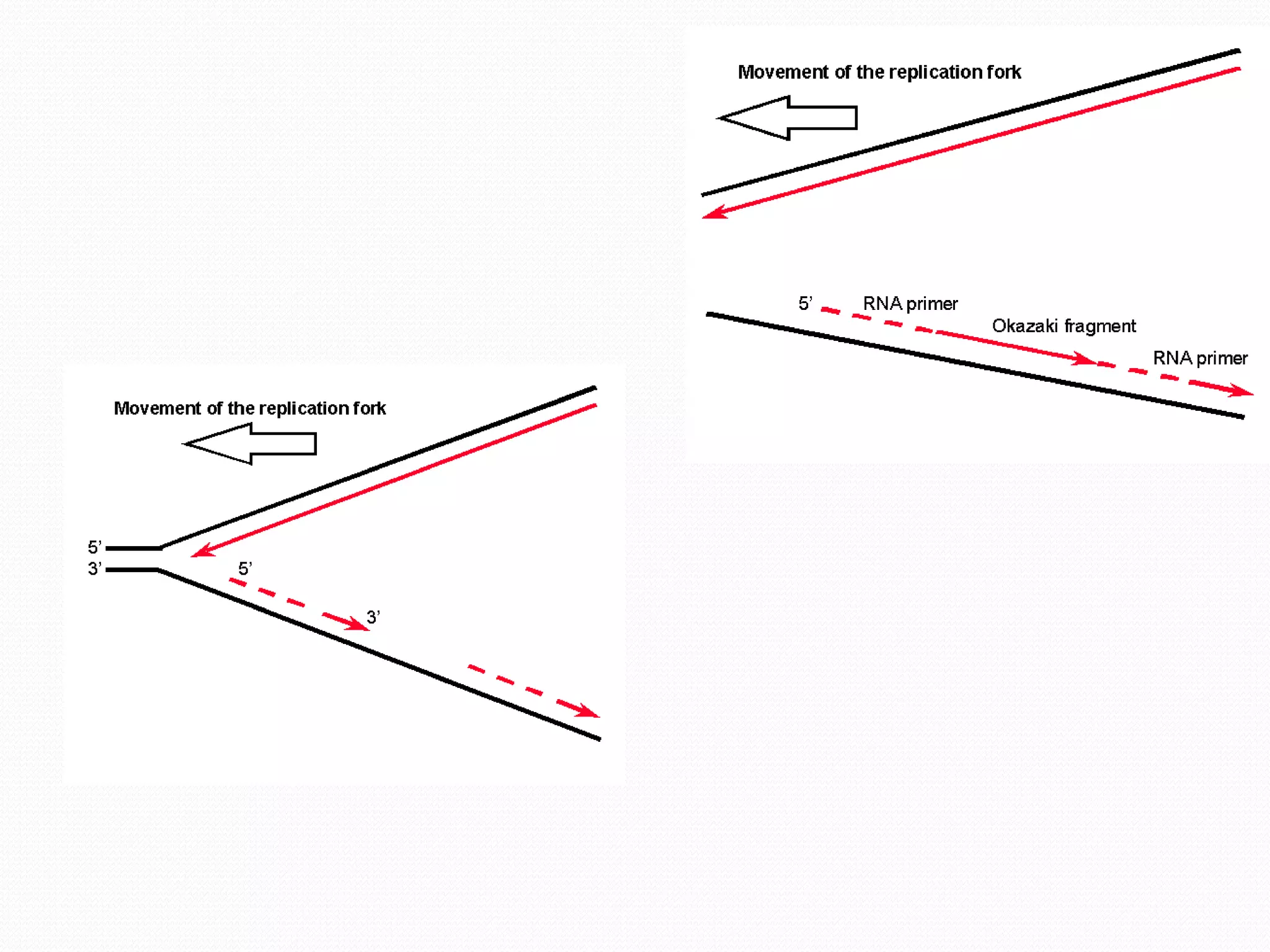
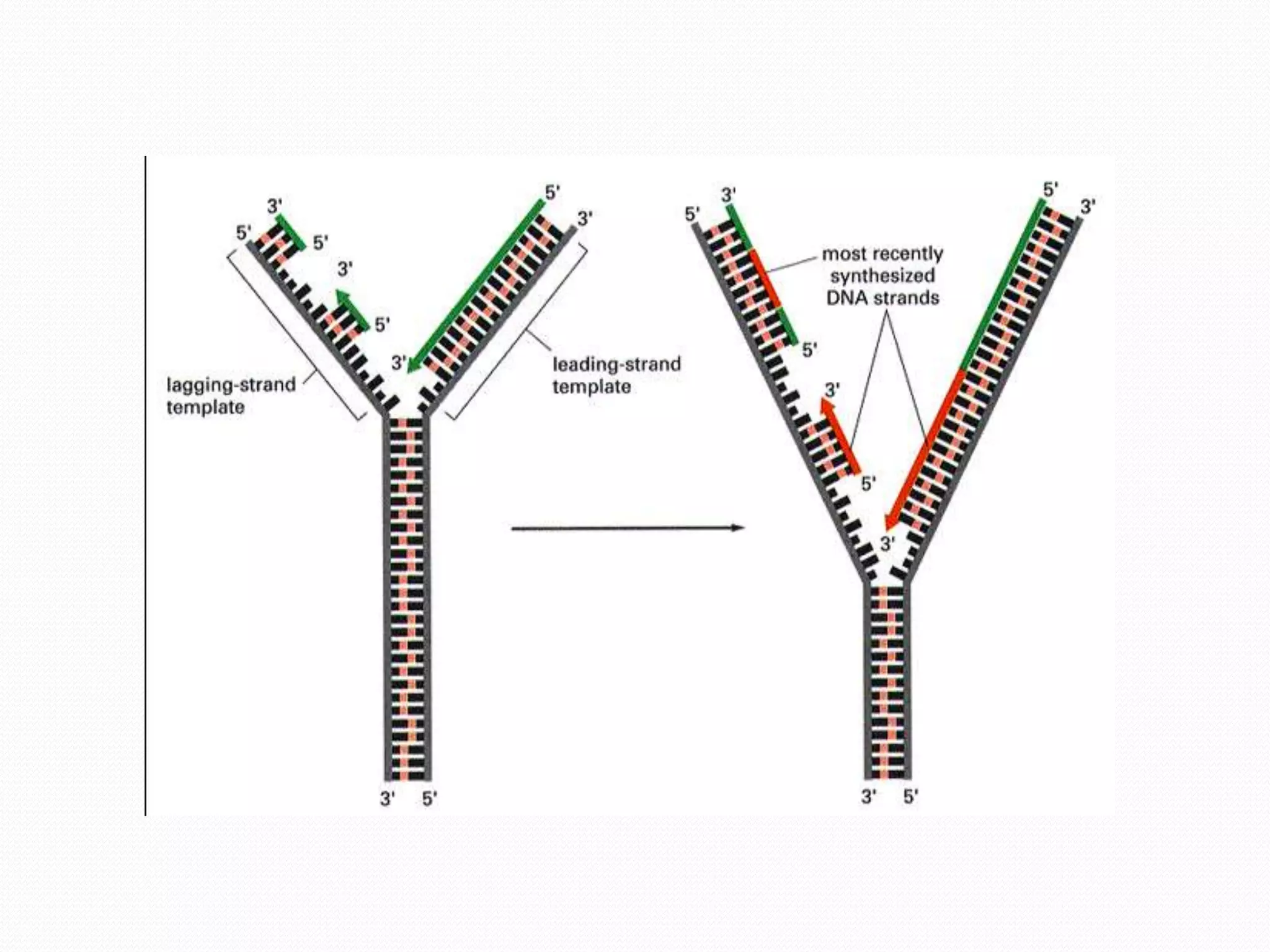
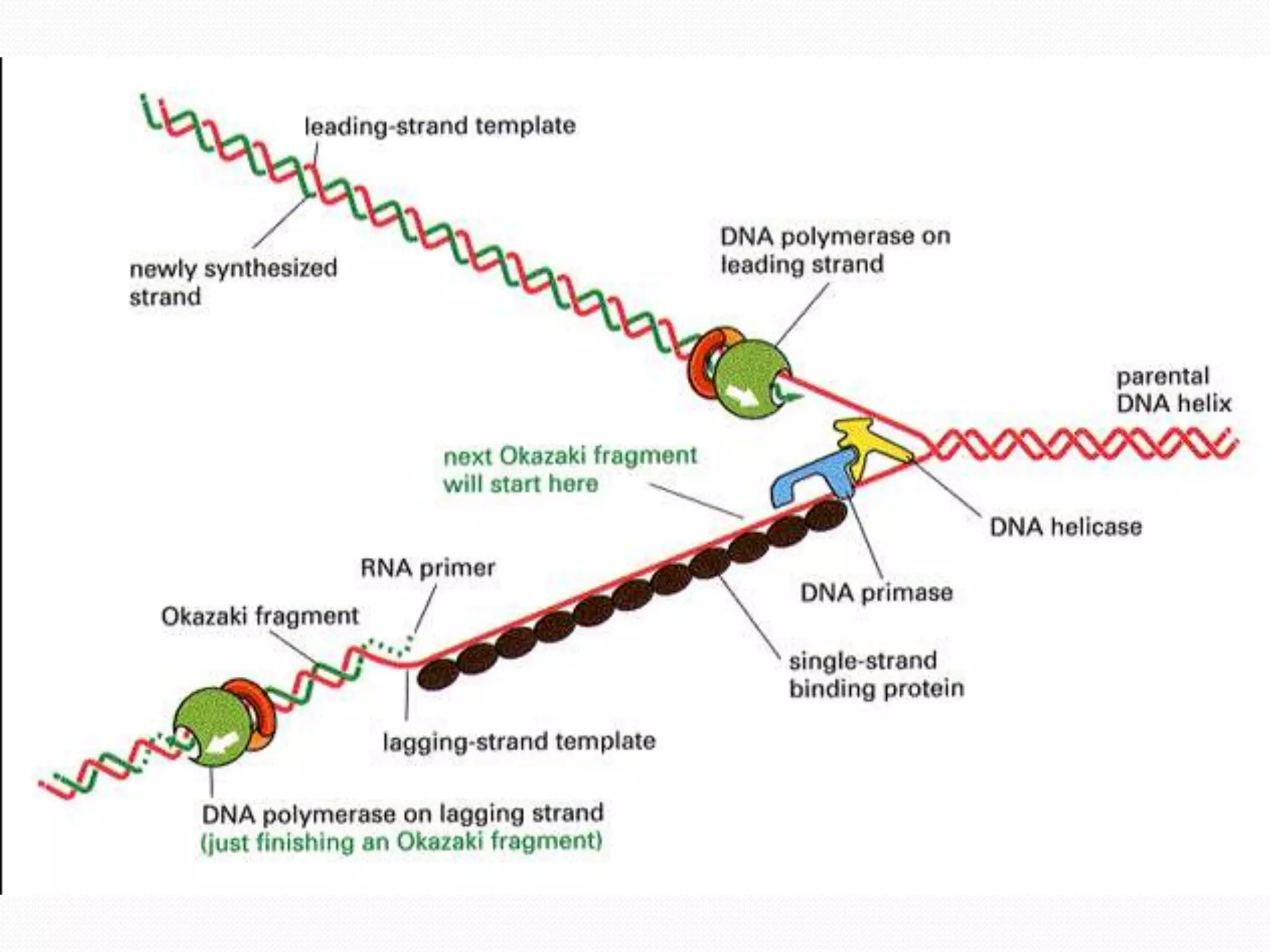
Elongation
 Enlarging of replication eye;
 Synthesis of DNA in two directions:
 Continuous synthesis of leader strand;
 Interrupted synthesis of lagging strand; synthesis of
Okazaki fragments on lagging strand.
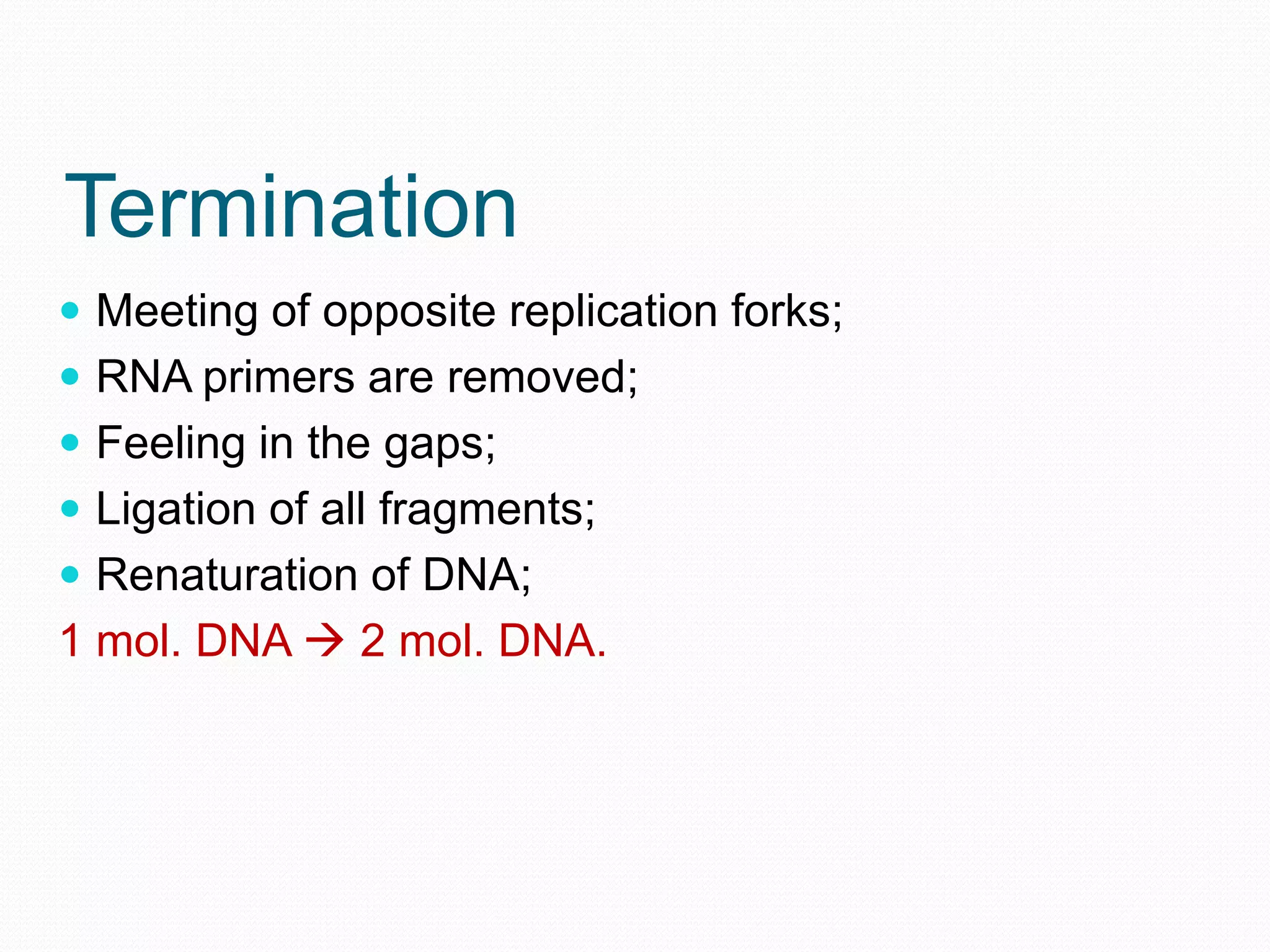
Termination
 Meeting of opposite replication forks;
 RNA primers are removed;
 Feeling in the gaps;
 Ligation of all fragments;
 Renaturation of DNA;

1 mol. DNA  2 mol. DNA.
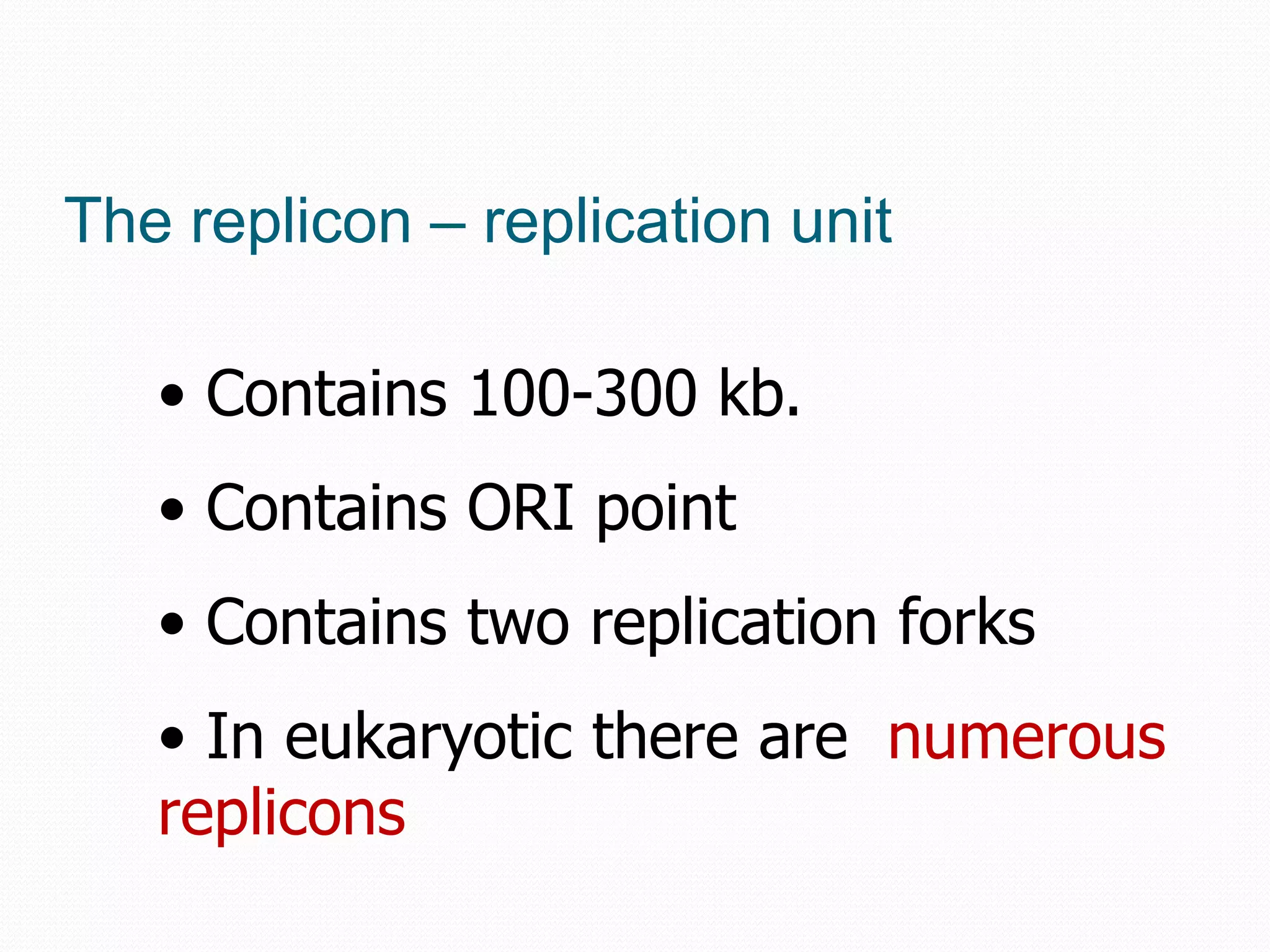
The replicon – replication unit
• Contains 100-300 kb.
• Contains ORI point
• Contains two replication forks
• In eukaryotic there are numerous
replicons
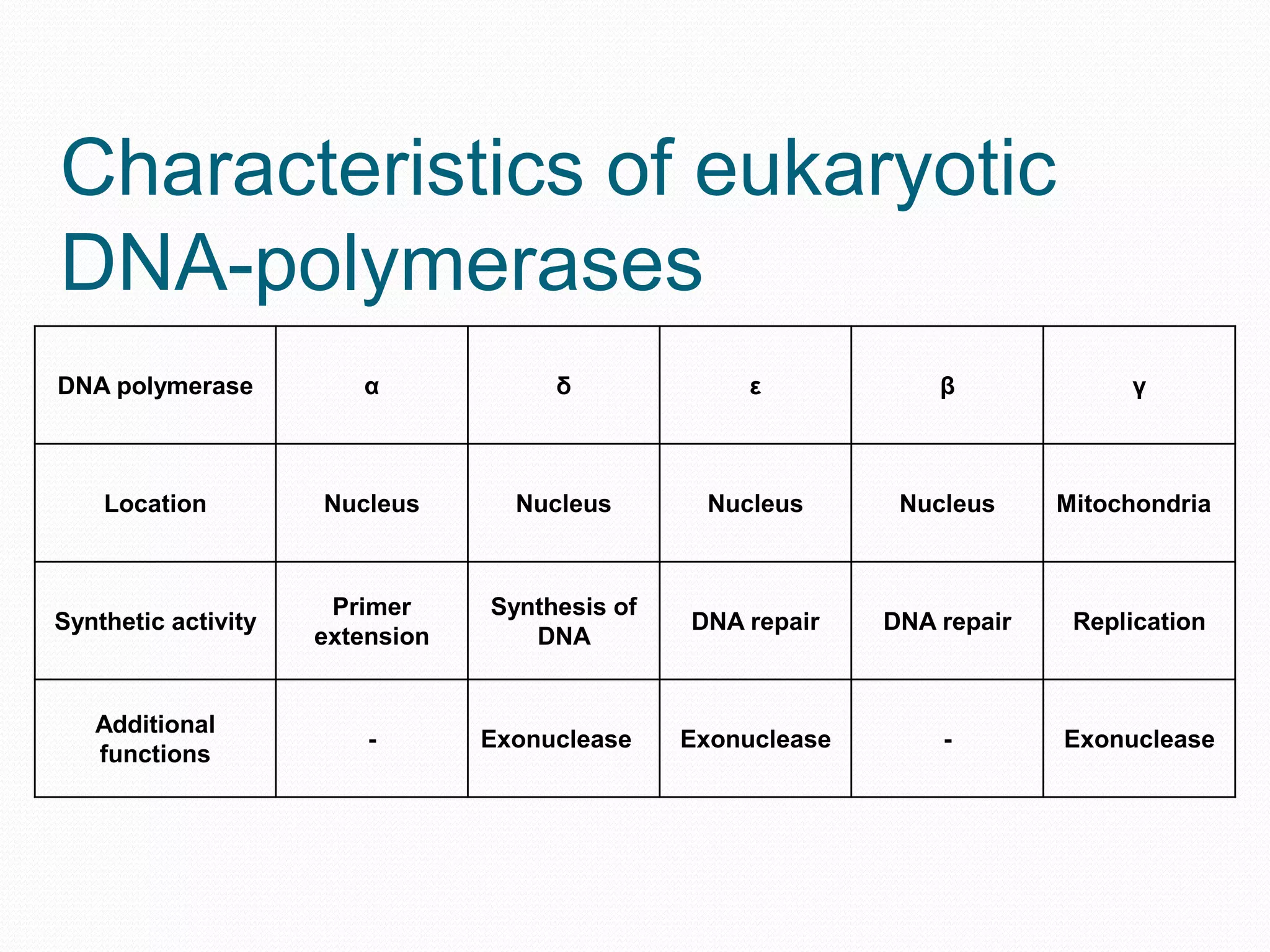
Characteristics of eukaryotic
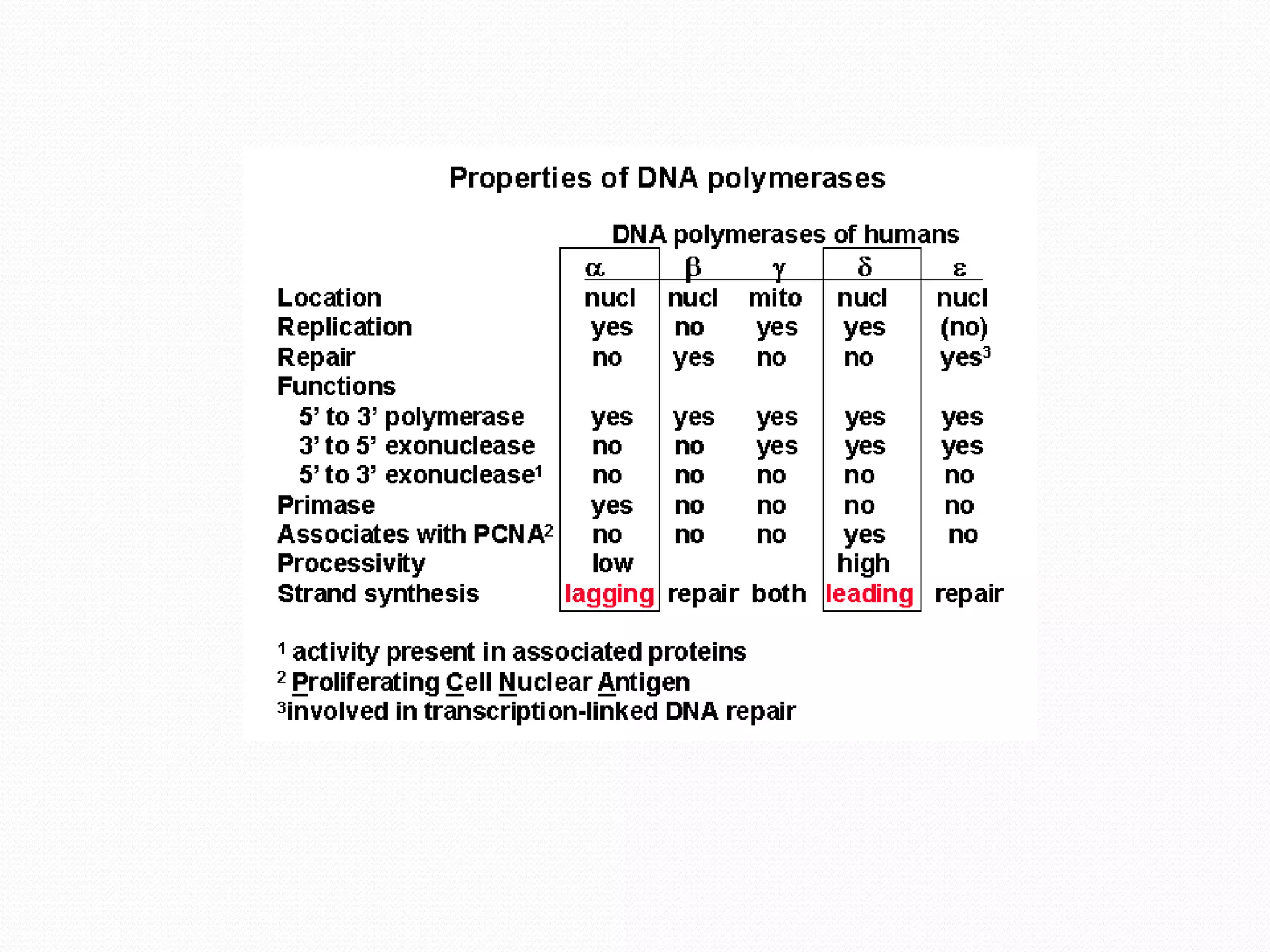
DNA-polymerases
DNA polymerase

α

δ

ε

β

γ

Location

Nucleus

Nucleus

Nucleus

Nucleus

Mitochondria

Synthetic activity

Primer
extension

Synthesis of
DNA

DNA repair

DNA repair

Replication

Additional
functions

-

Exonuclease

-

Exonuclease

Exonuclease
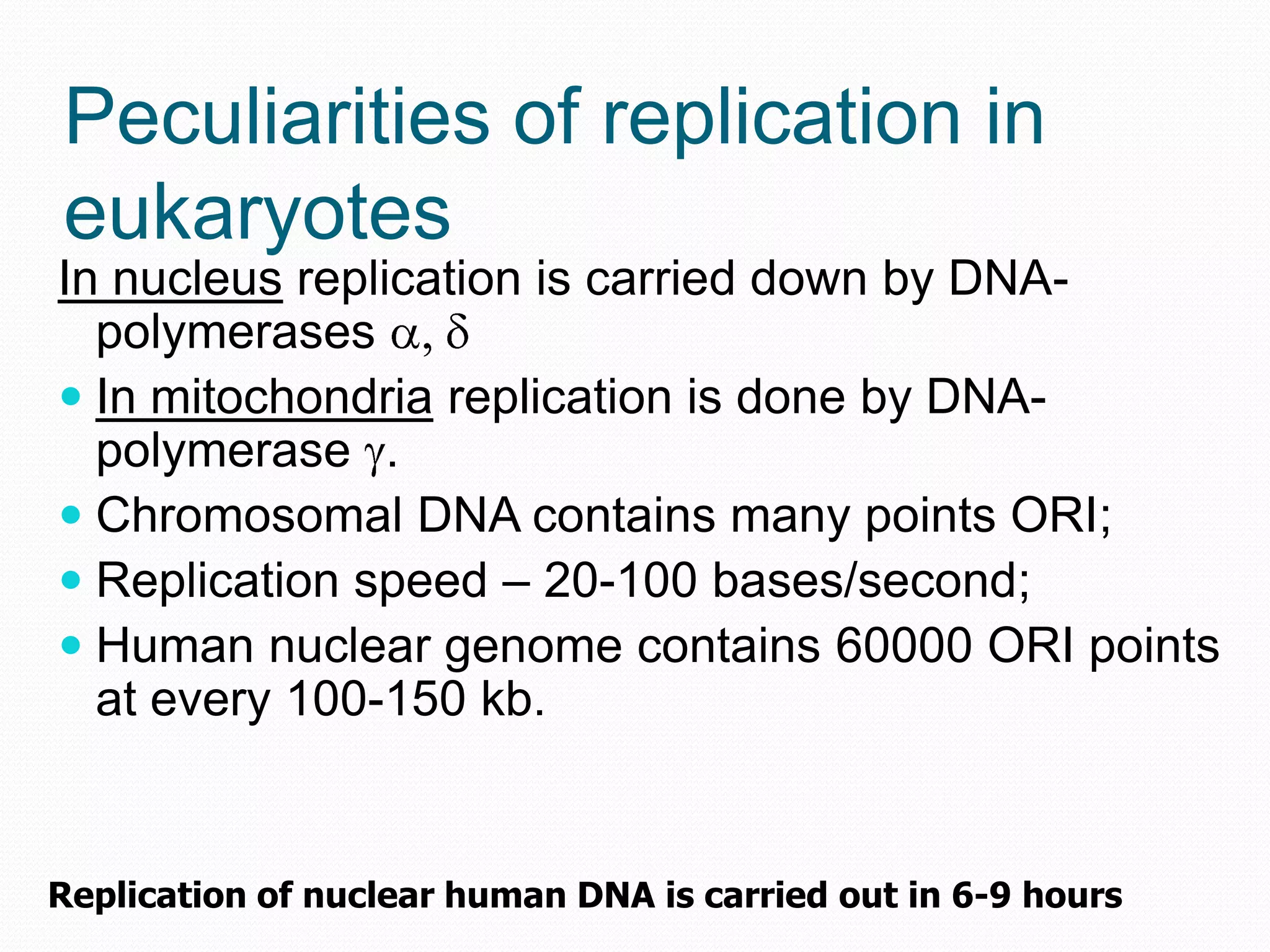
Peculiarities of replication in
eukaryotes
In nucleus replication is carried down by DNApolymerases
 In mitochondria replication is done by DNApolymerase .
 Chromosomal DNA contains many points ORI;
 Replication speed – 20-100 bases/second;
 Human nuclear genome contains 60000 ORI points
at every 100-150 kb.

Replication of nuclear human DNA is carried out in 6-9 hours
Example:
 If 1st chromosome will contain 1 ori

point, replication will take place during 15 hours:
 Contains 260 000 000 bp;
 Each replication fork will contain 130 000 000
bp
 Replication speed - 100 bp/sec;
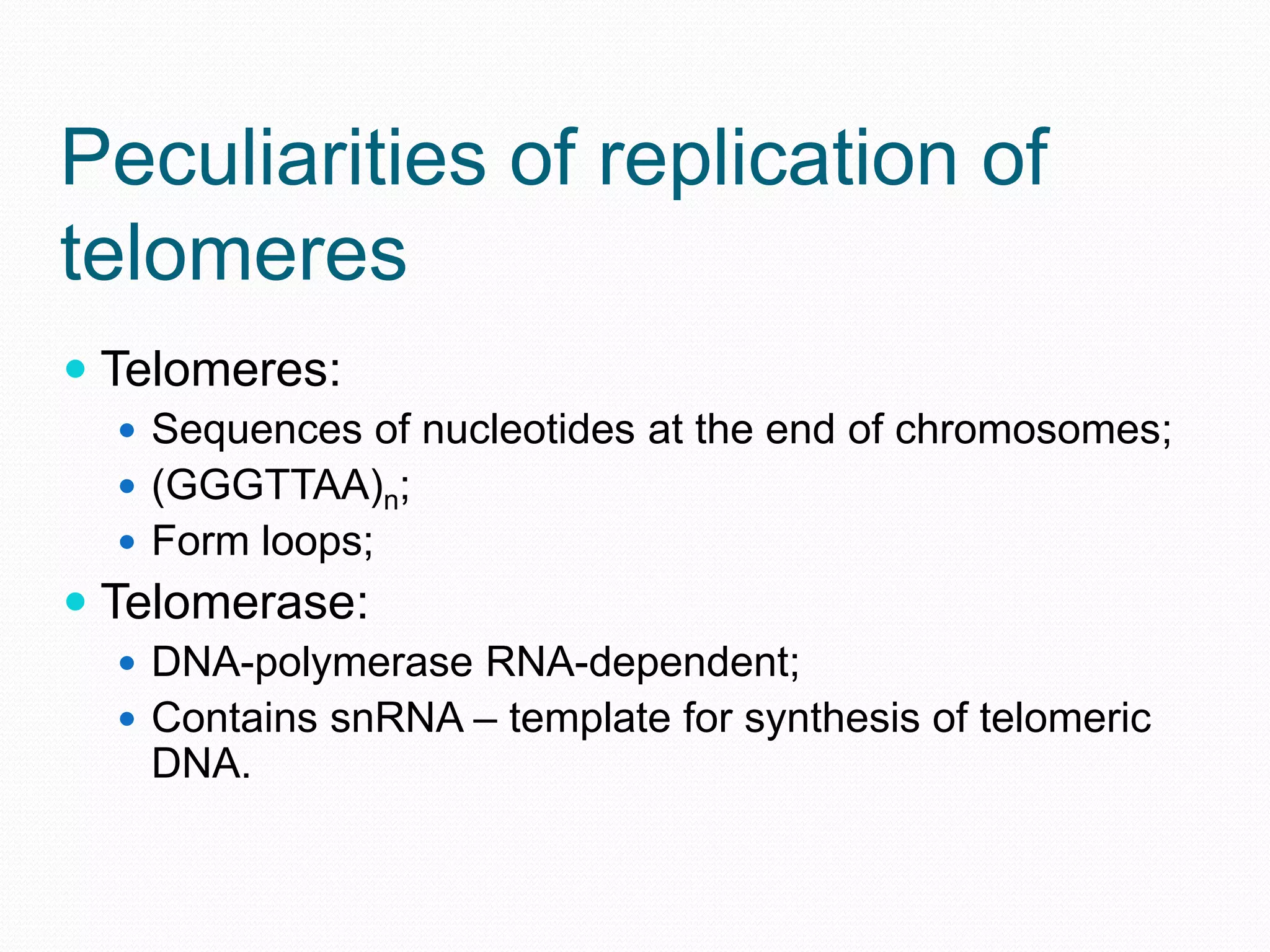
Peculiarities of replication of
telomeres
 Telomeres:
 Sequences of nucleotides at the end of chromosomes;
 (GGGTTAA)n;
 Form loops;

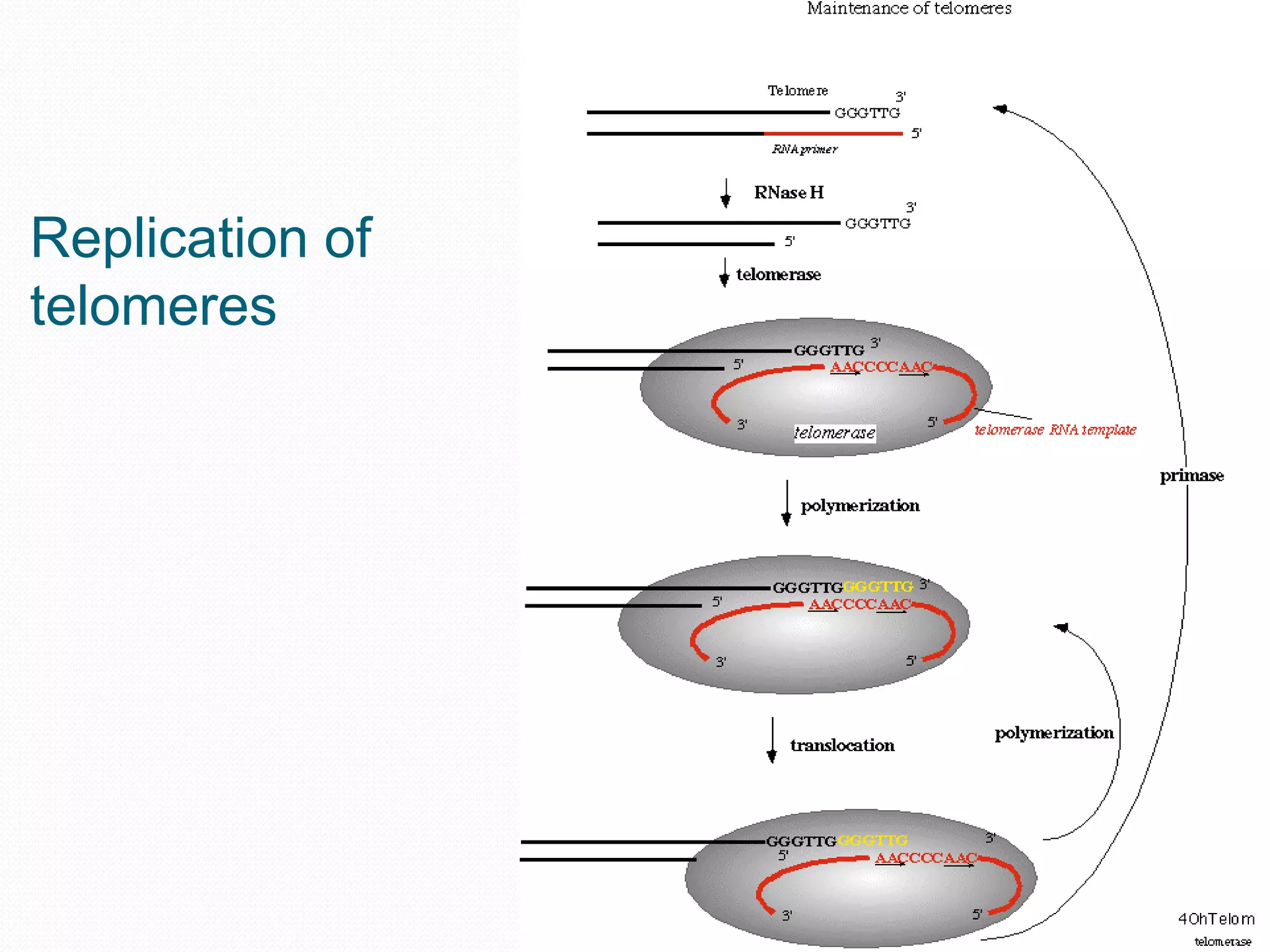
 Telomerase:
 DNA-polymerase RNA-dependent;
 Contains snRNA – template for synthesis of telomeric

DNA.
Replication of
telomeres
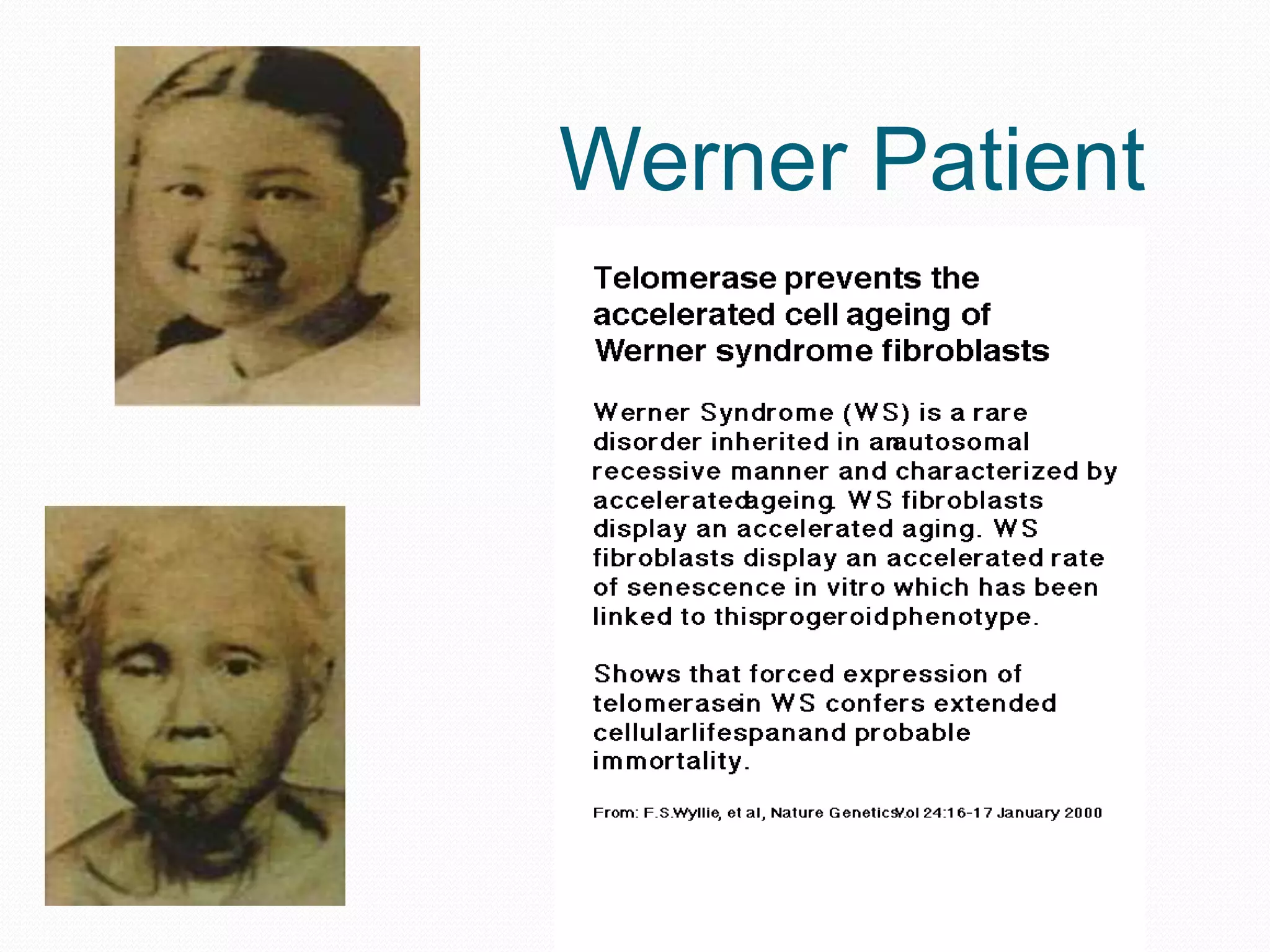
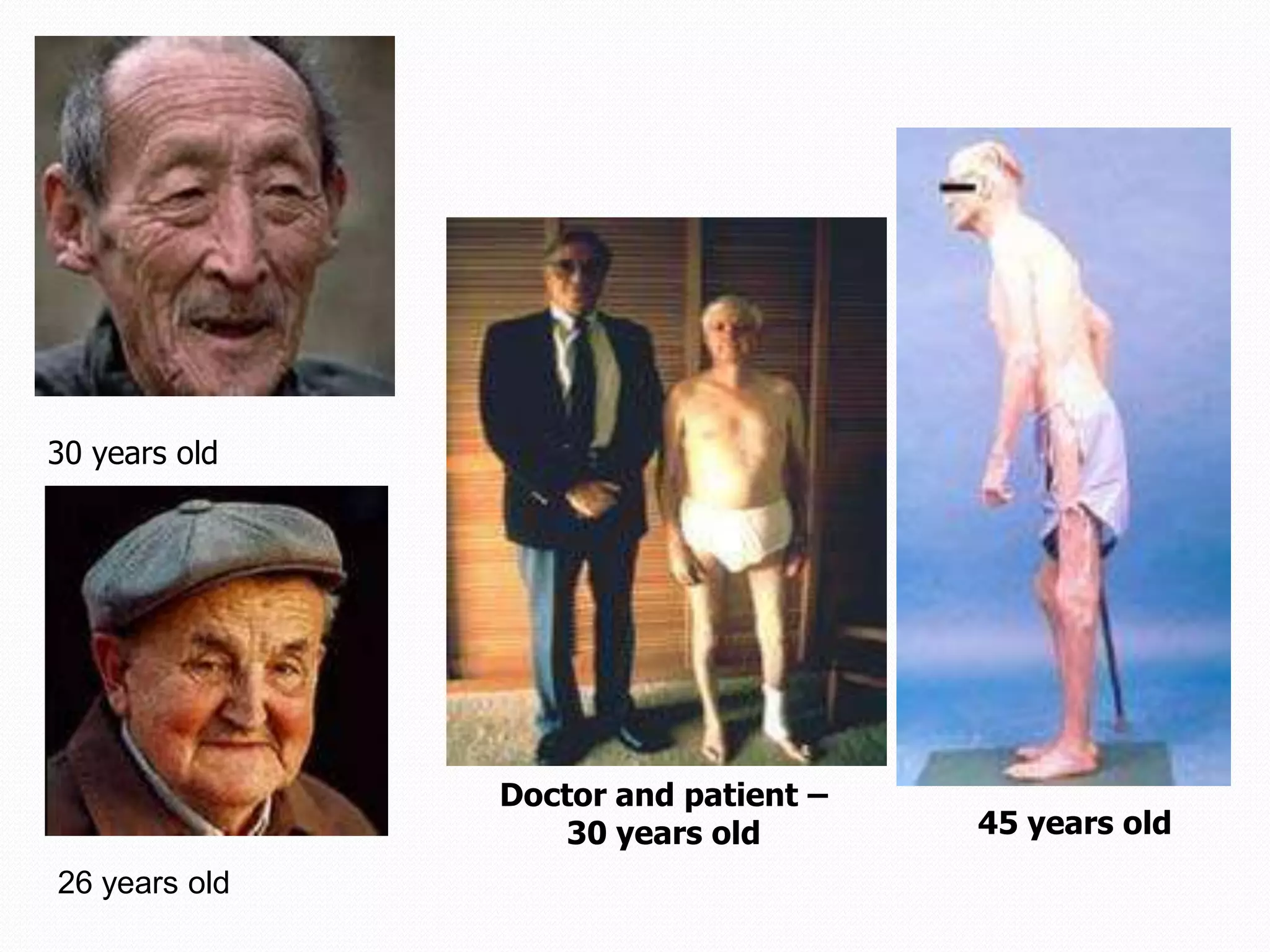
Werner Patient
30 years old

Doctor and patient –
30 years old
26 years old

45 years old

Replication

  • 2.
    What is replication? Unique property of double stranded molecules of DNA  Semi-conservative synthesis of DNA based on a template  Duplication of genetic material  The main mechanism that assures transmission of information from cell to cell and from one generation – to another.
  • 3.
    Why replication isrequired?  Assures exact transmission of information;  Determines self-reproduction;  Represents the support of heredity;  Assures material linkages between generation.
  • 4.
  • 5.
    What are theprinciples of replication?  Based on template;  Complementary;  Antiparallel;  Two directions;  Semi-conservative;  Fidel;  Very complex.
  • 7.
  • 8.
    Principles of replication: The monomers (nucleotides) are added to 3’ of one strand by enzyme DNA polymerase;  Newly syntheses strand is complementary to template strand;  Synthesis is semi-conservative: each new double-stranded molecule contains an old strand (template strand) a new strand (daughter strand).
  • 9.
  • 11.
    Components required for replications DNA molecule - template  Origin of replication – point ORI  Enzymes  Nucleotides (dNTP and NTP)  SSB proteins
  • 13.
    Main enzymes requiredfor replication  DNA-polymerase (I, II, III – in prokaryotes, – in eukaryotes)  Primase  DNA-helicases  Topoisomerase  DNA-ligase  Telomerase
  • 14.
  • 16.
  • 17.
    What are themain steps of replication?  Initiation  Elongation  Termination
  • 18.
    Initiation of replication: Identification of point ori;  Formation of replication eye containing two replication forks:  Unfolding of DNA  Denaturation of DNA  Synthesis of RNA primers  Initiation of polymerization of DNA
  • 19.
    Point of initiationof replication - ORI • consists of ~300 bp • contains sites for interaction with specific proteins required for initiation of replication
  • 21.
    Elongation  Enlarging ofreplication eye;  Synthesis of DNA in two directions:  Continuous synthesis of leader strand;  Interrupted synthesis of lagging strand; synthesis of Okazaki fragments on lagging strand.
  • 25.
    Termination  Meeting ofopposite replication forks;  RNA primers are removed;  Feeling in the gaps;  Ligation of all fragments;  Renaturation of DNA; 1 mol. DNA  2 mol. DNA.
  • 26.
    The replicon –replication unit • Contains 100-300 kb. • Contains ORI point • Contains two replication forks • In eukaryotic there are numerous replicons
  • 27.
    Characteristics of eukaryotic DNA-polymerases DNApolymerase α δ ε β γ Location Nucleus Nucleus Nucleus Nucleus Mitochondria Synthetic activity Primer extension Synthesis of DNA DNA repair DNA repair Replication Additional functions - Exonuclease - Exonuclease Exonuclease
  • 28.
    Peculiarities of replicationin eukaryotes In nucleus replication is carried down by DNApolymerases  In mitochondria replication is done by DNApolymerase .  Chromosomal DNA contains many points ORI;  Replication speed – 20-100 bases/second;  Human nuclear genome contains 60000 ORI points at every 100-150 kb. Replication of nuclear human DNA is carried out in 6-9 hours
  • 29.
    Example:  If 1stchromosome will contain 1 ori point, replication will take place during 15 hours:  Contains 260 000 000 bp;  Each replication fork will contain 130 000 000 bp  Replication speed - 100 bp/sec;
  • 30.
    Peculiarities of replicationof telomeres  Telomeres:  Sequences of nucleotides at the end of chromosomes;  (GGGTTAA)n;  Form loops;  Telomerase:  DNA-polymerase RNA-dependent;  Contains snRNA – template for synthesis of telomeric DNA.
  • 31.
  • 32.
  • 33.
    30 years old Doctorand patient – 30 years old 26 years old 45 years old