RENAISSANCE 
PERIOD 
LITERATURE 
1
RENAISSANCE 
• The word “Renaissance” is a 
French word which means 
“rebirth”. 
• It refers particularly to a 
renewed interest in classical 
learning – the writings of 
ancient Greece and Rome. 
2
RENAISSANCE 
• The Renaissance was a cultural 
movement that started in Italy 
and spread all over Europe. 
• It is considered to be the division 
between the Middle Ages and the 
Modern era. 
3
RENAISSANCE 
• The thinkers of this period, 
also called “humanists”, 
believed that the man should 
be the subject of study, and 
not God, as the Church had 
taught during the medieval 
period. 
4
The Printing Press 
• Johannes Gutenburg is credited 
with inventing the first printing 
press in Germany around 1400. 
By 1476 William Caxton had his 
own printing press up and 
running in Westminster, England. 
5
The 
Printing 
Press
The Printing Press 
• The Printing Press: William 
Caxton was the person who 
introduced printing in England. 
Before that, the books were 
written out in longhand, what 
meant a very slow jog. 
7
William Caxton
The 
Recuyell of 
the 
Historyes 
of Troye, 
printed in 
1473.
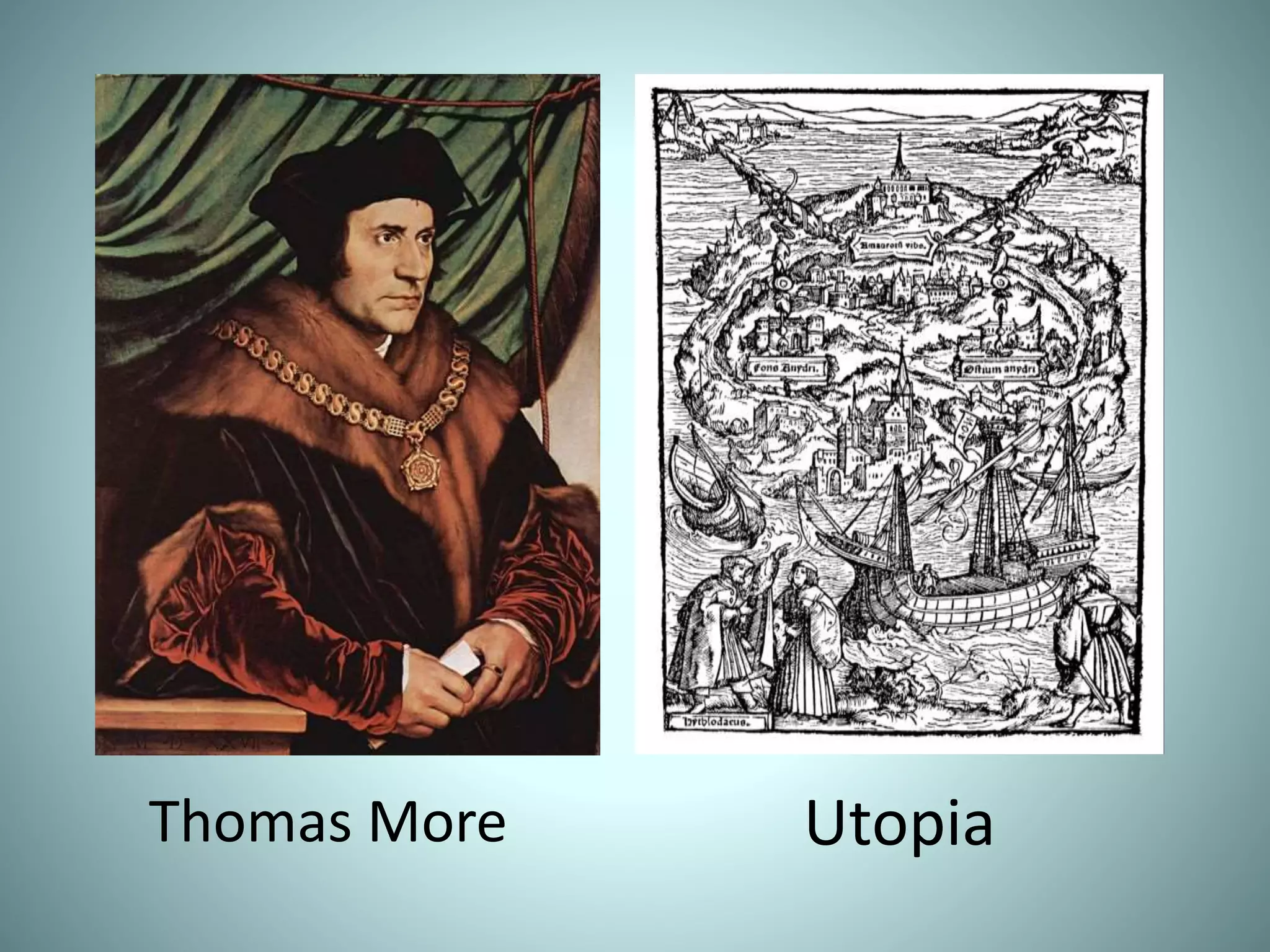
Thomas More: (1480-1535) 
• Thomas More was is 
considered one of the greatest 
of all English humanists, 
mainly for the book “Utopia”, 
written in Latin, in which were 
about an imaginary island 
where everything is perfect. 
10
Utopia 
• Utopia means “nowhere” in Greek; 
Thomas knew clearly that such an 
island could never exist. This dream of 
a place where happiness reigns and 
sorrow is banished is the most 
persistent of human fantasies and 
became a recurrent theme in many 
other British literature works.
Thomas More Utopia
Italian Genius of Renaissance 
Writing 
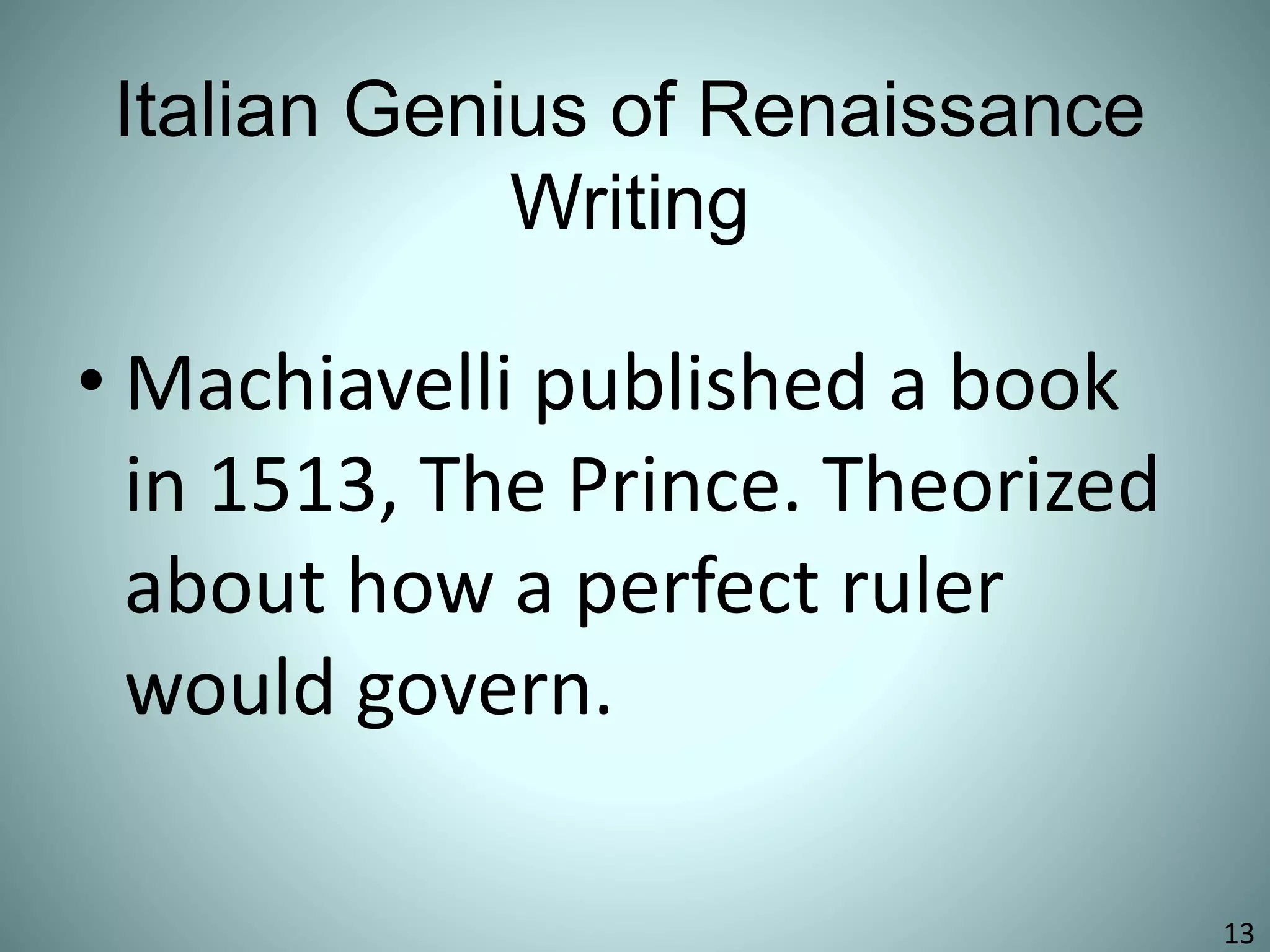
• Machiavelli published a book 
in 1513, The Prince. Theorized 
about how a perfect ruler 
would govern. 
13
Bible 
• In 1604, King James I ordered 
forty-seven scholars to 
produce a translation of the 
Bible to serve as the official 
one of the Anglicanism, the so-called 
“King James Bible”. 
14
It was published in 
1611 and is 
considered 
a masterpiece of 
English prose.
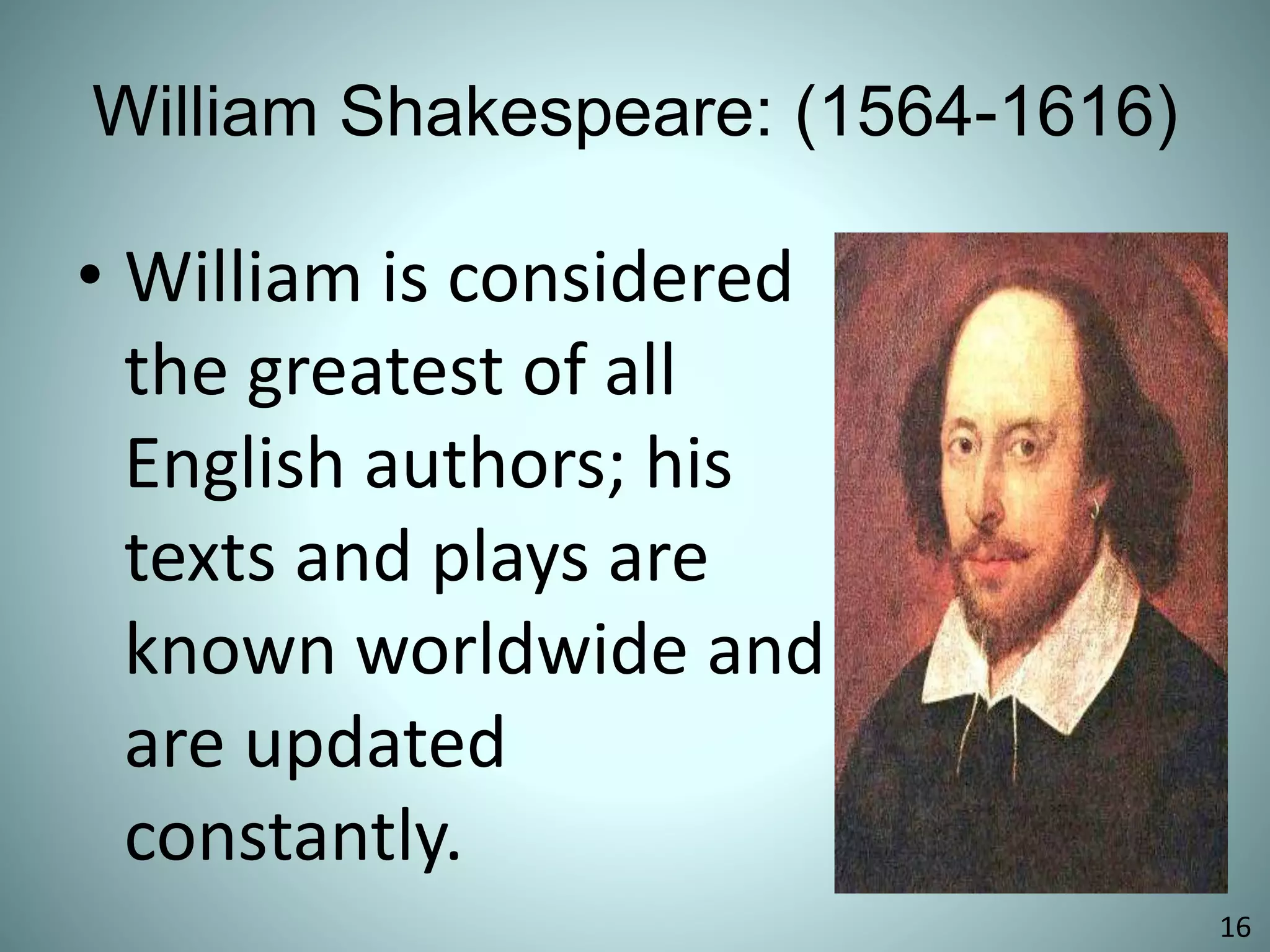
William Shakespeare: (1564-1616) 
• William is considered 
the greatest of all 
English authors; his 
texts and plays are 
known worldwide and 
are updated 
constantly. 
16
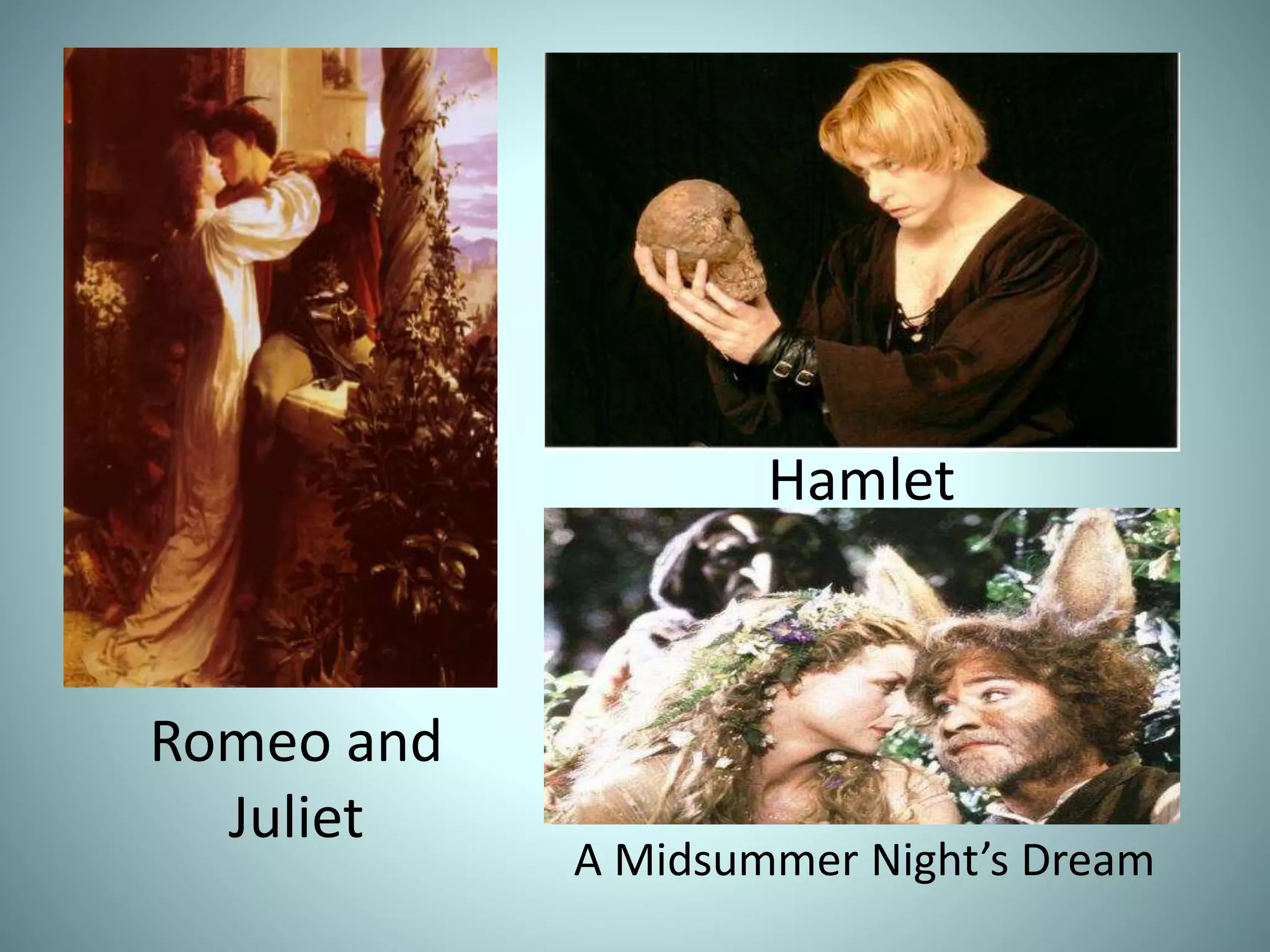
Romeo and 
Juliet 
Hamlet 
A Midsummer Night’s Dream
Macbeth 
• Macbeth compares life to a 
candle, then to a shadow, to an 
actor and finally to a story; this 
rapid shifting of metaphors is 
very characteristic of 
Shakespeare’s work. 
18
Great writers from the Renaissance 
Period 
• Christopher Marlowe 
• Sir Walter Raleigh 
• Robert Herrick 
• Andrew Marvell 
• William Shakespeare 
• John Donne 
• Ben Jonson 
• Francis Bacon 
• John Milton 
• John Bunyan 
• Edmund Spenser 
• Sir John Suckling 
• Richard Lovelace
Poetry of the Renaissance/Elizabethan 
Age 
• Major themes – love and 
beauty Physical beauty – 
outward sign of the spirit 
striving for perfection 
(humanist theory). 
• “Fair” = a sign of beauty
Poetry of the 
Renaissance/Elizabethan Age 
• Poet writes to a lady who is 
inflexible. Man seeks her love, 
but hopelessly. Her moods 
create the weather. Lady is 
usually not real (a stereotype).
Mona Lisa
Carpe Diem 
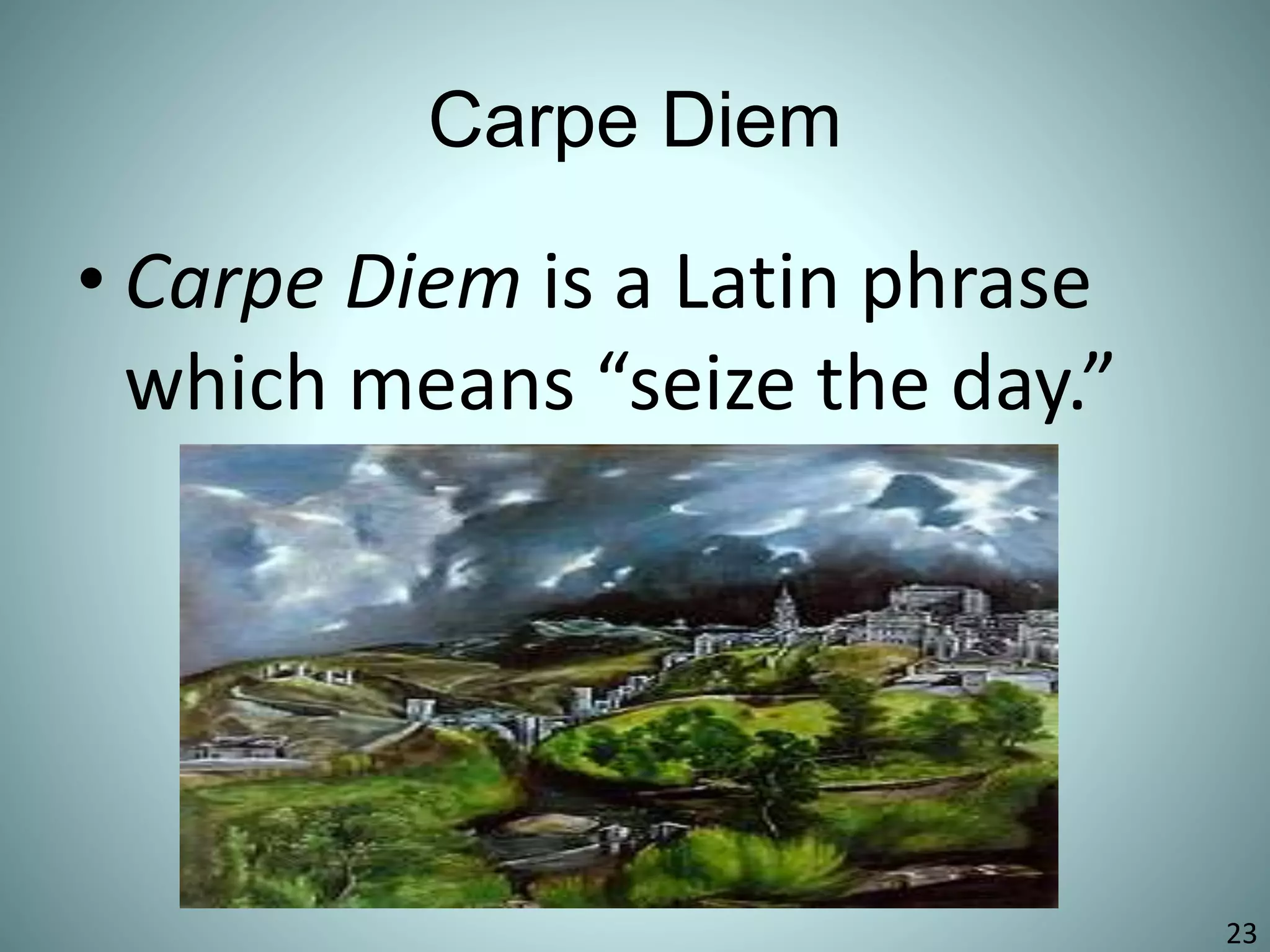
• Carpe Diem is a Latin phrase 
which means “seize the day.” 
23
“Live for today. Eat, drink, 
and be merry, for tomorrow 
we die.”
Pastoral Poetry 
• Pastoral Poetry focuses on the 
idealized countryside and the 
simple life. 
25
Three Sonnet Types 
• Petrarchan (Italian) 
• Shakespearean (English) 
• Spenserian 
26
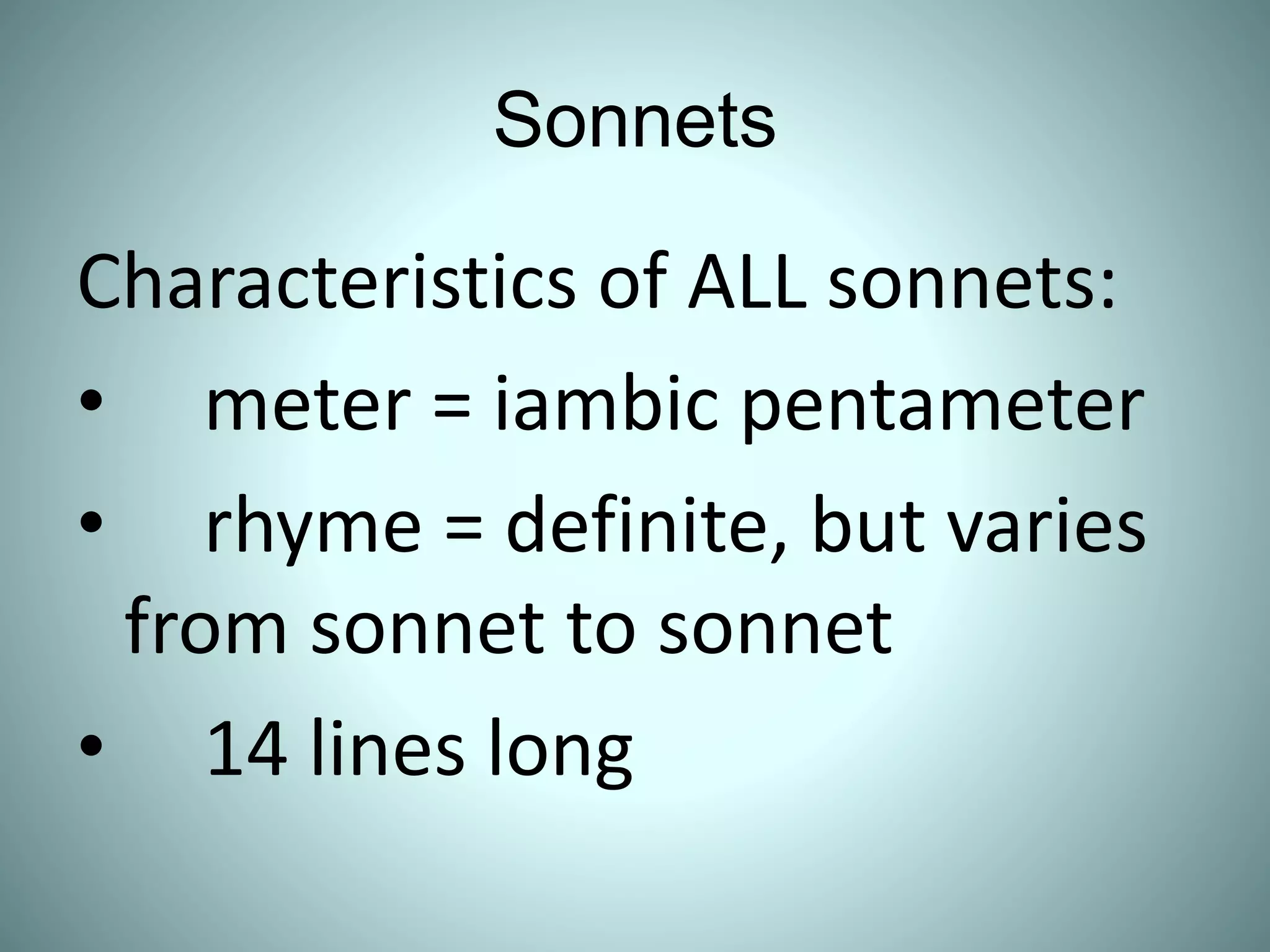
Sonnets 
Characteristics of ALL sonnets: 
• meter = iambic pentameter 
• rhyme = definite, but varies 
from sonnet to sonnet 
• 14 lines long
Sonnets 
Variations in sonnets: 
• rhyme 
• structure (octave – sestet 
VS. quatrains and a couplet)

Renaissance Period Literature

  • 1.
  • 2.
    RENAISSANCE • Theword “Renaissance” is a French word which means “rebirth”. • It refers particularly to a renewed interest in classical learning – the writings of ancient Greece and Rome. 2
  • 3.
    RENAISSANCE • TheRenaissance was a cultural movement that started in Italy and spread all over Europe. • It is considered to be the division between the Middle Ages and the Modern era. 3
  • 4.
    RENAISSANCE • Thethinkers of this period, also called “humanists”, believed that the man should be the subject of study, and not God, as the Church had taught during the medieval period. 4
  • 5.
    The Printing Press • Johannes Gutenburg is credited with inventing the first printing press in Germany around 1400. By 1476 William Caxton had his own printing press up and running in Westminster, England. 5
  • 6.
  • 7.
    The Printing Press • The Printing Press: William Caxton was the person who introduced printing in England. Before that, the books were written out in longhand, what meant a very slow jog. 7
  • 8.
  • 9.
    The Recuyell of the Historyes of Troye, printed in 1473.
  • 10.
    Thomas More: (1480-1535) • Thomas More was is considered one of the greatest of all English humanists, mainly for the book “Utopia”, written in Latin, in which were about an imaginary island where everything is perfect. 10
  • 11.
    Utopia • Utopiameans “nowhere” in Greek; Thomas knew clearly that such an island could never exist. This dream of a place where happiness reigns and sorrow is banished is the most persistent of human fantasies and became a recurrent theme in many other British literature works.
  • 12.
  • 13.
    Italian Genius ofRenaissance Writing • Machiavelli published a book in 1513, The Prince. Theorized about how a perfect ruler would govern. 13
  • 14.
    Bible • In1604, King James I ordered forty-seven scholars to produce a translation of the Bible to serve as the official one of the Anglicanism, the so-called “King James Bible”. 14
  • 15.
    It was publishedin 1611 and is considered a masterpiece of English prose.
  • 16.
    William Shakespeare: (1564-1616) • William is considered the greatest of all English authors; his texts and plays are known worldwide and are updated constantly. 16
  • 17.
    Romeo and Juliet Hamlet A Midsummer Night’s Dream
  • 18.
    Macbeth • Macbethcompares life to a candle, then to a shadow, to an actor and finally to a story; this rapid shifting of metaphors is very characteristic of Shakespeare’s work. 18
  • 19.
    Great writers fromthe Renaissance Period • Christopher Marlowe • Sir Walter Raleigh • Robert Herrick • Andrew Marvell • William Shakespeare • John Donne • Ben Jonson • Francis Bacon • John Milton • John Bunyan • Edmund Spenser • Sir John Suckling • Richard Lovelace
  • 20.
    Poetry of theRenaissance/Elizabethan Age • Major themes – love and beauty Physical beauty – outward sign of the spirit striving for perfection (humanist theory). • “Fair” = a sign of beauty
  • 21.
    Poetry of the Renaissance/Elizabethan Age • Poet writes to a lady who is inflexible. Man seeks her love, but hopelessly. Her moods create the weather. Lady is usually not real (a stereotype).
  • 22.
  • 23.
    Carpe Diem •Carpe Diem is a Latin phrase which means “seize the day.” 23
  • 24.
    “Live for today.Eat, drink, and be merry, for tomorrow we die.”
  • 25.
    Pastoral Poetry •Pastoral Poetry focuses on the idealized countryside and the simple life. 25
  • 26.
    Three Sonnet Types • Petrarchan (Italian) • Shakespearean (English) • Spenserian 26
  • 27.
    Sonnets Characteristics ofALL sonnets: • meter = iambic pentameter • rhyme = definite, but varies from sonnet to sonnet • 14 lines long
  • 28.
    Sonnets Variations insonnets: • rhyme • structure (octave – sestet VS. quatrains and a couplet)