Oxidation-Reduction
               Reactions

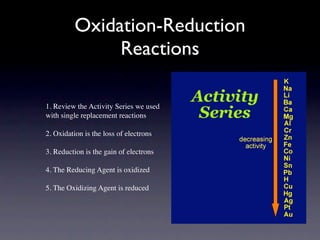
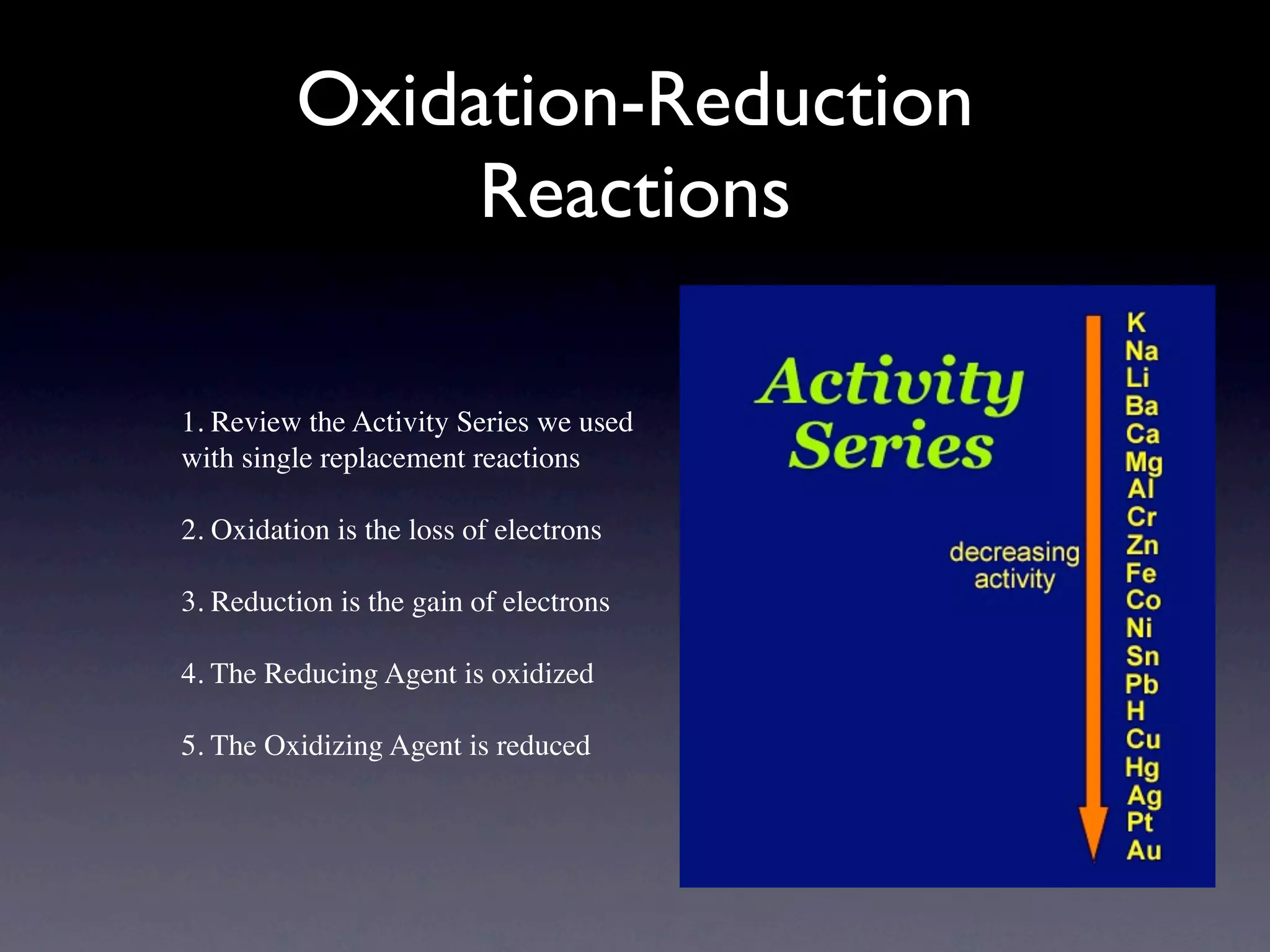
1. Review the Activity Series we used
with single replacement reactions

2. Oxidation is the loss of electrons

3. Reduction is the gain of electrons

4. The Reducing Agent is oxidized

5. The Oxidizing Agent is reduced
Calculating Oxidation Number
      The first step in better understanding redox
          reactions is the determination of the
      oxidation # of each element in a compound.


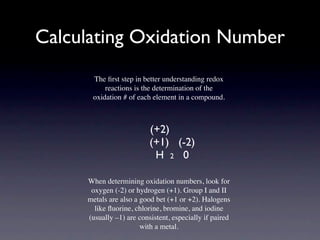
                          (+2)
                          (+1) (-2)
                           H 2 0

     When determining oxidation numbers, look for
      oxygen (-2) or hydrogen (+1). Group I and II
     metals are also a good bet (+1 or +2). Halogens
       like fluorine, chlorine, bromine, and iodine
     (usually –1) are consistent, especially if paired
                       with a metal.
Determine the oxidation
  numbers of the following:


MnO4-1


 NO3-1
 
 
 H2SO4


 AgNO3


HClO


    NaCl
 
 
 BaF2


 K2Cr2O7
A Few Reactions...
Cu(NO3)2
 +
 Ni
 
    Ni(NO3)2
 +
 Cu


Pb
 +
 PbO2
 +
 H2SO4

      
   PbSO4
 +
 H2O


Na
+
 H2O
    
   NaOH
 +
 H2


 1.
   Put oxidation #’s above each element
 2.
   Find the element oxidized (lose electrons)
 3.
   Find the element reduced (gain electrons)
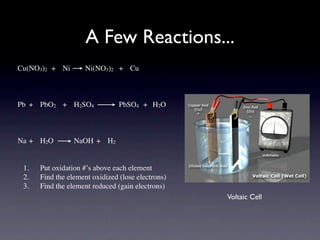
                                                    Voltaic Cell
Batteries and Galvanic Cells:
Applications of Redox
Reactions.

 •
Fuel cells for
   cars

 •
Power for
   personal
   electronic                   Lithium ion batteries
   devices (cell
   phones, etc)
The Anatomy of a Battery
  Do a diagram of a battery made from aluminum and
  silver.

  1. Electrodes
  2. Solutions
  3. Salt bridge
  4. Direction of e- flow
  5. Voltage
  6. Label anode and cathode, as well as the +/-
  electrodes

  Importance of the salt bridge- as Al     Al+3 + 3e- ….
  the electrons leave the anode and go to the cathode.
  This leaves a buildup of Al+3 ions that could interfere
  with the flow of electrons to the cathode. The salt
  bridge allows NO3-1 ions to flow from the cathode to
  the anode to balance the build up of Al+3.

Oxidation Reduction Reactions

  • 1.
    Oxidation-Reduction Reactions 1. Review the Activity Series we used with single replacement reactions 2. Oxidation is the loss of electrons 3. Reduction is the gain of electrons 4. The Reducing Agent is oxidized 5. The Oxidizing Agent is reduced
  • 2.
    Calculating Oxidation Number The first step in better understanding redox reactions is the determination of the oxidation # of each element in a compound. (+2) (+1) (-2) H 2 0 When determining oxidation numbers, look for oxygen (-2) or hydrogen (+1). Group I and II metals are also a good bet (+1 or +2). Halogens like fluorine, chlorine, bromine, and iodine (usually –1) are consistent, especially if paired with a metal.
  • 3.
    Determine the oxidation numbers of the following: MnO4-1 NO3-1 H2SO4 AgNO3 HClO NaCl BaF2 K2Cr2O7
  • 4.
    A Few Reactions... Cu(NO3)2 + Ni Ni(NO3)2 + Cu Pb + PbO2 + H2SO4 PbSO4 + H2O Na + H2O NaOH + H2 1. Put oxidation #’s above each element 2. Find the element oxidized (lose electrons) 3. Find the element reduced (gain electrons) Voltaic Cell
  • 5.
    Batteries and GalvanicCells: Applications of Redox Reactions. • Fuel cells for cars • Power for personal electronic Lithium ion batteries devices (cell phones, etc)
  • 6.
    The Anatomy ofa Battery Do a diagram of a battery made from aluminum and silver. 1. Electrodes 2. Solutions 3. Salt bridge 4. Direction of e- flow 5. Voltage 6. Label anode and cathode, as well as the +/- electrodes Importance of the salt bridge- as Al Al+3 + 3e- …. the electrons leave the anode and go to the cathode. This leaves a buildup of Al+3 ions that could interfere with the flow of electrons to the cathode. The salt bridge allows NO3-1 ions to flow from the cathode to the anode to balance the build up of Al+3.

Editor's Notes