Emotional Intelligence for
Professional Success
Morning Agenda
• Resilience You all have it in you –
preventative medicine
• Toolbox Project video Toolbox
• Self awareness – exercise
Afternoon Agenda
•
•
•
•
•
•

Outside in
Communication
Conflict fluency
Decision making
Change
Leadership President Lincoln Pulling it
all together
• Individual development Plan
Johari Window

J. Luft, Group Processes: An introduction to Group Dynamics, (Palo Alto, CA: Mayfield, 1970).
What is emotional
intelligence?
Building blocks of behavior
Thoughts

Emotions

Behaviors
Motere (Latin)
“to move”
root work for emotion and motivation
121 Fortune 500 Companies –
Competency Models
Skills needed

33%

67%

Technical
Emo onal Intelligence

Abilities Distinguishing Star Performers at Work
(Goleman, 1994)
Emotional Intelligence, EI, EQ
Self Mastery and RESILIENCE…
Toolbox Project video Toolbox
Einstein
“We should take care not to make the
intellect our god. It has, of course,
powerful muscles, but no personality. It
cannot lead, it can only serve.”
Misperception of Success
Irrational Thought Patterns
• We all have them…
Childhood
Our general US culture
Our workplace culture
Another interpretation

It is a
test.

Relief
Reptile Brain: Error patterns

Sacrifices accuracy for speed

Can’t tell the difference between
rattlesnakes and shame
Our Three Brains
Amygdala – reptile brain
(emotion)

Cortex (logic center)
Pre-frontal cortex (integrates
logic and emotion into judgment
Flipping Our Lids
• Dr Siegel Hand Model of the Brain
• Reflection
• Relationships
• Resilience
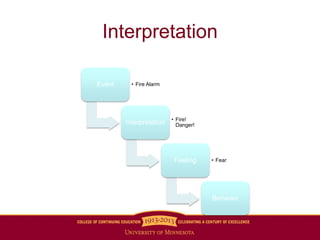
Interpretation
Event

• Fire Alarm

Interpretation

• Fire!
Danger!

Feeling

• Fear

Behavior
Automatic Process
Event

• Fire
Alarm

Feeling

• Fear

Behavior • Run
Expert Opinion
“I view emotions as organizing
processes that enable
individuals to think and behave
adaptively. This perspective
can be contrasted with a more
traditional one that sees affect
as a disorganized interruption of
mental activity that must be
minimized and controlled.”
Peter Salovey,Ph.D., Chair of Psychology, Yale
University
Major Emotional Intelligence Researcher and
Theorist
Our Culture Worships Intellect
DesCartes:
“I think; therefore I am.”
Stoics
Today’s schools
Today’s employers
Emotional Intelligence is a
collection of skills
• Self reflection
• Productive focus on relationships?
• Resilience when things do go the way
you want or intended
• EI = Logic and Emotions
Because it CAN be learned
•
•
•
•

Our EI can grow at any age
Learning EI starts early
Neuroplasticity of the brain?
SCARF?
Example of Emotional
Intelligence
• Aristotle: “Anyone can become angry –
that is easy. But to be angry with the
right person , to the right degree, at the
right time, for the right purpose, and in
the right way – that is not easy.”
1. Break into SCARF groups based on the biggest
concern identified in your assessment
2. Describe/characterize your domain
- What are your concerns or triggers?
3. Large group debrief
4. In domain groups discuss: How you reduce your
own sense of threat or increase your sense of
reward related to this domain

5. Debrief
Fairness study
• Fairness study
• Feeling free from bias, dishonesty, and
injustice
• An individual’s sense of fairness is
linked to personal values
We need both

IQ

EQ
EQ-i® 2.0 competencies
Total EQ

Self-Perception

Self-Expression

Interpersonal

Decision
Making

Stress
Management

Self-Regard

Emotional
Expression

Interpersonal
Relationships

Problem
Solving

Flexibility

SelfActualization

Assertiveness

Empathy

Reality Testing

Stress
Tolerance

Emotional SelfAwareness

Independence

Social
Responsibility

Impulse Control

Optimism
rosieFirst, Understand Habits
• Habits are hard to break
• Thought patterns can be changed
• Paying attention to things can rewire
habits
• Focus on what’s right, not what’s wrong
• Work at regulating your thinking
EI and Change
• VUCA World
• Volatile, uncertain, complex, ambiguous

• Requires VUCA leadership
• Lack of certainty = loss of control >
impacts status, fairness and
relationships
Emotions and Change
VISION
Rosie in the face of change
• Safety first
• Create new connections
• Embed with attention density
Well-Being
•
•
•
•

Self-Regard
Optimism
Interpersonal Relationships
Self-Actualization
Another way to look at WellBeing
work

play

“Richest and fullest lives
attempt to achieve balance
between three realms:
work, love, play.”

love
Erik Erikson
Developmental Psychologist

Rich and full life
Prefrontal
Cortex

Amygd
ala
Hippocamp
us
Prefrontal
Cortex

Amygd
ala
Hippocamp
us
SCARF
A way to understand social brain stimuli
and the responses that are triggered
Your brain is…
• Like a river
EI and Leadership
• Daniel Goleman (1998) pioneered the idea
that “the ability to recognize and understand
your moods, emotions, and drives, as well
as their effect on others,” was a hallmark of
effective leaders.
• High levels of self-awareness, long
acknowledged as contributing to individual
effectiveness and good leadership, also
correlate with corporate performance.
Korn/Ferry Institute 2013 A Better return on Self Awareness
Emotional Intelligence and
Leadership
• Emotions are contagious
• De-railers
– Impulse Control
– Stress Tolerance
– Problem Solving
– Independence
Mood contagion & Optimism
•

So given, that our neurons are at work and we are reacting to the people that we work with
in many ways.

•

There’s a word for that and it’s mood contagion.

•

Joyce Bono was faculty at CSOM here at the University and is now at the U of Florida. She
studied mood contagion. She looked at the sharing of positive emotions in the work setting.

•

What do we do to build a positive mood contagion?

•
•

Positive connections increase the secretion of oxytocin in the brain
We have choices:
–
–

How do I build a positive mood for myself? How do I reinforce this?
How do I choose those I interact with? Are they positive? How do they contribute to
my mood?
Emotions are contagious
rosiePractice ideas
• Practice giving yourself six seconds
• Focus on the positive
• Consider play; think of problems as
challenges
• Study what works for you – modes of
learning
• Make connections with positive others
• Celebrate accomplishments
• Practice choice -- choose what you pay
attention to and opt for positive reactions;
Values
• What interests you about emotional
intelligence?
Assess the emotional
intelligence of Lincoln
Doris Kearns Goodwin: What we can
learn from past presidents
Individual Development Plan
• What do you want to start?
• What do you want to stop?
• What do you want to continue doing?
Resilience
• Resiliency is the ability to find the inner
strength to grow through a set-back,
challenge, or opportunity. Resiliency is
not about bouncing back from a
situation. It is about growing through it.
Resiliency is not about pain. It is about
possibility.
Be Resilient: by Eileen Mc???????
We can choose our response
• What is the situation?
• What am I focusing on? What am I not
going to put attention on?
• How do I feel and think about this?
• How am I going to consciously
respond?
rosieSelf Care
• It’s about energy
• Work at building resilience; have it
ready when you have challenges
• Exercise, yoga or meditation
• Stop ruminating – this builds negative
wiring. Schedule a time each day for it
and get over it
Rosie more self care
• Think about challenging situations
• What can you start doing, stop doing or
continue doing that will help the
situation and other similar situations
• Practice your one thing
• Give yourself a reward for following
through
“When will we make the same
breakthroughs

in the way we relate to each
other,
as we have made in
technology?”
Theodore Zeldin, Philosopher
Evaluation
• What was most helpful today?
or
• Share one of your insights or aha’s

• CCE evaluation

Recovered file 2 ppt

  • 1.
  • 2.
    Morning Agenda • ResilienceYou all have it in you – preventative medicine • Toolbox Project video Toolbox • Self awareness – exercise
  • 3.
    Afternoon Agenda • • • • • • Outside in Communication Conflictfluency Decision making Change Leadership President Lincoln Pulling it all together • Individual development Plan
  • 4.
    Johari Window J. Luft,Group Processes: An introduction to Group Dynamics, (Palo Alto, CA: Mayfield, 1970).
  • 6.
    What is emotional intelligence? Buildingblocks of behavior Thoughts Emotions Behaviors
  • 8.
    Motere (Latin) “to move” rootwork for emotion and motivation
  • 9.
    121 Fortune 500Companies – Competency Models Skills needed 33% 67% Technical Emo onal Intelligence Abilities Distinguishing Star Performers at Work (Goleman, 1994)
  • 10.
    Emotional Intelligence, EI,EQ Self Mastery and RESILIENCE… Toolbox Project video Toolbox
  • 11.
    Einstein “We should takecare not to make the intellect our god. It has, of course, powerful muscles, but no personality. It cannot lead, it can only serve.”
  • 12.
  • 13.
    Irrational Thought Patterns •We all have them… Childhood Our general US culture Our workplace culture
  • 14.
  • 15.
    Reptile Brain: Errorpatterns Sacrifices accuracy for speed Can’t tell the difference between rattlesnakes and shame
  • 16.
    Our Three Brains Amygdala– reptile brain (emotion) Cortex (logic center) Pre-frontal cortex (integrates logic and emotion into judgment
  • 17.
    Flipping Our Lids •Dr Siegel Hand Model of the Brain • Reflection • Relationships • Resilience
  • 18.
    Interpretation Event • Fire Alarm Interpretation •Fire! Danger! Feeling • Fear Behavior
  • 19.
  • 20.
    Expert Opinion “I viewemotions as organizing processes that enable individuals to think and behave adaptively. This perspective can be contrasted with a more traditional one that sees affect as a disorganized interruption of mental activity that must be minimized and controlled.” Peter Salovey,Ph.D., Chair of Psychology, Yale University Major Emotional Intelligence Researcher and Theorist
  • 21.
    Our Culture WorshipsIntellect DesCartes: “I think; therefore I am.” Stoics Today’s schools Today’s employers
  • 22.
    Emotional Intelligence isa collection of skills • Self reflection • Productive focus on relationships? • Resilience when things do go the way you want or intended • EI = Logic and Emotions
  • 23.
    Because it CANbe learned • • • • Our EI can grow at any age Learning EI starts early Neuroplasticity of the brain? SCARF?
  • 24.
    Example of Emotional Intelligence •Aristotle: “Anyone can become angry – that is easy. But to be angry with the right person , to the right degree, at the right time, for the right purpose, and in the right way – that is not easy.”
  • 26.
    1. Break intoSCARF groups based on the biggest concern identified in your assessment 2. Describe/characterize your domain - What are your concerns or triggers? 3. Large group debrief 4. In domain groups discuss: How you reduce your own sense of threat or increase your sense of reward related to this domain 5. Debrief
  • 27.
    Fairness study • Fairnessstudy • Feeling free from bias, dishonesty, and injustice • An individual’s sense of fairness is linked to personal values
  • 28.
  • 30.
    EQ-i® 2.0 competencies TotalEQ Self-Perception Self-Expression Interpersonal Decision Making Stress Management Self-Regard Emotional Expression Interpersonal Relationships Problem Solving Flexibility SelfActualization Assertiveness Empathy Reality Testing Stress Tolerance Emotional SelfAwareness Independence Social Responsibility Impulse Control Optimism
  • 31.
    rosieFirst, Understand Habits •Habits are hard to break • Thought patterns can be changed • Paying attention to things can rewire habits • Focus on what’s right, not what’s wrong • Work at regulating your thinking
  • 32.
    EI and Change •VUCA World • Volatile, uncertain, complex, ambiguous • Requires VUCA leadership • Lack of certainty = loss of control > impacts status, fairness and relationships
  • 33.
  • 34.
    Rosie in theface of change • Safety first • Create new connections • Embed with attention density
  • 36.
  • 37.
    Another way tolook at WellBeing work play “Richest and fullest lives attempt to achieve balance between three realms: work, love, play.” love Erik Erikson Developmental Psychologist Rich and full life
  • 39.
  • 40.
  • 41.
    SCARF A way tounderstand social brain stimuli and the responses that are triggered
  • 42.
  • 43.
    EI and Leadership •Daniel Goleman (1998) pioneered the idea that “the ability to recognize and understand your moods, emotions, and drives, as well as their effect on others,” was a hallmark of effective leaders. • High levels of self-awareness, long acknowledged as contributing to individual effectiveness and good leadership, also correlate with corporate performance. Korn/Ferry Institute 2013 A Better return on Self Awareness
  • 44.
    Emotional Intelligence and Leadership •Emotions are contagious • De-railers – Impulse Control – Stress Tolerance – Problem Solving – Independence
  • 45.
    Mood contagion &Optimism • So given, that our neurons are at work and we are reacting to the people that we work with in many ways. • There’s a word for that and it’s mood contagion. • Joyce Bono was faculty at CSOM here at the University and is now at the U of Florida. She studied mood contagion. She looked at the sharing of positive emotions in the work setting. • What do we do to build a positive mood contagion? • • Positive connections increase the secretion of oxytocin in the brain We have choices: – – How do I build a positive mood for myself? How do I reinforce this? How do I choose those I interact with? Are they positive? How do they contribute to my mood?
  • 46.
  • 47.
    rosiePractice ideas • Practicegiving yourself six seconds • Focus on the positive • Consider play; think of problems as challenges • Study what works for you – modes of learning • Make connections with positive others • Celebrate accomplishments • Practice choice -- choose what you pay attention to and opt for positive reactions;
  • 48.
    Values • What interestsyou about emotional intelligence?
  • 49.
    Assess the emotional intelligenceof Lincoln Doris Kearns Goodwin: What we can learn from past presidents
  • 50.
    Individual Development Plan •What do you want to start? • What do you want to stop? • What do you want to continue doing?
  • 51.
    Resilience • Resiliency isthe ability to find the inner strength to grow through a set-back, challenge, or opportunity. Resiliency is not about bouncing back from a situation. It is about growing through it. Resiliency is not about pain. It is about possibility. Be Resilient: by Eileen Mc???????
  • 52.
    We can chooseour response • What is the situation? • What am I focusing on? What am I not going to put attention on? • How do I feel and think about this? • How am I going to consciously respond?
  • 53.
    rosieSelf Care • It’sabout energy • Work at building resilience; have it ready when you have challenges • Exercise, yoga or meditation • Stop ruminating – this builds negative wiring. Schedule a time each day for it and get over it
  • 54.
    Rosie more selfcare • Think about challenging situations • What can you start doing, stop doing or continue doing that will help the situation and other similar situations • Practice your one thing • Give yourself a reward for following through
  • 56.
    “When will wemake the same breakthroughs in the way we relate to each other, as we have made in technology?” Theodore Zeldin, Philosopher
  • 66.
    Evaluation • What wasmost helpful today? or • Share one of your insights or aha’s • CCE evaluation