EMOTIONAL
AND
SOCIAL INTELLIGENCE
www.humanikaconsulting.com
Low Social
Skill
• Loss of productivity
• Low moral
• Poor teamwork
• Work related accidents
• are often the results of
organizations inability to
manage the emotions of its
workforce
EMOTIONAL
INTELLIGENCE
What if there were ways to
harness emotions and use
them to everyone’s mutual
advantage? There is, it is
called
Emotional
Intelligence
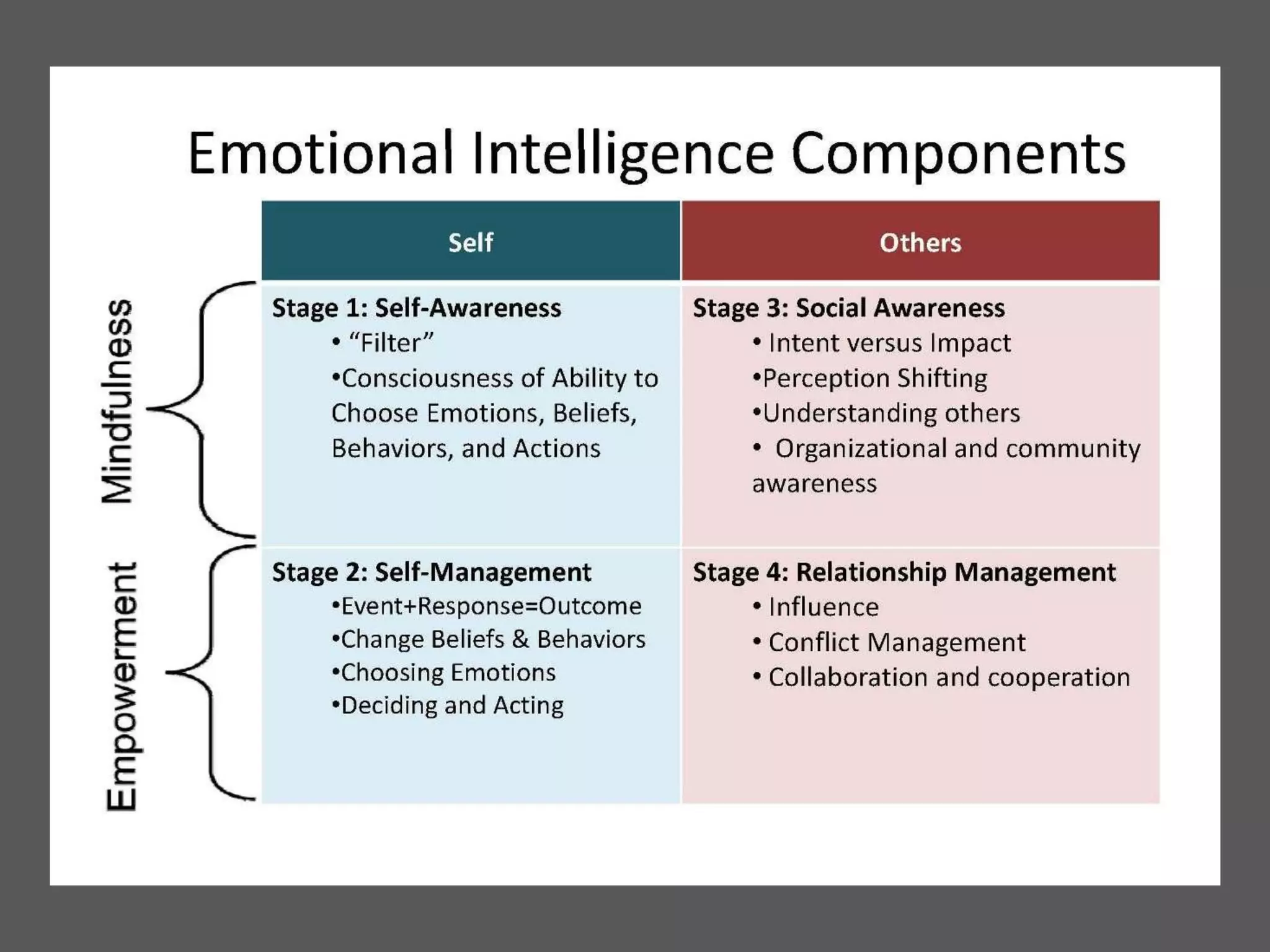
Emotional Intelligence is
an ability to recognize the
meanings of emotion and
their relationships, and to
reason and problem-solve
on the basis of them. EI is
involved in the capacity to
perceive emotions,
assimilate emotion-
related feelings,
understand the
information of those
emotions, and manage
them.
Goleman’s 5
Components
of EQ
Changing
As the pace of change increases, and our workplaces
make greater demands on our cognitive, emotional,
and physical resources, emotional intelligence will
continue to emerge, not as something "nice" to
have, but as an increasingly important set of "must-
have" skills.
Self Awareness
The more we know about ourselves, the
better we are able to control and
choose what kind of behaviours we will
display in a work setting. Without self-
awareness, our emotions can blind us
and guide us to do things or to become
people we really don’t want to be.
2. Self
Regulation
When we learn to manage our
emotions well, we become masters
of mood management. We are able
to handle stress and communicate
more constructively and
consistently. As a result, we appear
more level-headed and trustworthy
to others.
3. Self
Motivation
• Employees who are
highly self-motivated
realize that every job
has its less enjoyable
elements, but they
plow ahead.
• They accept change
and are more flexible,
have better attitudes,
persist toward goals
despite obstacles and
setbacks
4. Empathy
• Once we have become more
honest and intentional with
our emotions, it is time to
look outward.
• Emotional intelligence is
about tuning into our own
feelings as well as the
feelings of those around us:
learning to see things from
another person’s
perspective so that we can
relate to them better.
5. Effective
Relationships
• Mastering the abilities of
self-awareness, self-
regulation, self-motivation
and empathy pave the way
for attaining a greater skill
in handling relationships.
• In order to be effective in
our teams and
organizations, we need to
bring these skills together
to become “socially
intelligent.”
Some Effects of Poor EI
• Withdrawal and social problems
• Anxiety and depression
• Attention or thinking problems
• Delinquency and aggression
• Fights, put downs and name calling at
school/work
• Poor parent child relationship
• Poor teacher child relationship
• Poor therapist child relationship
OUTCOMES
A leader who is emotionally
intelligent will
• Listen to and employ
their emotions for
better decision-making
• Be more intentional in
their actions
• Create an environment
where people want to
work
• Show they care and
build trust by displaying
sensitivity and concern
• Use their energy and
enthusiasm to motivate
others while tempering
negative responses to
distressing situations
Learning and Giving for Better Indonesia
www.humanikaconsulting.com

Emotional and social Intelligence

  • 1.
  • 3.
    Low Social Skill • Lossof productivity • Low moral • Poor teamwork • Work related accidents • are often the results of organizations inability to manage the emotions of its workforce
  • 4.
    EMOTIONAL INTELLIGENCE What if therewere ways to harness emotions and use them to everyone’s mutual advantage? There is, it is called
  • 5.
    Emotional Intelligence Emotional Intelligence is anability to recognize the meanings of emotion and their relationships, and to reason and problem-solve on the basis of them. EI is involved in the capacity to perceive emotions, assimilate emotion- related feelings, understand the information of those emotions, and manage them.
  • 6.
  • 7.
    Changing As the paceof change increases, and our workplaces make greater demands on our cognitive, emotional, and physical resources, emotional intelligence will continue to emerge, not as something "nice" to have, but as an increasingly important set of "must- have" skills.
  • 8.
    Self Awareness The morewe know about ourselves, the better we are able to control and choose what kind of behaviours we will display in a work setting. Without self- awareness, our emotions can blind us and guide us to do things or to become people we really don’t want to be.
  • 9.
    2. Self Regulation When welearn to manage our emotions well, we become masters of mood management. We are able to handle stress and communicate more constructively and consistently. As a result, we appear more level-headed and trustworthy to others.
  • 10.
    3. Self Motivation • Employeeswho are highly self-motivated realize that every job has its less enjoyable elements, but they plow ahead. • They accept change and are more flexible, have better attitudes, persist toward goals despite obstacles and setbacks
  • 11.
    4. Empathy • Oncewe have become more honest and intentional with our emotions, it is time to look outward. • Emotional intelligence is about tuning into our own feelings as well as the feelings of those around us: learning to see things from another person’s perspective so that we can relate to them better.
  • 12.
    5. Effective Relationships • Masteringthe abilities of self-awareness, self- regulation, self-motivation and empathy pave the way for attaining a greater skill in handling relationships. • In order to be effective in our teams and organizations, we need to bring these skills together to become “socially intelligent.”
  • 13.
    Some Effects ofPoor EI • Withdrawal and social problems • Anxiety and depression • Attention or thinking problems • Delinquency and aggression • Fights, put downs and name calling at school/work • Poor parent child relationship • Poor teacher child relationship • Poor therapist child relationship
  • 15.
    OUTCOMES A leader whois emotionally intelligent will • Listen to and employ their emotions for better decision-making • Be more intentional in their actions • Create an environment where people want to work • Show they care and build trust by displaying sensitivity and concern • Use their energy and enthusiasm to motivate others while tempering negative responses to distressing situations
  • 21.
    Learning and Givingfor Better Indonesia www.humanikaconsulting.com