Clinical Data
Management: Strategies
for unregulated data
Heather Coates, IUPUI University Library
RDAP Summit: April 4, 2013
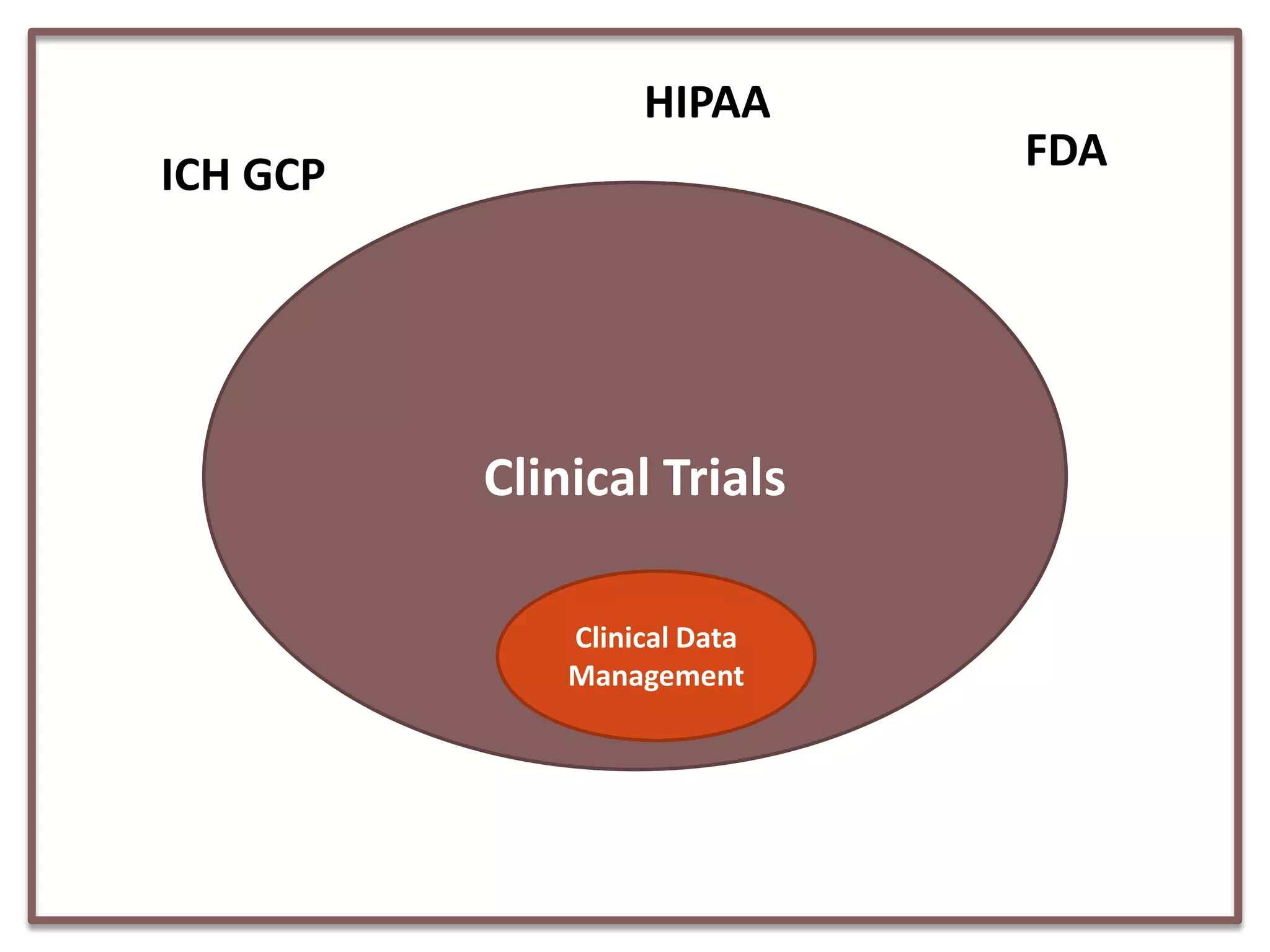
HIPAA
ICH GCP

Clinical Trials
Clinical Data
Management

FDA
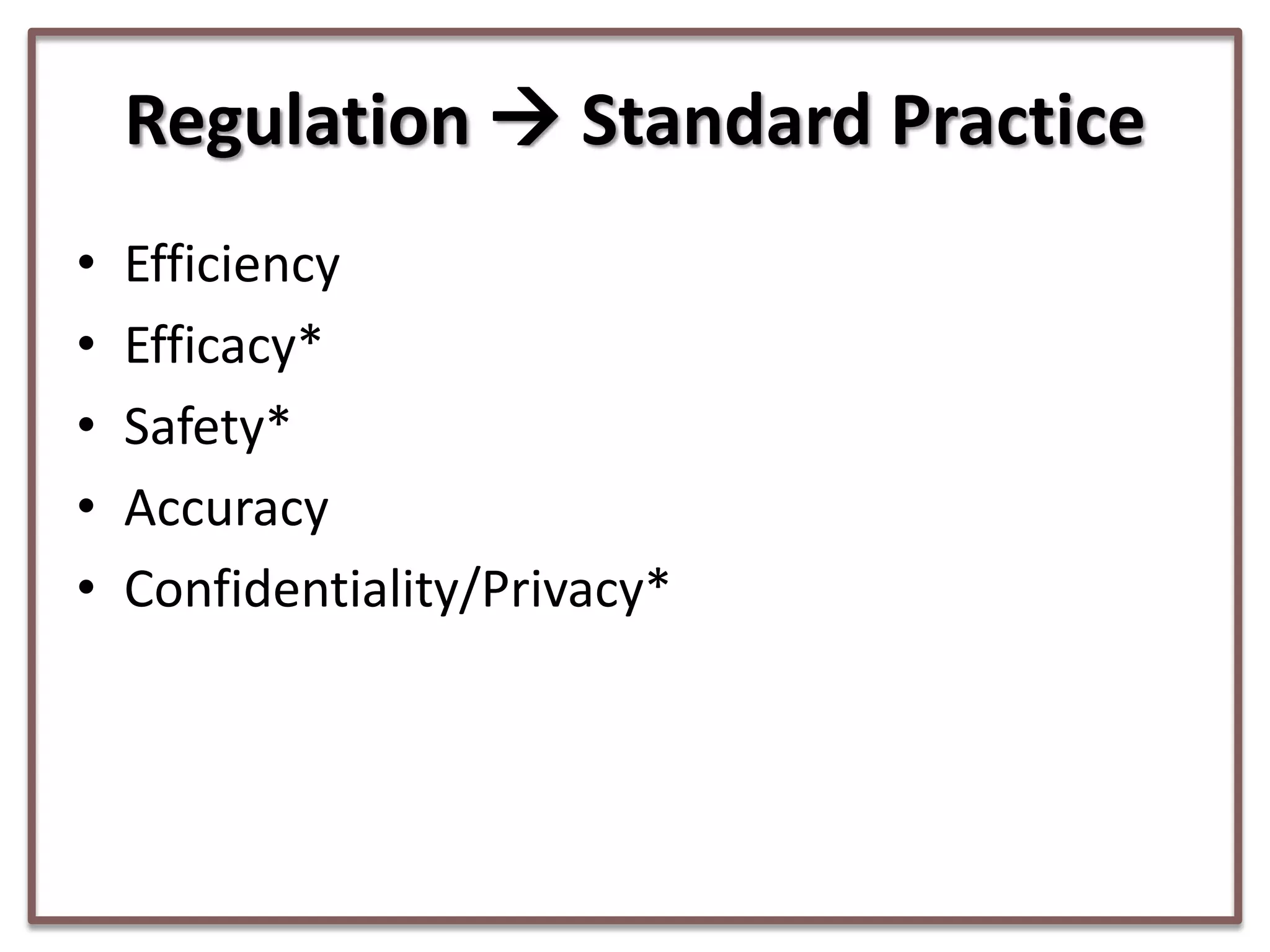
Regulation  Standard Practice
•
•
•
•
•

Efficiency
Efficacy*
Safety*
Accuracy
Confidentiality/Privacy*
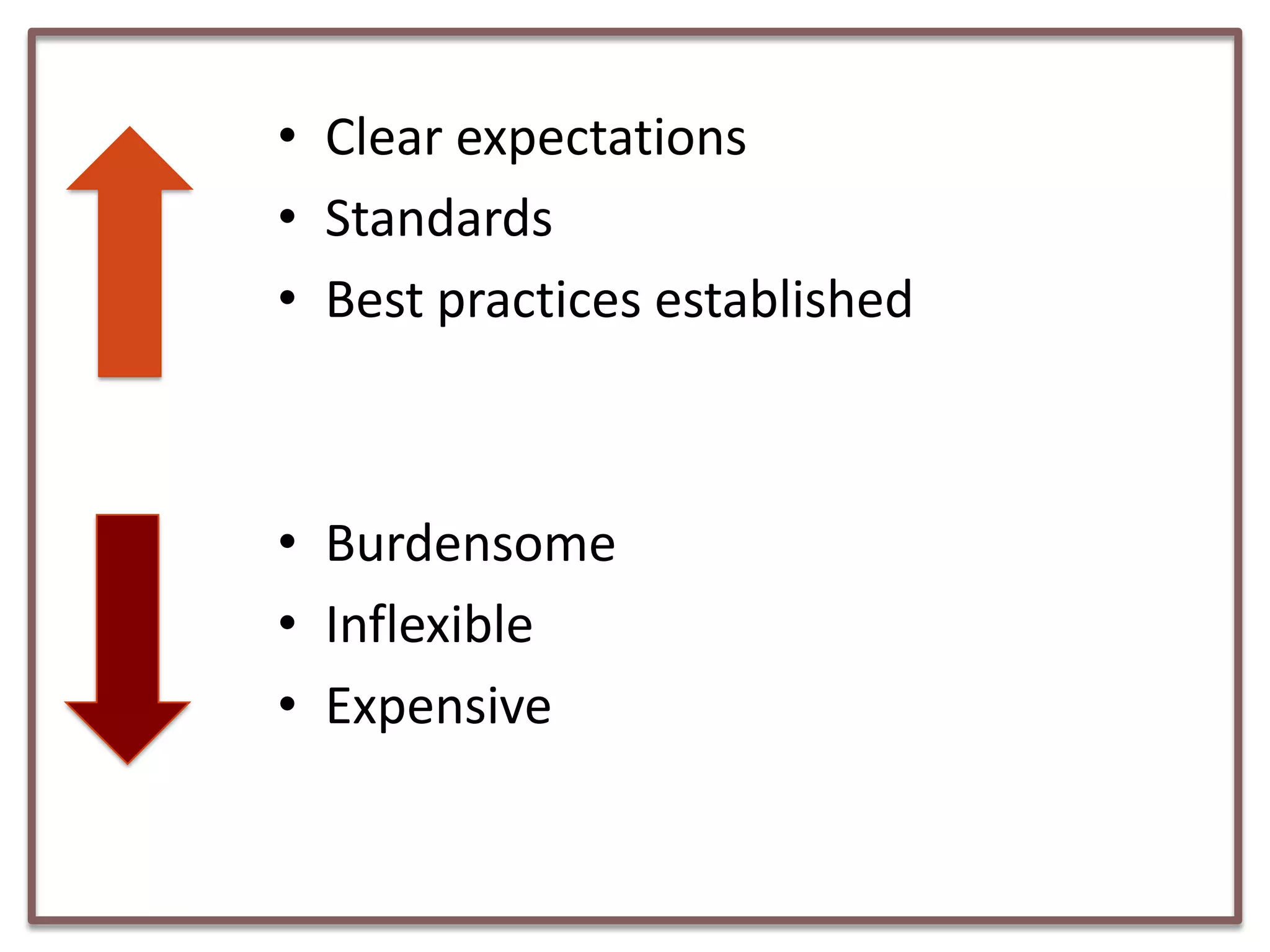
• Clear expectations
• Standards
• Best practices established

• Burdensome
• Inflexible
• Expensive
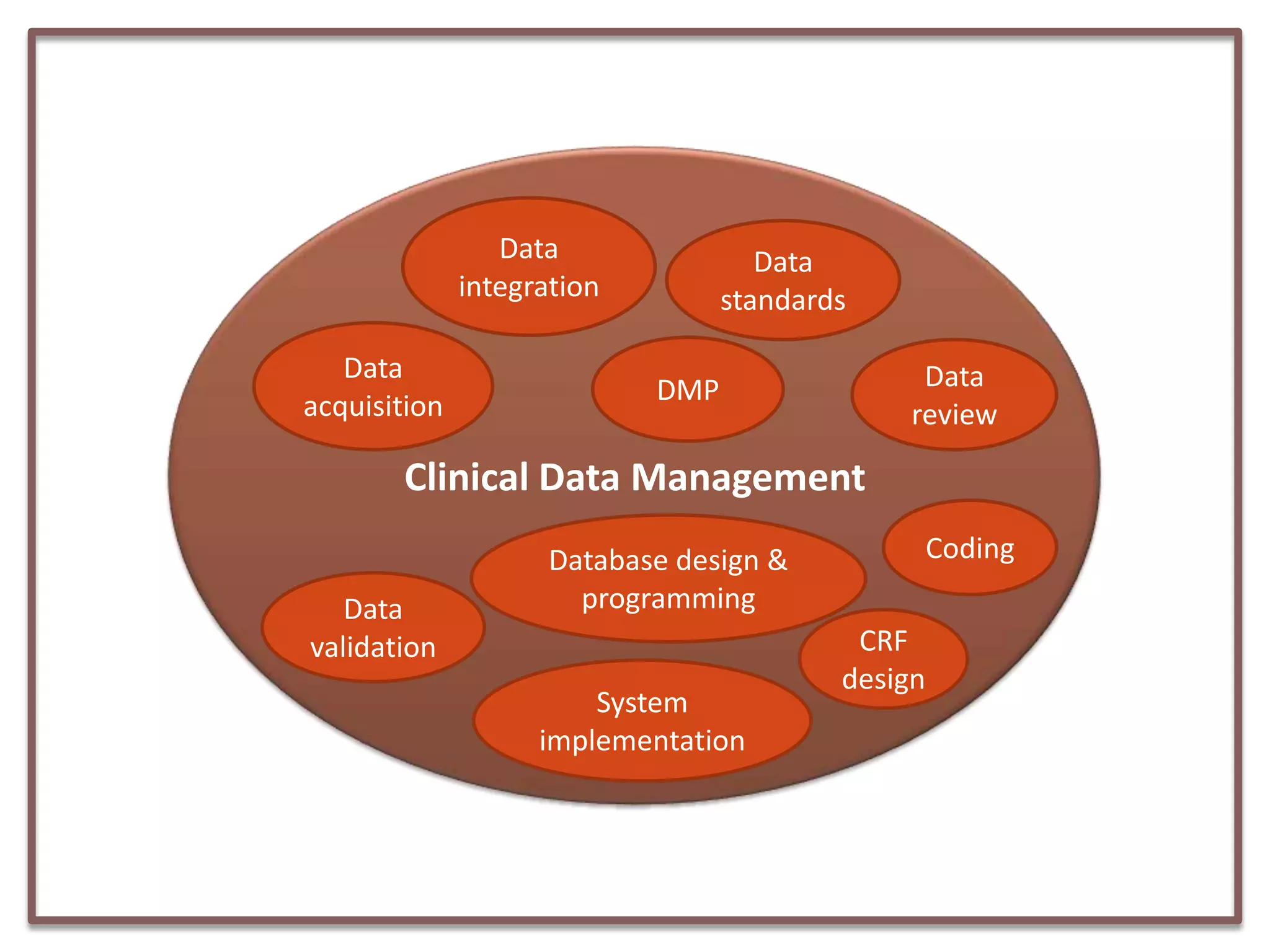
Data
integration
Data
acquisition

Data
standards
Data
review

DMP

Clinical Data Management
Data
validation

Database design &
programming
System
implementation

Coding
CRF
design
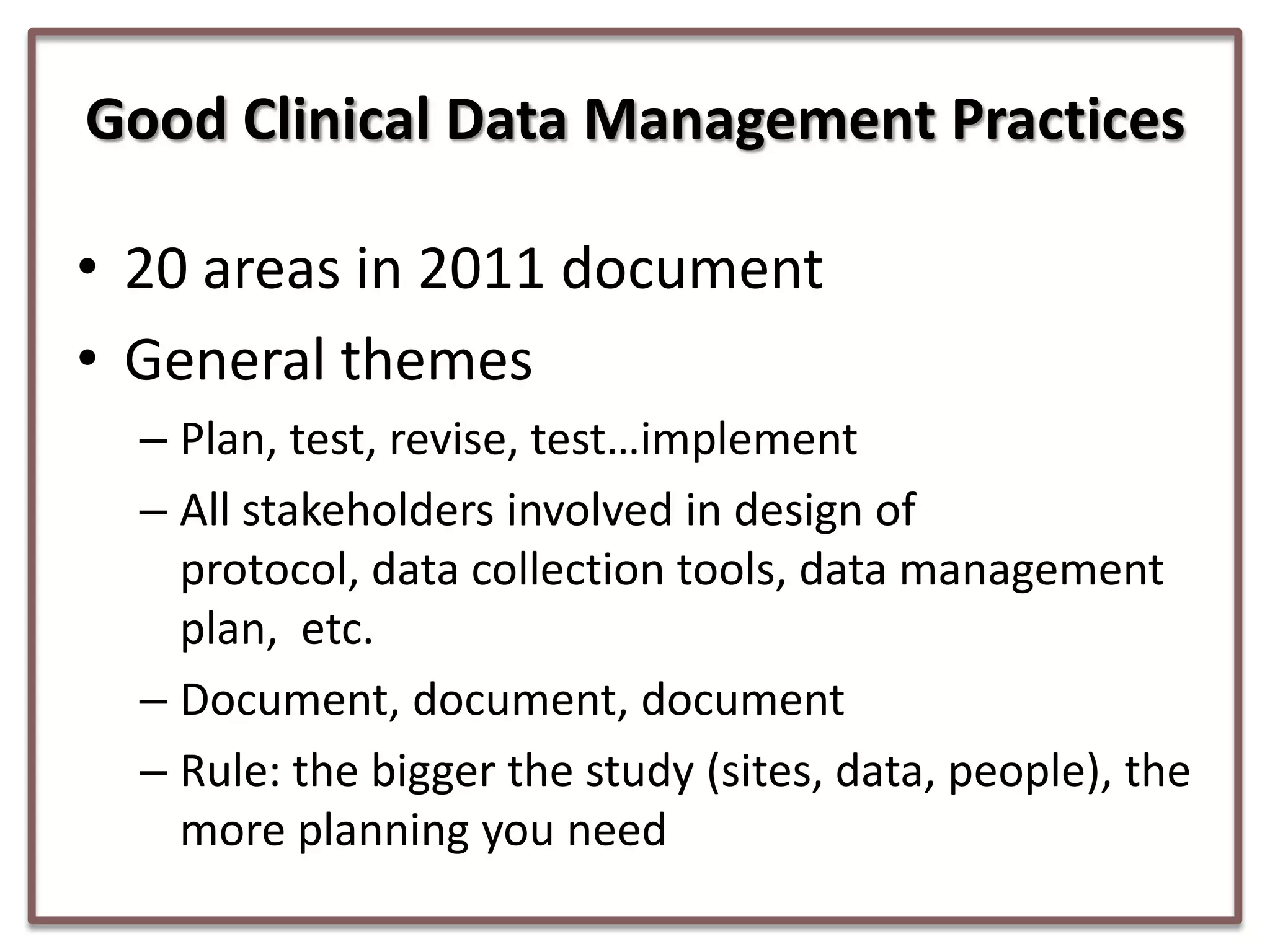
Good Clinical Data Management Practices
• 20 areas in 2011 document
• General themes
– Plan, test, revise, test…implement
– All stakeholders involved in design of
protocol, data collection tools, data management
plan, etc.
– Document, document, document
– Rule: the bigger the study (sites, data, people), the
more planning you need
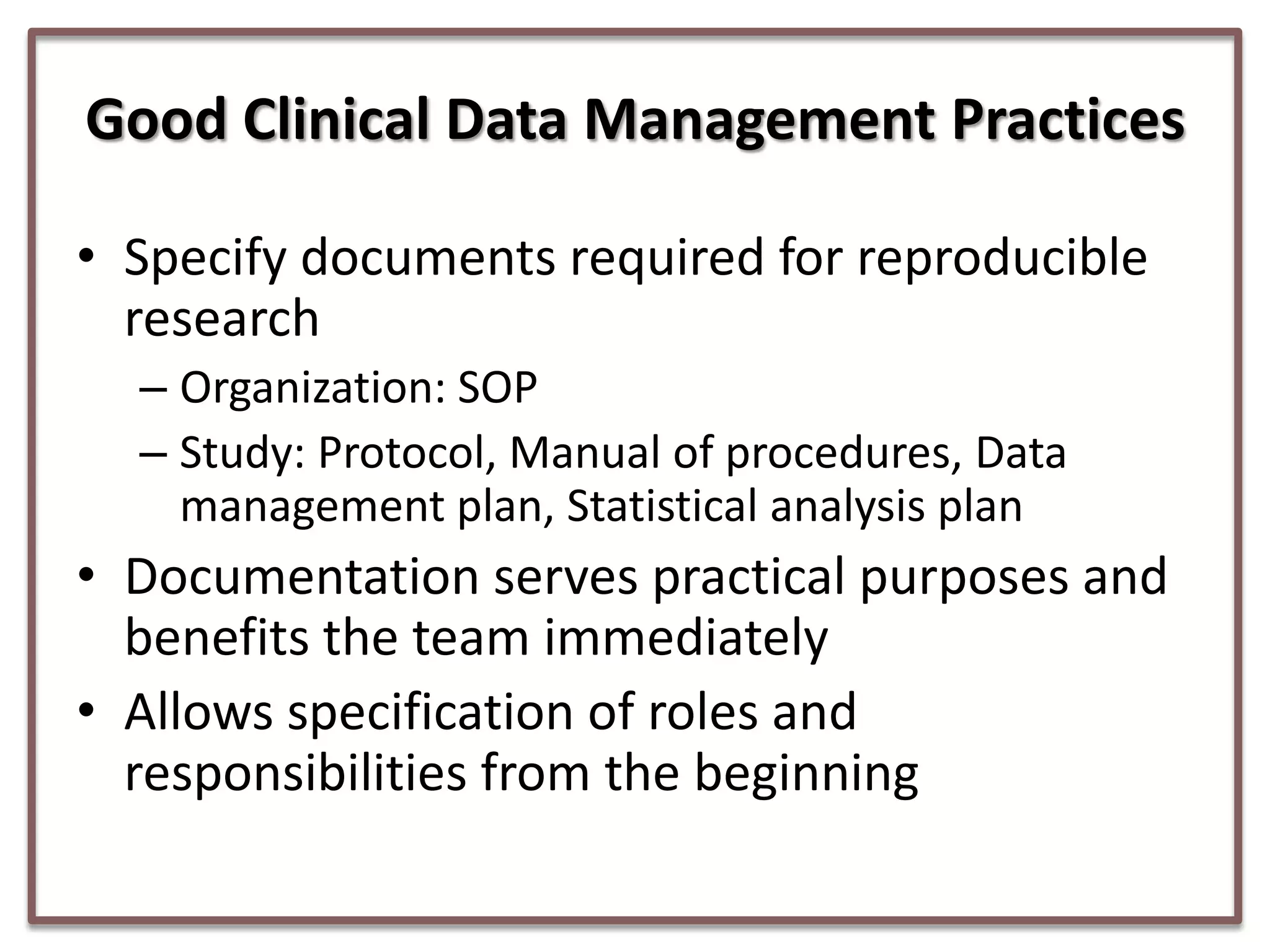
Good Clinical Data Management Practices
• Specify documents required for reproducible
research
– Organization: SOP
– Study: Protocol, Manual of procedures, Data
management plan, Statistical analysis plan

• Documentation serves practical purposes and
benefits the team immediately
• Allows specification of roles and
responsibilities from the beginning
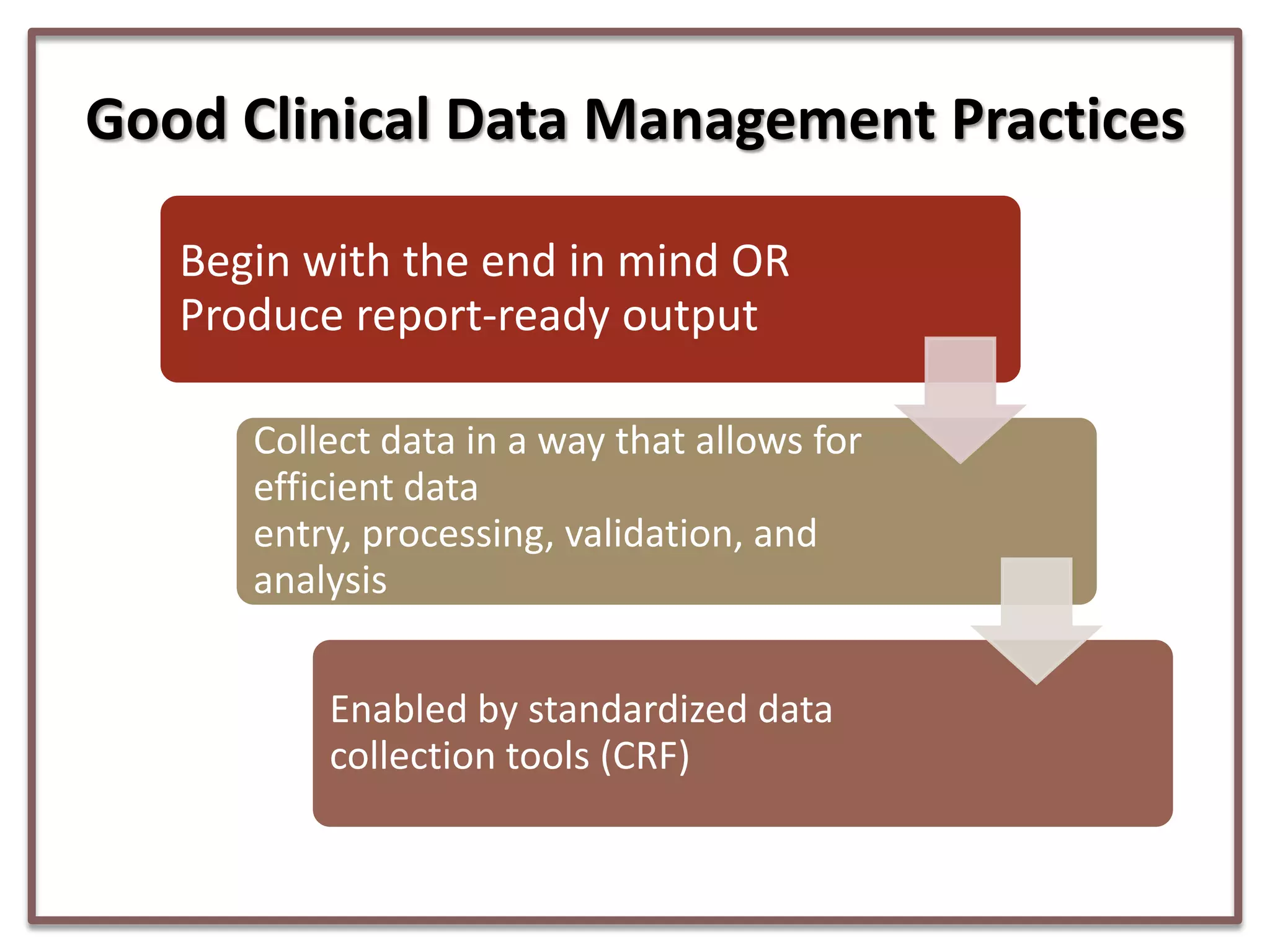
Good Clinical Data Management Practices
Begin with the end in mind OR
Produce report-ready output
Collect data in a way that allows for
efficient data
entry, processing, validation, and
analysis
Enabled by standardized data
collection tools (CRF)
Case Report Forms (CRF)
•
•
•
•

Efficient (concise)
Effective (clear)
Minimize redundancy
Minimize human error – consider
completeness, accuracy, legibility, timelin
ess
• Enables fast data transfer across studies
Raw data

Processed
data

Analysis
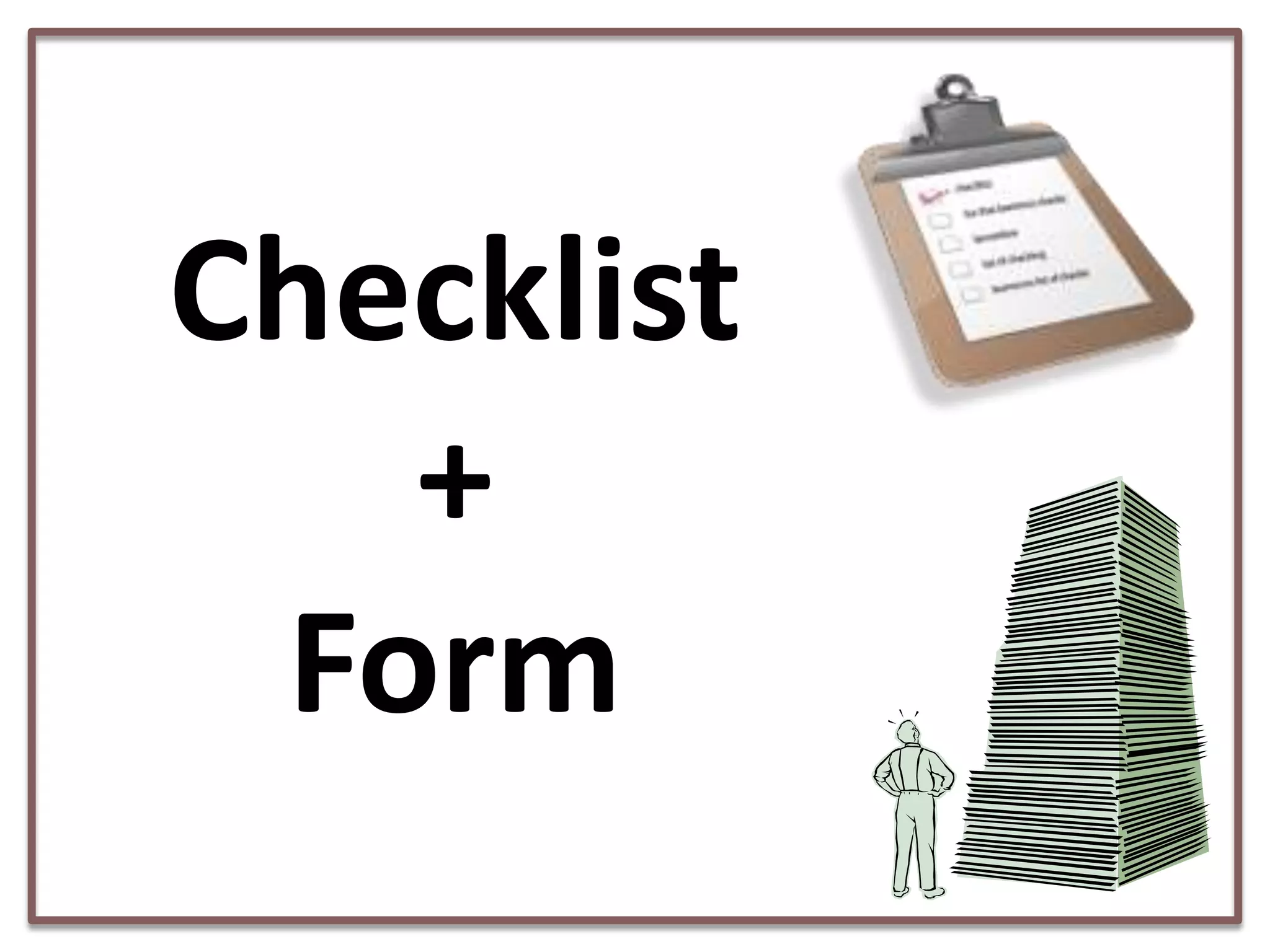
Checklist
+
Form
CRF + Instructions
= CRF Book
Why do these strategies work?
• Save time and money
• Regulated environment – compliance is
enforced
• Clinical trials are similar in structure and
question are fairly narrow in scope
BUT!!!
• GCDMP provide practical strategies that meet
regulatory requirements
References & Resources
1.

2.
3.

4.

Society for Clinical Data Management. (2011). Good Clinical Data
Management Practices. Washington, D.C.
ICH GCP E6. Retrieved from http://www.ich.org/products/guidelines/
efficacy/efficacy-single/article/good-clinical-practice.html
Center for Cancer Research. (nd). Managing Data in Clinical Research.
Retrieved from http://clinicaltrial.vc.ons.org/file_depot/0-10000000/010000/3367/folder/14779/Managing_Data_in_Clinical_Research.pdf
Howard, K. (2005). Data management in clinical trials. Retrieved from
http://www.kestrelconsultants.com/reference_files/Operationalizing_th
e_Study.pdf

Clinical Data Management: Strategies for unregulated data

  • 1.
    Clinical Data Management: Strategies forunregulated data Heather Coates, IUPUI University Library RDAP Summit: April 4, 2013
  • 2.
  • 3.
    Regulation  StandardPractice • • • • • Efficiency Efficacy* Safety* Accuracy Confidentiality/Privacy*
  • 4.
    • Clear expectations •Standards • Best practices established • Burdensome • Inflexible • Expensive
  • 5.
  • 6.
    Good Clinical DataManagement Practices • 20 areas in 2011 document • General themes – Plan, test, revise, test…implement – All stakeholders involved in design of protocol, data collection tools, data management plan, etc. – Document, document, document – Rule: the bigger the study (sites, data, people), the more planning you need
  • 7.
    Good Clinical DataManagement Practices • Specify documents required for reproducible research – Organization: SOP – Study: Protocol, Manual of procedures, Data management plan, Statistical analysis plan • Documentation serves practical purposes and benefits the team immediately • Allows specification of roles and responsibilities from the beginning
  • 8.
    Good Clinical DataManagement Practices Begin with the end in mind OR Produce report-ready output Collect data in a way that allows for efficient data entry, processing, validation, and analysis Enabled by standardized data collection tools (CRF)
  • 9.
    Case Report Forms(CRF) • • • • Efficient (concise) Effective (clear) Minimize redundancy Minimize human error – consider completeness, accuracy, legibility, timelin ess • Enables fast data transfer across studies
  • 10.
  • 12.
  • 13.
  • 14.
    Why do thesestrategies work? • Save time and money • Regulated environment – compliance is enforced • Clinical trials are similar in structure and question are fairly narrow in scope BUT!!! • GCDMP provide practical strategies that meet regulatory requirements
  • 15.
    References & Resources 1. 2. 3. 4. Societyfor Clinical Data Management. (2011). Good Clinical Data Management Practices. Washington, D.C. ICH GCP E6. Retrieved from http://www.ich.org/products/guidelines/ efficacy/efficacy-single/article/good-clinical-practice.html Center for Cancer Research. (nd). Managing Data in Clinical Research. Retrieved from http://clinicaltrial.vc.ons.org/file_depot/0-10000000/010000/3367/folder/14779/Managing_Data_in_Clinical_Research.pdf Howard, K. (2005). Data management in clinical trials. Retrieved from http://www.kestrelconsultants.com/reference_files/Operationalizing_th e_Study.pdf

Editor's Notes

  • #2 Society for Clinical Data Management developed and maintains the Good Clinical Data Management Practices guidelines in concordance with the ICH Good Clinical Practices (http://www.ich.org/products/guidelines/efficacy/efficacy-single/article/good-clinical-practice.html) for clinical trials. While clinical trials are highly regulated with focused questions and strict guidelines for operation, some common practices can be applied to studies occurring outside a regulated environment.Clinical Data Management strategies: How can they improve data management and sharing for non-clinical research?Unlike data curation, clinical data management (CDM) is a recognized area of expertise and a defined career path. The highly regulated clinical trials environment has produced effective and efficient practices that can be generalized to other areas of research. Good Clinical Practice (GCP) is an international standard developed by the International Conference on Harmonisation that specifies how clinical trials should be conducted and defines the roles and responsibilities of various sponsors, investigators, and monitors. These practices address many of the issues at the core of data curation and sharing. Much academic research is not rigidly structured in the manner of clinical trials. Relevant practices within CDM and GCP must be reinterpreted for non-clinical research so that they can inform general data management, sharing, and preservation practice. This lightning talk will highlight effective strategies from CDM and GCP that promote data integrity, facilitate data preservation and sharing, and facilitate reproducibility of results. -find interesting free fonts (2)-find a good color schemeResources-see Evernote note-http://www.entrypointplus.com/datamanagement.htm
  • #7 Characteristics of clinical data management
  • #8 Characteristics of clinical data management
  • #9 Characteristics of clinical data management
  • #10 The primary goal of CRF design is to collect all the data required by the protocol in such a way that it can be analyzed according to the protocol and statistical analysis plan.
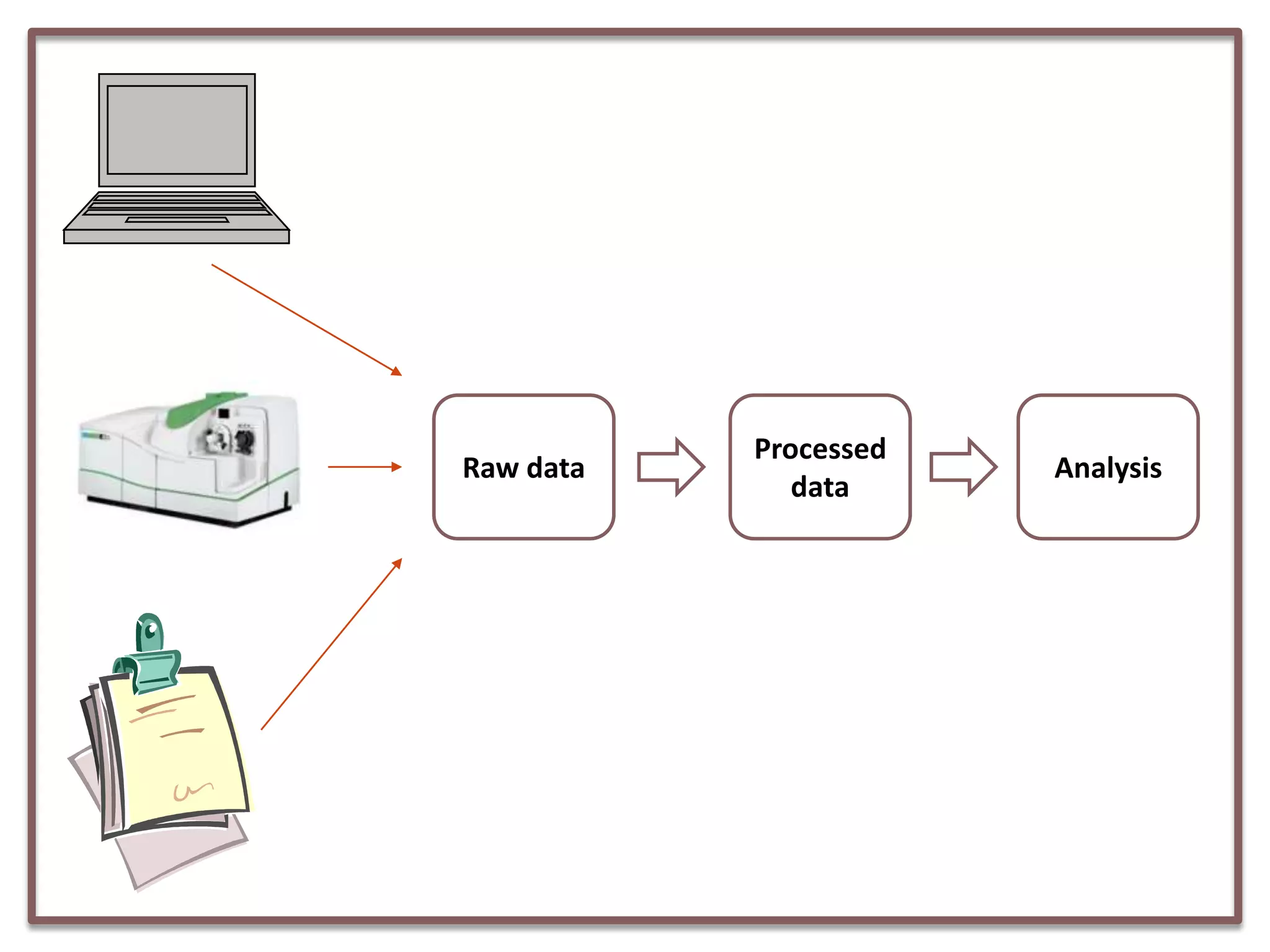
  • #11 Clinical trials have similar data collection issues to social science studies: variety of data types coming in in multiple streams. The GCDMP includes specifications on how to best manage the three types of data streams in clinical trials: CRF, patient reported outcomes, lab data.
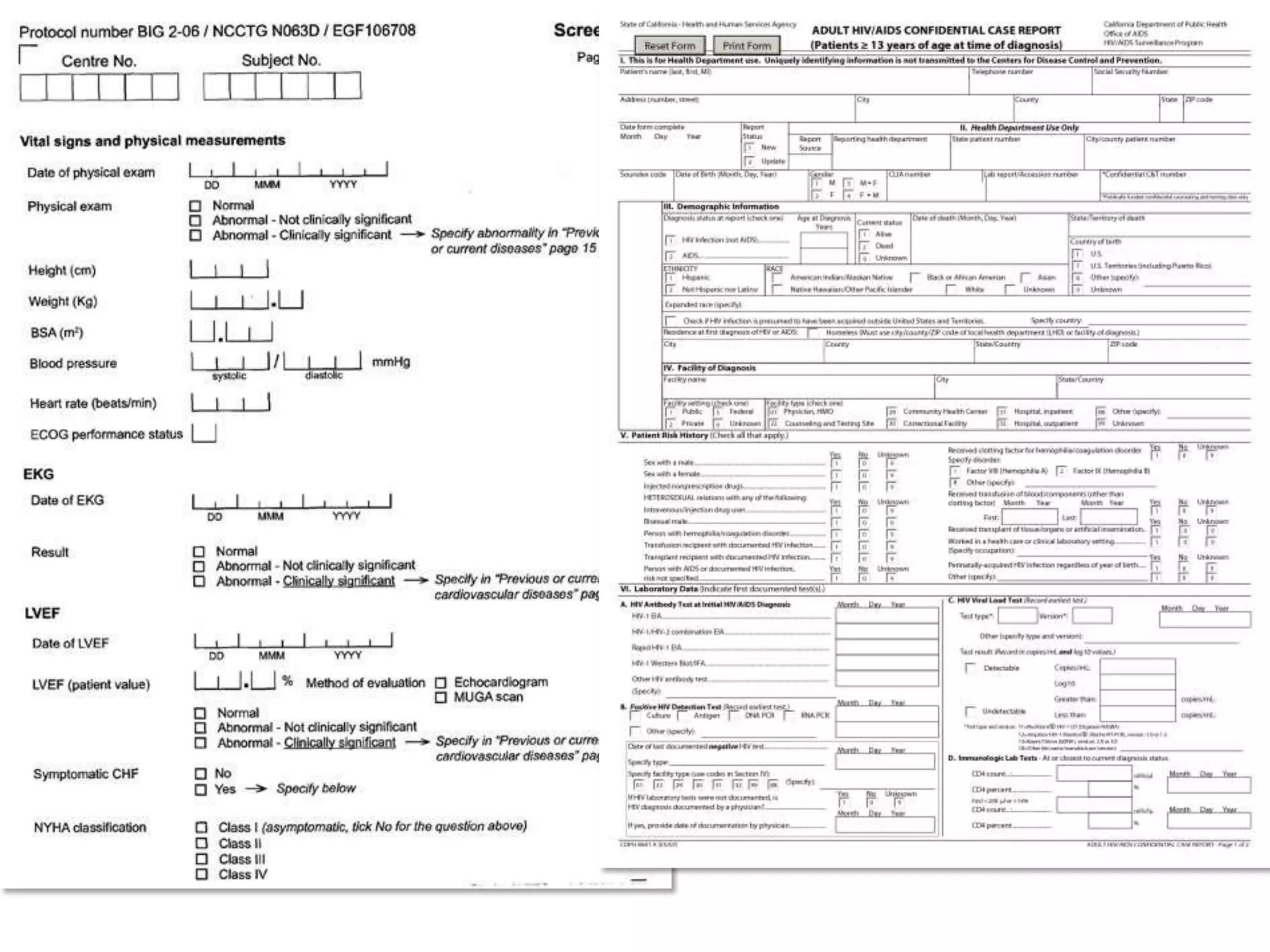
  • #12 They aren’t pretty or magical
  • #13 Why would a researcher in a unregulated environment adopt something like a CRF? A CRF is basically a checklist + standardized input of dataChecklist to ensure complete data collectionForm to ensure standardized data collection and entry
  • #14 CRF Book relates the CRF to the protocol – defines what data should be collected and what data must be collected specified by the protocol
  • #15 If everyone had to figure this out for themselves, it would be as variable as the social sciences generally are. Standards in data management free up researchers to focus on the design and analysis, which is what they typically are about anyway.