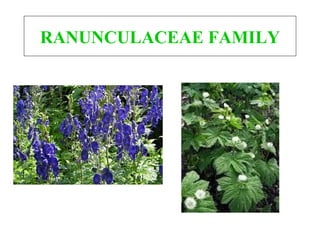

RANUNCULACEAE FAMILY
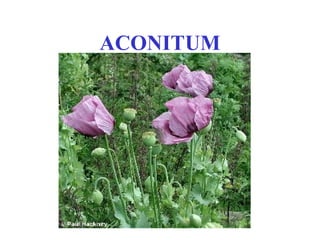
ACONITUM
•
• BOTANICAL ORIGION: Aconitum napellus
• Common Name: Monkshood, Aconite root,
Mithazahar.
• Part used: Dried roots.
• Habit: Perennial herb
• Habitat: Mountains of Germany and
Himalaya, England and Asia.
• Constituents:
It contains alkaloids. The
alkaloids are derivatives of Amino-alcohols and
pentacyclic diterpenes. The main alkaloid is
• Aconitine ( 0.4-0.8%)
Other alkaloids are
• Hypaconitine
• Mesaconitine
• Aconine
• Ephedrine
• Other constituents are
Acotinic acid
Mevlonic acid
Fat
Starch
Sugars
• Aconitines are diacetyl esters of polyhydric
amino alcohols and are extremely
poisonous.
• MEDICINAL USES:
As local analgesic
In rheumatism
Inflammation
Tincture Aconite is antipyretic in small doses.
Aconitine in 2-3mg can lead respiratory failure
and the end death
Mainly used in the preparation of an anti
neuralgic liniments.
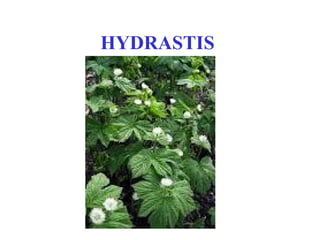
HYDRASTIS
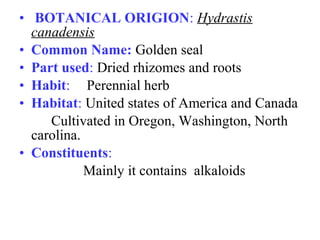
• BOTANICAL ORIGION: Hydrastis
canadensis
• Common Name: Golden seal
• Part used: Dried rhizomes and roots
• Habit: Perennial herb
• Habitat: United states of America and Canada
Cultivated in Oregon, Washington, North
carolina.
• Constituents:
Mainly it contains alkaloids
That is
Hydrastine (1.5-4%)
Berberine
Canadine
• MEDICINAL USES:
Hydrastine and berberine are used as
astringent in inflammation of mucous
membrane.
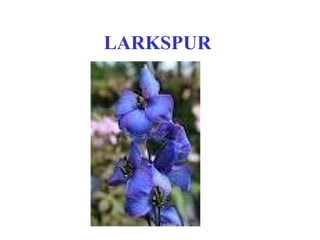
LARKSPUR
• BOTANICAL ORIGION: Delphinium
ajacis, Delphinium denudatum
• Common Name: Larkspur
• Part used: Dried roots and seed
• Habit: Annual herb
• Habitat: Constituents: Central Europe
Mainly it contains poly cyclic
diterpenoid alkaloids
That is
Ajacin
Delphinine
Ajacinine
Ajaconine
• MEDICINAL USES:
Parasiticidal
Anodyne
Antidote for Aconite posion
Used in liver diseases
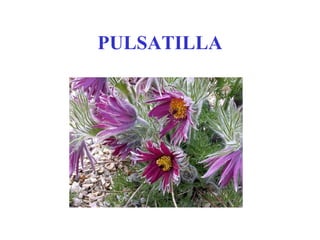
PULSATILLA
• BOTANICAL ORIGION: Anemone
pulsatilla, Pulsatilla vulgaris
• Common Name: Wind Flower. Meadow
Anemone
• Part used: Whole dried herb
• Habit: Perennial herb
• Habitat: Central and Southern Europe
• Constituents:
The fresh plant yields by distillation
with water an acrid, oily principle, called Oil
of Anemone.
Oil acts as a vesicant when applied to the skin
When kept for some time, this oily substance
becomes decomposed into Anemonic acid and
Anemonin
• MEDICINAL USES:
Nervine
antispasmodic,
alterative and diaphoretic .
Ranunculaceae

Ranunculaceae

  • 1.
  • 2.
  • 3.
    • • BOTANICAL ORIGION:Aconitum napellus • Common Name: Monkshood, Aconite root, Mithazahar. • Part used: Dried roots. • Habit: Perennial herb • Habitat: Mountains of Germany and Himalaya, England and Asia.
  • 4.
    • Constituents: It containsalkaloids. The alkaloids are derivatives of Amino-alcohols and pentacyclic diterpenes. The main alkaloid is • Aconitine ( 0.4-0.8%) Other alkaloids are • Hypaconitine • Mesaconitine • Aconine • Ephedrine
  • 5.
    • Other constituentsare Acotinic acid Mevlonic acid Fat Starch Sugars • Aconitines are diacetyl esters of polyhydric amino alcohols and are extremely poisonous.
  • 6.
    • MEDICINAL USES: Aslocal analgesic In rheumatism Inflammation Tincture Aconite is antipyretic in small doses. Aconitine in 2-3mg can lead respiratory failure and the end death Mainly used in the preparation of an anti neuralgic liniments.
  • 7.
  • 8.
    • BOTANICAL ORIGION:Hydrastis canadensis • Common Name: Golden seal • Part used: Dried rhizomes and roots • Habit: Perennial herb • Habitat: United states of America and Canada Cultivated in Oregon, Washington, North carolina. • Constituents: Mainly it contains alkaloids
  • 9.
    That is Hydrastine (1.5-4%) Berberine Canadine •MEDICINAL USES: Hydrastine and berberine are used as astringent in inflammation of mucous membrane.
  • 10.
  • 11.
    • BOTANICAL ORIGION:Delphinium ajacis, Delphinium denudatum • Common Name: Larkspur • Part used: Dried roots and seed • Habit: Annual herb • Habitat: Constituents: Central Europe Mainly it contains poly cyclic diterpenoid alkaloids
  • 12.
    That is Ajacin Delphinine Ajacinine Ajaconine • MEDICINALUSES: Parasiticidal Anodyne Antidote for Aconite posion Used in liver diseases
  • 13.
  • 14.
    • BOTANICAL ORIGION:Anemone pulsatilla, Pulsatilla vulgaris • Common Name: Wind Flower. Meadow Anemone • Part used: Whole dried herb • Habit: Perennial herb • Habitat: Central and Southern Europe • Constituents: The fresh plant yields by distillation with water an acrid, oily principle, called Oil of Anemone. Oil acts as a vesicant when applied to the skin
  • 15.
    When kept forsome time, this oily substance becomes decomposed into Anemonic acid and Anemonin • MEDICINAL USES: Nervine antispasmodic, alterative and diaphoretic .