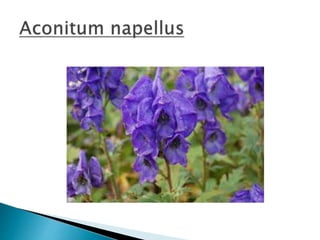
Aconitum napellus.
 Botanical origin Aconitum napellus.
 Plant family Ranunculaceae.
 Urdu name Zahreela poda.
 English name Aconite.
 Chemical class Alkaloids.
 Part used Roots.
Chemical constituents :
Aconitine,hypaconitine,mesaconitine, jesaconitine.
Pharmacological actions :
Antipyretic ,local anaesthetic,anti
inflammatory,sedative,diuretic,antineuralgic,
antirheumatic,atrabilious-antiphlegmatic disorders
(leprosy,leucoderma,asthma,chronic ulcer).
Availability/dosage form :
 As tincture,tea,liniment,oinment.
 Must be used in detoxified form.
Dose:
 60 mg of the root per dose.
 Pure aconite 2mg or aconite plant 1g may
cause death.
 Anabolic effects.
Mesaconitine;accelerate liver synthesis by increase of RNA polymerase.
 Analgesic effects.
Mesaconitine;release of nor-adrenaline(neurotransmitter) by nor-adrenergic pathway
that block pain sensation.
 Anti inflammatory effects.
Methanol extracts of aconitum;block histamine that is inflammatory mediator.
 Anti pyretic effect.
Mesaconitine-hypothermic effects.
 Cardiovascular effects.
Aconitine;mediated by alpha-adrenergic pathway.
 Endocrine effects.
Aconitine;reduce plasma glucose level.
 Immunological effects.
Aconitine;stimulates the response of IFN-gamma-activated expression of an antigen
by macrophages by increasing plasma corticosterone level.
 Neuromuscular blockade effects.
Aconitine;block sodium channels in nerve membrane.
 Anti-arrhythmic medications may antagonize the
effects of aconite and increase the risk of
cardiotoxicity or other side effects.
 It lowers blood sugar levels. Caution is advised when
using medications that may also lower blood sugar.
 It may lower blood pressure. Caution is advised when
using medications that may also lower blood
pressure.
 Combined use of aconitine with anesthetic
medications or diuretic medications (those that
increase urine flow) may also lower blood pressure.
 Digoxin may interfere with aconitine effects on the
heart.
 The cardiotoxicity and neurotoxicity of aconitine and related
alkaloids are due to their actions on the voltage-sensitive
sodium channels of the cell membranes of excitable tissues,
including the myocardium, nerves, and muscles.
 Aconitine and mesaconitine bind with high affinity to the open
state of the voltage-sensitive sodium channels at site 2, thereby
causing a persistent activation of the sodium channels, which
become refractory to excitation.
 The electrophysiological mechanism of arrhythmia induction is
triggered activity due to delayed after-depolarization and early
after-depolarization.
 The arrhythmogenic properties of aconitine are in part due to its
cholinolytic (anticholinergic) effects mediated by the vagus
nerve.
 Aconitine has a positive inotropic effect by prolonging sodium
influx during the action potential. It has hypotensive and
bradycardic actions due to activation of the ventromedial nucleus
of the hypothalamus.
 The neurological features can be sensory
(paresthesia and numbness of face, perioral
area, and the fore limbs), motor (muscle
weakness in the fore limbs), or both.
 The cardiovascular features include
hypotension, chest pain, palpitations,
bradycardia, sinus tachycardia, ventricular
ectopics, ventricular tachycardia, and
ventricular fibrillation.
 The gastrointestinal features include nausea,
vomiting, abdominal pain, and diarrhea.
 Avoid use of larger dose then recommended.
 Soaking and boiling or decoction preparation will
hydrolyze alkaloids into less toxic and non toxic
derivatives.
 Management of aconite poisoning is supportive, including
immediate attention to the vital functions and close
monitoring of blood pressure and cardiac rhythm.
 Inotropic therapy is required if hypotension persists and
atropine should be used to treat bradycardia.
 Available clinical evidence suggests that amiodarone and
flecainide are reasonable first-line treatment. In refractory
cases of ventricular arrhythmias and cardiogenic shock, it
is most important to maintain systemic blood flow, blood
pressure, and tissue oxygenation by the early use of
cardiopulmonary bypass.
Contraindications :
 Don’t take orally or apply to skin during pregnancy
and breast feeding.
 It is contraindicated in patients with coronary
disease,cardiac disfunction,arrhythmias .
Side effects :
 Cause tingling and numbness when applied topically.
 Cause hypotension,hypokalemia,leukocytosis
hypothermia,hyperventilation,clonic convulsions.
 Cause ventricular tachycardia,muscle
cramps,diarrhea,respiratory dipression,ataxia, blurred
vision,liver and kidney damage, nausea, vomiting,
dizziness.
 http://www.ncbi.nlm.nih.gov/pubmed/1951487
4 (toxicity,clinical features,management).
 http://herbsdatabase.blogspot.com/2012/07/ac
onitum-chasmanthum.html (uses and
pharmacognostic features).
 http://www.sigmaaldrich.com/life-
science/nutrition-research/learning-
center/plant-profiler/aconitum-napellus.html
(chemical constituent and mechanism of action).
 http://www.livingnaturally.com/ns/DisplayMono
graph.asp?StoreID=E32FA6C399AB4C998970325
81851D45D&DocID=bottomline-aconite
(interaction with drugs and side effect and
contraindications).

Aconite (Aconitum napellus)

  • 1.
  • 3.
     Botanical originAconitum napellus.  Plant family Ranunculaceae.  Urdu name Zahreela poda.  English name Aconite.  Chemical class Alkaloids.  Part used Roots.
  • 4.
    Chemical constituents : Aconitine,hypaconitine,mesaconitine,jesaconitine. Pharmacological actions : Antipyretic ,local anaesthetic,anti inflammatory,sedative,diuretic,antineuralgic, antirheumatic,atrabilious-antiphlegmatic disorders (leprosy,leucoderma,asthma,chronic ulcer).
  • 5.
    Availability/dosage form : As tincture,tea,liniment,oinment.  Must be used in detoxified form. Dose:  60 mg of the root per dose.  Pure aconite 2mg or aconite plant 1g may cause death.
  • 6.
     Anabolic effects. Mesaconitine;accelerateliver synthesis by increase of RNA polymerase.  Analgesic effects. Mesaconitine;release of nor-adrenaline(neurotransmitter) by nor-adrenergic pathway that block pain sensation.  Anti inflammatory effects. Methanol extracts of aconitum;block histamine that is inflammatory mediator.  Anti pyretic effect. Mesaconitine-hypothermic effects.  Cardiovascular effects. Aconitine;mediated by alpha-adrenergic pathway.  Endocrine effects. Aconitine;reduce plasma glucose level.  Immunological effects. Aconitine;stimulates the response of IFN-gamma-activated expression of an antigen by macrophages by increasing plasma corticosterone level.  Neuromuscular blockade effects. Aconitine;block sodium channels in nerve membrane.
  • 7.
     Anti-arrhythmic medicationsmay antagonize the effects of aconite and increase the risk of cardiotoxicity or other side effects.  It lowers blood sugar levels. Caution is advised when using medications that may also lower blood sugar.  It may lower blood pressure. Caution is advised when using medications that may also lower blood pressure.  Combined use of aconitine with anesthetic medications or diuretic medications (those that increase urine flow) may also lower blood pressure.  Digoxin may interfere with aconitine effects on the heart.
  • 8.
     The cardiotoxicityand neurotoxicity of aconitine and related alkaloids are due to their actions on the voltage-sensitive sodium channels of the cell membranes of excitable tissues, including the myocardium, nerves, and muscles.  Aconitine and mesaconitine bind with high affinity to the open state of the voltage-sensitive sodium channels at site 2, thereby causing a persistent activation of the sodium channels, which become refractory to excitation.  The electrophysiological mechanism of arrhythmia induction is triggered activity due to delayed after-depolarization and early after-depolarization.  The arrhythmogenic properties of aconitine are in part due to its cholinolytic (anticholinergic) effects mediated by the vagus nerve.  Aconitine has a positive inotropic effect by prolonging sodium influx during the action potential. It has hypotensive and bradycardic actions due to activation of the ventromedial nucleus of the hypothalamus.
  • 9.
     The neurologicalfeatures can be sensory (paresthesia and numbness of face, perioral area, and the fore limbs), motor (muscle weakness in the fore limbs), or both.  The cardiovascular features include hypotension, chest pain, palpitations, bradycardia, sinus tachycardia, ventricular ectopics, ventricular tachycardia, and ventricular fibrillation.  The gastrointestinal features include nausea, vomiting, abdominal pain, and diarrhea.
  • 10.
     Avoid useof larger dose then recommended.  Soaking and boiling or decoction preparation will hydrolyze alkaloids into less toxic and non toxic derivatives.  Management of aconite poisoning is supportive, including immediate attention to the vital functions and close monitoring of blood pressure and cardiac rhythm.  Inotropic therapy is required if hypotension persists and atropine should be used to treat bradycardia.  Available clinical evidence suggests that amiodarone and flecainide are reasonable first-line treatment. In refractory cases of ventricular arrhythmias and cardiogenic shock, it is most important to maintain systemic blood flow, blood pressure, and tissue oxygenation by the early use of cardiopulmonary bypass.
  • 11.
    Contraindications :  Don’ttake orally or apply to skin during pregnancy and breast feeding.  It is contraindicated in patients with coronary disease,cardiac disfunction,arrhythmias . Side effects :  Cause tingling and numbness when applied topically.  Cause hypotension,hypokalemia,leukocytosis hypothermia,hyperventilation,clonic convulsions.  Cause ventricular tachycardia,muscle cramps,diarrhea,respiratory dipression,ataxia, blurred vision,liver and kidney damage, nausea, vomiting, dizziness.
  • 12.
     http://www.ncbi.nlm.nih.gov/pubmed/1951487 4 (toxicity,clinicalfeatures,management).  http://herbsdatabase.blogspot.com/2012/07/ac onitum-chasmanthum.html (uses and pharmacognostic features).  http://www.sigmaaldrich.com/life- science/nutrition-research/learning- center/plant-profiler/aconitum-napellus.html (chemical constituent and mechanism of action).  http://www.livingnaturally.com/ns/DisplayMono graph.asp?StoreID=E32FA6C399AB4C998970325 81851D45D&DocID=bottomline-aconite (interaction with drugs and side effect and contraindications).