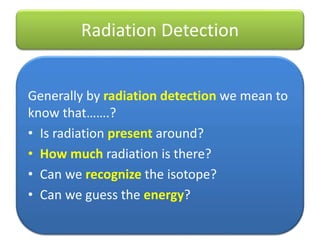
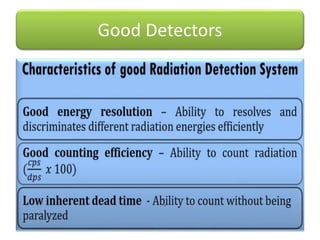
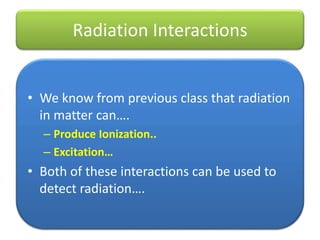
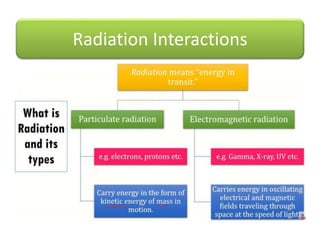
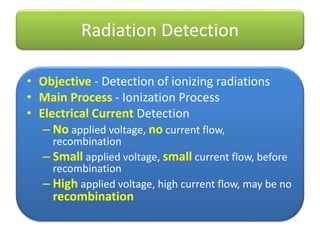
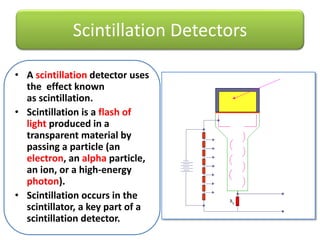
Radiation detection principles involve using detectors to determine if radiation is present, how much radiation exists, and characteristics of the radiation such as the isotope or energy. Common detector types include gas-filled detectors like proportional and Geiger-Muller counters, scintillation detectors using materials like sodium iodide, and solid state detectors made of semiconductors. Gas detectors work by ionizing gas when radiation passes through, while scintillation detectors use radiation-induced flashes of light and solid state detectors measure charge carriers freed in semiconductor materials.





![Human Reproduction [ Reproductive System ] Notes @irfanullah_mehar Irfanullah...](https://cdn.slidesharecdn.com/ss_thumbnails/humanreproductionreproductivesystemnotesirfanullahmeharirfanullahmeharjanantantra-260111172350-56e85778-thumbnail.jpg?width=640&height=640&fit=bounds)


