Downloaded 118 times

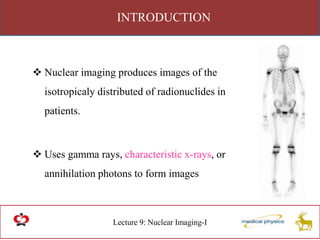
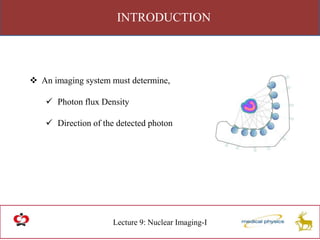
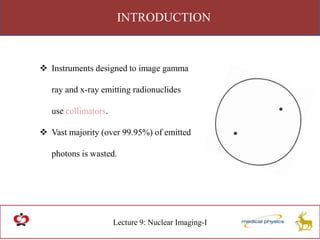
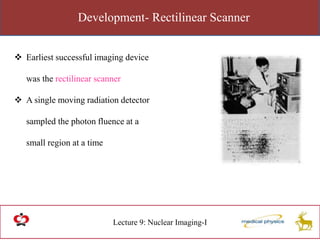
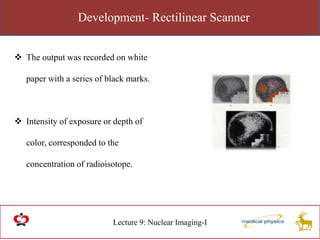
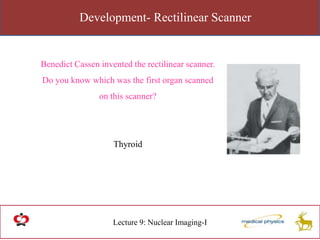
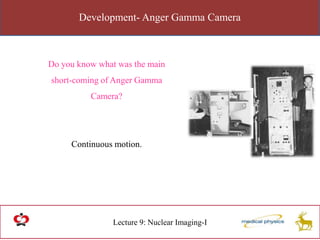
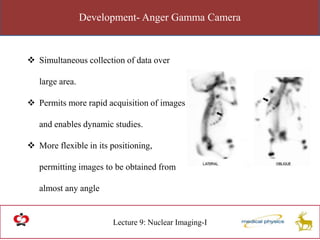
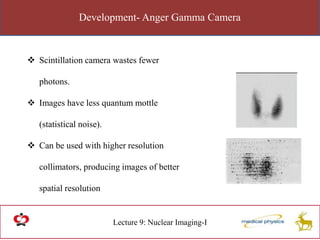
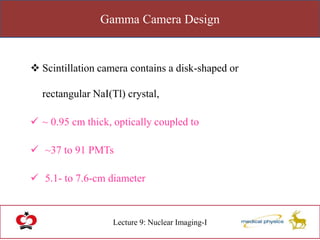
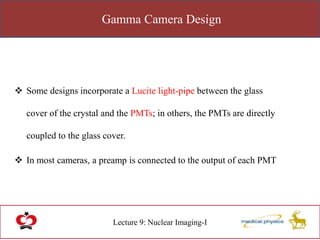
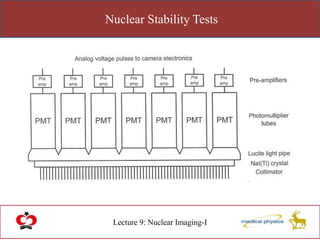
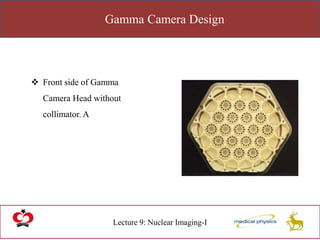
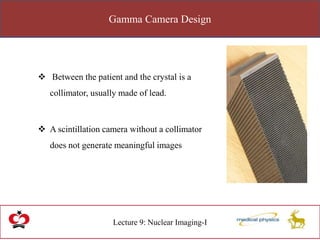
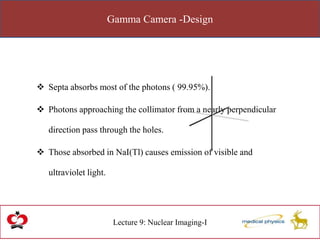
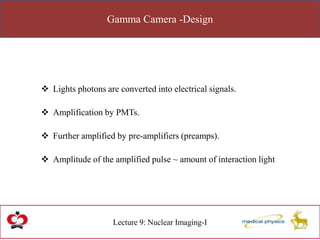
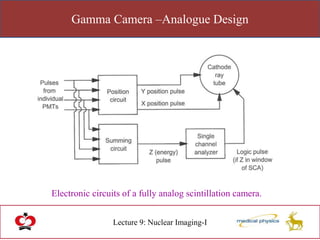
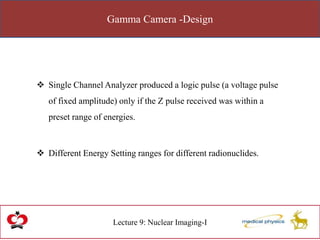
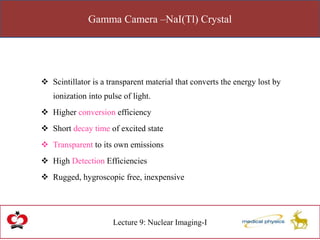
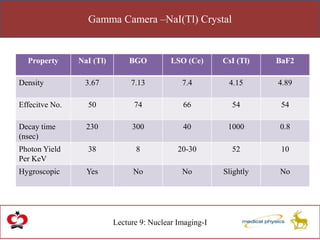
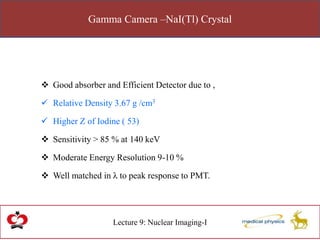
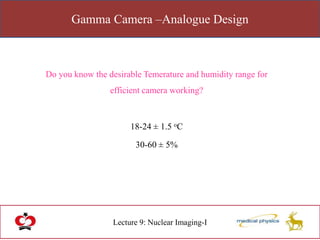
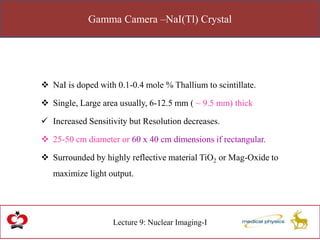
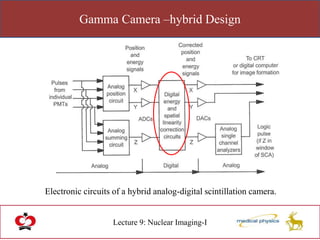
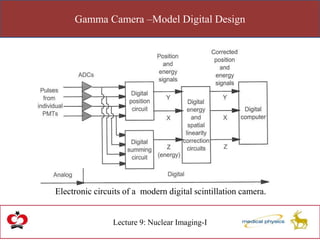
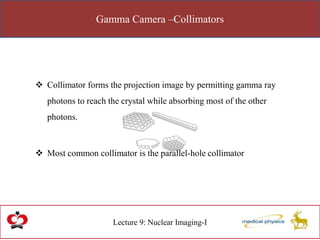
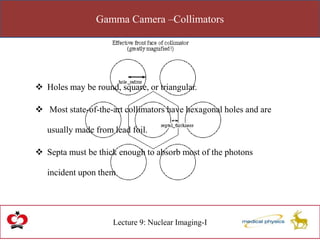

This lecture discusses the development of nuclear imaging techniques. It begins with an overview of nuclear imaging and its use of gamma rays and x-rays to form images. The earliest device was the rectilinear scanner, which used a single moving detector. The Anger gamma camera was a significant improvement as it allowed simultaneous detection over a large area. Modern gamma cameras use NaI(Tl) scintillator crystals coupled to PMTs to convert gamma ray interactions to light and then electrical signals. Digital processing is used to determine interaction locations and form images. Collimators are used to selectively detect gamma rays from a desired direction.


![PERI-PROSTHETIC FRACTURE NAIL-PLATE CONSTRUCT [NPC].pptx](https://cdn.slidesharecdn.com/ss_thumbnails/drarunkumardrmohamedashrafperiprostheticfrasturenail-plateconstructnpc-260209164459-7e9d15a1-thumbnail.jpg?width=640&height=640&fit=bounds)


![ONFH[AVN HIP] -TRIPLE REGIME -A NOVAL SURGICAL CONCEPT .pptx](https://cdn.slidesharecdn.com/ss_thumbnails/onfhavnhip2026koaconcalicutdrgokuldevdrmashraf-260210064517-213ec005-thumbnail.jpg?width=640&height=640&fit=bounds)

