MEASUREMENT OF
RADIOACTIVITY
PREPARED BY- RIKTTAH AHMED
Measurement of Radioactivity
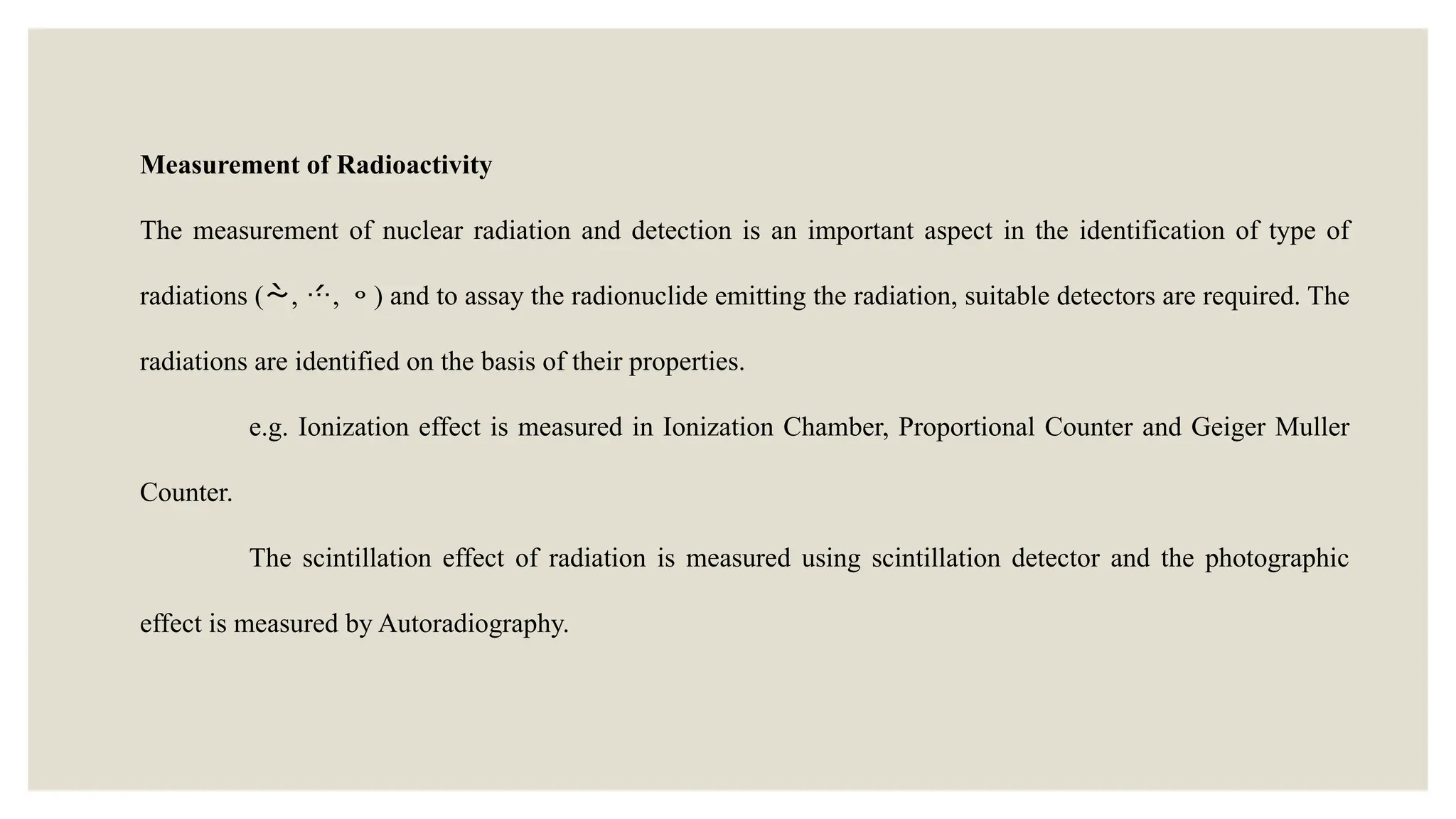
The measurement of nuclear radiation and detection is an important aspect in the identification of type of
radiations (, , ) and to assay the radionuclide emitting the radiation, suitable detectors are required. The
radiations are identified on the basis of their properties.
e.g. Ionization effect is measured in Ionization Chamber, Proportional Counter and Geiger Muller
Counter.
The scintillation effect of radiation is measured using scintillation detector and the photographic
effect is measured by Autoradiography.
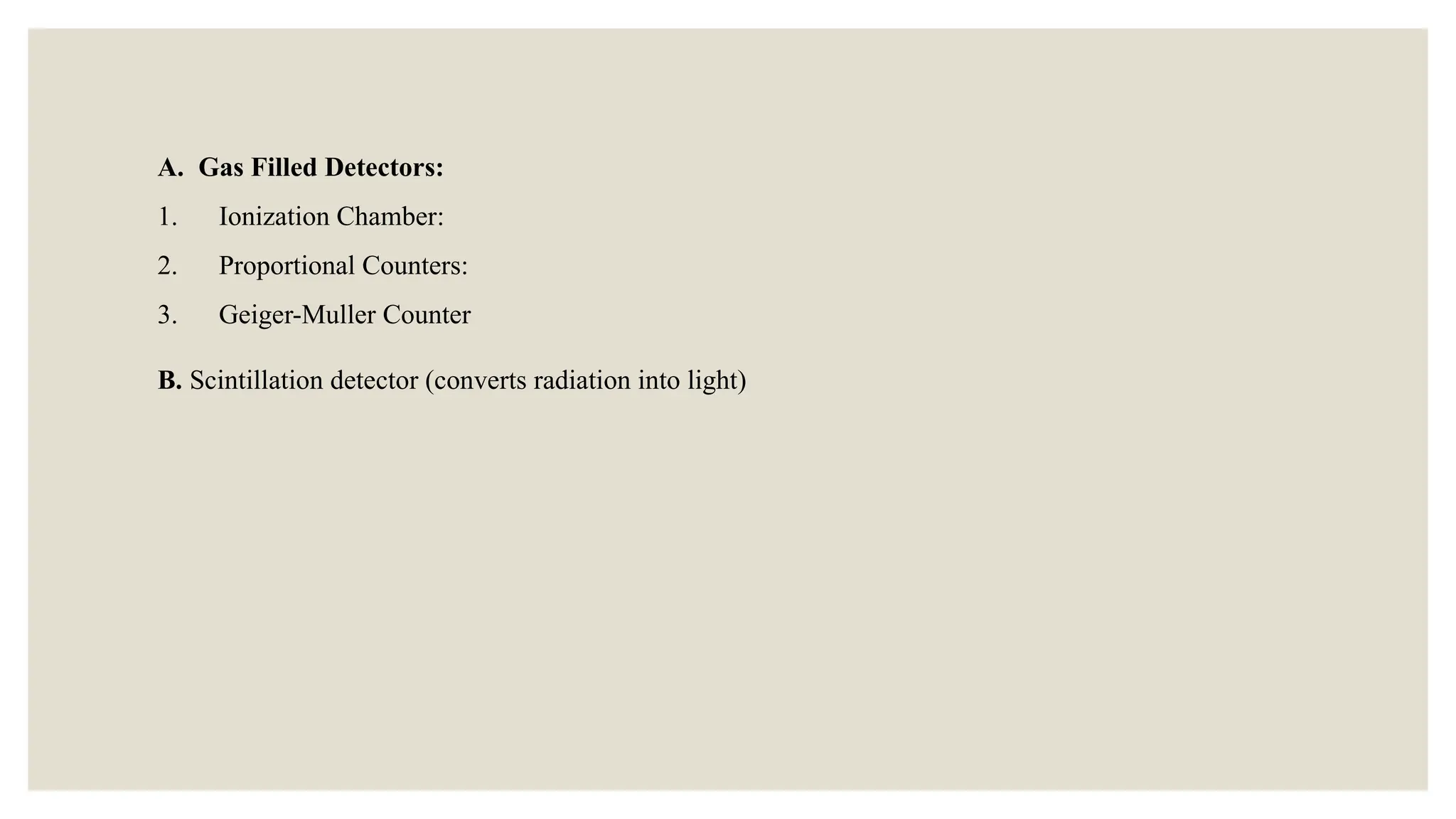
A. Gas Filled Detectors:
1. Ionization Chamber:
2. Proportional Counters:
3. Geiger-Muller Counter
B. Scintillation detector (converts radiation into light)
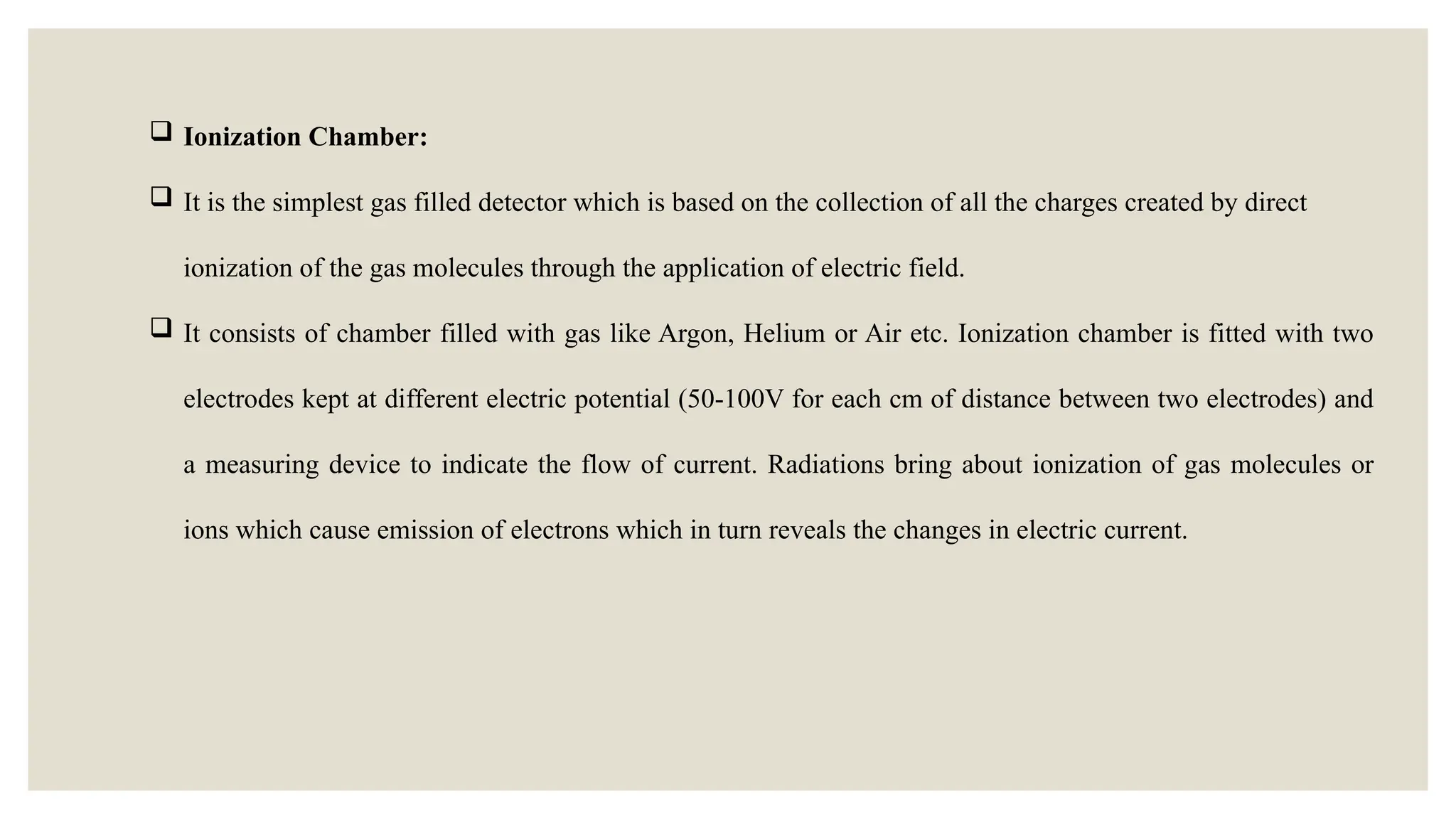
 Ionization Chamber:
 It is the simplest gas filled detector which is based on the collection of all the charges created by direct
ionization of the gas molecules through the application of electric field.
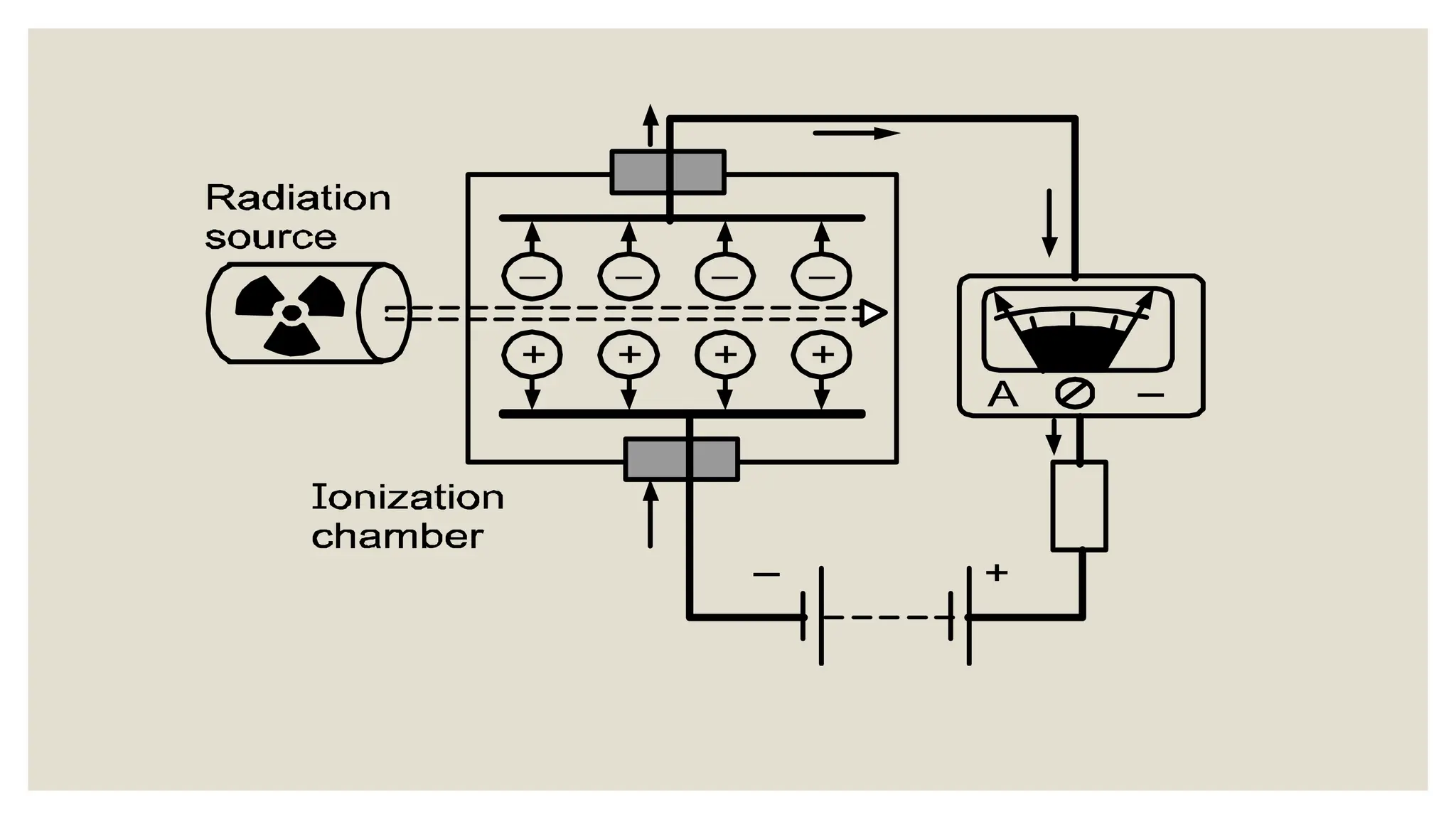
 It consists of chamber filled with gas like Argon, Helium or Air etc. Ionization chamber is fitted with two
electrodes kept at different electric potential (50-100V for each cm of distance between two electrodes) and
a measuring device to indicate the flow of current. Radiations bring about ionization of gas molecules or
ions which cause emission of electrons which in turn reveals the changes in electric current.
ADVANTAGES OF IONIZATION CHAMBERS
1.Accuracy: Ionization chambers provide precise measurements of ionizing radiation, making them reliable for dosimetry.
2.Wide Range of Radiation Types: They can detect various types of radiation, including alpha, beta, and gamma radiation.
3.High Dose Capability: They are suitable for measuring high radiation doses, which is beneficial in radiation therapy and
radiation safety.
4.Linear Response: The output current is directly proportional to the radiation dose, facilitating easy calibration and
interpretation.
5.Durability: Ionization chambers are generally robust and can be used in various environments without significant degradation.
DISADVANTAGES OF IONIZATION CHAMBERS
6.Energy Sensitivity: Ionization chambers can be sensitive to the energy of the incoming radiation, requiring careful calibration
for different radiation types.
7.Limited Sensitivity for Low Doses: They may not be as effective for detecting low radiation levels compared to other
detectors, like Geiger-Müller counters.
8.Response Time: The response time may be slower compared to some other types of radiation detectors, which can be a
limitation in rapidly changing radiation environments.
9.Size and Weight: Depending on the design, ionization chambers can be bulkier and heavier than portable radiation detectors,
limiting their use in certain field applications.
10.Calibration Requirement: Regular calibration is necessary to maintain accuracy, which can require additional time and
resources.
2. Proportional Counters:
It is the modified form of ionization chamber.
Operate at high voltage (1000-2000v).
It is device used to detect charged particle having low ionization power (i.e., ).
Filling gas 90% Ar and 10% methane
Principal : When voltage between cathode anode is sufficiently increases, primary ion will produce by
interaction of gas particles . They gain sufficient energy to further collide with gas molecule and produce
secondary ions and give rise to detector pulse.
Construction
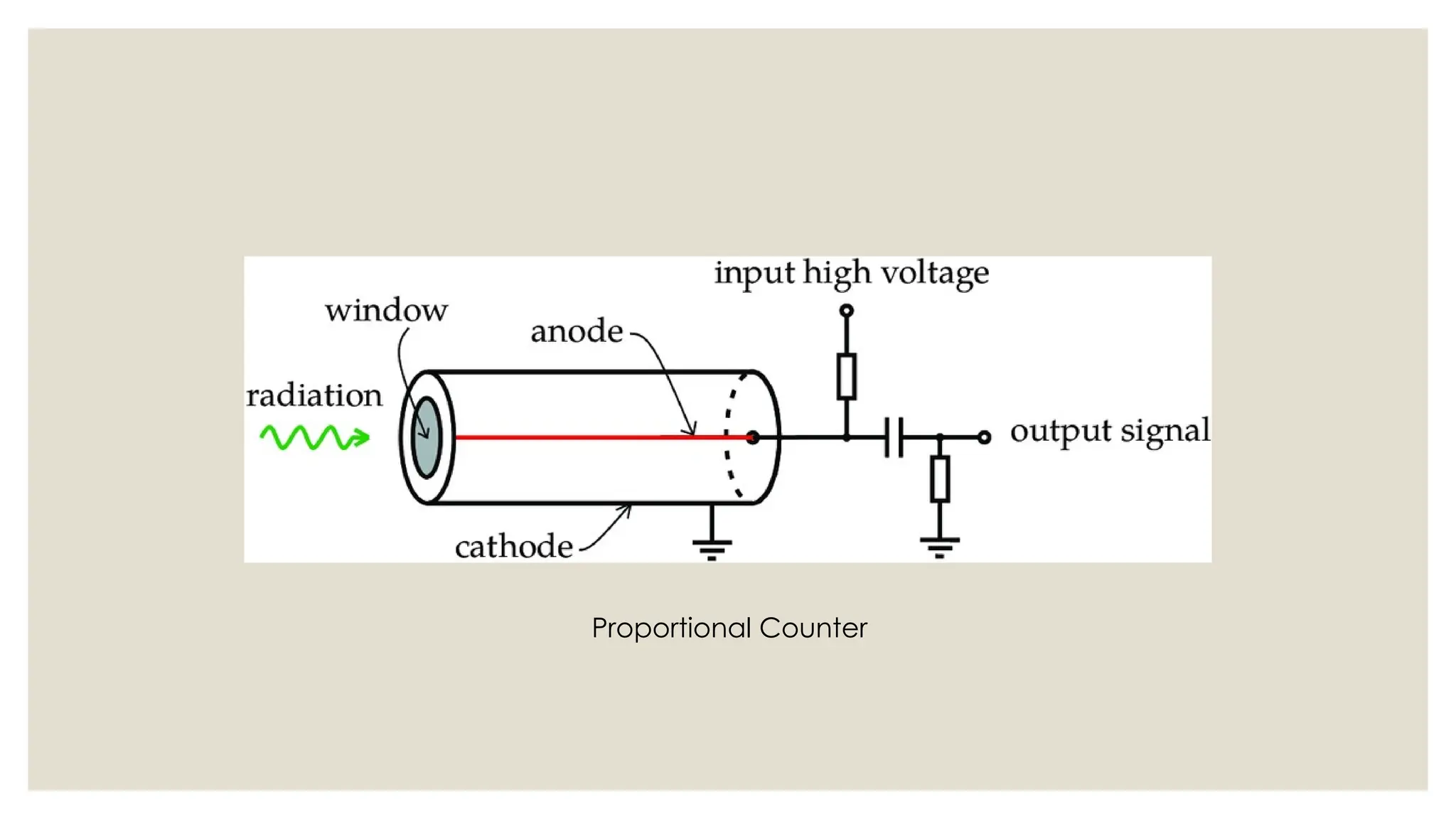
1.Gas Chamber: A sealed container filled with low-pressure gas (such as argon, neon, or xenon).
2.Electrodes:
1. Anode: Typically a thin wire or rod in the center of the chamber.
2. Cathode: The walls of the chamber, often coated with a conductive material.
3.Voltage Supply: A high-voltage power supply to create an electric field between the electrodes.
4.Signal Processing Circuit: Amplification and analysis circuits to process the electrical signals and display
the results.
Working Principle
1.Gas Ionization: When ionizing radiation (alpha particles, beta particles, or gamma rays) enters the detector, it
interacts with the gas (often a noble gas like argon or xenon), producing ion pairs (positive ions and free electrons).
2.Electric Field: The detector contains two electrodes (anode and cathode) and is operated in a controlled electric
field. The voltage is set between the two electrodes to allow for proportional counting.
3.Electron Amplification: The free electrons are accelerated towards the anode due to the electric field. As they
move, they gain energy and can cause further ionization, leading to an avalanche effect. The key here is that the
number of ion pairs produced is proportional to the energy of the incoming radiation.
4.Current Measurement: The resulting current produced by the movement of charge carriers (electrons and ions) is
measured. The current is proportional to the energy deposited in the gas by the radiation.
5.Output: The electrical signal is processed to provide a measurement of the radiation dose or energy spectrum.
Proportional Counter
3. Geiger-Muller Counter:
GM counter was developed by Geiger and Muller in Germany in the year 1928.
It is a devise used to detect and measuring ionizing radiation.
It is used to all type radiations α, β, γ easily.
It is the oldest radiation detector due to its low cost, simplicity and in case of operation; it is the best detector
among all.
Principle:
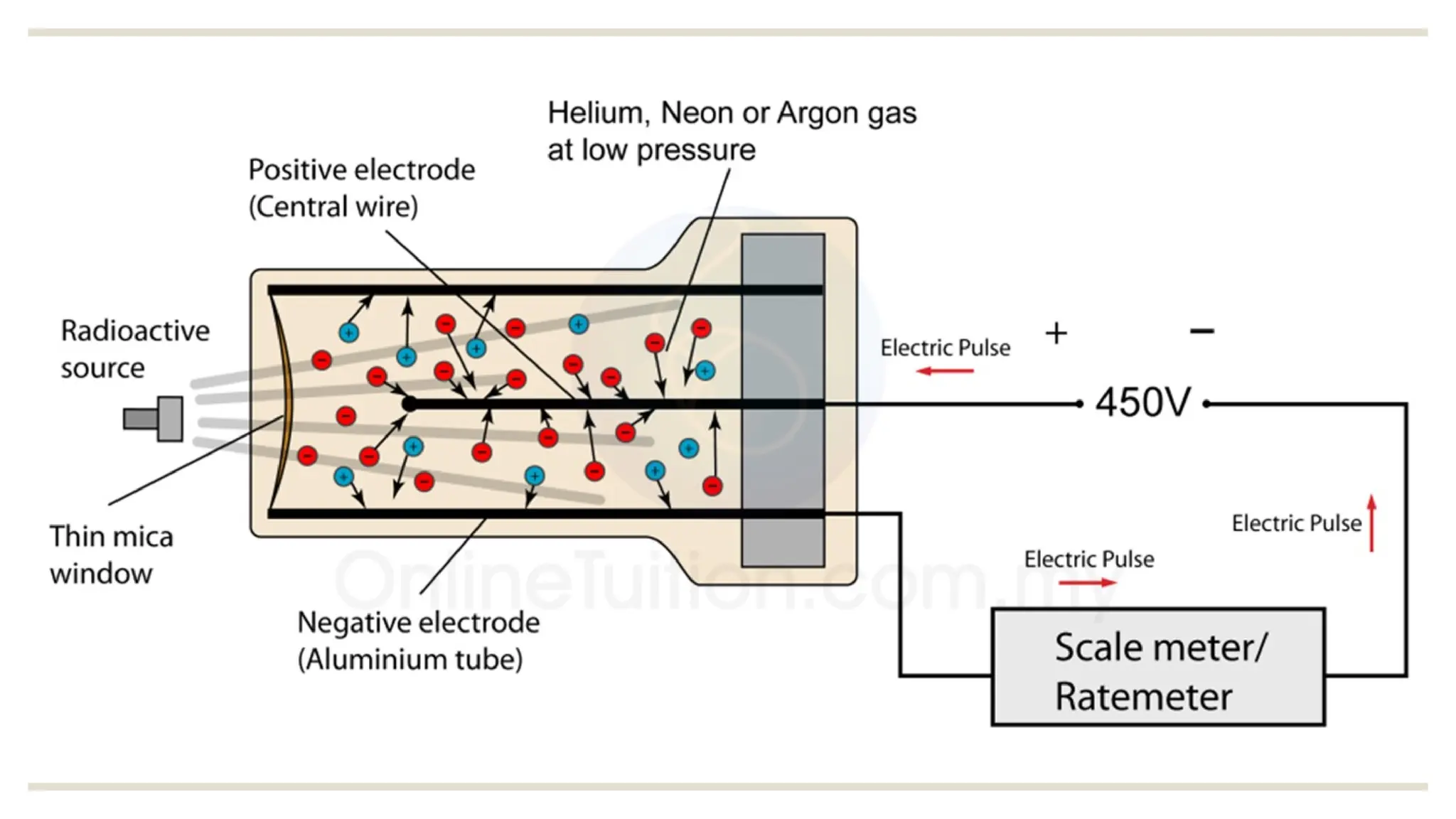
A GM counter consists of a GM tube, sensing element which detects the radiation and processing electronics
which displays the result. The GM tube is filled with an inert gas such as Helium, Neon or Argon at low pressure,
to which a high voltage (450-500 V) is applied.
The tube conducts electrical charge when a particle or photon of incident radiation makes the gas conductive by
ionization. The ionization considerably amplified within the tube to produce easily measured detection pulse,
which is fed to processing electronics and display the result.
Construction:
It consists of a cylinder 1-2 cm in diameter of stainless steel or glass coated with silver on inner side
which acts as cathode.
Internally a tungsten wire is suspended which is mounted at one end with a glass bead, act as anode.
Cylinder is filled mixture of gas (argon and helium generally used) at low pressure which also contain a
small amount of quenching vapours.
Working:
Radiations when enter the tube through a thin section also called as window causes the ionization of gas
molecules. From these ionized atoms or molecules, an electron is knocked out of the atom and the
remaining atom is positively charged.
When the high voltage is applied across the electrode (300-1300), the electrons and positively charged ions
are attracted towards anode and cathode respectively.
Hence, each particle of radiation produces a brief flow or pulse of current which can be transmitted to
radioactive sensor via an interface, which is finally recorded in computer.
All pulses from a GM counter are of same amplitude for any incident radiations.
Disadvantages:
A GM counter cannot distinguish between types of different radiation and their energy. However, the
multiplication factor is a big advantage in simple radioactive counting.
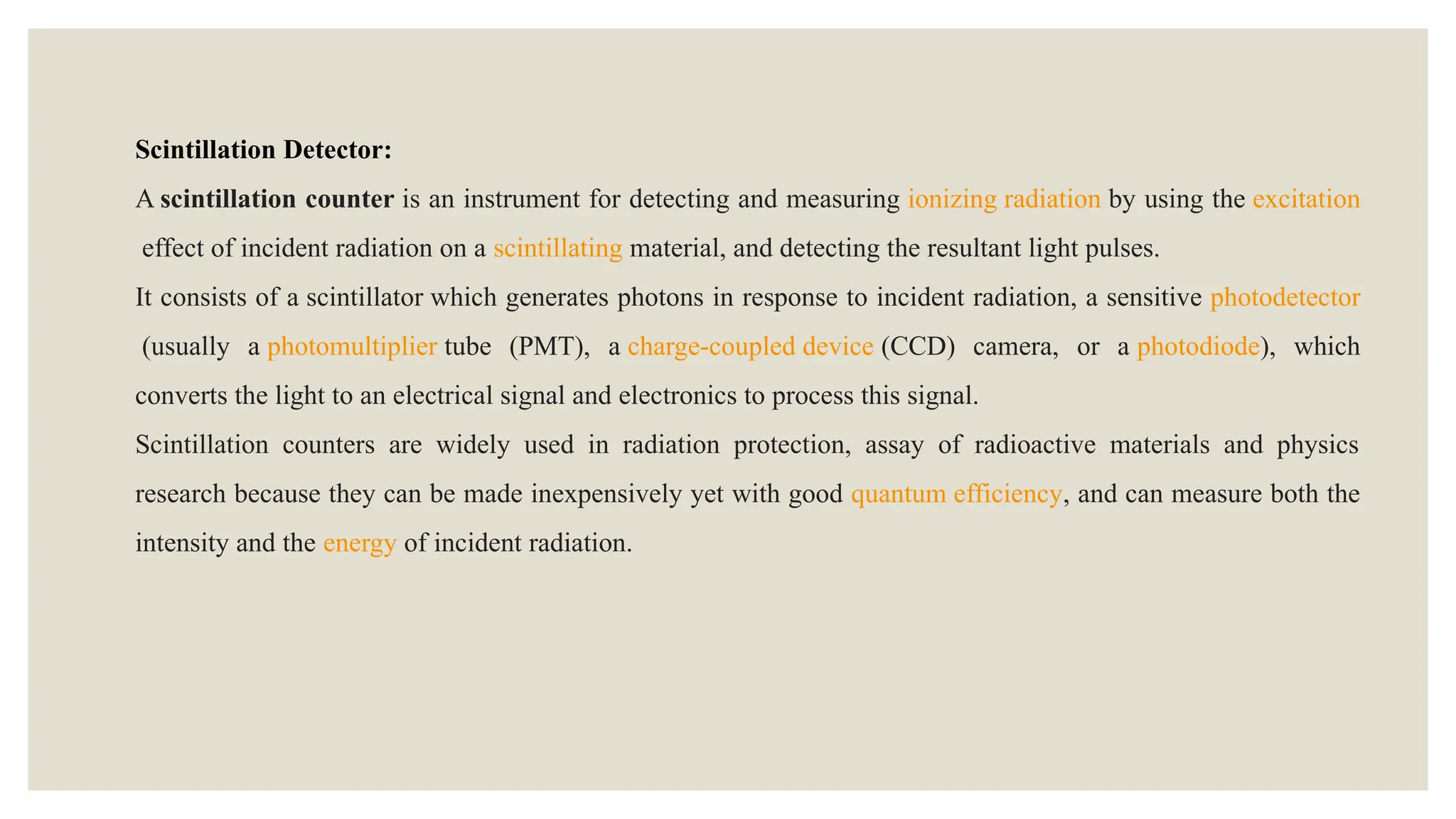
Scintillation Detector:
A scintillation counter is an instrument for detecting and measuring ionizing radiation by using the excitation
effect of incident radiation on a scintillating material, and detecting the resultant light pulses.
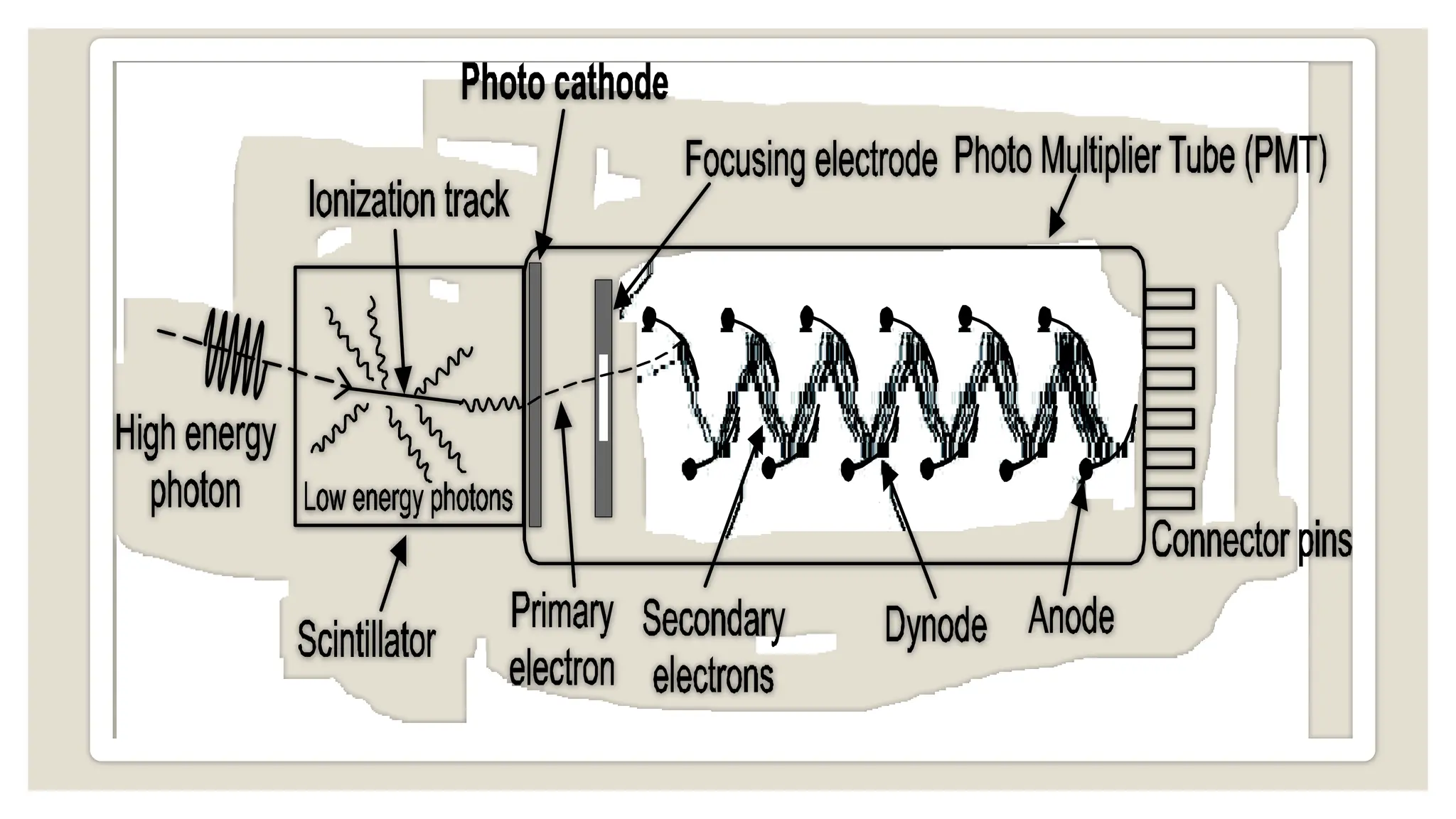
It consists of a scintillator which generates photons in response to incident radiation, a sensitive photodetector
(usually a photomultiplier tube (PMT), a charge-coupled device (CCD) camera, or a photodiode), which
converts the light to an electrical signal and electronics to process this signal.
Scintillation counters are widely used in radiation protection, assay of radioactive materials and physics
research because they can be made inexpensively yet with good quantum efficiency, and can measure both the
intensity and the energy of incident radiation.
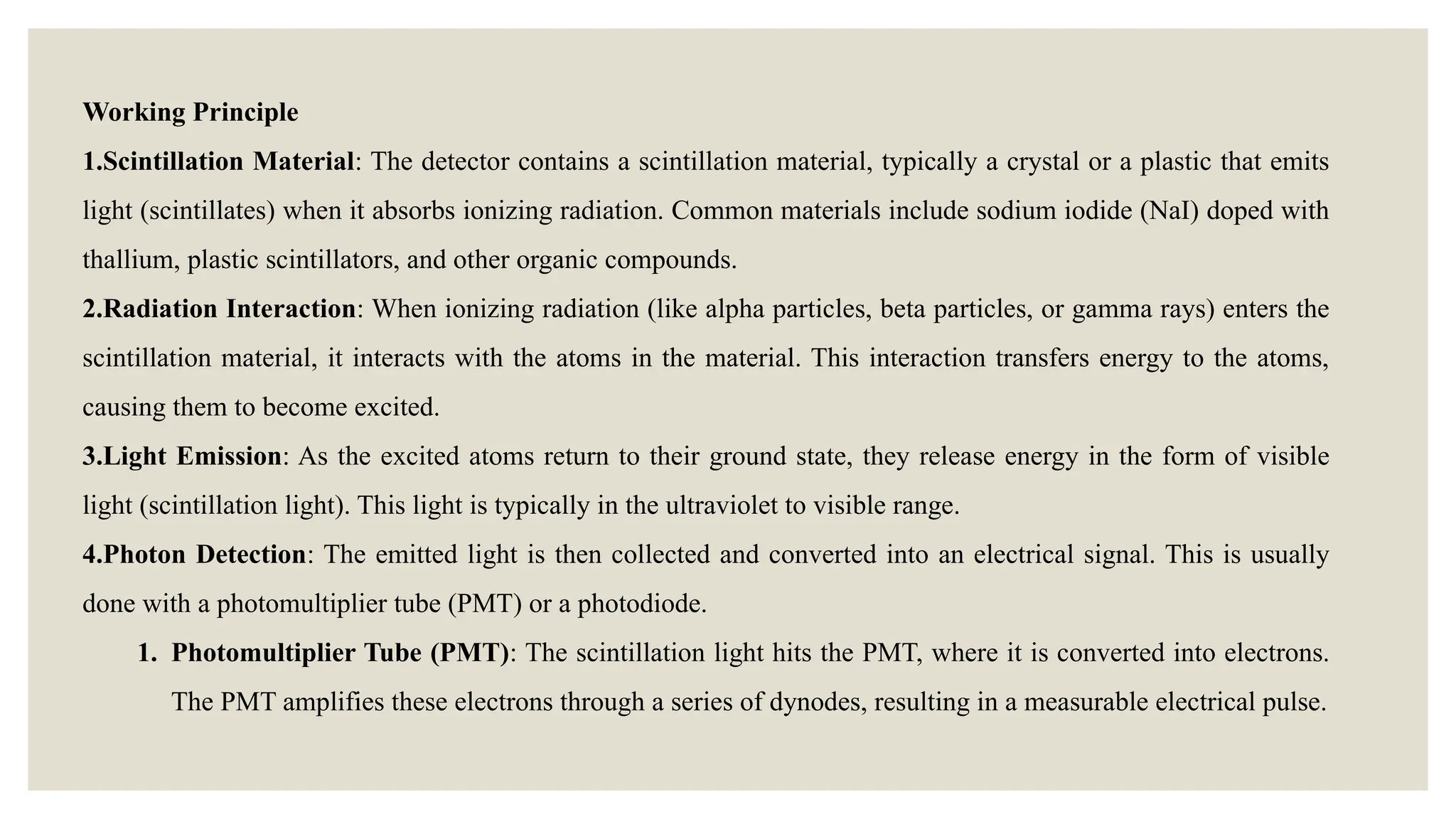
Working Principle
1.Scintillation Material: The detector contains a scintillation material, typically a crystal or a plastic that emits
light (scintillates) when it absorbs ionizing radiation. Common materials include sodium iodide (NaI) doped with
thallium, plastic scintillators, and other organic compounds.
2.Radiation Interaction: When ionizing radiation (like alpha particles, beta particles, or gamma rays) enters the
scintillation material, it interacts with the atoms in the material. This interaction transfers energy to the atoms,
causing them to become excited.
3.Light Emission: As the excited atoms return to their ground state, they release energy in the form of visible
light (scintillation light). This light is typically in the ultraviolet to visible range.
4.Photon Detection: The emitted light is then collected and converted into an electrical signal. This is usually
done with a photomultiplier tube (PMT) or a photodiode.
1. Photomultiplier Tube (PMT): The scintillation light hits the PMT, where it is converted into electrons.
The PMT amplifies these electrons through a series of dynodes, resulting in a measurable electrical pulse.
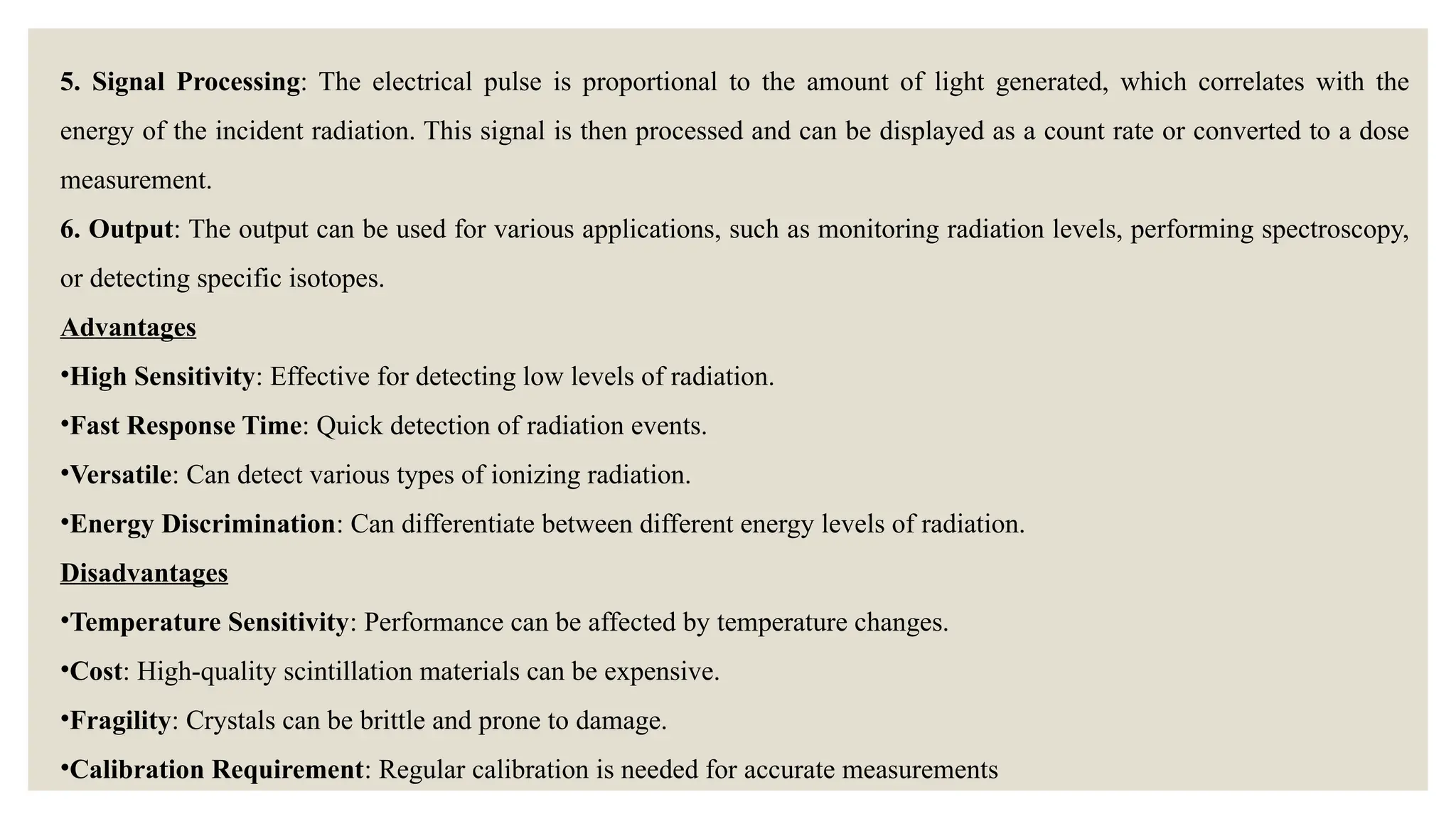
5. Signal Processing: The electrical pulse is proportional to the amount of light generated, which correlates with the
energy of the incident radiation. This signal is then processed and can be displayed as a count rate or converted to a dose
measurement.
6. Output: The output can be used for various applications, such as monitoring radiation levels, performing spectroscopy,
or detecting specific isotopes.
Advantages
•High Sensitivity: Effective for detecting low levels of radiation.
•Fast Response Time: Quick detection of radiation events.
•Versatile: Can detect various types of ionizing radiation.
•Energy Discrimination: Can differentiate between different energy levels of radiation.
Disadvantages
•Temperature Sensitivity: Performance can be affected by temperature changes.
•Cost: High-quality scintillation materials can be expensive.
•Fragility: Crystals can be brittle and prone to damage.
•Calibration Requirement: Regular calibration is needed for accurate measurements
UNIT V: MEASUREMENT OF RADIOACTIVITY,BPHARM

UNIT V: MEASUREMENT OF RADIOACTIVITY,BPHARM

  • 1.
  • 2.
    Measurement of Radioactivity Themeasurement of nuclear radiation and detection is an important aspect in the identification of type of radiations (, , ) and to assay the radionuclide emitting the radiation, suitable detectors are required. The radiations are identified on the basis of their properties. e.g. Ionization effect is measured in Ionization Chamber, Proportional Counter and Geiger Muller Counter. The scintillation effect of radiation is measured using scintillation detector and the photographic effect is measured by Autoradiography.
  • 3.
    A. Gas FilledDetectors: 1. Ionization Chamber: 2. Proportional Counters: 3. Geiger-Muller Counter B. Scintillation detector (converts radiation into light)
  • 4.
     Ionization Chamber: It is the simplest gas filled detector which is based on the collection of all the charges created by direct ionization of the gas molecules through the application of electric field.  It consists of chamber filled with gas like Argon, Helium or Air etc. Ionization chamber is fitted with two electrodes kept at different electric potential (50-100V for each cm of distance between two electrodes) and a measuring device to indicate the flow of current. Radiations bring about ionization of gas molecules or ions which cause emission of electrons which in turn reveals the changes in electric current.
  • 6.
    ADVANTAGES OF IONIZATIONCHAMBERS 1.Accuracy: Ionization chambers provide precise measurements of ionizing radiation, making them reliable for dosimetry. 2.Wide Range of Radiation Types: They can detect various types of radiation, including alpha, beta, and gamma radiation. 3.High Dose Capability: They are suitable for measuring high radiation doses, which is beneficial in radiation therapy and radiation safety. 4.Linear Response: The output current is directly proportional to the radiation dose, facilitating easy calibration and interpretation. 5.Durability: Ionization chambers are generally robust and can be used in various environments without significant degradation. DISADVANTAGES OF IONIZATION CHAMBERS 6.Energy Sensitivity: Ionization chambers can be sensitive to the energy of the incoming radiation, requiring careful calibration for different radiation types. 7.Limited Sensitivity for Low Doses: They may not be as effective for detecting low radiation levels compared to other detectors, like Geiger-Müller counters. 8.Response Time: The response time may be slower compared to some other types of radiation detectors, which can be a limitation in rapidly changing radiation environments. 9.Size and Weight: Depending on the design, ionization chambers can be bulkier and heavier than portable radiation detectors, limiting their use in certain field applications. 10.Calibration Requirement: Regular calibration is necessary to maintain accuracy, which can require additional time and resources.
  • 7.
    2. Proportional Counters: Itis the modified form of ionization chamber. Operate at high voltage (1000-2000v). It is device used to detect charged particle having low ionization power (i.e., ). Filling gas 90% Ar and 10% methane Principal : When voltage between cathode anode is sufficiently increases, primary ion will produce by interaction of gas particles . They gain sufficient energy to further collide with gas molecule and produce secondary ions and give rise to detector pulse. Construction 1.Gas Chamber: A sealed container filled with low-pressure gas (such as argon, neon, or xenon). 2.Electrodes: 1. Anode: Typically a thin wire or rod in the center of the chamber. 2. Cathode: The walls of the chamber, often coated with a conductive material. 3.Voltage Supply: A high-voltage power supply to create an electric field between the electrodes. 4.Signal Processing Circuit: Amplification and analysis circuits to process the electrical signals and display the results.
  • 8.
    Working Principle 1.Gas Ionization:When ionizing radiation (alpha particles, beta particles, or gamma rays) enters the detector, it interacts with the gas (often a noble gas like argon or xenon), producing ion pairs (positive ions and free electrons). 2.Electric Field: The detector contains two electrodes (anode and cathode) and is operated in a controlled electric field. The voltage is set between the two electrodes to allow for proportional counting. 3.Electron Amplification: The free electrons are accelerated towards the anode due to the electric field. As they move, they gain energy and can cause further ionization, leading to an avalanche effect. The key here is that the number of ion pairs produced is proportional to the energy of the incoming radiation. 4.Current Measurement: The resulting current produced by the movement of charge carriers (electrons and ions) is measured. The current is proportional to the energy deposited in the gas by the radiation. 5.Output: The electrical signal is processed to provide a measurement of the radiation dose or energy spectrum.
  • 9.
  • 10.
    3. Geiger-Muller Counter: GMcounter was developed by Geiger and Muller in Germany in the year 1928. It is a devise used to detect and measuring ionizing radiation. It is used to all type radiations α, β, γ easily. It is the oldest radiation detector due to its low cost, simplicity and in case of operation; it is the best detector among all. Principle: A GM counter consists of a GM tube, sensing element which detects the radiation and processing electronics which displays the result. The GM tube is filled with an inert gas such as Helium, Neon or Argon at low pressure, to which a high voltage (450-500 V) is applied. The tube conducts electrical charge when a particle or photon of incident radiation makes the gas conductive by ionization. The ionization considerably amplified within the tube to produce easily measured detection pulse, which is fed to processing electronics and display the result.
  • 11.
    Construction: It consists ofa cylinder 1-2 cm in diameter of stainless steel or glass coated with silver on inner side which acts as cathode. Internally a tungsten wire is suspended which is mounted at one end with a glass bead, act as anode. Cylinder is filled mixture of gas (argon and helium generally used) at low pressure which also contain a small amount of quenching vapours.
  • 13.
    Working: Radiations when enterthe tube through a thin section also called as window causes the ionization of gas molecules. From these ionized atoms or molecules, an electron is knocked out of the atom and the remaining atom is positively charged. When the high voltage is applied across the electrode (300-1300), the electrons and positively charged ions are attracted towards anode and cathode respectively. Hence, each particle of radiation produces a brief flow or pulse of current which can be transmitted to radioactive sensor via an interface, which is finally recorded in computer. All pulses from a GM counter are of same amplitude for any incident radiations. Disadvantages: A GM counter cannot distinguish between types of different radiation and their energy. However, the multiplication factor is a big advantage in simple radioactive counting.
  • 14.
    Scintillation Detector: A scintillationcounter is an instrument for detecting and measuring ionizing radiation by using the excitation effect of incident radiation on a scintillating material, and detecting the resultant light pulses. It consists of a scintillator which generates photons in response to incident radiation, a sensitive photodetector (usually a photomultiplier tube (PMT), a charge-coupled device (CCD) camera, or a photodiode), which converts the light to an electrical signal and electronics to process this signal. Scintillation counters are widely used in radiation protection, assay of radioactive materials and physics research because they can be made inexpensively yet with good quantum efficiency, and can measure both the intensity and the energy of incident radiation.
  • 15.
    Working Principle 1.Scintillation Material:The detector contains a scintillation material, typically a crystal or a plastic that emits light (scintillates) when it absorbs ionizing radiation. Common materials include sodium iodide (NaI) doped with thallium, plastic scintillators, and other organic compounds. 2.Radiation Interaction: When ionizing radiation (like alpha particles, beta particles, or gamma rays) enters the scintillation material, it interacts with the atoms in the material. This interaction transfers energy to the atoms, causing them to become excited. 3.Light Emission: As the excited atoms return to their ground state, they release energy in the form of visible light (scintillation light). This light is typically in the ultraviolet to visible range. 4.Photon Detection: The emitted light is then collected and converted into an electrical signal. This is usually done with a photomultiplier tube (PMT) or a photodiode. 1. Photomultiplier Tube (PMT): The scintillation light hits the PMT, where it is converted into electrons. The PMT amplifies these electrons through a series of dynodes, resulting in a measurable electrical pulse.
  • 16.
    5. Signal Processing:The electrical pulse is proportional to the amount of light generated, which correlates with the energy of the incident radiation. This signal is then processed and can be displayed as a count rate or converted to a dose measurement. 6. Output: The output can be used for various applications, such as monitoring radiation levels, performing spectroscopy, or detecting specific isotopes. Advantages •High Sensitivity: Effective for detecting low levels of radiation. •Fast Response Time: Quick detection of radiation events. •Versatile: Can detect various types of ionizing radiation. •Energy Discrimination: Can differentiate between different energy levels of radiation. Disadvantages •Temperature Sensitivity: Performance can be affected by temperature changes. •Cost: High-quality scintillation materials can be expensive. •Fragility: Crystals can be brittle and prone to damage. •Calibration Requirement: Regular calibration is needed for accurate measurements