In what way does your media 
product use, develop or 
challenge forms and 
conventions of real media 
products?
Masthead 
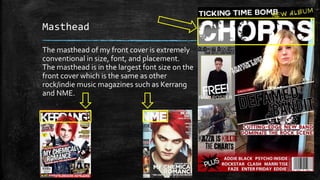
The masthead of my front cover is extremely 
conventional in size, font, and placement. 
The masthead is in the largest font size on the 
front cover which is the same as other 
rock/indie music magazines such as Kerrang 
and NME.
Masthead 
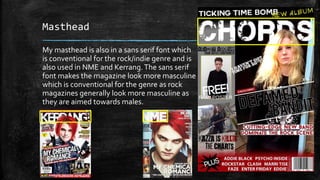
My masthead is also in a sans serif font which 
is conventional for the rock/indie genre and is 
also used in NME and Kerrang. The sans serif 
font makes the magazine look more masculine 
which is conventional for the genre as rock 
magazines generally look more masculine as 
they are aimed towards males.
Masthead 
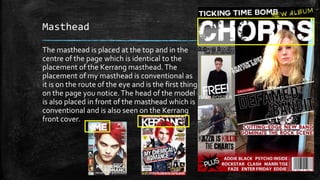
The masthead is placed at the top and in the 
centre of the page which is identical to the 
placement of the Kerrang masthead. The 
placement of my masthead is conventional as 
it is on the route of the eye and is the first thing 
on the page you notice. The head of the model 
is also placed in front of the masthead which is 
conventional and is also seen on the Kerrang 
front cover.
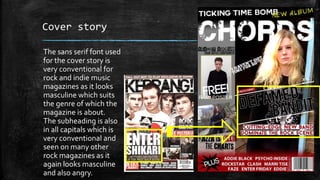
Cover story 
The sans serif font used 
for the cover story is 
very conventional for 
rock and indie music 
magazines as it looks 
masculine which suits 
the genre of which the 
magazine is about. 
The subheading is also 
in all capitals which is 
very conventional and 
seen on many other 
rock magazines as it 
again looks masculine 
and also angry.
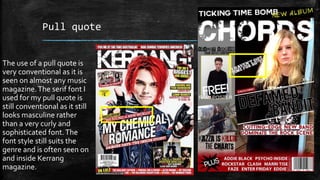
Pull quote 
The use of a pull quote is 
very conventional as it is 
seen on almost any music 
magazine. The serif font I 
used for my pull quote is 
still conventional as it still 
looks masculine rather 
than a very curly and 
sophisticated font. The 
font style still suits the 
genre and is often seen on 
and inside Kerrang 
magazine.
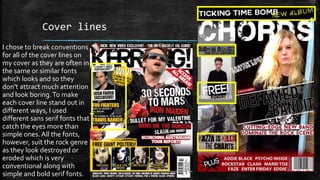
Cover lines 
I chose to break conventions 
for all of the cover lines on 
my cover as they are often in 
the same or similar fonts 
which looks and so they 
don’t attract much attention 
and look boring. To make 
each cover line stand out in 
different ways, I used 
different sans serif fonts that 
catch the eyes more than 
simple ones. All the fonts, 
however, suit the rock genre 
as they look destroyed or 
eroded which is very 
conventional along with 
simple and bold serif fonts.
▪LAYOUT 
YOOOO
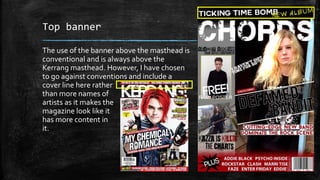
Top banner 
The use of the banner above the masthead is 
conventional and is always above the 
Kerrang masthead. However, I have chosen 
to go against conventions and include a 
cover line here rather 
than more names of 
artists as it makes the 
magazine look like it 
has more content in 
it.
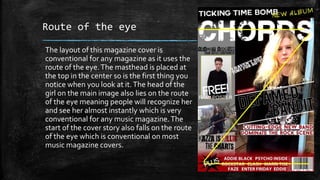
Route of the eye 
The layout of this magazine cover is 
conventional for any magazine as it uses the 
route of the eye. The masthead is placed at 
the top in the center so is the first thing you 
notice when you look at it. The head of the 
girl on the main image also lies on the route 
of the eye meaning people will recognize her 
and see her almost instantly which is very 
conventional for any music magazine. The 
start of the cover story also falls on the route 
of the eye which is conventional on most 
music magazine covers.
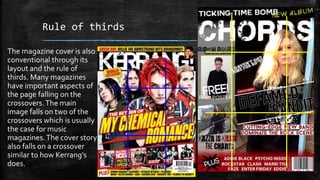
Rule of thirds 
The magazine cover is also 
conventional through its 
layout and the rule of 
thirds. Many magazines 
have important aspects of 
the page falling on the 
crossovers. The main 
image falls on two of the 
crossovers which is usually 
the case for music 
magazines. The cover story 
also falls on a crossover 
similar to how Kerrang’s 
does.
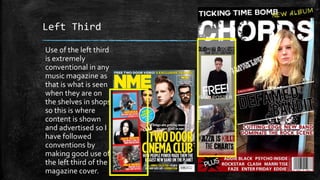
Left Third 
Use of the left third 
is extremely 
conventional in any 
music magazine as 
that is what is seen 
when they are on 
the shelves in shops 
so this is where 
content is shown 
and advertised so I 
have followed 
conventions by 
making good use of 
the left third of the 
magazine cover.
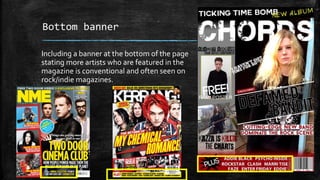
Bottom banner 
Including a banner at the bottom of the page 
stating more artists who are featured in the 
magazine is conventional and often seen on 
rock/indie magazines.
IMAGES 
Y0LO L0LZ
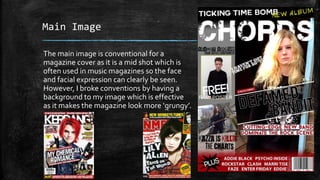
Main Image 
The main image is conventional for a 
magazine cover as it is a mid shot which is 
often used in music magazines so the face 
and facial expression can clearly be seen. 
However, I broke conventions by having a 
background to my image which is effective 
as it makes the magazine look more ‘grungy’.
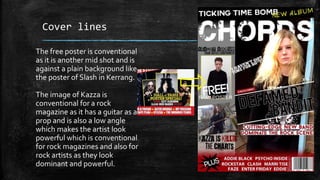
Cover lines 
The free poster is conventional 
as it is another mid shot and is 
against a plain background like 
the poster of Slash in Kerrang. 
The image of Kazza is 
conventional for a rock 
magazine as it has a guitar as a 
prop and is also a low angle 
which makes the artist look 
powerful which is conventional 
for rock magazines and also for 
rock artists as they look 
dominant and powerful.
#COLOURZ
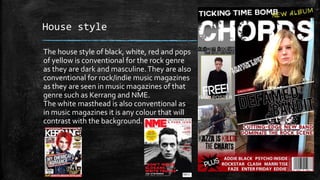
House style 
The house style of black, white, red and pops 
of yellow is conventional for the rock genre 
as they are dark and masculine. They are also 
conventional for rock/indie music magazines 
as they are seen in music magazines of that 
genre such as Kerrang and NME. 
The white masthead is also conventional as 
in music magazines it is any colour that will 
contrast with the background.
LANGUAGE 
WEWP
Language 
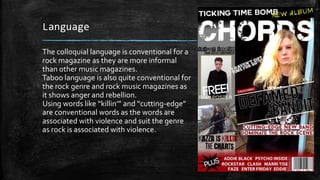
The colloquial language is conventional for a 
rock magazine as they are more informal 
than other music magazines. 
Taboo language is also quite conventional for 
the rock genre and rock music magazines as 
it shows anger and rebellion. 
Using words like “killin’” and “cutting-edge” 
are conventional words as the words are 
associated with violence and suit the genre 
as rock is associated with violence.
CONTENTS 
PAGEEEEEEEE
Typography 
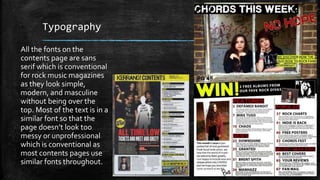
All the fonts on the 
contents page are sans 
serif which is conventional 
for rock music magazines 
as they look simple, 
modern, and masculine 
without being over the 
top. Most of the text is in a 
similar font so that the 
page doesn’t look too 
messy or unprofessional 
which is conventional as 
most contents pages use 
similar fonts throughout.
Images 
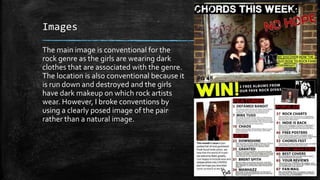
The main image is conventional for the 
rock genre as the girls are wearing dark 
clothes that are associated with the genre. 
The location is also conventional because it 
is run down and destroyed and the girls 
have dark makeup on which rock artists 
wear. However, I broke conventions by 
using a clearly posed image of the pair 
rather than a natural image.
Layout 
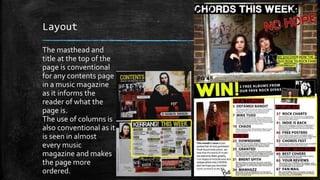
The masthead and 
title at the top of the 
page is conventional 
for any contents page 
in a music magazine 
as it informs the 
reader of what the 
page is. 
The use of columns is 
also conventional as it 
is seen in almost 
every music 
magazine and makes 
the page more 
ordered.
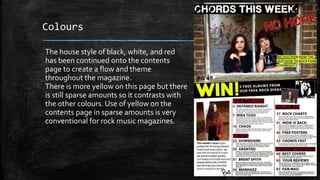
Colours 
The house style of black, white, and red 
has been continued onto the contents 
page to create a flow and theme 
throughout the magazine. 
There is more yellow on this page but there 
is still sparse amounts so it contrasts with 
the other colours. Use of yellow on the 
contents page in sparse amounts is very 
conventional for rock music magazines.
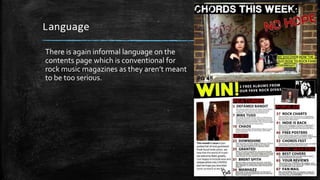
Language 
There is again informal language on the 
contents page which is conventional for 
rock music magazines as they aren’t meant 
to be too serious.
DPS
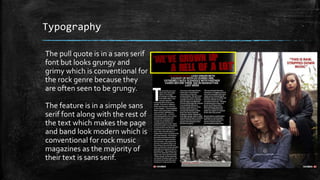
Typography 
The pull quote is in a sans serif 
font but looks grungy and 
grimy which is conventional for 
the rock genre because they 
are often seen to be grungy. 
The feature is in a simple sans 
serif font along with the rest of 
the text which makes the page 
and band look modern which is 
conventional for rock music 
magazines as the majority of 
their text is sans serif.
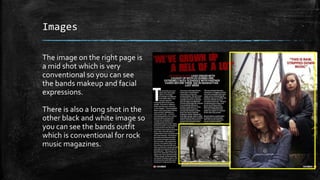
Images 
The image on the right page is 
a mid shot which is very 
conventional s0 you can see 
the bands makeup and facial 
expressions. 
There is also a long shot in the 
other black and white image so 
you can see the bands outfit 
which is conventional for rock 
music magazines.
Layout 
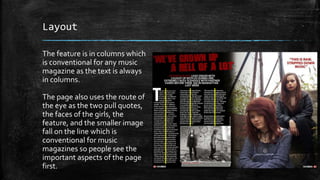
The feature is in columns which 
is conventional for any music 
magazine as the text is always 
in columns. 
The page also uses the route of 
the eye as the two pull quotes, 
the faces of the girls, the 
feature, and the smaller image 
fall on the line which is 
conventional for music 
magazines so people see the 
important aspects of the page 
first.
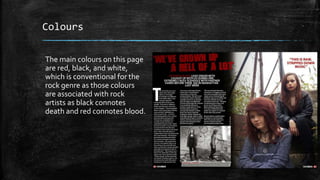
Colours 
The main colours on this page 
are red, black, and white, 
which is conventional for the 
rock genre as those colours 
are associated with rock 
artists as black connotes 
death and red connotes blood.
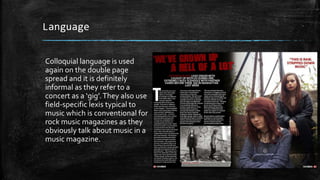
Language 
Colloquial language is used 
again on the double page 
spread and it is definitely 
informal as they refer to a 
concert as a ‘gig’. They also use 
field-specific lexis typical to 
music which is conventional for 
rock music magazines as they 
obviously talk about music in a 
music magazine.

Question 1

  • 1.
    In what waydoes your media product use, develop or challenge forms and conventions of real media products?
  • 2.
    Masthead The mastheadof my front cover is extremely conventional in size, font, and placement. The masthead is in the largest font size on the front cover which is the same as other rock/indie music magazines such as Kerrang and NME.
  • 3.
    Masthead My mastheadis also in a sans serif font which is conventional for the rock/indie genre and is also used in NME and Kerrang. The sans serif font makes the magazine look more masculine which is conventional for the genre as rock magazines generally look more masculine as they are aimed towards males.
  • 4.
    Masthead The mastheadis placed at the top and in the centre of the page which is identical to the placement of the Kerrang masthead. The placement of my masthead is conventional as it is on the route of the eye and is the first thing on the page you notice. The head of the model is also placed in front of the masthead which is conventional and is also seen on the Kerrang front cover.
  • 5.
    Cover story Thesans serif font used for the cover story is very conventional for rock and indie music magazines as it looks masculine which suits the genre of which the magazine is about. The subheading is also in all capitals which is very conventional and seen on many other rock magazines as it again looks masculine and also angry.
  • 6.
    Pull quote Theuse of a pull quote is very conventional as it is seen on almost any music magazine. The serif font I used for my pull quote is still conventional as it still looks masculine rather than a very curly and sophisticated font. The font style still suits the genre and is often seen on and inside Kerrang magazine.
  • 7.
    Cover lines Ichose to break conventions for all of the cover lines on my cover as they are often in the same or similar fonts which looks and so they don’t attract much attention and look boring. To make each cover line stand out in different ways, I used different sans serif fonts that catch the eyes more than simple ones. All the fonts, however, suit the rock genre as they look destroyed or eroded which is very conventional along with simple and bold serif fonts.
  • 8.
  • 9.
    Top banner Theuse of the banner above the masthead is conventional and is always above the Kerrang masthead. However, I have chosen to go against conventions and include a cover line here rather than more names of artists as it makes the magazine look like it has more content in it.
  • 10.
    Route of theeye The layout of this magazine cover is conventional for any magazine as it uses the route of the eye. The masthead is placed at the top in the center so is the first thing you notice when you look at it. The head of the girl on the main image also lies on the route of the eye meaning people will recognize her and see her almost instantly which is very conventional for any music magazine. The start of the cover story also falls on the route of the eye which is conventional on most music magazine covers.
  • 11.
    Rule of thirds The magazine cover is also conventional through its layout and the rule of thirds. Many magazines have important aspects of the page falling on the crossovers. The main image falls on two of the crossovers which is usually the case for music magazines. The cover story also falls on a crossover similar to how Kerrang’s does.
  • 12.
    Left Third Useof the left third is extremely conventional in any music magazine as that is what is seen when they are on the shelves in shops so this is where content is shown and advertised so I have followed conventions by making good use of the left third of the magazine cover.
  • 13.
    Bottom banner Includinga banner at the bottom of the page stating more artists who are featured in the magazine is conventional and often seen on rock/indie magazines.
  • 14.
  • 15.
    Main Image Themain image is conventional for a magazine cover as it is a mid shot which is often used in music magazines so the face and facial expression can clearly be seen. However, I broke conventions by having a background to my image which is effective as it makes the magazine look more ‘grungy’.
  • 16.
    Cover lines Thefree poster is conventional as it is another mid shot and is against a plain background like the poster of Slash in Kerrang. The image of Kazza is conventional for a rock magazine as it has a guitar as a prop and is also a low angle which makes the artist look powerful which is conventional for rock magazines and also for rock artists as they look dominant and powerful.
  • 17.
  • 18.
    House style Thehouse style of black, white, red and pops of yellow is conventional for the rock genre as they are dark and masculine. They are also conventional for rock/indie music magazines as they are seen in music magazines of that genre such as Kerrang and NME. The white masthead is also conventional as in music magazines it is any colour that will contrast with the background.
  • 19.
  • 20.
    Language The colloquiallanguage is conventional for a rock magazine as they are more informal than other music magazines. Taboo language is also quite conventional for the rock genre and rock music magazines as it shows anger and rebellion. Using words like “killin’” and “cutting-edge” are conventional words as the words are associated with violence and suit the genre as rock is associated with violence.
  • 21.
  • 22.
    Typography All thefonts on the contents page are sans serif which is conventional for rock music magazines as they look simple, modern, and masculine without being over the top. Most of the text is in a similar font so that the page doesn’t look too messy or unprofessional which is conventional as most contents pages use similar fonts throughout.
  • 23.
    Images The mainimage is conventional for the rock genre as the girls are wearing dark clothes that are associated with the genre. The location is also conventional because it is run down and destroyed and the girls have dark makeup on which rock artists wear. However, I broke conventions by using a clearly posed image of the pair rather than a natural image.
  • 24.
    Layout The mastheadand title at the top of the page is conventional for any contents page in a music magazine as it informs the reader of what the page is. The use of columns is also conventional as it is seen in almost every music magazine and makes the page more ordered.
  • 25.
    Colours The housestyle of black, white, and red has been continued onto the contents page to create a flow and theme throughout the magazine. There is more yellow on this page but there is still sparse amounts so it contrasts with the other colours. Use of yellow on the contents page in sparse amounts is very conventional for rock music magazines.
  • 26.
    Language There isagain informal language on the contents page which is conventional for rock music magazines as they aren’t meant to be too serious.
  • 27.
  • 28.
    Typography The pullquote is in a sans serif font but looks grungy and grimy which is conventional for the rock genre because they are often seen to be grungy. The feature is in a simple sans serif font along with the rest of the text which makes the page and band look modern which is conventional for rock music magazines as the majority of their text is sans serif.
  • 29.
    Images The imageon the right page is a mid shot which is very conventional s0 you can see the bands makeup and facial expressions. There is also a long shot in the other black and white image so you can see the bands outfit which is conventional for rock music magazines.
  • 30.
    Layout The featureis in columns which is conventional for any music magazine as the text is always in columns. The page also uses the route of the eye as the two pull quotes, the faces of the girls, the feature, and the smaller image fall on the line which is conventional for music magazines so people see the important aspects of the page first.
  • 31.
    Colours The maincolours on this page are red, black, and white, which is conventional for the rock genre as those colours are associated with rock artists as black connotes death and red connotes blood.
  • 32.
    Language Colloquial languageis used again on the double page spread and it is definitely informal as they refer to a concert as a ‘gig’. They also use field-specific lexis typical to music which is conventional for rock music magazines as they obviously talk about music in a music magazine.