INTRODUCTION
TO MICROBIOLOGY AND PARISTOLOGY
Pure culture Techniques
BSBT - 301
Submitted by:-
Chanderhash
ASU2017010100041
IBT – 2nd year (3rd semester)
Submitted to:-
Dr.Zeeshan khan
Introduction
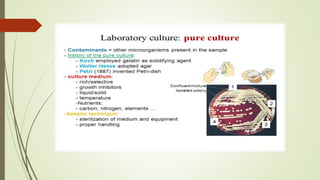
 Pure culture is a laboratory technique in which technique grow a particular or
single micro-organism. A pure culture may be isolated by use of special media
with a specific chemical or physical agent that allow the selection of one
organism over another. Both procedures (spread plating and streak plating)
require understanding of the aseptic technique.
 However, the term usually applied to any technique designed to keep unwanted
microorganisms from contaminating sterile material.
 The best way to obtain a pure culture is to start with a single bacterial cell.
 This cell divides quickly, and may produce millions of cells within 24 hours.
 About the Bacteria
1. Are everywhere!
2. On every surface of the body
3. Including digestive tract
4. Harmless
5. Beneficial
6. Pathogenic
7. Absorb nutrients and release toxins that damage cells
and tissues.
8. Bacterial toxins can cause disease even when bacteria are destroyed
9. Bacteria are Prokaryotes
Remember
Bacteria needs other things to grow :-
 Nutrition
 Temperature
 pH
 Osmolarity
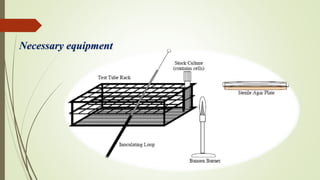
Necessary equipment
why we used sterile equipment or materials:-
 Basically to prevent the contamination of bacterial sample from
environmental microorganisms
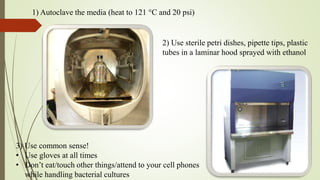
1) Autoclave the media (heat to 121 °C and 20 psi)
2) Use sterile petri dishes, pipette tips, plastic
tubes in a laminar hood sprayed with ethanol
3) Use common sense!
• Use gloves at all times
• Don’t eat/touch other things/attend to your cell phones
while handling bacterial cultures
 With the loop, spread the inoculum back and forth across the
upper 1/4 of the plate, keeping the lines of inoculation very close
Together.
 Isolated colonies ---- Do not use
strong pressure, which will break the surface of the agar.
Use the end of the loop, Dispose of the loop in the biohazard bucket on the
bench.
 Turn plate approximately 90oC. Streak the plate as indicated in the
across about 1/4 of the plate. Dispose of the loop.
 Label plates on the bottom and incubate inverted at 37oC.
 Procedure
Methods are used for pure culture of micro-organisms:-
 Pour plate method
 Streak plate method
 Spread plate method or picking method
 Serial dilution method
 Single cell isolation method
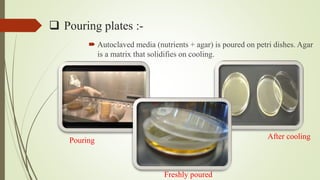
 Pouring plates :-
 Autoclaved media (nutrients + agar) is poured on petri dishes. Agar
is a matrix that solidifies on cooling.
Freshly poured
After coolingPouring
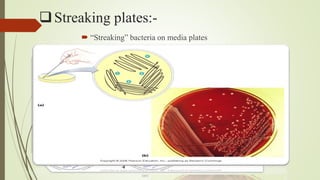
Streaking plates:-
 “Streaking” bacteria on media plates
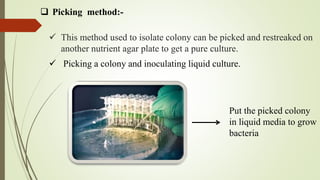
 This method used to isolate colony can be picked and restreaked on
another nutrient agar plate to get a pure culture.
Put the picked colony
in liquid media to grow
bacteria
 Picking method:-
 Picking a colony and inoculating liquid culture.
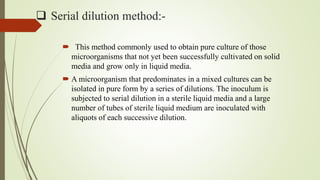
 Serial dilution method:-
 This method commonly used to obtain pure culture of those
microorganisms that not yet been successfully cultivated on solid
media and grow only in liquid media.
 A microorganism that predominates in a mixed cultures can be
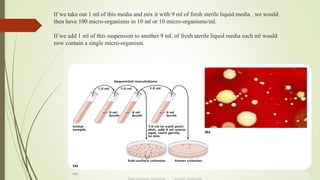
isolated in pure form by a series of dilutions. The inoculum is
subjected to serial dilution in a sterile liquid media and a large
number of tubes of sterile liquid medium are inoculated with
aliquots of each successive dilution.
If we take out 1 ml of this media and mix it with 9 ml of fresh sterile liquid media , we would
then have 100 micro-organisms in 10 ml or 10 micro-organisms/ml.
If we add 1 ml of this suspension to another 9 ml. of fresh sterile liquid media each ml would
now contain a single micro-organism.
 Single cell isolation method:-
 A single cell of the required kind is picked out by this method from the mixed culture and
is permitted to grow.
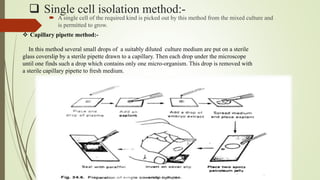
 Capillary pipette method:-
In this method several small drops of a suitably diluted culture medium are put on a sterile
glass coverslip by a sterile pipette drawn to a capillary. Then each drop under the microscope
until one finds such a drop which contains only one micro-organism. This drop is removed with
a sterile capillary pipette to fresh medium.
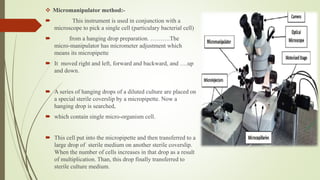
 Micromanipulator method:-
 This instrument is used in conjunction with a
microscope to pick a single cell (particulary bacterial cell)
 from a hanging drop preparation. ……….The
micro-manipulator has micrometer adjustment which
means its micropipette
 It moved right and left, forward and backward, and ….up
and down.
 A series of hanging drops of a diluted culture are placed on
a special sterile coverslip by a micropipette. Now a
hanging drop is searched,
 which contain single micro-organism cell.
 This cell put into the micropipette and then transferred to a
large drop of sterile medium on another sterile coverslip.
When the number of cells increases in that drop as a result
of multiplication. Than, this drop finally transferred to
sterile culture medium.

Pure culture techniques

  • 1.
    INTRODUCTION TO MICROBIOLOGY ANDPARISTOLOGY Pure culture Techniques BSBT - 301 Submitted by:- Chanderhash ASU2017010100041 IBT – 2nd year (3rd semester) Submitted to:- Dr.Zeeshan khan
  • 2.
    Introduction  Pure cultureis a laboratory technique in which technique grow a particular or single micro-organism. A pure culture may be isolated by use of special media with a specific chemical or physical agent that allow the selection of one organism over another. Both procedures (spread plating and streak plating) require understanding of the aseptic technique.  However, the term usually applied to any technique designed to keep unwanted microorganisms from contaminating sterile material.  The best way to obtain a pure culture is to start with a single bacterial cell.  This cell divides quickly, and may produce millions of cells within 24 hours.
  • 4.
     About theBacteria 1. Are everywhere! 2. On every surface of the body 3. Including digestive tract 4. Harmless 5. Beneficial 6. Pathogenic 7. Absorb nutrients and release toxins that damage cells and tissues. 8. Bacterial toxins can cause disease even when bacteria are destroyed 9. Bacteria are Prokaryotes Remember
  • 5.
    Bacteria needs otherthings to grow :-  Nutrition  Temperature  pH  Osmolarity
  • 6.
  • 7.
    why we usedsterile equipment or materials:-  Basically to prevent the contamination of bacterial sample from environmental microorganisms
  • 8.
    1) Autoclave themedia (heat to 121 °C and 20 psi) 2) Use sterile petri dishes, pipette tips, plastic tubes in a laminar hood sprayed with ethanol 3) Use common sense! • Use gloves at all times • Don’t eat/touch other things/attend to your cell phones while handling bacterial cultures
  • 9.
     With theloop, spread the inoculum back and forth across the upper 1/4 of the plate, keeping the lines of inoculation very close Together.  Isolated colonies ---- Do not use strong pressure, which will break the surface of the agar. Use the end of the loop, Dispose of the loop in the biohazard bucket on the bench.  Turn plate approximately 90oC. Streak the plate as indicated in the across about 1/4 of the plate. Dispose of the loop.  Label plates on the bottom and incubate inverted at 37oC.  Procedure
  • 10.
    Methods are usedfor pure culture of micro-organisms:-  Pour plate method  Streak plate method  Spread plate method or picking method  Serial dilution method  Single cell isolation method
  • 11.
     Pouring plates:-  Autoclaved media (nutrients + agar) is poured on petri dishes. Agar is a matrix that solidifies on cooling. Freshly poured After coolingPouring
  • 12.
  • 13.
     This methodused to isolate colony can be picked and restreaked on another nutrient agar plate to get a pure culture. Put the picked colony in liquid media to grow bacteria  Picking method:-  Picking a colony and inoculating liquid culture.
  • 14.
     Serial dilutionmethod:-  This method commonly used to obtain pure culture of those microorganisms that not yet been successfully cultivated on solid media and grow only in liquid media.  A microorganism that predominates in a mixed cultures can be isolated in pure form by a series of dilutions. The inoculum is subjected to serial dilution in a sterile liquid media and a large number of tubes of sterile liquid medium are inoculated with aliquots of each successive dilution.
  • 15.
    If we takeout 1 ml of this media and mix it with 9 ml of fresh sterile liquid media , we would then have 100 micro-organisms in 10 ml or 10 micro-organisms/ml. If we add 1 ml of this suspension to another 9 ml. of fresh sterile liquid media each ml would now contain a single micro-organism.
  • 16.
     Single cellisolation method:-  A single cell of the required kind is picked out by this method from the mixed culture and is permitted to grow.  Capillary pipette method:- In this method several small drops of a suitably diluted culture medium are put on a sterile glass coverslip by a sterile pipette drawn to a capillary. Then each drop under the microscope until one finds such a drop which contains only one micro-organism. This drop is removed with a sterile capillary pipette to fresh medium.
  • 17.
     Micromanipulator method:- This instrument is used in conjunction with a microscope to pick a single cell (particulary bacterial cell)  from a hanging drop preparation. ……….The micro-manipulator has micrometer adjustment which means its micropipette  It moved right and left, forward and backward, and ….up and down.  A series of hanging drops of a diluted culture are placed on a special sterile coverslip by a micropipette. Now a hanging drop is searched,  which contain single micro-organism cell.  This cell put into the micropipette and then transferred to a large drop of sterile medium on another sterile coverslip. When the number of cells increases in that drop as a result of multiplication. Than, this drop finally transferred to sterile culture medium.