Downloaded 6,104 times

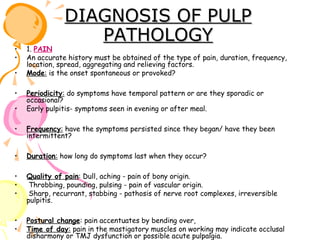
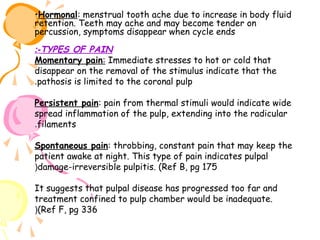
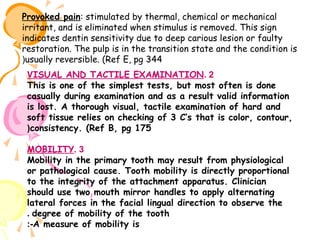
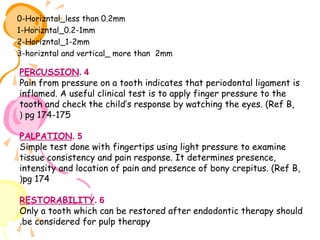


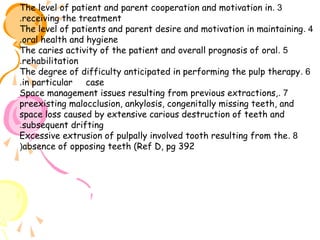

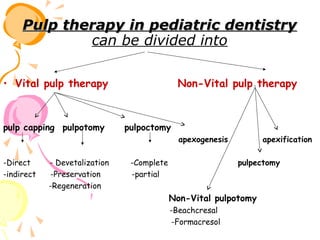
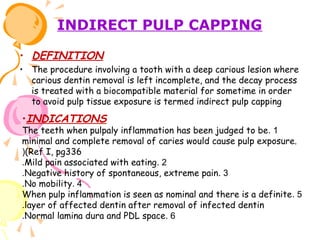
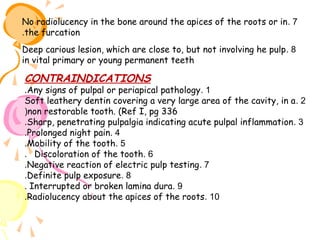
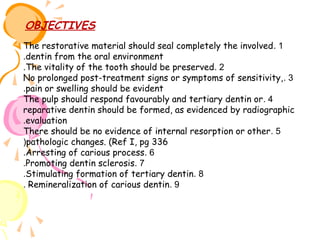
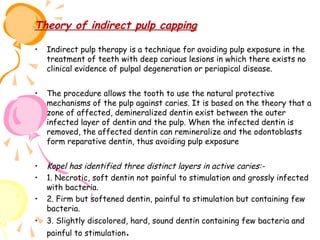
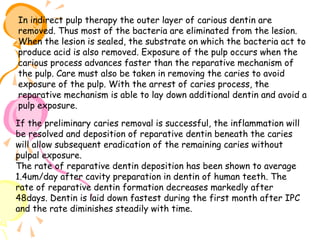
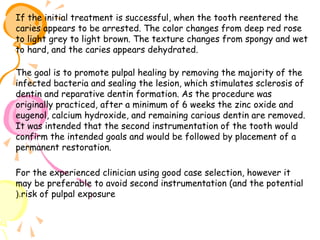
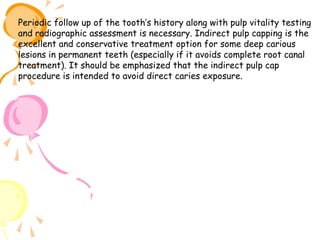
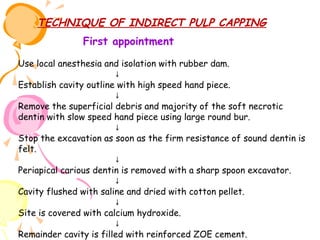
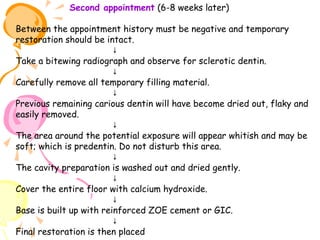
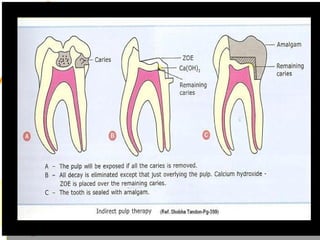

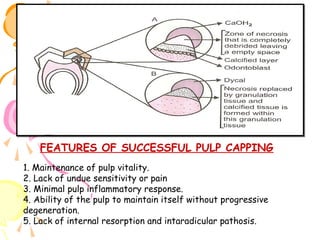
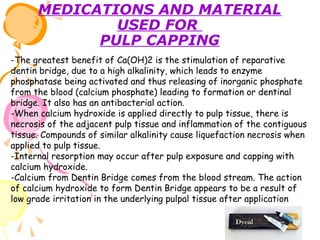


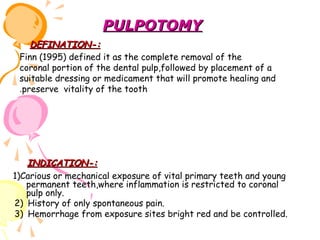
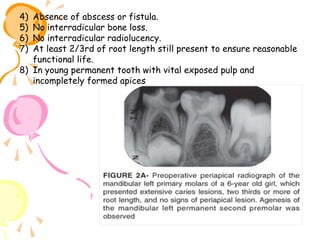
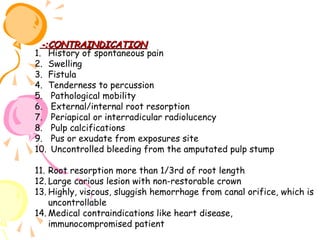
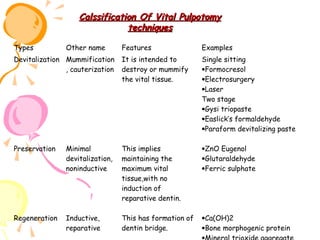
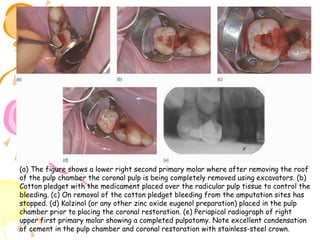
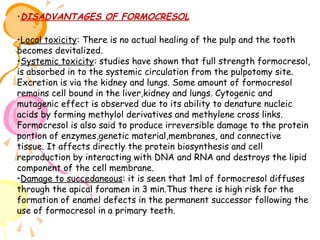
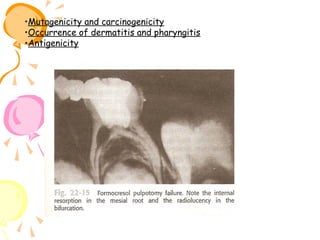
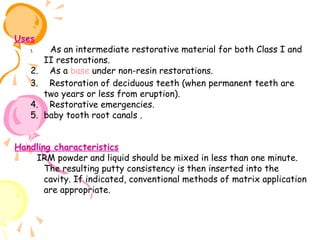
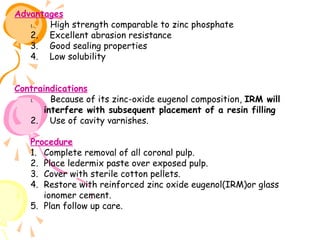
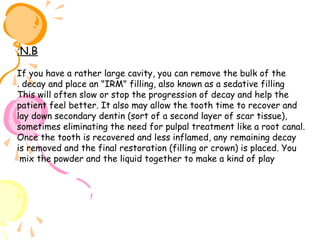
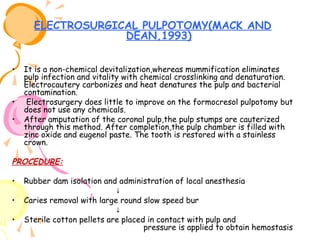


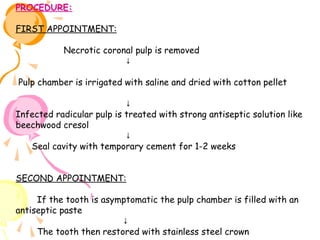
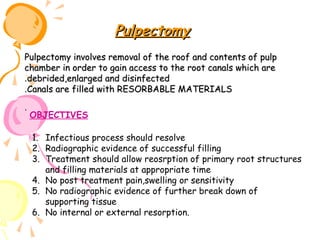
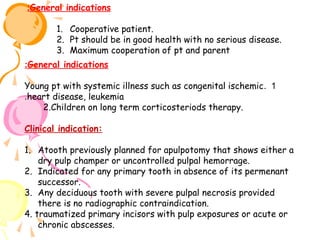
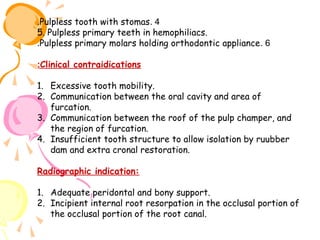
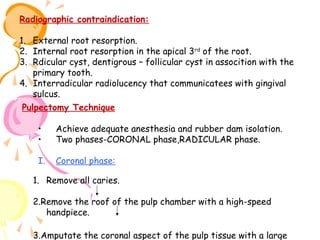
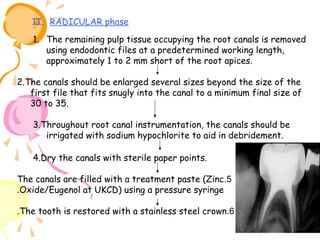
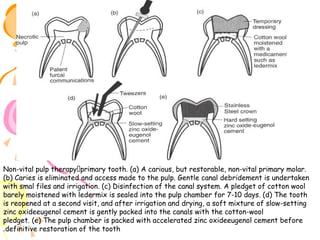
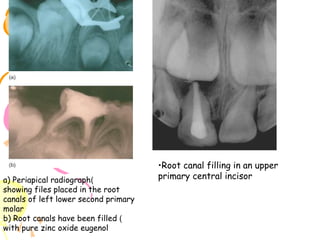



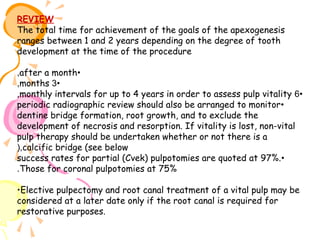
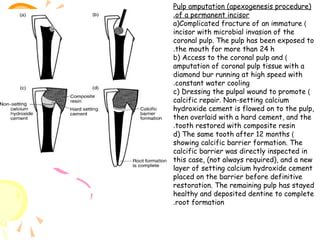
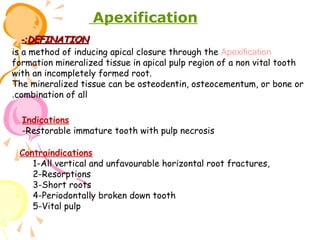
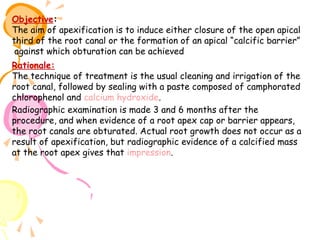

This document discusses pulp therapy in pediatric dentistry. It outlines several reasons for preserving teeth with pulp involvement, including preventing malocclusion, aiding mastication, and preventing psychological impacts of early tooth loss. The primary objectives of pulp treatment are to maintain oral health and integrity. A thorough diagnosis involves assessing factors like pain characteristics, tooth mobility, discoloration, periapical changes on radiographs, and pulpal hemorrhage in response to exposure. Pulp testing can help evaluate vitality, though results may be inconclusive for primary teeth. The goal of treatment is to restore the tooth when possible while considering the extent of pulpal inflammation or necrosis.


![endo diagnosis ppt friday.pptx [Autosaved].pptx](https://cdn.slidesharecdn.com/ss_thumbnails/endodiagnosispptfriday-240220084902-bcb16ad0-thumbnail.jpg?width=640&height=640&fit=bounds)


